For most home and project studios, I’d start with the beyerdynamic DT 770 Pro 80 Ohm: its closed-back design helps keep sound from leaking into microphones while you work. The Audio-Technica ATH-M50x is a versatile alternative for mixing and tracking, while the open-back Sennheiser HD 400 PRO suits listeners who want a more spacious presentation in a quiet room. The main choice is between isolation and reduced leakage on one side, and open-back listening comfort and presentation on the other; amplifier needs and long-session fit matter too. No headphone makes every mix decision for you, so learning its tonal character and checking mixes on other systems remain part of the job. Continue reading for the full breakdown of all 15 options and the tradeoffs that separate them.

Get audio and creator gear delivered free with Prime
- Fast, free delivery on millions of items
- Prime Video, Amazon Music and more included
- Member-only deals all year
Complete the kit


Key Takeaways
- Closed-back models lead for shared rooms and tracking: the DT 770 Pro 80 Ohm and ATH-M50x offer more practical isolation than the open-back reference picks.
- Open-back headphones are not a universal upgrade: the HD 400 PRO, DT 990 Pro X, and HD 660S2 are better suited to quiet rooms where leakage is not a concern.
- Impedance affects setup compatibility: the DT 990 PRO 250 Ohm and AKG K612 PRO may call for more capable headphone output than lower-impedance choices.
- Accessory bundles do not change the sound: the ATH-M40x bundle and ATH-M50x with Slappa case add storage convenience, while the underlying headphone remains the deciding factor.
- The lineup has distinct levels of specialization: the ATH-M20x is a basic entry point, the ATH-M70x is a more focused closed-back option, and the HD 660S2 sits among the premium open-back choices.
| Audio-Technica ATH-M50x Professional Studio Monitor Headphones, Black | 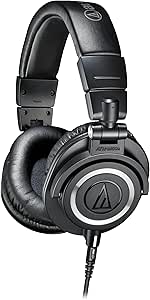 | Best Overall Closed-Back Pick | Driver type and size: Dynamic, 45 mm | Frequency response: Up to 28,000 Hz | Impedance: 38 ohms | VIEW LATEST PRICE | See Our Full Breakdown |
| beyerdynamic DT 770 Pro 80 Ohm Closed-Back Studio Headphones, Black |  | Best for Recording Isolation | Design: Closed-back, over-ear | Driver type: Dynamic | Impedance: 80 ohms | VIEW LATEST PRICE | See Our Full Breakdown |
| Audio-Technica ATH-M70x Closed-Back Professional Studio Monitor Headphones |  | Best for Extended-Frequency Checks | Design: Closed-back, over-ear | Driver type and size: Dynamic, 45 mm | Frequency response: 5 Hz–40 kHz | VIEW LATEST PRICE | See Our Full Breakdown |
| AKG K612 PRO Open-Back Over-Ear Reference Headphones, 120 Ohm |  | Best for Spacious Reference Listening | Design: Wired, open-back, over-ear | Impedance: 120 ohms | Weight: 8.4 oz | VIEW LATEST PRICE | See Our Full Breakdown |
| beyerdynamic DT 990 PRO 250 Ohm Open-Back Studio Headphones |  | Best for Amp-Driven Mixing Sessions | Design: Open-back, over-ear | Driver type: Dynamic | Impedance: 250 ohms | VIEW LATEST PRICE | See Our Full Breakdown |
| Roland VMH-S100 Over-Ear Music Production Headphones |  | Best Closed-Back for Flexible Studio Setup | Design: Over-ear, closed-back | Driver: 50 mm dynamic | Frequency response: 5 Hz–40 kHz | VIEW LATEST PRICE | See Our Full Breakdown |
| Sennheiser HD 599 SE Open-Back Wired Headphones, Black |  | Best for Spacious Mixing Checks | Design: Open-back, over-ear, wired | Model: HD 599 SE | Impedance: 50 ohms | VIEW LATEST PRICE | See Our Full Breakdown |
| Sennheiser HD 660S2 Open-Back Wired Over-Ear Headphones |  | Best Premium Open-Back Pick | Design: Open-back, wired, over-ear | Transducers: 42 mm | Low-frequency details: Piano lows at 27.5 Hz; bass drums at 45–60 Hz | VIEW LATEST PRICE | See Our Full Breakdown |
| Audio-Technica ATH-M20x Professional Studio Monitor Headphones |  | Best Value for Tracking and Starter Setups | Design: Over-ear, circumaural | Driver size: 40 mm | Frequency response: 15–20,000 Hz | VIEW LATEST PRICE | See Our Full Breakdown |
| Sony MDR-7506 Professional Over-Ear Studio Headphones | 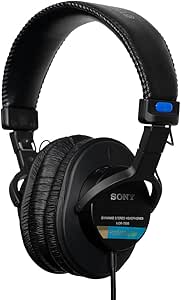 | Best for Portable Studio Monitoring | Design: Wired, over-ear, closed-ear, foldable | Driver size: 40 mm | Frequency response: 10 Hz–20 kHz | VIEW LATEST PRICE | See Our Full Breakdown |
| beyerdynamic DT 990 Pro X 48 Ohm Open-Back Studio Headphones | 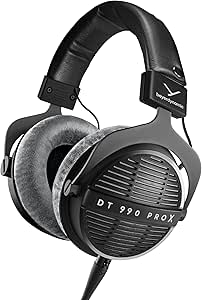 | Best Open-Back for Easy Device Pairing | Design: Open-back, over-ear | Impedance: 48 ohms | Driver: 45 mm dynamic STELLAR.45 | VIEW LATEST PRICE | See Our Full Breakdown |
| OneOdio Pro-10 Wired Over-Ear DJ Headphones, Black |  | Best for Single-Ear Monitoring | Design: Wired over-ear | Driver size: 50 mm | Impedance: 32 ohms | VIEW LATEST PRICE | See Our Full Breakdown |
| Audio-Technica ATH-M40x Studio Monitor Headphones Bundle with Hard Case and Cleaning Cloth |  | Best Value for Closed-Back Mixing | Design: Over-ear, circumaural, collapsible | Driver size: 40 mm | Frequency response: 15–24,000 Hz | VIEW LATEST PRICE | See Our Full Breakdown |
| Audio-Technica ATH-M50x Professional Monitor Headphones with Slappa HardBody PRO Case |  | Best for Isolated, Portable Monitoring | Design: Wired, over-ear | Driver type and size: 45 mm dynamic | Impedance: 38 ohms | VIEW LATEST PRICE | See Our Full Breakdown |
| Sennheiser HD 400 PRO Open-Back Studio Headphones, Black |  | Best for Long Open-Back Mixing Sessions | Design: Open-back, over-ear | Driver type: Dynamic, angled transducers | Impedance: 130 ohms | VIEW LATEST PRICE | See Our Full Breakdown |
| studio headphones for mixing | Design | Frequency response | Impedance | Sensitivity |
|---|---|---|---|---|
| Audio-Technica ATH-M50x Profes | — | Up to 28,000 Hz | 38 ohms | 99 dB |
| beyerdynamic DT 770 Pro 80 Ohm | Closed-back, over-ear | 5 Hz | 80 ohms | 96 dB |
| Audio-Technica ATH-M70x Closed | Closed-back, over-ear | 5 Hz–40 kHz | 35 ohms | 97 dB |
| AKG K612 PRO Open-Back Over-Ea | Wired, open-back, over-ear | 12–39,500 Hz | 120 ohms | 101 dB SPL/V at 1 kHz |
| beyerdynamic DT 990 PRO 250 Oh | Open-back, over-ear | — | 250 ohms | 96 dB |
| Roland VMH-S100 Over-Ear Music | Over-ear, closed-back | 5 Hz–40 kHz | — | — |
| Sennheiser HD 599 SE Open-Back | Open-back, over-ear, wired | — | 50 ohms | — |
| Sennheiser HD 660S2 Open-Back | Open-back, wired, over-ear | — | — | — |
| Audio-Technica ATH-M20x Profes | Over-ear, circumaural | 15–20,000 Hz | 47 ohms | 96 dB |
| Sony MDR-7506 Professional Ove | Wired, over-ear, closed-ear, foldable | 10 Hz–20 kHz | — | — |
| beyerdynamic DT 990 Pro X 48 O | Open-back, over-ear | — | 48 ohms | 97 dB |
| OneOdio Pro-10 Wired Over-Ear | Wired over-ear | Up to 40 kHz | 32 ohms | 110 dB |
| Audio-Technica ATH-M40x Studio | Over-ear, circumaural, collapsible | 15–24,000 Hz | — | 98 dB |
| Audio-Technica ATH-M50x Profes | Wired, over-ear | 15,000 Hz | 38 ohms | — |
| Sennheiser HD 400 PRO Open-Bac | Open-back, over-ear | Up to 38,000 Hz | 130 ohms | 110 dB |
More Details on Our Top Picks
Audio-Technica ATH-M50x Professional Studio Monitor Headphones, Black
The ATH-M50x is my most adaptable closed-back choice here: its 45 mm drivers, sound-isolating fit, and swiveling cups suit both mix checks and recording sessions where sound leaking into a microphone is a concern. Compared with the beyerdynamic DT 770 Pro, it offers a detachable cable, making replacement or cable changes simpler, while the DT 770 Pro has replaceable velour pads and a fixed longer cable. Its stated response extends to 28 kHz, but the described deep bass is a reason to check low-end balance against speakers rather than rely on headphone listening alone. The 90-degree rotation also helps when monitoring with one ear. The tradeoff is a closed-back presentation rather than the spacious feel of the AKG K612 PRO, and its over-ear fit may not suit everyone.
Pros:- Sound-isolating circumaural fit helps limit distractions and headphone bleed during recording.
- 90-degree swiveling earcups allow convenient one-ear monitoring.
- Detachable cable is easier to replace than the fixed cable on the DT 770 Pro.
- 45 mm dynamic drivers and stated response up to 28,000 Hz cover an extended range.
Cons:- Closed-back presentation is less open than the AKG K612 PRO for judging spaciousness.
- Described deep bass may encourage low-end decisions that should be checked on speakers.
- Over-ear design may feel bulky or uncomfortable to listeners who prefer other fits.
Best for: Mixers who need one closed-back pair for tracking, editing, and checking mixes in a shared or noisy room.
Not ideal for: Mixers who prioritize an open, spacious presentation for long stereo-balance decisions, or who need water-resistant headphones.
- Driver type and size:Dynamic, 45 mm
- Frequency response:Up to 28,000 Hz
- Impedance:38 ohms
- Sensitivity:99 dB
- Fit:Over-ear, circumaural
- Earcup rotation:90 degrees
- Cable:Detachable
- Noise control:Sound isolation
Our verdict“Choose the ATH-M50x if you want a versatile, isolating mixing and tracking headphone with a replaceable cable.”
beyerdynamic DT 770 Pro 80 Ohm Closed-Back Studio Headphones, Black
For mixing in the same room as a microphone, the DT 770 Pro 80 Ohm puts isolation first: its closed-back design helps contain playback, while the replaceable velour pads and spring-steel headband suit regular studio use. Against the ATH-M50x, its fixed 3 m cable is less convenient to replace, but the included 6.35 mm adapter and longer lead make it a practical wired studio setup. The 80-ohm impedance can work with most laptops, though the product data recommends an interface or headphone amplifier for best sound. That makes it less straightforward for a low-powered portable source than a lower-impedance option. It is a strong tracking companion, but the closed construction is not the pick for listeners seeking the spacious presentation of the open-back AKG K612 PRO.
Pros:- Closed-back construction provides passive isolation for recording and monitoring.
- Replaceable velour ear pads and spring-steel headband are suited to frequent studio use.
- Includes a 3 m straight cable and 6.35 mm adapter.
- Can play from most laptops, with an interface or headphone amplifier recommended for best sound.
Cons:- Fixed cable cannot be swapped or detached like the ATH-M50x cable.
- The 80-ohm impedance may benefit from a headphone amplifier for best performance.
- Closed-back listening does not provide the spacious feel of the AKG K612 PRO.
Best for: Home-studio vocalists, podcasters, and engineers who need closed-back isolation and durable replaceable ear pads.
Not ideal for: Portable listeners who need a detachable cable, or mixers seeking an open-back stereo presentation.
- Design:Closed-back, over-ear
- Driver type:Dynamic
- Impedance:80 ohms
- Frequency response:5 Hz
- Sensitivity:96 dB
- Cable:Fixed 3 m straight cable
- Connector:3.5 mm with 6.35 mm adapter
- Earpads:Replaceable velour
- Weight:9.5 oz
Our verdict“Pick the DT 770 Pro if tracking isolation and replaceable velour pads matter more than a detachable cable or open-back space.”
Audio-Technica ATH-M70x Closed-Back Professional Studio Monitor Headphones
The ATH-M70x is the closed-back option in this group with the widest stated frequency range, from 5 Hz to 40 kHz. That spec may appeal to mixers who want to inspect a broad range of material, though it does not by itself guarantee that a mix will translate; speaker checks still matter. Like the ATH-M50x, it has 45 mm drivers, circumaural isolation, and 90-degree swiveling cups for one-ear monitoring. Its listed metal components add a durability cue, while its 35-ohm impedance is lower than the DT 770 Pro 80 Ohm. The tradeoff is that the supplied description does not specify a detachable cable, and its closed-back design will feel less open than either the AKG K612 PRO or DT 990 PRO. Its over-ear build may also be less convenient for travel.
Pros:- Wide stated frequency response of 5 Hz–40 kHz.
- Circumaural closed-back design provides sound isolation.
- 90-degree swiveling earcups support one-ear monitoring.
- Metal components are included in the construction.
Cons:- Closed-back presentation feels less open than the AKG K612 PRO and DT 990 PRO.
- Over-ear form may be bulky for travel.
- The provided product data does not specify a detachable cable.
Best for: Studio mixers who prefer closed-back isolation and want a broad stated frequency range for detailed listening checks.
Not ideal for: Buyers who need a compact travel pair, or who want a spacious open-back soundstage for mix decisions.
- Design:Closed-back, over-ear
- Driver type and size:Dynamic, 45 mm
- Frequency response:5 Hz–40 kHz
- Impedance:35 ohms
- Sensitivity:97 dB
- Earcup rotation:90 degrees
- Materials:Faux leather, metal, and plastic
- Warranty:2 years
Our verdict“Choose the ATH-M70x for closed-back studio work if its wide stated response and one-ear monitoring features suit your workflow.”
AKG K612 PRO Open-Back Over-Ear Reference Headphones, 120 Ohm
If stereo placement and a less confined presentation matter more than isolation, the AKG K612 PRO is the open-back reference pick here. Its open design and Varimotion diaphragm technology are intended to support natural imaging, which can help when judging relationships across a mix. Compared with the closed-back ATH-M50x, it gives up containment: sound can escape, making it a poor choice beside an open microphone or in a shared room. The 120-ohm impedance also makes source matching worth checking before buying. Its 8.4 oz weight and self-adjusting leather headband are aimed at long sessions, while the included 3 m cable offers plenty of reach at the cost of portability. Unlike the DT 990 PRO, it is not described with replaceable velour pads, so pad-service details are less clear from the supplied information.
Pros:- Open-back construction is designed to provide a spacious sound.
- Varimotion diaphragm technology is intended to support natural sound imaging.
- Lightweight 8.4 oz build and self-adjusting leather headband suit long sessions.
- Includes a 3 m cable and screw-on 6.3 mm adapter.
Cons:- Open-back design offers less isolation than the ATH-M50x and can leak sound.
- 120-ohm impedance makes source compatibility worth checking.
- The 3 m cable can be cumbersome in portable setups.
Best for: Mixers working in a quiet room who prioritize stereo imaging and a spacious presentation for reference listening.
Not ideal for: Recording musicians near live microphones, shared-room listeners, or portable users who need isolation and a short cable.
- Design:Wired, open-back, over-ear
- Impedance:120 ohms
- Weight:8.4 oz
- Frequency response:12–39,500 Hz
- Sensitivity:101 dB SPL/V at 1 kHz
- Maximum input power:200 mW
- Cable length:3 m
- Headband:Self-adjusting real leather
- Included adapter:3.5 mm to 6.3 mm screw-on adapter
Our verdict“Pick the K612 PRO for quiet-room mixing where spacious imaging matters more than isolation or portability.”
beyerdynamic DT 990 PRO 250 Ohm Open-Back Studio Headphones
The DT 990 PRO 250 Ohm suits a fixed studio setup with a capable interface or headphone amplifier: its 250-ohm impedance is explicitly best paired with one, so it is less flexible than the 35-ohm ATH-M70x for direct use with everyday devices. In return, the open-back design is built for a wide, natural stereo image, a useful contrast to the closed DT 770 Pro when judging space in a quiet room. The sound is not private: nearby people can hear playback, and the design provides little isolation for recording beside a microphone. Replaceable grey velour pads and a spring-steel headband support ongoing studio use, but the 3 m coiled cable is fixed rather than detachable. Choose it for a settled mixing rig, not a grab-and-go headphone.
Pros:- Open-back design is intended to provide a wide, natural stereo image.
- Replaceable grey velour ear pads and spring-steel headband suit regular studio use.
- Includes a 3 m coiled cable and 1/4-inch adapter.
- Frequency range is specified as 5 Hz to 35,000 Hz.
Cons:- 250-ohm impedance is best suited to an audio interface or headphone amplifier.
- Open-back sound is audible to people nearby and offers little isolation.
- Fixed cable cannot be detached or replaced as easily as a detachable-cable design.
Best for: Mixers with an audio interface or headphone amp who work in a quiet room and want open-back stereo monitoring.
Not ideal for: Laptop-only or portable users without a suitable headphone output, and anyone recording near a live microphone.
- Design:Open-back, over-ear
- Driver type:Dynamic
- Impedance:250 ohms
- Frequency range:5 Hz–35,000 Hz
- Sensitivity:96 dB
- Cable:Fixed 3 m coiled cable
- Earpads:Replaceable grey velour
- Weight:0.4 kg
- Included:1/4-inch adapter
Our verdict“Choose the DT 990 PRO if your studio has a suitable headphone amp and you want open-back monitoring for quiet-room mixing.”
Roland VMH-S100 Over-Ear Music Production Headphones
The Roland VMH-S100 suits mixers who need isolation for tracking or a shared workspace, but want more cable flexibility than the fixed-cord Sony MDR-7506. Its closed-back design helps limit sound leakage and outside noise, while the 50 mm drivers and stated 5 Hz–40 kHz response offer a broad monitoring range. Those figures describe coverage, not a guarantee of neutral sound, so I would weigh them alongside the practical build details: metal construction, replaceable 3D-sewn pads, and cables that connect to either ear cup. The included short and long cables make desk and nearby-device setups easier to accommodate. Compared with the lighter, open Sennheiser HD 599 SE, the Roland is better suited to isolation than an airy listening presentation. Its tradeoffs are a wired, closed-back format and limited supplied information about tuning.
Pros:- Closed-back construction provides passive sound isolation for tracking and shared rooms.
- Cables can attach to either ear cup, and both 1.5 m and 3 m lengths are included.
- Replaceable 3D-sewn ear pads support continued use and comfort.
- Metal construction gives the frame a sturdier build than lightweight plastic designs.
Cons:- Closed-back monitoring does not offer the spacious presentation of open models such as the Sennheiser HD 599 SE.
- A wide stated frequency range does not by itself establish neutral mixing response.
- Wired listening limits movement, and the product data does not establish a useful water-resistance feature.
Best for: Home producers who need closed-back isolation for recording and want replaceable pads plus a choice of cable length.
Not ideal for: Mixers seeking an open, spacious presentation or buyers who need a confirmed neutral response for critical tonal decisions.
- Design:Over-ear, closed-back
- Driver:50 mm dynamic
- Frequency response:5 Hz–40 kHz
- Isolation:Passive sound isolation
- Enclosure material:Metal
- Cable lengths:1.5 m and 3 m
- Connection:3.5 mm jack; includes 1/4-inch adapter
- Ear pads:3D-sewn and replaceable
Our verdict“Choose the VMH-S100 if you need a sturdy closed-back mixing and tracking headphone with flexible cable placement, rather than an open-back soundstage.”
Sennheiser HD 599 SE Open-Back Wired Headphones, Black
The Sennheiser HD 599 SE earns its place for mixers who value an open, spacious presentation when judging stereo placement and listening balance. Its reported detail across highs, mids, and controlled bass gives it a different role from the sealed Audio-Technica ATH-M20x, which is better suited to isolation and tracking. The HD 599 SE’s open-back construction lets room sound in and headphone audio out, so it belongs in a quiet mixing space—not beside a live microphone or in a noisy room. Lightweight construction and velour-covered pads support long sessions, while the two detachable cables offer a shorter 3.5 mm option and a longer 6.3 mm connection. Compared with the more substantial Sennheiser HD 660S2, this model is the simpler choice, but the supplied data gives less detail about its driver and frequency range.
Pros:- Open-back design is suited to spacious listening and stereo-placement checks.
- Balanced reported highs, mids, and controlled bass support broad program listening.
- Lightweight build and velour-covered ear pads are intended for extended sessions.
- Two detachable cables provide 3.5 mm and 6.3 mm connection options.
Cons:- Open construction provides no noise control and allows sound leakage.
- Wired connection restricts movement compared with wireless headphones.
- The supplied product data does not list a frequency response or driver size for specification-based comparison.
Best for: Mixers working in a quiet room who want an open presentation for stereo decisions and comfortable extended listening.
Not ideal for: Producers recording beside a microphone, working around room noise, or needing headphones that keep sound from leaking outward.
- Design:Open-back, over-ear, wired
- Model:HD 599 SE
- Impedance:50 ohms
- Driver type:Dynamic
- Long cable:3 m with 6.3 mm connector
- Short cable:1.2 m with 3.5 mm connector
- Cable:Detachable
- Ear pads:Velour-covered
Our verdict“Pick the HD 599 SE for spacious mixing checks in a quiet room, but choose a closed-back model like the ATH-M20x for tracking or noisy surroundings.”
Sennheiser HD 660S2 Open-Back Wired Over-Ear Headphones
The Sennheiser HD 660S2 is the premium open-back choice here for mixers who want natural, spacious listening with particular attention to low-frequency detail. Sennheiser specifies piano lows at 27.5 Hz and bass drums at 45–60 Hz, giving buyers concrete low-end reference points; those details are not a substitute for checking translation on speakers. Compared with the HD 599 SE, the HD 660S2 has more explicit low-frequency and transducer information in the supplied specs, along with a 4.4 mm cable for compatible connections. Its 42 mm transducers, lightweight frame, and breathable velour cushions make it better suited to long, quiet-room sessions than tracking near an open microphone. The tradeoff is inherent to the open design: it offers little isolation and leaks sound. It also needs a wired audio source, and the included cables do not remove that constraint.
Pros:- Open-back presentation is suited to natural, spacious listening in a quiet room.
- Product data specifies low-frequency reference points for piano and bass drums.
- Lightweight frame and breathable velour cushions are designed for long sessions.
- Includes 6.3 mm and 4.4 mm cables, an adapter, and a carry pouch.
Cons:- Open-back construction offers less isolation and allows sound to leak.
- Wired use requires an audio connection compatible with the included cables or adapter.
- The spacious presentation is not a replacement for speaker checks when judging a mix.
Best for: Mixers with a quiet workspace and compatible wired audio equipment who prioritize an open presentation and detailed low-end listening.
Not ideal for: People recording vocals in the same room, working in noisy spaces, or needing a sealed headphone for tracking.
- Design:Open-back, wired, over-ear
- Transducers:42 mm
- Low-frequency details:Piano lows at 27.5 Hz; bass drums at 45–60 Hz
- Voice coil:Ultra-light aluminum
- Weight:0.3 kg
- Ear cushions:Velour
- Included cables:1.8 m 6.3 mm cable and 1.8 m 4.4 mm cable
- Included accessory:6.3 mm to 3.5 mm adapter and carry pouch
Our verdict“Choose the HD 660S2 for detailed, open-back mixing in a quiet room if its wired connections suit your setup and isolation is not a priority.”
Audio-Technica ATH-M20x Professional Studio Monitor Headphones
The Audio-Technica ATH-M20x is the practical starter pick for home producers who need a closed-back headphone for tracking and basic mix work. Its circumaural cups help reduce outside sound, making it more suitable near a microphone than the open Sennheiser HD 599 SE. The 40 mm drivers are described as tuned for enhanced low-frequency performance; that can make bass easier to monitor, but it also means buyers should compare low-end decisions on other playback systems rather than assume the tuning is neutral. A single-side, nearly 3 m cable keeps the lead out of the way at a desk, though it is fixed and can be cumbersome away from one. Unlike the Roland VMH-S100, the ATH-M20x offers no detachable or alternate-length cable in the supplied data. Its strength is straightforward studio utility, not portability or a feature-rich fit.
Pros:- Circumaural closed-back design helps reduce outside sound during tracking.
- 40 mm drivers are tuned for enhanced low-frequency performance.
- Single-side cable exit is convenient around a studio desk.
- Includes a 6.3 mm adapter for studio equipment connections.
Cons:- Fixed 2.99 m cable can be cumbersome for portable use and cannot be replaced as a detachable lead.
- Enhanced low-frequency tuning may not suit buyers seeking an explicitly neutral reference.
- Bulky over-ear construction is less convenient to carry than foldable headphones such as the Sony MDR-7506.
Best for: New home-studio producers who need an affordable-style wired setup for tracking, editing, and learning basic mix decisions in an isolated listening environment.
Not ideal for: Mobile mixers who want a compact carry option, or critical listeners seeking a documented flat frequency response and replaceable cable.
- Design:Over-ear, circumaural
- Driver size:40 mm
- Frequency response:15–20,000 Hz
- Sensitivity:96 dB
- Impedance:47 ohms
- Cable length:2.99 m (9.8 ft)
- Cable exit:Single-side
- Included adapter:6.3 mm
Our verdict“Choose the ATH-M20x for straightforward closed-back tracking and entry-level mix work, but look elsewhere for a detachable cable or compact portability.”
Sony MDR-7506 Professional Over-Ear Studio Headphones
The Sony MDR-7506 is the compact, work-ready choice for mixers who move between a desk, a recording setup, and other listening locations. Its folding closed-ear design and included soft case make storage easier than with the bulky ATH-M20x, while the closed construction helps reduce outside noise during monitoring. The 40 mm drivers and 10 Hz–20 kHz stated range cover conventional audio bandwidth, but those figures alone do not tell you how its tonal balance will translate; compare mixes on speakers and other headphones. A long 9.8-foot cord gives room to move around a workstation, yet its non-detachable construction is a real limitation if the cable is damaged or awkward for your setup. Compared with the Roland VMH-S100, the Sony is easier to fold and pack, while the Roland offers replaceable pads and cables that connect at either cup. The Sony’s closed fit may also feel less breathable over long sessions.
Pros:- Closed-ear construction helps reduce external noise during monitoring.
- Folding design and included soft case make storage and transport simpler.
- Long 9.8-foot cord provides reach around a studio workspace.
- Included adapter supports both 1/4-inch and 1/8-inch connections.
Cons:- Non-detachable cord cannot be swapped if damaged and may be inconvenient for compact setups.
- Closed-ear design may feel less breathable during extended listening.
- Closed-back presentation is less spacious than the open Sennheiser HD 599 SE.
Best for: Mobile producers and engineers who want foldable closed-back monitoring, a storage case, and a long cable for studio use.
Not ideal for: Mixers who need a replaceable cable, an open-back presentation, or a more breathable design for long sessions.
- Design:Wired, over-ear, closed-ear, foldable
- Driver size:40 mm
- Frequency response:10 Hz–20 kHz
- Cord length:9.8 ft
- Cord:Non-detachable OFC cable
- Connectors:Gold-plated plug; 1/4-inch and 1/8-inch applications
- Weight:8 oz
- Included accessories:Soft case and 1/4-inch adapter
Our verdict“Pick the MDR-7506 if foldable closed-back monitoring and easy storage matter more than a detachable cable or open-back mixing presentation.”
beyerdynamic DT 990 Pro X 48 Ohm Open-Back Studio Headphones
The DT 990 Pro X pairs an open, spacious presentation with a 48-ohm design that can work from many laptops, phones, consoles, and interfaces without a separate headphone amp. That makes it easier to integrate into a modest home setup than the 130-ohm Sennheiser HD 400 PRO, while the open-back construction gives mixes more room than closed options such as the ATH-M40x. Its detachable mini-XLR cable and velour pads add practical appeal for long editing sessions. The tradeoff is that open ear cups leak sound both ways, so they are a poor fit for recording near a live microphone or working around others. I’d choose it for spacious monitoring with flexible source pairing, not for isolation.
Pros:- 48-ohm impedance suits many everyday sources without a separate headphone amplifier.
- Open-back design offers a spacious, natural presentation for critical listening.
- Detachable 3 m mini-XLR cable is replaceable.
- Velour pads, 1/4-inch adapter, and carrying pouch are included.
Cons:- Open construction provides no isolation and leaks audio to nearby people.
- Wired listening restricts movement compared with wireless headphones.
- Not water resistant.
Best for: Home producers who want an open-back soundstage and plan to monitor from a laptop, console, or interface without a dedicated headphone amp.
Not ideal for: Vocalists tracking beside an open microphone or anyone mixing in a shared room where headphone leakage will bother others.
- Design:Open-back, over-ear
- Impedance:48 ohms
- Driver:45 mm dynamic STELLAR.45
- Sensitivity:97 dB
- Connectivity:Wired, 3.5 mm and 6.35 mm jack
- Cable:Detachable 3 m mini-XLR
- Weight:10.3 oz
- Included accessories:1/4-inch adapter and carrying pouch
Our verdict“Choose the DT 990 Pro X if you want spacious open-back monitoring that is easier to drive than the Sennheiser HD 400 PRO.”
OneOdio Pro-10 Wired Over-Ear DJ Headphones, Black
The OneOdio Pro-10 is the lineup’s practical pick for DJs and producers who need to monitor with one ear: its 90-degree swiveling cups make that easier than the fixed listening position of the ATH-M40x. A 32-ohm rating also makes it compatible with common headphone outputs, and the dual 3.5 mm and 6.35 mm connections suit a range of studio and DJ gear. Its shared audio port can pass a feed to another pair without a splitter, a useful convenience for collaborative listening. The focus here is flexible handling rather than mix translation; unlike the ATH-M40x’s stated flat tuning, the Pro-10 is described with emphasis on bass, vocals, and highs. Its wired-only design and 415 g weight make it less appealing for mobile or extended editing sessions.
Pros:- 90-degree swiveling ear cups support single-ear monitoring.
- 32-ohm impedance and 3.5 mm/6.35 mm compatibility suit many audio sources.
- Shared audio port allows another pair to connect without a splitter.
- Adjustable headband and padded ear cushions support a customizable fit.
Cons:- The product description emphasizes bass and crisp highs rather than flat tuning for mix decisions.
- Wired-only operation requires a device with a compatible headphone jack.
- At 415 g, it is heavier than the 240 g Sennheiser HD 400 PRO.
Best for: DJs and home producers who cue tracks on one ear, need broad jack compatibility, and want a simple way to share audio with another listener.
Not ideal for: Mix engineers seeking stated flat tuning for critical balance decisions or buyers who prioritize lightweight headphones for long sessions.
- Design:Wired over-ear
- Driver size:50 mm
- Impedance:32 ohms
- Frequency response:Up to 40 kHz
- Sensitivity:110 dB
- Ear cup rotation:90 degrees
- Connectivity:3.5 mm and 6.35 mm audio jacks
- Weight:415 g
Our verdict“Pick the Pro-10 for hands-on DJ cueing and shared listening, but choose the ATH-M40x if flat-tuned studio monitoring matters more.”
Audio-Technica ATH-M40x Studio Monitor Headphones Bundle with Hard Case and Cleaning Cloth
The ATH-M40x is the most straightforward choice here for closed-back monitoring with an explicitly flat-tuned response. Its circumaural cups help contain sound, making it more practical than the open-back DT 990 Pro X or HD 400 PRO when recording in the same room as a microphone. The 90-degree swivels also support one-ear checks, while its collapsible frame and bundle’s hard case make studio-to-location transport easier. Unlike the OneOdio Pro-10, this model includes both coiled and straight detachable cables, giving you a choice between reach and a tidier desk setup. The compromise is a wired, isolating presentation rather than the airy spatial feel of open headphones. It is a solid fit for tracking and reference checks, though I’d cross-check spatial judgments on speakers or open-back headphones.
Pros:- Flat tuning is intended for accurate sound monitoring.
- Circumaural earcups provide isolation useful near microphones.
- Swiveling cups support one-ear monitoring.
- Collapsible design, two detachable cables, and included hard case aid portability.
Cons:- Closed-back presentation is less open and spacious than the DT 990 Pro X or HD 400 PRO.
- Wired connectivity limits movement.
- Not water resistant.
Best for: Home-studio mixers who need closed-back isolation for tracking, want stated flat tuning, and carry their headphones between rooms or sessions.
Not ideal for: Listeners who want an open, spacious presentation for judging stereo depth or who need wireless freedom while working.
- Design:Over-ear, circumaural, collapsible
- Driver size:40 mm
- Frequency response:15–24,000 Hz
- Sensitivity:98 dB
- Connectivity:Wired, 3.5 mm jack
- Cables:Detachable coiled cable (3.9–9.8 ft) and straight cable (9.8 ft)
- Included accessories:1/4-inch adapter, pouch, hard case, and microfiber cleaning cloth
- Warranty:Limited 2-year manufacturer warranty
Our verdict“Choose the ATH-M40x bundle for isolated, flat-tuned monitoring and portable studio use; look to an open-back model for more spacious listening.”
Audio-Technica ATH-M50x Professional Monitor Headphones with Slappa HardBody PRO Case
The ATH-M50x makes the most sense for buyers who want a familiar closed-back format and a protective case for moving between studio spaces. Its sound-isolating over-ear design is a better match than the open-back Sennheiser HD 400 PRO for tracking near microphones or working where headphone leakage is unwelcome. Compared with the ATH-M40x bundle, this version lists larger 45 mm dynamic drivers and includes a full-size Slappa HardBody PRO case, but the supplied information does not claim the M40x’s flat tuning. That makes the M40x the clearer pick when stated response neutrality is your priority. The M50x remains a practical wired monitor with a detachable cable, though its 2.1-pound listed weight and full-size case make it less convenient for compact travel.
Pros:- Sound-isolating over-ear design is useful for tracking near microphones.
- 45 mm dynamic drivers.
- Detachable cable simplifies replacement and storage.
- Full-size Slappa HardBody PRO case is included.
Cons:- Closed-back design does not provide the spacious presentation of the HD 400 PRO.
- Wired connection limits freedom of movement.
- Listed weight of 2.1 pounds and full-size case make the bundle bulky to carry.
Best for: Producers who record in shared rooms, need sound isolation, and want a hard case for transporting their headphones between studio locations.
Not ideal for: Mixers prioritizing an open soundstage, a lightweight travel setup, or a clearly specified flat-tuned response.
- Design:Wired, over-ear
- Driver type and size:45 mm dynamic
- Impedance:38 ohms
- Frequency response:15,000 Hz
- Connector:3.5 mm
- Cable:Detachable
- Noise control:Sound isolation
- Included accessory:Slappa Full Sized HardBody PRO case
Our verdict“Choose the ATH-M50x bundle for isolated monitoring and a protective case, but pick the ATH-M40x if stated flat tuning and lighter portability lead your priorities.”
Sennheiser HD 400 PRO Open-Back Studio Headphones, Black
The HD 400 PRO is the open-back option here for mixers who value a spacious presentation and low weight over isolation. Its angled dynamic transducers and velour pads are designed for extended listening, while the 240 g construction is markedly lighter than the OneOdio Pro-10. Both coiled and straight cables come in the box, so desk-based work and setups needing extra cable reach are covered. Compared with the 48-ohm DT 990 Pro X, its 130-ohm impedance makes source matching a bigger part of the decision; check that your interface or headphone output can drive it adequately. Open cups also leak sound, ruling it out for many recording situations. I’d favor it for long, quiet mixing sessions rather than tracking or casual use around others.
Pros:- Open cups and angled transducers create a spacious soundstage for mixing.
- Lightweight 240 g build and velour earpads suit extended listening.
- Both coiled and straight cables are included.
- Designed for studio mixing, recording, and precise listening.
Cons:- 130-ohm impedance calls for checking compatibility with the intended headphone output.
- Open-back design provides no isolation and leaks sound.
- Wired connection limits movement.
Best for: Mixers with a capable headphone output who work in quiet rooms and want lightweight open-back headphones for long sessions.
Not ideal for: Users monitoring from weak headphone outputs, recording near open microphones, or working in shared spaces where sound leakage is a problem.
- Design:Open-back, over-ear
- Driver type:Dynamic, angled transducers
- Impedance:130 ohms
- Frequency response:Up to 38,000 Hz
- Sensitivity:110 dB
- Weight:240 g
- Connectivity:Wired, 3.5 mm headphone jack
- Included cables:Single-sided coiled cable and straight cable
Our verdict“Choose the HD 400 PRO for lightweight, spacious mixing sessions when your source can drive its 130-ohm load and isolation is not needed.”
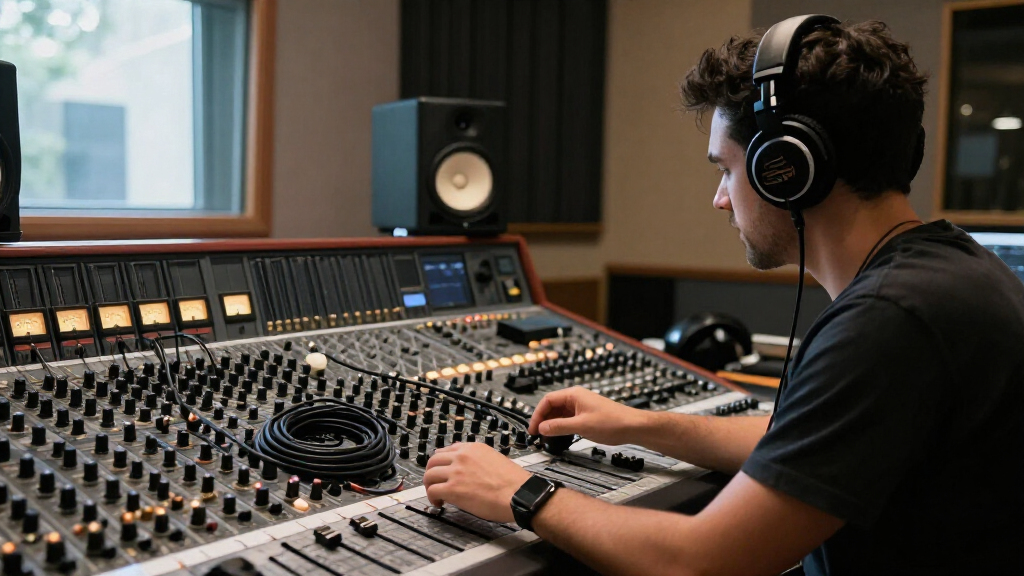
How We Picked
I ranked these studio headphones for mixing by how well their design suits real mixing situations: tonal usefulness for judging balance, isolation or leakage, comfort over longer sessions, connection and impedance demands, and practical build details. Closed-back headphones earned preference where a single pair needs to serve for tracking as well as mixing; open-back models could rank highly when their intended quiet-room use made sense. I also separated monitoring-focused models from general listening and DJ-style options rather than treating every over-ear headphone as an equal reference tool.
The order reflects usefulness across common studio setups, not a claim that one sound signature suits every listener. A headphone with a strong fit for one job may rank below a more adaptable choice, while premium construction or included accessories do not automatically move a model up. I considered whether an amplifier could be needed, whether the design would work around microphones, and what compromises a buyer accepts for the model’s strengths. These are feature-based recommendations, not claims of firsthand testing.
Factors to Consider When Choosing Studio Headphones For Mixing
Choosing headphones for mixing is less about finding a single universally accurate model and more about matching the design to your room, workflow, and listening habits. I’d settle the practical questions first—especially leakage, amp compatibility, and whether you also record—before comparing finer differences in presentation.
Closed-Back or Open-Back?
Start with what can be heard outside the earcups. Closed-back headphones reduce sound leakage and help limit microphone bleed, making them the safer choice for vocal recording, shared rooms, or sessions where other people are nearby. Open-back designs let air and sound pass through the earcups, but that also means your mix can be audible to others and outside sound can reach you. They are best reserved for a quiet workspace and are not a substitute for monitors in a treated room. A common mistake is buying open-back headphones for their reputation without checking whether the room is quiet enough to use them well. If you need one pair for both tracking and mixing, closed-back is usually the more flexible starting point.
Check the Headphone Output Before Choosing Impedance
Impedance is a compatibility question, not a direct measure of sound quality. Higher-impedance models may need more voltage from the headphone output to reach a useful listening level, so check the interface, mixer, laptop, or amp you plan to use. A headphone that gets loud enough is not automatically ideal if the output has little headroom or sounds strained at higher levels. Low-impedance options are often easier to drive from everyday gear, though the source still matters. Do not buy an amplifier just because a model has a high impedance number; confirm the output’s capability first. That can prevent spending on gear your current setup does not need.
Treat Comfort as a Mixing Requirement
Mixing decisions can drift when fatigue makes you want to remove the headphones, so fit matters beyond a quick audition. Clamping force, earcup depth, pad material, headband pressure, and heat buildup all affect how long a pair remains usable. If possible, check the return policy and try headphones during a session-length listening period rather than judging them in a brief shop visit. Glasses, head shape, and sensitivity to pressure can change how a model fits from one person to another. Replaceable pads can extend service life, but pad changes may also alter the fit and sound. Do not assume that a more expensive or heavier headphone will be more comfortable for you.
Learn the Tonal Character, Then Cross-Check
No headphone gives a perfectly neutral view of every mix, and a familiar reference track helps you learn what yours emphasizes or hides. Compare a few well-known recordings at a consistent listening level, then check your own work on speakers, earbuds, or another trusted system. Bass balance is especially easy to misjudge when a room, seal, or headphone response differs from what you are used to. Avoid compensating for a headphone’s tonal character after only one session; repeated reference listening gives you a steadier frame of comparison. Open-back presentation can feel spacious, but that alone does not make a headphone more accurate. Reliable decisions come from familiarity and cross-checking, not from a label on the box.
Decide Whether You Need One Pair or Two
A single versatile pair is convenient, but separate headphones can solve conflicting studio tasks. Closed-back headphones can handle recording and late-night work, while open-back models may be more comfortable for quiet-room editing or extended listening. If you record vocals or instruments in the same space, leakage can make a one-pair open-back setup impractical. On the other hand, buying two pairs before you know your workflow can leave one unused and make comparisons harder to interpret. First identify the task your current headphones handle poorly, then add a second pair only if it fills a clear gap. Keep one familiar reference as your baseline when comparing mixes across models.
Value the Working Details, Not Just the Bundle
Detachable cables, replacement pads, folding earcups, and a protective case can matter when headphones travel between a studio, rehearsal space, and recording location. These details affect durability and convenience, but they do not tell you whether the headphone’s sound suits your decisions. Bundles can be useful if the included case meets a real storage need; otherwise, compare the headphone itself with other options in the lineup. Check cable length and connector style against your desk and interface so the cable does not pull or snag during a session. Treat pads and cables as maintenance items, not reasons to ignore fit or sound. A practical, repairable pair can serve a studio longer than a feature-rich model that is uncomfortable or poorly matched to the room.
Frequently Asked Questions
Can I mix on closed-back headphones, or do I need open-back models?
You can mix on closed-back headphones, especially if you work in a shared room, record while mixing, or need to keep sound from escaping. Open-back designs can be a useful alternative in a quiet room, but they leak sound and provide little isolation from outside noise. Neither design guarantees accurate translation to speakers or other headphones. Learn the sound of whichever pair you choose using familiar recordings, and check important decisions on another playback system. For a first pair that also needs to handle tracking, closed-back is usually the more practical choice.
Will a 250-ohm or 120-ohm headphone work with my audio interface?
It depends on the headphone output’s ability to provide enough voltage, not just on whether the connector fits. Check your interface or mixer specifications for supported impedance or output power, and compare them with the headphone’s requirements. If the combination cannot reach a comfortable level with headroom, a dedicated headphone amp may help. Do not assume every interface will drive every high-impedance model equally well. When those specifications are unclear, a lower-impedance option can reduce compatibility uncertainty.
Can one pair of headphones work for both recording and mixing?
Yes, but closed-back headphones are usually the more practical single-pair choice because they limit leakage into nearby microphones. They can also suit late-night mixing, though you still need to learn their tonal character and cross-check your work elsewhere. Open-back headphones may be comfortable for mixing in a quiet room, but their leakage can reach a vocal microphone or disturb others. If recording is occasional and always happens in another room, open-back could still fit your workflow. Let your most demanding task decide which compromise is easier to live with.
Should I buy a bundle with a hard case, or choose the headphone on its own?
A case is useful when you carry headphones between locations or store them where the earcups could be damaged. For a pair that stays on a studio stand, the added protection may have little practical value. Judge the headphone’s sound, fit, and compatibility first, then treat the case as a convenience rather than a performance feature. Also check whether the included case fits the headphone with its cable attached or whether you will need to pack those separately. A bundle makes sense when its accessories solve a real storage or transport problem.
Is it sensible to mix using only headphones and no studio monitors?
Headphones can support a complete mix workflow when monitors are unavailable, but they make it harder to judge how sound behaves in a room and how low frequencies translate through speakers. Use familiar reference tracks and check the mix on multiple playback devices before calling it finished. Keep listening levels comfortable, since long or loud sessions can cause fatigue and distort your judgment. If you can add monitors later, even modest ones in a suitable space provide a useful second perspective. Until then, consistency and cross-checking matter more than owning several headphones with different signatures.
Conclusion
For best overall versatility, I’d choose the beyerdynamic DT 770 Pro 80 Ohm if isolation and tracking are part of the job; the Audio-Technica ATH-M50x is a strong alternative when a flexible closed-back design is the priority. For best value, the ATH-M40x is a sensible step up from the entry-level ATH-M20x, while the ATH-M20x makes the most sense for beginners who want a straightforward studio-oriented starting point. For best premium open-back direction, look at the Sennheiser HD 660S2 or HD 400 PRO, choosing only if your room is quiet and your source can drive the model well. For specific needs, consider the ATH-M70x for a more focused closed-back option, the DT 990 Pro X for an open-back model with a lower-impedance specification than the DT 990 PRO 250 Ohm, or the AKG K612 PRO if its impedance suits your setup. Match the design to your room and workflow first, then choose the model whose fit and tonal character you can learn and trust.