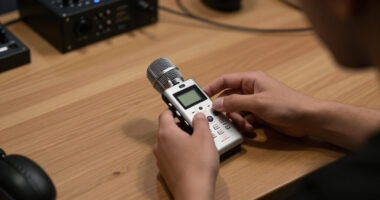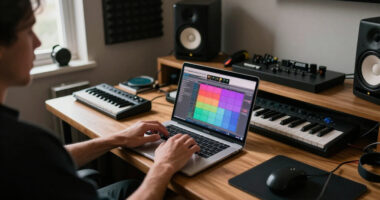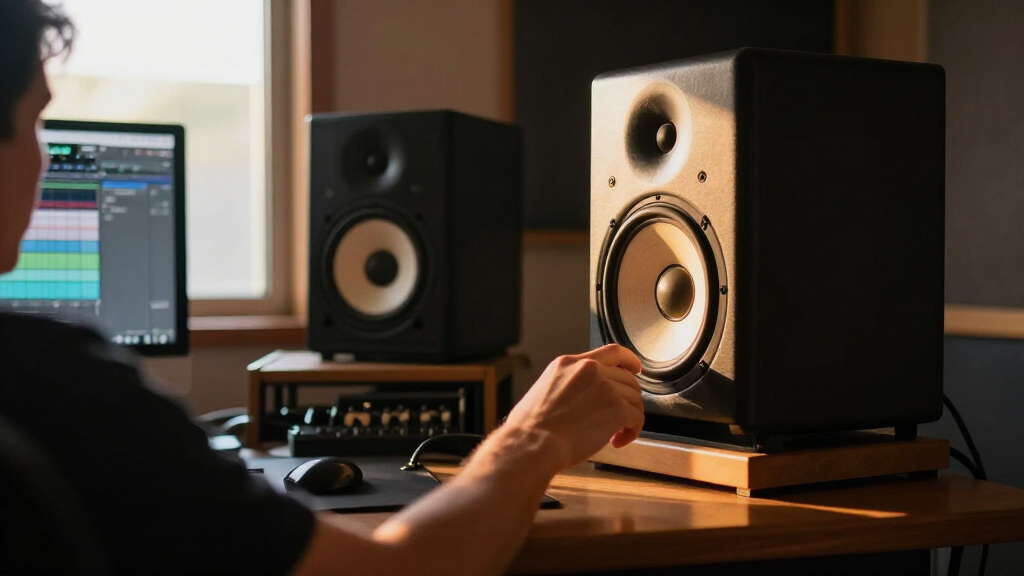

Choosing the right studio monitors for music production is essential for accurate sound reproduction and mixing. The best options, like the Yamaha HS5 W, deliver clear, balanced audio suitable for professional work, while the JBL 305P MkII offers excellent value without sacrificing quality. Tradeoffs often involve balancing price, accuracy, and size—more affordable monitors may lack the precision needed for detailed mixing, while high-end models come at a premium. Continue reading to find out which monitors will elevate your production setup and how to pick the best fit for your studio.

Get audio and creator gear delivered free with Prime
- Fast, free delivery on millions of items
- Prime Video, Amazon Music and more included
- Member-only deals all year
Key Takeaways
- The top monitors balance accuracy and affordability, with models like the JBL 305P MkII standing out as versatile all-rounders.
- Size matters: smaller monitors like the PreSonus Eris 3.5 are suitable for limited spaces but may lack bass response for certain genres.
- Build quality and input versatility vary; professional-grade monitors often feature multiple connection options and robust construction.
- Premium options like the Yamaha HS5 W offer superior clarity and detail, but may be overkill for casual or beginner producers.
- Wireless and smart features, found in models like the Ortizan C7, add convenience but can compromise traditional sound fidelity.


| studio monitors for music production | Inputs |
|---|---|
| Edifier MR5 2.0 Studio Monitor | — |
| Yamaha HS5 W 5-Inch Powered St | — |
| JBL 305P MkII 5-inch 2-Way Act | XLR/TRS |
| PreSonus Eris 3.5 Powered Stud | TRS, RCA, aux |
| M-AUDIO BX3 Pair 3.5" Wired St | 1/4-inch, 1/8-inch, RCA |
| Ortizan C7 Dual-Mode 2.0 Studi | RCA, AUX, TRS, headphone output |
| Edifier MR4 42W Powered Monito | TRS, RCA, AUX |
| Yamaha HS4 Powered Studio Moni | XLR/TRS combo, RCA, Stereo Mini |
More Details on Our Top Picks
Edifier MR5 2.0 Studio Monitor Bookshelf Speakers, 110W RMS, Hi-Res Audio, Bluetooth 6.0, 3-Way Active Design, Room Compensation, XLR/TRS/RCA Inputs, White
The Edifier MR5 stands out for its ability to combine high-resolution audio with extensive connectivity options, including Bluetooth 6.0, XLR, TRS, and RCA, making it highly adaptable for different studio setups. Unlike the Yamaha HS5 W, which focuses solely on accuracy, the MR5 offers room tuning and app-based controls that help tailor sound to your environment. However, this versatility comes with the tradeoff of requiring careful setup and calibration, and some users might find the control interface complex. Its 110W RMS amplifier and 3-way active design deliver powerful, clear sound suitable for both mixing and casual listening in smaller rooms. Compared with traditional studio monitors, the MR5’s wireless capabilities and room compensation features make it more flexible but slightly less straightforward for pure audio accuracy.
Pros:- Supports high-res audio up to 24-bit/96kHz for detailed sound
- Versatile input options including Bluetooth, XLR, TRS, and RCA
- Room tuning and app controls for customized listening experience
Cons:- Setup and calibration are required for optimal sound quality
- Controls can be complex for users unfamiliar with audio tuning
Best for: Home studio owners seeking flexible connectivity and room tuning features
Not ideal for: Purists who prioritize absolute flat response and simplicity over additional features
- Power:110W RMS
- Frequency Response:46Hz–40kHz
- Connectivity:Bluetooth 6.0, XLR, TRS, RCA, 3.5mm
- Drivers:5″ woofer, 3.75″ mid driver, 1″ silk dome tweeter
- Build Material:MDF cabinets
- Dimensions:Not specified
Our verdict“This monitor is ideal for those who want flexible connectivity and room customization in a compact package.”
Yamaha HS5 W 5-Inch Powered Studio Monitor (White, 2-Pack)
The Yamaha HS5 W pair is celebrated for their precise, flat frequency response, making them a staple in professional mixing environments. Compared to the JBL 305P MkII, which offers more dynamic sound with adjustable EQ, the HS5 W provides a more neutral output that’s essential for critical listening and accurate mastering. While the HS5 W excels in transparency, it may fall short for those seeking a bit of color or enhanced bass, which the JBL can provide with its adjustable settings. Its reputation for reliability and industry-standard accuracy makes it a favorite for engineers, but the price point may be a barrier for casual producers or hobbyists. The 5-inch drivers deliver detailed sound but are best suited for nearfield use, emphasizing their role in precise monitoring rather than immersive listening.
Pros:- Highly accurate, flat frequency response for precise mixing
- Industry-standard reputation for reliability and consistency
- Includes two monitors for stereo sound
Cons:- Higher cost relative to entry-level monitors
- Requires proper placement and acoustic treatment for best results
- Limited to nearfield use, not suitable for large rooms
Best for: Professional or serious hobbyist music producers who need flat, reliable sound for mixing
Not ideal for: Casual listeners or those wanting a more colorful sound profile for casual listening
- Model:HS5 W
- Type:Powered Studio Monitor
- Size:5 inches
- Color:White
- Quantity:2
Our verdict“This pair is perfect for professionals requiring transparent, flat sound for critical mixing and mastering.”
JBL 305P MkII 5-inch 2-Way Active Studio Monitors (Pair)
The JBL 305P MkII offers a compelling balance of clarity and power with dual 41-watt amplifiers and an adjustable EQ, making it suitable for a range of production tasks. Compared to the Yamaha HS5 W, which emphasizes flat response, the JBL’s room-tuning features allow more room-specific tailoring, beneficial for less treated spaces. Its strong imaging and bass response provide a lively listening experience, but the need for adequate space for proper positioning makes it less ideal for very small desks. The durable MDF enclosure and professional-grade build ensure longevity, yet the monitors are more suited to dedicated studio environments than casual setups. Overall, the JBL stands out for its adaptability and punchy sound, especially in environments where room acoustics are not perfect.
Pros:- Excellent sound clarity and imaging for detailed mixing
- Dual amplifiers deliver robust, dynamic sound
- Adjustable EQ for room-specific tuning
Cons:- Requires space for optimal placement
- Overkill for casual or bedroom use
- Higher price point for entry-level users
Best for: Producers and podcasters who want powerful, adjustable sound with good imaging
Not ideal for: Minimalists or those with very limited space looking for ultra-compact monitors
- Number of Speakers:2
- Woofer Size:5 inches
- Amplifier Power:2 x 41 Watts
- Inputs:XLR/TRS
- Enclosure Material:MDF
Our verdict“This monitor excels in versatile, room-tuned sound for production environments that demand dynamic range and clarity.”
PreSonus Eris 3.5 Powered Studio Monitors, Pair
The PreSonus Eris 3.5 pair delivers surprisingly balanced and clear sound for their small size, making them a strong choice for desktop producers or gamers. Compared to the M-AUDIO BX3, which also offers high-quality sound, the Eris 3.5’s built-in acoustic tuning controls give users more flexibility to adapt to different room environments. While they lack Bluetooth and wireless connectivity, their 50W power and 3.5-inch drivers provide enough volume and clarity for nearfield listening. These monitors suit users with limited desk space who want professional-grade sound without larger, more expensive options. However, their small driver size limits low-end extension, and they’re less suited for larger rooms or high-volume use, which can lead to distortion if pushed too hard.
Pros:- Provides balanced, clear sound with good bass for size
- Built-in acoustic tuning controls for room adaptation
- Affordable and compact for small spaces
Cons:- Limited low-end response due to small drivers
- No wireless or Bluetooth connectivity
- Requires proper placement to avoid acoustic issues
Best for: Desktop producers, streamers, and gamers needing compact, accurate sound
Not ideal for: Large-room producers or those needing deep bass for mixing bass-heavy music
- Power:50W
- Woofer Size:3.5 inches
- Frequency Range:80 Hz–20 kHz
- Inputs:TRS, RCA, aux
- Additional Features:Built-in acoustic tuning
Our verdict“These monitors make the most sense for users with limited space who need accurate sound for nearfield work.”
M-AUDIO BX3 Pair 3.5″ Wired Studio Monitors and PC Speakers for Recording and Multimedia
The M-AUDIO BX3 provides a comprehensive setup with active and passive options, Kevlar woofers, and silk dome tweeters, making it suitable for recording, gaming, and multimedia. Compared with the PreSonus Eris 3.5, the BX3’s inclusion of accessories and software makes it appealing for beginners or those building a full setup. Its bi-amplified design ensures clear highs and punchy lows, but the larger footprint and need for proper placement can be a concern in tight spaces. While its 3.5-inch drivers are versatile, they don’t deliver the deep bass needed for larger, bass-heavy mixes, limiting its use to smaller environments or casual production.
Pros:- High-quality sound with clear highs and punchy bass
- Includes accessories and software for quick setup
- Versatile input options for different devices
Cons:- Requires space for two speakers and proper positioning
- May be excessive for casual listening or small desks
Best for: Entry-level producers and multimedia users wanting a complete, ready-to-use studio setup
Not ideal for: Professional studios requiring high-end accuracy or large-room monitoring
- Speaker Size:3.5 inches
- Woofer Material:Kevlar
- Tweeter Type:Silk dome
- Inputs:1/4-inch, 1/8-inch, RCA
- Included Accessories:foam feet, interconnect, aux, RCA cables, software
Our verdict“This package is ideal for newcomers seeking an all-in-one solution for recording and multimedia with decent accuracy.”
Ortizan C7 Dual-Mode 2.0 Studio Monitors, Active Monitor Speakers for Near Field Music Production, Bluetooth 5.3 Wireless, Computer PC Monitor, Gaming Bookshelf Speakers (Pair, Black)
The Ortizan C7 monitors stand out for their flexible input options, including RCA, AUX, TRS, and Bluetooth 5.3, making them highly adaptable for different setups. Unlike the Yamaha HS4, which relies solely on wired connections, the C7’s wireless capability simplifies placement and reduces clutter. However, their limited size and lack of specified power output mean they are best suited for near-field listening in small spaces, rather than large or professional studios. While they offer a flat response for accurate sound, the absence of detailed amplification specs can be a concern for those seeking precise control over volume and power. Compared to the Edifier MR4, which emphasizes studio-quality sound in a more traditional wired setup, the C7’s wireless versatility makes it ideal for multimedia and casual production environments. This pick is perfect for multimedia creators and gamers who need flexible connectivity without sacrificing sound fidelity.Pros:- Multiple input options including Bluetooth 5.3, RCA, AUX, and TRS for versatile connectivity
- Professional tuning with flat response for accurate audio reproduction
- Wireless Bluetooth feature for easy pairing and device switching
Cons:- Limited to near-field listening; not suitable for large rooms
- Bulky design may occupy more space in small setups
- Lack of detailed power output info may concern power-sensitive users
Best for: Music producers and multimedia enthusiasts who value wireless connectivity and versatile input options in small to medium spaces.
Not ideal for: Large studio environments or professionals needing high-powered, passive monitors, as the C7 is limited to near-field listening and lacks specified wattage.
- Connectivity:RCA, Bluetooth 5.3, 3.5mm AUX, 6.35mm TRS balanced input
- Speaker Size:3.5-inch mid-bass, 0.75-inch silk dome tweeter
- DAC:24-bit
- Inputs:RCA, AUX, TRS, headphone output
- Color:Black
Our verdict“This monitor set is ideal for those seeking wireless flexibility and multi-device connectivity in small-scale music production or multimedia setups.”
Edifier MR4 42W Powered Monitor Speakers, 1″ Tweeter & 4″ Woofer, Balanced TRS/RCA/AUX, Monitoring & Music Mode, for PC/PS5/TV, Music Production & Gaming – White
The Edifier MR4 delivers studio-quality sound with a flat response thanks to its 1-inch silk dome tweeter and 4-inch composite woofer, making it a strong choice for precise music production. Compared with the Yamaha HS4, which emphasizes clarity in a smaller form factor, the MR4’s larger woofer and dual mode operation provide a richer listening experience, especially for casual mixing and entertainment. While the MR4’s wired setup and size may be less convenient for tight desk spaces, their sound accuracy and dual modes make them easier to adapt for both professional and casual use. The simple controls and MDF wood enclosure also contribute to a more refined listening environment, though setup can take some time for optimal tuning. This model suits those who want reliable, flat-spectrum monitors with flexible sound modes for both studio work and relaxed listening.Pros:- Studio-grade flat response for accurate monitoring
- Dual modes for monitoring and casual music listening
- Easy-to-use volume and tone controls
Cons:- Size may be large for very small desks
- Limited to wired connections, reducing flexibility
- Requires setup time to optimize sound profile
Best for: Home studio owners or content creators who want a straightforward, high-quality wired monitor with flexible sound modes.
Not ideal for: Pro users requiring extremely compact monitors or those with very limited desk space, due to the MR4’s size and wired design.
- Power:42W
- Tweeter:1 inch silk dome
- Woofer:4 inch composite
- Inputs:TRS, RCA, AUX
- Modes:Monitoring, Music
- Material:MDF wood
Our verdict“This monitor makes sense for those who prioritize sound accuracy and dual-functionality in a wired package for home or project studios.”
Yamaha HS4 Powered Studio Monitor (Pair)
The Yamaha HS4 is renowned for its reliable, neutral sound profile, thanks to a 4.5-inch woofer and 1-inch dome tweeter, providing a clear representation of mid and high frequencies. Unlike the Edifier MR4, which offers dual modes, the HS4 focuses on delivering a consistent, flat response ideal for critical mixing. Its 60 Hz to 22 kHz frequency range covers most of the audible spectrum, though the smaller woofer results in limited bass extension—something to consider if you need deep lows. The HS4’s multiple input options, including XLR and TRS, align well with professional studio setups, but its passive design means you’ll need a separate amplifier or audio interface. The included accessories facilitate straightforward placement, but space for proper positioning is essential for optimal sound. This monitor suits professional producers and engineers seeking reliable, flat response monitors for detailed mixing and mastering.Pros:- Precise, flat frequency response for critical mixing
- Multiple input options including XLR and TRS
- Accessories included for easy setup
Cons:- Limited bass response due to small woofer size
- Requires external amplification, increasing setup complexity
- No built-in power amplifier, not a standalone powered monitor
Best for: Experienced music producers and engineers requiring accurate, transparent sound in a professional or semi-professional studio environment.
Not ideal for: Casual hobbyists or those with small or cluttered spaces, as the HS4 requires space, proper mounting, and an external amplifier.
- Type:2-way bass-reflex powered speaker
- Woofer size:4.5 inches
- Tweeter size:1 inch
- Frequency response:60 Hz – 22 kHz
- Power output:26 W
- Inputs:XLR/TRS combo, RCA, Stereo Mini
Our verdict“This model is best suited for experienced professionals who need highly accurate monitoring and are equipped to handle passive speakers.”
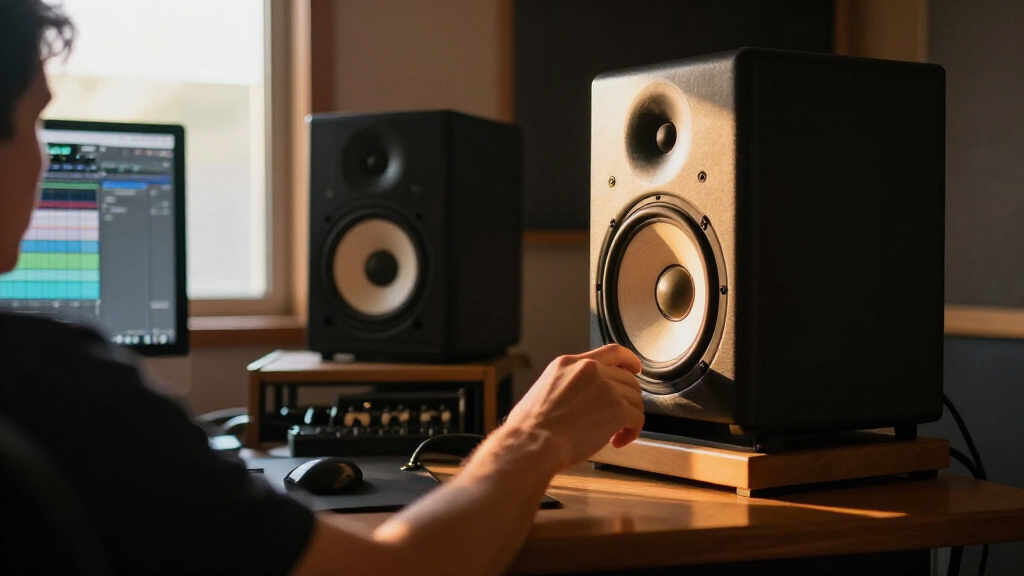
How We Picked
The monitors included in this roundup were evaluated based on sound performance, accuracy, build quality, input options, and value for money. We prioritized products that deliver reliable, flat frequency responses essential for mixing and mastering, while also considering user-friendliness and durability. The ranking reflects a balance between professional-grade features and accessibility for various budgets, ensuring there are options suited for beginners up to seasoned producers. We aimed to highlight models that stand out in specific categories, making it easier for buyers to find the best fit for their needs.Factors to Consider When Choosing Studio Monitors For Music Production
Selecting the right studio monitors involves more than just listening to reviews. Understanding key factors like size, sound accuracy, connectivity, and budget can help you make an informed decision that enhances your music production experience. Avoid common pitfalls such as choosing monitors that are too large for your space or sacrificing accuracy for flashy features. The following factors will guide you through the most important considerations to ensure your monitors meet your specific needs.Size and Room Space
The physical size of your monitors should match your studio space. Smaller monitors like the PreSonus Eris 3.5 are ideal for compact setups, but they may lack the bass response needed for larger rooms or bass-heavy genres. Larger monitors, such as the Yamaha HS5 W, deliver fuller sound but require more space and proper positioning to avoid reflections and standing waves. Measure your room and consider how much space you can dedicate to your monitors before choosing a size.
Sound Accuracy and Frequency Response
Accurate sound reproduction is critical for mixing. Flat frequency response monitors reveal flaws in your recordings without coloring the sound. Budget models may boost bass or treble, which can mislead your mixing decisions. Premium monitors like the Yamaha HS5 W excel in delivering neutral, detailed audio, but they come at a higher cost. Consider your skill level and the precision needed for your projects when evaluating sound accuracy.
Connectivity Options
Make sure your monitors have compatible inputs for your setup—XLR, TRS, or RCA. Monitors like the Edifier MR5 offer multiple options, accommodating different gear and future upgrades. Wireless models such as the Ortizan C7 provide added convenience but may introduce latency or compromise sound fidelity. Evaluate your current equipment and potential future needs to select monitors with versatile connectivity.
Build Quality and Durability
Studio monitors are a long-term investment, so durability matters. Look for models with solid enclosures and quality components that can withstand continuous use. Cheaper plastic bodies may degrade quicker or introduce unwanted vibrations. Premium options often have better shielding against electromagnetic interference, which can affect audio clarity. Choose a monitor that balances robustness with reasonable price for peace of mind during long sessions.
Budget and Value
While it’s tempting to go for the most affordable option, investing in a slightly higher-quality monitor often pays off in the accuracy and durability you’ll experience. Budget models like the M-AUDIO BX3 provide decent performance for beginners, but may lack the finesse needed for professional mixing. Premium models offer better sound, durability, and features but at a higher price. Consider your current needs and future ambitions to find a monitor that offers the best value for your investment.
Frequently Asked Questions
Can I use regular speakers for music production?
While regular speakers can be used temporarily, studio monitors are designed specifically for accurate sound reproduction, which is essential for mixing and mastering. Consumer speakers often boost certain frequencies or color the sound, leading to inaccurate mixes. Investing in studio monitors ensures you hear your music as it truly is, helping you make better production decisions and achieve professional results.
Is it better to have larger or smaller studio monitors?
The ideal size depends on your room size and the genre of music you produce. Larger monitors like the Yamaha HS5 W provide more bass and a fuller sound, suitable for bigger rooms and bass-heavy styles. Smaller monitors, such as the PreSonus Eris 3.5, work well in compact spaces but may lack low-end response. Think about your room dimensions and what you need to hear clearly when choosing monitor size.
Do I need active or passive studio monitors?
Most modern studio monitors are active, meaning they have built-in amplifiers tailored to their drivers, making setup easier. Passive monitors require external amplification and more complex wiring, which may be unnecessary for most home studios. Unless you have specific equipment preferences and experience, active monitors like those in this list are generally the better choice for straightforward, reliable performance.
How important is room treatment when using studio monitors?
Room acoustics significantly influence how your monitors sound. Even the most accurate monitors can produce misleading results if your room has reflective surfaces or uneven acoustic properties. Investing in basic room treatment, like bass traps and diffusers, can dramatically improve sound clarity and accuracy. Proper positioning and acoustic treatment are essential complements to quality monitors for achieving professional mixes.
When should I upgrade my studio monitors?
If you notice that your mixes translate poorly on other systems, or if your current monitors lack clarity or bass response, it might be time to upgrade. As your skills improve and your projects demand higher fidelity, investing in better monitors can provide more detailed feedback. Also, if your current setup becomes unsuitable due to space constraints or connectivity issues, a new pair may be a worthwhile upgrade.
Conclusion
For beginners just starting out, the PreSonus Eris 3.5 offers a budget-friendly, reliable option. Serious hobbyists and semi-professionals will appreciate the JBL 305P MkII for its balanced performance and value. The Yamaha HS5 W stands out as the best overall for professional-quality sound, while high-end producers should consider the Yamaha HS4 for ultimate clarity. If wireless convenience is a priority, the Ortizan C7 provides a smart, cable-free experience. Your ideal choice depends on your space, budget, and production goals—use this guide to find the perfect match.
As an affiliate, we earn on qualifying purchases.Halloween Picks
halloween