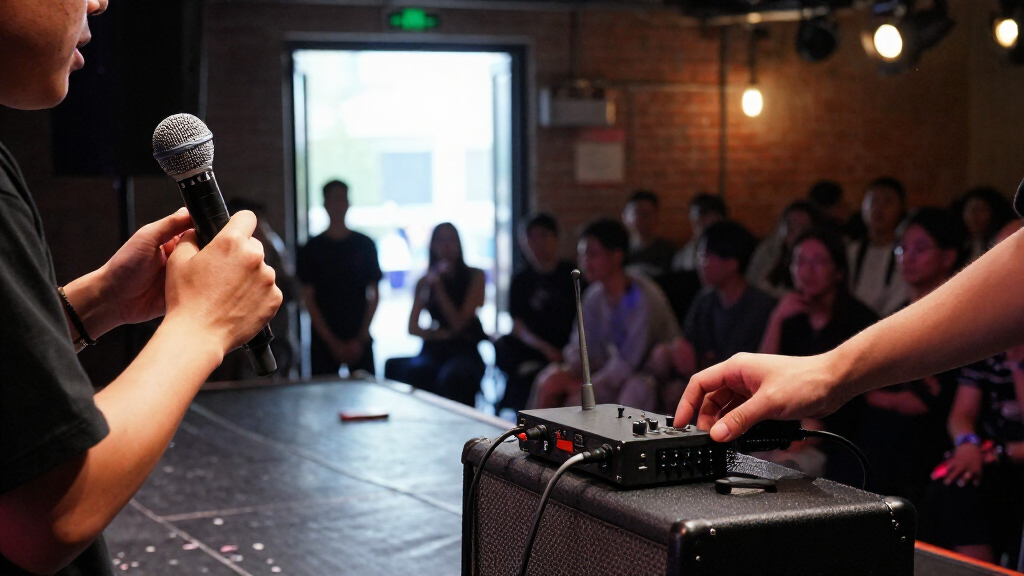
The best wireless microphone system for most multi-speaker events is the Phenyx Pro PTU-5000-4H, with four handheld microphones and a receiver built for managing several voices at once. For a mix of singers and presenters, the TONOR system with handheld, headset, and lavalier mics offers more wearing options, while the JBL PartyBox Wireless Microphone Set suits straightforward use with a compatible PartyBox speaker. The main tradeoffs are how many people need to speak, whether they need handheld or hands-free mics, and how much setup and frequency coordination the venue demands. More channels can serve larger groups, but they also bring more transmitters to manage. Read on for the full breakdown and help matching a system to your space and performers.

Get audio and creator gear delivered free with Prime
- Fast, free delivery on millions of items
- Prime Video, Amazon Music and more included
- Member-only deals all year
Complete the kit



Key Takeaways
- Four handheld channels make the PTU-5000-4H the clearest all-round fit in this lineup for events with several speakers who prefer to pass a microphone.
- Mic format matters as much as channel count: TONOR’s mixed handheld, headset, and lavalier setup suits presenters who need hands-free options better than a handheld-only kit.
- Eight-channel systems target larger groups, not every buyer: the TONOR TW388 and Phenyx Pro PTU-4000-8H and PTU-6000-8H offer room to grow, but require more planning and transmitter management.
- JBL’s two-microphone systems favor simple pairing with compatible JBL gear, while multi-channel UHF kits offer a better fit for broader event and PA setups.
- The JOYO MW-2 is a different kind of solution: its 2.4GHz XLR design is compact, but it does not replace a multi-mic receiver system for several performers.
| Phenyx Pro PTU-5000-4H 4-Channel UHF Wireless Microphone System with 4 Handheld Microphones |  | Best for Four-Handheld Group Vocals | Microphones: 4 handheld dynamic microphones | Wireless technology: UHF | Channels: 4 | VIEW LATEST PRICE | See Our Full Breakdown |
| TONOR Wireless Microphone System with Handheld, Headset, and Lavalier Mics |  | Best for Mixed Microphone Styles | Microphones and transmitters: 2 handheld microphones and 2 bodypacks | Wearable microphones: 2 headset microphones and 2 lavalier microphones | Wireless technology: UHF | VIEW LATEST PRICE | See Our Full Breakdown |
| TONOR TW360 UHF Wireless Microphone System | 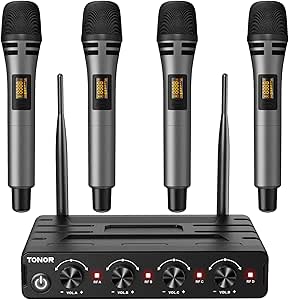 | Best for Frequency Flexibility on a Budget Setup | Microphone form factor: Handheld | Wireless technology: UHF | Channels: 40 selectable channels (4 × 10) | VIEW LATEST PRICE | See Our Full Breakdown |
| Phenyx Pro PTU-52-2H Dual UHF Wireless Microphone System |  | Best Dual-Mic Pick for XLR and 1/4-Inch Setups | Microphones: 2 metal handheld microphones | Wireless technology: UHF | Frequency range: 500–590 MHz | VIEW LATEST PRICE | See Our Full Breakdown |
| Aveek 4-Microphone Wireless System with 262 ft Range |  | Best Rechargeable Four-Mic System | Microphones: 4 handheld dynamic microphones | Wireless technology: UHF | Channels: 4 | VIEW LATEST PRICE | See Our Full Breakdown |
| TONOR UHF Wireless Microphone System with 4 Bodypacks, Headset and Lavalier Mics, 200 ft Range |  | Best for Four-Person Presentations | Wireless format: UHF | Bodypacks: 4 | Channels per bodypack: 10 | VIEW LATEST PRICE | See Our Full Breakdown |
| JBL PartyBox Wireless Microphone Set, 2 Digital Wireless Microphones |  | Best Rechargeable Pair for PartyBox Speakers | Microphones: 2 handheld microphones | Wireless connection: 2.4 GHz digital connection with dongle | Stated range: Up to 30 meters | VIEW LATEST PRICE | See Our Full Breakdown |
| TONOR TW388 8-Channel UHF Wireless Microphone System with Headset and Lavalier Mics |  | Best for Large Groups | Wireless format: UHF | Channels and bodypacks: 8 | Stated range: Up to 295 ft (90 m) | VIEW LATEST PRICE | See Our Full Breakdown |
| MELONARE MWM-41-4B 4-Channel UHF Wireless Microphone System |  | Best for Ready-to-Run Four-Person Setups | Wireless format: UHF | Channels and bodypacks: 4 | Microphone sets: 4 headset/lavalier combos | VIEW LATEST PRICE | See Our Full Breakdown |
| JBL Wireless Two-Microphone System with Dual-Channel Receiver, Black |  | Best Simple Two-Mic System for Select PartyBox Speakers | Microphones: 2 wireless microphones | Receiver: Rechargeable dual-channel UHF receiver | Microphone batteries: Replaceable AA batteries | VIEW LATEST PRICE | See Our Full Breakdown |
| Phenyx Pro PTU-7000-4H 4-Channel UHF Wireless Microphone System |  | Best Four-Channel System for Flexible Mixing | Channels: 4 | Selectable frequencies: 40 per channel; 160 total | Frequency range: 530–580 MHz | VIEW LATEST PRICE | See Our Full Breakdown |
| Phenyx Pro PTU-71-2H Dual UHF Wireless Handheld Microphone System |  | Best for Two-Person Vocal Setups | Channels: 2 | Selectable frequencies: 100 per channel | Channel 1 frequency range: 536.57–561.32 MHz | VIEW LATEST PRICE | See Our Full Breakdown |
| Phenyx Pro PTU-4000-8H 8-Channel UHF Wireless Microphone System |  | Best for Eight-Microphone Simplicity | Channels: 8 | Wireless technology: UHF, fixed frequency | Frequency range: 530–930 MHz | VIEW LATEST PRICE | See Our Full Breakdown |
| JOYO MW-2 2.4GHz Wireless XLR Microphone System |  | Best Compact Wireless XLR Adapter | Wireless frequency: 2.4 GHz | Wireless range: Up to 100 ft in open spaces | Audio resolution: 24-bit/48kHz | VIEW LATEST PRICE | See Our Full Breakdown |
| Phenyx Pro PTU-6000-8H 8-Channel UHF Wireless Microphone System |  | Best Expandable Eight-Channel Pick | Channels: 8 | Selectable frequencies: 40 per channel; 320 total | Frequency range: 530–580 MHz; product data also lists minimum 520.15 MHz and maximum 602.25 MHz | VIEW LATEST PRICE | See Our Full Breakdown |
| wireless microphone system | Channels | Microphones |
|---|---|---|
| Phenyx Pro PTU-5000-4H 4-Chann | 4 | 4 handheld dynamic microphones |
| TONOR Wireless Microphone Syst | 20 | — |
| TONOR TW360 UHF Wireless Micro | 40 selectable channels (4 × 10) | — |
| Phenyx Pro PTU-52-2H Dual UHF | 60 | 2 metal handheld microphones |
| Aveek 4-Microphone Wireless Sy | 4 | 4 handheld dynamic microphones |
| TONOR UHF Wireless Microphone | — | — |
| JBL PartyBox Wireless Micropho | — | 2 handheld microphones |
| TONOR TW388 8-Channel UHF Wire | — | — |
| MELONARE MWM-41-4B 4-Channel U | — | — |
| JBL Wireless Two-Microphone Sy | — | 2 wireless microphones |
| Phenyx Pro PTU-7000-4H 4-Chann | 4 | — |
| Phenyx Pro PTU-71-2H Dual UHF | 2 | 2 handheld dynamic microphones with cardioid pickup |
| Phenyx Pro PTU-4000-8H 8-Chann | 8 | 8 handheld dynamic cardioid microphones |
| JOYO MW-2 2.4GHz Wireless XLR | — | — |
| Phenyx Pro PTU-6000-8H 8-Chann | 8 | 8 handheld dynamic microphones with cardioid pickup |
More Details on Our Top Picks
Phenyx Pro PTU-5000-4H 4-Channel UHF Wireless Microphone System with 4 Handheld Microphones
The PTU-5000-4H suits groups that need four handheld microphones at once, with separate receiver controls that let an operator balance speakers or singers without changing the entire mix. Its four XLR outputs also offer more routing flexibility than the single mixed 1/4-inch output on the dual-channel Phenyx Pro PTU-52-2H. Cardioid pickup is intended to favor each person’s voice over surrounding sound, while the metal receiver gives the system a sturdier footing for regular event setups.
The tradeoff is limited frequency flexibility: this model uses fixed frequencies and is not intended for use alongside multiple systems. Its stated range reaches 260 feet, but a speaker or amplifier is still needed for audio output. I’d choose it over the rechargeable Aveek four-mic system when individual XLR feeds matter more than avoiding disposable batteries.
Pros:- Four handheld microphones support group vocals and panel-style events.
- Four XLR outputs allow separate microphone feeds to compatible equipment.
- Individual volume controls make balancing each microphone more direct.
- Metal receiver enclosure and included setup accessories suit regular event use.
Cons:- Fixed frequencies offer less room to adjust around interference.
- Not intended for operation with multiple systems.
- Requires an amplifier or speaker for sound output.
Best for: Choirs, event hosts, and community groups that need four handheld mics with separate XLR outputs and individual level controls.
Not ideal for: Operators in crowded wireless environments or anyone planning to run several systems together, since the frequencies are fixed and the system is not intended for multi-system operation.
- Microphones:4 handheld dynamic microphones
- Wireless technology:UHF
- Channels:4
- Fixed frequencies:541.9, 546.3, 561.6, and 568.65 MHz
- Stated wireless range:Up to 260 ft
- Pickup pattern:Unidirectional cardioid
- Outputs:4 XLR outputs; 6.35 mm jack
- Receiver features:LCD frequency display, individual volume controls, memory switch
- Power:8 AA batteries included; up to 8 hours
Our verdict“Choose the PTU-5000-4H when four handheld mics and separate XLR feeds matter more than frequency tuning or rechargeable batteries.”
TONOR Wireless Microphone System with Handheld, Headset, and Lavalier Mics
The TONOR TW362 is the flexible pick for events where not everyone should have to hold a microphone. It combines two handheld mics with two bodypacks, plus headset and lavalier options, so a presenter can keep both hands free while other speakers use handhelds. Compared with the handheld-only TONOR TW360, its advantage is wearable mic choice, not a larger handheld lineup. Automatic pairing also makes setup less hands-on for users who want to get connected without selecting a channel themselves.
The system’s stated range is 200 feet, and its 1/4-inch connection works with compatible mixers, karaoke machines, amplifiers, and powered speakers. That connection may require an adapter or different equipment for setups without a matching input. Batteries are not included, and the listed 60 dB signal-to-noise ratio is lower than the 105 dB figure listed for the Phenyx Pro PTU-5000-4H. I’d favor this TONOR when mic form matters more than dedicated XLR outputs.
Pros:- Includes two handheld microphones and two bodypacks with headset and lavalier microphones.
- Automatic pairing reduces setup steps.
- Stated operating range reaches up to 200 ft.
- 1/4-inch connection supports compatible mixers, karaoke machines, amplifiers, and powered speakers.
Cons:- Requires two AA batteries per microphone or bodypack, and batteries are not included.
- Receiver uses a 1/4-inch audio connection, which may not fit every audio setup.
- Listed signal-to-noise ratio is 60 dB.
Best for: Event organizers and presenters who need a mix of handheld and hands-free microphones for speakers, instructors, or performers.
Not ideal for: Buyers who need four handheld microphones, XLR outputs, or a kit that arrives with its required AA batteries.
- Microphones and transmitters:2 handheld microphones and 2 bodypacks
- Wearable microphones:2 headset microphones and 2 lavalier microphones
- Wireless technology:UHF
- Channels:20
- Stated operating range:Up to 200 ft (60 m)
- Pairing:Automatic
- Connection:1/4-inch (6.35 mm) audio cable
- Battery requirement:2 AA batteries per microphone or bodypack; not included
- Signal-to-noise ratio:60 dB
Our verdict“Pick the TONOR TW362 when your event needs both handheld and wearable mic options rather than a set of four handhelds.”
TONOR TW360 UHF Wireless Microphone System
The handheld-only TONOR TW360 makes sense for karaoke, presentations, and small events where two microphones and the ability to change channels are more useful than wearable mic options. Its 40 selectable channels give it more frequency choices than the fixed-frequency Phenyx Pro PTU-5000-4H, which can help when a current channel needs changing. Automatic receiver-to-transmitter syncing cuts down on manual setup, and the cardioid pickup is designed to focus on the main voice rather than surrounding sound.
Both systems list a 200-foot-plus range, but the TW360 is the simpler handheld option—not a substitute for the TONOR TW362 if headset or lavalier microphones are needed. Its receiver connects through a 6.35 mm cable, so check that the sound system has a compatible input. Each microphone needs two AA batteries, and none are included. The ABS enclosure also lacks the stated metal construction of the Phenyx PTU-52-2H.
Pros:- 40 selectable channels offer more frequency options than fixed-frequency systems.
- Automatic syncing simplifies receiver and microphone setup.
- Cardioid pickup is designed to focus on the main sound source.
- Stated wireless range reaches up to 200 ft (60 m).
Cons:- Requires two AA batteries per microphone, and batteries are not included.
- Receiver connects through a 6.35 mm cable rather than XLR outputs.
- ABS enclosure is less substantial than the metal construction listed for the Phenyx Pro PTU-52-2H.
Best for: Karaoke hosts, community presenters, and small event operators who want handheld microphones with selectable channels and compatible 1/4-inch audio equipment.
Not ideal for: Presenters who need headset or lavalier microphones, XLR outputs, or batteries supplied in the box.
- Microphone form factor:Handheld
- Wireless technology:UHF
- Channels:40 selectable channels (4 × 10)
- Stated wireless range:Up to 200 ft (60 m)
- Pickup pattern:Unidirectional cardioid
- Receiver connection:6.35 mm jack
- Battery requirement:2 AA batteries per microphone
- Batteries included:No
- Enclosure material:Acrylonitrile butadiene (ABS)
Our verdict“Choose the TW360 for selectable-channel handheld use with compatible 1/4-inch gear, but skip it if you need wearable mics or XLR routing.”
Phenyx Pro PTU-52-2H Dual UHF Wireless Microphone System
For a two-person setup, the Phenyx Pro PTU-52-2H brings more connection choices than the handheld TONOR TW360: it has two individual XLR outputs plus a mixed 1/4-inch output, making it easier to connect to different compatible audio systems. Its tunable frequency groups and automatic pairing give buyers more room to set up than the fixed-frequency PTU-5000-4H, even though that Phenyx model supports twice as many handheld microphones. Metal microphones and receiver add a more substantial build than the ABS-bodied TONOR option.
The stated 200-foot range applies to open-space line of sight, so walls and other obstructions can affect results. This is a two-mic system, not a group-vocal solution, and it requires four AA batteries. The included batteries help with initial setup, while the 40 Hz–15 kHz frequency response and 98 dB signal-to-noise ratio provide useful reference points for buyers comparing compatible audio equipment.
Pros:- Two XLR outputs and a mixed 1/4-inch output support different compatible audio setups.
- Tunable frequency groups and automatic pairing offer more setup flexibility than fixed-frequency systems.
- Metal receiver and handheld microphones are suited to regular handling.
- Four AA batteries, windscreens, antennas, and connection accessories are included.
Cons:- The stated 200-foot range is for open-space line of sight.
- Two microphones limit its use for larger groups.
- Requires four AA batteries.
Best for: Two-person hosts, instructors, or performers who need metal handheld microphones and a choice of separate XLR or mixed 1/4-inch output.
Not ideal for: Choirs and larger groups needing more than two microphones, or users who need reliable range through walls rather than open-space line of sight.
- Microphones:2 metal handheld microphones
- Wireless technology:UHF
- Frequency range:500–590 MHz
- Tunable frequency groups:30
- Channels:60
- Stated operating range:Up to 200 ft, line of sight
- Pickup pattern:Unidirectional cardioid
- Outputs:2 XLR outputs and 1 mixed 1/4-inch output
- Power:4 AA batteries
Our verdict“Choose the PTU-52-2H for a two-mic setup that needs both individual XLR feeds and a mixed 1/4-inch output.”
Aveek 4-Microphone Wireless System with 262 ft Range
The Aveek four-microphone system stands out for reducing battery upkeep: each handheld mic has a rechargeable battery rated for up to 40 hours and charges by USB-C. That gives it a practical advantage over the Phenyx Pro PTU-5000-4H, which uses eight AA batteries and lists up to eight hours of battery life. Both offer four handheld microphones with cardioid pickup, but the Aveek’s stated range reaches 262 feet and its receiver has a 1/4-inch output for compatible PA systems, mixers, and powered speakers.
The tradeoff is less connection flexibility than the Phenyx, which provides four XLR outputs. Aveek’s receiver randomly assigns a channel when paired, and the system is not compatible with laptops, tablets, cellphones, or AV receivers. Its ABS enclosure is another contrast with the Phenyx metal receiver. I’d select Aveek for rechargeable group use with supported sound equipment, not for a computer-centered recording setup.
Pros:- Four handheld dynamic microphones support group performances.
- Rechargeable microphones are rated for up to 40 hours of use.
- USB-C charging avoids routine AA battery replacement.
- 1/4-inch receiver output connects to compatible PA systems, mixers, and powered speakers.
Cons:- Not compatible with laptops, tablets, cellphones, or AV receivers.
- Receiver randomly assigns a channel when paired with a microphone.
- Provides a 1/4-inch receiver output, while the Phenyx PTU-5000-4H offers four XLR outputs.
Best for: Choirs, karaoke hosts, and event groups who need four handheld mics and prefer USB-C rechargeable batteries over replacing AA cells.
Not ideal for: Computer-based creators or buyers using laptops, tablets, phones, or AV receivers, which are listed as incompatible; also skip it if you need separate XLR feeds.
- Microphones:4 handheld dynamic microphones
- Wireless technology:UHF
- Channels:4
- Stated wireless range:Up to 262 ft
- Pickup pattern:Unidirectional cardioid
- Battery life:Up to 40 hours
- Charging:USB-C
- Receiver output:1/4-inch (6.35 mm)
- Compatibility limitations:Not compatible with laptops, iPads, cellphones, or AV receivers
Our verdict“Pick Aveek for rechargeable four-mic use with compatible PA or mixer equipment, but not for computers or separate XLR routing.”
TONOR UHF Wireless Microphone System with 4 Bodypacks, Headset and Lavalier Mics, 200 ft Range
The TONOR TW364 suits panels, group presentations, and events where four people need hands-free microphones at once. Its four bodypacks come with two headset and two lavalier mics, giving organizers a choice of fit rather than four identical setups. Automatic pairing and a stated 200-foot range keep setup straightforward, though actual coverage can vary with the venue. Compared with the MELONARE MWM-41-4B, this system offers fewer included microphone combinations, but its 10 channels per bodypack provide room to select frequencies. The main tradeoffs are practical: each pack needs two AA batteries that are not included, and the receiver’s 6.35 mm output may call for an adapter with some equipment. It makes more sense for smaller groups than the eight-person TONOR TW388.
Pros:- Four bodypacks support simultaneous use by a small group.
- Includes both headset and lavalier microphones.
- Automatic pairing simplifies initial setup.
- Stated wireless range is up to 200 ft (60 m).
Cons:- Requires eight AA batteries, which are not included.
- Receiver uses a 6.35 mm audio output rather than XLR.
Best for: Presenters, instructors, and small event organizers who need four bodypack users and both headset and lavalier options.
Not ideal for: Groups with more than four speakers, or buyers who need XLR output or rechargeable bodypacks.
- Wireless format:UHF
- Bodypacks:4
- Channels per bodypack:10
- Stated range:Up to 200 ft (60 m)
- Included microphones:2 headset and 2 lavalier microphones
- Receiver output:6.35 mm jack
- Bodypack power:2 AA batteries per bodypack; not included
- Warranty:2 years
Our verdict“Choose the TONOR TW364 for a four-person hands-free setup; pick the TONOR TW388 if your group needs eight transmitters.”
JBL PartyBox Wireless Microphone Set, 2 Digital Wireless Microphones
This JBL PartyBox Wireless Microphone Set is the convenient pick for PartyBox owners who want two handheld mics without managing disposable batteries for the microphones. Its rechargeable design offers up to 20 hours of use, or up to 12 hours with the wireless dongle, and the mics can operate while charging. A cardioid pickup pattern, pop filter, and shock mount are intended to keep vocals clearer and reduce breath and handling noise. Compared with the JBL Wireless Two-Microphone System, this set has a longer stated battery life and a 30-meter wireless range, but it is still designed for JBL PartyBox speakers rather than a broad range of mixers and PA systems. Buyers choosing it for long events should account for the shorter runtime when using the dongle.
Pros:- Two rechargeable handheld microphones can be used while charging.
- Cardioid pickup pattern is suited to focused vocal pickup.
- Pop filter and shock mount help reduce breath and handling noise.
- Stated wireless range is up to 30 meters.
Cons:- Designed for compatibility with JBL PartyBox speakers.
- Battery life falls to up to 12 hours when using the wireless dongle.
Best for: JBL PartyBox owners who want two rechargeable handheld microphones for karaoke, announcements, and casual performances.
Not ideal for: Buyers with non-JBL speakers or PA systems, or users who need a wireless microphone system with broad equipment compatibility.
- Microphones:2 handheld microphones
- Wireless connection:2.4 GHz digital connection with dongle
- Stated range:Up to 30 meters
- Pickup pattern:Unidirectional cardioid
- Battery life:Up to 20 hours; up to 12 hours with wireless dongle
- Charging:Rechargeable; microphones can be used while charging
- Frequency range:50–15,000 Hz
- Compatibility:JBL PartyBox speakers
Our verdict“Pick this set for rechargeable handhelds with a JBL PartyBox; choose the JBL Wireless Two-Microphone System if its specific receiver setup better fits your speaker.”
TONOR TW388 8-Channel UHF Wireless Microphone System with Headset and Lavalier Mics
When eight people need hands-free microphones, the TONOR TW388 offers a more suitable channel count than the four-bodypack TONOR TW364. It includes eight bodypacks, plus eight headset and eight lavalier mics, so users can choose a wearing style without sharing a single mic. Its stated range reaches 295 feet, and the receiver has four antennas, frequency memory, and a display for battery level and frequency. Those features help with managing a larger setup, but they do not remove venue-related limits on wireless coverage. Unlike the MELONARE four-channel option, the TW388 also provides both 6.35 mm and XLR outputs. The cost of that capacity is a larger, more involved system: all eight packs need two AA batteries each, and the batteries are not included.
Pros:- Eight bodypacks support larger multi-speaker setups.
- Includes eight headset microphones and eight lavalier microphones.
- Offers both 6.35 mm and XLR receiver outputs.
- Frequency memory, receiver display, and four antennas aid system management.
Cons:- Each bodypack requires two AA batteries, which are not included.
- The eight-transmitter setup is more equipment to manage than a four-channel system.
- The stated 295 ft range can vary with the operating environment.
Best for: Churches, schools, event teams, and instructors who need up to eight simultaneous bodypack users with headset or lavalier choices.
Not ideal for: Small groups that need only a few microphones, or buyers who want rechargeable transmitters and a compact receiver.
- Wireless format:UHF
- Channels and bodypacks:8
- Stated range:Up to 295 ft (90 m)
- Included microphones:8 headset and 8 lavalier microphones
- Receiver outputs:6.35 mm jack and XLR
- Receiver antennas:4
- Bodypack power:2 AA batteries per transmitter; not included
- Capsule and pickup pattern:Cardioid dynamic; unidirectional
Our verdict“Choose the TW388 when eight hands-free channels and XLR output matter more than compact size or battery convenience.”
MELONARE MWM-41-4B 4-Channel UHF Wireless Microphone System
The MELONARE MWM-41-4B is a practical four-person option for buyers who want a complete set of wearable mics and batteries in the box. Each bodypack has a headset/lavalier combo, while color-coded transmitters and mute buttons can help participants identify and manage their own packs. Frequency hopping and four groups of selectable frequencies offer tools for handling interference, although results still depend on the venue. Compared with the TONOR TW364, MELONARE includes four microphone combos rather than two headsets and two lavaliers, and it supplies eight AA batteries. Both systems use a 6.35 mm receiver connection and have a stated range of 200 feet. The MELONARE’s tradeoff is that it still relies on disposable batteries, and its receiver may need an adapter for other input types.
Pros:- Four bodypacks each come with a headset/lavalier microphone combo.
- Eight AA batteries are included.
- Frequency hopping and multiple frequency groups provide frequency-management options.
- Color-coded bodypacks and mute buttons support easier group operation.
Cons:- Transmitters still rely on AA batteries rather than rechargeable packs.
- Receiver uses a 6.35 mm jack, which may require an adapter for other inputs.
Best for: Churches, event hosts, and karaoke organizers who need four wearable mic sets and prefer batteries included for initial setup.
Not ideal for: Buyers needing XLR output, rechargeable bodypacks, or more than four simultaneous microphone channels.
- Wireless format:UHF
- Channels and bodypacks:4
- Microphone sets:4 headset/lavalier combos
- Sampling rate:24-bit/48 kHz
- Stated range:Up to 200 ft
- Frequency groups:4 groups of 10 frequencies
- Receiver connector:6.35 mm jack
- Batteries:8 AA batteries included
Our verdict“Choose MELONARE over the TONOR TW364 if you want four complete mic combos and included batteries for a four-person setup.”
JBL Wireless Two-Microphone System with Dual-Channel Receiver, Black
The JBL Wireless Two-Microphone System keeps a two-person setup simple: turn on the microphones and receiver, then send both voices through a compatible speaker. Its dual-channel receiver is built to handle two microphones together, making this a better fit for duets and shared announcements than a single-transmitter setup. Compared with the rechargeable JBL PartyBox Wireless Microphone Set, this model uses replaceable AA batteries in its microphones and provides up to six hours of playback. That means battery swaps are possible, but users must keep spares on hand. Compatibility is the bigger limitation: it works with select JBL PartyBox speakers, not as a general-purpose system for every mixer or PA. For buyers outside that JBL setup, the TONOR TW364 offers a broader range of compatible equipment.
Pros:- Dual-channel receiver supports two microphones at once.
- Plug-and-play setup keeps operation straightforward.
- Replaceable AA microphone batteries allow battery swaps.
- Designed to mix both voices through a compatible speaker.
Cons:- Compatibility is limited to select JBL PartyBox speakers.
- Playback time is up to six hours.
- Microphones need replaceable AA batteries while the receiver is rechargeable.
Best for: Owners of select JBL PartyBox speakers who want a straightforward two-microphone setup for duets, karaoke, or announcements.
Not ideal for: Users with non-compatible speakers, mixers, or PA systems, and performers who need longer runtime or more than two microphones.
- Microphones:2 wireless microphones
- Receiver:Rechargeable dual-channel UHF receiver
- Microphone batteries:Replaceable AA batteries
- Playback time:Up to 6 hours
- Frequency range:65–15,000 Hz
- Pickup pattern:Unidirectional
- Connectivity:Wireless; USB
- Compatibility:Select JBL PartyBox speakers
Our verdict“Choose this system for simple two-mic use with a compatible JBL PartyBox; pick the TONOR TW364 for broader speaker and mixer compatibility.”
Phenyx Pro PTU-7000-4H 4-Channel UHF Wireless Microphone System
The PTU-7000-4H is a strong fit when four speakers need separate control at the mixer. Its four individual XLR outputs let an operator adjust each microphone independently, while the mixed 1/4-inch output provides a simpler connection for basic PA setups. Auto Scan and IR Sync ease frequency setup, and 40 selectable frequencies per channel give more adjustment options than the fixed-frequency PTU-4000-8H. The tradeoff is capacity: the PTU-4000-8H serves twice as many microphones, though it offers less frequency flexibility. The PTU-7000-4H’s listed 328-foot range is line-of-sight, so walls and competing wireless gear can reduce practical coverage. Its metal receiver and included batteries make it event-ready, but coordinating frequencies still matters when multiple systems share a venue.
Pros:- Four independent XLR outputs allow separate channel processing at a mixer.
- Auto Scan, IR Sync, and 40 selectable frequencies per channel simplify setup and frequency changes.
- Mixed 1/4-inch output supports simpler PA connections.
- Metal receiver, mute controls, and included AA batteries suit regular event use.
Cons:- The stated range of up to 328 feet applies to line-of-sight conditions.
- Frequency coordination is needed when using multiple compatible systems nearby.
- Four channels may be limiting for larger groups compared with the eight-channel PTU-6000-8H.
Best for: Small venues, houses of worship, and event operators who need four handheld microphones with separate mixer control.
Not ideal for: Large events needing eight microphones from one receiver, or setups where the operating area is obstructed and the stated line-of-sight range is not practical.
- Channels:4
- Selectable frequencies:40 per channel; 160 total
- Frequency range:530–580 MHz
- Operating range:Up to 328 ft line of sight
- Microphone type:Handheld dynamic, unidirectional cardioid
- Outputs:4 XLR outputs and 1/4-inch mixed output
- Signal-to-noise ratio:98 dB
- Power and battery life:8 included AA batteries; up to 16 hours
- Receiver material:Metal
Our verdict“Choose the PTU-7000-4H if four speakers need separately routed audio and adjustable UHF frequencies without moving up to an eight-microphone system.”
Phenyx Pro PTU-71-2H Dual UHF Wireless Handheld Microphone System
For a host and guest, duet, or two-person presentation, the PTU-71-2H supplies two handhelds without the extra channels of the PTU-7000-4H. One-touch scanning, IR synchronization, and 100 selectable frequencies per channel make frequency management more adjustable than the fixed-frequency PTU-4000-8H, while its cardioid pickup is aimed at focused vocals. Frequency lock and mute controls add useful safeguards during an event. The metal construction and replaceable microphone heads also make this a more serviceable choice than a compact plug-on option such as the JOYO MW-2, which is designed to make an existing XLR microphone wireless rather than supply two handhelds. The stated range reaches 328 feet only in line of sight, and the listed channel frequency ranges do not fully match the overall range stated in the product data.
Pros:- One-touch scanning, IR synchronization, and frequency lock support easier setup and channel management.
- 100 selectable frequencies per channel offer flexibility for finding a usable frequency.
- Cardioid handheld microphones are suited to focused speech and vocals.
- Metal construction, mute controls, and replaceable microphone heads support ongoing use.
Cons:- The stated 328-foot range is for line-of-sight operation and can be reduced by obstacles or interference.
- The listed channel frequency ranges do not fully align with the overall frequency range in the specifications.
- Two channels offer less room to expand than the four-channel PTU-7000-4H.
Best for: Duos, interviewers, small presenters, and venues that need two handheld microphones with straightforward frequency scanning.
Not ideal for: Groups needing more than two microphones, or buyers who need clearly consistent frequency-range documentation before coordinating several systems.
- Channels:2
- Selectable frequencies:100 per channel
- Channel 1 frequency range:536.57–561.32 MHz
- Channel 2 frequency range:562.37–587.12 MHz
- Operating range:Up to 328 ft line of sight
- Microphones:2 handheld dynamic microphones with cardioid pickup
- Signal-to-noise ratio:98 dB
- Impedance:200 ohms
- Batteries included:4 AA batteries listed in box contents
Our verdict“Pick the PTU-71-2H for two-person speech or singing when scanning and channel controls matter more than room to add several microphones.”
Phenyx Pro PTU-4000-8H 8-Channel UHF Wireless Microphone System
The PTU-4000-8H prioritizes microphone count over frequency adjustment: one receiver handles eight handhelds, with individual volume controls and eight XLR outputs for routing each voice separately. That makes it a practical fit for panels, group events, or installations where the microphone lineup is established in advance. Compared with the PTU-6000-8H, it uses fixed frequencies rather than Auto Scan and selectable channels, so it is less adaptable when venue conditions change. Its stated range is also shorter, at up to 260 feet. The metal receiver and included AA batteries reduce some setup work, but this system still needs an amplifier or powered speaker for sound. Because it is not intended for multi-set operation, it is a less suitable choice for venues planning to add matching receivers later.
Pros:- Eight handheld microphones cover large panels and group events from one receiver.
- Eight XLR outputs allow separate routing for each microphone.
- Individual volume controls and an LCD display aid receiver-side operation.
- Metal receiver and 16 included AA batteries support a ready-to-configure setup.
Cons:- Fixed-frequency operation offers less flexibility than the selectable-frequency PTU-6000-8H.
- The system is not intended for use with multiple sets.
- An amplifier or speaker is required for sound output, and stated range is up to 260 feet.
Best for: Venues and event teams that regularly need eight handheld microphones, individual XLR feeds, and a set-and-leave frequency configuration.
Not ideal for: Operators who need to adjust frequencies around interference, plan to run multiple systems, or expect the receiver to power speakers directly.
- Channels:8
- Wireless technology:UHF, fixed frequency
- Frequency range:530–930 MHz
- Maximum stated range:Up to 260 ft
- Microphones:8 handheld dynamic cardioid microphones
- Receiver outputs:8 XLR outputs
- Signal-to-noise ratio:105 dB
- Microphone frequency response:50 Hz–18 kHz
- Power and battery life:16 included AA batteries; up to 8 hours
Our verdict“Choose the PTU-4000-8H when eight microphones and individual XLR feeds matter more than frequency changes or future multi-set expansion.”
JOYO MW-2 2.4GHz Wireless XLR Microphone System
Unlike the Phenyx Pro systems, the JOYO MW-2 does not include handheld microphones: its plug-on transmitter and receiver turn a compatible wired XLR microphone into a wireless setup. That makes it the more portable route for performers who already own a dynamic mic, and its 24-bit/48kHz audio and automatic pairing keep the connection simple. It supports up to four systems, with frequency hopping intended to help manage shared use. The compromise is range and compatibility: its open-space limit is 100 feet, well below the stated reach of the PTU-71-2H or PTU-7000-4H. Dynamic microphones are its best match; condenser support is limited to models requiring up to 24V phantom power, and noise performance may vary. Its rechargeable battery also calls for a charging routine that AA-powered systems avoid.
Pros:- Plug-on transmitter and receiver make an existing XLR microphone wireless without replacing it.
- Automatic pairing and support for up to four systems simplify compact multi-mic setups.
- 24-bit/48kHz audio supports a high-resolution signal path.
- Rechargeable batteries have LED indicators and a stated 6–8-hour runtime.
Cons:- The stated range is up to 100 feet in open spaces, shorter than the Phenyx UHF systems listed here.
- It is optimized for dynamic microphones; some condenser microphones may produce noise.
- Powering the transmitter or receiver on and off can cause loud pops unless the mixer is muted or lowered.
Best for: Performers and presenters who already own an XLR dynamic microphone and want a compact wireless link for a PA, mixer, interface, or camera.
Not ideal for: Buyers who need microphones included, need more than 100 feet of stated open-space range, or rely on condenser microphones with higher phantom-power needs.
- Wireless frequency:2.4 GHz
- Wireless range:Up to 100 ft in open spaces
- Audio resolution:24-bit/48kHz
- Systems supported:Up to 4
- Microphone compatibility:Dynamic microphones; condenser microphones requiring up to 24V phantom power
- Battery life:6–8 hours
- Charging time:2 hours
- Connectors:XLR and USB Type-C
- Housing material:ABS engineering plastic
Our verdict“Choose the MW-2 if keeping your existing XLR microphone is the priority and its 100-foot open-space range and mic compatibility suit your setup.”
Phenyx Pro PTU-6000-8H 8-Channel UHF Wireless Microphone System
The PTU-6000-8H combines eight handheld channels with Auto Scan and IR Sync, giving event operators more frequency-management options than the fixed-frequency PTU-4000-8H. Its 40 selectable frequencies per channel can help when a venue’s RF conditions call for adjustment, while cardioid pickup and mute controls suit speech-heavy events. The stated range reaches 328 feet line of sight, longer than the PTU-4000-8H’s 260-foot rating, though real coverage depends on the venue. This added flexibility comes with setup work: eight channels still need sensible frequency coordination, and the system uses 16 AA batteries. The product data lists both 530–580 MHz and broader minimum and maximum frequency values, so buyers managing regulated or crowded RF environments should verify the usable band for their location before purchase.
Pros:- Eight handheld microphones support large groups from one receiver.
- Auto Scan, IR Sync, and 40 selectable frequencies per channel offer more adjustment than the fixed-frequency PTU-4000-8H.
- Cardioid pickup, mute controls, and anti-rolling rings suit speech and live event handling.
- Metal receiver and stated battery life of up to 16 hours support extended events.
Cons:- Eight channels require frequency coordination, particularly in venues with other wireless equipment.
- The system uses 16 AA batteries, adding battery management for a full set of microphones.
- Frequency-range figures in the supplied product data are inconsistent and should be checked for the intended region.
Best for: Event crews, schools, and houses of worship that need eight handheld microphones plus selectable frequencies for adapting to different venues.
Not ideal for: Buyers seeking a minimal setup, rechargeable microphones, or a system whose listed frequency limits are unambiguous for their local RF requirements.
- Channels:8
- Selectable frequencies:40 per channel; 320 total
- Frequency range:530–580 MHz; product data also lists minimum 520.15 MHz and maximum 602.25 MHz
- Operating range:Up to 328 ft line of sight
- Microphones:8 handheld dynamic microphones with cardioid pickup
- Signal-to-noise ratio:98 dB
- Connectors:6.35 mm jack and XLR
- Power and battery life:16 included AA batteries; up to 16 hours
- Receiver enclosure:Metal
Our verdict“Pick the PTU-6000-8H over the PTU-4000-8H when eight microphones are needed and adjustable UHF frequencies are worth the added coordination.”
How We Picked
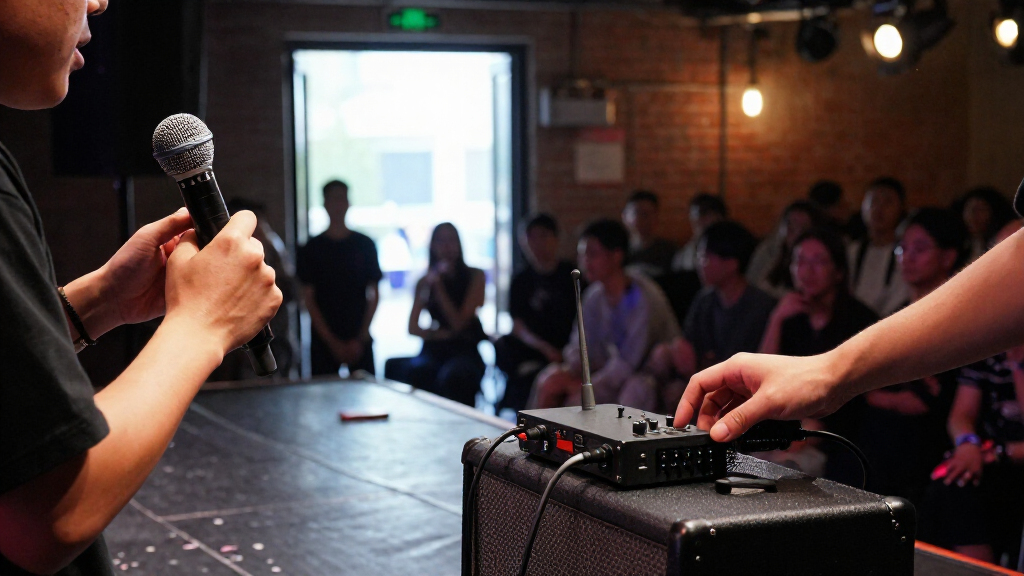
I ranked these systems by how well their channel count and microphone formats match common real-world jobs, from a two-person presentation to a larger group event. I weighed usability, receiver and transmitter setup, stated range where provided, connection fit, and the flexibility to accommodate handheld, headset, or lavalier use. I also treated compactness and simplicity as advantages only when they fit the intended job; a small two-mic system should not outrank a multi-channel kit for a stage with several speakers.
The order favors systems with a clear, useful balance of capacity and versatility, then separates specialist options by the buyers they serve. A higher channel count is not an automatic win: frequency coordination, the number of transmitters to manage, and compatibility with the sound system can matter more than unused channels. Because specifications and included accessories vary, I frame each recommendation around its stated configuration and intended use rather than assuming every system suits every venue.
Factors to Consider When Choosing Wireless Microphone Systems
Before choosing among these wireless microphone systems, match the system to the actual event workflow, not just the largest number on the box. The questions below help identify capacity, mic style, signal needs, and setup demands that can affect performance after purchase.
How Many People Need to Use Microphones at Once?
Count simultaneous speakers, not the total number of people who might speak during an event. A two-channel receiver can cover a host and guest, while four channels make handoffs easier when several people share a stage. Eight channels can make sense for ensembles, panels, or venues that regularly host larger groups, but each additional transmitter adds batteries, setup steps, and opportunities for user error. Buying more channels than you need may leave you paying in complexity without improving a small meeting. If your event size changes often, decide whether you can add compatible transmitters later before treating a larger system as a flexible upgrade.
Choose the Microphone Style for the Job
Handheld microphones suit singers, announcements, and speakers who are comfortable holding a mic and passing it between users. Headsets and lavaliers keep hands free, which helps instructors, presenters, and performers who move around, but they need careful placement and can pick up clothing noise or breath if worn poorly. A mixed-format kit can cover several types of event, though the included transmitters and microphones may not be interchangeable across systems. A common mistake is choosing the most convenient form factor without considering who will wear it and how quickly it must be fitted. For shared events, simple handhelds may be easier to distribute than bodypacks that require individual adjustment.
Match the Wireless Band and Venue
UHF systems and 2.4GHz systems operate in different parts of the radio spectrum, and neither is automatically right for every room. UHF kits are common in multi-channel event setups, but the usable frequencies and local radio conditions affect which channels are available. A 2.4GHz unit such as the JOYO MW-2 offers a compact alternative, but that design should be judged against the specific receiver, XLR connection, and wireless conditions of your setup. Nearby wireless networks and other devices can affect crowded 2.4GHz environments. Check the frequency information and local requirements for your region, and plan a sound check in the actual venue rather than relying on an advertised range alone.
Treat Range Claims as a Starting Point
Published range figures are measured under particular conditions and may not reflect a room filled with people, walls, or competing radio signals. A long straight-line range is less useful if the receiver is hidden in a rack or placed behind metal equipment. Put the receiver where its antennas have a clear path to the transmitters, and test the farthest point a performer will reach. Do not buy solely on the largest stated distance; confirm that the system’s practical coverage suits the venue layout. For a fixed small room, reliable placement and a clean signal path can matter more than extra range on paper.
Check Receiver Connections and Sound-System Compatibility
Before buying, confirm that the receiver can connect to the mixer, powered speaker, or PA you actually own. Output types, cable needs, and the number of available inputs can determine whether a multi-mic system works smoothly with your existing gear. A receiver with several channels still needs an appropriate route for each signal if you want independent control at the mixer. JBL’s PartyBox set is aimed at a more specific speaker pairing, while broader UHF kits are usually chosen for event sound systems. Verify what cables are included and whether your setup needs separate channel controls, rather than assuming the receiver’s channel count guarantees an easy connection.
Plan for Batteries, Setup, and Future Use
Wireless systems shift some work away from cables but add battery checks, frequency setup, storage, and transmitter handling. For occasional use, prioritize straightforward controls and a small number of transmitters; for regular events, assess how easily you can label, charge, and maintain the full kit. Keep spare batteries available and establish a routine for checking every mic before an event. If you expect to expand, confirm that additional transmitters are supported and compatible instead of assuming another unit from the same brand will pair. Paying more or choosing a larger system makes sense when it solves a recurring need, not simply because the package includes more hardware.
Frequently Asked Questions
Should I choose a four-channel or eight-channel wireless microphone system?
Choose four channels if your usual event has a small group of speakers or performers and you want simpler setup. Eight channels are useful when several people need separate microphones at the same time, or when your venue regularly hosts varied group sizes. The larger system also means more transmitters to prepare, monitor, and keep supplied with batteries. Think about simultaneous use rather than the number of people in the room. If you rarely need more than four mics, a smaller system may be easier to operate well.
Are headset and lavalier microphones better than handheld microphones for presentations?
They are better for presenters who need both hands free, demonstrate something, or move around while speaking. A handheld mic is often simpler to share and reposition, which can suit panels, announcements, and occasional speeches. Headsets and lavaliers require a bodypack and a good fit, and clothing contact or poor placement can affect sound. Consider how many different people will use the system and whether they can adjust a wearable mic correctly. A mixed kit makes sense when the event genuinely calls for both styles.
Can I use a wireless microphone system with a portable or powered speaker?
Often, but you need to check the receiver’s outputs against the speaker’s available inputs. Some systems are designed to feed a mixer or PA, while a speaker-focused set may be intended for a particular product family. You may need an additional cable, and a receiver with multiple channels does not always give you separate control through a speaker with one input. Confirm the connection type and how many microphone signals the speaker can accept at once. Test the complete signal path before relying on it for an event.
Does a longer advertised wireless range mean fewer dropouts?
No. Range figures describe performance under specific conditions and do not account for every room, obstruction, or source of radio interference. Receiver placement, antenna visibility, walls, and the number of wireless devices nearby can all affect the signal. A system with a more modest stated range can work well in a clear, appropriately sized venue, while a longer-range model can struggle if its receiver is blocked. Test at the edges of your performance area and keep the receiver in an open location. Choose based on the venue you use, not the largest number in a specification.
Is the JOYO MW-2 a replacement for a multi-channel UHF system?
Not for a group that needs several microphones operating through a shared multi-channel receiver. The JOYO MW-2 is a compact 2.4GHz wireless XLR option, so its appeal is a simpler, more focused connection rather than a large channel count. It may fit a compatible setup where a single wireless microphone connection is the priority. Multi-mic UHF systems are more appropriate when several speakers need independent transmitters at once. Check the XLR connection, frequency environment, and number of simultaneous users before choosing between them.
Conclusion
For the strongest all-round balance of capacity and straightforward handheld use, I recommend the Phenyx Pro PTU-5000-4H as best overall. The TONOR TW360 is my best value direction for buyers who want a more focused UHF system without jumping straight to an eight-channel setup, while the Phenyx Pro PTU-6000-8H is the best premium-style fit here for buyers who need eight channels and are prepared to manage a larger rig. Beginners should look at the JBL PartyBox Wireless Microphone Set if they already use a compatible PartyBox and want a simple two-mic arrangement. For hands-free presenters, choose a TONOR mixed-format system; for a compact single-mic XLR application, the JOYO MW-2 is the more targeted option. The right pick is the one that matches your actual number of simultaneous users, mic style, and sound-system connections.