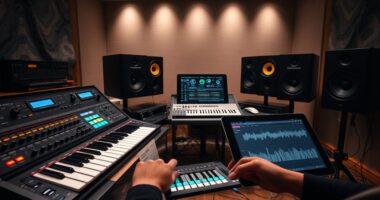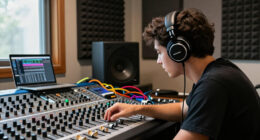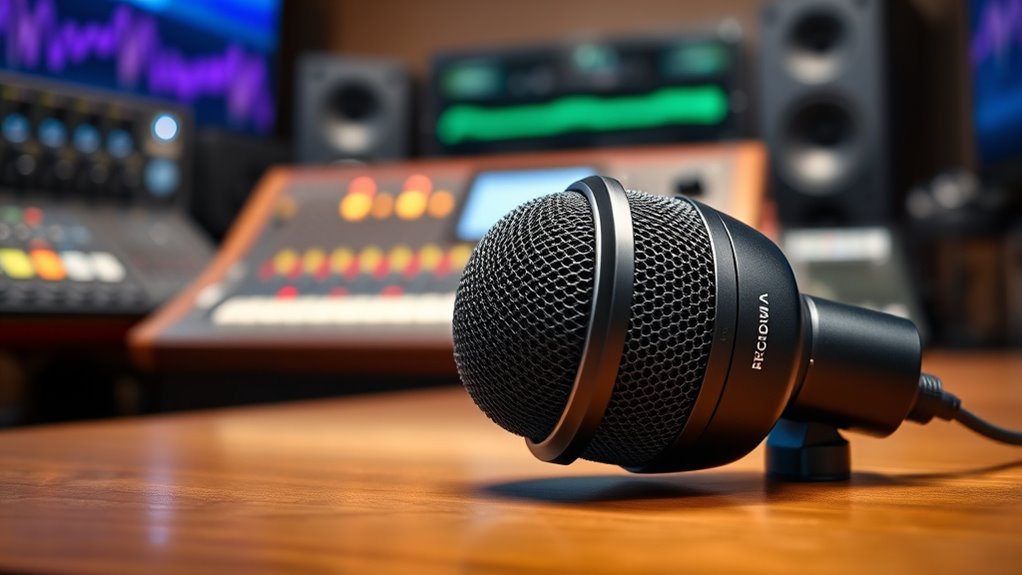

When it comes to achieving accurate studio monitoring, a reliable calibration mic is essential. The Earthworks M30 stands out as the overall best choice for its wide frequency response and high precision, ideal for professional setups. The Neumann MA 1 offers seamless integration with calibration systems, making it a top pick for those needing a complete solution. Meanwhile, the miniDSP UMIK-1 provides excellent value for newcomers thanks to its affordability and ease of use. Buyers often face a tradeoff between precision, ease of setup, and budget—this guide breaks down the key differences. Continue reading to find the perfect calibration mic for your studio setup.

Get audio and creator gear delivered free with Prime
- Fast, free delivery on millions of items
- Prime Video, Amazon Music and more included
- Member-only deals all year
Complete the kit

Key Takeaways
- The most accurate calibration results come from microphones with flat, wide frequency responses like the Earthworks M30 and M50.
- Integration with calibration software varies; some mics like the Neumann MA 1 are designed for seamless setup, saving time and reducing errors.
- Budget-friendly options like the miniDSP UMIK-1 deliver solid performance but may lack some advanced features of premium models.
- Room correction tools like IK Multimedia ARC X complement calibration mics, especially for complex acoustic environments.
- Choosing the right calibration mic depends heavily on your studio’s complexity, your experience level, and your budget constraints.
| Earthworks M30 30kHz Omnidirectional Measurement Microphone |  | Best for High-Resolution Measurement and Precise Frequency Response | Frequency Response: Up to 30kHz | Polar Pattern: Omnidirectional | Application: Measurement microphone | VIEW ON AMAZON | See Our Full Breakdown |
| Neumann MA 1 Monitor Alignment Microphone and Calibration System |  | Best for Automated Monitor Calibration for KH DSP Speakers | Compatibility: macOS, Windows | Includes: Calibration software, measurement microphone | VIEW ON AMAZON | See Our Full Breakdown | |
| miniDSP UMIK-1 Calibrated Measurement Microphone |  | Best for Versatile Audio System Tuning and Easy Setup | Calibration: Unique calibration file for each device | Compatibility: Windows, Mac, Linux, iOS | Included Accessories: Mini tripod, USB cable, windscreen, padded box | VIEW ON AMAZON | See Our Full Breakdown |
| Sonarworks SoundID Reference for Speakers & Headphones with Measurement Microphone |  | Best for Comprehensive Sound Calibration Across Devices | Filter Modes: Zero latency, mixed, linear phase | Includes: Measurement Microphone | Platform Compatibility: Windows 8+, macOS 10.12+ | VIEW ON AMAZON | See Our Full Breakdown |
| Dayton Audio EMM-6 Precision Omnidirectional Electret Condenser Microphone |  | Best for Professional Room Analysis and Acoustic Measurements | Type: Electret Condenser Microphone | Application: Room Acoustic Analyzers, Audio Measurement Systems | Includes: Stand mount, foam windscreen, transport case | VIEW ON AMAZON | See Our Full Breakdown |
| Audix TM1 Plus Omnidirectional Condenser Measurement Microphone for Studio Use |  | Best for Versatile, On-the-Go Calibration | Type: Omnidirectional Condenser Microphone | Application: Studio and live sound calibration | Features: Simultaneous measurements, flexible microphone options | VIEW ON AMAZON | See Our Full Breakdown |
| IK Multimedia ARC X Room Correction, Monitor Calibration & Speaker Emulation |  | Best for Precise Room Correction and Virtual Monitoring | Measurement Microphone: Included | Number of Scan Points: 1, 3, 7, or 21 | Monitor Emulations: Over 20 systems | VIEW ON AMAZON | See Our Full Breakdown |
| Earthworks M50 50kHz Omnidirectional Measurement Microphone |  | Best for High-Resolution, Detailed Measurements | Frequency Response: 3Hz-50kHz | Diaphragm: Small | Body Material: Stainless Steel | VIEW ON AMAZON | See Our Full Breakdown |
More Details on Our Top Picks
Earthworks M30 30kHz Omnidirectional Measurement Microphone
The Earthworks M30 excels in capturing audio across an exceptionally broad spectrum, with a response up to 30kHz, making it ideal for detailed measurement tasks. Compared with the Dayton EMM-6, the M30’s higher frequency response offers finer analysis for professionals needing ultra-high-frequency accuracy. However, this specialization means it’s less suited for general studio calibration or mixing, where more versatile mics are preferred. The included electronic calibration files boost measurement precision but add complexity for those unfamiliar with high-end audio analysis. Its omnidirectional pattern ensures comprehensive sound capture, which is essential for room acoustics and detailed room analysis. The main tradeoff is its cost, which is higher than typical calibration mics, reflecting its professional-grade capabilities.
Pros:- Extremely broad frequency response up to 30kHz for detailed spectral analysis
- Omnidirectional pattern captures sound from all directions, ideal for room measurements
- Includes electronic calibration files for high accuracy
Cons:- Primarily designed for measurement, not for typical studio calibration or recording
- Higher cost may be prohibitive for casual or semi-professional use
Best for: Audio engineers and acousticians requiring detailed room analysis and high-frequency measurements.
Not ideal for: Home studio owners or musicians looking for a general-purpose calibration microphone—its specialization may be overkill.
- Frequency Response:Up to 30kHz
- Polar Pattern:Omnidirectional
- Application:Measurement microphone
- Calibration:Electronic calibration files
Our verdict“This mic is best suited for professionals needing ultra-precise high-frequency measurements and detailed room analysis.”
Neumann MA 1 Monitor Alignment Microphone and Calibration System
The Neumann MA 1 stands out for automating monitor alignment, a process that can be tedious with traditional measurement mics like the miniDSP UMIK-1. Its integrated calibration system ensures your KH DSP speakers are perfectly aligned, which is critical for accurate listening environments. Unlike the UMIK-1, which requires manual setup and software calibration, the MA 1 simplifies the process with a plug-and-play approach, but it is limited to KH DSP equipment, restricting versatility. The included calibration software is user-friendly for those familiar with speaker setup but may seem complex for newcomers. Its main tradeoff is the need for specific hardware compatibility, making it less suitable for general room or studio calibration outside of compatible systems.
Pros:- Automates monitor alignment, saving time and ensuring consistency
- Compatible with macOS and Windows, broad software support
- Includes calibration microphone and software for seamless setup
Cons:- Requires existing KH DSP loudspeakers, limiting flexibility
- Setup can be complex for users unfamiliar with speaker calibration
Best for: Pro audio setups with KH DSP loudspeakers seeking quick, automated monitor calibration.
Not ideal for: Home studios or users with non-KH speakers, as the system is tailored for specific hardware and may not be adaptable.
- Compatibility:macOS, Windows
- Includes:Calibration software, measurement microphone
Our verdict“Ideal for professionals with KH DSP systems who want effortless, reliable monitor alignment without manual measurements.”
miniDSP UMIK-1 Calibrated Measurement Microphone
The miniDSP UMIK-1 is a highly practical choice for those tuning audio systems, with a unique calibration file that ensures accuracy across platforms like Windows, Mac, and Linux. Its plug-and-play design makes it accessible for users who want quick results without complex setup, unlike the Earthworks M30 which is more specialized for high-frequency measurement. While it pairs well with acoustic software for sound correction, it requires external software to fully utilize its capabilities, which can be a hurdle for beginners. Its included accessories, such as a mini tripod and windscreen, add to convenience, but it’s primarily designed for measurement and calibration, not for recording or broad studio use. The main tradeoff is that it doesn’t offer the same high-frequency response as the M30, limiting advanced spectral analysis.
Pros:- Accurate calibration files for reliable measurements
- Plug-and-play setup across multiple platforms
- Includes useful accessories for portable use
Cons:- Requires external software for full functionality
- Limited to measurement applications, not for recording or broad studio use
Best for: Home studio owners and audio enthusiasts who want an easy, accurate measurement mic for system tuning.
Not ideal for: Professionals needing ultra-high-frequency analysis or specialized room acoustics measurements, where the UMIK-1’s capabilities may fall short.
- Calibration:Unique calibration file for each device
- Compatibility:Windows, Mac, Linux, iOS
- Included Accessories:Mini tripod, USB cable, windscreen, padded box
Our verdict“This mic provides a straightforward, accurate solution for system tuning and calibration for home and semi-professional setups.”
Sonarworks SoundID Reference for Speakers & Headphones with Measurement Microphone
Sonarworks SoundID Reference offers a flexible software solution for calibrating both speakers and headphones, standing out with multiple filter modes like zero latency and linear phase. Compared with hardware-focused options like the Earthworks M30, it emphasizes software correction, providing more control over the final sound. Its included measurement microphone simplifies the calibration process, but the platform’s focus on software requires compatible OS versions, limiting use on older systems. While it offers extensive DSP controls, this complexity might overwhelm beginners, making it more suitable for professional studios or seasoned audiophiles. The main tradeoff involves reliance on software, which can introduce latency or compatibility issues on some setups.
Pros:- Offers precise calibration for multiple device types
- Multiple filter modes for tailored sound correction
- Flexible platform options with both plug-in and standalone modes
Cons:- Requires specific OS versions, limiting older system compatibility
- Complex interface may be daunting for novices
Best for: Mixing engineers and audio professionals seeking detailed calibration for both speakers and headphones, with flexible software control.
Not ideal for: Casual hobbyists or users with outdated operating systems, due to compatibility and complexity concerns.
- Filter Modes:Zero latency, mixed, linear phase
- Includes:Measurement Microphone
- Platform Compatibility:Windows 8+, macOS 10.12+
Our verdict“Perfect for professionals aiming for detailed, customizable calibration of their entire audio chain, provided their system is compatible.”
Dayton Audio EMM-6 Precision Omnidirectional Electret Condenser Microphone
The Dayton Audio EMM-6 delivers high-quality, professional-grade measurements for room acoustics, with a rugged build and accessories like a stand mount and foam windscreen. Its low noise FET input minimizes distortion, making it a reliable choice for detailed acoustic analysis, similar in purpose to the Earthworks M30. However, while the EMM-6 excels in professional environments, its feature set and build quality might be excessive for casual users or home studios. Its calibration response graph helps in ensuring measurement accuracy but requires some familiarity with acoustic analysis tools. The main tradeoff is that it’s primarily designed for room and acoustic analysis, rather than direct calibration of monitors, which limits its versatility for general studio calibration needs.
Pros:- High-quality components ensure accurate, detailed measurements
- Includes accessories like stand mount and foam windscreen
- Low noise design reduces measurement distortion
Cons:- Primarily suited for acoustic analysis, not for general calibration tasks
- Overkill for casual or amateur use
Best for: Acoustic engineers and room treatment specialists needing precise room response measurements.
Not ideal for: Musicians or home studio owners seeking a multi-purpose mic for both calibration and recording, due to its specialized design.
- Type:Electret Condenser Microphone
- Application:Room Acoustic Analyzers, Audio Measurement Systems
- Includes:Stand mount, foam windscreen, transport case
- Features:Low noise FET input, calibration response graph
Our verdict“Best for professionals focused on acoustic treatment and detailed room measurements rather than studio monitor calibration alone.”
Audix TM1 Plus Omnidirectional Condenser Measurement Microphone for Studio Use
The Audix TM1 Plus stands out for its portability and ability to deliver accurate calibration in both studio and live environments. Unlike the Earthworks M50, which offers higher frequency response up to 50kHz, the TM1 Plus is more flexible for field use, thanks to its omnidirectional design and simultaneous measurement capabilities. However, it requires additional equipment for calibration setup, making it less of a standalone solution. This mic is ideal for professionals needing quick, reliable measurements across various settings but may be less appealing for those seeking an all-in-one calibration system. Its versatility makes it a strong choice for engineers who frequently calibrate on the move, but it’s less suited for users who want an integrated solution or are new to calibration procedures.
Pros:- Provides accurate calibration for high-quality audio performance
- Allows simultaneous measurements with multiple microphones
- Versatile for studio and mobile use
Cons:- Requires additional calibration equipment for setup
- Designed primarily for professional users, not plug-and-play
Best for: Professional audio engineers who need flexible, portable measurement tools for both studio and live environments
Not ideal for: Beginners or home studio users who lack additional calibration equipment or prefer simpler, integrated solutions
- Type:Omnidirectional Condenser Microphone
- Application:Studio and live sound calibration
- Features:Simultaneous measurements, flexible microphone options
Our verdict“This microphone is best for experienced professionals needing portable, accurate measurement tools across various locations.”
IK Multimedia ARC X Room Correction, Monitor Calibration & Speaker Emulation
The IK Multimedia ARC X offers comprehensive room correction paired with extensive speaker emulation, making it a standout for professional mixing and mastering. Compared to the Earthworks M50, which excels at high-frequency measurement, ARC X provides a complete system for acoustic correction, including real-time and DAW-based adjustments. Its included measurement microphone and multiple scan options make setup efficient, but a steep learning curve and higher price point may deter less experienced users. This pick is ideal for studios seeking detailed acoustic treatment and virtual monitoring, though it might be overkill for casual hobbyists or those with simple setups. The extensive speaker emulation and customizable curves make it a powerful tool for accurate, consistent sound reproduction.
Pros:- Accurate room correction and monitor calibration
- Over 20 speaker emulations for versatile virtual monitoring
- Customizable target curves and phase modes
Cons:- Requires technical expertise for optimal use
- Higher cost may be prohibitive for hobbyists
Best for: Professional mixers and mastering engineers needing precise room correction and speaker emulation
Not ideal for: Home studio owners or beginners who lack technical knowledge or prefer an affordable, straightforward calibration method
- Measurement Microphone:Included
- Number of Scan Points:1, 3, 7, or 21
- Monitor Emulations:Over 20 systems
- Target Curves:Nine professional options
- Phase Mode:Natural and linear
- Compatibility:IK and third-party monitors
Our verdict“This system is ideal for professionals demanding detailed acoustic correction and flexible virtual monitoring capabilities.”
Earthworks M50 50kHz Omnidirectional Measurement Microphone
The Earthworks M50 excels with its ultra-wide frequency response up to 50kHz, making it ideal for detailed measurement applications that demand high fidelity. Unlike the Audix TM1 Plus, which offers good versatility, the M50’s stainless steel body and precise calibration files make it a durable choice for critical measurements, especially at high frequencies. However, it’s primarily designed for technical measurement rather than general recording or simple calibration setups, which could limit its appeal for users seeking a more all-round microphone. This model suits professionals who need the highest possible measurement resolution but may be too specialized for those new to calibration or seeking a straightforward, budget-friendly option.
Pros:- High-frequency response up to 50kHz for detailed analysis
- Stainless steel body provides durability
- Includes electronic calibration files for precise measurements
Cons:- Primarily built for measurement, not recording or general use
- May require calibration expertise for best results
- Limited features beyond measurement capabilities
Best for: Acoustic measurement specialists requiring ultra-high-frequency accuracy and durability
Not ideal for: Home studio users or beginners who want a versatile microphone for general use or simple calibration tasks
- Frequency Response:3Hz-50kHz
- Diaphragm:Small
- Body Material:Stainless Steel
Our verdict“This microphone is best for professionals needing ultra-high-resolution measurements, especially at high frequencies.”
How We Picked
I evaluated these calibration microphones based on their frequency response accuracy, ease of use, compatibility with calibration software, build quality, and value for money. Preference was given to models that deliver professional-level precision while balancing user-friendliness, especially for different experience levels. The ranking also considers how well each mic integrates into broader studio calibration workflows, including room correction systems. Ultimately, I chose products that stand out for their reliability in real-world studio environments, not just technical specs alone.Factors to Consider When Choosing Studio Monitor Calibration Mics
Choosing the right studio monitor calibration mic involves understanding several key factors that impact your calibration accuracy and workflow. The ideal mic should match your studio size, provide precise measurements, and be compatible with calibration software you plan to use. Budget considerations also play a role, especially when balancing performance and cost. This section explores the most important features and common pitfalls so you can make an informed decision tailored to your studio needs.Frequency Response and Measurement Range
Calibration microphones should have a flat and wide frequency response to accurately capture room and speaker characteristics. Mics with limited frequency ranges can introduce inaccuracies, especially in the high or low ends of the spectrum. For professional studios, models like the Earthworks M30 or M50 excel because they capture extended frequencies, ensuring comprehensive room analysis. Cheaper microphones might suffice for basic setups but can compromise calibration quality if their response isn’t flat across the entire audible spectrum.
Software Compatibility and Integration
Some calibration mics are designed to work seamlessly with specific software, reducing setup time and potential errors. For example, the Neumann MA 1 integrates well with certain calibration systems, making it easier for professionals to streamline their workflow. On the other hand, affordable options like the UMIK-1 are compatible with a wide range of free and paid software, making them accessible for beginners. Always verify that your chosen mic supports the calibration software you plan to use to avoid compatibility issues later.
Build Quality and Durability
Since calibration microphones are often used in regular studio sessions, durability matters. A well-constructed mic with solid connectors and a stable mount reduces the risk of damage and ensures consistent measurements over time. Premium models like the Earthworks M50 tend to have robust construction, suitable for frequent use. Cheaper models may be more fragile, so consider your studio environment and handling habits when choosing a mic.
Ease of Use and Setup
Users new to room calibration should prioritize microphones that are straightforward to set up and calibrate. Features like clear documentation, plug-and-play operation, and minimal calibration steps make a difference. The miniDSP UMIK-1 is praised for its simplicity, ideal for those just starting out. More advanced models might require additional calibration procedures or software configurations, which can be daunting for beginners but valuable for experienced engineers seeking precision.
Cost and Value
Pricing varies widely, from affordable entry-level options to high-end professional mics. While investing in a more expensive mic often yields higher accuracy and build quality, it’s important to match your choice to your studio’s needs. For hobbyists or small setups, budget-friendly options like the UMIK-1 provide excellent value. For commercial or critical listening environments, spending more on a premium mic like the Earthworks M30 or M50 can justify the investment through improved calibration precision.
Frequently Asked Questions
Can I use any microphone for monitor calibration?
Not all microphones are suitable for calibration purposes. Calibration mics are designed with flat frequency responses and specific polar patterns to accurately measure room and speaker behavior. Using a standard vocal or dynamic microphone can introduce inaccuracies, leading to flawed room correction and monitoring. Investing in a dedicated calibration microphone ensures your measurements are reliable, making your calibration process more precise and effective.
How often should I calibrate my studio monitors?
Calibration should be performed whenever you make significant changes to your studio setup, such as moving monitors, changing room acoustics, or upgrading equipment. For most users, recalibrating once every few months is sufficient to maintain accuracy. Regular calibration ensures your monitoring remains consistent, especially if your studio environment is prone to changes or if you work in different spaces frequently.
Do I need a room correction system if I have a calibration mic?
While a calibration microphone is essential for measuring your room accurately, a room correction system like IK Multimedia ARC X complements this by applying EQ adjustments based on the measurements. Without room correction, even the best calibration mic can’t fully compensate for acoustic issues. Combining both tools provides a more balanced and accurate listening environment, especially in challenging rooms.
Is a higher-frequency response necessary in a calibration mic?
Yes, a wider frequency response, especially extending into the high frequencies (above 20kHz), allows the mic to capture all relevant acoustic details. This is particularly important for professional audio work where high-frequency accuracy impacts the overall sound quality. Models like the Earthworks M50 with a 50kHz response can provide extra detail, which is beneficial for critical listening and precise room analysis.
What is the main difference between a measurement mic and a regular studio mic?
A measurement mic is specifically designed to provide a flat, neutral frequency response, and stable polar patterns, which are crucial for accurate room and speaker measurements. Regular studio mics are often tailored for vocal or instrument recording, with colorations or tailored responses that can distort measurement accuracy. For calibration purposes, choosing a dedicated measurement mic ensures that your room analysis is based on reliable data, leading to better calibration results.
Conclusion
For those seeking the best overall calibration mic, the Earthworks M30 offers a blend of precision and durability suited for professional studios. Budget-conscious users or beginners will find the miniDSP UMIK-1 to be a smart entry point, combining ease of use with solid performance. For high-end setups demanding the utmost accuracy, the Earthworks M50 and Neumann MA 1 provide advanced features and seamless integration. Small home studios and hobbyists should prioritize affordability and simplicity, while larger, more critical environments justify investing in premium models. Ultimately, your choice should align with your studio size, calibration needs, and budget constraints.
Fall Picks
fall essentials
As an affiliate, we earn on qualifying purchases.