
For most creators, I’d start with the Hollyland Lark M2: its camera and USB-C receiver options make it a flexible choice across common recording setups. The DJI Mic Mini is a strong alternative for creators who want a two-transmitter kit and charging case, while the MAYBESTA Wireless Mini Lavalier suits phone users seeking a simpler plug-in setup. The main tradeoff is between easy phone-only recording and a more adaptable system that can serve cameras, interviews, and multiple speakers. I also weigh receiver compatibility, noise control, battery arrangements, and how much setup each kit asks of a creator. Read on for the full breakdown and a buying guide matched to different recording needs.

Get audio and creator gear delivered free with Prime
- Fast, free delivery on millions of items
- Prime Video, Amazon Music and more included
- Member-only deals all year
Complete the kit


Key Takeaways
- The Hollyland Lark M2 ranks first for flexibility: its listed camera and USB-C receiver options make it a stronger all-around fit than phone-focused plug-in lavaliers.
- The DJI Mic Mini kits stand out for two-person recording: the reviewed configurations include two transmitters, while buyers still need to choose between a charging-case kit and a mobile-receiver version.
- Simple phone recording favors compact plug-in options: MAYBESTA, Mini Mic Pro, and the USB-C active-denoise model emphasize direct mobile use, but their device compatibility should be checked before ordering.
- Several Hollyland listings are variations, not interchangeable picks: Lark M2 and LARK A2 bundles differ in receiver or case configuration, so kit contents matter as much as the product family name.
- Two-mic bundles are not automatically better for solo creators: options from Amazpro, wedaniya, and Labstandard can suit interviews, but a second transmitter adds little value if most recordings feature one speaker.
| MAYBESTA Wireless Mini Lavalier Microphone for iPhone and Android |  | Best for Simple Phone Recording | Microphone type: Mini lavalier | Wireless frequency: 2.4 GHz | Connectors: Lightning and USB Type-C | VIEW LATEST PRICE | See Our Full Breakdown |
| Hollyland Lark M2 Wireless Lavalier Microphone System with Camera and USB-C Receivers |  | Best for Camera-to-Phone Versatility | Connectivity: 2.4 GHz | Connectors: 3.5 mm jack and USB Type-C | Audio format: 48 kHz/24-bit | VIEW LATEST PRICE | See Our Full Breakdown |
| DJI Mic Mini Wireless Microphone Kit (2 Transmitters, 1 Receiver, Charging Case) | 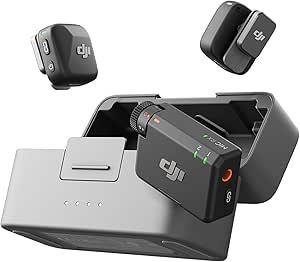 | Best for Long Shoots and Two-Person Content | Included components: 2 transmitters, 1 receiver, charging case, accessories | Transmitter weight: 10 g | Audio sampling rate: 48 kHz | VIEW LATEST PRICE | See Our Full Breakdown |
| Mini Mic Pro – Wireless Lavalier Microphone for iPhone & Android | 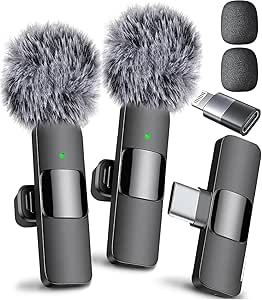 | Best for Lightweight, Accessory-Ready Phone Recording | Connectivity: Wireless | Connectors: Lightning and USB Type-C | Microphone form factor: Mini | VIEW LATEST PRICE | See Our Full Breakdown |
| 2-Pack Wireless Lavalier Lapel Microphones for iPhone, iPad, Android – Plug & Play with Noise Reduction |  | Best Value for Two-Person Phone Content | Wireless connectivity: 2.4 GHz | Connector: USB Type-C with iOS adapter | Microphones: 2, for simultaneous use | VIEW LATEST PRICE | See Our Full Breakdown |
| Hollyland LARK A2 Mini Duo Wireless Microphone (2 Transmitters + 1 Receiver), Noise Cancelling |  | Best for Two-Person Creator Shoots | Wireless connection: 2.4 GHz | Receiver connector: USB Type-C | Microphone type: Omnidirectional lavalier | VIEW LATEST PRICE | See Our Full Breakdown |
| Hollyland Lark M2 Wireless Microphone for iPhone 15/16/17 & Android, USB-C Mini Lapel Mic, 1000 ft Range, Hi-Fi Audio, Noise Cancellation, 30 h Battery | 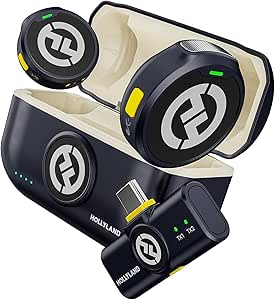 | Best for Long-Range Phone Filming | Wireless range: Up to 1,000 ft line-of-sight | Audio format: 48 kHz / 24-bit | Signal-to-noise ratio: 70 dB | VIEW LATEST PRICE | See Our Full Breakdown |
| Hollyland LARK A2 (2TX+1RX+Charging Case) Wireless Microphone, AI Auto-Limit |  | Best for Creators Who Want Editing Safeguards | Wireless connection: 2.4 GHz | Receiver connector: USB Type-C | Transmitters and receiver: 2 transmitters, 1 receiver | VIEW LATEST PRICE | See Our Full Breakdown |
| Amazpro Dual Wireless Lavalier Microphone for iPhone and Android |  | Best for Simple Two-Person Phone Recording | Microphone type: Dual wireless lavalier | Wireless connection: 2.4 GHz | Connector: USB Type-C | VIEW LATEST PRICE | See Our Full Breakdown |
| Wireless Lavalier Mic for iPhone, Android, PC, Live Stream, Vlog (Black) |  | Best for Multi-Device Starter Kits | Wireless connection: 2.4 GHz digital | Connectors: USB Type-C and Lightning adapters | Wireless range: Up to 20 m | VIEW LATEST PRICE | See Our Full Breakdown |
| DJI Mic Mini Wireless Microphone (2 Transmitters + Mobile Receiver) |  | Best for Two-Person Creator Workflows | Transmitter weight: 10 g each | Maximum transmission range: Up to 300 m | Maximum operating time: Up to 11.5 hours | VIEW LATEST PRICE | See Our Full Breakdown |
| wedaniya Wireless Mini Lavalier Microphone, 2-Pack with USB-C and Lightning Receivers |  | Best for Plug-and-Play Phone Recording | Model: WM189 | Microphone type: Wireless lavalier | Connectivity: Wireless with USB-C and Lightning receivers | VIEW LATEST PRICE | See Our Full Breakdown |
| Mini Mic Pro Wireless Lavalier Microphone with Charging Case |  | Best Compact Kit for Phone Creators | Microphone type: Wireless lavalier | Connectivity: USB-C and Lightning | Compatibility: Android, iPhone, laptop, tablet, and iPad | VIEW LATEST PRICE | See Our Full Breakdown |
| Labstandard Dual Wireless Lavalier Microphone Set for iPhone, iPad, and USB-C Devices |  | Best for Simple Dual-Channel Recording | Microphone type: Mini lavalier | Channels: 2 | Connectivity: Bluetooth | VIEW LATEST PRICE | See Our Full Breakdown |
| USB-C Wireless Lavalier Microphone with Active Denoise – Clip-On Mic for Android, iPhone 15, Tablet & PC |  | Best for Longer USB-C Recording Sessions | Microphone type: Wireless lavalier | Connectivity: Wireless; USB-C with USB-A adapter | Battery: Two 60 mAh lithium-ion batteries | VIEW LATEST PRICE | See Our Full Breakdown |
| wireless microphones for creator | Connectivity | Signal-to-noise ratio |
|---|---|---|
| MAYBESTA Wireless Mini Lavalie | — | 80 dB |
| Hollyland Lark M2 Wireless Lav | 2.4 GHz | 70 dB |
| DJI Mic Mini Wireless Micropho | Bluetooth, DJI OsmoAudio, USB Type-C | — |
| Mini Mic Pro | Wireless | — |
| 2-Pack Wireless Lavalier Lapel | — | — |
| Hollyland LARK A2 Mini Duo Wir | — | ≥68 dB |
| Hollyland Lark M2 Wireless Mic | Wireless, USB-C | 70 dB |
| Hollyland LARK A2 | — | ≥68 dB |
| Amazpro Dual Wireless Lavalier | — | — |
| Wireless Lavalier Mic for iPho | — | 65 dB |
| DJI Mic Mini Wireless Micropho | Bluetooth, Wi-Fi, and USB Type-C | — |
| wedaniya Wireless Mini Lavalie | Wireless with USB-C and Lightning receivers | 70 dB |
| Mini Mic Pro Wireless Lavalier | USB-C and Lightning | — |
| Labstandard Dual Wireless Lava | Bluetooth | — |
| USB-C Wireless Lavalier Microp | Wireless; USB-C with USB-A adapter | 65 dB |
More Details on Our Top Picks
MAYBESTA Wireless Mini Lavalier Microphone for iPhone and Android
Lightning and USB-C support make this a practical pick for creators who record directly on compatible phones and want to avoid a separate app or Bluetooth setup. Automatic pairing keeps the process straightforward, while the mute function gives you a quick way to silence the mic during a take. Compared with the Hollyland Lark M2, the MAYBESTA is more phone-focused and lists fewer performance details: it does not specify wireless range or battery life, and it lacks the Lark M2’s stated 48 kHz/24-bit recording and long-range transmission. Its included pair of lavaliers and clips can suit simple two-person recording, but the supplied information does not clarify how the system handles both microphones at once. Choose it for uncomplicated phone capture; skip it if you need documented runtime, range, or a more clearly specified multi-person setup.
Pros:- Lightning and USB-C connectors support compatible iPhones and Android phones.
- Automatic pairing and plug-and-play operation reduce setup steps.
- Noise reduction and included sponge tips can help limit unwanted sound.
- Mute function offers a quick way to silence the microphone.
Cons:- Wireless range and battery life are not specified.
- Compatibility depends on a Lightning or USB-C connection.
- The supplied details do not explain whether both included lavalier microphones can record simultaneously.
Best for: Phone-first creators who want a plug-and-play lavalier with Lightning and USB-C connections for compatible devices.
Not ideal for: Creators recording long sessions or working far from the camera who need a specified battery runtime and wireless range.
- Microphone type:Mini lavalier
- Wireless frequency:2.4 GHz
- Connectors:Lightning and USB Type-C
- Polar pattern:Omnidirectional
- Signal-to-noise ratio:80 dB
- Features:Automatic pairing, noise reduction, mute function, plug and play
- Included microphones:2 lavalier microphones
- Compatible devices:Android phones, iPhone, laptops, tablets
Our verdict“Choose the MAYBESTA for straightforward phone recording, but pick the Hollyland Lark M2 if documented range and recording specifications matter more.”
Hollyland Lark M2 Wireless Lavalier Microphone System with Camera and USB-C Receivers
Camera and USB-C receivers give the Lark M2 a broader workflow than phone-only kits: creators can move between a camera, smartphone, and computer without choosing a different system for each. The set records 48 kHz/24-bit audio, and its stated 300 m line-of-sight range suits shoots where the subject needs room to move. Compared with the MAYBESTA Wireless Mini Lavalier, it offers more documented recording and transmission specs, while the DJI Mic Mini claims a longer maximum range and greater battery life with its case. The Lark M2’s up-to-40-hour figure applies to the camera-version charging case, not every configuration. Mono/stereo switching also depends on connecting the camera receiver through its 3.5 mm jack, so creators using only USB-C should check that workflow before choosing it.
Pros:- Camera and USB-C receivers support varied recording setups.
- 48 kHz/24-bit audio provides a clearly specified recording format.
- Up to 300 m line-of-sight transmission supports more distant subjects.
- Compact 9 g transmitters and pre-paired operation keep the kit portable and quick to set up.
Cons:- The up-to-40-hour total depends on the camera-version charging case.
- Mono/stereo switching is available only through the camera receiver’s 3.5 mm connection.
- The stated maximum range is line of sight and may not reflect obstructed shooting locations.
Best for: Creators who record on both cameras and USB-C phones or computers and want a compact system with stated audio and range specifications.
Not ideal for: Mobile-only creators who do not need camera connectivity or who require mono/stereo switching through a USB-C connection.
- Connectivity:2.4 GHz
- Connectors:3.5 mm jack and USB Type-C
- Audio format:48 kHz/24-bit
- Transmission range:Up to 300 m line of sight
- Battery life:Up to 10 hours per charge; up to 40 hours with camera-version charging case
- Channels:2
- Signal-to-noise ratio:70 dB
- Compatible devices:Camera, smartphone, computer
Our verdict“Pick the Lark M2 if your creator workflow spans camera and USB-C devices; choose the DJI Mic Mini if its longer stated range and case runtime matter more.”
DJI Mic Mini Wireless Microphone Kit (2 Transmitters, 1 Receiver, Charging Case)
The two transmitters and charging case make the DJI Mic Mini a strong fit for interviews, livestreams, and creator shoots that need two people on mic without frequent charging stops. Its stated up-to-48-hour battery life with the case exceeds the Lark M2’s camera-case figure, while the 400 m maximum range also goes beyond that system’s listed 300 m. Two noise-cancellation levels let creators choose between lighter processing and stronger background suppression, and automatic audio limiting is intended to help control sudden loud peaks. That flexibility comes with compatibility caveats: the kit is not waterproof, and connection to DJI’s mobile series requires the first-generation OM Multifunctional Module. Its 24-bit resolution is specified for a direct OsmoAudio connection, so I would not assume every connection path delivers that format.
Pros:- Two transmitters support two-person interviews and conversations.
- Charging case supports up to 48 hours of stated battery life.
- Two noise-cancellation levels and automatic audio limiting offer useful control over changing sound.
- Up to 400 m maximum transmission range exceeds the Lark M2’s listed range.
Cons:- The system is not waterproof.
- Mobile-series connection requires the first-generation DJI OM Multifunctional Module.
- 24-bit resolution is specified for direct OsmoAudio connection rather than every connection method.
Best for: Interviewers and mobile creators who need two transmitters, extended case-supported runtime, and compatibility with supported cameras or DJI OsmoAudio devices.
Not ideal for: Creators who record in wet conditions or rely on a DJI mobile-series connection without the required first-generation OM Multifunctional Module.
- Included components:2 transmitters, 1 receiver, charging case, accessories
- Transmitter weight:10 g
- Audio sampling rate:48 kHz
- Audio resolution:24-bit via OsmoAudio direct connection
- Maximum transmission range:400 m
- Battery life with case:Up to 48 hours
- Noise cancellation:Basic and Strong levels
- Connectivity:Bluetooth, DJI OsmoAudio, USB Type-C
Our verdict“Choose the DJI Mic Mini for two-person shoots and long sessions, provided its connection requirements fit your devices.”
Mini Mic Pro – Wireless Lavalier Microphone for iPhone & Android
Lightning and USB-C adapters let this Mini Mic Pro serve creators who record on different phone types, while its compact form and included wind-protection accessories suit quick outdoor clips and on-the-go posts. The stated up-to-six-hour runtime gives it a defined session limit, unlike the MAYBESTA, whose battery life is not specified; the DJI Mic Mini is the stronger choice for longer shoots because its case is rated for up to 48 hours. The Mini Mic Pro’s one-touch recording and battery indicator light are useful quality-of-life features, but the supplied data also lists two C batteries as required despite describing a rechargeable battery. That inconsistency makes the power setup less clear than the DJI’s case-based system. I would favor it for short, direct-to-phone recording, not for all-day production.
Pros:- Included Lightning and USB-C adapters support compatible iPhones and Android devices.
- Plug-and-play connection avoids app or Bluetooth setup.
- Wind-protection accessories suit recording outdoors or in breezy locations.
- Battery indicator light and one-touch recording add practical controls.
Cons:- Stated continuous runtime is limited to up to 6 hours.
- The product data is unclear about power: it describes a rechargeable battery but also lists two C batteries as required.
- The supplied information does not state a wireless transmission range.
Best for: Creators who make short phone videos across Lightning and USB-C devices and want a compact mic with wind-protection accessories.
Not ideal for: Creators planning long recording days who need more than six hours of stated runtime or a clearly specified power setup.
- Connectivity:Wireless
- Connectors:Lightning and USB Type-C
- Microphone form factor:Mini
- Polar pattern:Omnidirectional
- Battery runtime:Up to 6 hours
- Features:One-touch recording, battery indicator light, clip, noise reduction
- Weight:80 g
- Compatible devices:Android, laptop, smartphone, tablet, iPad, iPhone
Our verdict“Choose the Mini Mic Pro for short, portable phone shoots with wind protection, but select the DJI Mic Mini for longer sessions.”
2-Pack Wireless Lavalier Lapel Microphones for iPhone, iPad, Android – Plug & Play with Noise Reduction
This two-microphone set is built around a straightforward creator need: recording two people at once for interviews, podcasts, or social video without buying separate transmitters. Automatic pairing, a USB-C receiver with an iOS adapter, and noise-reduction and reverb modes keep the setup aimed at quick phone or computer shoots rather than a camera-first rig. Compared with the MAYBESTA, this pack explicitly describes simultaneous two-person use and gives a range and runtime; compared with the DJI Mic Mini, it is more limited at about five hours per charge and a maximum 30 m range. Android users may need to enable OTG, and the stated maximum range can fall in crowded RF environments. I would choose it for nearby two-person content, not for long shoots or movement across a large location.
Pros:- Two microphones support simultaneous two-person recording.
- USB-C receiver with an iOS adapter supports a range of compatible devices.
- Noise-reduction and reverb modes offer options for shaping the recorded sound.
- Automatic pairing helps keep setup simple.
Cons:- About five hours of recording per charge may fall short for extended shoots.
- Android devices may require OTG activation.
- The maximum 30 m range can be reduced by outdoor conditions or crowded wireless environments.
Best for: Two-person creators making interviews, podcasts, or livestreams on compatible phones, tablets, PCs, or Macs.
Not ideal for: Android creators who cannot enable OTG, or production teams needing a longer runtime and a more extensive transmission range.
- Wireless connectivity:2.4 GHz
- Connector:USB Type-C with iOS adapter
- Microphones:2, for simultaneous use
- Polar pattern:Omnidirectional
- Transmission range:Up to 30 m (98 ft)
- Recording time:About 5 hours per charge
- Charging time:About 1.5 hours
- Features:Automatic pairing, noise reduction, reverb mode, mute function
- Compatible devices:Smartphone, tablet, PC, Mac
Our verdict“Choose this set for short, nearby two-person content; opt for the DJI Mic Mini when longer runtime and greater stated range are priorities.”
Hollyland LARK A2 Mini Duo Wireless Microphone (2 Transmitters + 1 Receiver), Noise Cancelling
For interviews, co-hosted videos, and two-person walk-and-talks, the LARK A2 Mini Duo pairs two transmitters with a USB-C receiver and gives each speaker a discreet 8.5 g lavalier. Its 48 kHz/24-bit audio, three noise-cancellation levels, auto-limit protection, and safety track offer more recording safeguards than the simpler Amazpro Dual Wireless Lavalier, whose listed details focus on basic plug-and-play use. The case extends stated battery life to 42 hours, useful for creators who record in bursts without charging after every session. The tradeoff is less convenience than the built-in rechargeable setup suggested by some compact rivals: the supplied information says the transmitters require C-size batteries, and disposable cells add ongoing hassle. Its 2.4 GHz connection may also face interference in crowded wireless environments.
Pros:- Two transmitters support interviews and co-hosted recordings.
- Three noise-cancellation levels let creators adapt to different surroundings.
- Auto-limit and a safety track add protection against sudden loud sounds.
- Charging case provides up to 42 hours of stated total battery life.
Cons:- The listed C-size battery requirement adds bulk and replacement chores.
- 2.4 GHz operation can be vulnerable to interference in busy wireless locations.
- The included receiver uses USB-C, which may not suit devices with other ports.
Best for: Creators recording two speakers at once who want adjustable noise reduction, backup audio protection, and a USB-C phone or tablet connection.
Not ideal for: Solo creators seeking the simplest rechargeable setup, or crews filming in crowded RF environments where 2.4 GHz interference could disrupt a take.
- Wireless connection:2.4 GHz
- Receiver connector:USB Type-C
- Microphone type:Omnidirectional lavalier
- Audio format:48 kHz / 24-bit
- Wireless range:Up to 200 m / 650 ft
- Transmitter battery life:Up to 7 hours; up to 9 hours with AI Power Saving
- Total battery life with case:Up to 42 hours
- Signal-to-noise ratio:≥68 dB
Our verdict“Choose this Duo for two-person creator videos that benefit from audio safeguards, but skip it if disposable C-size batteries are a deal-breaker.”
Hollyland Lark M2 Wireless Microphone for iPhone 15/16/17 & Android, USB-C Mini Lapel Mic, 1000 ft Range, Hi-Fi Audio, Noise Cancellation, 30 h Battery
The Hollyland Lark M2 suits creators who need to move well away from a phone or camera without giving up a compact clip-on mic. Its stated 1,000 ft line-of-sight range is a much longer reach than the 200 m listed for the LARK A2 Mini Duo, making it attractive for wide outdoor shots, though real obstacles can reduce wireless range. At 9 g, it stays unobtrusive on clothing, and the TX button can control video recording when the phone setup supports it. One-click noise cancellation and 48 kHz/24-bit audio round out a capable mobile kit. The listed 30-hour figure is total battery life, not continuous use; the product data states 10 hours continuous with ENC off. Remote controls may also require specific phone settings, and its USB-C connection is not a universal port solution.
Pros:- Stated line-of-sight range reaches up to 1,000 ft.
- Light 9 g lavalier is easy to wear discreetly during mobile shoots.
- 48 kHz/24-bit audio and one-click noise cancellation support polished voice capture.
- TX button can control video recording on compatible phone setups.
Cons:- The 30-hour figure is total battery life; listed continuous runtime is 10 hours with noise cancellation off.
- Remote recording depends on compatible phone settings.
- USB-C connectivity may require an adapter for devices with other ports.
Best for: Phone-first vloggers and solo filmmakers shooting wide, unobstructed scenes who want a lightweight mic and compatible remote video control.
Not ideal for: Creators who need dependable range through walls or crowds, or anyone who needs a receiver for a non-USB-C device without an adapter.
- Wireless range:Up to 1,000 ft line-of-sight
- Audio format:48 kHz / 24-bit
- Signal-to-noise ratio:70 dB
- Maximum SPL:115 dB
- Weight:9 g
- Battery life:30 hours total; 10 hours continuous with ENC off
- Connectivity:Wireless, USB-C
- Pickup pattern:Omnidirectional
Our verdict“Pick the Lark M2 for unobstructed long-range phone filming, but choose a more adaptable kit if your shoots involve varied devices or obstructed locations.”
Hollyland LARK A2 (2TX+1RX+Charging Case) Wireless Microphone, AI Auto-Limit
This LARK A2 two-transmitter kit is aimed at creators who would rather prevent common audio problems at capture than repair every take in editing. Its AI Auto-Limit helps guard against clipping, while a -6 dB safety track preserves a quieter backup; those tools give it a more protective workflow than the Amazpro M-06, whose supplied description mentions noise cancellation but no backup track or limiter. AI Voice Tuning through the HollyAudio app can also adjust EQ, compression, and de-essing for a more finished voice. The tradeoff is a more involved feature set than a basic plug-and-play mic, and some tuning relies on the app. At 8.5 g per transmitter with a stated 42-hour case total, it remains travel-friendly, but its 2.4 GHz link and stated C-battery requirement may not suit every creator.
Pros:- Auto-Limit and a -6 dB safety track help preserve usable audio during sudden volume spikes.
- AI Voice Tuning offers app-based EQ, compression, and de-essing.
- Three noise-cancellation levels provide control for different recording settings.
- Two transmitters and a charging case suit interviews and extended creator sessions.
Cons:- App-based voice tuning adds setup and workflow steps.
- The supplied product data lists C-size batteries, which are bulkier to carry than compact built-in cells.
- 2.4 GHz wireless can encounter interference in crowded RF locations.
Best for: Interviewers, podcasters, and vloggers recording two people who want clipping protection, a backup track, and app-based voice shaping.
Not ideal for: Creators who want a minimal, app-free setup or who need a rechargeable transmitter with clearly stated battery details rather than C-size cells.
- Wireless connection:2.4 GHz
- Receiver connector:USB Type-C
- Transmitters and receiver:2 transmitters, 1 receiver
- Audio format:48 kHz / 24-bit
- Signal-to-noise ratio:≥68 dB
- Maximum SPL:120 dB
- Transmitter runtime:Up to 7 hours; up to 9 hours with AI Power Saving
- Total battery life with case:Up to 42 hours
- Wireless range:Up to 200 m / 650 ft
Our verdict“Choose this LARK A2 kit if backup audio and voice shaping matter more than the simplicity of a basic phone mic.”
Amazpro Dual Wireless Lavalier Microphone for iPhone and Android
The Amazpro M-06 is the straightforward pick for creators who want two wireless lavaliers for phone recording without an app or Bluetooth pairing. Auto-pairing and a USB-C receiver keep setup simpler than the LARK A2 kit, which offers more involved controls such as adjustable noise-cancellation levels and audio safeguards. The M-06 also lists up to 30 m of range, enough for many indoor interviews and short walk-and-talk shots, though it falls well short of the Lark M2’s stated line-of-sight reach. Noise cancellation is included, but the product details do not specify audio resolution, battery runtime, or cancellation controls, making it harder to plan a demanding shoot. Its phone-focused USB-C connection also narrows device flexibility. This is a basic, uncomplicated choice, not the strongest fit for creators who need detailed audio specifications.
Pros:- Auto-pairs without an app or Bluetooth setup.
- Dual lavalier format supports two-person phone recordings.
- Listed range of up to 30 m covers many small-location shoots.
- Noise cancellation is included for recording and streaming.
Cons:- Battery type and runtime are not specified in the supplied product details.
- USB-C receiver limits direct compatibility with phones using other ports.
- Audio resolution and detailed noise-cancellation settings are not provided.
Best for: New interviewers and mobile creators recording two voices on a USB-C smartphone who value quick pairing over advanced audio controls.
Not ideal for: Creators needing a clearly documented battery runtime, extended range, multiple receiver connections, or a setup for cameras and computers.
- Microphone type:Dual wireless lavalier
- Wireless connection:2.4 GHz
- Connector:USB Type-C
- Compatible devices:Smartphones
- Transmission range:Up to 30 m
- Power source:Battery powered; battery type and runtime not specified
- Enclosure material:Plastic
- Warranty:1 year
Our verdict“Choose the Amazpro M-06 for uncomplicated two-person USB-C phone recordings, but favor the LARK A2 if you need defined audio safeguards and runtime.”
Wireless Lavalier Mic for iPhone, Android, PC, Live Stream, Vlog (Black)
For creators switching between a phone and a computer, this wireless lavalier stands out for including both USB-C and Lightning adapters, a broader connection package than the USB-C-only Amazpro M-06. Automatic pairing and a stated 2.4 GHz link up to 20 m make it approachable for quick streams, short interviews, and close-range vlogs. The supplied description also lists about six hours of continuous use per mic, though its separate battery details are unclear: the spec sheet names one LR44 battery, while the description says the mic is rechargeable. That inconsistency makes power planning less certain than with the Hollyland LARK A2, whose case runtime is stated. The 20 m range is also the shortest clearly specified here, so this kit is better for nearby recording than roaming shots.
Pros:- USB-C and Lightning adapters support a wider range of phones and devices.
- Automatic pairing reduces setup steps for quick recording.
- Omnidirectional pickup suits voice capture from a clipped lavalier.
- The product description states about six hours of use per mic.
Cons:- The listed 20 m range is shorter than the ranges stated for the Hollyland options.
- Battery information conflicts between the rechargeable description and LR44 spec.
- USB-C devices may require OTG to be enabled for pairing.
Best for: Beginner creators who record close to a phone, tablet, or computer and want both USB-C and Lightning connection options in one kit.
Not ideal for: Creators who need long-range movement, well-documented battery details, or an especially robust build for frequent location work.
- Wireless connection:2.4 GHz digital
- Connectors:USB Type-C and Lightning adapters
- Wireless range:Up to 20 m
- Pickup pattern:Omnidirectional
- Signal-to-noise ratio:65 dB
- Battery runtime:About 6 hours per mic, as stated in the description
- Listed battery:1 LR44 included; product description also calls the battery rechargeable
- Weight:40 g
Our verdict“Pick this kit for short-range creator work across Lightning and USB-C devices, but avoid it if reliable battery documentation or long-distance filming is a priority.”
DJI Mic Mini Wireless Microphone (2 Transmitters + Mobile Receiver)
For creators who regularly record interviews or conversations, the DJI Mic Mini brings two transmitters, a mobile receiver, and a longer stated operating time than the six-hour options here. Its 10 g transmitters are light enough to keep clips unobtrusive, while two noise-cancellation levels and automatic limiting can help manage changing voices and background sound without constant adjustment. The stated 300 m range also gives more room to move than the GoorDik’s 30 m claim, though real-world results depend on surroundings and setup. This kit suits creators already working with compatible phones, computers, tablets, or supported OsmoAudio devices. Its downsides are practical: it is not waterproof, and connecting to Osmo Mobile series products requires the first-generation DJI OM Multifunctional Module. Choose it for flexible two-person recording, not weatherproof use.
Pros:- Two 10 g transmitters keep the setup light for on-camera speakers.
- Up to 11.5 hours of operating time exceeds the stated runtime of several six-hour alternatives.
- Two noise-cancellation levels and automatic limiting help manage background sound and audio peaks.
- Works with compatible phones, PCs, tablets, and supported OsmoAudio devices.
Cons:- The set is not waterproof.
- Osmo Mobile series connection requires the first-generation DJI OM Multifunctional Module.
- The listed 300 m maximum range is a best-case claim, not a guarantee for obstructed creator setups.
Best for: Mobile interviewers and livestreamers who need two lightweight transmitters, broad device compatibility, and longer recording sessions.
Not ideal for: Outdoor creators recording in rain or users who expect direct Osmo Mobile series connection without the specified first-generation module.
- Transmitter weight:10 g each
- Maximum transmission range:Up to 300 m
- Maximum operating time:Up to 11.5 hours
- Noise cancellation:Basic and Strong levels
- Audio format via OsmoAudio:48 kHz, 24-bit
- Pickup pattern:Omnidirectional
- Connectivity:Bluetooth, Wi-Fi, and USB Type-C
- Included components:Two transmitters, one mobile receiver, and accessories
Our verdict“Choose the DJI Mic Mini for lightweight two-person recording and longer sessions, provided you do not need waterproofing or unrestricted Osmo Mobile compatibility.”
wedaniya Wireless Mini Lavalier Microphone, 2-Pack with USB-C and Lightning Receivers
The wedaniya WM189 is aimed at creators who want a straightforward two-mic phone setup, especially when a group uses both USB-C and Lightning devices. Its plug-and-play receiver avoids app installation and Bluetooth pairing, while real-time headphone monitoring gives speakers a chance to catch problems during recording rather than after. Noise reduction, included wind covers, and Standard, Reverb, and Mute modes add flexibility for casual videos and livestreams. Compared with the Mini Mic Pro, wedaniya specifies monitoring and several selectable modes, but its stated runtime is still only up to six hours. The documentation also leaves battery and charging details unclear for this wireless set, and gives no recording-range figure. That makes it less reassuring for planned, longer shoots than the DJI Mic Mini.
Pros:- Includes USB-C and Lightning receivers for compatible devices.
- Plug-and-play connection does not require an app or Bluetooth pairing.
- Real-time headphone monitoring helps catch audio issues while recording.
- Includes two microphones, wind covers, and Standard, Reverb, and Mute modes.
Cons:- Recording time is stated as up to six hours.
- Battery and charging details are unclear in the supplied product information.
- No wireless recording-range figure is provided.
Best for: Phone-first creators and small teams switching between Lightning and USB-C devices who value simple setup and live headphone monitoring.
Not ideal for: Creators planning long recording days or shoots where a clearly documented wireless range and battery setup are needed.
- Model:WM189
- Microphone type:Wireless lavalier
- Connectivity:Wireless with USB-C and Lightning receivers
- Compatible devices:Android and iOS devices, laptops, smartphones, and tablets
- Recording time:Up to 6 hours
- Charging time:1 hour
- Signal-to-noise ratio:70 dB
- Included items:Two microphones, receiver, portable bag, two deadcat covers, and two sponge covers
Our verdict“Pick wedaniya for uncomplicated two-person phone recording across Lightning and USB-C devices, but skip it if runtime and range need to be clearly specified.”
Mini Mic Pro Wireless Lavalier Microphone with Charging Case
The Mini Mic Pro makes the most sense for creators who want a compact kit they can move between phones, tablets, and laptops without dealing with app or Bluetooth setup. Its USB-C and Lightning adapters broaden compatibility, and the included charging case keeps the two microphones and receiver together between shoots. Foam and dead-cat covers give it a useful advantage for outdoor voice recording over a bare-bones phone mic, while the ability to charge the connected device during recording can help on longer mobile sessions. Still, the microphones provide up to six hours per charge, shorter than the DJI Mic Mini’s stated operating time. Unlike the wedaniya set, its supplied details do not mention real-time headphone monitoring or multiple sound modes. This is a tidy portability pick, but less suited to creators who need active monitoring or extended run time.
Pros:- USB-C and Lightning adapters support a range of compatible phones, tablets, and computers.
- Charging case keeps the microphones and receiver together between shoots.
- Foam and dead-cat tips help reduce wind and handling noise.
- Connected device can be charged while recording.
Cons:- Each charge provides up to six hours of recording.
- The supplied details do not specify a wireless transmission range.
- No real-time headphone monitoring or selectable recording modes are listed.
Best for: Mobile vloggers who want a small two-microphone kit with both phone connector types, wind covers, and a charging case.
Not ideal for: Creators recording long sessions without breaks or anyone who needs documented headphone monitoring and selectable audio modes.
- Microphone type:Wireless lavalier
- Connectivity:USB-C and Lightning
- Compatibility:Android, iPhone, laptop, tablet, and iPad
- Battery life:Up to 6 hours per charge
- Pickup pattern:Omnidirectional
- Special features:One-touch recording, battery indicator, clip, and noise reduction
- Included components:Charging case, two microphones, receiver, USB charging cable, two clips, two foam tips, and two dead-cat tips
- Enclosure material:ABS
Our verdict“Choose the Mini Mic Pro for a portable, adapter-ready phone kit with wind protection, not for long sessions or monitoring-heavy workflows.”
Labstandard Dual Wireless Lavalier Microphone Set for iPhone, iPad, and USB-C Devices
Labstandard’s appeal is its two-microphone, dual-channel setup for creators who need to capture two speakers on compatible iPhone, iPad, or USB-C devices. Omnidirectional pickup is a practical fit for clipped-on dialogue, and the set claims 0.008-second audio syncing, which may help keep recorded voices aligned with video. Compared with the Mini Mic Pro, Labstandard highlights syncing rather than a charging case and device charging; compared with the DJI Mic Mini, its stated battery life is shorter and its compatibility notes are less specific. The listing also describes Bluetooth connectivity alongside Lightning and USB-C connectors, so buyers should check the manual and device support before planning a shoot. With about six hours of claimed battery life and limited detail on range, this is a basic two-person option rather than the most confidently documented kit.
Pros:- Two microphones support recording two speakers.
- Lightning and USB-C connectors cover common mobile-device ports.
- Omnidirectional pickup suits clipped-on spoken audio.
- The product claims 0.008-second audio syncing and includes noise reduction.
Cons:- Claimed battery life is about six hours.
- Compatibility details are broad, so device support may require checking the manual.
- The supplied specifications do not state a wireless transmission range.
Best for: Creators making short two-person videos on compatible iPhone, iPad, or USB-C devices who want a basic dual-channel lavalier setup.
Not ideal for: Creators who need clearly documented device compatibility, long runtimes, or a stated wireless range before committing to a shoot.
- Microphone type:Mini lavalier
- Channels:2
- Connectivity:Bluetooth
- Connectors:Lightning and USB Type-C
- Pickup pattern:Omnidirectional
- Claimed battery life:About 6 hours
- Weight:0.05 kg
- Included accessories:Receiver, user manual, USB-C charging cable, and rechargeable Lightning adapter
Our verdict“Labstandard is a reasonable fit for short, two-speaker mobile shoots if your device is confirmed compatible and you can work within its stated runtime.”
USB-C Wireless Lavalier Microphone with Active Denoise – Clip-On Mic for Android, iPhone 15, Tablet & PC
For creators who record on USB-C devices and want more runtime than the several six-hour kits here, the GoorDik lists six to twelve hours per transmitter and simultaneous charging for two transmitters. Its active denoise has two modes, giving vloggers and livestreamers a way to adapt noise reduction to different surroundings, while a stated 30 m range suits modest movement around a phone or computer. The tradeoff is a more hands-on setup: some Android phones may need OTG enabled, and computer users must select the mic as the default input. Its 65 dB signal-to-noise ratio is specified, but the product information does not detail recording formats or a receiver display. Compared with the DJI Mic Mini, its claimed range is much shorter; compared with Mini Mic Pro, it emphasizes longer runtime and denoise modes over a charging case.
Pros:- Lists six to twelve hours of battery life per transmitter.
- Active denoise offers two noise-reduction modes.
- The stated 30 m range supports movement around a small recording area.
- USB-C connectivity and included adapters are listed for a range of device types.
Cons:- Some Android phones may require OTG activation.
- Computer users must manually select the microphone as the default input.
- Its stated 30 m range is shorter than the DJI Mic Mini’s 300 m maximum claim.
Best for: USB-C Android, iPhone 15, tablet, and PC creators who record longer sessions and are comfortable adjusting device input settings.
Not ideal for: Creators who need a seamless setup across varied phone ports or a longer stated wireless range than 30 m.
- Microphone type:Wireless lavalier
- Connectivity:Wireless; USB-C with USB-A adapter
- Battery:Two 60 mAh lithium-ion batteries
- Battery life:6–12 hours per charge
- Wireless range:Up to 30 m
- Frequency response:20 Hz–20 kHz
- Signal-to-noise ratio:65 dB
- Pickup pattern:Omnidirectional
Our verdict“Choose the GoorDik for longer USB-C recording sessions and adjustable denoise, provided you are willing to handle device setup and do not need extended range.”

How We Picked
I ranked these wireless microphones for creators by how well each listed kit addresses real recording setups: phone-first video, camera-based production, and recording two speakers. I gave more weight to receiver compatibility, transmitter count, and practical kit contents than to long range or battery claims alone, since a mic is only useful when it connects to the device and workflow a creator actually uses. I also considered noise-control features, charging arrangements, and the setup implied by each product listing.
The ranking favors systems with broader connection options and clearer support for common creator workflows, which puts the Hollyland Lark M2 and the two-transmitter DJI Mic Mini kits ahead of simpler phone-only bundles. Plug-in lavaliers remain useful when low setup effort matters more than camera compatibility or a larger feature set. Several products have similar names or overlapping claims, so I distinguish them by the bundle details provided rather than treating them as identical. Where a listing does not specify a capability, I do not assume it.
Factors to Consider When Choosing Wireless Microphones For Creators
Before choosing a mic, I’d match the entire recording chain to the way you publish: the device, number of speakers, location, and editing workflow. These broader checks can prevent a common mistake—buying a capable transmitter kit that cannot connect cleanly to your phone or camera.
Match the Receiver to Your Recording Device
Start with the input on the device you record with most, not the microphone’s headline feature. A USB-C receiver may suit many current phones and tablets, while camera recording can call for a camera-ready receiver or an appropriate audio connection. Check the exact phone generation and port, especially if a product title names only certain models. Adapters can sometimes bridge a connection, but they add another part that can be forgotten or interfere with a compact rig. If you switch between phone and camera, favor a kit that lists support for both rather than assuming every receiver works everywhere. For a dedicated phone workflow, a simpler direct-connect option may be less fiddly than a more elaborate system.
Choose One Transmitter or Two Based on Your Format
A second transmitter is useful for interviews, co-hosted videos, and demonstrations where the speaker moves away from the camera. For solo narration or voiceovers, it may add cost and charging duties without improving the recording. Also check whether the receiver can handle two active transmitters in the configuration you plan to use; a two-transmitter bundle does not by itself explain every mixing or output detail. Two-person shoots benefit from testing each mic’s placement and level before recording, since equal distances from the camera do not always produce equal voice levels. Creators who alternate between solo and interview work may value a dual kit even if one transmitter often stays packed away. The right count follows your usual format, not the largest number in a product title.
Treat Noise Reduction as One Part of Sound Quality
Noise reduction can help with steady background sounds, but it cannot fix every recording problem. Wind, clothing rub, room echo, and a mic placed too far from the speaker each call for different solutions. A denoise label should not replace checking whether the microphone can sit close to the mouth and stay secure during movement. In a quiet room, a clean placement and sensible recording levels may matter more than aggressive processing. For street videos or busy locations, plan a short test clip and listen for muffled speech or unnatural changes in voice tone. Keep the original recording when possible so you can compare processed and unprocessed sound during editing.
Plan for Battery Use Across a Full Shoot
Battery claims are most useful when compared with your actual recording schedule, including setup time and breaks. A charging case can simplify recharging between takes, but it does not remove the need to check each transmitter and receiver before leaving. Longer shoots should include a routine for confirming charge and monitoring connection status, rather than relying on a case as a backup plan. If you record short clips throughout the day, a small kit that is quick to top up may fit better than a system selected only for a long listed runtime. Remember that recording with two transmitters may change how often you need to charge the kit. Carrying a cable compatible with the bundle can help when a shoot runs longer than expected.
Weigh Portability Against Controls and Expandability
A tiny clip-on system is easy to carry and quick to attach, which matters when recording spontaneous clips or traveling light. A receiver-based kit may take more room, yet it can offer a more adaptable path between mobile and camera recording. Before choosing the smallest option, ask whether you need visible status information, separate speaker control, or a setup that can grow with your content. Compactness is less helpful if the receiver blocks a phone case or the connector is awkward to reach. On the other hand, extra hardware can slow down creators who publish quick phone videos and rarely change devices. Choose the least complicated kit that still covers the formats you expect to record.
Check the Whole Kit, Not Just the Product Family
Wireless microphone names often cover bundles with different receivers, transmitter counts, and charging accessories. Compare the exact contents of the listing you plan to buy, particularly when two versions share a model name. A mobile receiver is not the same purchase as a camera-ready receiver, and a charging case may be included in one bundle but not another. Confirm whether the needed cable or adapter is supplied before assuming the kit is ready for your setup. This check also helps distinguish near-duplicate listings, such as separate versions of the Hollyland Lark M2 or LARK A2. Matching the bundle to your device can matter more than choosing between two closely related model names.
Frequently Asked Questions
Can I use the same wireless mic for my phone and a camera?
Sometimes, but the receiver determines whether the setup works smoothly. The Hollyland Lark M2 listing in this roundup includes camera and USB-C receiver options, making it a more flexible starting point than phone-only plug-in kits. Check the exact bundle, since model families can be sold with different receivers. If your camera needs a particular audio input or cable, confirm that the kit supports it before recording day. For a phone-only creator, paying for camera compatibility may not be worthwhile.
Do I need two transmitters if I usually record alone?
Not unless you expect to record interviews, co-hosted segments, or demonstrations with another speaker. Two-transmitter kits such as the listed DJI Mic Mini bundles and several dual lavalier options give you room for those formats, but they also mean another device to charge and manage. A solo creator may get more value from a simpler phone-ready mic and spend the saved setup time on placement and sound checks. If guest recording is occasional but likely, a dual kit can reduce the need to replace your setup later. Choose based on the formats you expect to publish, not just the bundle size.
Are phone plug-in lavalier kits a good choice for short-form video?
They can be a good fit when you record directly on a compatible phone and want to minimize setup steps. Options such as the MAYBESTA and Mini Mic Pro listings are aimed at iPhone and Android use, but connector support varies by device and bundle. A plug-in receiver may be less convenient if your phone case blocks the port or if you plan to move between phone and camera. For quick clips, simplicity can matter more than a broader feature set. Check compatibility and port access before choosing one.
Will noise cancellation make outdoor dialogue clear?
It may reduce some background noise, but it cannot guarantee clear speech in every outdoor setting. Wind hitting the mic, fabric rubbing against it, and traffic competing with the speaker are different problems, and processing may not remove them cleanly. Place the mic close to the speaker, keep it clear of clothing movement, and record a short sample before filming a full segment. A system with noise-control features, such as the listed Hollyland LARK A2 options, still benefits from careful placement. For windy shoots, check whether the kit includes the accessories you need to protect the mic.
What should I verify when two listings use the same microphone name?
Compare the exact receiver type, transmitter count, charging case, and included cables or adapters. This roundup includes separate Hollyland Lark M2 and LARK A2 bundles, so the family name alone does not tell you which device connection the package supports. Also check whether the listing describes a mobile receiver or a camera-oriented configuration. A bundle that looks similar in photos may not suit the same recording workflow. Use the included-items list as your final check before ordering.
Conclusion
For the best overall fit, I’d choose the Hollyland Lark M2 when creator work spans phone and camera recording. The DJI Mic Mini with two transmitters is my pick for a more feature-rich two-person setup, while its mobile-receiver version suits creators who mainly film on a phone. For best value in simplicity, I’d shortlist the MAYBESTA or Mini Mic Pro, then verify the connector against your device. Beginners who want a direct phone workflow can start with one of those plug-in lavaliers; creators who expect interviews should favor a dual-transmitter kit. For specific needs, compare the Hollyland LARK A2 bundles for their listed noise-control and AI auto-limit features, and choose by receiver and case configuration—not model name alone.