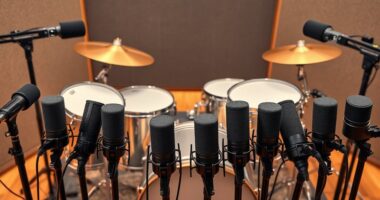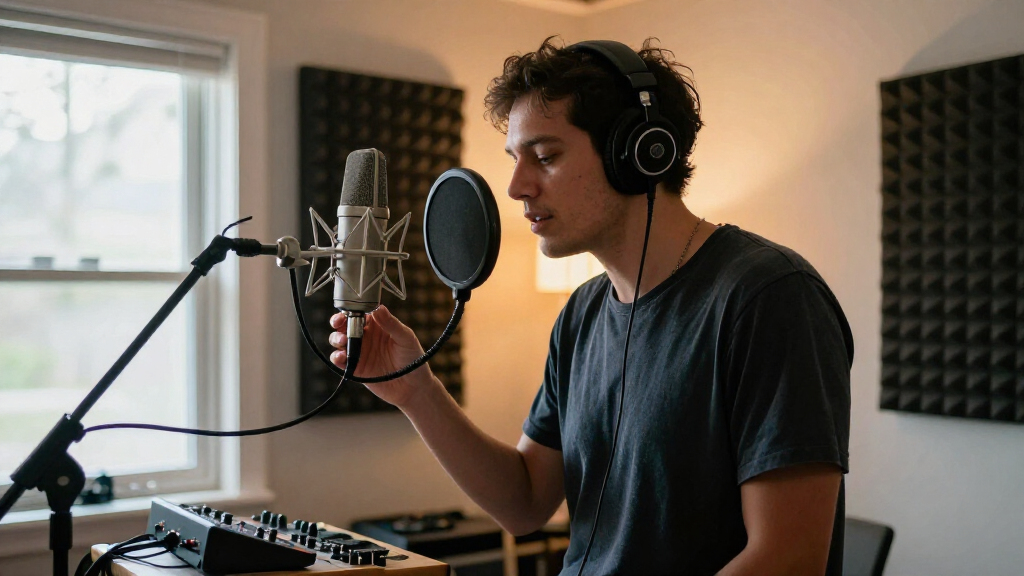
For most home-recording setups, I’d start with the RØDE NT1 5th Generation: its XLR and USB-C connections give you room to grow without locking you into one recording setup. The Audio-Technica AT2020 is a straightforward XLR condenser choice, while the MAONO HD300T offers a dynamic option with both USB and XLR for untreated or noisy rooms. The main tradeoff is between condenser detail and room-noise pickup, dynamic-mic rejection and the need for more gain, or an all-in-one USB kit’s convenience and limited upgrade flexibility. I compare all 15 options by sound-use fit, connection, included accessories, and practical setup demands. Read on for the full breakdown and help matching a mic to your room, voice, and workflow.

Get audio and creator gear delivered free with Prime
- Fast, free delivery on millions of items
- Prime Video, Amazon Music and more included
- Member-only deals all year
Complete the kit

Key Takeaways
Flexible connections separate the strongest long-term picks. The RØDE NT1 5th Generation supports both USB-C and XLR, so it can suit a simple computer setup now and an interface-based studio later.
Room acoustics can matter more than a condenser’s extra detail. In an untreated space, dynamic options such as the MAONO HD300T or FIFINE AmpliTank K688 may be easier to manage than sensitive condensers.
Starter bundles trade flexibility for convenience. Kits from FIFINE, TONOR, Dejasound, and ALSO GO can provide mounting or isolation accessories, but buyers should judge the microphone and the included extras separately.
XLR models need a fuller setup than their product names suggest. The AT2020, Mackie EM-91C, and RØDE NT1 Signature Series need an audio interface and a suitable XLR cable, adding setup steps and equipment choices.
A wireless feature is a workflow choice, not a sound-quality shortcut. The MAONO PD200W is distinct for wireless use, while fixed-desk recording may be better served by a conventional wired USB/XLR microphone.
| Mackie EM-91C Large-Diaphragm Condenser Microphone |  | Best Straightforward XLR Condenser | Microphone type: Large-diaphragm condenser | Polar pattern: Cardioid (unidirectional) | Connectivity: XLR | VIEW LATEST PRICE | See Our Full Breakdown |
| MAONO HD300T USB/XLR Dynamic Podcast Microphone |  | Best Beginner-Friendly Dynamic | Microphone type: Dynamic, large diaphragm | Polar pattern: Super cardioid | Connectivity: USB and XLR | VIEW LATEST PRICE | See Our Full Breakdown |
| MAONO A04 Gen2 USB/XLR Condenser Microphone Kit |  | Best Bundled Condenser Kit | Microphone type: Studio condenser | Capsule: 16 mm electret condenser | Polar pattern: Cardioid | VIEW LATEST PRICE | See Our Full Breakdown |
| MAONO PM320S XLR Condenser Microphone with Boom Arm and Pop Filter | 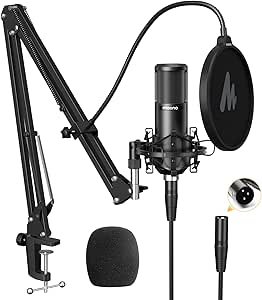 | Best for Phantom-Powered XLR Setups | Connectivity: XLR | Power requirement: 48V phantom power | Capsule: 16 mm condenser | VIEW LATEST PRICE | See Our Full Breakdown |
| MAONO PD200W Hybrid Wireless Dynamic Podcast Microphone |  | Best Wireless Recording Flexibility | Microphone type: Dynamic | Polar pattern: Unidirectional (cardioid) | Capsule size: 30 mm | VIEW LATEST PRICE | See Our Full Breakdown |
| FIFINE T669 USB Condenser Microphone Kit with Adjustable Boom Arm |  | Best Complete USB Starter Kit | Connectivity: USB | Connectors: USB Type-A, USB Type-C | Polar pattern: Unidirectional cardioid | VIEW LATEST PRICE | See Our Full Breakdown |
| Audio-Technica AT2020 Cardioid Condenser XLR Studio Microphone |  | Best XLR Studio Foundation | Microphone type: Condenser | Polar pattern: Cardioid | Connector: 3-pin XLRM | VIEW LATEST PRICE | See Our Full Breakdown |
| RØDE NT1 5th Generation Studio Condenser Microphone with XLR and USB-C |  | Best Flexible Premium Pick | Microphone type: Large-diaphragm cardioid condenser | Connectivity: USB-C, XLR | Polar pattern: Unidirectional | VIEW LATEST PRICE | See Our Full Breakdown |
| Shure SM4 XLR Studio Condenser Microphone Kit |  | Best for Loud Sources and Treated Setups | Connectivity: XLR | Microphone type: Condenser | Capsule: 1-inch brass dual-diaphragm | VIEW LATEST PRICE | See Our Full Breakdown |
| TONOR Studio Recording Microphone with Isolation Shield Set for Podcast |  | Best Compact Desk Recording Bundle | Model: TC777 Pro-IS | Connectivity: USB | Connectors: USB, Type-C, 3.5 mm jack | VIEW LATEST PRICE | See Our Full Breakdown |
| FIFINE AmpliTank K688 Dynamic USB/XLR Microphone |  | Best for a Flexible Upgrade Path | Microphone type: Dynamic | Connectivity: USB-C, XLR | Polar pattern: Unidirectional cardioid | VIEW LATEST PRICE | See Our Full Breakdown |
| ALSO GO F998 Podcast Equipment Bundle with BM800 Microphone | 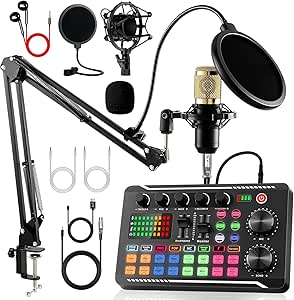 | Best for Effects-Focused Podcasting | Included microphone: BM800 studio condenser | Microphone polar pattern: Supercardioid | Connectivity: Bluetooth, USB, 3.5 mm | VIEW LATEST PRICE | See Our Full Breakdown |
| RØDE NT1 Signature Series Large-Diaphragm Studio Condenser Microphone, Black |  | Best for Clean, Detailed Vocal Recording | Microphone type: Large-diaphragm condenser | Capsule: HF6, 1-inch true condenser | Connectivity: XLR | VIEW LATEST PRICE | See Our Full Breakdown |
| Focusrite Scarlett Solo Studio 4th Gen USB-C Audio Interface Bundle |  | Best Complete Starter Recording Setup | Interface connectivity: USB-C | Audio resolution: 24-bit/192 kHz | Dynamic range: 120 dB | VIEW LATEST PRICE | See Our Full Breakdown |
| Dejasound DJM5 USB Condenser Microphone Kit with Isolation Shield and Pop Filter |  | Best for a Shielded Desk Setup | Connectivity: USB | Connector types: USB Type-B, 3.5 mm jack | Polar pattern: Hypercardioid in specifications; cardioid in description | VIEW LATEST PRICE | See Our Full Breakdown |
| studio microphones for home recording | Included accessories | Polar pattern | Connectivity | Microphone type |
|---|---|---|---|---|
| Mackie EM-91C Large-Diaphragm | Shock mount and XLR cable | Cardioid (unidirectional) | XLR | Large-diaphragm condenser |
| MAONO HD300T USB/XLR Dynamic P | Desktop stand, shock mount, pop filter, USB cable, and XLR cable | Super cardioid | USB and XLR | Dynamic, large diaphragm |
| MAONO A04 Gen2 USB/XLR Condens | Adjustable scissor arm, shock mount, pop filter, foam windscreen, boom arm base, and USB cable | Cardioid | USB, USB Type-C, and XLR | Studio condenser |
| MAONO PM320S XLR Condenser Mic | Boom arm, metal shock mount, pop filter, windscreen, 98-inch XLR cable, and user manual | Cardioid (unidirectional) | XLR | — |
| MAONO PD200W Hybrid Wireless D | Desktop stand, USB-C to USB-A/C cable, Type-C receiver, Type-C adapter cable, and user manual | Unidirectional (cardioid) | Wireless, USB, and XLR | Dynamic |
| FIFINE T669 USB Condenser Micr | Boom arm stand, shock mount, double-layer pop filter, USB-B to USB-A/C cable | Unidirectional cardioid | USB | — |
| Audio-Technica AT2020 Cardioid | Stand mount, 5/8"-27 to 3/8"-16 threaded adapter, soft protective pouch | Cardioid | — | Condenser |
| RØDE NT1 5th Generation Studio | Shock mount, pop filter, XLR cable, USB-C cable | Unidirectional | USB-C, XLR | Large-diaphragm cardioid condenser |
| Shure SM4 XLR Studio Condenser | Detachable magnetic pop filter, shock mount, brass stand adapter, zippered carrying case | Cardioid | XLR | Condenser |
| TONOR Studio Recording Microph | Three-sided shield, headphones, USB cable, USB-A to Type-C adapter, metal tripod, shock mount, pop filter | Unidirectional | USB | — |
| FIFINE AmpliTank K688 Dynamic | Shock mount, windscreen, USB-C to USB-A cable, 5/8 in to 3/8 in adapter | Unidirectional cardioid | USB-C, XLR | Dynamic |
| ALSO GO F998 Podcast Equipment | Boom arms, earphone, shock mounts, pop filters, foam caps, XLR cables, USB cable, 3.5 mm audio cables | — | Bluetooth, USB, 3.5 mm | — |
| RØDE NT1 Signature Series Larg | SM6 shock mount with pop filter, 6 m XLR cable, dust cover | Cardioid (unidirectional) | XLR | Large-diaphragm condenser |
| Focusrite Scarlett Solo Studio | — | — | — | — |
| Dejasound DJM5 USB Condenser M | Five-panel isolation shield, pop filter, tripod stand, headphones, Lightning and USB-C adapters, foam cover | Hypercardioid in specifications; cardioid in description | USB | — |
More Details on Our Top Picks
Mackie EM-91C Large-Diaphragm Condenser Microphone
The Mackie EM-91C is a practical choice for home recordists who already have an audio interface or mixer and want a conventional condenser setup for vocals, instruments, or room ambience. Its cardioid pattern favors sound in front of the mic, which can help keep some room noise out of a take, though it cannot fix a noisy space by itself. Unlike the USB/XLR MAONO A04 Gen2, the EM-91C has no direct USB connection or software controls; the payoff is a simpler XLR-only signal path. Mackie includes a shock mount and XLR cable, so fewer basic accessories need to be sourced separately. Its tradeoff is the familiar condenser requirement for compatible recording gear, and the supplied details do not specify a frequency response or sensitivity to help buyers compare its sound character.
Pros:- Cardioid pattern suits close vocal and instrument recording where some rear-room rejection is useful.
- Designed for vocals, instruments, and room ambience, giving it several studio roles.
- Shock mount and XLR cable are included.
- Stainless-steel enclosure is specified for a rugged studio build.
Cons:- XLR connection requires compatible recording equipment; no USB option is listed.
- No frequency-response or sensitivity figures are provided for judging tonal fit.
- The included setup is studio-oriented rather than a complete computer-recording bundle.
Best for: Home vocalists and instrumentalists who already own an XLR interface or mixer and want a simple condenser with basic mounting accessories.
Not ideal for: Computer-only beginners without an audio interface, or anyone seeking USB recording, onboard monitoring, or app-based controls.
- Microphone type:Large-diaphragm condenser
- Polar pattern:Cardioid (unidirectional)
- Connectivity:XLR
- Enclosure material:Stainless steel
- Weight:0.2 kg
- Dimensions:6.1 x 1.85 x 1.85 inches
- Included accessories:Shock mount and XLR cable
- Warranty:1-year all-inclusive, nontransferable
Our verdict“Choose the EM-91C if you already have XLR recording gear and want a no-frills condenser, but pick the MAONO A04 Gen2 for USB flexibility and bundled desk mounting.”
MAONO HD300T USB/XLR Dynamic Podcast Microphone
The MAONO HD300T suits home recordists who want to start on a computer and retain the option to move to an interface later. Its USB and XLR connections make that route more flexible than the XLR-only Mackie EM-91C, while the dynamic design is a sensible fit for spoken voice in rooms that are not acoustically treated. USB mode adds zero-latency headphone monitoring and a volume control, giving beginners a way to hear their voice without relying on extra studio hardware. The included desktop stand, shock mount, pop filter, and cables make the package ready for a basic desk setup. Compared with the condenser MAONO A04 Gen2, it prioritizes voice-oriented convenience over condenser capture. The tradeoffs are its wired-only operation and monitoring feature being specified for USB mode.
Pros:- USB and XLR support computer recording as well as interface- or mixer-based setups.
- Dynamic capsule and supercardioid pickup are suited to focused voice capture.
- USB mode provides zero-latency headphone monitoring and a volume control.
- Desktop stand, shock mount, pop filter, and both connection cables are included.
Cons:- Requires a wired connection and power source rather than offering wireless recording.
- Zero-latency monitoring is specified for USB mode, not all connection methods.
- The supplied desktop stand is less flexible for positioning than the A04 Gen2’s adjustable arm.
Best for: New podcasters, streamers, and voiceover creators recording at a desk who want USB simplicity now with an XLR path for later.
Not ideal for: Musicians seeking a dedicated condenser for detailed acoustic-instrument or room recordings, or buyers who need wireless placement.
- Microphone type:Dynamic, large diaphragm
- Polar pattern:Super cardioid
- Connectivity:USB and XLR
- Frequency response:20 Hz–20 kHz
- Signal-to-noise ratio:80 dB
- Monitoring:Zero-latency headphone monitoring in USB mode
- Included accessories:Desktop stand, shock mount, pop filter, USB cable, and XLR cable
- Enclosure material:Metal
Our verdict“Pick the HD300T for a ready-to-use, voice-focused desk mic with both USB and XLR, but choose the A04 Gen2 if condenser-style recording and an adjustable arm matter more.”
MAONO A04 Gen2 USB/XLR Condenser Microphone Kit
The MAONO A04 Gen2 is a strong fit for a home setup that needs both computer-friendly USB recording and a possible XLR upgrade path. Its 16 mm cardioid condenser capsule is aimed at close vocal capture, and the included arm, shock mount, pop filter, and windscreen make desk positioning easier than with the Mackie EM-91C, which supplies a shock mount and cable but not an arm. In USB mode, MAONO Link adds gain, EQ, compression, limiting, and noise-reduction controls, useful for shaping a voice without adding separate processing hardware. That software control does not carry over to XLR use, however, and the XLR cable is not included. The 30 Hz–16 kHz response is narrower on paper than the MAONO PM320S listing, so buyers focused on a broader specified range may prefer that model—provided they have 48V phantom power.
Pros:- USB and XLR connectivity supports both direct computer use and interface-based recording.
- Adjustable arm, shock mount, pop filter, and foam windscreen are bundled.
- MAONO Link offers gain, EQ presets, compressor, limiter, and noise reduction in USB mode.
- Cardioid pickup is suited to close recording in a home workspace.
Cons:- XLR cable is not included.
- Software controls are available only in USB mode.
- XLR operation with listed devices may require phantom power, adding setup requirements.
Best for: Computer-based home vocalists who want a condenser, adjustable arm, included wind protection, and the option to adopt XLR recording later.
Not ideal for: Buyers who need software controls while using XLR, need a supplied XLR cable, or record on Xbox.
- Microphone type:Studio condenser
- Capsule:16 mm electret condenser
- Polar pattern:Cardioid
- Connectivity:USB, USB Type-C, and XLR
- Sampling rate and bit depth:192 kHz/24-bit
- Frequency response:30 Hz–16 kHz
- Included accessories:Adjustable scissor arm, shock mount, pop filter, foam windscreen, boom arm base, and USB cable
- Desk clamp fit:For desktops less than 2.1 inches thick
- Recommended recording distance:2–6 inches
Our verdict“Choose the A04 Gen2 for an accessory-rich USB condenser kit with an XLR option, but favor the PM320S if you already have phantom-powered XLR gear and prefer its listed wider frequency range.”
MAONO PM320S XLR Condenser Microphone with Boom Arm and Pop Filter
The MAONO PM320S makes the most sense for a home studio built around an audio interface, mixer, or preamp that can supply 48V phantom power. Its XLR-only design keeps the signal path firmly in traditional studio territory, unlike the MAONO A04 Gen2, which can connect directly over USB. The PM320S includes a boom arm, shock mount, pop filter, windscreen, and XLR cable, so it covers many of the practical setup needs for vocal recording in one package. Its listed 20 Hz–20 kHz response gives a wider stated range than the A04 Gen2’s 30 Hz–16 kHz, though the product data also gives a conflicting 20 Hz–18 kHz figure; I would not treat the range as a precise point of distinction without clarification. Its main tradeoff is the need for phantom-powered gear.
Pros:- Cardioid condenser design is suited to focused vocal and music recording.
- Boom arm, shock mount, pop filter, windscreen, and XLR cable are included.
- Metal housing and adjustable arm support a more fixed studio desk setup.
- Listed 20 Hz–20 kHz frequency response covers a broad stated range.
Cons:- Requires 48V phantom power from compatible recording equipment.
- The product data gives conflicting upper frequency limits of 18 kHz and 20 kHz.
- XLR-only connectivity is less convenient for direct computer recording than the A04 Gen2.
Best for: Home vocalists and podcasters who already own a 48V-capable interface or mixer and want a complete XLR condenser mounting kit.
Not ideal for: USB-only computer users, mobile creators without phantom power, or anyone who wants a clearly specified frequency response.
- Connectivity:XLR
- Power requirement:48V phantom power
- Capsule:16 mm condenser
- Polar pattern:Cardioid (unidirectional)
- Frequency response:Listed as 20 Hz–20 kHz; product data also states 20 Hz–18 kHz
- Sensitivity:-34 dB ±3 dB
- Signal-to-noise ratio:75 dB
- Included accessories:Boom arm, metal shock mount, pop filter, windscreen, 98-inch XLR cable, and user manual
Our verdict“Choose the PM320S if your home studio already has phantom-powered XLR gear and you want a bundled arm and vocal accessories; skip it if you need direct USB recording.”
MAONO PD200W Hybrid Wireless Dynamic Podcast Microphone
The MAONO PD200W stands apart from the rest of this group by letting a home creator record through wireless, USB, or XLR. That flexibility is useful for a desk that doubles as a recording space, or for moving between a computer, camera, and interface without committing to one connection type. Its dynamic capsule, cardioid pickup, and three-stage noise cancellation are aimed at spoken voice in imperfect rooms; compared with the condenser Mackie EM-91C, it puts more emphasis on convenience and background-noise management than on a traditional condenser workflow. The receiver can support two wireless microphones on separate tracks, a notable option for interviews. The compromises are a more involved hybrid setup and accessory gaps: camera and Lightning accessories are sold separately, and the stated 60-hour battery life applies with RGB lighting off.
Pros:- Wireless, USB, and XLR connections suit several home and mobile recording workflows.
- Dynamic capsule, cardioid pattern, and three-stage noise cancellation target focused voice capture.
- One receiver supports two wireless microphones on separate tracks.
- Up to 60 m wireless range and up to 60 hours of battery life with RGB lighting off are specified.
Cons:- Camera and Lightning accessories are sold separately.
- The 60-hour battery figure applies only with RGB lighting off.
- Its wireless features add setup complexity compared with the USB/XLR MAONO HD300T.
Best for: Mobile podcasters, interviewers, and streamers who want one dynamic mic for wireless, USB, and XLR recording, including two-mic sessions.
Not ideal for: Home-studio musicians seeking a dedicated condenser for detailed instrument or room capture, or buyers who want all camera and phone adapters in the box.
- Microphone type:Dynamic
- Polar pattern:Unidirectional (cardioid)
- Capsule size:30 mm
- Connectivity:Wireless, USB, and XLR
- Maximum SPL:128 dB
- Wireless range:Up to 60 m
- Battery life:Up to 60 hours with RGB lighting off
- App support:MaonoLink for Mac, Windows, and smartphones
- Included accessories:Desktop stand, USB-C to USB-A/C cable, Type-C receiver, Type-C adapter cable, and user manual
Our verdict“Pick the PD200W if wireless movement or two-mic interviews matter alongside USB and XLR options; choose the HD300T for a simpler, wired desk-focused setup.”
FIFINE T669 USB Condenser Microphone Kit with Adjustable Boom Arm
The FIFINE T669 makes home recording approachable by supplying the microphone, boom arm, shock mount, and double-layer pop filter in one package. Its plug-and-play USB connection avoids the interface and phantom-power requirements of the XLR-only Audio-Technica AT2020, making it a simpler fit for a computer-based voice setup. The cardioid pattern favors sound from the front, while the included arm helps position the mic near the speaker without taking up as much desk space as a tripod setup such as the TONOR TC777 Pro-IS.
The tradeoff is a less adaptable recording path: it connects by USB rather than offering the T669’s? No—unlike the RØDE NT1 5th Generation, it has no XLR option for later integration with an audio interface. It also needs a wired computer connection and does not work with Xbox. I’d pick it for straightforward speech recording, not for someone building a flexible studio signal chain.
Pros:- USB setup works with compatible computers without extra drivers.
- Cardioid pickup favors sound in front of the mic over side and rear sound.
- Included steel boom arm and C-clamp allow flexible desk positioning.
- Double-layer pop filter helps soften plosive consonants.
Cons:- USB-only connectivity offers less flexibility than the XLR/USB RØDE NT1 5th Generation.
- Requires a wired USB connection and is not compatible with Xbox.
Best for: New podcasters, streamers, and home voiceover creators who want a computer-ready mic with a boom arm and basic plosive control included.
Not ideal for: Musicians planning to record through an XLR interface or Xbox users; this model is USB-only and is listed as incompatible with Xbox.
- Connectivity:USB
- Connectors:USB Type-A, USB Type-C
- Polar pattern:Unidirectional cardioid
- Frequency response:20 Hz–20 kHz
- Signal-to-noise ratio:78 dB
- Cable length:8.2 ft
- Included accessories:Boom arm stand, shock mount, double-layer pop filter, USB-B to USB-A/C cable
- Compatibility:Laptop, desktop, PC, PS4, PS5; incompatible with Xbox
Our verdict“Choose the FIFINE T669 if you want a ready-to-position USB setup for home speech recording without buying a separate boom arm.”
Audio-Technica AT2020 Cardioid Condenser XLR Studio Microphone
The Audio-Technica AT2020 suits a home studio built around an audio interface rather than a direct-to-computer USB mic. Its cardioid pickup pattern helps reduce sound from the sides and rear, and its stated high SPL handling and wide dynamic range support more than quiet spoken-word work. Compared with the USB-ready FIFINE T669, the AT2020 takes more setup: it needs an XLR connection and phantom power. In return, it fits naturally into an interface-based recording chain and can be used alongside other studio gear.
This is a more conventional, expandable route than the T669, but it does not arrive with a boom arm or pop filter, and the included pouch is for protection rather than desk use. The RØDE NT1 5th Generation offers both USB-C and XLR, so it is the more flexible pick for switching between computer-direct and interface recording. I’d choose the AT2020 when an interface is already part of the plan.
Pros:- Cardioid pattern helps limit pickup from the sides and rear.
- High SPL handling and wide dynamic range suit varied vocal and instrument sources.
- Low-mass diaphragm is designed for extended frequency and transient response.
- Metal enclosure provides a durable studio-style build.
Cons:- Requires phantom power from a compatible interface or other recording equipment.
- XLR connection adds setup requirements compared with the FIFINE T669’s USB connection.
- No boom arm or pop filter is listed among the included accessories.
Best for: Home musicians and vocalists who already own, or are ready to buy, an audio interface with phantom power and want an XLR condenser mic.
Not ideal for: Beginners seeking a direct USB connection or an all-in-one desk kit; it requires compatible XLR equipment and does not include a boom arm or pop filter.
- Microphone type:Condenser
- Polar pattern:Cardioid
- Connector:3-pin XLRM
- Frequency response:20 Hz
- Signal-to-noise ratio:74 dB
- Impedance:200 ohm
- Power:Phantom power
- Included accessories:Stand mount, 5/8″-27 to 3/8″-16 threaded adapter, soft protective pouch
Our verdict“Pick the AT2020 if you have an interface and want a straightforward XLR condenser as the foundation of a home studio.”
RØDE NT1 5th Generation Studio Condenser Microphone with XLR and USB-C
The RØDE NT1 5th Generation stands apart for giving a home studio both XLR and USB-C recording paths. Use XLR with an interface and phantom power, or connect over USB-C for its stated 32-bit float recording and digital conversion up to 192 kHz. That flexibility makes it a stronger long-term fit than the XLR-only AT2020 for someone whose setup may change, while its low stated self-noise and high SPL handling suit vocals, voiceovers, and instruments.
The broader feature set comes with a more involved choice of workflow: buyers need to decide whether they want an interface-based chain or direct USB recording, and the microphone remains a single-channel device. The FIFINE T669 is simpler for a basic USB desk setup and includes a boom arm, but lacks the NT1’s dual connectivity and listed recording formats. The supplied shock mount, pop filter, and cables make the RØDE a more studio-oriented package, though it is more than a minimal speech mic needs.
Pros:- USB-C and XLR support direct computer recording or an interface-based setup.
- 32-bit float recording over USB and conversion up to 192 kHz are specified.
- Low self-noise and high SPL handling suit vocals and a range of instruments.
- Includes a shock mount, pop filter, XLR cable, and USB-C cable.
Cons:- Single-channel design does not provide multiple microphone channels.
- More recording options can be unnecessary for buyers who only need a basic USB speech mic.
- The supplied product data gives inconsistent power information, so buyers should verify the required power method for their intended connection.
Best for: Home recordists who want one condenser mic that can connect directly to a computer now and integrate with an XLR interface later.
Not ideal for: Anyone seeking the simplest budget-style USB desk kit or a multi-channel recording solution; this is a single-channel microphone with a more feature-rich workflow.
- Microphone type:Large-diaphragm cardioid condenser
- Connectivity:USB-C, XLR
- Polar pattern:Unidirectional
- Frequency response:20–20,000 Hz
- Digital conversion:Up to 192 kHz
- USB recording format:32-bit float
- Self-noise:4 dB
- Included accessories:Shock mount, pop filter, XLR cable, USB-C cable
Our verdict“Choose the NT1 5th Generation if you want a home-studio condenser that can move between USB-C computer recording and an XLR interface.”
Shure SM4 XLR Studio Condenser Microphone Kit
The Shure SM4 is a focused choice for an XLR home studio where loud sources and room-related distractions are part of the recording challenge. Its 140 dB maximum SPL rating gives it headroom for forceful vocals or loud instruments, while the cardioid pattern and RF shielding address off-axis sound and wireless-device interference. The included magnetic pop filter and shock mount also mean fewer accessories to source than with the AT2020, which comes with a mount and pouch but no listed pop filter.
That accessory package does not make it a computer-direct option: like the AT2020, the SM4 needs phantom power and an XLR recording setup. The RØDE NT1 5th Generation is the more flexible alternative if USB-C recording matters, while the SM4’s stated strength is its high sound-handling capacity and shielding. Its 2.5-pound weight and kit dimensions may also be less convenient for a lightweight desk mount. I’d favor it for an interface-based studio, not a plug-and-play streaming station.
Pros:- 140 dB maximum SPL supports recording high-volume sources.
- RF shielding helps reduce interference from wireless devices.
- Detachable magnetic pop filter and shock mount are included.
- All-metal construction and carrying case suit a studio kit that may be moved or stored.
Cons:- Requires phantom power and a compatible XLR interface or recording setup.
- Does not offer the USB-C recording option found on the RØDE NT1 5th Generation.
- Listed weight of 2.5 pounds may call for a sturdy stand or mount.
Best for: Home-studio musicians and vocalists recording loud sources through an XLR interface who want a supplied shock mount and pop filter.
Not ideal for: USB-only creators or people without phantom power; it requires an XLR setup, and its 2.5-pound listed weight may not suit every lightweight mounting arrangement.
- Connectivity:XLR
- Microphone type:Condenser
- Capsule:1-inch brass dual-diaphragm
- Polar pattern:Cardioid
- Maximum SPL:140 dB
- Power:Phantom power required
- Weight:2.5 pounds
- Included accessories:Detachable magnetic pop filter, shock mount, brass stand adapter, zippered carrying case
Our verdict“Choose the SM4 if your home studio uses XLR and needs a condenser kit suited to loud sources rather than direct USB recording.”
TONOR Studio Recording Microphone with Isolation Shield Set for Podcast
The TONOR TC777 Pro-IS is built around a different home-recording problem than the XLR microphones here: it combines a USB condenser mic with a foldable three-panel isolation shield, tripod, pop filter, and earphones. That bundle is useful for a desk-based podcaster or voiceover creator who wants a contained setup and does not already own recording accessories. Its one-touch mute and gain dial add practical control for calls and streaming, while its USB connection is more accessible than the phantom-powered AT2020 or Shure SM4.
The shield can help manage reflections close to the mic, but it is not a substitute for treating the whole room, and the product data does not provide the detailed SPL and self-noise figures listed for the RØDE NT1 5th Generation. The TC777 Pro-IS is also described as incompatible with Xbox and with iPhone 14 and earlier models. Choose it for a compact speech-recording station, not as a flexible XLR studio microphone.
Pros:- Bundle includes a three-panel foldable isolation shield, tripod, pop filter, and earphones.
- USB connection is designed for plug-and-play use with listed computer and mobile platforms.
- One-touch mute and gain dial give convenient control during speech recording.
- Shield and stand form a compact desk-oriented setup.
Cons:- The isolation shield addresses nearby reflections but does not replace broader room treatment.
- USB-focused setup lacks the XLR option available on the RØDE NT1 5th Generation and other interface microphones.
- Listed incompatibilities include Xbox and iPhone 14 and earlier models.
Best for: Desk-based podcasters, remote workers, and beginner voiceover creators who want a USB mic bundled with a foldable shield and basic monitoring accessories.
Not ideal for: Musicians seeking an XLR microphone for an interface-based signal chain, or Xbox and iPhone 14-and-earlier users, which are listed as incompatible.
- Model:TC777 Pro-IS
- Connectivity:USB
- Connectors:USB, Type-C, 3.5 mm jack
- Polar pattern:Unidirectional
- Frequency range:100 Hz–16 kHz
- Channels:1
- Power source:Corded electric
- Included accessories:Three-sided shield, headphones, USB cable, USB-A to Type-C adapter, metal tripod, shock mount, pop filter
- Warranty:Two years
Our verdict“Pick the TONOR TC777 Pro-IS if you want a compact USB speech-recording bundle with a desk shield, rather than an XLR mic for a growing studio chain.”
FIFINE AmpliTank K688 Dynamic USB/XLR Microphone
The FIFINE K688 suits home recordists who want to start with a simple USB setup and keep the option of moving to an interface later. Its dynamic capsule and cardioid pickup favor close-mic vocals and can be a more forgiving fit for an untreated room than a sensitive condenser such as the RØDE NT1 Signature Series. USB mode adds mute, gain, and headphone-monitoring controls, while XLR gives the mic a place in a more conventional recording chain. That flexibility is the main reason I rank it ahead of a USB-only kit. The tradeoff is that those controls disappear over XLR, and the box lacks a stand or boom arm. It also works best close to the speaker, so it is less suited to distant or roomy recordings.
Pros:- USB-C and XLR connections support both beginner and interface-based setups.
- Dynamic cardioid design is well suited to close vocals and spoken-word recording.
- USB mode includes mute, gain, headphone-volume controls, and real-time monitoring.
- Metal body, shock mount, and windscreen are included.
Cons:- XLR cable, boom arm, and microphone stand are not included.
- Mute, gain, and monitoring controls work only over USB.
- Close-range recording is needed for its intended use.
Best for: Home podcasters and vocalists who want easy USB recording now, with the option to use an XLR interface later.
Not ideal for: Musicians recording from a distance or anyone who needs a complete stand-and-cable setup in one box.
- Microphone type:Dynamic
- Connectivity:USB-C, XLR
- Polar pattern:Unidirectional cardioid
- Frequency range:50 Hz–16 kHz
- Maximum SPL:130 dB
- Signal-to-noise ratio:80 dB
- Monitoring jack:3.5 mm
- Included accessories:Shock mount, windscreen, USB-C to USB-A cable, 5/8 in to 3/8 in adapter
Our verdict“Choose the K688 if you want close-mic recording with USB convenience today and an XLR upgrade path later.”
ALSO GO F998 Podcast Equipment Bundle with BM800 Microphone
The ALSO GO F998 bundle is aimed at creators who want a mixer, microphone, mounting gear, and sound effects together rather than a straightforward studio mic. Its 16 background effects, seven recording modes, and voice-changing options make it more geared to interactive podcasting and casual streaming than the cleaner, recording-first approach of the RØDE NT1 Signature Series. The included boom arms, filters, cables, and earphone reduce the number of separate pieces a new setup needs. I would pick it for experimentation and live-style content, not for the most predictable vocal capture. The BM800 is a condenser with a listed supercardioid pattern, so mic placement matters, and the added mixer features may not help someone who simply wants a direct connection to recording software. The bundle also calls for charging before first use or after long storage.
Pros:- Bundle includes a mixer, BM800 microphone, boom arms, filters, shock mounts, earphone, and cables.
- Mixer offers 16 sound effects, seven modes, and four voice-changer modes.
- Supports USB, 3.5 mm wired connections, and Bluetooth for compatible devices.
- Echo control and noise-reduction features provide options for live-style content.
Cons:- Supercardioid pickup calls for careful positioning relative to the speaker.
- Effects and voice processing may be unnecessary for clean music or voice-over recording.
- The unit may need a full charge before first use or after extended storage.
Best for: New podcasters and streamers who want a bundled mic-and-mixer setup with effects and voice-changing features.
Not ideal for: Vocalists focused on natural, detailed takes or buyers seeking a minimal, interface-based recording chain.
- Included microphone:BM800 studio condenser
- Microphone polar pattern:Supercardioid
- Connectivity:Bluetooth, USB, 3.5 mm
- Channels:2
- Sound effects:16 background effects
- Recording modes:7
- Voice changer modes:4
- Included accessories:Boom arms, earphone, shock mounts, pop filters, foam caps, XLR cables, USB cable, 3.5 mm audio cables
Our verdict“Pick the F998 if your home setup is centered on interactive podcasting and built-in effects, rather than unprocessed studio takes.”
RØDE NT1 Signature Series Large-Diaphragm Studio Condenser Microphone, Black
For a home studio built around controlled vocal and instrument takes, the RØDE NT1 Signature Series is the strongest dedicated condenser in this group. Its 4 dB self-noise helps keep quiet sources and subtle vocal detail from being masked by the microphone itself, while the cardioid pattern focuses capture toward the performer. Compared with the USB/XLR FIFINE K688, the NT1 is less convenient to connect but is designed for a more conventional XLR recording chain and broad studio use. The included SM6 shock mount with pop filter and six-metre cable also mean fewer essential accessories to source separately. Its sensitivity is not automatically an advantage in a noisy or reflective room, though: room sound and background noise can remain prominent. It also requires an audio interface with phantom power, so this is not a plug-directly-into-a-computer pick.
Pros:- Low 4 dB self-noise supports clean capture of quiet vocals and instruments.
- Cardioid pickup focuses recording toward the performer.
- Includes an SM6 shock mount with pop filter and a 6 m XLR cable.
- High SPL handling supports loud sources as well as vocals.
Cons:- XLR connection requires an audio interface or suitable preamp.
- Condenser sensitivity can pick up room reflections and background noise.
- No USB connection is available for direct computer recording.
Best for: Home vocalists, voice-over artists, and musicians with an audio interface who want a low-self-noise XLR condenser.
Not ideal for: Beginners without an interface or people recording in noisy, untreated rooms who need a forgiving close-mic dynamic.
- Microphone type:Large-diaphragm condenser
- Capsule:HF6, 1-inch true condenser
- Connectivity:XLR
- Polar pattern:Cardioid (unidirectional)
- Self-noise:4 dB
- Signal-to-noise ratio:78 dB
- Weight:313 g
- Included accessories:SM6 shock mount with pop filter, 6 m XLR cable, dust cover
Our verdict“Choose the NT1 Signature if you have an interface and want a low-noise XLR condenser for detailed vocals and instruments.”
Focusrite Scarlett Solo Studio 4th Gen USB-C Audio Interface Bundle
The Scarlett Solo Studio 4th Gen bundle earns its place by supplying the pieces needed to start recording vocals or guitar at home: an interface, CM25 MkIII condenser, headphones, and software. That makes it a more complete music-making entry point than the standalone RØDE NT1 Signature Series, which still needs an interface and headphones. Its Air mode can add presence to vocals and guitars, while the 24-bit/192 kHz specification and 120 dB dynamic range describe the interface’s conversion capability. The package is also a better fit for tracking a voice alongside a direct instrument than a microphone-only USB option such as the FIFINE K688. The tradeoff is its two-channel limit, which restricts simultaneous sources, and the included mic and headphones are starter components rather than a reason to skip future upgrades.
Pros:- Includes an audio interface, CM25 MkIII condenser microphone, and SH-450 headphones.
- Air mode offers an added presence option for vocals and guitars.
- 24-bit/192 kHz audio resolution and a stated 120 dB dynamic range.
- Software bundle includes Pro Tools Intro+, Ableton Live Lite, Cubase LE, and Hitmaker Expansion.
Cons:- Two-channel interface limits simultaneous recording sources.
- Included microphone and headphones may be stepping stones for buyers seeking higher-end standalone gear.
- Requires a computer or compatible iOS device and some setup before recording.
Best for: First-time songwriters and home recordists who need an interface, condenser mic, headphones, and recording software in one package.
Not ideal for: Experienced producers who already own an interface and monitoring gear, or groups recording several microphones at once.
- Interface connectivity:USB-C
- Audio resolution:24-bit/192 kHz
- Dynamic range:120 dB
- Channels:2
- Inputs:1 XLR mic preamp, 1 Hi-Z instrument input
- Included microphone:CM25 MkIII condenser
- Included headphones:SH-450
- Included software:Pro Tools Intro+, Ableton Live Lite, Cubase LE, Hitmaker Expansion
Our verdict“Choose this bundle if you are starting a songwriter’s home studio and need the recording chain as well as the microphone.”
Dejasound DJM5 USB Condenser Microphone Kit with Isolation Shield and Pop Filter
The Dejasound DJM5 kit stands apart by supplying a foldable five-panel shield alongside a USB condenser mic, pop filter, tripod, headphones, and device adapters. That makes it more of a compact desk recording station than the FIFINE K688, which offers USB/XLR flexibility but leaves the stand to the buyer. A shield can help limit some nearby reflections around the microphone, though it cannot make a noisy room acoustically quiet. The DJM5 also lists echo and volume controls, mute, and headphone monitoring, providing a direct workflow for spoken-word recording. I would be cautious about its pickup behavior: the description says cardioid while the specifications say hypercardioid, making placement expectations less clear than with the explicitly cardioid RØDE NT1 Signature Series. It is USB-only and needs wired power, so it is not the choice for an XLR upgrade path.
Pros:- Includes a foldable five-panel isolation shield, pop filter, tripod, and headphones.
- USB setup includes mute, echo and volume controls, plus headphone monitoring.
- Lightning and USB-C adapters support connection to a range of devices.
- 24-bit/192 kHz sampling specification is provided.
Cons:- Polar pattern is inconsistent in the product data: cardioid in the description and hypercardioid in the specifications.
- USB-only connectivity offers no XLR path to an interface.
- Requires wired 5 V power, and the shield cannot replace room treatment.
Best for: Desk-based podcasters and streamers who want a bundled USB mic, pop filter, monitoring headphones, and a portable reflection shield.
Not ideal for: Recordists who need clearly documented pickup behavior, XLR connectivity, or a setup that works without wired power.
- Connectivity:USB
- Connector types:USB Type-B, 3.5 mm jack
- Polar pattern:Hypercardioid in specifications; cardioid in description
- Diaphragm:16 mm
- Sampling rate and bit depth:192 kHz/24-bit
- Frequency response:30 Hz–16 kHz
- Microphone dimensions:6.3 × 1.96 in
- Included accessories:Five-panel isolation shield, pop filter, tripod stand, headphones, Lightning and USB-C adapters, foam cover
Our verdict“Pick the DJM5 if you want a ready-made desk kit with a reflection shield, and can accept USB-only operation and unclear polar-pattern details.”
How We Picked
I ranked these microphones for home-recording usefulness, not for studio prestige or the length of a feature list. I weighed connection options, how well the microphone type fits common room conditions, setup demands, included accessories, and the flexibility to handle voice recording, streaming, or instruments. A microphone that can work with a computer directly or through an interface earned credit for adaptability; a bundle earned credit for reducing setup friction, but not simply for including more parts.
The order favors options that balance sound-capture potential with realistic home use. That puts flexible, capable microphones ahead of specialist or accessory-heavy kits, while standalone XLR condensers remain strong when the buyer already has an interface and a reasonably controlled room. Dynamic models rank well for less-treated spaces, but their placement and gain needs count against them for some beginners. Lower-ranked bundles can still be the better fit for a buyer who wants a ready-to-assemble desk setup, though they offer fewer reasons to choose them over a more adaptable mic.
| studio microphones for home recording | Microphone type |
|---|---|
| Mackie EM-91C Large-Diaphragm | Large-diaphragm condenser |
| MAONO HD300T USB/XLR Dynamic P | Dynamic, large diaphragm |
| MAONO A04 Gen2 USB/XLR Condens | Studio condenser |
| MAONO PM320S XLR Condenser Mic | — |
| MAONO PD200W Hybrid Wireless D | Dynamic |
| FIFINE T669 USB Condenser Micr | — |
| Audio-Technica AT2020 Cardioid | Condenser |
| RØDE NT1 5th Generation Studio | Large-diaphragm cardioid condenser |
| Shure SM4 XLR Studio Condenser | Condenser |
| TONOR Studio Recording Microph | — |
| FIFINE AmpliTank K688 Dynamic | Dynamic |
| ALSO GO F998 Podcast Equipment | — |
| RØDE NT1 Signature Series Larg | Large-diaphragm condenser |
| Focusrite Scarlett Solo Studio | — |
| Dejasound DJM5 USB Condenser M | — |
Factors to Consider When Choosing Studio Microphones For Home Recording
Before choosing a microphone, I’d match it to the room and recording chain rather than buying on capsule type or accessory count alone. These decisions shape how much room sound you capture, how much extra hardware you need, and whether the setup remains useful as your recording habits change.
Match the Microphone to the Room, Not Just the Voice
A condenser can capture fine vocal detail, but it may also pick up computer fans, traffic, and reflections from bare walls. A dynamic microphone can be more forgiving of a lively room when used close to the mouth, though it still records room sound and may need more preamp gain. Before spending more on sensitivity, listen for echo by clapping in the recording space and check whether you can reduce reflections with curtains, rugs, or soft furnishings. A common mistake is buying a highly sensitive mic to fix a room that needs acoustic attention. If the room cannot be treated, a close-miked dynamic model may yield a cleaner result with less editing.
Choose USB, XLR, or Both Based on Your Next Step
USB microphones connect directly to a computer and simplify a first recording setup, while XLR microphones route through an audio interface. XLR gives you a more modular chain: you can change the interface, add other inputs, or use the microphone with compatible recording gear. A dual-connection mic can bridge those approaches, but check how its USB and XLR modes differ rather than assuming they offer identical controls or processing. Buyers often choose XLR for its professional reputation without budgeting for an interface, cable, and desk space. If you only record one source on a computer, USB may be the cleaner choice; if your setup is likely to expand, XLR or dual connectivity can make sense.
Think About Placement, Monitoring, and Gain
Microphones do not sound their best at every distance, and placement can change clarity more than a small spec difference. A close position can improve voice presence and reduce room pickup, but it also makes plosives and proximity bass more apparent. Dynamic mics often call for a stronger gain setting, so check that your interface or USB controls can provide a clean, usable level. Condensers usually need phantom power when connected over XLR; confirm your interface supplies it before buying. Plan for a stable stand or boom arm that places the capsule near your mouth without transmitting desk bumps. These practical checks can prevent a capable mic from becoming frustrating to use.
Treat Bundled Accessories as a Starting Point
A bundle can save setup time by including a stand, pop filter, or isolation shield, but those parts do not guarantee a better recording. A flimsy boom arm may sag, and a small shield cannot replace room treatment or remove reflections from every direction. A pop filter helps control plosive bursts, while correct mic angle and distance still matter. Check whether the package includes the connection cable and any mount adapter your desk setup needs. Buyers sometimes pay attention to the accessory count and overlook whether the microphone itself suits their room and voice. Choose a kit for convenience, then upgrade only the parts that limit your recording.
Spend More for a Specific Recording Need
Paying more makes sense when a feature solves a recurring problem: dual connectivity for a changing setup, a suitable microphone for a noisy room, or an interface bundle when you need a complete recording chain. It is less useful to spend extra for specifications that your room, voice technique, or software cannot take advantage of. If you record several sources, prioritize input count and future expandability rather than a single microphone’s feature set. If you only record spoken voice, a reliable placement setup and quiet room may matter more than an elaborate bundle. Set aside part of your budget for a stand, cable, or room improvements when those are missing from the package.
Check Compatibility Before You Buy
Confirm that the microphone works with your computer, phone, recording software, and any interface you already own. USB-C on a microphone does not automatically mean every mobile device or cable will support the intended connection, and some USB features may depend on software. For XLR, check connector type, phantom-power needs for condensers, and whether your interface has enough gain for a dynamic mic. Wireless models add another layer: verify how the receiver connects, how the mic is powered, and whether wireless operation fits your recording environment. These details are easy to miss when a listing emphasizes a broad compatibility claim. A quick connection check can prevent extra adapters or an unusable workflow.
Frequently Asked Questions
Should I choose a condenser or dynamic microphone for a room without acoustic treatment?
I’d usually begin with a dynamic microphone if the room has noticeable echo, household noise, or a computer close to the desk. Its close-miking style can help keep the voice more prominent relative to the room, though it does not erase background sound. A condenser may still work if you can record close, keep the room quiet, and soften reflective surfaces. Also check whether your interface can supply enough clean gain for the dynamic model. The room and placement matter more than treating either microphone type as a universal fix.
Is a USB/XLR microphone worth choosing over a dedicated USB or XLR model?
A dual-output microphone is useful when you want a simple computer connection now but may add an interface later. It can also help if you switch between a desk setup and another recording chain. The tradeoff is that you should check what controls, monitoring, and features work in each connection mode. If you already own an interface and expect to keep using it, a dedicated XLR microphone may be the simpler purchase. If you only need one computer connection and do not expect to expand, a straightforward USB mic can reduce setup complexity.
Do I need an audio interface to record with an XLR studio microphone?
Most XLR microphones need an audio interface or another device with a compatible mic preamp and XLR input to connect to a computer. XLR condenser microphones also commonly need phantom power, so check that the interface provides it. Dynamic microphones generally do not need phantom power, but some may need more gain than an entry-level interface supplies comfortably. An interface bundle can simplify the first setup by pairing the main pieces, though you should confirm the included cables and software fit your needs. If you want to avoid extra hardware, consider a USB or dual-connection model instead.
Will an isolation shield make a bedroom sound like a studio?
No. A small shield can reduce some reflections reaching the back or sides of a microphone, but it cannot control sound bouncing around the entire room. It also will not stop street noise, loud appliances, or sound traveling through walls. A quiet recording time, close mic placement, and soft furnishings can make a bigger difference than relying on a shield alone. If a bundle includes one, treat it as a useful accessory rather than a replacement for room treatment. Listen to a short test recording before deciding what the space still needs.
Which setup is a better fit if I record both spoken voice and instruments?
Start by listing the sources and how often you record them, since one microphone may not suit every instrument and voice equally well. A condenser can offer useful detail for vocals and many acoustic sources in a quiet room, while a dynamic mic may be easier to manage near amplifiers or in a less-controlled space. An interface-based XLR setup gives more room to add microphones or inputs later, but it requires more gear and setup knowledge. A dual USB/XLR model can cover a simpler computer workflow and a later interface connection. Check the microphone’s polar pattern and placement options against the instruments you actually plan to record.
Conclusion
For the broadest mix of home-recording flexibility, I’d choose the RØDE NT1 5th Generation as best overall, especially if you may move between USB and XLR. For a more direct XLR route, the Audio-Technica AT2020 is a sensible value-oriented pick when you already have an interface and a reasonably quiet room. The RØDE NT1 Signature Series is my best premium choice for buyers who want a dedicated XLR condenser and have the supporting gear. Beginners who want a straightforward computer setup can look at the FIFINE T669 kit, while the MAONO HD300T is a better fit for buyers who want dynamic pickup with USB/XLR flexibility. For wireless use, consider the MAONO PD200W; for a larger interface-based recording chain, the Focusrite Scarlett Solo Studio bundle is the more relevant route. Choose based on room, connection, and workflow first—the right match is the one you can set up well and use consistently.