Digital piano keyboards range from compact 61-key learning kits to 88-key instruments with weighted action for piano-style practice. My best overall pick is the Yamaha P-45, which pairs full-size weighted keys with a focused, portable design. The Yamaha P71 is another strong choice for straightforward weighted-key practice, while the Donner DEP-20 suits buyers who want a stand and three-pedal unit included. The main tradeoff is between realistic key feel and portability or bundled learning features; continue reading for the full breakdown of all 15 options.

Get audio and creator gear delivered free with Prime
- Fast, free delivery on millions of items
- Prime Video, Amazon Music and more included
- Member-only deals all year
Complete the kit


Key Takeaways
- Weighted 88-key models lead for piano-style practice: The Yamaha P-45 and P71 prioritize full-range, weighted keys over bundled stands and lesson accessories.
- The Donner DEP-20 adds a fuller home setup: Its stand and three-pedal unit make it a stronger fit for buyers who want more than a portable keyboard alone.
- 61-key kits favor convenience and learning extras: Models such as the Alesis Melody, RockJam RJ5061, and JIKADA include accessories or lighted keys, but offer less range than 88-key instruments.
- Semi-weighted options sit between portability and piano feel: The UISCOM stand set and several generic 88-key bundles offer more keys than beginner 61-key models, but their action is not the same as fully weighted keys.
- Included accessories change the value calculation: A stand, bench, pedal, headphones, or microphone can reduce setup shopping, but buyers should check which items they will actually use.
| Yamaha PSR-E283 61-Key Portable Keyboard for Beginners |  | Best for Guided Beginner Practice | Keys: 61 full-sized keys | Skill level: Beginner | Learning features: Quiz Mode, Smart Chord, built-in songs | VIEW LATEST PRICE | See Our Full Breakdown |
| UISCOM 88-Key Weighted Digital Piano with Triple Pedals, Brown |  | Best for Traditional Pedal Practice | Keys: 88 | Keyboard action: Weighted, progressive hammer action | Tones: 8 | VIEW LATEST PRICE | See Our Full Breakdown |
| UISCOM 88-Key Semi-Weighted Digital Piano with Wooden Stand |  | Best All-In-One Home Practice Set | Keys: 88 | Key type: Semi-weighted | Tones: 600 | VIEW LATEST PRICE | See Our Full Breakdown |
| Alesis Melody 61-Key Beginner Keyboard with Stand, Bench, Headphones, and Lessons |  | Best Beginner Bundle | Keys: 61 | Sounds: 300 | Rhythms: 300 | VIEW LATEST PRICE | See Our Full Breakdown |
| Yamaha P71 88-Key Weighted Action Digital Piano with Sustain Pedal and Power Supply |  | Best for Piano-Focused Weighted-Key Practice | Keys: 88 | Key action: Weighted hammer action | Voices: 10, including a Yamaha grand piano sound | VIEW LATEST PRICE | See Our Full Breakdown |
| 88-Key Beginner Digital Piano with Semi-Weighted Keys and Accessories |  | Best 88-Key Starter Bundle | Keys: 88 full-size, semi-weighted, touch-sensitive keys | Skill level: Beginner | Voices and rhythms: 128 | VIEW LATEST PRICE | See Our Full Breakdown |
| MIZAYI 61-Key Portable Electronic Keyboard with Speakers and Microphone |  | Best for Portable, Play-and-Sing Practice | Keys: 61 | Tones and rhythms: 100 tones and 100 rhythms | Demo songs: 10 | VIEW LATEST PRICE | See Our Full Breakdown |
| JIKADA 61-Key Portable Electronic Keyboard Piano Set with Lighted Keys |  | Best Guided-Learning Bundle | Keys: 61 | Tones and rhythms: 255 tones and 255 rhythms | Demo songs: 50 | VIEW LATEST PRICE | See Our Full Breakdown |
| Donner DEP-20 88-Key Weighted Digital Piano with Stand and 3-Pedal Unit | 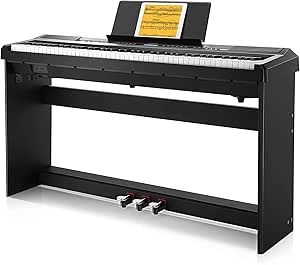 | Best for Piano-Style Key Action | Keys and action: 88 full-size weighted hammer-action keys with adjustable touch response | Tones: 238 | Maximum polyphony: 128 notes | VIEW LATEST PRICE | See Our Full Breakdown |
| RockJam RJ5061 61-Key Keyboard Piano Kit with Stand, Bench, and Headphones |  | Best Beginner Seating and Practice Kit | Keys: 61 | Skill level: Beginner | Tones and rhythms: 200 tones and 200 rhythms | VIEW LATEST PRICE | See Our Full Breakdown |
| Ktaxon 88-Key Digital Piano Set with Bench, Black |  | Best for a Three-Pedal Starter Setup | Keys: 88 | Key type: Semi-weighted | Polyphony: 64 notes | VIEW LATEST PRICE | See Our Full Breakdown |
| Yamaha P-45 88-Key Weighted Portable Digital Piano, Black | | Best for Weighted-Key Fundamentals | Keys: 88 | Key action: Weighted hammer action | Voices: 10 | VIEW LATEST PRICE | See Our Full Breakdown |
| RockJam RJ761 61-Key Keyboard Piano Kit with Stand, Stool, Sustain Pedal, and Headphones |  | Best Beginner Kit for Guided Practice | Keys: 61 | Display: Touch display | Included components: Keyboard, adjustable stand, padded stool, headphones, sustain pedal, keynote stickers, sheet music stand | VIEW LATEST PRICE | See Our Full Breakdown |
| 88-Key Digital Piano with Semi-Weighted Keys and Beginner Accessory Kit |  | Best for Built-In Learning and Sound Variety | Keys: 88 | Key type: Semi-weighted | Tones and rhythms: 1,000 tones; 1,000 rhythms | VIEW LATEST PRICE | See Our Full Breakdown |
| Alesis Recital Play 88-Key Piano Keyboard Bundle |  | Best Portable 88-Key Beginner Bundle | Keys: 88 full-size, touch-sensitive keys | Sounds, rhythms, and demo songs: 480 sounds; 160 rhythms; 140 demo songs | Practice features: Lesson and Record modes, metronome, transpose, Split, Layer | VIEW LATEST PRICE | See Our Full Breakdown |
| digital piano keyboard | Keys | Connectivity |
|---|---|---|
| Yamaha PSR-E283 61-Key Portabl | 61 full-sized keys | Auxiliary, USB |
| UISCOM 88-Key Weighted Digital | 88 | USB Type-A or Type-B; MIDI |
| UISCOM 88-Key Semi-Weighted Di | 88 | Bluetooth audio, USB-MIDI |
| Alesis Melody 61-Key Beginner | 61 | USB-MIDI, 1/4-inch sustain input, 1/8-inch auxiliary input |
| Yamaha P71 88-Key Weighted Act | 88 | USB, auxiliary |
| 88-Key Beginner Digital Piano | 88 full-size, semi-weighted, touch-sensitive keys | Bluetooth |
| MIZAYI 61-Key Portable Electro | 61 | — |
| JIKADA 61-Key Portable Electro | 61 | Auxiliary input/output, microphone jack, USB port, and 3.5 mm headphone jack |
| Donner DEP-20 88-Key Weighted | — | MIDI, USB, auxiliary input/output, and 6.35 mm headphone jack |
| RockJam RJ5061 61-Key Keyboard | 61 | 3.5 mm headphone jack, auxiliary, and USB |
| Ktaxon 88-Key Digital Piano Se | 88 | Wireless, USB MIDI, 3.5 mm jack |
| Yamaha P-45 88-Key Weighted Po | 88 | USB |
| RockJam RJ761 61-Key Keyboard | 61 | — |
| 88-Key Digital Piano with Semi | 88 | USB-MIDI, Bluetooth |
| Alesis Recital Play 88-Key Pia | 88 full-size, touch-sensitive keys | USB-MIDI, 1/4-inch sustain pedal input, 1/8-inch auxiliary input, 1/8-inch headphone output |
More Details on Our Top Picks
Yamaha PSR-E283 61-Key Portable Keyboard for Beginners
I’d choose the Yamaha PSR-E283 for a new player who wants lessons and playful practice tools built into a compact keyboard. Its full-sized keys give beginners room to develop familiar finger spacing, while Quiz Mode, Smart Chord, and built-in songs offer more direction than the streamlined Yamaha P71. The Portable Grand Piano button also makes it simple to reach a piano sound without sorting through options. This is a beginner keyboard, not an acoustic-style digital piano: its 61 keys and lack of weighted action give it less room and a lighter playing feel than the 88-key P71 or UISCOM 1852. Battery power supports flexible placement, but batteries are not listed among the included items. I’d skip it if realistic weighted-key practice or a full range is the priority.
Pros:- Full-sized keys give beginners familiar spacing for learning hand position.
- Quiz Mode and Smart Chord add interactive practice and make chord playing more approachable.
- Built-in songs, multiple instrument sounds, and recording support varied practice.
- AC or battery power makes it easier to place away from an outlet.
Cons:- The 61-key, beginner-focused layout is less suitable for advanced repertoire than the Yamaha P71 or UISCOM 1852.
- Keys are not specified as weighted, so it does not offer the acoustic-style resistance of the Yamaha P71.
- Batteries are not listed among the included components.
Best for: First-time players and families seeking 61 full-sized keys, built-in practice activities, and a keyboard that can run on batteries.
Not ideal for: Pianists preparing for advanced repertoire or acoustic-style technique who need 88 weighted keys.
- Keys:61 full-sized keys
- Skill level:Beginner
- Learning features:Quiz Mode, Smart Chord, built-in songs
- Recording:Recording and playback
- Connectivity:Auxiliary, USB
- Headphone jack:6.35 mm
- Power:AC adapter or batteries
- Dimensions and weight:12.5 x 37 x 4.1 inches; 8.8 pounds
Our verdict“Choose the PSR-E283 for approachable, feature-guided beginner practice, but pick the Yamaha P71 if weighted 88-key playing is your goal.”
UISCOM 88-Key Weighted Digital Piano with Triple Pedals, Brown
The UISCOM 1852 is the pick here for a buyer who wants the full 88-key range and a complete three-pedal setup rather than a broad collection of sounds. Its progressive hammer-action keys are designed to give a more piano-like resistance than the semi-weighted UISCOM URS25, and the sustain, sostenuto, and soft pedals support practice with traditional pedal functions. Eight tones keep the sound selection focused; that is a sharper contrast with the URS25’s 600 tones and 800 rhythms, but it also means fewer options for experimenting. USB playback, MIDI, and dual headphone jacks make this model more practice- and connection-oriented than the simpler Yamaha P71. It needs corded power, though, and its feature set is a better fit for a stationary home setup than a portable keyboard routine.
Pros:- Progressive hammer action offers a more piano-like playing feel than the semi-weighted UISCOM URS25.
- Three pedals provide sustain, sostenuto, and soft functions for varied playing technique.
- MIDI and USB playback give it useful connections for compatible devices and practice material.
- Dual headphone jacks allow two people to listen during quiet practice.
Cons:- Corded electric power limits placement and makes it less suited to mobile use than the Yamaha PSR-E283.
- Eight tones provide fewer sound choices than the UISCOM URS25’s extensive tone selection.
- The 6.35 mm headphone connectors may require an adapter for headphones with a different plug.
Best for: Home learners who want 88 weighted keys, three distinct pedal functions, and MIDI or USB playback for practice.
Not ideal for: Players who need battery-powered portability, extensive sound and rhythm choices, or an especially lightweight keyboard.
- Keys:88
- Keyboard action:Weighted, progressive hammer action
- Tones:8
- Demo songs:40
- Pedals:Sustain, sostenuto, and soft
- Connectivity:USB Type-A or Type-B; MIDI
- Headphone jacks:Dual 6.35 mm
- Power:Corded electric
Our verdict“Choose the UISCOM 1852 for weighted 88-key practice with three pedals, not for portability or a large sound library.”
UISCOM 88-Key Semi-Weighted Digital Piano with Wooden Stand
I’d point buyers who want a ready-to-set-up practice station toward the UISCOM URS25. The included wooden stand, triple pedal, headphones, and cover make it a more complete home bundle than the standalone Yamaha P71, while 600 tones, 800 rhythms, and 80 demo songs invite experimentation beyond conventional piano practice. Bluetooth audio and USB-MIDI add ways to play along with audio or connect to compatible learning apps. The tradeoff is key feel: its semi-weighted action is lighter than the fully weighted Yamaha P71 and UISCOM 1852, so it is less suited to players building an acoustic-piano touch. Its extensive sound and rhythm library may also be more than a focused learner needs. I’d choose it for a varied home setup, not for weighted-key realism.
Pros:- Stand, triple pedal, headphones, cover, and other accessories make it more set-up-ready than the Yamaha P71.
- 600 tones, 800 rhythms, and 80 demo songs support a wide range of practice and play-along activities.
- Bluetooth audio and USB-MIDI provide options for compatible devices and learning apps.
- Semi-weighted keys offer a lighter touch and quicker return than fully weighted actions.
Cons:- Semi-weighted keys do not match the piano-like resistance of the Yamaha P71 or UISCOM 1852.
- USB-MIDI app use depends on compatible devices and learning software.
- The large sound and rhythm library may distract buyers who want a straightforward piano-focused instrument.
Best for: Home learners who want a stand, pedals, headphones, and a wide selection of tones and rhythms in one practice-oriented set.
Not ideal for: Players prioritizing fully weighted hammer action or those who want a simple, piano-focused sound set.
- Keys:88
- Key type:Semi-weighted
- Tones:600
- Rhythms:800
- Demo songs:80
- Connectivity:Bluetooth audio, USB-MIDI
- Headphone jack:3.5 mm
- Included components:Wooden stand, triple pedal, music stand, headphones, music clips, piano cover, key stickers
Our verdict“Pick the URS25 for an accessory-rich home setup and varied sounds, but choose a fully weighted model for acoustic-style technique.”
Alesis Melody 61-Key Beginner Keyboard with Stand, Bench, Headphones, and Lessons
The Alesis Melody suits beginners who would rather receive a practical starter setup than buy a keyboard and accessories separately. Its stand, bench, headphones, music rest, and power adapter make it more immediately equipped for home practice than the Yamaha PSR-E283, while 300 sounds and 300 rhythms give learners variety for exploring styles. USB-MIDI and access to Skoove and Melodics lessons add a route toward structured digital practice; an auxiliary input can bring in audio from a mobile device. At 6.6 pounds, it is lighter than the PSR-E283, though the included stand and bench make the whole setup less grab-and-go than the keyboard alone. Like the Yamaha, it has 61 keys and is beginner-focused, so I’d skip it for full-range pieces or weighted-key technique.
Pros:- Included stand, bench, headphones, music rest, and adapter make it a fuller starter kit than the Yamaha PSR-E283.
- USB-MIDI and supported Skoove and Melodics lessons add options for software-based practice.
- 300 sounds and 300 rhythms offer more variety than a strictly piano-focused starter setup.
- The 6.6-pound keyboard is easy to move between practice spots.
Cons:- Its 61-key beginner layout offers less range than the 88-key Yamaha P71 and UISCOM models.
- Batteries are sold separately, so portable operation requires an additional purchase.
- The included accessories add setup pieces that may be less convenient to transport than a keyboard alone.
Best for: New players who want a 61-key keyboard with a stand, bench, headphones, and access to interactive lessons.
Not ideal for: Players seeking 88 weighted keys, advanced piano technique, or battery power without buying batteries separately.
- Keys:61
- Sounds:300
- Rhythms:300
- Demo songs:30
- Connectivity:USB-MIDI, 1/4-inch sustain input, 1/8-inch auxiliary input
- Headphone output:1/8 inch
- Power:Power adapter or separately sold batteries
- Weight and dimensions:6.6 pounds; 9.12 x 36 x 2.88 inches
Our verdict“Choose the Melody for a lesson-friendly beginner kit with accessories, but look to an 88-key model for full-range or weighted-key practice.”
Yamaha P71 88-Key Weighted Action Digital Piano with Sustain Pedal and Power Supply
For buyers who want a straightforward digital piano rather than a feature-packed beginner keyboard, I’d choose the Yamaha P71. Its 88 weighted, touch-sensitive keys and included sustain pedal make it better suited to developing piano technique than the 61-key Yamaha PSR-E283 or the semi-weighted UISCOM URS25. The 10 voices include a Yamaha grand piano sound, and Dual Mode lets players layer two voices without adding a large library of rhythms and practice games. That restraint keeps the focus on playing, but it also means fewer built-in learning activities and sound choices than the PSR-E283 or URS25. At 25 pounds with corded power, it is less convenient to move than the beginner keyboards. I’d pass if battery use, a full accessory bundle, or MIDI connectivity is a priority.
Pros:- Weighted, touch-sensitive 88-key action supports piano-style practice better than the PSR-E283’s beginner keyboard format.
- Includes a Yamaha grand piano voice among 10 sounds.
- Dual Mode layers two voices for a fuller sound without a large set of built-in rhythms.
- Sustain pedal and power supply are included.
Cons:- At 25 pounds and with corded power, it is less portable than the Yamaha PSR-E283 or Alesis Melody.
- It has 10 voices and no listed built-in learning games, offering less variety and guidance than the UISCOM URS25 or PSR-E283.
- USB connectivity is listed, but MIDI connectivity is not.
Best for: Learners and returning pianists who want a full 88-key weighted action, a sustain pedal, and a focused piano sound set.
Not ideal for: Buyers seeking battery-powered portability, built-in beginner games, a large variety of rhythms, or MIDI connectivity.
- Keys:88
- Key action:Weighted hammer action
- Voices:10, including a Yamaha grand piano sound
- Sound layering:Dual Mode
- Connectivity:USB, auxiliary
- Headphone jack:3.5 mm
- Power:Corded electric
- Dimensions and weight:52.25 x 11.5 x 6 inches; 25 pounds
Our verdict“Choose the P71 for focused 88-key weighted piano practice, but pick a beginner keyboard for more built-in lessons, portability, or sound variety.”
88-Key Beginner Digital Piano with Semi-Weighted Keys and Accessories
For a beginner who wants a full-length keyboard and a ready-to-use practice setup, this Yhgfe bundle covers more ground than the 61-key MIZAYI 600. Its 88 full-size, touch-sensitive keys give learners room to practice across a piano’s full range, while the semi-weighted action offers a lighter feel than the Donner DEP-20’s hammer-action keys. Bluetooth, 128 voices and rhythms, and 80 demo songs add ways to explore beyond basic piano practice. The stand, carrying case, headphones, sustain pedal, and power supply also reduce the need to assemble a separate kit. The tradeoff is that semi-weighted keys don’t reproduce the resistance of traditional piano action, and the 44-inch body plus stand calls for a dedicated setup area. Choose it for breadth and included gear, not the most piano-like key feel.
Pros:- Full-size, touch-sensitive 88-key layout covers the piano’s full range.
- Bluetooth and 128 voices and rhythms support varied practice.
- Includes a stand, carrying case, headphones, sustain pedal, and power supply.
- 80 demo songs provide material for listening and practice.
Cons:- Semi-weighted keys feel different from the Donner DEP-20’s weighted hammer-action keys.
- The 44-inch length and stand require room for a dedicated setup.
- The feature set emphasizes variety over a traditional piano-action feel.
Best for: New players who want 88 keys, varied practice sounds, and a bundled stand, case, pedal, and headphones.
Not ideal for: Learners focused on developing traditional weighted-piano technique or buyers who need a compact keyboard that can stay set up in a small space.
- Keys:88 full-size, semi-weighted, touch-sensitive keys
- Skill level:Beginner
- Voices and rhythms:128
- Demo songs:80
- Connectivity:Bluetooth
- Dimensions:44 × 10 × 4 inches
- Included components:Sustain pedal, power supply, stand, carrying case, and headphones
- Brand and model:Yhgfe 883+X
Our verdict“Choose this bundle if you want a full 88-key beginner setup with accessories and can accept semi-weighted action.”
MIZAYI 61-Key Portable Electronic Keyboard with Speakers and Microphone
The MIZAYI 600 is the most compact choice in this group, built for casual playing that can move from room to room rather than for full-range piano study. Its 61 keys, built-in speakers, and included microphone make it easy to play and sing without adding much equipment. Recording and playback, 100 tones, 100 rhythms, and practice functions give beginners activities beyond repeating scales. Compared with the larger, accessory-rich JIKADA 61-Key set, the MIZAYI is much shorter and can run on four AA batteries, but it doesn’t include a stand, stool, or headphones. Neither its DC adapter nor batteries are supplied, so buyers need to source power separately. The 61-key range is also narrower than the 88-key Yhgfe or Donner, making this a better fit for portable, recreational use than piano repertoire requiring a full keyboard.
Pros:- Compact body measures 22.83 × 7.08 × 2.16 inches.
- Microphone and built-in speakers support play-and-sing use without extra audio gear.
- Recording, playback, and practice functions offer beginner activities.
- Can run on a DC 5V adapter or four AA batteries.
Cons:- Neither the DC adapter nor four AA batteries are included.
- 61 keys provide a smaller range than the 88-key Yhgfe and Donner models.
- No stand or headphones are listed among the included components.
Best for: Casual beginners and families who want a lightweight keyboard with speakers and a microphone for portable play and sing-along sessions.
Not ideal for: Piano students who need 88 keys, a stand-and-bench setup, or a ready-to-play kit with power accessories included.
- Keys:61
- Tones and rhythms:100 tones and 100 rhythms
- Demo songs:10
- Features:Built-in speakers, LCD screen, recording and playback, microphone, and practice functions
- Power options:DC 5V adapter or four AA batteries; neither included
- Material:ABS plastic
- Dimensions:22.83 × 7.08 × 2.16 inches
- Brand and model:MIZAYI 600
Our verdict“Pick the MIZAYI for compact, battery-capable music play with a microphone, not for full-range piano training.”
JIKADA 61-Key Portable Electronic Keyboard Piano Set with Lighted Keys
For a learner who benefits from visual prompts and a complete practice station, the JIKADA’s lighted keys and three teaching modes give it a clearer learning focus than the RockJam RJ5061, which instead emphasizes a broad assortment of tones and rhythms. The 61-key layout is shorter than the 88-key options here, but this set adds an LCD, stereo speakers, recording and playback, and a substantial collection of 255 tones, 255 rhythms, and 50 demo songs. A stand, folding stool, headphones, microphone, music rest, adapter, and note stickers make the package unusually self-contained; unlike the MIZAYI 600, its power adapter is included. The main limits are its corded-only power and the stated age restriction: it is not intended for users under 12. Lighted keys can guide practice, but they don’t replace the range or weighted action of a full-size piano.
Pros:- Lighted keys and three teaching modes support guided practice.
- Includes a stand, folding stool, headphones, microphone, music rest, and power adapter.
- Offers 255 tones, 255 rhythms, and 50 demo songs.
- Recording and playback plus auxiliary, microphone, and USB connections add practice options.
Cons:- Corded electric power limits use away from an outlet.
- The product is not intended for users under 12.
- Its 61-key layout and unspecified key action offer less piano-like training than the 88-key Donner DEP-20.
Best for: Learners aged 12 and older who want guided practice features and a bundled stand, stool, headphones, and power adapter.
Not ideal for: Younger children, players who need battery-powered portability, or students ready for an 88-key weighted piano.
- Keys:61
- Tones and rhythms:255 tones and 255 rhythms
- Demo songs:50
- Teaching features:Lighted keys and three teaching modes
- Display and speakers:LCD display and built-in stereo speakers
- Connectivity:Auxiliary input/output, microphone jack, USB port, and 3.5 mm headphone jack
- Power:Corded electric
- Included accessories:X-shaped stand, folding stool, headphones, microphone, music rest, power adapter, and note stickers
- Age recommendation:Not intended for users under 12
Our verdict“Choose the JIKADA if visual lessons and a complete corded setup matter more than 88 keys or weighted action.”
Donner DEP-20 88-Key Weighted Digital Piano with Stand and 3-Pedal Unit
The Donner DEP-20 earns its place for players who care more about piano-style key response than portability or a large beginner accessory bundle. Its 88 weighted hammer-action keys and adjustable touch response offer a more traditional playing feel than the semi-weighted Yhgfe 88-key model, while the 128-note polyphony supports layered passages without cutting notes off as readily. A furniture stand and three-pedal unit make it the most piano-like fixed setup among these five products. It also adds 238 tones, dual-tone mode, MIDI recording, an MP3 player, and two 25W amplifiers, giving it broader sound and playback features than the simpler 61-key RockJam RJ5061. That capability comes with a real space and moving tradeoff: the listed weight is 24.75 kg and the dimensions include the stand. Its 6.35 mm headphone jack may also call for an adapter.
Pros:- Full-size weighted hammer-action keys with adjustable touch response.
- Furniture stand and three-pedal unit provide a piano-style setup.
- 128-note polyphony, dual-tone mode, and 238 tones support layered and varied playing.
- MIDI recording, MP3 playback, backlit LCD, and two 25W amplifiers add useful practice and playback options.
Cons:- Listed weight of 24.75 kg makes it less convenient to move than the portable 61-key keyboards.
- Its dimensions with the furniture stand require substantial setup space.
- The 6.35 mm headphone jack may require an adapter for other plug sizes.
Best for: Beginners and developing players who want an 88-key weighted action, three-pedal setup, and built-in amplification for a permanent practice space.
Not ideal for: People who need a lightweight portable keyboard, have limited room, or want a compact all-in-one beginner kit.
- Keys and action:88 full-size weighted hammer-action keys with adjustable touch response
- Tones:238
- Maximum polyphony:128 notes
- Amplifiers:Two 25W amplifiers
- Features:Dual-tone mode, backlit LCD, MIDI recording, and MP3 player
- Connectivity:MIDI, USB, auxiliary input/output, and 6.35 mm headphone jack
- Included components:Furniture stand and three-pedal unit
- Weight and dimensions:24.75 kg; 52.36 × 11.61 × 36.99 inches
Our verdict“Choose the DEP-20 if weighted 88-key action and a three-pedal home setup matter more than easy portability.”
RockJam RJ5061 61-Key Keyboard Piano Kit with Stand, Bench, and Headphones
The RJ5061 is aimed at beginners who need the basics of a seated practice setup more than the visual teaching tools of the JIKADA or the 88-key range of the Donner. Its adjustable stand, padded bench, headphones, and note stickers make it easy to start practicing at home, while the LED panel gives access to 200 tones and 200 rhythms. A pitch bend wheel offers expressive control uncommon in a straightforward beginner kit, and USB playback, auxiliary input, and a headphone jack add ways to connect or practice quietly. The compromises are its 61-key range and beginner-oriented feature set: players studying full-range piano pieces or seeking weighted action should look to the Donner DEP-20 instead. It is also battery powered, so buyers should plan for a separate power source rather than expect an included adapter.
Pros:- Includes an adjustable stand, padded bench, headphones, and note stickers.
- 200 tones and 200 rhythms provide variety for beginner practice.
- Pitch bend wheel adds expressive control beyond basic note playing.
- Headphone, auxiliary, and USB connections support quiet practice and playback.
Cons:- The 61-key layout is more limited than the 88-key Donner DEP-20.
- Battery-powered operation means buyers need to provide batteries.
- Designed for beginners, with no weighted key action listed.
Best for: New players who want a seated home-practice kit with a stand, bench, headphones, and note stickers included.
Not ideal for: Students who need 88 weighted keys, a piano-style pedal setup, or a keyboard that includes a power adapter instead of relying on batteries.
- Keys:61
- Skill level:Beginner
- Tones and rhythms:200 tones and 200 rhythms
- Special features:Pitch bend wheel, LED panel, preset tones and rhythms, and USB playback
- Connectivity:3.5 mm headphone jack, auxiliary, and USB
- Power:Battery powered
- Included components:Adjustable stand, padded bench, headphones, note stickers, sheet music stand, and Simply Piano lessons
- Weight and dimensions:3.3 kg; 11.2 × 36.8 × 3.1 inches
- Warranty:2 years
Our verdict“Pick the RJ5061 for a bundled seated beginner setup, but choose the Donner if full-range weighted piano practice is your priority.”
Ktaxon 88-Key Digital Piano Set with Bench, Black
The Ktaxon pairs a full 88-key range with a height-adjustable bench and three pedals, making it a ready-to-set-up choice for learners who want more than a sustain pedal. Its semi-weighted keys offer touch response, but they do not reproduce the heavier feel of the Yamaha P-45’s weighted hammer action; players focused on acoustic-style technique should favor the Yamaha. Ktaxon instead brings 128 GM tones and 128 rhythms, along with wireless connectivity and USB MIDI, for broader experimentation and device connection. The 64-note polyphony is a practical limit when many notes or layered sounds overlap. Built-in stereo speakers support standalone practice, while the included bench removes one setup purchase. Choose it for a bundled, feature-rich start, not for the most realistic key action.
Pros:- Full 88-key layout with touch-sensitive semi-weighted keys.
- Sustain, soft, and sostenuto pedals offer more control than a sustain-only setup.
- Wireless connectivity and USB MIDI support connection to compatible devices.
- Height-adjustable bench and built-in stereo speakers are included.
Cons:- Semi-weighted keys feel lighter than the Yamaha P-45’s weighted hammer action.
- 64-note polyphony can limit passages with sustained or layered notes.
Best for: New players who want 88 keys, a height-adjustable bench, and three pedal functions in one starter setup.
Not ideal for: Piano students prioritizing an acoustic-style weighted action or players who need more than 64-note polyphony.
- Keys:88
- Key type:Semi-weighted
- Polyphony:64 notes
- Tones and rhythms:128 GM tones; 128 rhythms
- Pedals:Sustain, soft, and sostenuto
- Connectivity:Wireless, USB MIDI, 3.5 mm jack
- Included accessories:Height-adjustable bench
- Dimensions:48.5 x 11.5 x 28.58 inches
Our verdict“Choose the Ktaxon if you want a full-size beginner setup with a bench and three pedals, but choose the Yamaha P-45 if weighted key feel matters more.”
Yamaha P-45 88-Key Weighted Portable Digital Piano, Black
The Yamaha P-45 is the clearest choice here for learners who want to build technique on weighted hammer-action keys. That action gives it a more piano-like response than the semi-weighted Ktaxon and the accessory-packed 88-key beginner models, though the Yamaha offers only 10 voices and fewer built-in sound options. Its compact cabinet, built-in speakers, headphone jack, and included music rest suit home practice without a separate speaker setup. USB connectivity adds a route to compatible devices, while the included sustain foot switch covers basic pedal use. The tradeoff is a focused feature set: there are no bundled bench or stand listed, and power comes from the supplied AC adapter. I’d pick it for key feel and a straightforward practice instrument, not for extensive rhythms, sound libraries, or an all-in-one kit.
Pros:- Weighted hammer-action keys provide a more acoustic-style response than semi-weighted alternatives.
- Built-in speakers and a 3.5 mm headphone jack support both open and quiet practice.
- Compact 6-inch depth makes it easier to place than a full furniture-style piano.
- Includes a sustain foot switch, music rest, and AC adapter.
Cons:- Ten voices provide fewer sound choices than the Ktaxon or Alesis Recital Play.
- No stand or bench is listed among the included components.
- Requires AC power rather than offering battery operation.
Best for: Learners who want an 88-key weighted action for piano practice and prefer a compact, focused instrument over a large sound library.
Not ideal for: Buyers seeking a bundled stand and bench, extensive rhythms, or wireless connectivity.
- Keys:88
- Key action:Weighted hammer action
- Voices:10
- Connectivity:USB
- Audio features:Built-in speakers; 3.5 mm headphone jack
- Dimensions:52.25 x 11.5 x 6 inches
- Weight:11.5 kg
- Included components:AC adapter, foot switch, music rest, owner’s manual
Our verdict“Choose the P-45 if weighted action and a simple piano-focused setup matter more than extra sounds or bundled furniture.”
RockJam RJ761 61-Key Keyboard Piano Kit with Stand, Stool, Sustain Pedal, and Headphones
The RockJam RJ761 is the most immediately class-ready option in this group: its 61 keys, adjustable stand, padded stool, headphones, and sustain pedal give a beginner the basic practice station in one bundle. The touch display offers a direct way to reach tones and rhythms, and Simply Piano lessons and keynote stickers add learning support that the Yamaha P-45 does not include. The tradeoff is range: unlike the 88-key Yamaha or Alesis Recital Play, this keyboard has fewer keys, which can limit repertoire as a player advances. Its 3.5 mm headphone jack makes quiet sessions possible, but the set needs corded electric power and space for the stand and stool. I’d favor it for a beginner who values guided practice and included furniture over a full piano range.
Pros:- Stand, padded stool, headphones, and sustain pedal are bundled.
- Simply Piano lessons and keynote stickers offer beginner-oriented practice support.
- Touch display provides access to tones, rhythms, and keyboard functions.
- Headphone jack supports quieter practice at home.
Cons:- 61 keys offer less range than the Yamaha P-45 and Alesis Recital Play.
- Corded electric power limits placement away from an outlet.
- Stand and stool require dedicated setup and storage space.
Best for: First-time players who want a 61-key learning setup with a stand, stool, headphones, and lesson support included.
Not ideal for: Students practicing music that requires a full 88-key range or buyers who need a compact, battery-powered keyboard.
- Keys:61
- Display:Touch display
- Included components:Keyboard, adjustable stand, padded stool, headphones, sustain pedal, keynote stickers, sheet music stand
- Audio connector:3.5 mm headphone jack
- MIDI connector:5-pin DIN
- Power source:Corded electric
- Weight:19.8 lbs
- Dimensions:12.8 x 36.2 x 4.4 inches
Our verdict“Pick the RJ761 for a supported first setup with furniture and learning aids, but choose an 88-key model if you expect to study a broader piano repertoire.”
88-Key Digital Piano with Semi-Weighted Keys and Beginner Accessory Kit
This 88-key model prioritizes variety: 1,000 tones, 1,000 rhythms, and 150 demo songs give beginners plenty to explore, while recording and playback let them review practice. Its dual-keyboard function can split the range for paired exercises, and USB-MIDI and Bluetooth provide ways to connect compatible devices. Compared with the Yamaha P-45, it offers far more onboard activities and accessories, but its semi-weighted keys are a weaker fit for players seeking the Yamaha’s weighted hammer-action feel. The included stand, carrying case, headphones, microphone, and sustain pedal make this a broad starter bundle, though the feature count may matter less to a learner focused on conventional piano technique. I’d choose it for experimentation and practice tools, not for a realistic acoustic-style key response.
Pros:- Large selection of tones, rhythms, and demo songs supports varied practice and play.
- Recording, playback, and dual-keyboard functions add useful practice options.
- USB-MIDI and Bluetooth support connections to compatible devices.
- Stand, carrying case, headphones, microphone, and sustain pedal are included.
Cons:- Semi-weighted keys do not match the Yamaha P-45’s weighted hammer action.
- The many built-in sounds and functions may be unnecessary for learners focused on piano technique.
Best for: Beginners who want an 88-key keyboard with abundant onboard sounds, demo songs, recording features, and a broad accessory bundle.
Not ideal for: Piano students who want weighted hammer-action keys or buyers who prefer a simple, piano-focused instrument.
- Keys:88
- Key type:Semi-weighted
- Tones and rhythms:1,000 tones; 1,000 rhythms
- Demo songs:150
- Special features:Recording and playback, dual keyboard, USB-MP3 playback
- Connectivity:USB-MIDI, Bluetooth
- Included components:Sustain pedal, stand, carrying case, headphones, music rest, power adapter, microphone, key stickers
- Skill level:Beginner
Our verdict“Choose this model for an accessory-rich 88-key learning keyboard with extensive onboard features, not for weighted-key training.”
Alesis Recital Play 88-Key Piano Keyboard Bundle
The Alesis Recital Play stands out as an 88-key beginner keyboard built for portability: it weighs 5.5 kg, includes a carry case, and can run on a power adapter or six AA batteries. Its 480 sounds, 160 rhythms, 140 demo songs, plus Lesson and Record modes, give learners more guided play than the pared-back Yamaha P-45, while USB-MIDI supports compatible learning or recording software. The full-size, touch-sensitive keys suit basic dynamic practice, but the product data does not specify a weighted hammer action, so buyers seeking an acoustic-style feel should look at the Yamaha instead. The bundle also includes a stand, headphones, music stand, and sustain pedal. Battery use is convenient for moving sessions, but the six AA batteries are not included.
Pros:- Full-size, touch-sensitive 88-key layout supports beginner practice across a broad range.
- Lesson and Record modes, demo songs, and varied sounds offer multiple ways to practice.
- USB-MIDI connects with compatible software, including listed options such as Skoove and Melodics.
- Stand, carry case, sustain pedal, headphones, and music stand are included.
Cons:- Weighted hammer action is not specified, unlike the Yamaha P-45.
- Six AA batteries are required for battery-powered use and are not included.
- The listed 1/8-inch headphone output may need an adapter for other plug sizes.
Best for: Beginner players who want an 88-key keyboard bundle that can move between rooms or be used away from an outlet.
Not ideal for: Players prioritizing weighted hammer-action keys or buyers who need battery operation without supplying their own batteries.
- Keys:88 full-size, touch-sensitive keys
- Sounds, rhythms, and demo songs:480 sounds; 160 rhythms; 140 demo songs
- Practice features:Lesson and Record modes, metronome, transpose, Split, Layer
- Connectivity:USB-MIDI, 1/4-inch sustain pedal input, 1/8-inch auxiliary input, 1/8-inch headphone output
- Power:Power adapter or 6 AA batteries (not included)
- Weight:5.5 kg
- Dimensions:49.92 x 10.08 x 2.88 inches
- Included accessories:Adjustable-height keyboard stand, music/tablet stand, sustain pedal, headphones, carry case, power adapter
Our verdict“Choose the Recital Play for a portable 88-key beginner bundle with practice modes, and choose the Yamaha P-45 if weighted action is your priority.”
How We Picked
I compared these digital piano keyboards around the decisions that affect daily use: key count and action, portability, setup requirements, learning aids, and the usefulness of included accessories. For piano study, I gave more weight to 88-key weighted action than to a large accessory bundle, since key feel and full range matter as skills develop. For casual play or a first instrument, I also looked at whether a model offers an approachable kit, lighted keys, or a compact layout.
The ranking favors instruments with a clear purpose and a strong fit for that purpose, rather than treating every included extra as an advantage. Yamaha’s P-45 and P71 rank highly for focused weighted-key practice; the Donner DEP-20 earns attention for its more complete home setup. Beginner 61-key bundles remain useful for portability and starter accessories, but rank lower for buyers seeking a piano-like playing experience. Semi-weighted and less clearly specified bundles are positioned for shoppers who value a particular setup or format and are comfortable checking exact package details before buying.
Factors to Consider When Choosing Digital Piano Keyboards
Before choosing among these digital piano keyboards, decide what you want the instrument to support over the next few years, not only what looks convenient in a starter kit. A few practical choices—key action, room setup, and how you plan to learn—can matter more than a long feature list.
Choose key count around the music you plan to play
A 61-key keyboard is easier to fit on a desk and can work well for basic melodies, simple lessons, and casual playing. It may limit pieces that use a wider range or require both hands to cover more notes, so check the music or lesson method you intend to follow. An 88-key model gives you the full standard piano range and avoids running out of keys as repertoire grows. Buyers sometimes choose fewer keys for convenience, then replace the instrument once their practice becomes more demanding. If space is tight, measure the intended surface and storage area before deciding that a full-size instrument will not fit.
Know what weighted and semi-weighted keys mean for practice
Weighted action is designed to feel closer to an acoustic piano, which can make it a better match for developing finger control and dynamics. Semi-weighted keys may offer more resistance than basic synth-style keys, but they should not be assumed to feel like a fully weighted piano. The difference matters most if you take piano lessons, plan to move between digital and acoustic instruments, or practice pieces that rely on expressive touch. A lighter keyboard can still be a sensible choice for portable use or casual playing. Avoid choosing by the word “piano” in a product name alone; confirm the listed action and key count.
Decide whether a bundle saves effort or adds clutter
A bundle with a stand, bench, pedal, or headphones can simplify setup, especially for a first instrument. Those extras only add value if they suit your room and playing habits; an included bench may not adjust to your preferred height, and a basic pedal may offer less control than a separate upgrade. Compare the bundle contents with what you already own rather than counting accessories as automatic benefits. Also check whether the instrument can sit securely on furniture you already have. A simpler keyboard can be the better buy when you prefer to choose your own stand or seat.
Match portability to where you will actually play
Portable 61-key models are generally easier to carry and store, making them practical for shared rooms, travel between locations, or occasional use. A full-size 88-key digital piano takes more space, and a stand or pedal assembly can make a bundled setup less convenient to move. Consider whether you need to put the keyboard away after each session or can leave it ready to play. Buyers often focus on the instrument’s dimensions but overlook the extra footprint of a bench and stand. If mobility matters, check the weight and power requirements for the exact configuration, not only the keyboard itself.
Pick learning features that fit your practice style
Lighted keys, built-in lessons, and beginner accessories can help make early practice feel more approachable, but they do not replace a structured learning plan. Lighted keys may be useful for following prompts, while a simpler instrument can suit a player working with a teacher, printed music, or an app. Check whether the learning feature supports the way you intend to study and whether it requires a phone, connection, or separate subscription. A microphone in a starter kit may appeal to younger learners or casual performers, yet it does little for someone focused on piano technique. Pay for learning extras when they will be part of regular practice, not just because they appear on the box.
Set a realistic path for upgrades
Think about which parts of your setup are most likely to change: key action, pedal control, or furniture. A beginner who expects to study seriously may be better served by weighted keys from the start, even if that means skipping a larger accessory kit. A casual player can reasonably prioritize easy setup and a compact footprint instead. Check whether a model’s included pedal and stand meet your needs before planning to replace them, and leave room for headphones or a more supportive seat if those matter to your routine. Choosing around likely upgrades helps avoid paying twice for the same role.
Frequently Asked Questions
Should I choose the Yamaha P-45 or Yamaha P71?
Both are 88-key weighted portable digital pianos aimed at buyers who want a focused piano-style instrument rather than a large beginner bundle. The better choice depends on the package and listing details available to you, including whether the included sustain pedal and power supply meet your setup needs. Compare the exact contents rather than assuming the two names signal different playing experiences. If you want a stand or bench, check whether either package includes one before ordering. Neither is the strongest fit if lighted keys or a broad accessory kit is your main priority.
Is a 61-key keyboard enough for a beginner?
A 61-key model can be enough for early lessons, simple songs, and casual playing, especially when portability or a smaller setup matters. It may become limiting as you learn pieces that use a wider range or more demanding two-hand arrangements. If your lesson materials assume a full piano keyboard, an 88-key option avoids that mismatch. Beginners who are unsure can check the range needed by their planned method or teacher before choosing. The right answer depends less on experience level than on what you intend to learn.
Are semi-weighted keys a good substitute for weighted keys?
Semi-weighted keys can be a useful middle ground for players who want more resistance than a light portable keyboard provides. They are not a direct substitute for fully weighted action when the goal is piano-style technique or a closer feel to an acoustic instrument. For casual playing, early exploration, or a lower-commitment setup, semi-weighted action may be perfectly serviceable. If you take formal piano lessons or expect to practice demanding repertoire, favor a clearly specified weighted model. Try to compare the action description carefully rather than relying on broad product labels.
Do I need a stand, bench, and three-pedal unit?
You do not need every accessory to begin playing, but a stable setup at a comfortable height can make practice easier to maintain. A bench is useful when your existing seat places your arms or wrists at an awkward level, while a stand helps if there is no suitable table. A sustain pedal supports many piano pieces, and a three-pedal unit may matter for a more piano-like home arrangement. For basic lessons, a single pedal may be enough at first. Choose a bundle based on your space and practice needs, not on the number of items included.
Which type should I buy if I may take piano lessons later?
If formal lessons are a realistic possibility, prioritize an 88-key keyboard with weighted action so your instrument better matches standard piano repertoire and technique work. That points toward models such as the Yamaha P-45, Yamaha P71, or Donner DEP-20 rather than a compact 61-key learning kit. Ask a prospective teacher whether they have a preferred key action or pedal setup, since expectations can vary. You can start with a simpler model if budget or space requires it, but recognize that a key-count or action upgrade may follow. Buying for the likely lesson plan can prevent a mismatch once practice becomes structured.
Conclusion
For most buyers seeking weighted keys in a focused, portable instrument, I recommend the Yamaha P-45 as the best overall choice; the Yamaha P71 is a close alternative for straightforward piano practice. The Donner DEP-20 is my best value-style pick for a home setup that benefits from its included stand and three-pedal unit, while the UISCOM 88-key weighted model is the best premium-style option here for shoppers who want a more furniture-like configuration with triple pedals. Beginners who want a ready-made learning kit should look at the Alesis Melody or RockJam RJ5061, while the JIKADA is a better fit for learners drawn to lighted keys. For compact, casual use, the Yamaha PSR-E283 or another 61-key keyboard makes more sense than carrying a full-size piano. Choose by the way you will practice: weighted action for piano study, a bundle for easy setup, and fewer keys for portability.