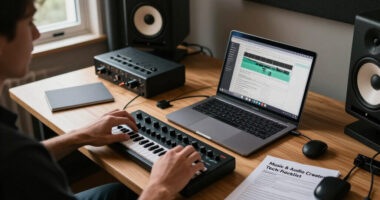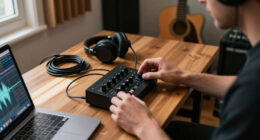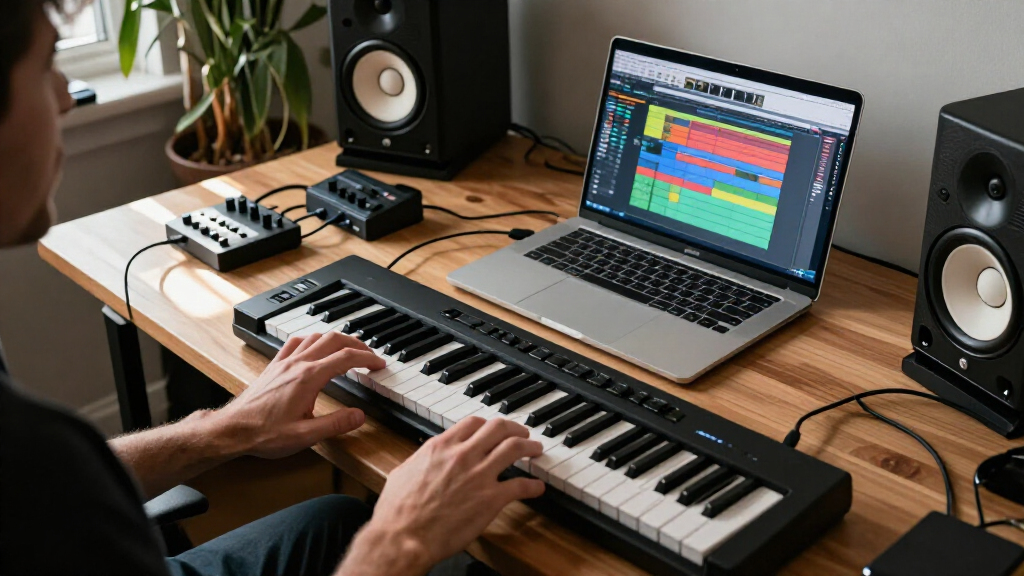
MIDI keyboards for music production range from compact controllers for quick ideas to larger boards with controls for shaping a full DAW session. My best overall pick is the Novation FLkey 49 for producers who work in FL Studio and want a keyboard built around that workflow. The Arturia KeyLab Essential MK3 61 stands out for its broader software-focused control, while the M-Audio Oxygen Pro Mini suits a smaller desk and portable setup. The main tradeoffs are key count, software integration, portability, and how much hands-on control you need; more keys and controls take up space, while compact boards can limit two-handed playing. Read on for the full breakdown of all 15 options and how I’d match them to different production needs.

Get audio and creator gear delivered free with Prime
- Fast, free delivery on millions of items
- Prime Video, Amazon Music and more included
- Member-only deals all year
Complete the kit


Key Takeaways
- DAW fit changes the ranking: the Novation FLkey 49 is the clearest choice for FL Studio users, while the Arturia KeyLab Essential MK3 models offer a more software-centered general-purpose setup.
- Key count is a practical workflow decision: the 25-key MPK Mini IV and compact controllers suit riffs and desk-limited studios, while 49- and 61-key boards are better for wider parts and two-handed playing.
- More controls do not automatically mean a better fit: Oxygen Pro models and MPK options provide hands-on features, but a simpler board such as the Keystation 49 MK3 may suit producers who mainly need to play notes.
- Portability creates real compromises: the Arturia MicroLab Mk3, Akai LPK25, DaierTek Bluetooth model, and CME Xkey 37 prioritize compact setups, while their form factors differ from conventional full-size keyboards.
- The strongest picks serve distinct needs: the roundup separates DAW-specific integration, broad studio control, basic note entry, and compact mobility rather than treating one feature set as right for every producer.
| Akai Professional MPK Mini IV 25-Key USB-C MIDI Keyboard Controller, Black |  | Best Overall for Compact Production | Keys: 25 velocity-sensitive mini keys | Pads: 8 velocity- and pressure-sensitive RGB MPC pads | Knobs: 8 assignable 360-degree knobs | VIEW LATEST PRICE | See Our Full Breakdown |
| Arturia MicroLab Mk3 Universal MIDI Controller, White |  | Best for Simple, Portable Setups | Keys: 25 slim keys | Connectivity: USB Type-C | Controls: Four buttons and two touch strips | VIEW LATEST PRICE | See Our Full Breakdown |
| M-Audio Oxygen 49 MKV USB MIDI Keyboard Controller |  | Best for Full-Range Playing and DAW Control | Keys: 49 velocity-sensitive, full-size keys | Connectivity: USB | Drum pads: 8 backlit pads with Note Repeat | VIEW LATEST PRICE | See Our Full Breakdown |
| Akai Professional MPK Mini MK3 25-Key USB MIDI Keyboard Controller |  | Best Value for Beat-Making Basics | Keys: 25 mini velocity-sensitive keys | Connectivity: USB 2.0 Type-B | Pads: 8 velocity-sensitive MPC-style pads | VIEW LATEST PRICE | See Our Full Breakdown |
| M-Audio Oxygen Pro Mini 32-Key USB MIDI Keyboard Controller |  | Best Compact Controller with Extra Key Range | Keys: 32 velocity-sensitive semi-weighted mini keys | Connectivity: USB | Drum pads: 8 RGB backlit, velocity-sensitive, assignable pads with Note Repeat | VIEW LATEST PRICE | See Our Full Breakdown |
| Novation FLkey 49 USB MIDI Controller Keyboard |  | Best for FL Studio | Keys: 49 semi-weighted keys | Pads: 16 | Faders: 9 | VIEW LATEST PRICE | See Our Full Breakdown |
| M-Audio Oxygen Pro 61 USB MIDI Keyboard Controller |  | Best for Performance Controls | Keys: 61 semi-weighted, velocity-sensitive keys with aftertouch | Drum pads: 16 RGB backlit, velocity-sensitive pads with Note Repeat | Knobs: 8 assignable | VIEW LATEST PRICE | See Our Full Breakdown |
| Akai Professional LPK25 25-Key USB MIDI Keyboard Controller |  | Best Compact Pick | Keys: 25 responsive mini keys | Connectivity: USB | Controls: Octave up/down buttons and sustain button | VIEW LATEST PRICE | See Our Full Breakdown |
| Arturia KeyLab Essential MK3 61-Key USB MIDI Keyboard Controller with Analog Lab V | 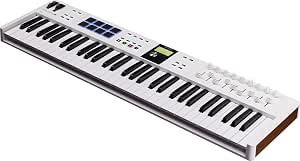 | Best for Broad DAW and Instrument Control | Keys: 61 | Pads: 8 velocity- and pressure-sensitive RGB pads | Faders and encoders: 9 faders and 9 encoders | VIEW LATEST PRICE | See Our Full Breakdown |
| M-Audio Keystation 49 MK3 USB MIDI Controller |  | Best Straightforward 49-Key Starter | Keys: 49 full-size velocity-sensitive keys | Connectivity: USB-MIDI | Power: USB-powered; no separate power supply required | VIEW LATEST PRICE | See Our Full Breakdown |
| Akai Professional MPK Mini Plus 37-Key USB MIDI Keyboard Controller |  | Best for Hybrid Studio Setups | Keys: 37 velocity-sensitive mini keys | Connectivity: USB, MIDI I/O, and CV/Gate | Pads: 8 RGB MPC pads | VIEW LATEST PRICE | See Our Full Breakdown |
| Arturia KeyLab Essential mk3 61-Key USB MIDI Controller, Rose Quartz |  | Best for Beginners Building a DAW Setup | Keys: 61 full-size keys | Key action: Semi-weighted | Connectivity: USB | VIEW LATEST PRICE | See Our Full Breakdown |
| Arturia KeyLab mk3 61-Key USB MIDI Keyboard Controller, Black |  | Best Premium Performance Controller | Keys: 61 with aftertouch | Connectivity: USB-C | Pads: 12 pressure-sensitive performance pads | VIEW LATEST PRICE | See Our Full Breakdown |
| DaierTek 25-Key Portable Bluetooth and USB MIDI Keyboard Controller |  | Best for Wireless Mobile Production | Keys: 25 velocity-sensitive keys | Connectivity: Bluetooth and USB MIDI | Pads: 8 RGB backlit velocity-sensitive pads with aftertouch | VIEW LATEST PRICE | See Our Full Breakdown |
| CME Xkey 37 USB Limited Edition MIDI Keyboard |  | Best Compact Full-Size Keyboard | Keys: 37 full-size velocity-sensitive keys with configurable polyphonic aftertouch | Connectivity: USB | Body: Anodized aluminum | VIEW LATEST PRICE | See Our Full Breakdown |
| MIDI keyboards for music production | Keys | Connectivity | Pads | Included software |
|---|---|---|---|---|
| Akai Professional MPK Mini IV | 25 velocity-sensitive mini keys | USB-C and full-size MIDI Out | 8 velocity- and pressure-sensitive RGB MPC pads | — |
| Arturia MicroLab Mk3 Universal | 25 slim keys | USB Type-C | — | Analog Lab Intro and Ableton Live Lite |
| M-Audio Oxygen 49 MKV USB MIDI | 49 velocity-sensitive, full-size keys | USB | — | MPC Beats, Ableton Live Lite, AIR Music Tech Hybrid 3 and Mini Grand, and 5 MPC Expansion packs |
| Akai Professional MPK Mini MK3 | 25 mini velocity-sensitive keys | USB 2.0 Type-B | 8 velocity-sensitive MPC-style pads | — |
| M-Audio Oxygen Pro Mini 32-Key | 32 velocity-sensitive semi-weighted mini keys | USB | — | MPC Beats, Ableton Live Lite, AIR Music Tech virtual instruments, and Akai Professional MPC Expansion Packs |
| Novation FLkey 49 USB MIDI Con | 49 semi-weighted keys | USB-C and 5-pin MIDI Out | 16 | — |
| M-Audio Oxygen Pro 61 USB MIDI | 61 semi-weighted, velocity-sensitive keys with aftertouch | USB and 5-pin MIDI output | — | MPC Beats, Ableton Live Lite, AIR Music Tech virtual instruments, and Akai Professional MPC Expansion Packs |
| Akai Professional LPK25 25-Key | 25 responsive mini keys | USB | — | — |
| Arturia KeyLab Essential MK3 6 | 61 | USB | 8 velocity- and pressure-sensitive RGB pads | Analog Lab V, UVI Model D piano, NI The Gentleman, Loopcloud subscription, and Melodics subscription |
| M-Audio Keystation 49 MK3 USB | 49 full-size velocity-sensitive keys | USB-MIDI | — | MPC Beats, Ableton Live Lite, Velvet, XPand2, Mini Grand, and Touch Loops |
| Akai Professional MPK Mini Plu | 37 velocity-sensitive mini keys | USB, MIDI I/O, and CV/Gate | 8 RGB MPC pads | MPC Beats |
| Arturia KeyLab Essential mk3 6 | 61 full-size keys | USB | 8 velocity- and pressure-sensitive RGB backlit pads | Analog Lab, Ableton Live Lite, UVI Grand Piano Model D, and NI The Gentleman Piano |
| Arturia KeyLab mk3 61-Key USB | 61 with aftertouch | USB-C | 12 pressure-sensitive performance pads | — |
| DaierTek 25-Key Portable Bluet | 25 velocity-sensitive keys | Bluetooth and USB MIDI | 8 RGB backlit velocity-sensitive pads with aftertouch | — |
| CME Xkey 37 USB Limited Editio | 37 full-size velocity-sensitive keys with configurable polyphonic aftertouch | USB | — | — |
More Details on Our Top Picks
Akai Professional MPK Mini IV 25-Key USB-C MIDI Keyboard Controller, Black
The MPK Mini IV makes the strongest all-around case for producers who want keys, beat programming, and sound shaping in one small controller. Its USB-C and full-size MIDI Out support both computer-based sessions and compatible hardware, while the color display, eight knobs, and pressure-sensitive RGB pads put useful production controls close at hand. Chord and scale modes can help build ideas without extensive keyboard technique, and the included sound collection gives new projects a starting point. Compared with the Arturia MicroLab Mk3, it offers substantially more hands-on controls; unlike the M-Audio Oxygen Pro Mini, it has 25 rather than 32 keys. The tradeoff is the familiar mini-key limitation, and some bundled software is available only as time-limited trials.
Pros:- USB-C plus full-size MIDI Out connects to computer-based and compatible hardware setups
- Pressure-sensitive RGB pads and eight assignable knobs provide hands-on beat and sound control
- Color display, arpeggiator, chord mode, and scale mode support quick idea-making
- Includes a collection of more than 1,000 sounds and DAW integration
Cons:- 25 mini keys restrict playing range and may feel cramped for pianists
- Some included software is offered as time-limited trials
- The compact key count is less suited to two-handed parts than 32- or 49-key options
Best for: Producers building beats or sketching arrangements who want a compact controller with pads, assignable knobs, onboard guidance, and a hardware MIDI connection.
Not ideal for: Pianists who need full-size keys or a wide playing range, and buyers who want every bundled software component to remain available without trial limits.
- Keys:25 velocity-sensitive mini keys
- Pads:8 velocity- and pressure-sensitive RGB MPC pads
- Knobs:8 assignable 360-degree knobs
- Connectivity:USB-C and full-size MIDI Out
- Display:Full-color screen
- Performance features:Arpeggiator, chord mode, and scale mode
- Included sounds:Studio Instrument Collection with more than 1,000 sounds
- Compatibility:Mac, Windows, and mobile setups
Our verdict“Choose the MPK Mini IV if you want a feature-rich portable production hub and can work comfortably on mini keys.”
Arturia MicroLab Mk3 Universal MIDI Controller, White
The MicroLab Mk3 is the pared-back choice here: its 25 slim keys, four buttons, and two touch strips keep the control layout approachable and the unit easy to carry. USB-C powers it, so there is no separate power supply to pack, and the included Analog Lab Intro presets and Ableton Live Lite give computer-based producers a practical starting point. That simplicity is also its main compromise. Compared with the Akai MPK Mini IV, the MicroLab lacks drum pads, a bank of assignable knobs, and a display, so it is less suited to hands-on beat programming or detailed parameter control. Its touch strips provide quick expressive adjustment, but buyers seeking a controller that can manage several production tasks at once will get more from the M-Audio Oxygen Pro Mini.
Pros:- Compact, lightweight design is easy to carry between home and mobile setups
- USB-C power keeps the setup simple
- Two touch strips provide quick expressive control without a complex panel
- Includes Analog Lab Intro with 500 presets and Ableton Live Lite
Cons:- 25 keys limit playing range
- No dedicated drum pads or bank of assignable knobs for hands-on production
- The listed software requires a compatible Mac or Windows computer
Best for: Mobile producers and beginners who want a lightweight, USB-C controller for playing parts and starting software-based sessions on a Mac or Windows computer.
Not ideal for: Beatmakers who want dedicated drum pads and multiple assignable knobs, or players who need more than 25 keys for broader parts.
- Keys:25 slim keys
- Connectivity:USB Type-C
- Controls:Four buttons and two touch strips
- Included software:Analog Lab Intro and Ableton Live Lite
- Preset library:500 presets
- Compatible platforms:Mac, Windows 10, and Windows 11
- Power:USB-powered
- Materials:Plastic and rubber
Our verdict“Pick the MicroLab Mk3 if portability and a simple playing surface matter more than pads or extensive controls.”
M-Audio Oxygen 49 MKV USB MIDI Keyboard Controller
For producers who play melodic parts as often as they program beats, the Oxygen 49 MKV is the lineup’s most practical step up to full-size keys. Its 49-key range makes wider chords and two-handed parts less cramped than on the Akai MPK Mini IV or Oxygen Pro Mini. Eight pads, eight knobs, and nine faders also give it a stronger mixer-and-performance role than the smaller controllers, while DAW auto-mapping can reduce manual setup. Smart Chord, Smart Scale, and the arpeggiator add ways to shape ideas without relying on an elaborate control surface. The tradeoff is size: at 6.7 pounds and over 32 inches long, it is less suited to mobile work. Its USB connection also requires a device with a compatible port.
Pros:- 49 velocity-sensitive full-size keys allow broader and more comfortable playing than mini-key controllers
- Eight pads, eight knobs, and nine faders support beat-making and hands-on DAW control
- DAW auto-mapping can simplify controller setup
- Smart Chord, Smart Scale, arpeggiator, and bundled production software support varied workflows
Cons:- Its 32-inch-plus length and 6.7-pound weight make it less portable than compact options
- Requires a device with a compatible USB port
- Bundled software requires downloading from the M-Audio website
Best for: Home-studio producers who want full-size keys for expressive parts alongside pads, faders, and mapped DAW controls.
Not ideal for: Travel-focused musicians, desk setups with limited space, and buyers who specifically need a standalone hardware MIDI output.
- Keys:49 velocity-sensitive, full-size keys
- Connectivity:USB
- Drum pads:8 backlit pads with Note Repeat
- Assignable controls:8 knobs and 9 faders
- Features:DAW auto-mapping, Smart Chord, Smart Scale, arpeggiator, pitch and mod wheels
- Sustain input:Yes
- Dimensions:9.6 x 32.04 x 3.6 inches
- Weight:6.7 pounds
- Included software:MPC Beats, Ableton Live Lite, AIR Music Tech Hybrid 3 and Mini Grand, and 5 MPC Expansion packs
Our verdict“Choose the Oxygen 49 MKV if full-size keys and faders matter more than a small travel footprint.”
Akai Professional MPK Mini MK3 25-Key USB MIDI Keyboard Controller
The MPK Mini MK3 packs the core beat-making controls into a compact, USB-powered design: 25 velocity-sensitive mini keys, eight MPC-style pads, eight knobs, and a pitch-and-modulation joystick. Its arpeggiator, Note Repeat, and Full Level features make it a useful fit for rhythm-focused sketches, while MPC Beats and included sound content give new producers software to begin with. Compared with the newer MPK Mini IV, this model has a simpler display-free layout and older USB 2.0 Type-B connectivity; the IV adds a color screen, pressure-sensitive pads, USB-C, and full-size MIDI Out. The MK3 remains a capable, straightforward option, but its mini keys limit comfortable melodic playing, and production depends on a compatible computer and DAW.
Pros:- Combines mini keys, eight pads, eight knobs, and a pitch-and-modulation joystick
- Arpeggiator, Note Repeat, and Full Level support rhythm-focused production
- Compact and USB-powered for portable computer-based sessions
- Includes MPC Beats, three virtual instruments, and 2 GB of sound content
Cons:- Mini keys may feel cramped and restrict melodic playing
- USB 2.0 Type-B is less current than the USB-C connection on the MPK Mini IV
- Requires a compatible computer and DAW for production
Best for: Beginning beatmakers who want keys, pads, knobs, and basic performance tools in one compact controller for a computer-based studio.
Not ideal for: Players who need full-size keys, a larger range, USB-C, or a hardware MIDI output for connecting external instruments.
- Keys:25 mini velocity-sensitive keys
- Connectivity:USB 2.0 Type-B
- Pads:8 velocity-sensitive MPC-style pads
- Knobs:8 assignable 360-degree knobs
- Additional controls:4-way pitch and modulation joystick
- Performance features:Arpeggiator, Note Repeat, and Full Level
- Compatibility:Windows and Mac
- Included software and content:MPC Beats, 3 virtual instruments, and 2 GB of sound content
Our verdict“The MPK Mini MK3 suits computer-based beatmakers who want an all-in-one compact layout and do not need the newer MPK Mini IV’s display or connections.”
M-Audio Oxygen Pro Mini 32-Key USB MIDI Keyboard Controller
The Oxygen Pro Mini splits the difference between a 25-key controller and the larger Oxygen 49 MKV. Its 32 velocity-sensitive semi-weighted mini keys give melodies and chord parts more room than the Akai 25-key models, while keeping the controller compact enough for a smaller desk. Eight RGB pads, four assignable controls, an OLED screen, and pitch and modulation wheels make it more hands-on than the Arturia MicroLab Mk3. DAW auto-mapping, Smart Chord, Smart Scale, and the arpeggiator further support production without requiring a separate control surface. The compromise is that the keys are still mini-sized, and its USB-powered workflow depends on a connected computer. The listed 1/8-inch MIDI Out also differs from the Oxygen 49’s USB-focused connection setup.
Pros:- 32 velocity-sensitive semi-weighted mini keys offer more range than 25-key controllers
- Eight assignable RGB pads include Note Repeat for beat programming
- OLED screen, pitch and modulation wheels, and four assignable controls support hands-on use
- DAW auto-mapping and included production software provide a ready computer-based workflow
Cons:- Mini keys may feel cramped for players accustomed to full-size keyboards
- USB-powered operation requires a connected computer
- The four assignable controls offer less knob-and-fader capacity than the Oxygen 49 MKV
Best for: Producers with limited desk space who want more key range than a 25-key controller, plus pads, DAW controls, and software for computer-based production.
Not ideal for: Pianists who prefer full-size keys, or musicians seeking a self-contained controller that does not rely on a connected computer for USB power.
- Keys:32 velocity-sensitive semi-weighted mini keys
- Connectivity:USB
- Drum pads:8 RGB backlit, velocity-sensitive, assignable pads with Note Repeat
- Assignable controls:4 knobs, buttons, and faders
- Additional controls:OLED screen, arpeggiator, pitch and modulation wheels
- MIDI output:1/8-inch MIDI Out
- Sustain input:Sustain pedal input
- Compatibility:Mac and Windows
- Included software:MPC Beats, Ableton Live Lite, AIR Music Tech virtual instruments, and Akai Professional MPC Expansion Packs
Our verdict“Choose the Oxygen Pro Mini if you need more playable range than a 25-key controller without moving up to a full-size 49-key board.”
Novation FLkey 49 USB MIDI Controller Keyboard
The FLkey 49 is the clearest choice here for producers who want to operate FL Studio from the keyboard rather than reach for the mouse. Dedicated sequencer, Mixer, and Channel Rack controls pair with nine faders, eight encoders, and 16 pads, making common arrangement and mixing tasks more immediate than on the simpler M-Audio Keystation 49 MK3. Its Scale and Chord modes can also help turn ideas into playable parts without requiring advanced keyboard technique.
The tradeoff is its specialization: its hands-on controls are most compelling inside FL Studio, so it is less flexible as a general-purpose controller for switching among DAWs. The Keystation is a more straightforward fit for basic playing across software, while the FLkey makes more sense when FL Studio is the center of the production setup. Its 5-pin MIDI Out also gives it a route to external instruments.
Pros:- Dedicated controls for FL Studio sequencer, Mixer, and Channel Rack workflows
- Combines 16 pads, nine faders, and eight encoders for hands-on production
- Scale and Chord modes support melodic playing and idea generation
- USB-C and 5-pin MIDI Out support computer and external-instrument setups
Cons:- Its most distinctive workflow features are designed primarily for FL Studio
- Semi-weighted keys may not suit players seeking a piano-like key action
Best for: FL Studio producers who want dedicated control of the sequencer, Channel Rack, and mixer, along with pads for finger drumming.
Not ideal for: Producers who regularly switch between several DAWs or want a controller with broad, comparable hands-on integration across different software.
- Keys:49 semi-weighted keys
- Pads:16
- Faders:9
- Encoders:8
- Connectivity:USB-C and 5-pin MIDI Out
- Software compatibility:FL Studio
- Other controls:Pitch and modulation wheels; Scale and Chord modes
- Included components:FLkey 49, USB cable, and safety information sheet
Our verdict“Choose the FLkey 49 if FL Studio is your main DAW and you want dedicated production controls; choose the Keystation 49 MK3 for a simpler, more general MIDI keyboard.”
M-Audio Oxygen Pro 61 USB MIDI Keyboard Controller
The Oxygen Pro 61 earns its place for producers who need a broad playing range and a dense set of performance controls in one controller. Its 61 velocity-sensitive semi-weighted keys with aftertouch give more room for two-handed parts than the 49-key Novation FLkey 49, while assignable zones support splitting or layering sounds. Sixteen RGB pads, nine faders, and eight knobs provide plenty of hands-on access to beats and mix parameters.
DAW auto-mapping and performance tools make it a more adaptable choice than the FLkey’s FL Studio-focused layout, and the included MPC Beats, Ableton Live Lite, and instruments offer a starting point for a computer-based setup. The tradeoffs are a plastic build and reliance on a computer and music software for its main functions. Its larger 61-key footprint also takes more desk space than compact controllers such as the Akai LPK25.
Pros:- 61 semi-weighted keys with velocity response and aftertouch
- Assignable zones support split and layered performance setups
- 16 RGB pads, eight knobs, and nine faders provide broad hands-on control
- DAW auto-mapping and included production software help start a computer-based workflow
Cons:- Plastic construction may be less appealing to buyers seeking a more substantial build
- Its main functions depend on a computer and music production software
- The 61-key format occupies more desk and carrying space than compact options
Best for: Computer-based producers who want 61 keys, aftertouch, assignable zones, and plenty of mapped controls for playing and arranging.
Not ideal for: Travel-focused musicians or buyers seeking a self-contained instrument that works without a computer and production software.
- Keys:61 semi-weighted, velocity-sensitive keys with aftertouch
- Drum pads:16 RGB backlit, velocity-sensitive pads with Note Repeat
- Knobs:8 assignable
- Faders:9 assignable
- Connectivity:USB and 5-pin MIDI output
- Power:USB-powered
- Additional input:Sustain pedal input
- Included software:MPC Beats, Ableton Live Lite, AIR Music Tech virtual instruments, and Akai Professional MPC Expansion Packs
Our verdict“Pick the Oxygen Pro 61 for a large playing range and extensive assignable controls, but skip it if portability or computer-free use matters more.”
Akai Professional LPK25 25-Key USB MIDI Keyboard Controller
The Akai LPK25 is the space-saving option for producers who need keys beside a laptop or another controller, not a full studio keyboard. Its 25 mini keys and USB-powered setup keep the footprint and connection needs modest, while octave buttons let a player reach notes beyond its physical range. The built-in arpeggiator, clock, and eight programmable presets add useful creative control in a small package.
Compared with the M-Audio Keystation 49 MK3, the LPK25 gives up full-size keys and a wider range for portability and a built-in arpeggiator. That trade is sensible for sketching melodies, triggering parts, or fitting a controller into a crowded desk, but less so for extended two-handed playing. It also needs a computer or compatible USB-enabled gear; it is not a standalone instrument. Choose it as a compact companion, rather than a replacement for a larger main keyboard.
Pros:- Compact 25-key layout fits crowded desks and mobile setups
- Built-in arpeggiator and clock provide creative control without adding another controller
- Eight programmable presets can store different control setups
- USB-powered plug-and-play setup works with Mac and PC
Cons:- Mini keys may feel cramped for players accustomed to full-size keyboards
- Limited key range makes it less suitable for extended two-handed playing
- Requires a computer or compatible USB-enabled gear
Best for: Laptop-based producers, traveling musicians, and studio owners who need a small keyboard for sketching melodies or adding a second key input.
Not ideal for: Players who want full-size keys, a broad playing range, or a primary keyboard for two-handed parts.
- Keys:25 responsive mini keys
- Connectivity:USB
- Controls:Octave up/down buttons and sustain button
- Arpeggiator:Built-in arpeggiator and clock
- Presets:8 programmable preset slots
- Power:USB-powered
- Compatibility:Mac and PC; compatible with popular music production applications
Our verdict“Choose the LPK25 as a portable sketching keyboard or compact secondary controller, not as your main instrument for full-range playing.”
Arturia KeyLab Essential MK3 61-Key USB MIDI Keyboard Controller with Analog Lab V
The KeyLab Essential MK3 61 stands out for producers who want one controller to work across several DAWs and a large software instrument bundle to explore. Its custom scripts support Ableton Live, Logic Pro X, FL Studio, and other listed software, giving it broader DAW reach than the FL Studio-centered Novation FLkey 49. A 2.5-inch LCD provides parameter feedback, while nine faders, nine encoders, and eight pressure-sensitive RGB pads put mixing and performance controls within reach.
The included Analog Lab V, two piano libraries, and subscriptions make this a particularly appealing package for building a virtual-instrument workflow. That breadth comes with practical limits: it has only one USB port, and its 61-key, 6.8-pound body is less convenient to move than the Akai LPK25. This is better suited to a fixed production desk than a minimal travel rig.
Pros:- Custom DAW scripts support Ableton Live, Logic Pro X, FL Studio, and more
- Analog Lab V, two piano libraries, and subscriptions provide a substantial software bundle
- Nine faders, nine encoders, and pressure-sensitive RGB pads support hands-on production
- 2.5-inch LCD offers real-time parameter feedback
Cons:- A single USB port limits simultaneous external connections
- At 6.8 pounds and 35 inches wide, it is less convenient for portable setups
Best for: Producers working across supported DAWs who want extensive software instruments and hands-on controls for keys, pads, and mixing.
Not ideal for: Mobile producers who prioritize a light, compact controller or users who need multiple USB connections directly on the keyboard.
- Keys:61
- Pads:8 velocity- and pressure-sensitive RGB pads
- Faders and encoders:9 faders and 9 encoders
- Display:2.5-inch LCD
- Connectivity:USB
- Supported DAWs:Ableton Live, Logic Pro X, FL Studio, Avid Pro Tools, and others via custom scripts
- Included software:Analog Lab V, UVI Model D piano, NI The Gentleman, Loopcloud subscription, and Melodics subscription
- Dimensions and weight:9.4 x 35 x 2.8 inches; 6.8 pounds
Our verdict“Choose the KeyLab Essential MK3 if you want broad DAW control and a rich virtual-instrument bundle at a studio desk, rather than a travel-friendly controller.”
M-Audio Keystation 49 MK3 USB MIDI Controller
The Keystation 49 MK3 is the uncomplicated choice for producers who want a conventional playing surface to control virtual instruments and record parts. Its 49 full-size velocity-sensitive keys make it more comfortable for melodic and chord work than the Akai LPK25’s mini keys, while octave buttons extend its range when needed. Pitch and modulation wheels, a volume fader, transport controls, and a sustain-pedal input cover useful performance and DAW basics without a bank of pads and encoders to configure.
That simplicity is also the main compromise. Compared with the Novation FLkey 49, it lacks dedicated FL Studio controls, pads, and multiple faders, so it is less suited to hands-on beat programming or mixer work. USB power and Mac/PC compatibility make setup straightforward, and the included software supports getting started. Choose it for playing and recording parts, not for deep DAW control.
Pros:- 49 full-size velocity-sensitive keys support expressive playing
- USB-powered operation needs no separate power supply
- Pitch and modulation wheels, octave buttons, and transport controls cover core tasks
- Bundled software includes MPC Beats, Ableton Live Lite, and virtual instruments
Cons:- No drum pads or bank of faders and encoders for hands-on beat and mixer control
- Apple to USB Camera Adapter is required separately for iOS use
- Sustain pedal is not included
Best for: New or returning producers who want full-size keys for virtual instruments and basic DAW controls without a more elaborate pad-and-fader layout.
Not ideal for: Beatmakers seeking dedicated drum pads, extensive mixer control, or a controller tailored to a specific DAW workflow.
- Keys:49 full-size velocity-sensitive keys
- Connectivity:USB-MIDI
- Power:USB-powered; no separate power supply required
- Controls:Volume fader, transport and directional buttons, pitch and modulation wheels, and octave buttons
- Sustain pedal input:1/4-inch (6.3 mm)
- Compatibility:Mac and PC; iOS devices via Apple to USB Camera Adapter
- Included software:MPC Beats, Ableton Live Lite, Velvet, XPand2, Mini Grand, and Touch Loops
Our verdict“Choose the Keystation 49 MK3 for straightforward full-size-key playing and basic production controls; choose the FLkey 49 if dedicated FL Studio operation matters more.”
Akai Professional MPK Mini Plus 37-Key USB MIDI Keyboard Controller
I’d pick the MPK Mini Plus when a compact controller needs to reach beyond a computer-based DAW. Its 37 mini keys give more room for melodies than the 25-key DaierTek, while MIDI I/O and CV/Gate let it connect with external MIDI instruments and modular gear. The 64-step sequencer can sketch drum patterns and a melody or chord part without relying on a DAW, a useful distinction from the computer-dependent Arturia KeyLab Essential mk3. Eight MPC pads and eight assignable knobs add hands-on control for beat making and parameter changes. The tradeoff is that its keys are still mini-sized, and many production workflows will require a computer or compatible equipment. I’d favor it over a simpler travel keyboard when hardware connectivity and sequencing matter more than full-size keys.
Pros:- 37 keys provide more playing range than common 25-key controllers.
- MIDI I/O and CV/Gate support connections to hardware and modular gear.
- Built-in 64-step sequencer can create drum and melodic or chord parts.
- Eight RGB MPC pads, eight knobs, MPC Beats, and NKS integration support varied production workflows.
Cons:- Mini keys may feel cramped for players used to full-size keyboards.
- Many production workflows still depend on a computer or compatible external gear.
Best for: Producers who want a small keyboard for DAW work, external MIDI gear, or modular equipment, with sequencing and beat controls onboard.
Not ideal for: Pianists who need full-size keys, or musicians seeking a self-contained instrument with built-in sounds.
- Keys:37 velocity-sensitive mini keys
- Connectivity:USB, MIDI I/O, and CV/Gate
- Pads:8 RGB MPC pads
- Assignable knobs:8
- Sequencer:64-step; one drum track and one melody or chord track
- Compatibility:Mac and Windows
- Included software:MPC Beats
Our verdict“Choose the MPK Mini Plus if you want compact keys with sequencing and hardware connections; skip it if full-size piano-style keys are your priority.”
Arturia KeyLab Essential mk3 61-Key USB MIDI Controller, Rose Quartz
The KeyLab Essential mk3 makes sense for a new producer who wants room to play two-handed parts and a useful set of controls without stepping up to the heavier, more elaborate KeyLab mk3. Its 61 full-size semi-weighted keys are a substantial practical advantage over the mini keys on the Akai MPK Mini Plus, especially for learning piano parts or recording broad chord voicings. Nine faders and nine rotary encoders put mixing and instrument parameters within reach, while the pressure-sensitive RGB pads add performance input. The bundled Analog Lab, Ableton Live Lite, and piano software help get a computer-based setup started. Its main limitation is that it connects through USB and requires a laptop or PC for the supported software; it isn’t a standalone sound source. The larger footprint also suits a fixed desk better than a travel rig.
Pros:- 61 full-size semi-weighted keys accommodate two-handed parts more comfortably than compact mini-key controllers.
- Nine faders and nine encoders provide hands-on control of mixing and software instruments.
- Eight velocity- and pressure-sensitive RGB pads add expressive beat and clip input.
- Includes Analog Lab, Ableton Live Lite, and piano software titles.
Cons:- Supported software requires a laptop or PC, so it is not a standalone instrument.
- Its 61-key layout takes more desk and transport space than the MPK Mini Plus or DaierTek.
Best for: New DAW producers who want full-size keys, hands-on mixer controls, and bundled instruments for a home-studio desk.
Not ideal for: Travel-focused musicians or players who need a keyboard that works independently of a computer.
- Keys:61 full-size keys
- Key action:Semi-weighted
- Connectivity:USB
- Pads:8 velocity- and pressure-sensitive RGB backlit pads
- Faders:9
- Rotary encoders:9
- Included software:Analog Lab, Ableton Live Lite, UVI Grand Piano Model D, and NI The Gentleman Piano
- Dimensions and weight:9.4 × 35 × 2.8 inches; 6.8 pounds
Our verdict“Pick this model for a computer-based home studio that benefits from full-size keys and bundled software, not for a minimal travel setup.”
Arturia KeyLab mk3 61-Key USB MIDI Keyboard Controller, Black
I’d choose the KeyLab mk3 for a studio player who wants expressive control across keys, pads, and pedals rather than the simpler, more entry-oriented layout of the KeyLab Essential mk3. Its 61 keys with aftertouch allow pressure-based expression after a note is played, while 12 pressure-sensitive pads give more performance surfaces than the Essential’s eight. Nine assignable encoders and sustain and auxiliary pedal inputs make it easier to shape sounds and build a more personalized setup. The aluminum-and-wood construction and USB-C connection also set it apart from the lighter Essential. That extra capability comes with a considerable physical tradeoff: at 18.7 pounds, it is much less appealing as a portable controller. I’d choose the Essential for a lighter desk setup, but this model for players who value expressive input and pedal flexibility.
Pros:- 61 keys with aftertouch add expressive control beyond basic velocity.
- Twelve pressure-sensitive performance pads provide more pad inputs than the KeyLab Essential mk3.
- Sustain and auxiliary pedal inputs support expanded performance setups.
- USB-C connectivity and aluminum-and-wood materials suit a permanent studio workstation.
Cons:- At 18.7 pounds, it is considerably less convenient to carry than compact controllers.
- Its expanded performance controls may be unnecessary for buyers who mainly need basic MIDI note input.
Best for: Experienced producers and keyboard performers who want aftertouch, pressure-sensitive pads, pedal inputs, and a substantial studio controller.
Not ideal for: Mobile musicians or buyers who want a lightweight keyboard with a straightforward control set.
- Keys:61 with aftertouch
- Connectivity:USB-C
- Pads:12 pressure-sensitive performance pads
- Encoders:9 assignable
- Pedal inputs:Sustain and auxiliary
- Supported platforms:Mac and Windows 10
- Materials:Aluminum and wood
- Dimensions and weight:34.37 × 11.02 × 2.91 inches; 18.7 pounds
Our verdict“Choose the KeyLab mk3 for expressive studio performance and pedal integration; choose the lighter KeyLab Essential mk3 if portability matters more.”
DaierTek 25-Key Portable Bluetooth and USB MIDI Keyboard Controller
For producers who make music away from a desk, the DaierTek combines a rechargeable battery with Bluetooth MIDI and support for Windows, Mac, Android, and iOS. That makes it a different kind of travel option from the USB-only CME Xkey 37: the DaierTek gives you wireless connection, pads, knobs, and touch strips, while the Xkey offers full-size keys and a notably thin body. Eight velocity-sensitive pads, eight encoders, pitch and modulation strips, and smart chord, scale, and arpeggio functions provide several ways to sketch parts on a small controller. The compromise is its 25-key range, which limits two-handed playing, and it produces no sound without music software or a DAW. Bluetooth setup can also depend on the app or Windows MIDI driver you use.
Pros:- Bluetooth and USB MIDI offer flexible connections for supported devices.
- Built-in rechargeable battery is listed for about 16 hours of use.
- Combines keys, velocity-sensitive pads, encoders, a display, and touch strips in one portable controller.
- Smart chord, smart scale, and arpeggio features support quick idea generation.
Cons:- The 25-key layout limits playing range compared with the 37-key MPK Mini Plus and CME Xkey.
- It makes no sound without compatible music software or a DAW.
- Bluetooth MIDI setup may require a compatible app or a Windows MIDI driver.
Best for: Mobile producers who want a battery-powered controller for compatible phones, tablets, or computers and value wireless MIDI.
Not ideal for: Players who need a broad keyboard range, full-size keys, or an instrument that makes sound without a DAW or music app.
- Keys:25 velocity-sensitive keys
- Connectivity:Bluetooth and USB MIDI
- Pads:8 RGB backlit velocity-sensitive pads with aftertouch
- Knobs:8 assignable encoders
- Battery:2,000 mAh; about 16 hours of battery life
- Compatible platforms:Windows, Mac OS, Android, and iOS
- Additional controls:Mini display and 2 capacitive touch strips
- Sound output:Requires music software or a DAW
Our verdict“Pick the DaierTek for wireless, battery-powered mobile production, but choose a 37-key controller if playing range matters more.”
CME Xkey 37 USB Limited Edition MIDI Keyboard
The CME Xkey 37 is the pick I’d make when portability matters but mini keys are a deal-breaker. Its 37 full-size velocity-sensitive keys give more comfortable note spacing than the Akai MPK Mini Plus, and configurable polyphonic aftertouch adds a layer of expression that is unusual in such a thin controller. At less than two pounds and just 0.6 inches thick, it is much easier to slip into a bag than either 61-key Arturia. The tradeoff is a more focused control surface: unlike the MPK Mini Plus, the Xkey’s listed feature set does not include pads, knobs, or a built-in sequencer. It connects over USB rather than Bluetooth, and the Xcable is not included. I’d favor it for mobile keyboard playing, not for producers who want pads and mixing controls integrated into the controller.
Pros:- 37 full-size velocity-sensitive keys provide more comfortable spacing than mini-key alternatives.
- Configurable polyphonic aftertouch supports expressive playing.
- Anodized aluminum body is 0.6 inches thin and weighs less than two pounds.
- Works across Windows, macOS, iOS, Linux, and Android without drivers.
Cons:- The listed feature set has no pads, knobs, or onboard sequencer, unlike the MPK Mini Plus.
- The Xcable is not included.
Best for: Traveling producers and keyboard players who want full-size keys, polyphonic aftertouch, and broad device compatibility in a very thin controller.
Not ideal for: Beat makers who want built-in pads, knobs, sequencing, or wireless MIDI in one device.
- Keys:37 full-size velocity-sensitive keys with configurable polyphonic aftertouch
- Connectivity:USB
- Body:Anodized aluminum
- Thickness:0.6 inches
- Weight:Less than 2 pounds
- Compatible platforms:Android, Linux, macOS, Windows, and iOS
- Software compatibility:All major DAWs
- Included components and warranty:Micro USB to USB-A cable, quick start guide, and 3-year warranty; Xcable not included
Our verdict“Choose the Xkey 37 if full-size keys and minimal carry weight matter more than an integrated production-control surface.”

How We Picked
I ranked these keyboards by how well they support music production workflows, not by key count or feature quantity alone. I weighed playing range and key feel, the usefulness of pads, knobs, faders, transport and performance controls, connection options, portability, and how clearly each model fits a particular kind of studio. Software and DAW integration mattered because controls that map naturally to a production setup can save time, while extra hardware controls matter less to someone who mainly records MIDI notes.
The order reflects the balance of workflow usefulness and audience fit. Models with a clear production advantage—such as DAW-oriented integration or a practical blend of keys and controls—rank ahead of boards with narrower roles. Compact and basic controllers remain valuable for limited spaces, travel, or simple note entry, but they rank lower as all-purpose studio choices when their smaller format or reduced control set asks buyers to accept more compromises. Similar products are separated by their role, rather than treated as interchangeable.
Factors to Consider When Choosing MIDI Keyboards For Music Production
Before choosing a MIDI keyboard, I’d start with the way you actually make tracks: where you sit, what you play, and how much you want to control without reaching for a mouse. A product’s feature list can look persuasive, but a mismatch in key range or DAW workflow may matter more than an extra set of pads.
Choose Key Range Around What You Play
Key count affects more than how many notes fit on the board; it shapes whether you can play bass, chords, and melody together without constant octave changes. A compact 25-key controller can be enough for one-handed parts, step input, and quick sketching, but it can feel restrictive for two-handed playing. A 49-key layout often serves as a useful middle ground for a desk studio, while 61 keys give more room for wider arrangements and keyboard-style performance. Before buying, measure the space where the controller will live and think about whether it must share a desk with a computer keyboard or mixer. A common mistake is choosing the smallest model for convenience, then discovering that octave switching interrupts the way you compose. If you mostly program notes with a mouse, a smaller range may be a sensible trade; if you perform parts live, range deserves greater weight.
Match the Controls to Your DAW Workflow
Knobs, pads, faders, and transport controls are useful only when they make tasks you perform often easier. DAW-specific integration can provide a more direct route to transport, patterns, or instrument controls, while a general-purpose controller may suit producers who switch between software. Check your preferred DAW’s current compatibility and mapping support before treating a controller’s integration claims as a deciding factor. A control that requires repeated setup or does not address your common tasks can add clutter rather than speed. Producers who record notes and edit with a mouse may get more value from a straightforward keyboard than from a dense control surface. Those who automate instruments or trigger clips may benefit from assigning greater weight to hands-on controls. I’d prioritize the controls you expect to touch every session, not the largest number of controls on a spec sheet.
Think About Key Feel and Playing Technique
Mini keys reduce the controller’s footprint, but they do not feel or space like conventional full-size keys. That difference can be minor for tapping in a melody or using a keyboard as a note-entry tool, yet more noticeable when practicing, performing chords, or playing passages that rely on precise finger placement. Key action also affects how comfortably you can control dynamics, so consider whether you rely on velocity-sensitive performance rather than drawing notes afterward. If possible, compare the layout and action with a keyboard you already know before committing to a compact design. Buyers sometimes focus on the total number of keys without accounting for their size and spacing. A smaller controller can still be the right choice, but it should match your playing habits rather than just fit the desk.
Separate Must-Have Connections From Nice Extras
USB connection is common across this lineup, but the practical value of a controller’s connection options depends on the rest of your setup. A Bluetooth-capable model can reduce cable clutter for compatible workflows, yet wireless convenience does not replace checking device support, power needs, and how you plan to use the keyboard. USB-C may suit newer computers and simplify cable matching, while older or simpler setups may already have the connections they need. If you plan to use external MIDI hardware, confirm the specific MIDI output options rather than assuming a USB controller can connect to every device directly. Also check whether the keyboard needs a particular software utility or setup process for its controls to work as expected. Buying for a connection you will rarely use can be a distraction; failing to check one your setup depends on can make a suitable keyboard inconvenient.
Decide How Much Software Control You Want
Bundled instruments and production software can help a new setup feel ready to make music, while established producers may already have preferred plug-ins and DAWs. A software bundle is useful when it fits your computer, license needs, and creative habits; its presence alone does not make a controller a better instrument. Check which applications are included and whether the controls are designed to work with them, since bundled software and hands-on integration are separate benefits. If your sound library is already settled, prioritize playing comfort and control mapping over the size of a bundle. Beginners may benefit from a connected software experience that reduces setup friction, but should still check that it supports the way they want to learn and produce. The broader lesson is to compare the complete workflow, not just count what comes in the box.
Pay for Space and Control You Will Actually Use
A larger keyboard can provide more playing range and surface controls, but it also claims more desk space and may be harder to move between rooms. A compact board makes sense for a mobile or shared setup, though the space savings can come with fewer keys or a different playing feel. Before paying for a larger control layout, identify whether you will use those faders, pads, and knobs regularly or whether they will sit untouched. Conversely, choosing a bare-bones keyboard for a studio session built around hands-on automation may create extra mouse work. Think about how often the controller will be moved, where it will be stored, and whether it needs to remain connected. Spending more is most defensible when the added range, workflow integration, or control surface removes a repeated limitation in your own production process.
Frequently Asked Questions
Should I choose a 25-key controller or a 49-key MIDI keyboard for a first home studio?
I’d choose based on how you play, not on whether you are new to music production. A 25-key model is easier to place on a crowded desk and works well for one-handed parts, short riffs, and note entry. A 49-key board gives you more room for chords and two-handed ideas, with fewer octave changes during a take. If you are unsure, consider whether you expect to perform parts in real time or mainly enter notes into a piano roll. The MPK Mini models represent the compact end of this roundup, while options such as the Oxygen 49 MKV and Keystation 49 MK3 provide more range.
Does a DAW-specific controller make sense if I might change music software?
It can, if the current workflow benefits are more valuable to you than broad flexibility. The Novation FLkey 49 is the standout choice here for an FL Studio-centered setup, but a DAW-specific layout is less compelling if you regularly switch programs. Before buying, check whether the controller’s core keyboard and controls remain useful when its dedicated integration is not active. General-purpose options such as the Arturia KeyLab Essential MK3 or M-Audio Oxygen Pro models may be a better match for producers who move between software. I’d treat dedicated integration as a reason to choose a model only when it supports the DAW you expect to use consistently.
Do I need pads and knobs if I already use a mouse and piano roll?
No; a controller’s extra controls are optional, not a requirement for producing music. If you mainly draw notes, edit MIDI, and mix with a mouse, a simpler keyboard such as the M-Audio Keystation 49 MK3 may fit your habits better than a board with many performance controls. Pads can help when triggering drums or clips, and knobs can make instrument changes or automation feel more direct. Those benefits matter most when you will use the controls repeatedly rather than leave them untouched. I’d list the tasks you do most often, then pay for hardware controls only when they make those tasks easier.
Is a Bluetooth MIDI keyboard a good choice for a studio setup?
It can be useful when reducing cables or moving a small controller around matters more than maintaining a fixed wired arrangement. The DaierTek 25-key option is the lineup’s Bluetooth-and-USB choice, but wireless support should be checked against the computer or device and software you plan to use. Think through power, connection stability, and whether you still need a wired setup for other equipment. USB remains a straightforward choice for many desk studios, especially when the controller will stay in one place. I’d choose Bluetooth for a specific mobility or cable-management need, not simply because wireless sounds more convenient.
When is a 61-key controller worth the extra desk space?
A 61-key board makes the most sense when you regularly play wider parts, perform with both hands, or want fewer octave changes while recording. It can also suit a studio where the controller stays set up and serves as a central playing surface. The Arturia KeyLab Essential MK3 and M-Audio Oxygen Pro 61 are larger-range options in this roundup, while the 49-key models take less room. A bigger keyboard is not automatically better for programming short parts or working in a tight mobile setup. Before choosing one, check the available desk width and decide whether the added range would change how you play in a typical session.
Conclusion
For the broadest mix of production-focused use and playing room, my best overall recommendation is the Novation FLkey 49—especially for a producer working in FL Studio. For a best value choice focused on straightforward note entry, I’d look at the M-Audio Keystation 49 MK3; it favors essential keyboard use over a crowded control layout. My best premium pick is the Arturia KeyLab MK3 61 for buyers who want a larger, more capable studio centerpiece. For beginners who want compact keys and a broad set of hands-on features, the Akai MPK Mini IV is a strong starting point. For specific needs, choose the Arturia MicroLab Mk3 or Akai LPK25 for compact note input, the Oxygen Pro Mini for a small-format controller with more production controls, or the DaierTek when Bluetooth connectivity is part of the plan. My final advice is to match key range and workflow first, then use extra features to break a close call.
Fall Picks
fall essentials
As an affiliate, we earn on qualifying purchases.