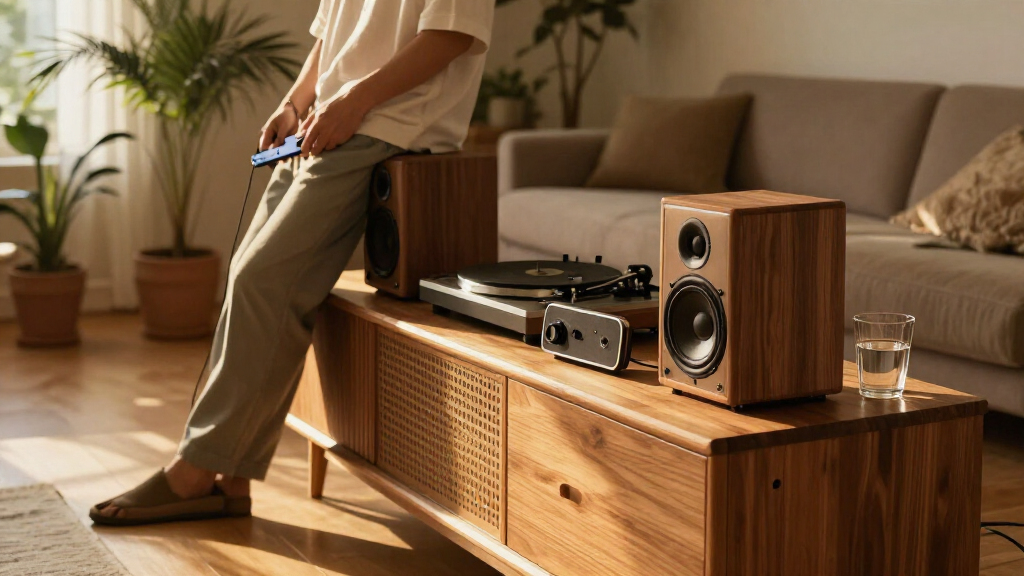
For most buyers, I’d start with the Edifier R1700BTs: its Bluetooth convenience, flexible inputs, and subwoofer output make it a well-rounded fit for everyday listening. The Klipsch R-51PM is a stronger match for listeners who want a more feature-rich powered setup, while the Edifier R1280DBs offers practical digital connections and an upgrade path to a subwoofer. The main tradeoff is that wireless bookshelf speakers still vary in wired inputs, room-filling ability, and whether they need a separate amplifier. I also separate true powered wireless models from passive speakers that need additional gear. Read on for the full breakdown and help matching a speaker pair to your room and setup.

Get audio and creator gear delivered free with Prime
- Fast, free delivery on millions of items
- Prime Video, Amazon Music and more included
- Member-only deals all year
Complete the kit


Key Takeaways
- The Edifier R1700BTs is my best overall pick because it balances Bluetooth, multiple connections, and a subwoofer output without requiring a separate amplifier.
- The R1280DBs stands out for digital-source flexibility, while the similarly named R1280DB and R1280T variants differ in inputs; check the exact model rather than assuming the names are interchangeable.
- Powered speakers make wireless listening simpler: the Sony SS-CS5M2 and Polk T15 are passive options, so Bluetooth playback requires an amplifier or receiver with the right connections.
- Subwoofer outputs matter more than headline wattage for some rooms; several Edifier models support adding a sub, while buyers should confirm the output and connection needs on their chosen model.
- The lineup includes repeated models and finishes, including duplicate Saiyin listings and multiple R1280 versions, so the useful comparison is often connectivity and setup rather than appearance.
| ULTIMEA BS-3 3-Way Powered Bookshelf Speakers with App Control |  | Best for TV and Flexible System Expansion | Speaker type: Powered bookshelf speakers | Drivers: 5.25-inch woofer, dedicated midrange driver, 1-inch tweeter | Amplifier output: 70 W RMS | VIEW LATEST PRICE | See Our Full Breakdown |
| Edifier MR3 Powered Studio Monitor Speakers |  | Best for Near-Field Listening and Work | Speaker type: Powered studio monitor | Output: 36 W RMS total | Drivers: 3.5-inch mid-low drivers and 1-inch tweeters | VIEW LATEST PRICE | See Our Full Breakdown |
| Edifier R1700BTs Active Bluetooth Bookshelf Speakers – 2.0 Wireless Near Field Studio Monitor Speaker – 66w RMS with Subwoofer Line Out |  | Best for Bluetooth Music and Subwoofer Upgrades | Speaker type: Active bookshelf speakers | Output: 66 W continuous | Drivers: 4-inch woofer and 19 mm silk dome tweeter | VIEW LATEST PRICE | See Our Full Breakdown |
| Edifier R1280DB Powered Bluetooth Bookshelf Speakers, 42W RMS, Wood Grain |  | Best for Straightforward TV and Stereo Connections | Speaker type: Powered bookshelf speakers | Audio output: Stereo | Maximum output power: 42 W | VIEW LATEST PRICE | See Our Full Breakdown |
| Edifier R1280DB Powered Bluetooth Bookshelf Speakers, White |  | Best White-Finish Pick | Speaker type: Powered bookshelf speakers | Audio output: Stereo | Maximum output power: 42 W | VIEW LATEST PRICE | See Our Full Breakdown |
| Edifier R1280DBs Active Bluetooth Bookshelf Speakers |  | Best for TV and Subwoofer Expansion | Configuration: Powered stereo pair | Bluetooth: Bluetooth 5.0 | Inputs: Optical, coaxial, Bluetooth, line-in | VIEW LATEST PRICE | See Our Full Breakdown |
| Sony SS-CS5M2 3-Way Compact Bookshelf Speakers (Pair) | 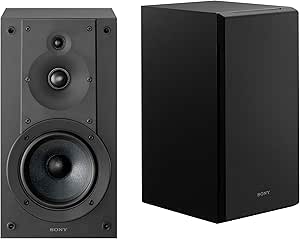 | Best for Receiver-Based Stereo | Configuration: 3-way, 3-driver passive pair | Woofer: 5.12 inches | Tweeter: 0.98 inches | VIEW LATEST PRICE | See Our Full Breakdown |
| Polk Audio T15 Passive Bookshelf Speakers, Black, Pair |  | Best for Wall-Mounted Surround Systems | Configuration: Passive bookshelf speaker pair | Tweeter: 0.75 inches | Woofer: 5.25-inch Dynamic Balance driver | VIEW LATEST PRICE | See Our Full Breakdown |
| Saiyin Powered Bluetooth Bookshelf Speakers |  | Best for Beginners and Turntable Connections | Configuration: Active and passive bookshelf speaker pair | Power: 30W × 2 | Bluetooth: Bluetooth 5.3 | VIEW LATEST PRICE | See Our Full Breakdown |
| OHAYO 60W Bluetooth 5.3 Bookshelf Computer Speakers, Stereo 2.0, Black |  | Best Compact Desktop Pick | Configuration: Powered stereo pair | Maximum output power: 60 watts (30W × 2) | Bluetooth: Bluetooth 5.3 | VIEW LATEST PRICE | See Our Full Breakdown |
| Edifier R1280T Powered Bookshelf Speakers, 42 Watts RMS, Black |  | Best for Simple Wired Setups | Speaker type: Powered bookshelf speakers | Audio output: Stereo, 2 channels | Maximum output power: 42 watts | VIEW LATEST PRICE | See Our Full Breakdown |
| Saiyin Powered Bluetooth Bookshelf Speakers |  | Best Value for Broad Connectivity | Speaker type: Powered bookshelf speakers | Bluetooth: Version 5.3; 10-meter range | Inputs: Optical, coaxial, auxiliary, RCA, and Bluetooth | VIEW LATEST PRICE | See Our Full Breakdown |
| Klipsch R-51PM Powered Bluetooth Monitors, Black |  | Best Premium Connectivity | Speaker type: Powered stereo monitors | Connectivity: Bluetooth, phono/line, optical, RCA, USB, and 3.5 mm | Drivers: 5.25-inch woofer; 1-inch tweeter | VIEW LATEST PRICE | See Our Full Breakdown |
| Edifier R1280T Powered Bookshelf Speakers, 42W RMS, Brown |  | Best for a Classic Wood-Finish Setup | Speaker type: Powered bookshelf speakers | Audio output: Stereo, 2 channels | Maximum output power: 42 watts | VIEW LATEST PRICE | See Our Full Breakdown |
| wireless bookshelf speaker | Drivers | Speaker type | Controls | Inputs |
|---|---|---|---|---|
| ULTIMEA BS-3 3-Way Powered Boo | 5.25-inch woofer, dedicated midrange driver, 1-inch tweeter | Powered bookshelf speakers | App control with EQ settings | — |
| Edifier MR3 Powered Studio Mon | 3.5-inch mid-low drivers and 1-inch tweeters | Powered studio monitor | — | Balanced TRS, RCA, AUX |
| Edifier R1700BTs Active Blueto | 4-inch woofer and 19 mm silk dome tweeter | Active bookshelf speakers | Remote and side-panel EQ knobs | — |
| Edifier R1280DB Powered Blueto | 4-inch woofer and 13 mm silk dome tweeter | Powered bookshelf speakers | Remote control and side-panel bass and treble knobs | — |
| Edifier R1280DB Powered Blueto | 4-inch woofer and 13 mm tweeter | Powered bookshelf speakers | Remote control and side-panel knobs | — |
| Edifier R1280DBs Active Blueto | 4-inch woofer and 13mm silk dome tweeter | — | Remote; side-panel bass, treble, and volume | Optical, coaxial, Bluetooth, line-in |
| Sony SS-CS5M2 3-Way Compact Bo | — | — | — | — |
| Polk Audio T15 Passive Bookshe | — | — | — | — |
| Saiyin Powered Bluetooth Books | — | — | Remote and top-mounted buttons | Optical, coaxial, 3.5mm, RCA, Bluetooth |
| OHAYO 60W Bluetooth 5.3 Booksh | — | — | — | Bluetooth, RCA, AUX, USB |
| Edifier R1280T Powered Bookshe | 13 mm silk dome tweeter; 4-inch full-range driver | Powered bookshelf speakers | Remote control; side-mounted bass and treble controls | 2 AUX inputs |
| Saiyin Powered Bluetooth Books | 4-inch woofer; 12.7 mm silk dome tweeter | Powered bookshelf speakers | Remote control and top-mounted buttons | Optical, coaxial, auxiliary, RCA, and Bluetooth |
| Klipsch R-51PM Powered Bluetoo | 5.25-inch woofer; 1-inch tweeter | Powered stereo monitors | — | — |
| Edifier R1280T Powered Bookshe | 13 mm silk dome tweeter; 4-inch woofer | Powered bookshelf speakers | Remote control; side-mounted bass and treble controls | 2 AUX inputs; 3.5 mm and dual RCA |
More Details on Our Top Picks
ULTIMEA BS-3 3-Way Powered Bookshelf Speakers with App Control
The ULTIMEA BS-3 is the strongest fit here for a mixed TV-and-music setup. Its HDMI ARC connection can simplify linking to a compatible television, while optical, USB, RCA, and Bluetooth 6.0 cover other sources. Unlike the smaller Edifier MR3, the BS-3 uses a three-way driver layout with a dedicated midrange driver, giving it a more separated approach to bass, vocals, and treble on paper. App EQ adds room to adjust the sound, and the subwoofer output leaves a path to deeper bass later. The tradeoff is a larger, heavier pair that needs shelf space and mains power; its claimed 50 Hz bass extension also does not replace a subwoofer for substantial low-end impact.
Pros:- HDMI ARC makes connection to a compatible TV straightforward.
- Three-way drivers give the design a dedicated midrange driver.
- App-based EQ provides sound adjustments without relying only on cabinet controls.
- Subwoofer output and multiple wired inputs support future expansion and varied sources.
Cons:- At 19 pounds and over 13 inches tall, the pair needs more shelf space than the Edifier MR3.
- The claimed bass extension down to 50 Hz may leave listeners wanting a subwoofer for deeper impact.
- Not water resistant, so these are intended for indoor listening areas.
Best for: TV owners who want powered stereo speakers with HDMI ARC, several source connections, app EQ, and the option to add a subwoofer later.
Not ideal for: Listeners seeking a small desktop pair or strong bass without adding a subwoofer; the speakers are relatively large and their low-end extension is limited.
- Speaker type:Powered bookshelf speakers
- Drivers:5.25-inch woofer, dedicated midrange driver, 1-inch tweeter
- Amplifier output:70 W RMS
- Bass extension:Down to 50 Hz (claimed)
- Connectivity:HDMI ARC, optical, RCA, USB, Bluetooth 6.0
- Expansion:Subwoofer output
- Controls:App control with EQ settings
- Dimensions and weight:9.17 x 7.4 x 13.15 inches; 19 pounds
Our verdict“Choose the BS-3 for a TV-centered setup that benefits from HDMI ARC, app EQ, and a subwoofer upgrade path.”
Edifier MR3 Powered Studio Monitor Speakers
The Edifier MR3 is the most work-oriented choice in this group, particularly for a desk where the listener sits close to the speakers. Its Monitor, Music, and Custom modes, app EQ, and balanced TRS inputs offer more control for switching between editing and casual playback than the simpler R1280DB. Bluetooth 5.4 with multipoint also makes it easy to keep a phone and computer connected, though the speakers still need corded power. The 3.5-inch mid-low drivers and 36 W RMS output make this a more compact, lower-output option than the ULTIMEA BS-3, whose larger driver array and HDMI ARC suit broader TV use better. The MR3’s stated 52 Hz lower limit and modest driver size make it less suited to room-filling bass or listeners who want a substantial low-end presentation without a subwoofer.
Pros:- Monitor, Music, and Custom modes suit both focused work and everyday listening.
- Balanced TRS, RCA, AUX, Bluetooth, and headphone connections cover varied desktop setups.
- App EQ allows sound adjustment for the room and listening task.
- Compact 9.9-pound pair is easier to accommodate on a desk than the ULTIMEA BS-3.
Cons:- 36 W RMS output and 3.5-inch mid-low drivers are less suited to filling a large room.
- No HDMI ARC connection for a direct, convenient TV setup.
- Corded electric power is still required despite Bluetooth playback.
Best for: Desktop listeners, home creators, and computer users who want monitor-style sound modes, balanced inputs, and Bluetooth multipoint in a compact powered pair.
Not ideal for: TV listeners seeking HDMI ARC or people who want strong, room-filling bass from speakers without a subwoofer.
- Speaker type:Powered studio monitor
- Output:36 W RMS total
- Drivers:3.5-inch mid-low drivers and 1-inch tweeters
- Frequency response:52 Hz–40 kHz
- Inputs:Balanced TRS, RCA, AUX
- Wireless connectivity:Bluetooth 5.4 with multipoint
- Sound modes:Music, Monitor, Custom
- Cabinet and weight:MDF; 9.9 pounds
Our verdict“Pick the MR3 for a close-listening desk setup where input flexibility and selectable monitor modes matter more than high output or deep bass.”
Edifier R1700BTs Active Bluetooth Bookshelf Speakers – 2.0 Wireless Near Field Studio Monitor Speaker – 66w RMS with Subwoofer Line Out
The Edifier R1700BTs balances wireless music listening with a useful upgrade path. Bluetooth 5.0 with aptX HD is a draw for compatible phones and computers, while dual RCA inputs let two wired sources stay connected at once. Its 66 W continuous output is higher than the MR3’s 36 W RMS, making this the more substantial option for music playback when a small desktop monitor is not the goal. The built-in crossover and subwoofer line out also make bass expansion simpler than with the R1280DB, which has no subwoofer output listed. In exchange, the R1700BTs lacks the MR3’s balanced TRS input and selectable app sound modes. It is still a powered indoor pair, not a portable wireless speaker, and its 4-inch woofers may leave bass-focused listeners wanting the optional subwoofer.
Pros:- Bluetooth 5.0 with aptX HD supports higher-quality wireless playback on compatible devices.
- 66 W continuous output exceeds the Edifier MR3’s stated 36 W RMS.
- Dual RCA inputs allow two wired sources to remain connected.
- Subwoofer output with built-in crossover supports a straightforward bass upgrade.
Cons:- No balanced TRS inputs or app-based sound modes like those on the Edifier MR3.
- The 4-inch woofers may not satisfy listeners seeking deep bass without a subwoofer.
- Requires corded electric power and is not a portable wireless system.
Best for: Bluetooth listeners with compatible aptX HD devices who want stronger stated output, two wired sources, and a clear route to adding a subwoofer.
Not ideal for: Studio users who need balanced TRS connections or people seeking a one-piece portable speaker that runs without mains power.
- Speaker type:Active bookshelf speakers
- Output:66 W continuous
- Drivers:4-inch woofer and 19 mm silk dome tweeter
- Bluetooth:Bluetooth 5.0 with Qualcomm aptX HD
- Wired inputs:Dual RCA
- Subwoofer connection:Subwoofer line out with built-in crossover and auto detection
- Controls:Remote and side-panel EQ knobs
- Enclosure:Wood
Our verdict“Choose the R1700BTs for wireless music, multiple wired sources, and a more direct subwoofer upgrade path than the R1280DB offers.”
Edifier R1280DB Powered Bluetooth Bookshelf Speakers, 42W RMS, Wood Grain
The Edifier R1280DB makes sense for buyers who want the main digital and analog connections without app setup or a studio-focused feature set. Bluetooth sits alongside optical, coaxial, and dual RCA, so it can serve a television, computer, or phone; the included remote also makes everyday input and volume changes easier from across the room. Compared with the R1700BTs, it gives up the listed subwoofer output and higher 66 W continuous rating, but retains a practical mix of wired inputs for a conventional stereo setup. The 4-inch woofer and 13 mm silk dome tweeter are suited to everyday listening, while the side-panel bass and treble knobs provide basic tuning. It is not a battery-powered speaker, and buyers who want app EQ or subwoofer expansion should look at the BS-3 or R1700BTs instead.
Pros:- Optical, coaxial, dual RCA, and Bluetooth cover common TV and music sources.
- Remote control makes volume and input changes convenient from a listening seat.
- Side-panel bass and treble knobs offer direct sound adjustment.
- 4-inch woofers and silk dome tweeters provide a conventional two-way stereo design.
Cons:- No subwoofer output is listed, unlike the Edifier R1700BTs and ULTIMEA BS-3.
- No app EQ or balanced TRS input for more tailored or studio-oriented setups.
- Needs corded electric power and is not water resistant.
Best for: TV and desktop owners who want Bluetooth plus optical, coaxial, and RCA inputs, with a remote for simple everyday control.
Not ideal for: Listeners planning to add a subwoofer, seeking app-based EQ, or needing speakers that work without a power outlet.
- Speaker type:Powered bookshelf speakers
- Audio output:Stereo
- Maximum output power:42 W
- Drivers:4-inch woofer and 13 mm silk dome tweeter
- Connectivity:Bluetooth, optical, coaxial, dual RCA
- Controls:Remote control and side-panel bass and treble knobs
- Bluetooth range:10 meters
- Weight:12.9 pounds
Our verdict“Pick the R1280DB for a simple powered stereo system with a remote and broad source compatibility, but choose the R1700BTs if subwoofer expansion matters.”
Edifier R1280DB Powered Bluetooth Bookshelf Speakers, White
This white-finish version of the Edifier R1280DB is best understood as a style-led alternative to the wood-grain R1280DB, not a different sound-system tier. It keeps the same practical combination of Bluetooth, optical, coaxial, and dual RCA, plus a remote and side-panel EQ knobs. That makes it a capable match for a white desk or living-room setup where a dark cabinet would stand out. Against the MR3, it prioritizes easy home listening and remote operation over balanced TRS inputs and selectable monitor modes. The listing describes a wood enclosure, but the white finish is the main distinction offered here. As with the wood-grain model, there is no subwoofer output listed, and these speakers need mains power; the R1700BTs is a stronger match if bass expansion is part of the plan.
Pros:- White finish offers a lighter visual alternative to the wood-grain R1280DB.
- Bluetooth, optical, coaxial, and dual RCA support several common sources.
- Remote control and side-panel EQ knobs allow convenient input and sound adjustments.
- Wood enclosure pairs a home-friendly appearance with a powered stereo design.
Cons:- No subwoofer output is listed, unlike the Edifier R1700BTs.
- Lacks the MR3’s balanced TRS inputs and selectable sound modes.
- Requires corded electric power and is not water resistant.
Best for: Buyers furnishing a white desk or living room who want a powered stereo pair with Bluetooth, digital inputs, and remote control.
Not ideal for: Listeners who need balanced studio inputs, a listed subwoofer output, or battery-powered portability.
- Speaker type:Powered bookshelf speakers
- Audio output:Stereo
- Maximum output power:42 W
- Drivers:4-inch woofer and 13 mm tweeter
- Connectivity:Bluetooth, optical, coaxial, dual RCA
- Controls:Remote control and side-panel knobs
- Enclosure and finish:Wood enclosure with white finish
- Weight:4899 g
Our verdict“Choose this R1280DB variant when the white finish suits your room and you want the same straightforward connections as the wood-grain version.”
Edifier R1280DBs Active Bluetooth Bookshelf Speakers
The R1280DBs is a practical choice when wireless music playback needs to share space with a TV setup. Bluetooth 5.0 handles phone and computer streaming, while optical and coaxial inputs provide direct digital connections to compatible TVs and computers. That gives it more flexible TV wiring than the OHAYO, which offers USB, RCA, and AUX but no listed optical input. Its subwoofer output with automatic detection also leaves a straightforward path to add deeper bass later. At 42W RMS, it is a capable powered stereo pair for everyday rooms, though it has less stated output than the Saiyin’s 60W total. The tradeoff is a larger, less desk-focused setup than compact options, and Bluetooth range is listed at 30 feet. I’d choose it for a mixed TV-and-music system, not for buyers who want the smallest speakers or a receiver-free path to powerful bass without adding a subwoofer.
Pros:- Bluetooth 5.0 supports wireless playback from phones, tablets, and computers.
- Optical and coaxial inputs suit compatible TVs and computers.
- Subwoofer line out with automatic detection supports bass expansion.
- Remote and side-panel bass and treble controls provide convenient adjustment.
Cons:- The two speakers still need a wired connection between them and mains power.
- A separate subwoofer is needed for stronger low-frequency output.
- Listed Bluetooth range is 30 feet.
Best for: Listeners who want Bluetooth music, direct optical or coaxial TV connections, and the option to add a powered subwoofer later.
Not ideal for: Desk users with very limited space or listeners seeking the more compact OHAYO speakers; its listed Bluetooth range is also limited to 30 feet.
- Configuration:Powered stereo pair
- Bluetooth:Bluetooth 5.0
- Inputs:Optical, coaxial, Bluetooth, line-in
- Subwoofer connection:Subwoofer line out with automatic detection
- Drivers:4-inch woofer and 13mm silk dome tweeter
- Controls:Remote; side-panel bass, treble, and volume
- Bluetooth range:30 feet
- Finish:Wood grain
Our verdict“Choose the R1280DBs for a versatile TV-and-music setup with digital inputs and a subwoofer upgrade path, rather than a minimal desktop system.”
Sony SS-CS5M2 3-Way Compact Bookshelf Speakers (Pair)
The Sony SS-CS5M2 earns its place for listeners who value a conventional receiver-driven stereo system over built-in wireless convenience. Its three-way, three-driver design separates woofer, tweeter, and super-tweeter duties, while the stated 53–50,000 Hz response gives buyers a broad specification range to pair with compatible equipment. Compared with the powered Edifier R1280DBs, the Sony does not offer Bluetooth, a remote, or direct TV inputs; it depends on an AV receiver and speaker wire. That makes it a weaker match for someone seeking an all-in-one wireless bookshelf setup, but a better fit for buyers already building around a receiver. The compact cabinet and bass-reflex design suit shelves and smaller listening areas. Its wired-only connection is the central compromise, and the listed 100-watt maximum output should not be read as a substitute for an amplifier.
Pros:- Three-way, three-driver layout includes a woofer, precision tweeter, and super tweeter.
- Bass-reflex enclosure is designed to support low-frequency response.
- Compact cabinet fits bookshelf and tabletop placements.
- Compatible with Sony AV receivers.
Cons:- No Bluetooth or other wireless playback connection.
- Requires a separate AV receiver or amplifier and speaker wire.
- Not waterproof, so placement should remain indoors and dry.
Best for: Buyers with a compatible Sony AV receiver or other suitable amplifier who want compact passive speakers for a wired stereo system.
Not ideal for: People who want Bluetooth streaming or powered speakers that connect directly to a TV without a receiver; the Saiyin and Edifier R1280DBs are more self-contained.
- Configuration:3-way, 3-driver passive pair
- Woofer:5.12 inches
- Tweeter:0.98 inches
- Frequency response:53–50,000 Hz
- Maximum output power:100 watts
- Impedance:6 ohms
- Connectivity:Wired
- Dimensions:8.7 × 7 × 13.2 inches
- Warranty:1 year
Our verdict“Pick the Sony pair if you already have a receiver and want compact wired speakers; skip it if wireless playback is a requirement.”
Polk Audio T15 Passive Bookshelf Speakers, Black, Pair
The Polk T15 is the lineup’s most placement-flexible pick for buyers assembling a receiver-based home theater. Its integrated keyhole slots allow wall mounting, and the pair can serve as front, rear, or surround channels—useful when a system needs speakers in more than one position. The 5.25-inch Dynamic Balance driver is larger than the Saiyin’s 3.75-inch woofer, but the Polk is passive, so it needs a receiver or amplifier and speaker wire. That makes it less convenient for wireless listening than the powered Saiyin or Edifier R1280DBs. Its 8-ohm impedance is a clear match detail for amplifier setup, while the compact cabinet helps when floor space is limited. Buyers should not mistake “bookshelf” for wireless here: the T15 has no Bluetooth, and its wall-mounting flexibility does not remove the need for wired connections.
Pros:- Integrated keyhole slots allow wall mounting.
- Can be used as front, rear, or surround speakers.
- 5.25-inch Dynamic Balance driver is larger than the woofer in the Saiyin pair.
- Compact cabinet can suit constrained shelf or wall locations.
Cons:- Passive design requires a separate receiver or amplifier.
- Wired speaker connections only; no Bluetooth playback.
- Not waterproof.
Best for: Home-theater builders who need compact, wall-mountable wired speakers for front, rear, or surround duties.
Not ideal for: Listeners seeking Bluetooth streaming or speakers that work without a receiver; the powered Saiyin is a simpler choice for direct device connections.
- Configuration:Passive bookshelf speaker pair
- Tweeter:0.75 inches
- Woofer:5.25-inch Dynamic Balance driver
- Impedance:8 ohms
- Connectivity:Wired speaker connection
- Mounting:Integrated keyhole wall-mount slots
- Enclosure material:Wood
- Color:Black
Our verdict“Choose the Polk T15 when wall placement and flexible surround-system use matter more than wireless convenience.”
Saiyin Powered Bluetooth Bookshelf Speakers
The Saiyin pair makes the most sense for someone who wants powered speakers with several ways to connect everyday sources, without buying a separate amplifier. Bluetooth 5.3, optical, coaxial, 3.5mm, and RCA inputs cover phones, computers, TVs, and compatible turntables. That range is broader than the OHAYO’s listed connections for digital TV use, while the Edifier R1280DBs adds a dedicated subwoofer output that Saiyin does not list. One important setup caveat: a turntable must provide line out or Bluetooth transmission; a phono-only turntable needs a preamp, and a Bluetooth receiver on the turntable is not enough. The 3.75-inch woofer keeps the system compact, but it also limits low-bass reach compared with larger-driver options. Its active/passive arrangement still requires a speaker wire between the cabinets, so wireless describes the source connection, not a cable-free pair.
Pros:- Bluetooth 5.3 supports wireless playback from compatible devices.
- Optical, coaxial, RCA, and 3.5mm inputs suit varied sources.
- Powered design does not require a separate amplifier or receiver.
- Remote and top-mounted buttons provide input and volume control.
Cons:- Turntables with phono-only output need a separate preamp.
- Small 3.75-inch woofer limits low-bass output compared with larger speakers.
- The passive speaker connects to the active one by speaker wire.
Best for: First-time powered-speaker buyers connecting a phone, TV, computer, or turntable with line-level output and seeking multiple input choices.
Not ideal for: Turntable owners with only phono output and no preamp, or listeners who want a dedicated subwoofer output and stronger bass expansion; the Edifier R1280DBs offers that output.
- Configuration:Active and passive bookshelf speaker pair
- Power:30W × 2
- Bluetooth:Bluetooth 5.3
- Inputs:Optical, coaxial, 3.5mm, RCA, Bluetooth
- Woofer:3.75 inches
- Tweeter:0.5-inch silk dome horn tweeter
- Speaker dimensions:5.3 × 6.3 × 8.6 inches (active speaker)
- Controls:Remote and top-mounted buttons
- Power source:Corded electric
Our verdict“Choose Saiyin for a straightforward, multi-input powered setup, provided your turntable has line-level output or a suitable preamp.”
OHAYO 60W Bluetooth 5.3 Bookshelf Computer Speakers, Stereo 2.0, Black
OHAYO’s compact footprint makes this pair a natural choice for a desk or small room where larger cabinets would crowd the setup. The 3-inch carbon-fiber drivers and 0.75-inch tweeters handle stereo playback, while Bluetooth 5.3 offers wireless streaming alongside USB, RCA, and AUX inputs. That gives it more listed connection variety than the Sony SS-CS5M2, which is a passive wired pair, and avoids the receiver requirement of the Polk T15. A front-panel volume knob is handy when the speakers sit within reach, and the MDF cabinets with rear ports are designed to support bass response. The compromise is physical scale: these small woofers are less suited to room-filling low end than the larger-driver Polk or Sony. They also need corded power, and the listed inputs do not include optical, so TV connections may depend on the TV’s available outputs.
Pros:- Compact dimensions suit desks and small listening spaces.
- Bluetooth 5.3, RCA, AUX, and USB provide several connection options.
- Front-panel volume knob allows quick adjustment.
- MDF enclosure and rear bass ports are designed to support bass response.
Cons:- 3-inch woofers may not provide the low-end output of larger bookshelf speakers.
- Requires corded electric power.
- No optical input is listed for direct connection to compatible TVs.
Best for: Desktop listeners who want a compact powered pair with Bluetooth plus USB, RCA, and AUX connections.
Not ideal for: Buyers prioritizing deeper bass or optical TV connectivity; the Edifier R1280DBs is a stronger fit for optical connections and subwoofer expansion.
- Configuration:Powered stereo pair
- Maximum output power:60 watts (30W × 2)
- Bluetooth:Bluetooth 5.3
- Inputs:Bluetooth, RCA, AUX, USB
- Woofer:3-inch carbon-fiber driver
- Tweeter:0.75 inches
- Enclosure:MDF wood with rear bass ports
- Dimensions:6.5 × 4.33 × 4.72 inches
- Power source:Corded electric
Our verdict“Pick OHAYO for a compact desktop system with useful wired and wireless inputs, but choose a larger speaker if bass weight is a priority.”
Edifier R1280T Powered Bookshelf Speakers, 42 Watts RMS, Black
The Edifier R1280T in black suits listeners who want powered bookshelf speakers with straightforward connections and useful on-speaker adjustments. Its two AUX inputs let two compatible sources stay connected, while the remote makes everyday volume changes easier from across a room. The 4-inch woofer and silk dome tweeter form a conventional stereo pair, and the MDF cabinets bring a furniture-like finish rather than a compact plastic appearance.
For a wireless bookshelf speaker roundup, its limitation is central: it has no Bluetooth, so audio sources need a cable. The Saiyin adds Bluetooth and optical and coaxial inputs, while the Klipsch R-51PM offers Bluetooth alongside broader wired connectivity. Choose this Edifier when wired simplicity and dual AUX connections matter more than wireless playback; skip it if phone streaming without cables is a priority.
Pros:- Two AUX inputs keep two compatible wired sources connected at once.
- Remote control simplifies everyday listening adjustments.
- Side-mounted bass and treble controls allow basic tonal tuning.
- MDF cabinets with a black wood-effect finish suit home setups.
Cons:- No Bluetooth or other wireless audio connection.
- Requires corded electric power and wired audio sources.
- No subwoofer output is listed for adding a powered sub.
Best for: Listeners setting up a desk or living room system with two wired AUX sources and no need for Bluetooth.
Not ideal for: Buyers who want to stream music wirelessly from a phone or tablet, since this model has no Bluetooth connectivity.
- Speaker type:Powered bookshelf speakers
- Audio output:Stereo, 2 channels
- Maximum output power:42 watts
- Inputs:2 AUX inputs
- Drivers:13 mm silk dome tweeter; 4-inch full-range driver
- Frequency response:18,000 Hz
- Controls:Remote control; side-mounted bass and treble controls
- Enclosure:MDF with black wood-effect vinyl finish
- Dimensions and weight:17 × 12.6 × 7.2 inches; 4.9 kg
Our verdict“Pick the black R1280T for a tidy, dual-source wired stereo setup, but choose the Saiyin or Klipsch R-51PM if wireless streaming is a requirement.”
Saiyin Powered Bluetooth Bookshelf Speakers
The Saiyin Powered Bluetooth Bookshelf Speakers are the more flexible pick for buyers who mix wireless playback with several wired sources. Bluetooth 5.3 covers everyday phone streaming, while optical, coaxial, auxiliary, and RCA inputs make it easier to connect a TV, computer, or compatible turntable without adding a separate amplifier. A subwoofer output also leaves a path to fuller bass later, something the Edifier R1280T models in this group do not list.
That range of connections comes with setup conditions: digital sources should output PCM or stereo rather than surround, and a phono-only turntable needs a preamplifier. Wireless turntable playback also requires Bluetooth output or a transmitter. The Klipsch R-51PM has a similarly broad source mix and a larger 5.25-inch woofer, but the Saiyin is a compact alternative. Its 10-meter Bluetooth range and lack of water resistance make placement and use indoors the sensible choice.
Pros:- Bluetooth 5.3 supports wireless playback from compatible devices.
- Optical, coaxial, auxiliary, and RCA inputs cover varied wired sources.
- Subwoofer output provides an upgrade path for stronger low bass.
- Remote control and top-mounted buttons offer two ways to adjust playback.
Cons:- Phono-only turntables require a separate preamplifier.
- Wireless turntable playback requires Bluetooth output or an added transmitter.
- Some digital sources need PCM or stereo output settings to work correctly.
Best for: Apartment listeners who want Bluetooth streaming, TV-ready digital inputs, and the option to add a powered subwoofer.
Not ideal for: Turntable owners with a phono-output-only deck who want a plug-and-play setup, or listeners who need speakers for damp or outdoor spaces.
- Speaker type:Powered bookshelf speakers
- Bluetooth:Version 5.3; 10-meter range
- Inputs:Optical, coaxial, auxiliary, RCA, and Bluetooth
- Digital audio support:Optical and coaxial support up to 24-bit/192 kHz
- Drivers:4-inch woofer; 12.7 mm silk dome tweeter
- Subwoofer output:Yes
- Controls:Remote control and top-mounted buttons
- Dimensions:150 × 170 × 240 mm
- Enclosure materials:ABS, MDF, and metal
Our verdict“Choose Saiyin for compact speakers that pair wireless streaming with broad source connections, provided you are comfortable checking source and turntable settings.”
Klipsch R-51PM Powered Bluetooth Monitors, Black
The Klipsch R-51PM is the strongest fit here for listeners who want one powered stereo system to handle multiple kinds of sources. It combines Bluetooth, phono/line, optical, RCA, USB, and 3.5 mm inputs, so a phone, computer, TV, or compatible turntable can join the setup without an external receiver. Its 5.25-inch woofer is larger than the 4-inch drivers in the Saiyin and Edifier R1280T, and dynamic bass adjustment is intended to retain bass presence when listening at lower volume.
This breadth makes it a more capable centerpiece than the simpler Edifier R1280T, but also a less basic choice: it still needs a power connection, and its larger cabinets need room on a shelf or desk. A subwoofer output gives bass-focused listeners room to expand. Since it is not water resistant, it belongs indoors. Choose it for source flexibility and upgrade options, not for a cable-free or compact setup.
Pros:- Bluetooth and five types of wired input support a wide range of audio sources.
- Built-in amplification avoids the need for a separate receiver.
- Dynamic bass adjustment supports bass presence at different listening levels.
- Subwoofer connection allows a later low-frequency upgrade.
Cons:- Requires a power connection, so it is not a portable wireless system.
- Larger cabinets take more shelf or desk space than the Saiyin speakers.
- Not water resistant, limiting placement to suitable indoor spaces.
Best for: Listeners building a living-room or desktop system around Bluetooth, a TV, a computer, and a compatible turntable.
Not ideal for: Buyers with limited shelf space or anyone seeking fully cordless speakers, since the system requires power and has larger cabinets than compact options.
- Speaker type:Powered stereo monitors
- Connectivity:Bluetooth, phono/line, optical, RCA, USB, and 3.5 mm
- Drivers:5.25-inch woofer; 1-inch tweeter
- Enclosure material:Aluminum
- Subwoofer connection:Subwoofer output supported
- Bass feature:Dynamic bass adjustment
- Dimensions:8.5 × 7 × 13 inches
- Weight:10.6 pounds
- Included accessories:USB cable, power cord, speaker wire, remote with 2 AAA batteries, and rubber feet
Our verdict“Choose the Klipsch R-51PM if you want a flexible, receiver-free hub for several sources and can accommodate its size and power needs.”
Edifier R1280T Powered Bookshelf Speakers, 42W RMS, Brown
The brown Edifier R1280T offers the same wired-first approach as the black version, but its wood-effect finish is the clearer match for buyers who want speakers to blend with traditional furniture. It has two AUX inputs for keeping two compatible devices connected, plus a remote and side-mounted bass and treble controls. The MDF enclosure and 4-inch woofer make it a conventional home stereo option rather than a wireless speaker in the phone-streaming sense.
Compared with the Saiyin Powered Bluetooth Bookshelf Speakers, this Edifier gives up Bluetooth and optical or coaxial connections, along with a listed subwoofer output. The Klipsch R-51PM is the better fit for a broader mix of sources and expansion, while the brown R1280T keeps the setup simpler and adds a warmer cabinet appearance. The tradeoff is decisive for this roundup: audio needs a wired connection, and the speakers need mains power.
Pros:- Brown wood-effect vinyl over MDF suits classic furniture and home decor.
- Two AUX inputs allow two compatible wired sources to remain connected.
- Remote control and side-mounted tone controls make adjustments accessible.
- Stereo powered design does not require a separate amplifier.
Cons:- No Bluetooth, so wireless phone or tablet streaming is unavailable.
- No optical or coaxial inputs are listed for direct digital-source connections.
- Requires mains power and wired audio connections.
Best for: Buyers furnishing a traditional-looking room who need two wired AUX sources and prefer a brown wood-effect cabinet.
Not ideal for: People who stream from phones over Bluetooth, need digital TV inputs, or want a listed subwoofer output for future expansion.
- Speaker type:Powered bookshelf speakers
- Audio output:Stereo, 2 channels
- Maximum output power:42 watts
- Inputs:2 AUX inputs; 3.5 mm and dual RCA
- Drivers:13 mm silk dome tweeter; 4-inch woofer
- Frequency response:80 Hz
- Impedance and signal-to-noise ratio:4 ohms; 85 dB
- Controls:Remote control; side-mounted bass and treble controls
- Dimensions and weight:17 × 12.6 × 7.2 inches; 4,900 g
Our verdict“Pick the brown R1280T when cabinet appearance and two wired AUX sources matter more than Bluetooth or digital inputs.”
How We Picked
I ranked these speakers by how well they serve the specific promise of wireless bookshelf listening: straightforward Bluetooth playback, useful wired inputs, and a setup that fits a desk or living room. I also weighed expandability, the practical role of the controls and companion app where offered, and whether a buyer needs an additional amplifier. A model’s advertised output was not treated as a stand-alone measure of sound quality; room size, placement, and the rest of the system affect what buyers hear.
The order favors versatile powered pairs that combine wireless playback with connections useful beyond a phone. Options with fewer inputs or less setup flexibility sit lower when a more capable alternative appears in the lineup. Passive speakers are ranked for readers who already own, or plan to buy, amplification, rather than as ready-to-use wireless systems. Duplicate products and color variants are treated as near-identical choices unless their listed features differ, so finish alone does not earn a higher position.
| wireless bookshelf speaker | Speaker type |
|---|---|
| ULTIMEA BS-3 3-Way Powered Boo | Powered bookshelf speakers |
| Edifier MR3 Powered Studio Mon | Powered studio monitor |
| Edifier R1700BTs Active Blueto | Active bookshelf speakers |
| Edifier R1280DB Powered Blueto | Powered bookshelf speakers |
| Edifier R1280DB Powered Blueto | Powered bookshelf speakers |
| Edifier R1280DBs Active Blueto | — |
| Sony SS-CS5M2 3-Way Compact Bo | — |
| Polk Audio T15 Passive Bookshe | — |
| Saiyin Powered Bluetooth Books | — |
| OHAYO 60W Bluetooth 5.3 Booksh | — |
| Edifier R1280T Powered Bookshe | Powered bookshelf speakers |
| Saiyin Powered Bluetooth Books | Powered bookshelf speakers |
| Klipsch R-51PM Powered Bluetoo | Powered stereo monitors |
| Edifier R1280T Powered Bookshe | Powered bookshelf speakers |
Factors to Consider When Choosing Wireless Bookshelf Speakers
Before choosing a pair, I’d match the speakers to the whole listening setup, not just the Bluetooth label. These checks can prevent the common mistake of buying speakers that connect to a phone but do not fit the TV, computer, room, or future upgrade you have in mind.
Know Whether You Need Powered Speakers
Powered speakers have amplification built in, which usually makes them the simpler choice for a phone, computer, or TV. Passive speakers, such as the Sony SS-CS5M2 and Polk T15 in this roundup, need an external amplifier or receiver before they can play. That added component can bring more system flexibility, but it also adds cost, space, cables, and setup decisions. A common mistake is to see Bluetooth discussed in a product search and assume every bookshelf pair can connect wirelessly on its own. Check the exact product specifications and the signal path from your source to the speakers. If you want the fewest components, prioritize a powered pair with the inputs your devices need.
Match Inputs to Your Actual Sources
Bluetooth is convenient for casual playback, but a speaker’s wired connections can matter just as much. List every source you expect to use, such as a computer, television, turntable with a preamp, or streaming device, then check whether the speaker accepts those signals. Optical input can be useful for a compatible TV, while analog connections serve many computers and audio components. Do not assume similar model names mean identical connectivity: variants in the R1280 family have different listed features. If several devices need to stay connected, input selection and available ports can save daily unplugging. Spend for extra inputs only when they solve a real need in your setup.
Decide Whether You May Add a Subwoofer
A subwoofer output provides an upgrade route if you later want deeper bass or more weight for movies and music. It does not mean you need to buy a subwoofer immediately, and it will not fix poor speaker placement or an unsuitable room. Check whether the speaker has a dedicated output and what connection the subwoofer expects; do not assume every output works the same way. For a desk or small room, a separate sub may take up more space than the improvement is worth. In a larger listening area, the option can help a compact pair cover a broader range. Treat expandability as flexibility, not as a reason to buy more equipment than you need.
Size the Speakers to the Room and Placement
Room size and listening distance shape the result more than a specification headline can reveal. Near-field listening at a desk puts you close to the speakers, while a living room asks them to serve a wider area and often sit farther from the listener. Bookshelf speakers also need stable surfaces and enough clearance around them; cramped placement can affect how they sound. Measure the available shelf or desk space before ordering, including room for cables and controls. If you cannot position a pair well, a larger model or higher output rating may not solve the problem. Choose for the listening position you actually have, not an imagined future room.
Treat Wireless Convenience and Wired Playback as Different Needs
Bluetooth prioritizes easy pairing and flexible placement, while a wired connection can be preferable for a fixed computer or television setup. Think about who will use the speakers and how often sources change: a shared room may benefit from simple wireless pairing, while a permanent desk system may rely mostly on cables. Confirm supported wireless features on the exact model rather than assuming every version offers the same controls or connection options. Also check whether the speakers need to be linked to each other by cable; “wireless” often describes the source connection, not a completely cable-free pair. This distinction helps set realistic expectations about outlets and speaker placement. Choose the connection that fits your routine, then use the other inputs as useful backup.
Pay for Flexibility You Will Use
Extra features are valuable when they remove a real limitation, not simply because a longer specification list looks better. App control may appeal if you expect to adjust settings from a phone, while an optical input or subwoofer output matters only when it fits your equipment plans. Finish options and duplicate listings can make the same basic speaker seem like separate choices, so compare model identifiers and connection details carefully. A cheaper, simpler pair can be the better match for one computer and one listener. Paying more makes more sense when you need broader source support, more control, or a path to expand the system. Before deciding, write down the two or three features you will actually use and ignore the rest.
Frequently Asked Questions
Can I use the Sony SS-CS5M2 or Polk T15 with Bluetooth without buying an amplifier?
No. These are passive speakers, so they need an amplifier or receiver to power them. To play audio from a phone over Bluetooth, that separate component must also provide Bluetooth, or you need a suitable Bluetooth receiver connected to it. This can suit someone building a flexible system, but it is less direct than choosing a powered Bluetooth pair. Include the extra device, connections, and space in your setup plan before choosing either model.
Which connection should I use to connect bookshelf speakers to a TV?
Start by checking the TV’s audio outputs and the inputs on the exact speaker model. An optical connection can be a clean option when both devices support it, while analog output may work with a compatible speaker input. Bluetooth can reduce cable clutter, but the TV and speakers must support compatible audio pairing, and wireless playback may not suit every viewing setup. Do not buy based only on a model family name, since related variants can have different input selections. If the TV is your main source, verify the signal path before ordering.
Are the Edifier R1280DB, R1280DBs, and R1280T interchangeable?
No; treat them as distinct variants and compare the listed inputs and outputs before choosing. The R1280DBs listing specifically calls out optical input and a subwoofer output, while the R1280T is a different connection-focused version. The R1280DB listings also appear in more than one finish, and finish alone does not establish that a listing has the same features as another variant. Check the full model name and product specifications for the exact listing you plan to buy. This is especially useful if you need a TV connection or intend to add a subwoofer later.
Do I need a subwoofer with wireless bookshelf speakers?
Not automatically. A pair of bookshelf speakers may be enough for desk listening, smaller rooms, or music that does not need especially deep bass. A subwoofer can add low-frequency output, but it also takes floor space and requires another connection and setup step. If you want that option later, choose a model with a compatible subwoofer output and check the subwoofer’s input requirements. Decide based on your room and listening habits rather than treating an additional speaker as a required upgrade.
Should I choose a studio-monitor-style pair or a general-purpose Bluetooth speaker setup?
Choose around how you listen, not the label alone. A near-field setup can suit a desk where you sit close to the speakers, while a general-purpose powered pair may be easier when you want Bluetooth and several sources in a shared room. A monitor-oriented model may be a better fit for focused desktop playback, but its connections and controls still need to match your devices. For mixed use, prioritize straightforward source switching and the inputs you will use every day. Compare the Edifier MR3 and the broader powered options by setup and connectivity rather than assuming one category is automatically better.
Conclusion
For the broadest mix of everyday wireless playback and useful system flexibility, I’d choose the Edifier R1700BTs as best overall. Buyers seeking a value-oriented, uncomplicated powered setup can look to the Edifier R1280T, while the Klipsch R-51PM is my premium pick for shoppers who want a more feature-rich powered option. For beginners, a powered Edifier R1280-series pair is a sensible starting point, provided the exact version’s inputs suit their devices. Choose the Edifier R1280DBs for optical connectivity and a subwoofer upgrade path, or pick the Sony SS-CS5M2 or Polk T15 only if you already have amplification or want to build a separate system. Match the connections and setup to your room first; the best wireless bookshelf speakers are the ones that fit the way you will actually listen.