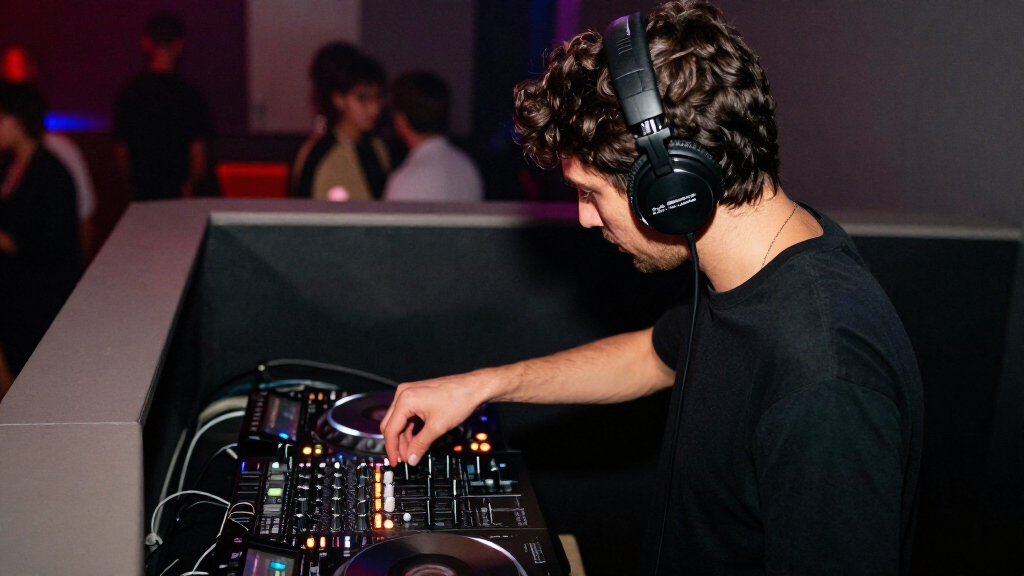
DJ headphones with noise isolation help you cue tracks and monitor mixes when speakers or room noise compete for your attention. My best overall pick is the Pioneer DJ HDJ-X7-K, a dedicated DJ model that stands out for professional use, while the Hercules HDP DJ60 offers a purpose-built alternative and the OneOdio Monitor 60 suits buyers who also want studio listening versatility. The main tradeoffs are passive isolation versus comfort, DJ-specific handling versus general studio use, and a rugged build versus a lighter, more portable fit. No wired over-ear headphone can fully block loud surroundings, so fit and ear-pad seal matter alongside the model. Read on for how all 13 options compare and which one best matches your setup.

Get audio and creator gear delivered free with Prime
- Fast, free delivery on millions of items
- Prime Video, Amazon Music and more included
- Member-only deals all year
Complete the kit


Key Takeaways
- The Pioneer DJ HDJ-X7-K leads for dedicated booth use: it is the clearest choice here for buyers prioritizing a professional DJ-oriented design over general studio versatility.
- The Hercules HDP DJ60 is a strong DJ-focused alternative: it gives shoppers a second purpose-built option rather than steering them toward studio headphones by default.
- The OneOdio Monitor 60 stands apart for mixed use: it makes more sense for buyers splitting time between DJ monitoring and studio listening than a narrowly focused DJ model.
- Entry-level options are not interchangeable: the HDP DJ45, Pioneer HDJ-CUE1, and OneOdio Pro-10 each offer a different route into DJ monitoring, so fit, handling, and intended use should guide the choice.
- Isolation depends on the seal as much as the name: over-ear models can reduce surrounding sound passively, but glasses, head shape, and worn ear pads can weaken that benefit.
| Hercules HDP DJ45 Over-Ear DJ Headphones |  | Best for One-Ear Monitoring | Design: Closed-back, over-ear | Driver size: 40 mm | Impedance: 60 ohms | VIEW LATEST PRICE | See Our Full Breakdown |
| OneOdio A71 Hi-Res Wired Over-Ear Studio Headphones, Black |  | Best for Flexible Connections | Fit: Over-ear | Driver size: 40 mm | Impedance: 32 ohms | VIEW LATEST PRICE | See Our Full Breakdown |
| OneOdio A71D Wired Over-Ear DJ Studio Headphones |  | Best Lightweight Budget-Style Pick | Type: Wired over-ear headphones | Driver size: 40 mm | Impedance: 32 ohms | VIEW LATEST PRICE | See Our Full Breakdown |
| Pioneer DJ HDJ-X7-K Professional DJ Headphones |  | Best for Professional Booth Isolation | Type: Wired over-ear headphones | Driver type and size: Dynamic, 50 mm | Frequency response: 5 Hz–30 kHz | VIEW LATEST PRICE | See Our Full Breakdown |
| OneOdio Monitor 60 Professional Studio Headphones |  | Best for Studio Isolation and Comfort | Type: Wired over-ear headphones | Noise control: Passive sound isolation from closed-back earcups | Headphone jacks: 6.35 mm and 3.5 mm | VIEW LATEST PRICE | See Our Full Breakdown |
| Hercules HDP DJ60 Over-Ear DJ Headphones |  | Best for Compact DJ Setups | Driver size: 40 mm | Frequency response: 15 Hz–22 kHz | Sensitivity: 105 dB | VIEW LATEST PRICE | See Our Full Breakdown |
| Syndesmos CM7005 Wired Over-Ear Studio Headphones |  | Best Lightweight Pick | Driver size: 50 mm | Frequency range: 20 Hz–20 kHz | Weight: 260 g (9.12 oz) | VIEW LATEST PRICE | See Our Full Breakdown |
| OneOdio Pro-10 Wired Over-Ear DJ Headphones |  | Best for Shared Listening | Driver size: 50 mm | Frequency response: 20 Hz–40 kHz | Impedance: 32 ohms | VIEW LATEST PRICE | See Our Full Breakdown |
| Audio-Technica ATH-M20x Professional Studio Monitor Headphones |  | Best for Studio Tracking | Driver type and size: 40 mm dynamic | Frequency response: 15–20,000 Hz | Impedance: 47 ohms | VIEW LATEST PRICE | See Our Full Breakdown |
| Gemini DJX-500 Wired Studio Headphones |  | Best for Strong Passive Isolation | Driver type and size: 57 mm dynamic | Design: Closed-back, over-ear | Impedance: 80 ohms | VIEW LATEST PRICE | See Our Full Breakdown |
| Pioneer DJ HDJ-CUE1 On-Ear Wired DJ Headphones, Dark Silver |  | Best for Beginner Cueing | Brand: Pioneer DJ | Model: HDJ-CUE1 | Design: On-ear | VIEW LATEST PRICE | See Our Full Breakdown |
| Gemini DJX-1000 Wired DJ Headphones, 53mm Drivers |  | Best for Closed-Back Isolation | Brand: Gemini | Model: DJX-1000 | Driver size: 53 mm | VIEW LATEST PRICE | See Our Full Breakdown |
| PUPGSIS M20 Wired DJ and Studio Monitor Headphones |  | Best Accessory Bundle | Brand: PUPGSIS | Model: M20 (PG-M20PRO) | Connectivity: Wired | VIEW LATEST PRICE | See Our Full Breakdown |
| DJ headphones with noise isolation | Impedance | Driver size | Frequency response | Sensitivity |
|---|---|---|---|---|
| Hercules HDP DJ45 Over-Ear DJ | 60 ohms | 40 mm | — | — |
| OneOdio A71 Hi-Res Wired Over- | 32 ohms | 40 mm | 20 Hz–40,000 Hz | 110 dB |
| OneOdio A71D Wired Over-Ear DJ | 32 ohms | 40 mm | — | 110 dB |
| Pioneer DJ HDJ-X7-K Profession | 36 ohms | — | 5 Hz–30 kHz | 102 dB |
| OneOdio Monitor 60 Professiona | 38 ohms | — | 40 kHz | 110 dB |
| Hercules HDP DJ60 Over-Ear DJ | 32 ohms | 40 mm | 15 Hz–22 kHz | 105 dB |
| Syndesmos CM7005 Wired Over-Ea | — | 50 mm | — | — |
| OneOdio Pro-10 Wired Over-Ear | 32 ohms | 50 mm | 20 Hz–40 kHz | 110 dB |
| Audio-Technica ATH-M20x Profes | 47 ohms | — | 15–20,000 Hz | 96 dB |
| Gemini DJX-500 Wired Studio He | 80 ohms | — | — | — |
| Pioneer DJ HDJ-CUE1 On-Ear Wir | — | — | — | — |
| Gemini DJX-1000 Wired DJ Headp | — | 53 mm | — | — |
| PUPGSIS M20 Wired DJ and Studi | — | 50 mm | 20 Hz–20 kHz | — |
More Details on Our Top Picks
Hercules HDP DJ45 Over-Ear DJ Headphones
The HDP DJ45 earns its place for DJs who need closed-back isolation and an easy way to monitor one channel at a time. Its swiveling earcups support that common booth technique, while the coiled single-sided cable stretches as you move without leaving excess cable slack in the way. Compared with the OneOdio A71D, it offers a similarly practical fold-and-swivel design, but the A71D is lighter and lists a fixed 2.2 m cable rather than an extending coil. At 0.6 kg, the Hercules is the heavier pick here, a drawback during long sets. Its wired connection also ties you to the mixer, and the supplied data does not specify a removable cable, so cable replacement may be less convenient than with the Pioneer DJ HDJ-X7-K.
Pros:- Closed-back, over-ear cups provide passive sound isolation.
- Swiveling cups support one-ear monitoring.
- Foldable design and coiled cable suit transport and booth use.
Cons:- At 0.6 kg, it is heavier than the OneOdio A71D listed here.
- Wired use restricts movement away from the connected equipment.
- Not water resistant.
Best for: Club and mobile DJs who prioritize one-ear cue monitoring, passive isolation, and a cable that can extend across a booth.
Not ideal for: DJs seeking a lightweight pair for long sessions or a removable cable for easier replacement; the listed weight is 0.6 kg and the cable is wired.
- Design:Closed-back, over-ear
- Driver size:40 mm
- Impedance:60 ohms
- Connectivity:Wired
- Connector:3.5 mm stereo jack with 6.35 mm adapter
- Cable:Single-sided coiled cable; extends from 1 m to over 2 m
- Earcups:Swiveling and foldable
- Weight:0.6 kg
Our verdict“Choose the HDP DJ45 if one-ear cueing and an extending coiled cable matter more than low weight or wireless freedom.”
OneOdio A71 Hi-Res Wired Over-Ear Studio Headphones, Black
The A71 is a strong match for DJs who move between mixers, computers, and shared listening setups. Its 3.5 mm and 6.35 mm plugs cover common audio connections, and the shared audio port lets another pair connect without a separate splitter. For isolation-focused booth work, the over-ear fit and 90° swiveling cups offer useful coverage and one-ear cueing. Compared with the more DJ-specific Hercules HDP DJ45, the A71 adds connection flexibility and a detachable coiled cable, but the provided description does not specify a closed-back construction as explicitly as the Hercules does. Its 32-ohm impedance and 110 dB sensitivity are listed, though these figures do not establish how much outside sound the cups block. The wired-only design also limits movement, and no water resistance is specified.
Pros:- Includes 3.5 mm and 6.35 mm plugs for compatibility with varied equipment.
- Detachable coiled cable makes replacement and storage more convenient.
- 90° swiveling cups support one-ear monitoring.
- Shared audio port can connect another pair of headphones.
Cons:- Wired-only connectivity limits movement away from the source.
- Closed-back construction is not explicitly specified in the supplied product description.
- Not water resistant.
Best for: DJs and home-studio users who switch between 3.5 mm and 6.35 mm gear or want to share a listening connection with another person.
Not ideal for: Buyers who want a clearly specified closed-back isolation design or a wireless option; this model is wired and its description does not explicitly state closed-back construction.
- Fit:Over-ear
- Driver size:40 mm
- Impedance:32 ohms
- Frequency response:20 Hz–40,000 Hz
- Sensitivity:110 dB
- Headphone jacks:3.5 mm and 6.35 mm
- Cable:Detachable coiled cable, 6.6–9.8 ft
- Features:90° swiveling earcups, foldable design, adjustable headband, shared audio port
Our verdict“Pick the A71 if connection options and shared listening matter more than a clearly stated closed-back design.”
OneOdio A71D Wired Over-Ear DJ Studio Headphones
The A71D makes the most sense for DJs who want the essentials for cueing and transport without extra connection features. Its 90° swiveling earcups support one-ear monitoring, while the foldable frame and padded cups make it straightforward to pack. At 0.34 kg, it is substantially lighter than the Hercules HDP DJ45 listed here, an advantage for long practice sessions. It also includes a 6.35 mm adapter for mixer and amplifier connections. The tradeoff is the non-detachable 2.2 m cable: unlike the OneOdio A71, it cannot be swapped out if damaged, and its fixed length offers less reach flexibility than the Hercules coiled cable. Sound isolation is listed, but the product data gives no detailed isolation measurement. This is a practical wired choice, not a feature-rich connection hub.
Pros:- Light 0.34 kg build is easier to wear for extended sessions than the Hercules HDP DJ45.
- 90° swiveling earcups enable one-ear monitoring.
- Foldable design and padded earcups suit portable DJ setups.
- Includes a 6.35 mm adapter for compatible mixers and amplifiers.
Cons:- The 2.2 m cable is non-detachable, making replacement less convenient.
- Fixed cable length lacks the reach adjustment of the Hercules coiled cable.
- Wired connectivity restricts movement.
Best for: New and mobile DJs who want lightweight, foldable wired headphones for practice, basic booth monitoring, and use with standard mixer jacks.
Not ideal for: DJs who need a replaceable cable, a shared audio port, or adjustable cable reach; the cable is fixed at 2.2 m.
- Type:Wired over-ear headphones
- Driver size:40 mm
- Impedance:32 ohms
- Sensitivity:110 dB
- Cable length:2.2 m (7.2 ft)
- Connectors:3.5 mm; 6.35 mm adapter included
- Features:90° swiveling earcups, foldable design, sound isolation
- Weight:0.34 kg
Our verdict“Choose the A71D for a lighter, straightforward wired DJ pair, but skip it if a detachable or extendable cable is a priority.”
Pioneer DJ HDJ-X7-K Professional DJ Headphones
For DJs working in loud booths, the HDJ-X7-K offers the most purpose-built isolation package in this group. Its bass reflex chamber is designed to support low-frequency response and sound isolation, while the 50 mm dynamic drivers and four-core cable target clear monitoring and channel separation. Compared with the Hercules HDP DJ45, this Pioneer model has a larger driver and a removable cable, making it the stronger fit for demanding monitoring setups and easier cable replacement. That focus comes with compromises: the supplied data does not list swiveling or folding earcups, features that make the Hercules and OneOdio A71D more convenient for one-ear cueing and transport. It is also wired and not water resistant. The stated durability testing adds reassurance for professional use, but does not make it a weatherproof choice.
Pros:- Bass reflex chamber is designed to support sound isolation and low-frequency response.
- 50 mm dynamic drivers are suited to monitoring in loud DJ environments.
- Removable four-core cable supports easier replacement and channel separation.
- Tested to meet MIL durability standards.
Cons:- Wired connectivity limits movement away from the mixer.
- Swiveling and foldable earcups are not listed, unlike the Hercules HDP DJ45 and OneOdio A71D.
- Not water resistant.
Best for: Working DJs who need a sound-isolating wired headset for loud booths, value a removable cable, and prioritize monitoring performance over compact portability.
Not ideal for: DJs who rely on folding earcups or one-ear monitoring features, or who need water resistance for outdoor use; those features are not listed here.
- Type:Wired over-ear headphones
- Driver type and size:Dynamic, 50 mm
- Frequency response:5 Hz–30 kHz
- Impedance:36 ohms
- Sensitivity:102 dB
- Cable:Removable four-core cable
- Noise control:Sound isolation; bass reflex chamber
- Durability:Tested to meet MIL durability standards
Our verdict“Choose the HDJ-X7-K for professional booth monitoring and a removable cable, not for compact folding or weather exposure.”
OneOdio Monitor 60 Professional Studio Headphones
The Monitor 60 suits listeners who split time between DJ monitoring and longer studio sessions, where a cushioned fit and closed-back passive isolation matter more than booth-specific swiveling features. Its adjustable headband and included ear cushions support extended wear, while the 3.5 mm and 6.35 mm jacks cover common studio and consumer connections. Compared with the OneOdio A71, the Monitor 60 emphasizes closed-back isolation and comfort in the supplied description, but it does not list the A71’s 90° swivel cups or shared audio port. That makes it less suited to one-ear cueing and collaborative listening. The wired connection is another constraint, and the product data does not give a driver size or cable length, limiting direct spec comparisons with the Pioneer DJ HDJ-X7-K.
Pros:- Closed-back earcups provide passive sound isolation.
- Cushioned ear pads and an adjustable headband are suited to extended wear.
- 3.5 mm and 6.35 mm jacks support a range of audio equipment.
- Includes a PU carrying bag.
Cons:- Wired-only connectivity restricts movement.
- Swiveling earcups and one-ear monitoring support are not listed, unlike the OneOdio A71.
- Driver size and cable length are not specified in the supplied product data.
Best for: Home-studio producers and DJs who wear headphones for extended monitoring sessions and need passive isolation plus both common jack sizes.
Not ideal for: Booth DJs who depend on one-ear cueing or want a specified driver size and cable length; those details are not provided for this model.
- Type:Wired over-ear headphones
- Noise control:Passive sound isolation from closed-back earcups
- Headphone jacks:6.35 mm and 3.5 mm
- Frequency response:40 kHz
- Sensitivity:110 dB
- Impedance:38 ohms
- Driver type:Dynamic
- Included items:Cable, ear cushions, headphones, PU bag, user manual
Our verdict“Choose the Monitor 60 for comfortable, passively isolating studio sessions, but pick a swiveling model for regular one-ear DJ cueing.”
Hercules HDP DJ60 Over-Ear DJ Headphones
The Hercules HDP DJ60 earns its place for DJs who want practical isolation and easy packability without a complicated setup. Its sound-isolating ear pads help reduce surrounding noise during monitoring, while pivoting cups make it easier to check a track with one ear. The foldable frame and coiled cable, which extends up to 3 m, suit a booth where gear needs to pack away quickly but still reach the mixer.
Compared with the Gemini DJX-500, the HDP DJ60 has smaller 40 mm drivers and less elaborate cup movement, but its 32-ohm impedance is a straightforward match for common headphone outputs. The tradeoffs are a wired-only connection and a listed weight of 1.3 pounds, which may feel substantial over long sessions. It is also not water resistant, so it is better for indoor setups than rough, spill-prone use.
Pros:- Sound-isolating ear pads help limit ambient distractions while monitoring
- Pivoting ear cups support one-ear track checks
- Coiled cable extends up to 3 m for flexible booth positioning
- Foldable design and included 1/4-inch adapter simplify transport and mixer connection
Cons:- Wired-only operation restricts movement away from the audio source
- At 1.3 pounds, it is heavier than the 260 g Syndesmos CM7005
- Not water resistant
Best for: Mobile DJs and hobbyists who need foldable, sound-isolating headphones with a long coiled cable for mixer use.
Not ideal for: DJs who need wireless movement, a lightweight fit for lengthy sets, or headphones suited to wet or spill-prone environments.
- Driver size:40 mm
- Frequency response:15 Hz–22 kHz
- Sensitivity:105 dB
- Impedance:32 ohms
- Connectivity:Wired, 3.5 mm jack
- Cable length:Up to 3 m
- Weight:1.3 pounds
- Included accessory:1/8-inch to 1/4-inch adapter
Our verdict“Choose the HDP DJ60 if you want foldable, isolating wired headphones for a compact DJ setup and can accept their weight and lack of wireless use.”
Syndesmos CM7005 Wired Over-Ear Studio Headphones
At 260 g, the Syndesmos CM7005 is the lightest clearly specified option in this group, making it a sensible pick for DJs who wear headphones for long stretches and want less weight on their head. Its 90-degree swiveling ear cups allow single-ear monitoring, while the foldable build makes it easier to carry than a full-size studio model such as the Audio-Technica ATH-M20x.
The 50 mm drivers and stated 20 Hz–20 kHz range cover the standard audible spectrum, but the product details do not specify a noise-isolation rating or a closed-back design. That makes its isolation case less explicit than the Gemini DJX-500’s closed-back construction. Detachable 3.5 mm and 6.35 mm plugs add connection flexibility, though the coiled cord is only about 5.7–6 ft and the headphones remain wired. Choose it for low weight and monitoring flexibility, not for the strongest documented isolation.
Pros:- Lightweight 260 g construction is easier to wear for extended sessions
- 90-degree swiveling cups support single-ear monitoring
- Foldable design helps with storage and transport
- Detachable 3.5 mm and 6.35 mm plugs suit compatible audio connections
Cons:- Noise-isolation performance and closed-back construction are not specified
- Wired connection limits movement
- Coiled cable length is about 5.7–6 ft
Best for: DJs who prioritize a lightweight, foldable headset and need 90-degree cup rotation for one-ear monitoring.
Not ideal for: Buyers whose main requirement is clearly specified passive isolation or a longer cable reach for a distant mixer.
- Driver size:50 mm
- Frequency range:20 Hz–20 kHz
- Weight:260 g (9.12 oz)
- Ear cup rotation:90°
- Connectors:Detachable 3.5 mm and 6.35 mm plugs
- Cable length:5.7–6 ft coiled cord
- Fit:Wired over-ear
- Warranty:1 year
Our verdict“Pick the CM7005 for a lightweight, portable monitoring option, but choose the Gemini DJX-500 if documented closed-back isolation matters more.”
OneOdio Pro-10 Wired Over-Ear DJ Headphones
The OneOdio Pro-10 stands out for combining padded, sound-isolating ear cushions with useful DJ monitoring features. Its 90-degree swiveling cups support one-ear cueing, and the 50 mm drivers are described as producing strong bass alongside clear vocals and highs. A shared audio port lets another pair of headphones connect, which is handy when a collaborator needs to hear a cue without swapping the main connection.
Compared with the Hercules HDP DJ60, the Pro-10 offers a broader stated frequency response and the shared-listening port, but at 415 g it is heavier than the Syndesmos CM7005. Its 3.5 mm and 6.35 mm connections suit common DJ and studio gear, and the two-year warranty is longer than the Hercules model’s. The main limitation is straightforward: it works only over a cable, so it will not suit DJs who need freedom to move around a room.
Pros:- Padded ear cushions are designed to support comfort and sound isolation
- 90-degree swiveling cups enable single-ear monitoring
- 3.5 mm and 6.35 mm connections work with a range of audio equipment
- Shared audio port can connect another pair of headphones
Cons:- Wired-only operation limits movement
- At 415 g, it weighs more than the Syndesmos CM7005
- Shared audio port adds little value for solo users
Best for: DJs, producers, or collaborators who need isolating wired headphones and want to share audio with a second listener.
Not ideal for: DJs who value a lightweight headset or need wireless movement during performance.
- Driver size:50 mm
- Frequency response:20 Hz–40 kHz
- Impedance:32 ohms
- Sensitivity:110 dB
- Connectivity:3.5 mm and 6.35 mm audio jacks
- Ear cup movement:90° swiveling
- Weight:415 g
- Warranty:2 years
Our verdict“Choose the Pro-10 if you want isolating cups, flexible DJ connections, and a way to share audio, and do not mind its weight or wired-only design.”
Audio-Technica ATH-M20x Professional Studio Monitor Headphones
The ATH-M20x is the studio-focused choice here: its circumaural over-ear fit helps isolate sound, and its 40 mm dynamic drivers are tuned for enhanced low-frequency performance. That combination makes it a more natural fit for tracking and mixing than for DJs who want multiple rotating-cup positions or a foldable travel design. The single-sided 3 m cable keeps the cord routed from one side, which can reduce tangling around a desk or studio station.
Compared with the DJ-oriented OneOdio Pro-10, the ATH-M20x is more clearly framed around studio work and has a long cable, but its listed 47-ohm impedance and 96 dB sensitivity may make source matching more relevant than with the Hercules HDP DJ60’s 32-ohm specification. It is wired only and not water resistant. Buyers seeking swivel-cup cueing should look elsewhere; the supplied details do not specify that feature.
Pros:- Circumaural fit is designed to help isolate sound
- 40 mm dynamic drivers are tuned for enhanced low-frequency performance
- Single-sided 3 m cable suits studio tracking and desk use
- Two-year warranty
Cons:- Wired connection restricts movement away from the source
- No water resistance is specified
- Rotating ear cups are not specified for one-ear DJ monitoring
Best for: Home-studio users and DJs who prioritize circumaural isolation and a long, single-sided cable for tracking or mixing.
Not ideal for: Performers who need specified rotating cups for single-ear cueing, wireless use, or water resistance.
- Driver type and size:40 mm dynamic
- Frequency response:15–20,000 Hz
- Impedance:47 ohms
- Sensitivity:96 dB
- Cable length:3 m (9.8 ft)
- Fit:Over-ear
- Noise control:Sound isolation
- Warranty:2 years
Our verdict“Choose the ATH-M20x for studio tracking with a sound-isolating over-ear fit, but favor the OneOdio Pro-10 if you need specified swiveling cups for DJ cueing.”
Gemini DJX-500 Wired Studio Headphones
The Gemini DJX-500 makes the clearest isolation-focused case in this batch, pairing a closed-back, over-ear design with stated passive noise isolation. Its 57 mm dynamic drivers are described as delivering deep bass and crisp highs, while the rotating cups move 90 degrees horizontally and 180 degrees vertically. That extra range gives DJs more ways to monitor with one ear than the simpler pivoting-cup setup on the Hercules HDP DJ60.
At 12 ounces, it is lighter than the OneOdio Pro-10’s listed 415 g, and included 1/8-inch and 1/4-inch connectors make it adaptable to different audio outputs. The tradeoff is the 80-ohm impedance, which may be less suitable for weaker headphone sources than the 32-ohm options here. The design is wired, and no detachable cable is specified, so cable damage or restricted movement may be more of a concern.
Pros:- Closed-back, over-ear design is specified for passive noise isolation
- 57 mm dynamic drivers are described as delivering deep bass and crisp highs
- 90° horizontal and 180° vertical cup rotation supports flexible monitoring
- Includes 1/8-inch and 1/4-inch connectors
Cons:- 80-ohm impedance may be a less convenient match for weaker headphone outputs
- Wired design restricts movement
- Detachable cable is not specified
Best for: DJs who want explicitly stated passive isolation, broad ear-cup rotation, and included connectors for studio or club equipment.
Not ideal for: Users with low-output devices who want an easy-to-drive headset, or performers who need wireless use or a specified detachable cable.
- Driver type and size:57 mm dynamic
- Design:Closed-back, over-ear
- Impedance:80 ohms
- Noise control:Passive noise isolation
- Rotating joints:90° horizontal and 180° vertical
- Connectors:1/8-inch and 1/4-inch
- Weight:12 ounces
- Warranty:2-year limited warranty
Our verdict“Choose the DJX-500 when passive isolation and extensive cup rotation are your priorities, provided your audio source can drive its 80-ohm load.”
Pioneer DJ HDJ-CUE1 On-Ear Wired DJ Headphones, Dark Silver
The Pioneer DJ HDJ-CUE1 makes the most sense for newer DJs who need to hear cue tracks clearly and monitor with one ear in a loud booth. Its swivel earcups support that familiar monitoring position, while the soft pads and light build suit practice sessions and portable setups. Compared with the over-ear Gemini DJX-1000, this on-ear design is easier to fold and carry, but it offers less physical coverage around the ears, so it may not block surrounding sound as effectively. The wired connection keeps the setup straightforward, though it tethers movement to the mixer or audio source. I’d choose it for basic cueing and beatmatching rather than advanced users seeking a broader feature set or stronger isolation from a fully enclosing fit.
Pros:- Tuning is intended to support clear cueing and beatmatching
- Swivel earcups make one-ear monitoring practical
- Lightweight build and soft earpads suit practice sessions
- Foldable design is convenient for transport
Cons:- On-ear fit provides less coverage than closed-back over-ear alternatives
- Wired connection restricts movement
- Beginner-focused feature set may not suit advanced users
Best for: New DJs who want lightweight, foldable headphones for cueing and one-ear monitoring at home or in a booth.
Not ideal for: DJs who need maximum passive isolation in especially loud environments or want freedom to move without a cable.
- Brand:Pioneer DJ
- Model:HDJ-CUE1
- Design:On-ear
- Connectivity:Wired
- Color:Dark silver
- Foldable:Yes
- Swivel earcups:Yes
Our verdict“Choose the HDJ-CUE1 for approachable, portable cueing and one-ear monitoring, but look to a closed-back over-ear model for more coverage from room noise.”
Gemini DJX-1000 Wired DJ Headphones, 53mm Drivers
For buyers focused on keeping outside sound down while cueing, the Gemini DJX-1000 has a useful advantage: its closed-back, over-ear construction surrounds the ears rather than resting on them like the Pioneer DJ HDJ-CUE1. That fit can help contain music and reduce distractions, while the 53 mm drivers are specified for deep bass and clear highs—useful when checking low-end timing and track detail. Plush pads and a lightweight frame aim to make longer sessions easier, and the included 1/8-inch and 1/4-inch connectors suit common DJ and studio connections. Its tradeoff is a wired-only setup, with no stated folding feature for compact packing. I’d favor it over the on-ear Pioneer for physical coverage, but buyers wanting portability or a more compact headphone should compare other options.
Pros:- Closed-back over-ear design helps limit surrounding sound
- 53 mm drivers are specified for deep bass and clear highs
- Plush earpads and lightweight frame are suited to longer sessions
- Includes 1/8-inch and 1/4-inch connectors
Cons:- Wired connection limits mobility
- No folding feature is listed for compact storage
- Over-ear coverage may feel bulkier than the on-ear Pioneer DJ HDJ-CUE1
Best for: DJs and home recording users who prioritize closed-back ear coverage and need both 1/8-inch and 1/4-inch connections.
Not ideal for: Mobile DJs who need a foldable design or listeners who want to move freely away from their wired source.
- Brand:Gemini
- Model:DJX-1000
- Driver size:53 mm
- Design:Closed-back, over-ear
- Connectivity:Wired
- Connectors:1/8-inch and 1/4-inch
- Controls:Volume control
- Warranty:1 year
Our verdict“Pick the DJX-1000 if closed-back coverage and flexible connector sizes matter more than cable-free movement or compact storage.”
PUPGSIS M20 Wired DJ and Studio Monitor Headphones
The PUPGSIS M20 stands out for buyers who want a ready-to-pack wired setup for DJ monitoring, recording, and general studio work. Its over-ear design offers more ear coverage than the on-ear Pioneer DJ HDJ-CUE1, and the listed 50 mm dynamic drivers and 20 Hz–20 kHz response give buyers concrete monitoring specifications. The bundle adds practical travel value: two AUX cables, a 6.35 mm adapter, and a protective case cover common connection and storage needs. That versatility comes with a caveat for noise isolation: the supplied details do not identify a closed-back design or provide an isolation rating, so I wouldn’t rank it ahead of the explicitly closed-back Gemini DJX-1000 for loud rooms. The stiff headband noted as a possible issue may also make fit less comfortable for some users.
Pros:- Over-ear format provides more ear coverage than the on-ear Pioneer DJ HDJ-CUE1
- Includes two AUX cables and a 6.35 mm adapter
- Foldable design comes with a protective case
- 50 mm dynamic drivers and a stated 20 Hz–20 kHz response
Cons:- Wired connection limits mobility
- Closed-back construction and an isolation rating are not specified
- Some users may find the headband stiff
Best for: DJs and home creators who want one foldable wired headset with included cables, a 6.35 mm adapter, and a storage case.
Not ideal for: DJs who need confirmed closed-back isolation for loud booths or are sensitive to a potentially stiff headband.
- Brand:PUPGSIS
- Model:M20 (PG-M20PRO)
- Connectivity:Wired
- Design:Over-ear, foldable
- Driver type:Dynamic
- Driver size:50 mm
- Frequency response:20 Hz–20 kHz
- Connectors:3.5 mm and 6.35 mm
- Included accessories:2 AUX cables, 6.35 mm adapter, protective case, user manual
Our verdict“Choose the M20 for a foldable, accessory-rich wired setup, but prefer the Gemini DJX-1000 if explicitly stated closed-back isolation is your main priority.”
How We Picked
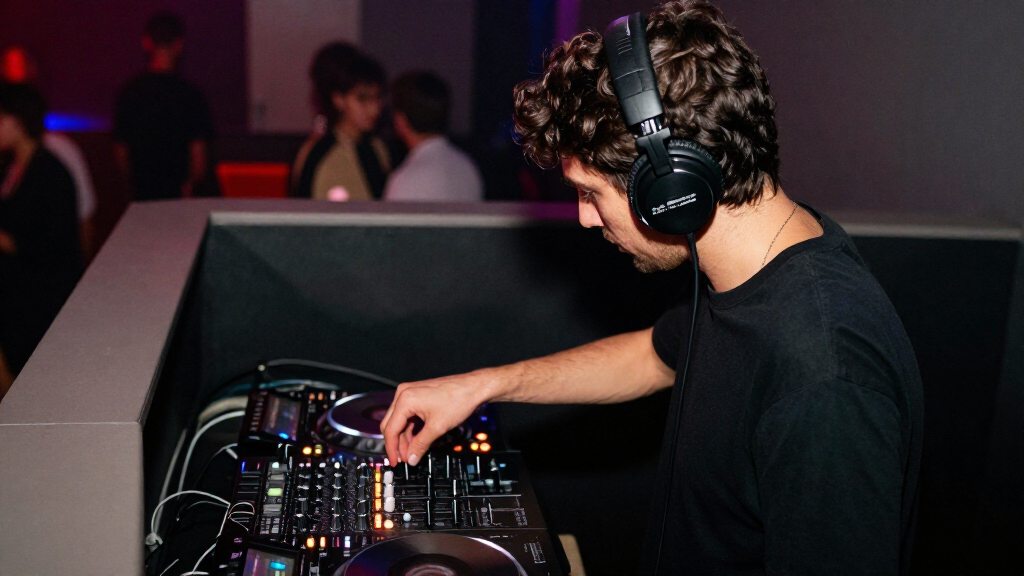
I compared these 13 wired headphones through the needs that matter when cueing in a noisy room: passive isolation from the ear-pad seal, comfort during extended sessions, practical handling for one-ear monitoring, and build suitability for regular transport. I also considered whether each model is designed specifically for DJ use or aimed more broadly at studio listening, since that affects how well its design fits booth work.
The ranking gives more weight to a clear DJ use case, dependable fit and handling than to broad feature claims alone. That puts the Pioneer DJ HDJ-X7-K first as the strongest dedicated option, while models such as the OneOdio Monitor 60 earn distinction through versatility rather than booth specialization. Value and beginner suitability separate accessible alternatives, but no lower-ranked model is treated as a substitute for isolation testing in a buyer’s own fit: ear shape and pad seal can change results.
Factors to Consider When Choosing DJ Headphones With Noise Isolation
Choosing DJ headphones for isolation is not just a matter of selecting the largest driver or the most DJ-focused name. I would match the headphone to the room, monitoring habits and time spent wearing it before comparing secondary features.
Match Isolation to the Room
Passive isolation comes mainly from how well the pads seal around your ears, not from a label promising noise reduction. A headphone that muffles conversation at home may still let in strong booth monitors or low-frequency crowd noise. If you mix beside loud speakers, prioritize a stable over-ear seal and keep a backup monitoring method available. On-ear designs can be easier to carry, but their smaller contact area may leave more sound around the ear. Check how the pads sit with your glasses, hair, or piercings, since small gaps can make a noticeable difference. Do not treat isolation as permission to raise headphone volume; a tight seal can make monitoring feel louder at the same setting.
Choose the Right Fit for One-Ear Cueing
Many DJs listen with one ear covered while the other stays open to the room, so swivel and cup movement can matter as much as isolation. A tightly sealed pair may work well for two-ear monitoring but feel awkward if the cups do not stay in place when rotated. Before buying, check whether the headband and cups allow the handling style you actually use. If you mainly cue with both ears covered, prioritize a comfortable, even seal instead. A common mistake is choosing solely for maximum clamping force: pressure can become tiring during long sets and may not improve the seal for every head shape. Fit is a personal tradeoff, so a return option can be useful when buying online.
Separate DJ Features from Studio Versatility
DJ headphones are shaped around quick cueing and frequent handling, while studio-oriented models often aim for general monitoring and longer listening. Either type can work at a mixer, but a studio label does not confirm that a headphone is convenient to move between ears or wear in a booth. If you also edit, record, or listen at a desk, a versatile model may be a better use of your gear budget. If your main job is beatmatching in a loud venue, prioritize a DJ-specific fit and handling over broader studio claims. Think about your most frequent task rather than choosing the model with the longest feature list. That distinction helps explain why the HDJ-X7-K and HDP DJ60 appeal to a different buyer than the Monitor 60.
Weigh Comfort Against a Firm Seal
A secure fit can help keep outside sound down, but strong clamping pressure and heavy cups may become distracting over a long set. Soft pads matter, yet pad material, heat buildup, and how much room the ear has inside the cup also affect comfort. If you wear headphones for hours, prioritize a fit that stays stable without pinching. If you use them only for short cue checks, a firmer fit may feel like a fair trade for keeping the cups in place. Remember that pads compress and wear with use, which can reduce comfort and alter the seal. Replacement-pad availability is a practical ownership question, not just an accessory detail.
Think About Cables and Transport
A wired connection avoids battery concerns and suits most mixer setups, but the cable can catch on equipment or restrict movement. Check that the cable arrangement and connector suit your mixer and the way you stand at the booth. A folding design or supplied pouch can make travel easier, while a more substantial build may better suit frequent transport. These benefits are separate from isolation: a portable headphone can still have a poor seal for your ears. Consider where the headphones will live between sets and whether you need to replace pads or cables over time. The most sensible choice balances fit and handling with the wear the pair will face.
Spend for Your Main Use, Not a Spec Sheet
Paying more makes sense when the extra spend addresses a real need, such as more durable construction, better comfort for long sessions, or a design that supports regular booth work. It may not be worthwhile if you only practice at home and a simpler wired pair fits securely. Large driver figures and broad sound-quality claims do not tell you how much room noise the pads will block. Buyers who need one pair for DJing and studio tasks should value versatility; dedicated performers should place more weight on fit and handling. Set a budget around expected use and replacement frequency rather than treating premium positioning as proof of better isolation. This keeps the choice focused on outcomes you can actually use.
Frequently Asked Questions
Can passive DJ headphones block loud club sound completely?
No. The over-ear models in this roundup use physical coverage and pad seals to reduce some surrounding sound, but they are not a guarantee of silence. Loud music, especially bass, can still be audible through the cups. A better seal may improve the perceived reduction, but fit varies between people and can be affected by glasses or worn pads. Keep monitoring volume at a sensible level and do not rely on headphones as hearing protection.
Should I choose a DJ-specific model or a studio headphone for mixing?
Choose based on how you work rather than the category name alone. A DJ-focused design is the more direct fit if you need quick cueing and frequent cup movement in a booth. A studio-oriented model can make more sense if the same pair will spend substantial time on editing or general listening. In this lineup, the Pioneer DJ HDJ-X7-K and Hercules HDP DJ60 represent the dedicated direction, while the OneOdio Monitor 60 offers a broader-use alternative. Either way, check that the fit and handling suit your monitoring technique.
Are on-ear headphones a good choice for noisy DJ booths?
They can be convenient for portability and may suit short cue checks, but their smaller contact area can make a consistent seal harder to achieve. That may leave more ambient sound competing with the track than a well-fitting over-ear pair. Comfort also varies: some listeners prefer less coverage, while others find direct pressure on the ears tiring. If booth noise is the main problem, compare fit carefully and give over-ear options priority when they seal comfortably. A compact form is not automatically the better choice for isolation.
What matters more for isolation: larger drivers or a better ear-pad seal?
The seal is the more useful thing to check for passive isolation. Driver size can relate to sound reproduction, but it does not tell you how effectively a headphone limits sound entering around your ears. Pads that sit evenly and comfortably are more likely to reduce gaps than a spec-sheet number. Try to account for glasses, hair, and the shape of your ears when judging fit. If a model feels impressive on paper but leaves gaps, it may not suit a noisy booth.
Is a more expensive pair worth it if I only DJ at home?
Not automatically. Home practice usually exposes headphones to less physical wear and less competing noise than frequent club use, so a comfortable, well-sealing entry-level option may be enough. Paying more can be worthwhile if you also need a pair for regular studio work or want a design built around frequent handling. The HDJ-X7-K is the stronger fit for buyers who prioritize dedicated professional use, while simpler options can cover basic practice needs. Let expected hours, fit, and durability drive the decision rather than assuming a higher tier will block more sound.
Conclusion
For the best overall dedicated DJ option, I would start with the Pioneer DJ HDJ-X7-K; the Hercules HDP DJ60 is a sensible alternative for shoppers seeking another purpose-built design. The best value direction is an entry-level wired model that fits securely, with the Hercules HDP DJ45 and OneOdio Pro-10 worth comparing for basic practice rather than assuming either suits every booth. For best premium, the HDJ-X7-K is my lead pick in this lineup. Beginners should compare the HDP DJ45, Pioneer DJ HDJ-CUE1, and OneOdio Pro-10 by fit and handling, while the OneOdio Monitor 60 is the better match for someone dividing time between DJ monitoring and studio listening. Choose the pair that seals comfortably on your head and matches your cueing style; isolation claims matter less than a fit you can wear through a full session.
Halloween Picks
halloween
As an affiliate, we earn on qualifying purchases.