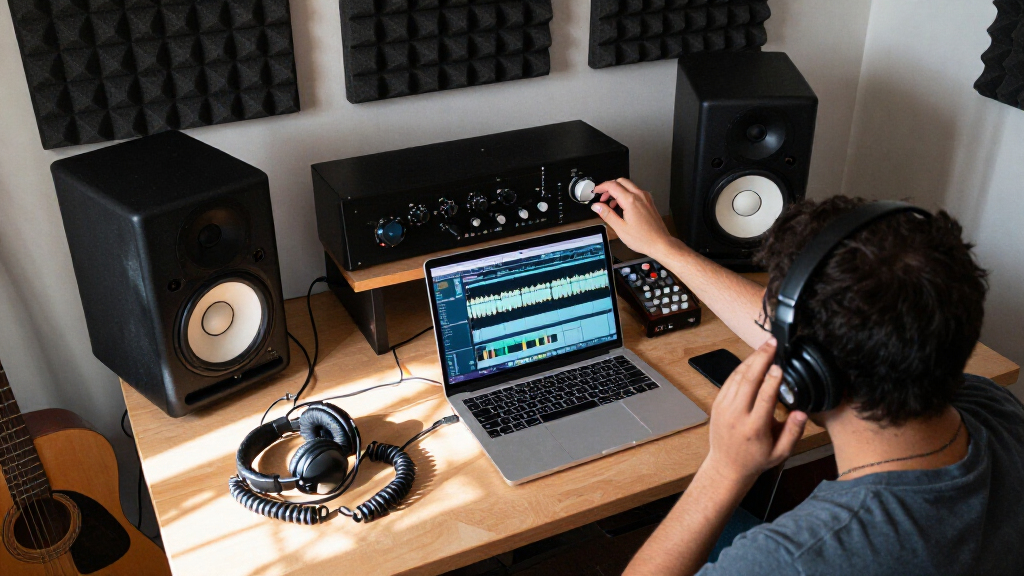

Choosing the right studio monitor speakers determines whether your mixes translate well on other systems or fall apart outside your room. For most producers, the Yamaha HS5 stands out as the best overall pick due to its neutral frequency response and industry-standard reliability. However, if you need a wider sweet spot for larger rooms, the JBL 305P MkII offers superior imaging with its waveguide technology. Budget-conscious beginners might find the PreSonus Eris E4.5 more accessible, though it lacks the headroom of its competitors. The main tradeoff here is between size, accuracy, and price—smaller monitors save desk space but struggle with low-end extension. Continue reading to see how these fourteen options compare across critical performance metrics.

Get audio and creator gear delivered free with Prime
- Fast, free delivery on millions of items
- Prime Video, Amazon Music and more included
- Member-only deals all year
Complete the kit


Key Takeaways
- Smaller woofers (3.5-inch and 4-inch) require careful placement or subwoofer integration to avoid misleading low-end judgments.
- The JBL 305P MkII provides the widest sweet spot among mid-sized monitors, making it forgiving for imperfect room acoustics.
- Yamaha‘s HS series prioritizes mid-range clarity over bass punch, which helps in identifying vocal and instrumental clashes.
- Powered monitors with balanced inputs (XLR/TRS) offer better noise rejection and integration with professional audio interfaces than consumer-grade RCA-only models.
- Aesthetic choices like white finishes (Yamaha HS4 W, Ortizan C7 White) do not affect sound quality but may indicate a different internal component tier in some brands.
| Ortizan C7 Powered Studio Monitor Speakers |  | Best for Hybrid Desktop Use | Speaker Type: Powered Studio Monitor | Drivers: 3.5″ Carbon Fiber Woofer, 0.75″ Silk Tweeter | Connectivity: Bluetooth 5.3, USB, RCA, TRS, AUX | VIEW LATEST PRICE | See Our Full Breakdown |
| Yamaha HS5 Powered Studio Monitors |  | Best for Critical Listening | Frequency Response: 54 Hz – 30 kHz | Drivers: 5″ Woofer, 1″ Dome Tweeter | Power: 70W Total (45W LF + 25W HF) | VIEW LATEST PRICE | See Our Full Breakdown |
| Edifier MR4 4-Inch Active Near-Field Studio Monitors | 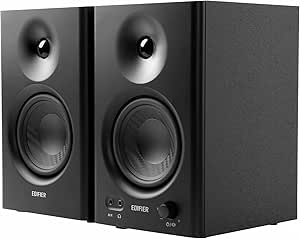 | Best for Beginners | Woofer: 4-inch Composite | Tweeter: 1-inch Silk Dome | Power: 42 Watts | VIEW LATEST PRICE | See Our Full Breakdown |
| Edifier R1280T Powered Bookshelf Speakers |  | Best for Casual Listening & Light Production | Type: Powered Bookshelf | Drivers: 4″ Woofer, 13mm Tweeter | Power: 42 Watts | VIEW LATEST PRICE | See Our Full Breakdown |
| PreSonus Eris E4.5 4.5-Inch Nearfield Studio Monitors |  | Best Balanced Starter Monitor | Woofer: 4.5-inch Woven Composite | Tweeter: 1-inch Silk Dome | Amplification: 50W Total Class AB | VIEW LATEST PRICE | See Our Full Breakdown |
| Edifier MR4 Active Near-Field Studio Monitor Speakers, 4-Inch |  | Best Value for Hybrid Workspaces | Woofer Size: 4 inches | Tweeter Size: 1 inch | Max Power: 42 watts | VIEW LATEST PRICE | See Our Full Breakdown |
| Ortizan C7 Powered Studio Monitors, Pair, White |  | Best for Wireless Convenience | Woofer Size: 3.5 inches | Tweeter Size: 0.75 inches | Connectivity: Bluetooth 5.3, USB, TRS, RCA | VIEW LATEST PRICE | See Our Full Breakdown |
| Yamaha HS4 Powered Studio Monitors, Black, Pair |  | Best for Critical Mixing in Small Rooms | Woofer Size: 4.5 inches | Tweeter Size: 1 inch | Max Power: 26 watts | VIEW LATEST PRICE | See Our Full Breakdown |
| JBL 305P MkII 5-Inch 2-Way Powered Studio Monitors (Pair) |  | Best Overall for Imaging and Sweet Spot | Woofer Size: 5 inches | Tweeter Size: 1 inch | Amp Power: 41 watts | VIEW LATEST PRICE | See Our Full Breakdown |
| PreSonus Eris 3.5 Powered Studio Monitors, Stereo Pair |  | Best for Beginners and Desktop Gaming | Woofer Size: 3.5 inches | Tweeter Size: 1 inch | Total Power: 50 watts | VIEW LATEST PRICE | See Our Full Breakdown |
| PreSonus Eris E7 XT 2-Way Active Studio Monitor with EBM Waveguide |  | Best for Collaborative Listening | Configuration: 2-Way Active | Woofer: 6.5-inch Woven Composite | Tweeter: 1.25-inch Silk Dome | VIEW LATEST PRICE | See Our Full Breakdown |
| Yamaha HS4 Powered Studio Monitors, White, Pair |  | Best Compact Desktop Solution | Configuration: 2-Way Powered Pair | Woofer: 4.5 Inches | Tweeter: 1-Inch Dome | VIEW LATEST PRICE | See Our Full Breakdown |
| Yamaha HS5 W 5-Inch Powered Studio Monitors, White, 2-Pack |  | Best for Critical Mixing Accuracy | Configuration: 2-Way Powered Pair | Woofer: 5-Inch Cone | Tweeter: 1-Inch Dome | VIEW LATEST PRICE | See Our Full Breakdown |
| Mackie CR3.5 Powered Studio Monitors, Pair, 3.5-Inch Woofers, Black | 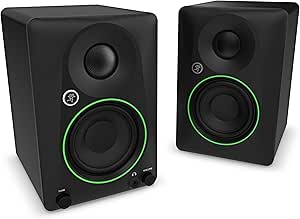 | Best Entry-Level Versatility | Configuration: 2-Way Powered Pair | Woofer: 3.5 Inches | Tweeter: 1 Inch | VIEW LATEST PRICE | See Our Full Breakdown |
| studio monitor speaker | Inputs |
|---|---|
| Ortizan C7 Powered Studio Moni | — |
| Yamaha HS5 Powered Studio Moni | XLR and TRS |
| Edifier MR4 4-Inch Active Near | TRS, RCA, AUX |
| Edifier R1280T Powered Bookshe | RCA, 3.5mm AUX |
| PreSonus Eris E4.5 4.5-Inch Ne | TRS, RCA, 1/8" AUX |
| Edifier MR4 Active Near-Field | TRS, RCA, AUX |
| Ortizan C7 Powered Studio Moni | — |
| Yamaha HS4 Powered Studio Moni | XLR/TRS, RCA, Mini |
| JBL 305P MkII 5-Inch 2-Way Pow | XLR, TRS |
| PreSonus Eris 3.5 Powered Stud | TRS, RCA, AUX |
| PreSonus Eris E7 XT 2-Way Acti | — |
| Yamaha HS4 Powered Studio Moni | XLR/TRS Combo, RCA, Stereo Mini |
| Yamaha HS5 W 5-Inch Powered St | — |
| Mackie CR3.5 Powered Studio Mo | — |
More Details on Our Top Picks
Ortizan C7 Powered Studio Monitor Speakers
This pair stands out for its versatile connectivity, blending professional balanced TRS inputs with consumer-friendly Bluetooth 5.3 and USB. While the Yamaha HS5 offers superior flat-frequency accuracy for critical mixing, the Ortizan C7 is better suited for creators who need to switch between a DAW and casual media consumption without swapping cables. The 24-bit DAC provides decent resolution for digital sources, though the smaller 3.5-inch drivers limit low-end extension compared to 5-inch models. It’s a pragmatic choice for home setups where convenience rivals pure fidelity.
Pros:- Balanced TRS inputs allow direct connection to audio interfaces
- Bluetooth 5.3 enables wireless streaming from phones and laptops
- Compact footprint fits easily on crowded desks
- Integrated DAC simplifies digital audio playback
Cons:- Smaller 3.5-inch drivers limit bass response compared to 5-inch monitors
- Inconsistent Bluetooth range specifications in documentation
- Plastic-heavy build feels less durable than MDF alternatives
Best for: Home studio owners and gamers who need a single speaker system for both music production and desktop media.
Not ideal for: Mixing engineers requiring critical low-frequency accuracy, as the smaller drivers lack deep bass extension.
- Speaker Type:Powered Studio Monitor
- Drivers:3.5″ Carbon Fiber Woofer, 0.75″ Silk Tweeter
- Connectivity:Bluetooth 5.3, USB, RCA, TRS, AUX
- DAC:24-bit
- Dimensions:5.11 x 5.9 x 7.67 inches
- Quantity:Pair
Our verdict“Choose this if you value wireless convenience and versatile inputs over critical mixing accuracy.”
Yamaha HS5 Powered Studio Monitors
The Yamaha HS5 remains the industry standard for a reason: its flat frequency response reveals flaws in mixes that smoother-sounding speakers hide. Compared to the Edifier MR4, which offers more tone-shaping flexibility, the HS5 demands a treated room because it won’t flatter poor recordings with boosted highs or lows. The 5-inch woofer provides better bass extension than smaller 4-inch competitors, making it suitable for fuller productions. However, its neutrality means it can sound harsh or thin in untreated spaces, requiring careful placement and acoustic consideration.
Pros:- Industry-standard flat response for accurate mixing
- 5-inch woofer offers better low-end than 4-inch rivals
- Robust MDF and polypropylene construction
- Balanced XLR and TRS inputs for pro gear
Cons:- Unforgiving in untreated acoustic environments
- No tone controls or wireless connectivity
- Heavier and larger than compact desktop monitors
Best for: Producers and engineers working in treated rooms who need accurate monitoring to make critical mixing decisions.
Not ideal for: Beginners in untreated rooms, as the flat response can sound harsh and lack engaging bass without acoustic treatment.
- Frequency Response:54 Hz – 30 kHz
- Drivers:5″ Woofer, 1″ Dome Tweeter
- Power:70W Total (45W LF + 25W HF)
- Inputs:XLR and TRS
- Enclosure:MDF, Polypropylene, Silk
- Weight:5.3 kg (per pair)
- Type:Two-way Bi-amplified
Our verdict“This is the tool for those who need truth, not flattery, in their audio monitoring.”
Edifier MR4 4-Inch Active Near-Field Studio Monitors
This model strikes a balance between affordability and utility, offering switchable monitor and music modes that the Yamaha HS5 lacks. The separate high- and low-frequency controls allow users to tailor the sound to their specific room acoustics, a significant advantage for untreated home studios. While the 42-watt output is modest, it is sufficient for nearfield listening. Compared to the PreSonus Eris E4.5, the MR4’s MDF enclosure helps reduce cabinet resonance, though it lacks the PreSonus’s dedicated headphone amplifier features. It is a forgiving entry point for new producers.
Pros:- Monitor and music modes adapt to different use cases
- Adjustable bass and treble help correct room issues
- MDF cabinet reduces unwanted resonance
- Front-panel headphone output for private monitoring
Cons:- No Bluetooth or wireless input options
- 42W power limit restricts volume in larger rooms
- Incomplete dimensional data in specs
Best for: Home recording novices who need tone controls to compensate for untreated room acoustics.
Not ideal for: Professional studios requiring wireless connectivity or high-wattage output for larger spaces.
- Woofer:4-inch Composite
- Tweeter:1-inch Silk Dome
- Power:42 Watts
- Inputs:TRS, RCA, AUX
- Modes:Monitor and Music
- Enclosure:MDF Wood
- Warranty:2 Years
Our verdict“A flexible starter monitor that lets you shape the sound to fit your imperfect room.”
Edifier R1280T Powered Bookshelf Speakers
The R1280T leans toward consumer-friendly sound with a wood-finish cabinet that looks at home in a living room. Unlike the Yamaha HS5, these are not designed for critical mixing; the 42-watt system emphasizes a pleasant, slightly colored sound profile ideal for enjoying music rather than dissecting it. The inclusion of a remote control and dual AUX inputs makes it convenient for mixed-use setups, such as connecting a TV and a computer. However, the lack of balanced inputs and studio-specific tuning makes it less suitable for professional audio work compared to dedicated monitors.
Pros:- Aesthetic wood finish suits home decor
- Remote control for easy volume adjustment
- Dual inputs allow connecting two devices at once
- Adjustable bass and treble for personal preference
Cons:- Colored sound signature is not ideal for critical mixing
- No balanced inputs (XLR/TRS) for pro audio gear
- Wired-only connectivity limits flexibility
Best for: Users who want decent audio for both casual music listening and light hobbyist recording.
Not ideal for: Serious producers who need balanced connections and a flat frequency response for mixing.
- Type:Powered Bookshelf
- Drivers:4″ Woofer, 13mm Tweeter
- Power:42 Watts
- Inputs:RCA, 3.5mm AUX
- Controls:Remote, Volume, Bass, Treble
- Finish:Wood-effect Vinyl
- Weight:4.9 kg
Our verdict“Buy these if you prioritize lifestyle aesthetics and ease of use over studio-grade accuracy.”
PreSonus Eris E4.5 4.5-Inch Nearfield Studio Monitors
The Eris E4.5 offers a middle ground between the consumer appeal of the Edifier R1280T and the pro-oriented Yamaha HS5. Its Class AB amplification and 4.5-inch woven-composite woofer deliver a tighter bass response than many plastic-cabinet competitors. The integrated headphone amplifier is a standout feature for solo producers working late hours. While it lacks the wireless capabilities of the Ortizan C7, its balanced TRS inputs and adjustable tone controls provide a professional workflow foundation. It is a robust choice for those starting a dedicated home studio.
Pros:- Balanced TRS inputs for professional audio interfaces
- Front-panel headphone amp with dedicated volume control
- Adjustable high/low-frequency EQ for room tuning
- Class AB amplification for reliable power delivery
Cons:- No wireless connectivity options
- Power-saving mode may interrupt long quiet passages
- 4.5-inch size requires more desk space than 3.5-inch models
Best for: Home studio builders who want professional inputs and a dedicated headphone amp for silent monitoring.
Not ideal for: Users needing Bluetooth connectivity or those with very small desks, as the 4.5-inch size is bulkier.
- Woofer:4.5-inch Woven Composite
- Tweeter:1-inch Silk Dome
- Amplification:50W Total Class AB
- Inputs:TRS, RCA, 1/8″ AUX
- Headphone Amp:Yes, Front Panel
- Power Save:Auto-off after 40 mins
- Enclosure:MDF
Our verdict“A solid, wired-only starter monitor that balances pro features with home-friendly usability.”
Edifier MR4 Active Near-Field Studio Monitor Speakers, 4-Inch
This pair stands out for its dual-mode functionality, offering a dedicated music mode alongside the standard flat-response monitor mode. This flexibility makes it a stronger choice than the PreSonus Eris 3.5, which lacks a specific consumer-tuning switch. The 4-inch composite woofers provide adequate midrange clarity for desktop production, though they lack the deep bass extension found in larger 5-inch models like the JBL 305P MkII. Users benefit from independent high- and low-frequency controls, allowing for quick room adjustments without external EQ software. However, the absence of Bluetooth connectivity limits its utility in wireless-centric setups, a feature present in the Ortizan C7. It is an excellent entry point for producers who also use their desktop for casual listening, but serious mixing engineers may find the soundstage too narrow for critical decisions.
Pros:- Dedicated music mode for consumer playback
- Independent high and low frequency controls
- Balanced TRS inputs for professional interfaces
- MDF enclosure reduces cabinet resonance
Cons:- No wireless connectivity options
- Limited bass extension compared to 5-inch models
- Requires wired connection to all sources
Best for: Home producers and content creators who need a single set of speakers for both mixing and casual music listening.
Not ideal for: Audio engineers requiring deep sub-bass response or wireless streaming capabilities.
- Woofer Size:4 inches
- Tweeter Size:1 inch
- Max Power:42 watts
- Inputs:TRS, RCA, AUX
- Output:Headphone jack
- Enclosure:MDF Wood
- Dimensions:7.2 x 12.1 x 16.9 inches
Our verdict“A versatile hybrid option that balances studio accuracy with consumer-friendly features.”
Ortizan C7 Powered Studio Monitors, Pair, White
This model distinguishes itself with Bluetooth 5.3 connectivity and a built-in 24-bit DAC, catering to users who prioritize seamless wireless streaming over traditional wired-only setups. Compared to the Yamaha HS4, which relies strictly on wired inputs, the Ortizan C7 offers greater flexibility for mobile devices and laptops via USB. The 3.5-inch carbon fiber woofers are compact, making them ideal for small desks, but they naturally sacrifice low-frequency punch found in the 5-inch JBL 305P MkII. While the silk dome tweeters provide clear highs, the smaller driver size may result in a less authoritative midrange for critical mixing. It is a practical choice for video editors or podcasters who need quick access to multiple audio sources, though purists might prefer the dedicated signal path of traditional monitors.
Pros:- Bluetooth 5.3 for wireless streaming
- Built-in 24-bit DAC for USB audio
- Compact footprint saves desk space
- Balanced TRS input for pro gear
Cons:- Small 3.5-inch woofers limit bass depth
- Not suitable for large room filling
- Plastic enclosure may resonate at high volumes
Best for: Video editors and podcasters who value Bluetooth streaming and USB audio simplicity.
Not ideal for: Mix engineers who require robust bass response and strict signal path separation.
- Woofer Size:3.5 inches
- Tweeter Size:0.75 inches
- Connectivity:Bluetooth 5.3, USB, TRS, RCA
- DAC Resolution:24-bit
- Power Source:Corded Electric
- Color:White
- Output:Headphone jack
Our verdict“A convenient, modern monitor pair that prioritizes connectivity and desk-space efficiency.”
Yamaha HS4 Powered Studio Monitors, Black, Pair
The Yamaha HS4 inherits the brand’s reputation for honest, uncolored sound reproduction, making it a superior choice for critical listening compared to the consumer-tuned Edifier MR4. Its 4.5-inch woofer and 1-inch dome tweeter deliver a focused midrange that helps identify mix errors quickly. The inclusion of room control and high trim response allows for precise calibration to desk reflections, a feature often missing in budget competitors like the PreSonus Eris 3.5. While its 26-watt power output is modest, it is sufficient for near-field monitoring at close distances. The compact size fits tight workspaces, but the lack of Bluetooth and lower volume headroom means it is strictly a professional tool rather than a hybrid lifestyle speaker.
Pros:- Renowned Yamaha flat frequency response
- Room control and high trim for calibration
- XLR/TRS combo inputs for pro interfaces
- Includes anti-slip pads and cables
Cons:- Lower power output than competitors
- No wireless connectivity
- Limited bass extension below 60 Hz
Best for: Mix engineers and producers who need accurate sound reproduction in small, treated spaces.
Not ideal for: Casual listeners who want wireless streaming or high-volume playback.
- Woofer Size:4.5 inches
- Tweeter Size:1 inch
- Max Power:26 watts
- Frequency Response:60 Hz–22 kHz
- Inputs:XLR/TRS, RCA, Mini
- Controls:Room Control, High Trim
- Included:Cables and Pads
Our verdict“A precise, professional-grade monitor designed for accuracy over versatility or volume.”
JBL 305P MkII 5-Inch 2-Way Powered Studio Monitors (Pair)
This pair earns its top spot due to the Image Control Waveguide, which creates a remarkably wide sweet spot, allowing for accurate mixing even if you move slightly from the center. Compared to the Yamaha HS4, the JBL 305P MkII offers more bass extension and higher power output (41 watts per amp), making it suitable for slightly larger rooms or louder monitoring. The 5-inch woofer delivers fuller low-mids than the 3.5-inch drivers in the Ortizan C7. While it lacks the dual-mode consumer tuning of the Edifier MR4, its studio-focused tuning and balanced XLR inputs make it a robust choice for serious production. The tradeoff is its larger physical footprint, which may crowd smaller desks, and the lack of integrated Bluetooth connectivity.
Pros:- Wide sweet spot via Image Control Waveguide
- Strong 41-watt Class-D amplification
- Boundary EQ for wall proximity tuning
- Balanced XLR and TRS inputs
Cons:- Larger footprint than compact models
- No wireless streaming options
- Requires dedicated speaker stands or pads
Best for: Professional producers and mixing engineers who need wide imaging and reliable bass response.
Not ideal for: Users with extremely small desks who cannot accommodate 5-inch drivers.
- Woofer Size:5 inches
- Tweeter Size:1 inch
- Amp Power:41 watts
- Max SPL:108 dB
- Inputs:XLR, TRS
- Technology:Image Control Waveguide
- Enclosure:MDF with ABS baffle
- Weight:10.4 pounds
Our verdict“The benchmark for near-field monitoring, offering superior imaging and power for professional work.”
PreSonus Eris 3.5 Powered Studio Monitors, Stereo Pair
The PreSonus Eris 3.5 offers an accessible entry into active monitoring with a versatile feature set that includes a front headphone output and multiple input types. While it lacks the refined imaging of the JBL 305P MkII or the strict flat response of the Yamaha HS4, its 50-watt total power and acoustic tuning controls make it a flexible tool for beginners. The 3.5-inch woven-composite woofers are small, limiting bass depth compared to the 4.5-inch Yamaha HS4, but the high- and low-frequency controls allow for basic room correction. It is a better value proposition for those who need a single pair for gaming, movies, and light music production, rather than dedicated mixing. The lack of Bluetooth puts it at a disadvantage against the Ortizan C7 for wireless users.
Pros:- 50 watts total amplification
- Front headphone output for private listening
- Acoustic tuning controls for room adjustment
- Compact size fits small desks easily
Cons:- Limited bass extension due to 3.5-inch drivers
- No Bluetooth or wireless connectivity
- Soundstage is narrower than premium models
Best for: Students, gamers, and hobbyists entering music production or needing versatile desktop audio.
Not ideal for: Professional mix engineers requiring precise low-frequency accuracy and wide soundstage.
- Woofer Size:3.5 inches
- Tweeter Size:1 inch
- Total Power:50 watts
- Frequency Response:80 Hz–20 kHz
- Inputs:TRS, RCA, AUX
- Output:Headphone jack
- Controls:High/Low Frequency
- Dimensions:5.5 x 6 x 8.3 inches
Our verdict“A versatile, budget-friendly monitor pair ideal for multi-purpose desktop use.”
PreSonus Eris E7 XT 2-Way Active Studio Monitor with EBM Waveguide
This monitor stands out for its EBM waveguide, which creates a significantly wider listening sweet spot than standard designs. While the Yamaha HS5 offers a tighter, more focused stereo image ideal for solo critical listening, the Eris E7 XT is engineered for situations where multiple people need to hear the same mix. The 6.5-inch woven composite woofer delivers deeper bass extension, making it suitable for checking low-end elements without a subwoofer. However, it is sold as a single unit, requiring you to buy two for stereo use, which adds complexity to the purchase process. The integrated acoustic tuning controls help mitigate room modes, a feature less prominent in budget competitors. This makes it a pragmatic choice for team environments rather than isolated bedroom studios.Pros:- Wide dispersion waveguide ensures consistent sound for listeners off-axis
- Acoustic tuning controls allow for room-specific frequency adjustments
- 6.5-inch woofer provides deeper bass extension than smaller 4-5 inch models
Cons:- Sold as a single monitor, requiring separate purchase for stereo setup
- Larger footprint may overwhelm very small desk spaces
Best for: Producers and engineers who frequently collaborate with clients or colleagues in the same room.
Not ideal for: Users on a strict budget who need a complete stereo pair immediately, as units are sold individually.
- Configuration:2-Way Active
- Woofer:6.5-inch Woven Composite
- Tweeter:1.25-inch Silk Dome
- Max Output Power:130 Watts
- Max Sound Level:104 dB
- Dispersion:100° H x 60° V
- Dimensions:11.5 x 9.8 x 16 inches
Our verdict“Choose this if you need a wide sweet spot for group listening sessions rather than a tight solo mix.”
Yamaha HS4 Powered Studio Monitors, White, Pair
The Yamaha HS4 excels in scenarios where desk real estate is scarce. Compared to the bulkier Yamaha HS5, this pair offers a significantly smaller footprint while retaining the brand’s signature flat response characteristic. It is designed for nearfield monitoring at very close distances, making it ideal for content creators working on laptops or compact setups. The inclusion of multiple input options, including RCA and stereo mini, offers flexibility that some pure studio monitors lack. However, the 4.5-inch woofer limits low-frequency extension, meaning bass-heavy genres may require a subwoofer for accurate judgment. It is a focused tool for precision in small spaces, not a replacement for larger monitors in treated rooms.Pros:- Compact size fits easily on crowded desks
- Versatile inputs include XLR/TRS, RCA, and 1/8-inch jack
- Room control and high trim allow for basic environment calibration
Cons:- Limited bass extension due to 4.5-inch woofer size
- Lower power output may struggle in noisy environments
Best for: Content creators and podcasters with limited desk space who need accurate nearfield sound.
Not ideal for: Mix engineers working on bass-heavy genres who need extended low-frequency response without a subwoofer.
- Configuration:2-Way Powered Pair
- Woofer:4.5 Inches
- Tweeter:1-Inch Dome
- Frequency Response:60 Hz – 22 kHz (-10 dB)
- Output Power:26 W + 26 W
- Inputs:XLR/TRS Combo, RCA, Stereo Mini
- Dimensions:8.4 x 5.9 x 9.4 inches
Our verdict“This is the go-to choice for tight workspaces where size constraints outweigh the need for deep bass.”
Yamaha HS5 W 5-Inch Powered Studio Monitors, White, 2-Pack
This pair is widely regarded as a benchmark for neutral sound reproduction. Unlike the PreSonus Eris E7 XT, which prioritizes a wider sweet spot, the Yamaha HS5 focuses on a precise stereo image that reveals mix flaws clearly. The bi-amplified design ensures that the woofer and tweeter operate independently, reducing intermodulation distortion. This results in a cleaner top end and tighter bass compared to single-amplifier systems. While the white finish is aesthetic, the core value lies in the flat frequency response that translates well to other playback systems. It is a professional-grade tool that demands a properly treated room to shine, as it will not flatter poor mixes.Pros:- Bi-amplified architecture provides clear separation between drivers
- Extremely flat response aids in accurate mix decisions
- High-resolution image helps pinpoint panning and depth issues
Cons:- Unforgiving sound reveals every flaw in a mix immediately
- Requires acoustic treatment for optimal performance in untreated rooms
Best for: Mix engineers and producers who prioritize accurate translation across different playback systems.
Not ideal for: Beginners looking for a ‘fun’ or bass-heavy sound for casual listening or gaming.
- Configuration:2-Way Powered Pair
- Woofer:5-Inch Cone
- Tweeter:1-Inch Dome
- Amplifier Output:70 Watts Max
- Frequency Response:54 Hz – 30 kHz
- Connectivity:XLR and TRS
- Color:White
Our verdict“Select this pair if your primary goal is mix translation and you have a controlled listening environment.”
Mackie CR3.5 Powered Studio Monitors, Pair, 3.5-Inch Woofers, Black
The Mackie CR3.5 targets users who need a balance between studio monitoring and casual desktop listening. It lacks the deep bass extension of the Yamaha HS4 due to its 3.5-inch woofers, but it compensates with a user-friendly tone control knob and a location switch. This allows users to adjust the sound for desk or bookshelf placement, a feature absent in more rigid professional monitors like the HS5. It is an excellent starter pair for students or hobbyists who also use their speakers for media consumption. The included isolation pads and cables make it a plug-and-play solution, though audiophiles will find the sound signature less neutral than dedicated studio tools.Pros:- Tone knob and location switch offer flexible sound shaping
- Includes necessary cables and isolation pads for easy setup
- Compact size is ideal for small desks and dorm rooms
Cons:- Small 3.5-inch drivers limit low-frequency accuracy
- Sound is less neutral than dedicated professional monitors
Best for: Students and hobbyists who need a versatile pair for both basic mixing and music playback.
Not ideal for: Professional mix engineers who require flat frequency response and extended low-end accuracy.
- Configuration:2-Way Powered Pair
- Woofer:3.5 Inches
- Tweeter:1 Inch
- Max Output Power:50 Watts
- Connectivity:RCA, TRS, 1/8-inch
- Dimensions:7.1 x 5.5 x 8.1 inches
- Weight:10.2 Pounds
Our verdict“This is a practical, all-in-one choice for beginners who value ease of use over absolute precision.”
How We Picked
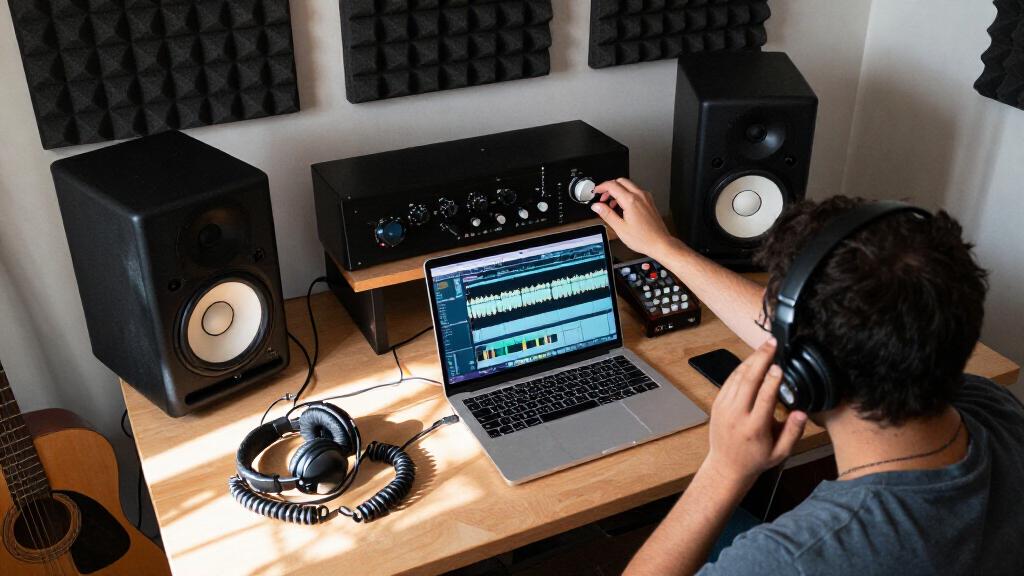
I evaluated these monitors based on three primary criteria: frequency response neutrality, build quality, and connectivity options. Neutrality is the most critical factor; a monitor must reveal flaws in a mix rather than flattering it with boosted bass or treble. I compared each model’s technical specifications against known industry benchmarks for flat response curves, prioritizing models that minimize coloration in the critical 2kHz–5kHz range.
Build quality and connectivity were assessed to determine long-term viability in a professional workflow. Monitors with robust enclosures, metal tweeters, and balanced inputs ranked higher because they resist vibration-induced distortion and maintain signal integrity over long cable runs. I also considered ease of setup and control placement, as accessible volume knobs and switchable filters reduce friction during critical listening sessions. This ranking reflects a balance between acoustic performance and practical usability for home and project studios.
Factors to Consider When Choosing Studio Monitor Speakers
Understanding the technical nuances of studio monitors prevents costly mistakes. Here are the key factors that influence your choice beyond just brand reputation.
Woofer Size and Low-End Extension
The size of the woofer directly impacts how low the monitor can go without distortion. 3.5-inch and 4-inch monitors often roll off before 50Hz, meaning you might boost bass in your mix thinking it’s absent, only to find it overwhelming on larger systems. If your room is small, larger 5-inch or 6.5-inch drivers might excite room modes excessively, causing boomy or uneven bass. Matching driver size to room size is a common oversight; too small means you miss low-end detail, while too large introduces acoustic problems that require expensive treatment to fix.
Near-Field vs. Mid-Field Placement
Most home studios operate in the near-field listening zone, where you sit close to the speakers (3–4 feet). Near-field monitors are designed to minimize room reflections, making them ideal for untreated rooms. However, if you have a larger control room or listen at greater distances, you need mid-field monitors with higher power handling and wider dispersion. Using near-field monitors in a large space results in a narrow sweet spot and inadequate volume, forcing you to mix too loud and causing listener fatigue.
Balanced vs. Unbalanced Inputs
Professional audio interfaces typically output balanced signals via XLR or TRS cables, which cancel out noise over long distances. Many budget monitors, like the Edifier R1280T, rely on unbalanced RCA inputs. While convenient, unbalanced connections are susceptible to hum and interference, especially if cables run near power supplies. For a serious production setup, balanced inputs are non-negotiable for maintaining a clean signal path. If you choose monitors with only RCA, use high-quality cables and keep them short to minimize issues.
Room Treatment vs. Monitor Quality
A common mistake is investing heavily in expensive monitors while ignoring the acoustic environment. A $500 pair of monitors in an untreated, square room will sound worse than a $200 pair in a properly treated space. Room treatment addresses reflections and standing waves that distort frequency response. Before upgrading monitors, spend a portion of your budget on bass traps and acoustic panels. This ensures that what you hear is the monitor’s performance, not the room’s coloration, leading to more accurate translation.
Bi-Amplification and Power Headroom
Bi-amped monitors have separate amplifiers for the woofer and tweeter, allowing for more precise control and reduced distortion. Single-amped designs use a passive crossover, which can introduce phase issues and limit dynamic range. Check the power ratings carefully; watts are not the only indicator of loudness, but higher headroom means less clipping at high volumes. For electronic music or loud genres, monitors with ample power reserve prevent compression artifacts during peaks, ensuring your mix remains clear even at high SPL.
Frequently Asked Questions
Do I need a subwoofer with 5-inch studio monitors?
For most home studios, a subwoofer is beneficial even with 5-inch monitors. While 5-inch drivers can reach down to 50–60Hz, they lack the authority and extension needed for critical low-end decisions in modern genres like hip-hop or EDM. A dedicated subwoofer allows the main monitors to focus on mid and high frequencies, reducing distortion. However, integrating a sub requires careful setup to avoid phase issues. If you cannot treat your room for bass, a subwoofer with adjustable crossover and phase controls is a practical workaround to gain low-end visibility without overwhelming the main drivers.
Are expensive monitors better than cheap ones for beginners?
Not necessarily. Expensive monitors often reveal more detail, which can be overwhelming for beginners who lack the experience to interpret subtle frequency imbalances. Mid-range monitors like the PreSonus Eris or Yamaha HS series offer a balanced view that helps you learn mixing fundamentals without the frustration of hearing every flaw. The skill of the engineer matters more than the gear. Start with affordable, reliable monitors, learn to mix on them, and upgrade only when you identify specific limitations in your current setup that hinder your workflow.
Can I use studio monitors for gaming or movies?
Studio monitors are designed for accuracy, not entertainment. They lack the exaggerated bass and dynamic compression found in consumer speakers, which can make movies and games feel flat or lifeless. While you can use them for both, you will miss the immersive impact of home theater systems. If you need a dual-purpose setup, look for monitors with a switchable bass boost or a separate headphone amp for gaming. Otherwise, it is better to keep your studio monitors dedicated to production to avoid compromising your mixing decisions with entertainment preferences.
How do I position my studio monitors correctly?
Place your monitors in an equilateral triangle with your head, where the distance between speakers equals the distance from each speaker to your ears. Tweeters should be at ear level, and the speakers should be angled inward (toed-in) to aim directly at the listening position. Keep monitors at least 6–12 inches away from walls to reduce bass buildup. Isolate them from the desk with foam pads or stands to prevent vibration transfer. Proper positioning is free and yields better results than buying more expensive gear.
What is the difference between active and passive monitors?
Active monitors have built-in amplifiers and are the standard for modern studios due to their convenience and optimized component matching. Passive monitors require an external amplifier, offering more flexibility to upgrade amps separately but adding complexity and cost. Active monitors are generally easier to set up and ensure the amp and speaker are designed to work together. For most users, active monitors are the better choice because they simplify the signal chain and reduce potential points of failure. Passive systems are mostly reserved for high-end mastering suites where specific amp characteristics are desired.
Conclusion
Choosing the right pair of studio monitor speakers depends on your room size, budget, and experience level. For the best overall balance of accuracy and reliability, the Yamaha HS5 remains a top choice for intermediate producers. If you work in a larger space or need a wider sweet spot, the JBL 305P MkII offers superior imaging and clarity. Beginners on a tight budget should consider the PreSonus Eris E4.5 for its accessibility and decent performance, while those needing a compact solution for small desks will find the Yamaha HS4 ideal. Remember that proper placement and room treatment will do more for your sound than any single upgrade. Start with the monitor that fits your current workflow and upgrade as your skills grow.