The AIAIAI TMA-2 DJ Wireless is my best overall pick for DJs seeking a dedicated wireless setup, while the AlphaTheta HDJ-F10-TX stands out for its SonicLink transmitter and the OneOdio Studio Max 1 for combining wireless and wired studio use. The main tradeoff is that standard Bluetooth can add delay that makes cueing harder, while specialized low-latency systems may cost more or depend on extra equipment. Fit, isolation, and whether the headphones can also work by cable matter as much as wireless convenience. I compare all 10 options by their DJ usefulness, connection flexibility, and likely fit for different budgets and routines. Continue reading for the full breakdown and a pick matched to your setup.

Get audio and creator gear delivered free with Prime
- Fast, free delivery on millions of items
- Prime Video, Amazon Music and more included
- Member-only deals all year
Complete the kit


Key Takeaways
- Wireless does not automatically mean suitable for beatmatching: the AlphaTheta HDJ-F10-TX pairs with a dedicated SonicLink transmitter, while Bluetooth-focused models may be better for casual listening than latency-sensitive cueing.
- The HDJ-F10 and HDJ-F10-TX serve different setups: the transmitter bundle is the more ready-to-use route for SonicLink monitoring; the standard HDJ-F10 makes sense when you already have a compatible transmitter or want to choose one separately.
- OneOdio’s Studio Max models prioritize flexibility: the Studio Max 1 combines wireless and wired studio use, while the Studio Max 2 is a DJ-focused alternative; buyers should check which connectivity features fit their exact setup.
- The AIAIAI TMA-2 options split by intended use: the DJ Wireless is the stronger match for DJ-focused monitoring, while the white TMA-2 Move is better suited to wireless listening beyond the booth.
- The Pioneer DJ HDJ-CUE1BT variants emphasize accessible Bluetooth convenience: their on-ear format makes them distinct from the over-ear picks, but listeners who need strong isolation or a dedicated low-latency link may prefer another category leader.
| PUPGSIS PG-MXPRO Wireless DJ Headphones, Black |  | Best for Flexible Connections | Connectivity: 2.4 GHz wireless, Bluetooth 5.3, and AUX | Drivers: 50 mm | Frequency response: 20 Hz–40 kHz | VIEW LATEST PRICE | See Our Full Breakdown |
| OneOdio Studio Max 1 Wireless DJ and Wired Studio Headphones |  | Best for Long Sessions | Connectivity: Bluetooth and wired; included low-latency transmitter | Bluetooth version: 5.2 in the specifications; product description also claims 5.3 | Drivers: 50 mm | VIEW LATEST PRICE | See Our Full Breakdown |
| AIAIAI TMA-2 DJ Wireless Over-Ear Headphones |  | Best for Low-Latency DJ Mixing | Connectivity: W+ Link and Bluetooth | Audio latency: 10 ms | Drivers: 40 mm dynamic, bio-cellulose | VIEW LATEST PRICE | See Our Full Breakdown |
| AIAIAI TMA-2 Move Wireless Over-Ear Headphones, White |  | Best for Modular Everyday Listening | Connectivity: Wireless Bluetooth; optional X03 transmitter for W+ Link | Bluetooth version: 5.3 | Battery life: Up to 40 hours | VIEW LATEST PRICE | See Our Full Breakdown |
| Pioneer DJ HDJ-CUE1BT On-Ear DJ Headphones with Bluetooth, White |  | Best for Straightforward Cueing | Connectivity: Bluetooth 4.2 and wired | Drivers: 40 mm dynamic | Impedance: 32 ohm | VIEW LATEST PRICE | See Our Full Breakdown |
| AlphaTheta HDJ-F10-TX Wireless DJ Headphones with SonicLink Transmitter |  | Best for Low-Latency Wireless Booth Monitoring | Connectivity: SonicLink wireless, Bluetooth, wired | Included transmitter: HP-TX01 | SonicLink latency: 9 ms | VIEW LATEST PRICE | See Our Full Breakdown |
| Pioneer DJ HDJ-CUE1BT On-Ear Bluetooth DJ Headphones |  | Best Compact On-Ear Pick | Style: On-ear | Connectivity: Bluetooth and wired | Driver: 40 mm dynamic | VIEW LATEST PRICE | See Our Full Breakdown |
| AlphaTheta HDJ-F10 Wireless DJ Headphones with SonicLink and Noise Cancelling |  | Best Premium Headphones for Booth-to-Travel Use | Type: Over-ear wireless DJ headphones | Connectivity: SonicLink, Bluetooth 4.0, wired | SonicLink latency: 9 ms | VIEW LATEST PRICE | See Our Full Breakdown |
| OneOdio A70 Bluetooth Over-Ear Headphones, Black |  | Best Long-Battery Value Pick | Type: Wireless over-ear headphones | Connectivity: Bluetooth and wired | Driver: 40 mm neodymium | VIEW LATEST PRICE | See Our Full Breakdown |
| OneOdio Studio Max 2 Wireless DJ Headphones |  | Best for Long Sessions and Multi-Device Setups | Connectivity: Bluetooth 6.0, 2.4G wireless, wired | Latency: 9 ms | Audio codec: LDAC | VIEW LATEST PRICE | See Our Full Breakdown |
| wireless DJ headphone | Connectivity | Battery life | Weight | Driver |
|---|---|---|---|---|
| PUPGSIS PG-MXPRO Wireless DJ H | 2.4 GHz wireless, Bluetooth 5.3, and AUX | Up to 60 hours in Bluetooth mode; up to 30 hours in 2.4 GHz mode | — | — |
| OneOdio Studio Max 1 Wireless | Bluetooth and wired; included low-latency transmitter | Up to 120 hours via Bluetooth; up to 50 hours via transmitter | — | — |
| AIAIAI TMA-2 DJ Wireless Over- | W+ Link and Bluetooth | More than 25 hours | 217 g | — |
| AIAIAI TMA-2 Move Wireless Ove | Wireless Bluetooth; optional X03 transmitter for W+ Link | Up to 40 hours | 225 g | — |
| Pioneer DJ HDJ-CUE1BT On-Ear D | Bluetooth 4.2 and wired | Average life listed as 3 hours | — | — |
| AlphaTheta HDJ-F10-TX Wireless | SonicLink wireless, Bluetooth, wired | Up to 9 hours with SonicLink; up to 30 hours with Bluetooth | 2.3 pounds | 40 mm PEEK |
| Pioneer DJ HDJ-CUE1BT On-Ear B | Bluetooth and wired | — | 250 g | 40 mm dynamic |
| AlphaTheta HDJ-F10 Wireless DJ | SonicLink, Bluetooth 4.0, wired | Up to 9 hours with SonicLink; up to 30 hours with Bluetooth | 2.2 pounds | 40 mm PEEK dynamic |
| OneOdio A70 Bluetooth Over-Ear | Bluetooth and wired | — | 8.96 oz | 40 mm neodymium |
| OneOdio Studio Max 2 Wireless | Bluetooth 6.0, 2.4G wireless, wired | Up to 120 hours | — | 45 mm High-Flux |
More Details on Our Top Picks
PUPGSIS PG-MXPRO Wireless DJ Headphones, Black
The PUPGSIS PG-MXPRO is the most adaptable connection choice here: it combines Bluetooth for casual listening, a 2.4 GHz transmitter for lower-latency wireless use, and wired AUX with both 3.5 mm and 6.35 mm compatibility. That range makes it easier to switch between a compatible DJ setup and everyday devices than with the Pioneer DJ HDJ-CUE1BT, which offers Bluetooth and wired listening but no separate 2.4 GHz link. The 180° rotating ear cups also support one-ear cueing, and the foldable build with a case suits DJs who carry their gear. The tradeoff is that 2.4 GHz use depends on the included transmitter, and its stated battery life falls to 30 hours in that mode, versus 60 hours over Bluetooth. I’d pick it for connection flexibility, not for a transmitter-free wireless setup.
Pros:- Three connection options cover Bluetooth, transmitter-based 2.4 GHz, and wired use.
- Includes 3.5 mm and 6.35 mm compatibility for a range of audio gear.
- Rotating ear cups make single-ear monitoring practical.
- Foldable design and included case support transport.
Cons:- 2.4 GHz operation requires the included transmitter.
- Battery life is listed at up to 30 hours in 2.4 GHz mode, half the stated Bluetooth runtime.
- The connection and accessory range may be more than needed for DJs who only want a straightforward wired setup.
Best for: DJs who want one headphone for Bluetooth listening, wired connections to DJ gear, and transmitter-based low-latency wireless monitoring.
Not ideal for: DJs who want a simple transmitter-free wireless setup or expect the longest battery runtime while using low-latency wireless.
- Connectivity:2.4 GHz wireless, Bluetooth 5.3, and AUX
- Drivers:50 mm
- Frequency response:20 Hz–40 kHz
- Latency:20 ms in 2.4 GHz mode
- Battery life:Up to 60 hours in Bluetooth mode; up to 30 hours in 2.4 GHz mode
- Monitoring design:Over-ear, foldable, 180° rotating ear cups
- Included audio connections:3.5 mm spring cable and 6.35 mm adapter
- Warranty:1 year
Our verdict“Choose the PG-MXPRO if you want three ways to connect and can accommodate its separate transmitter for low-latency wireless use.”
OneOdio Studio Max 1 Wireless DJ and Wired Studio Headphones
For DJs who put long battery intervals and broad studio connectivity first, the OneOdio Studio Max 1 has the strongest stated endurance in this group: up to 120 hours over Bluetooth and up to 50 hours with its transmitter. The included transmitter and 3.5 mm and 6.35 mm connections give it more flexibility for mixing than the Bluetooth-focused AIAIAI TMA-2 Move, whose W+ Link function requires a separately purchased transmitter. Rotating ear cups, a foldable frame, and a travel case make the OneOdio easier to pack and cue with. I’d also count quick charging as useful insurance for sessions that run longer than planned. The tradeoffs are a listed Bluetooth-version discrepancy—5.2 in the specs, while the description also claims 5.3—and a shorter runtime on the transmitter than on Bluetooth. Its feature set is a better fit for hybrid studio use than for a minimalist DJ rig.
Pros:- Includes a low-latency transmitter as well as 3.5 mm and 6.35 mm wired connections.
- Stated Bluetooth playback reaches up to 120 hours.
- Five minutes of charging is listed as providing five hours of playback.
- Rotating cups, folding design, and travel case support monitoring and transport.
Cons:- The Bluetooth version is inconsistent in the supplied information: 5.2 in the specs and 5.3 in the description.
- Transmitter playback is listed at up to 50 hours, well below the Bluetooth-mode figure.
- Call-focused dual-microphone noise reduction and hi-res codecs add features that may matter less in a DJ-first purchase.
Best for: DJs and studio users who need long wireless listening sessions, a supplied low-latency transmitter, and wired connections for multiple audio setups.
Not ideal for: Buyers who want a clearly specified Bluetooth version or a compact, uncomplicated headphone dedicated to DJ cueing.
- Connectivity:Bluetooth and wired; included low-latency transmitter
- Bluetooth version:5.2 in the specifications; product description also claims 5.3
- Drivers:50 mm
- Latency:20 ms
- Battery life:Up to 120 hours via Bluetooth; up to 50 hours via transmitter
- Quick charging:5 minutes of charging provides 5 hours of playback
- Audio support:Hi-Res Audio, LDAC, and LC3
- Ear cup rotation:180°
- Warranty:2 years
Our verdict“Pick the Studio Max 1 if extended battery life and an included transmitter matter more than a simple, DJ-only feature set.”
AIAIAI TMA-2 DJ Wireless Over-Ear Headphones
The AIAIAI TMA-2 DJ Wireless is the clearest choice here for DJs who prioritize responsive wireless monitoring: its W+ Link connection is listed at 10 ms, compared with the 20 ms figures supplied for the PUPGSIS PG-MXPRO and OneOdio Studio Max 1. That lower stated latency is the reason to choose it for mixing; Bluetooth remains available for listening away from the decks. Its modular construction also lets buyers replace or customize parts rather than treating the whole headphone as one fixed unit. The cost of that DJ focus is a more modest stated battery life of over 25 hours, far below the OneOdio’s Bluetooth claim of up to 120 hours. The listing also describes the cushions as memory foam with sound isolation but flags the fit as potentially unsuitable for people who prefer generous over-ear padding. I’d choose it for its dedicated low-latency link, not for maximum runtime or plush fit.
Pros:- W+ Link audio is listed at 10 ms latency for responsive mixing.
- Bluetooth supports listening beyond DJ use.
- Modular parts can be customized, replaced, or upgraded.
- Memory-foam cushions provide sound isolation.
Cons:- Battery life is more than 25 hours, below the stated runtimes of the OneOdio Studio Max 1 and PUPGSIS PG-MXPRO.
- The supplied product information flags the cushion fit as potentially unsuitable for buyers who prefer over-ear padding.
- Plastic enclosure may feel less substantial to buyers seeking metal construction.
Best for: DJs who value low-latency wireless cueing and want a modular headphone they can customize or repair by replacing individual parts.
Not ideal for: DJs whose priority is the longest battery life, or listeners who need roomy, plush over-ear cushions for extended wear.
- Connectivity:W+ Link and Bluetooth
- Audio latency:10 ms
- Drivers:40 mm dynamic, bio-cellulose
- Battery life:More than 25 hours
- Impedance:32 ohm
- Sensitivity:97 dB
- Cushions:Memory foam with PU leather
- Weight:217 g
- Warranty:2 years
Our verdict“Choose the TMA-2 DJ Wireless if low-latency W+ Link and replaceable modular parts matter more than battery life or a plush fit.”
AIAIAI TMA-2 Move Wireless Over-Ear Headphones, White
The AIAIAI TMA-2 Move suits buyers who want wireless over-ear headphones for everyday listening and occasional DJ use, rather than a complete low-latency DJ system out of the box. Its Bluetooth 5.3, app-based sound customization, memory-foam cushions, and up to 40 hours of playback give it a more daily-listening focus than the DJ-oriented TMA-2 DJ Wireless. Both models offer modular parts, but the DJ Wireless includes W+ Link for low-latency mixing; the Move needs an optional X03 transmitter to add that capability. That distinction should guide the purchase: the Move is simpler for Bluetooth listening, while its wireless DJ credentials depend on an extra accessory. Passive isolation and a 225 g weight support portable use, but buyers who need low-latency cueing immediately should choose a model with a transmitter included.
Pros:- Bluetooth 5.3 supports wireless everyday listening.
- Up to 40 hours of playback suits repeated use between charges.
- Memory-foam cushions and passive isolation support focused listening.
- Replaceable and upgradeable modular parts extend customization options.
Cons:- W+ Link low-latency connectivity requires an optional X03 transmitter.
- The supplied connectivity details do not list a wired connection.
- Its general listening focus makes it less ready for wireless DJ cueing than the TMA-2 DJ Wireless.
Best for: Listeners who want Bluetooth headphones with replaceable parts, app-based sound tuning, and the option to add low-latency DJ connectivity later.
Not ideal for: DJs who need low-latency wireless monitoring straight from the box or do not want to buy a separate transmitter.
- Connectivity:Wireless Bluetooth; optional X03 transmitter for W+ Link
- Bluetooth version:5.3
- Battery life:Up to 40 hours
- Driver type:Dynamic
- Impedance:32 ohm
- Cushions:Memory foam
- Controls:App-based sound customization
- Weight:225 g
- Design:White, over-ear, modular parts
Our verdict“Choose the TMA-2 Move for customizable Bluetooth listening, but choose the TMA-2 DJ Wireless if low-latency mixing is your immediate priority.”
Pioneer DJ HDJ-CUE1BT On-Ear DJ Headphones with Bluetooth, White
The Pioneer DJ HDJ-CUE1BT keeps the feature set focused: Bluetooth handles wireless listening, while the wired connection supports DJ monitoring. Its bass- and kick-focused tuning is aimed at hearing rhythmic cues, and the swivel earcups make one-ear monitoring straightforward. Compared with the more connection-heavy PUPGSIS PG-MXPRO, this Pioneer is simpler, but it lacks a dedicated low-latency wireless transmitter mode. That matters because Bluetooth listening should not be treated as a replacement for a wired DJ cue connection when timing is important. The foldable design and metal enclosure suit travel and regular handling, yet the on-ear fit and listed lack of noise control may be less comfortable in loud settings than the over-ear AIAIAI options. The supplied data also lists average battery life as three hours, a major limitation for wireless use. I’d treat Bluetooth as a convenience, not its main DJ-monitoring method.
Pros:- Bluetooth and wired connections cover casual listening and wired DJ monitoring.
- Bass- and kick-focused tuning helps make rhythmic cues prominent.
- Swivel earcups support one-ear monitoring.
- Foldable design and metal enclosure suit transport and regular handling.
Cons:- Battery average life is listed as 3 hours, limiting wireless listening time.
- Noise control is listed as none, which can make loud environments harder to manage.
- Bluetooth does not provide the dedicated low-latency transmitter mode offered by the PUPGSIS PG-MXPRO.
Best for: Beginner or travel-focused DJs who want recognizable DJ-style cueing, swivel cups, and Bluetooth for casual listening alongside wired monitoring.
Not ideal for: DJs who need long wireless sessions, strong noise isolation, or low-latency wireless monitoring without a cable.
- Connectivity:Bluetooth 4.2 and wired
- Drivers:40 mm dynamic
- Impedance:32 ohm
- Sensitivity:104 dB
- Connector:3.5 mm
- Monitoring design:On-ear with swivel earcups and foldable design
- Noise control:None listed
- Battery life:Average life listed as 3 hours
- Warranty:1 year manufacturer
Our verdict“Choose the HDJ-CUE1BT if you want simple wired DJ monitoring with Bluetooth for casual use, but skip it if long wireless runtime is a priority.”
AlphaTheta HDJ-F10-TX Wireless DJ Headphones with SonicLink Transmitter
The HDJ-F10-TX is the clearest fit here for DJs who want to monitor wirelessly from a mixer without relying on ordinary Bluetooth timing. Its included HP-TX01 transmitter sends audio over SonicLink with a stated 9 ms latency, while the HDJ-CUE1BT is a simpler Bluetooth-and-cable option without a dedicated low-latency transmitter. Active noise cancelling and transparency modes also make this set more adaptable between a loud booth and travel listening. The tradeoff is that wireless booth use depends on connecting the transmitter to the mixer, and SonicLink battery life is up to 9 hours rather than the 30 hours available over Bluetooth. Its 2.3-pound listed weight also makes it a less appealing choice for buyers prioritizing a light commute set.
Pros:- Included transmitter enables SonicLink monitoring with stated 9 ms latency.
- Offers SonicLink, Bluetooth, and wired listening modes.
- Active noise cancelling and transparency modes suit different listening settings.
- Shock-tested construction and up to 30 hours of Bluetooth battery life support travel use.
Cons:- SonicLink battery life is limited to up to 9 hours.
- Wireless mixer monitoring requires connecting the included transmitter.
- Listed weight of 2.3 pounds is substantial for portable everyday listening.
Best for: DJs who want dedicated, low-latency wireless monitoring from a mixer and also need Bluetooth for travel listening.
Not ideal for: Commuters seeking lightweight headphones or DJs who do not want to connect a separate transmitter to their mixer.
- Connectivity:SonicLink wireless, Bluetooth, wired
- Included transmitter:HP-TX01
- SonicLink latency:9 ms
- Driver:40 mm PEEK
- Battery life:Up to 9 hours with SonicLink; up to 30 hours with Bluetooth
- Noise control:Active Noise Cancelling and Transparency modes
- Durability:MIL-STD-810H shock-tested
- Weight:2.3 pounds
Our verdict“Choose the HDJ-F10-TX if low-latency wireless booth monitoring matters more than a lightweight build or all-day SonicLink runtime.”
Pioneer DJ HDJ-CUE1BT On-Ear Bluetooth DJ Headphones
For DJs who want one compact pair for practice, travel, and occasional booth use, the HDJ-CUE1BT keeps the setup straightforward: use Bluetooth for casual listening or connect the coiled cable for wired monitoring. Its swivel earcups support one-ear monitoring, and the foldable on-ear design packs more neatly than the bulky over-ear OneOdio Studio Max 2. Bass- and kick-focused tuning also speaks directly to beat matching. The compromise is fit: on-ear cups press against the ears rather than surrounding them, which may be less comfortable for extended sessions than the over-ear AlphaTheta HDJ-F10 models. It also lacks their dedicated SonicLink transmitter and active noise control, so this is better for compactness and versatility than serious low-latency wireless booth monitoring.
Pros:- Bluetooth and wired modes cover casual listening and DJ monitoring.
- Swivel earcups make one-ear monitoring easier.
- Foldable on-ear design is convenient for packing.
- Bass- and kick-focused tuning suits beat matching.
Cons:- On-ear fit may be uncomfortable for listeners who prefer over-ear headphones.
- No dedicated low-latency wireless transmitter like the AlphaTheta HDJ-F10-TX.
- Included coiled cable extends to 1.8 m, which may limit reach in some setups.
Best for: New and mobile DJs who want foldable headphones for casual Bluetooth listening and wired practice, with swivel cups for one-ear monitoring.
Not ideal for: DJs needing dedicated low-latency wireless monitoring or buyers who prefer over-ear cushioning for long sessions.
- Style:On-ear
- Connectivity:Bluetooth and wired
- Driver:40 mm dynamic
- Impedance:36 ohm
- Sensitivity:104 dB
- Cable:1.2 m coiled; 1.8 m extended
- Earcup features:Swivel
- Weight:250 g
Our verdict“Pick the HDJ-CUE1BT for a compact, foldable practice-and-commute set, not for dedicated wireless booth monitoring.”
AlphaTheta HDJ-F10 Wireless DJ Headphones with SonicLink and Noise Cancelling
The HDJ-F10 combines low-latency SonicLink monitoring with Bluetooth, wired listening, and active noise control, making it a flexible pick for DJs who move between booth sessions and travel. Its stated 9 ms SonicLink latency matches the HDJ-F10-TX system, but the supplied product data describes this version as including a transmitter too, so buyers should verify the exact package before choosing between the two listings. Compared with the lighter, simpler HDJ-CUE1BT, it brings over-ear isolation, transparency mode, and shock-tested construction—but at a listed 2.2 pounds, it is much less portable. SonicLink runtime tops out at 9 hours, while Bluetooth lasts up to 30, so frequent wireless booth use means more charging than casual Bluetooth listening.
Pros:- Supports SonicLink, Bluetooth, and wired listening.
- Stated 9 ms SonicLink latency supports responsive wireless monitoring.
- Active Noise Cancelling and Transparency modes offer listening flexibility.
- Shock-tested design and up to 30 hours of Bluetooth playback suit travel.
Cons:- SonicLink battery life is up to 9 hours, shorter than Bluetooth runtime.
- Listed weight of 2.2 pounds is heavy for portable headphones.
- The supplied package description includes a transmitter, so buyers should check bundle details against the HDJ-F10-TX listing.
Best for: DJs who want over-ear fit, noise-control modes, and low-latency wireless alongside Bluetooth and wired playback.
Not ideal for: Travelers who prioritize low weight, or buyers who need more than up to 9 hours of SonicLink use between charges.
- Type:Over-ear wireless DJ headphones
- Connectivity:SonicLink, Bluetooth 4.0, wired
- SonicLink latency:9 ms
- Driver:40 mm PEEK dynamic
- Battery life:Up to 9 hours with SonicLink; up to 30 hours with Bluetooth
- Noise control:Active Noise Cancelling and Transparency modes
- Durability:MIL-STD-810H shock-tested
- Weight:2.2 pounds
Our verdict“Choose the HDJ-F10 for a feature-rich over-ear set spanning wireless DJ monitoring and travel, provided its weight and SonicLink runtime fit your routine.”
OneOdio A70 Bluetooth Over-Ear Headphones, Black
The OneOdio A70 is aimed at buyers who want long wireless listening between charges and practical wired connections, not a dedicated low-latency DJ system. Its stated up to 72-hour battery life is well beyond the AlphaTheta HDJ-F10 models’ Bluetooth runtime, while included 3.5 mm and 6.35 mm cables make it easier to connect to compatible audio gear. Foldable, rotatable construction and padded over-ear cushions add everyday versatility. The tradeoff is that the listed data does not give a DJ-specific wireless latency figure or a dedicated transmitter, so Bluetooth should not be treated as a substitute for wired cue monitoring. Compared with the Pioneer DJ HDJ-CUE1BT, the A70 offers over-ear coverage and longer stated battery life, but its wired 6.35 mm connection depends on compatible equipment.
Pros:- Up to 72 hours of stated wireless battery life.
- Includes 3.5 mm-to-6.35 mm and 3.5 mm-to-3.5 mm cables.
- Foldable, rotatable over-ear design with memory foam and protein leather padding.
- Built-in microphone and audio-sharing feature add general-use flexibility.
Cons:- No dedicated low-latency wireless DJ link is listed.
- Wired listening requires a cable, and the 6.35 mm connection needs compatible equipment.
- The stated long battery life applies to wireless playback, not wired use.
Best for: Home DJs and hobbyists who want long-lasting Bluetooth playback, over-ear padding, and included cables for wired practice.
Not ideal for: Performers who need a specified low-latency wireless link for cue monitoring or a lightweight, purpose-built booth system.
- Type:Wireless over-ear headphones
- Connectivity:Bluetooth and wired
- Driver:40 mm neodymium
- Wireless battery life:Up to 72 hours
- Included cables:3.5 mm to 6.35 mm; 3.5 mm to 3.5 mm
- Microphone:Built-in HD microphone with noise reduction
- Design:Foldable and rotatable
- Weight:8.96 oz
Our verdict“Choose the A70 for extended everyday wireless listening and flexible wired practice, but use a cable when reliable DJ cue timing matters.”
OneOdio Studio Max 2 Wireless DJ Headphones
The Studio Max 2 has the broadest stated connection mix in this group: Bluetooth 6.0, 2.4G wireless, and wired connections with 3.5 mm and 6.35 mm jacks. Its 9 ms RapidWill+ 3.0 latency and 120-hour battery claim make it appealing for DJs who want wireless flexibility without the shorter SonicLink runtime of the AlphaTheta HDJ-F10 models. LDAC support and 45 mm drivers add appeal for high-resolution listening, while the included cables and case suit a studio-focused setup. This is a larger over-ear design, though, and its listed button controls may feel less intuitive to some users. Unlike the HDJ-F10-TX, the product data does not specify an included mixer transmitter, so check how its 2.4G mode connects to your gear before relying on it for booth monitoring.
Pros:- Supports Bluetooth 6.0, 2.4G wireless, and wired listening.
- Stated 9 ms latency and up to 120 hours of battery life suit extended use.
- LDAC support, 45 mm drivers, and 20 Hz–40 kHz stated frequency response target detailed listening.
- Includes 3.5 mm and 6.35 mm cables, a 3 m coiled cable, and an EVA case.
Cons:- Large over-ear design may be bulky for travel.
- Button controls may be less intuitive for some users.
- The supplied data does not identify an included transmitter for mixer-based 2.4G monitoring.
Best for: DJs, editors, and gamers who need multiple connection types, long stated battery life, and a headphone that can also handle studio listening.
Not ideal for: Travelers who want a compact set or DJs who require a clearly specified included transmitter for mixer-based wireless monitoring.
- Connectivity:Bluetooth 6.0, 2.4G wireless, wired
- Latency:9 ms
- Audio codec:LDAC
- Driver:45 mm High-Flux
- Frequency response:20 Hz–40 kHz
- Battery life:Up to 120 hours
- Charging:USB-C; 5-minute charge for up to 9 hours of playback
- Included accessories:USB-C cable, 3.5 mm-to-3.5 mm and 6.35 mm straight cables, 3 m coiled cable, EVA case
Our verdict“Pick the Studio Max 2 if long runtime and flexible wired and wireless connections matter most, after confirming its 2.4G setup fits your mixer.”
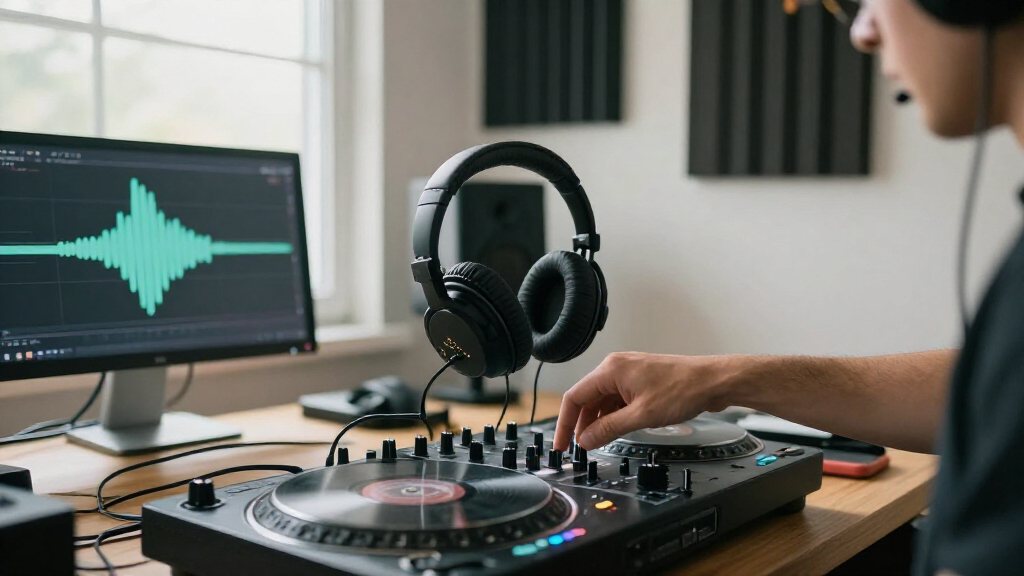
How We Picked
I ranked these headphones by how well their stated design and connection options line up with actual DJ tasks: cueing tracks, monitoring in a loud room, moving between booth and everyday listening, and keeping a wired fallback available. Wireless connection type and latency carried particular weight because Bluetooth convenience does not guarantee responsive monitoring. I also compared form factor, portability, versatility, and whether each model appears aimed at DJ use or general listening.
The ranking favors models with a clearer path to dependable DJ monitoring, then weighs versatility and ease of use for different buyers. That puts dedicated wireless systems and useful hybrid designs ahead of headphones whose main appeal is casual Bluetooth listening. Product names and variants matter: the HDJ-F10-TX includes a SonicLink transmitter, while the HDJ-F10 listing does not specify that bundle, and the two HDJ-CUE1BT color listings are separate entries rather than distinct performance categories. I would confirm included accessories, compatible transmitters, and connection details before buying.
Factors to Consider When Choosing Wireless DJ Headphones
Wireless DJ headphones are not one uniform category: some prioritize quick Bluetooth pairing, others are built around a dedicated low-latency link, and some balance wireless use with a cable for studio work. I would start with the job the headphones need to do most often, then check that the connection and fit support it. These factors help avoid paying for convenience you will not use—or choosing a wireless feature that does not suit live mixing.
Match Wireless Latency to Your DJ Routine
For casual listening, a little delay may be easy to ignore; for cueing a track against music playing in the room, it can make timing feel disconnected. Do not assume that every Bluetooth headphone is suitable for beatmatching just because it carries a DJ label. Look for a stated low-latency system and check what transmitter or device it requires. A dedicated link can improve responsiveness, but it may add a separate piece of equipment to carry and connect. If you mix mainly at home or use headphones between sets, ordinary Bluetooth may be a more practical tradeoff. If you perform live, treat latency information as a core buying criterion, not a minor specification.
Decide Whether You Need a Wired Fallback
A cable can keep headphones useful when a battery runs down, wireless pairing fails, or a mixer lacks a compatible wireless connection. Buyers sometimes focus on wireless features and overlook whether wired playback remains available or whether the cable is included. Check whether the headphone can operate passively by cable and whether its connection suits your mixer or interface. A hybrid model can cover DJ practice, studio editing, and travel with fewer compromises across tasks. The tradeoff is that a wired fallback does not solve wireless latency during a live set. Choose based on how often you will need the cable, rather than treating its presence as an automatic advantage.
Choose Over-Ear or On-Ear for Your Booth
Over-ear cups can cover the ears and may be a better starting point for monitoring around loud speakers, while on-ear designs are often more compact and easier to carry. Neither shape guarantees comfort: clamp force, pad material, heat, and headband fit vary by person and session length. A lightweight portable pair may feel convenient on a commute but become tiring during a long practice session. Think about whether you monitor one ear at a time, wear glasses, or need to remove one cup quickly. If possible, check return terms and fit information before committing. Do not choose by appearance alone, especially when comparing the white TMA-2 Move or on-ear HDJ-CUE1BT with larger over-ear models.
Prioritize Isolation for the Room You Play In
In a quiet bedroom, strong isolation may matter less than comfort and a convenient connection. A loud booth changes that balance: external sound can mask cue details and encourage you to raise playback volume. Look for a secure fit and an over-ear design if you need more passive sound blocking, but do not assume a noise-cancelling label replaces good physical isolation. Active noise cancelling can be useful away from the booth, yet it may not suit every monitoring workflow or provide the low latency needed for mixing. Consider the loudest place you will use the headphones, not just where you plan to audition them. For hearing safety, avoid compensating for poor isolation by turning the headphones up excessively.
Check the Complete Wireless Setup, Not Just the Headphones
A wireless system is only convenient if it works with your mixer, phone, computer, or transmitter. Confirm what is included in the box, which connections are supported, and whether any accessory must be purchased separately. The HDJ-F10-TX and HDJ-F10 listings illustrate why bundle details matter: their names do not describe the same included transmitter arrangement. Also check how the headphones charge, how long the battery lasts for your sessions, and whether controls are accessible while mixing. A feature-rich setup can be a poor fit if it requires frequent charging or awkward booth-side pairing. Before ordering, compare the exact model identifier and listed accessories rather than relying on a family name.
Pay More for a Specific Need, Not a Longer Feature List
Spending more is easiest to justify when it solves a repeated problem, such as latency during performance, the need for a dedicated transmitter, or the lack of a reliable wired option. A premium wireless system may be wasted on a buyer who only wants headphones for casual listening and occasional practice. Conversely, choosing the simplest Bluetooth model for a demanding live setup can create frustration that a lower purchase cost does not fix. Think about repairability and replaceable parts as well, since ear pads and cables can affect the useful life of a frequently handled pair. Compare the features you will use every week against those that only look appealing on a spec sheet. A clearly matched midrange or hybrid option can be a smarter choice than the most elaborate setup.
Frequently Asked Questions
Can I use ordinary Bluetooth headphones to beatmatch in a live DJ set?
You can connect many Bluetooth headphones to compatible devices, but ordinary Bluetooth can introduce enough delay to make cue timing feel out of sync with the room. That may be acceptable for listening, preparation, or some home practice, but it is a risk for latency-sensitive live mixing. Check whether the headphone supports a low-latency mode and whether your mixer or transmitter supports the same system. A dedicated wireless link, such as SonicLink with its compatible transmitter, is a more relevant feature to investigate than Bluetooth availability alone. If timing is critical and compatibility is uncertain, use a wired connection.
Do I need the AlphaTheta HDJ-F10-TX bundle, or is the HDJ-F10 enough?
The main decision is whether you need the SonicLink transmitter included with the TX version. The HDJ-F10-TX is the more straightforward choice if you want the named transmitter as part of the package. The HDJ-F10 may suit a buyer who already owns a compatible transmitter or wants to select the wireless components separately, but confirm the exact bundle before ordering. Do not assume the two listings include identical accessories based on the shared headphone name. Compare the full product listing against your mixer and performance setup.
Is an on-ear DJ headphone a poor choice for a loud booth?
Not automatically, but an on-ear fit may let in more surrounding sound than a well-sealed over-ear design, which can make cue monitoring harder in a noisy booth. Comfort is personal: some DJs prefer the smaller, lighter feel, while others want cups that cover the ears. Consider how loud your venue is and whether you monitor one ear at a time before prioritizing portability. The HDJ-CUE1BT entries are the on-ear options in this roundup, unlike the over-ear AIAIAI and OneOdio models. If isolation is a regular problem, try an over-ear design or confirm the fit before making your choice.
Should I choose DJ-focused wireless headphones or a general Bluetooth pair for both mixing and travel?
Start by deciding which job has the stricter requirements. DJ monitoring calls for a responsive connection, a secure fit, and a dependable wired option or compatible low-latency system; travel listening puts more weight on comfort, portability, and easy everyday pairing. A hybrid model such as the OneOdio Studio Max 1 may suit someone who wants wireless and wired use across studio and listening tasks, while a dedicated SonicLink setup better addresses latency-sensitive monitoring. One pair can cover both roles, but it may not match a specialist in either. If you perform often, prioritize mixing needs and treat travel convenience as a bonus.
How can I tell whether the headphones will work with my mixer before buying?
Identify the mixer’s available headphone output and wireless options, then compare them with the headphone’s wired connector, Bluetooth support, or required transmitter. A Bluetooth connection to a phone does not prove that the same headphones will pair with a mixer or deliver suitable monitoring latency. Check whether a transmitter is included, sold separately, or compatible with your equipment. Also verify cable availability and connector details if you want a wired fallback. When listings use similar names, compare the exact model and package contents rather than relying on the product family label.
Conclusion
For the strongest balance of DJ-focused wireless use and flexibility, I recommend the AIAIAI TMA-2 DJ Wireless as best overall. The OneOdio Studio Max 1 is my value-minded pick for buyers who want wireless and wired use across DJ practice and studio listening, while the AlphaTheta HDJ-F10-TX is the best premium choice for shoppers who want a SonicLink transmitter in the package. Beginners who mainly want Bluetooth convenience can start with a Pioneer DJ HDJ-CUE1BT, provided its on-ear fit and connection style suit their setup. For a specific need, choose the HDJ-F10 if you already have or plan to source a compatible transmitter, or the AIAIAI TMA-2 Move if everyday wireless listening matters more than a dedicated DJ link. Before buying, confirm latency expectations, compatibility, and included accessories; those details separate a useful wireless setup from one that only works well away from the booth.