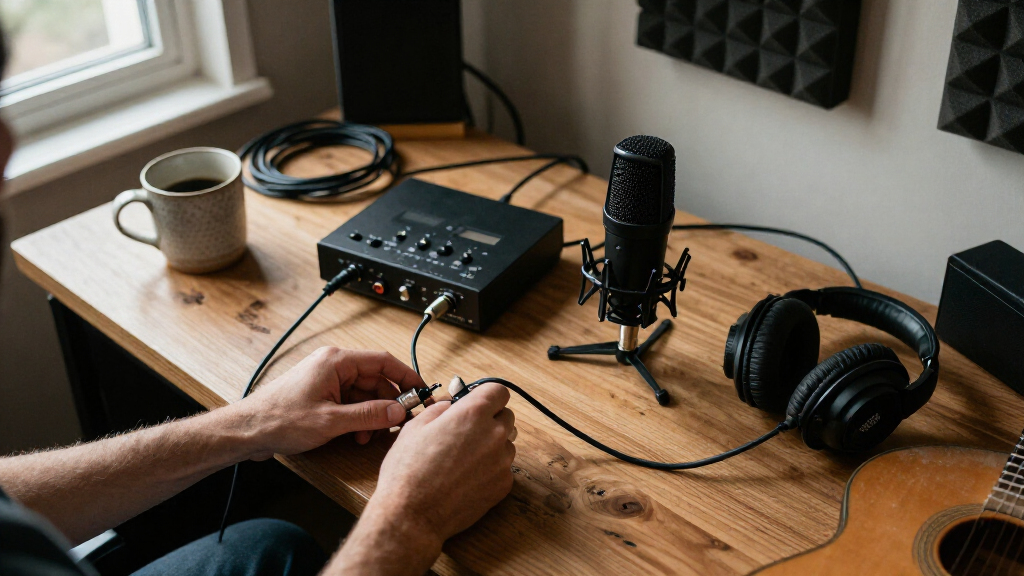

Studio microphone bundles range from simple USB kits to complete recording setups with an interface, headphones, and monitors. My best overall pick is the Focusrite Scarlett Solo Studio 4th Gen bundle, which pairs a recognized recording interface with the core gear needed to start capturing vocals. The Audio-Technica AT2020 bundle is a strong fit for buyers who want an XLR condenser setup, while the FIFINE T669 keeps setup simpler with USB connectivity and a boom arm. The main tradeoff is between ease and expandability: USB kits are straightforward, while interface-based bundles offer more control but require more setup. Read on for the full breakdown and guidance on choosing a bundle that fits your recording space and plans.

Get audio and creator gear delivered free with Prime
- Fast, free delivery on millions of items
- Prime Video, Amazon Music and more included
- Member-only deals all year
Complete the kit


Key Takeaways
- Complete recording chains ranked ahead of mic-only kits: The Scarlett Solo Studio bundle includes an interface and supporting gear, reducing the need to piece together a first setup.
- USB simplicity comes with fewer upgrade paths: The FIFINE T669 and MAONO AU-A04H suit direct-to-computer recording, while XLR bundles require an interface but allow more component choice.
- Two-person recording calls for a genuinely two-mic setup: The Sktome bundle is designed around two microphones; a single-mic kit may need extra inputs and accessories before it can serve two speakers well.
- Podcast sound cards prioritize live controls over studio flexibility: The ALSO GO and voice-changer bundles suit streaming features, while Focusrite and PreSonus interface bundles better fit conventional recording workflows.
- Monitor bundles make more sense when speakers are part of the plan: The Scarlett 2i2 and Mackie CR4-X package adds a listening setup, but buyers recording only with headphones may prefer a simpler bundle.
| MXL 770 Studio Condenser Microphone Bundle with Stand, Pop Filter, and XLR Cable |  | Best Stand-and-Cable XLR Bundle | Microphone type: Small-diaphragm condenser | Polar pattern: Unidirectional | Connectivity: Wired XLR | VIEW LATEST PRICE | See Our Full Breakdown |
| FIFINE T669 Studio Condenser USB Microphone Kit with Boom Arm |  | Best for Beginner USB Recording | Connectivity: USB Type-A / Type-C | Polar pattern: Cardioid (unidirectional) | Frequency response: 20 Hz–20 kHz | VIEW LATEST PRICE | See Our Full Breakdown |
| Audio-Technica AT2020 Cardioid Condenser Microphone Bundle with XLR Cable, Microphone Arm, Pop Filter, and Cleaning Cloth |  | Best for a Home Studio XLR Mic | Microphone type: Cardioid condenser | Polar pattern: Unidirectional | Connector: 3-pin XLRM | VIEW LATEST PRICE | See Our Full Breakdown |
| ALSO GO Podcast Equipment Bundle with F998 Audio Mixer and BM800 Microphone | 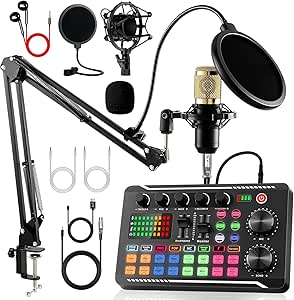 | Best for Effects-Focused Podcasting | Microphone: BM800 studio condenser | Mixer: F998 audio mixer | Polar pattern: Super cardioid | VIEW LATEST PRICE | See Our Full Breakdown |
| Focusrite Scarlett Solo Studio 4th Gen USB-C Audio Interface Bundle |  | Best Complete Recording Starter Bundle | Microphone: CM25 MkIII condenser microphone | Headphones: SH-450 | Connectivity: USB | VIEW LATEST PRICE | See Our Full Breakdown |
| Focusrite Scarlett Solo 4th Gen USB-C Audio Interface Studio Bundle with Microphone, Headphones, Stand, Pop Filter and Cables |  | Best for a Flexible Home Recording Setup | Generation: 4th | Channels: 2 in / 2 out | Connectivity: USB-C, XLR | VIEW LATEST PRICE | See Our Full Breakdown |
| BM-800 Podcast Equipment Bundle with Voice Changer and Live Sound Card |  | Best for Voice-Effect Streaming | Microphone: BM-800 condenser | Pickup pattern: Cardioid | Connectivity: USB | VIEW LATEST PRICE | See Our Full Breakdown |
| Podcast Recording Bundle with Microphones, Mixer, and Voice Changer |  | Best for Two-Person Podcasts | Microphones included: 2 condenser microphones | Channels: 2 | Mixer output: USB Type-C | VIEW LATEST PRICE | See Our Full Breakdown |
| MAONO AU-A04H USB Condenser Microphone Kit with Headphones |  | Best Plug-and-Play Starter Kit | Connectivity: USB, USB Type-C | Sampling rate and bit depth: 192 kHz / 24-bit | Frequency response: 30 Hz–16 kHz | VIEW LATEST PRICE | See Our Full Breakdown |
| ALSO GO Podcast Equipment Bundle with V8s Sound Card and BM-800 Microphone |  | Best for Effects-Focused Gaming and Streaming | Microphone: BM-800 condenser | Polar pattern: Hyper cardioid | Connectivity: USB, USB Type-C connector | VIEW LATEST PRICE | See Our Full Breakdown |
| Sktome Podcast Equipment Bundle for Two with V8S Sound Card and BM-800 Condenser Microphones |  | Best for Two-Person Streaming | Microphones: 2 BM-800 condenser microphones | Sound card: V8S with 12 electric sounds, 12 sound effects, and 10 modes | Polar pattern: Unidirectional | VIEW LATEST PRICE | See Our Full Breakdown |
| Focusrite Scarlett 2i2 4th Gen USB-C Recording Bundle with Mackie CR4-X Studio Monitors |  | Best Complete Home Studio | Audio interface: Focusrite Scarlett 2i2 4th Gen | Interface inputs and outputs: 2-in / 2-out | Recording resolution: 24-bit / 192 kHz | VIEW LATEST PRICE | See Our Full Breakdown |
| PreSonus AudioBox 96 25th Anniversary USB Audio MIDI Interface Recording Bundle |  | Best for a Traditional Recording Workflow | Interface: PreSonus AudioBox 96 25th Anniversary | Audio resolution: 24-bit / 96 kHz | Connectivity: USB 2.0 | VIEW LATEST PRICE | See Our Full Breakdown |
| PreSonus AudioBox GO Creator Studio Bundle |  | Best Compact Bundle | Interface: USB-C, 2×2 channels | Recording resolution: 24-bit / 96 kHz | Inputs: 1 TS instrument input and 1 mic/line combo input | VIEW LATEST PRICE | See Our Full Breakdown |
| TENLAMP G10 Creator Audio Mixer Bundle with Microphone |  | Best for Effects-Focused Livestreaming | Channels: 2 | Connectivity: Auxiliary, Bluetooth, and USB | Power source: Battery-powered | VIEW LATEST PRICE | See Our Full Breakdown |
| studio microphone bundle | Connectivity | Included accessories |
|---|---|---|
| MXL 770 Studio Condenser Micro | Wired XLR | Shock mount, carrying case, tripod stand with fixed-length boom, pop filter, XLR cable |
| FIFINE T669 Studio Condenser U | USB Type-A / Type-C | Boom arm stand, shock mount, double pop filter, 8.2 ft USB cable |
| Audio-Technica AT2020 Cardioid | — | 20-foot XLR cable, microphone arm, pop filter, microfiber cleaning cloth |
| ALSO GO Podcast Equipment Bund | Bluetooth, USB | Boom arm, shock mount, pop filter, cables |
| Focusrite Scarlett Solo Studio | USB | — |
| Focusrite Scarlett Solo 4th Ge | USB-C, XLR | — |
| BM-800 Podcast Equipment Bundl | USB | Suspension arm, shock mount, pop filter, foam windscreen, cables, live sound card |
| Podcast Recording Bundle with | — | — |
| MAONO AU-A04H USB Condenser Mi | USB, USB Type-C | Wired headphones, mic stand, shock mount, pop filter, foam windscreen, table clamp, USB cable |
| ALSO GO Podcast Equipment Bund | USB, USB Type-C connector | — |
| Sktome Podcast Equipment Bundl | USB | 2 boom arms, 2 earphones, 2 shock holders, 2 pop filters, foam covers, and cables |
| Focusrite Scarlett 2i2 4th Gen | — | Boom stand, shockmount, pop filter, windscreen, XLR and monitor cables, USB-C cable |
| PreSonus AudioBox 96 25th Anni | USB 2.0 | Shockmount, pop filter, XLR cable, mic stand, headphones, and USB cable |
| PreSonus AudioBox GO Creator S | — | — |
| TENLAMP G10 Creator Audio Mixe | Auxiliary, Bluetooth, and USB | — |
More Details on Our Top Picks
MXL 770 Studio Condenser Microphone Bundle with Stand, Pop Filter, and XLR Cable
The MXL 770 bundle is a practical choice for someone building an XLR vocal setup who wants the basic recording hardware in one package. Its 20-foot cable, shock mount, carrying case, tripod stand, and pop filter reduce the number of separate accessories to source. The unidirectional condenser is aimed at vocal recording, while its metal enclosure gives it a sturdier feel than the plastic-bodied Audio-Technica AT2020 bundle in this lineup. The tradeoff is a less adjustable desk arrangement: the stand has a fixed-length boom, and the mic needs a recording interface or mixer plus corded power. Unlike the USB FIFINE T669, this is not a direct-to-computer kit. Choose it when an XLR signal chain and included stand matter more than plug-and-play simplicity.
Pros:- Includes a shock mount, carrying case, tripod stand, pop filter, and 20-foot XLR cable.
- Unidirectional pickup pattern is suited to vocal recording.
- Metal enclosure.
- Pop filter helps reduce plosive sounds.
Cons:- Requires an XLR interface or mixer and corded power.
- Fixed-length boom limits stand-position adjustments.
Best for: Home vocalists who already have an XLR interface or mixer and want a mic, stand, pop filter, and long cable together.
Not ideal for: Laptop podcasters who need a direct USB connection, or desk users who require a highly adjustable boom arm.
- Microphone type:Small-diaphragm condenser
- Polar pattern:Unidirectional
- Connectivity:Wired XLR
- Frequency response:20 Hz–20 kHz
- Impedance:150 ohm
- Signal-to-noise ratio:78 dB
- Cable length:20 ft
- Included accessories:Shock mount, carrying case, tripod stand with fixed-length boom, pop filter, XLR cable
Our verdict“Choose the MXL 770 if you want an accessory-rich XLR vocal bundle and already have the equipment needed to connect it.”
FIFINE T669 Studio Condenser USB Microphone Kit with Boom Arm
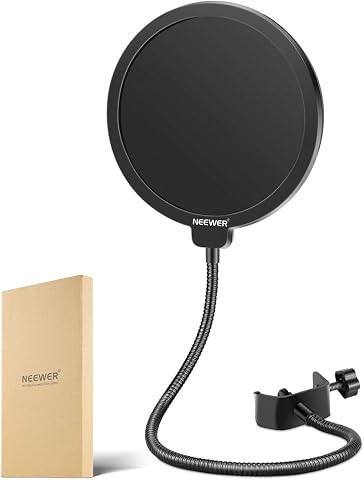
The FIFINE T669 suits a first-time podcaster or streamer who wants to record on a computer without buying an audio interface. Its USB plug-and-play connection is the key difference from the XLR-based MXL 770 and Audio-Technica AT2020 bundles: connect it to a compatible PC or laptop, then use the included steel boom arm, shock mount, and double pop filter to set up a desk position. The cardioid pickup pattern is intended to favor the voice in front of the mic, which helps keep the setup focused on one speaker. This kit is less useful for console users with Xbox, which it does not support, and the arm’s fixed horizontal length can constrain placement. Unlike the Focusrite Scarlett Solo Studio bundle, it also lacks a separate interface, headphones, and included recording software.
Pros:- USB connection avoids the need for a separate audio interface.
- Includes a steel boom arm, shock mount, double pop filter, and USB cable.
- Cardioid pattern is designed to focus pickup on the speaker in front.
- Compatible with PC, laptop, PS4, and PS5.
Cons:- Not compatible with Xbox.
- Fixed horizontal arm length may restrict positioning on some desks.
- Does not include the separate interface, headphones, or software found in the Focusrite Scarlett Solo Studio bundle.
Best for: New PC or laptop podcasters and streamers who want a USB mic with a desk arm and vocal accessories in one kit.
Not ideal for: Xbox users, multi-microphone recording setups, or creators who want an XLR interface and bundled headphones or software.
- Connectivity:USB Type-A / Type-C
- Polar pattern:Cardioid (unidirectional)
- Frequency response:20 Hz–20 kHz
- Signal-to-noise ratio:78 dB
- Material:Metal
- Included accessories:Boom arm stand, shock mount, double pop filter, 8.2 ft USB cable
- Compatibility:PC, laptop, PS4, PS5; not compatible with Xbox
Our verdict“Pick the T669 for straightforward computer-based voice recording when USB convenience matters more than an XLR signal chain.”
Audio-Technica AT2020 Cardioid Condenser Microphone Bundle with XLR Cable, Microphone Arm, Pop Filter, and Cleaning Cloth
The AT2020 bundle is aimed at home-studio users who want a recognized XLR condenser and a useful starter set of recording accessories. Its cardioid pattern limits pickup from the sides and rear, while the low-mass diaphragm and wide dynamic range are intended to support detailed capture across different vocal and project-studio tasks. The included 20-foot XLR cable, microphone arm, and pop filter make it more desk-oriented than the MXL 770, whose included tripod has a fixed-length boom. Both still require an interface or mixer; the FIFINE T669 is the simpler direct-USB choice for computer-only recording. One notable compromise is the listed plastic enclosure, rather than the MXL’s metal body. This bundle also does not include headphones or an interface, so it suits buyers who already have those pieces or plan to choose them separately.
Pros:- Cardioid pickup helps reduce sound from the sides and rear.
- Includes a 20-foot XLR cable, microphone arm, and pop filter.
- Low-mass diaphragm and wide dynamic range are suited to varied recording applications.
- Limited two-year manufacturer warranty.
Cons:- Requires an XLR interface or mixer.
- Plastic enclosure may be less appealing than the MXL 770’s metal body.
- No interface or headphones are included.
Best for: Home-studio vocalists who want an XLR cardioid condenser with a cable, arm, and pop filter, and already own or plan to add an interface.
Not ideal for: Beginners seeking a complete computer-ready kit with an interface and headphones, or buyers who prefer a metal microphone enclosure.
- Microphone type:Cardioid condenser
- Polar pattern:Unidirectional
- Connector:3-pin XLRM
- Noise level:20 dB
- Dynamic range:Wide
- Enclosure material:Plastic
- Included accessories:20-foot XLR cable, microphone arm, pop filter, microfiber cleaning cloth
- Warranty:Limited 2-year manufacturer warranty
Our verdict“Choose the AT2020 bundle if you want an XLR home-studio microphone with a desk arm and already have a way to record its signal.”
ALSO GO Podcast Equipment Bundle with F998 Audio Mixer and BM800 Microphone
This ALSO GO kit takes a different route from the straightforward microphone bundles: it pairs a BM800 condenser with an F998 mixer built around voice effects and recording modes. The listed 16 background effects, seven recording modes, and four voice-changer modes make it better suited to creators who want live audio variations than the MXL 770 or AT2020, which are more conventional XLR microphone-and-accessory packages. Its USB and Bluetooth connectivity and broad device compatibility give it flexibility across computers and mobile devices, though the product notes recommend wired connections for computers and Bluetooth for mobile use. The two-channel limit can be restrictive for interviews with several microphones, and charging before use adds a step absent from the USB-powered FIFINE T669’s plug-and-play pitch. Choose this for effects and platform range, not a simple, expandable studio signal chain.
Pros:- Includes a BM800 microphone, F998 mixer, boom arm, shock mount, pop filter, and cables.
- Offers 16 background effects, seven recording modes, and four voice-changer modes.
- USB and Bluetooth connectivity support a range of devices.
- Listed compatibility includes PC, Mac, iOS, Android, and Xbox.
Cons:- Two channels can limit multi-person recording.
- Requires charging before first use or after long storage.
- Wired computer connections and Bluetooth mobile connections may require users to choose different setup methods.
Best for: Solo podcasters, streamers, and mobile creators who want a bundled mixer with voice effects and multiple connection options.
Not ideal for: Two-person or larger podcast teams needing more than two channels, or studio users seeking a conventional XLR interface workflow.
- Microphone:BM800 studio condenser
- Mixer:F998 audio mixer
- Polar pattern:Super cardioid
- Connectivity:Bluetooth, USB
- Connector type:3.5 mm jack
- Channels:2
- Included accessories:Boom arm, shock mount, pop filter, cables
- Compatible devices:Laptop, smartphone, speaker, voice recorder, Xbox, PC, Mac, iOS, Android
Our verdict“Pick this kit if live voice effects and broad device compatibility matter more than channel expansion or a standard studio interface setup.”
Focusrite Scarlett Solo Studio 4th Gen USB-C Audio Interface Bundle
The Scarlett Solo Studio is the most complete recording workflow here: it supplies a CM25 MkIII condenser microphone, SH-450 headphones, USB interface, and recording software, rather than focusing on a mic and stand alone. That makes it a stronger starting point for someone who needs to hear and record a signal on a computer, while the MXL 770 and AT2020 bundles leave the interface to the buyer. Its interface pairs an XLR mic preamp with a Hi-Z instrument input, so a vocalist can add a guitar or another instrument without replacing the setup. The 24-bit/192 kHz recording capability and 120 dB dynamic range add headroom for a broad range of home-studio work. The tradeoff is one XLR mic input: unlike a larger multi-input setup, it is not built for recording several microphones at once, and it still depends on USB connectivity.
Pros:- Includes a condenser microphone, headphones, USB interface, and recording software.
- 24-bit/192 kHz recording and 120 dB dynamic range support detailed recording workflows.
- Combines one XLR mic preamp with a Hi-Z instrument input.
- Compatible with Mac, Windows, and iOS.
Cons:- Only one XLR microphone preamp is included.
- USB connection is required.
- A solo-oriented interface is less suitable for recording several mic-equipped performers at once.
Best for: Solo musicians and vocalists starting a computer-based home studio who need a microphone, headphones, interface, and recording software together.
Not ideal for: Podcast teams or musicians who need to record multiple XLR microphones simultaneously, or buyers seeking a wireless setup.
- Microphone:CM25 MkIII condenser microphone
- Headphones:SH-450
- Connectivity:USB
- Inputs:1 XLR mic preamp; 1 Hi-Z instrument input
- Channels:2
- Bit depth:24-bit
- Maximum sample rate:192 kHz
- Dynamic range:120 dB
- Included software:Pro Tools Intro+, Ableton Live Lite, Cubase LE, Hitmaker Expansion
Our verdict“Choose the Scarlett Solo Studio if you want one coordinated microphone-and-interface setup for solo vocals or instruments, not a multi-mic recording rig.”
Focusrite Scarlett Solo 4th Gen USB-C Audio Interface Studio Bundle with Microphone, Headphones, Stand, Pop Filter and Cables
The Scarlett Solo 4th Gen is the strongest pick here for someone who wants a conventional recording interface rather than a mixer built around voice effects. Its XLR microphone input and separate Hi-Z instrument input let you record a vocal and guitar together, while direct monitoring helps you hear the input without distracting latency. Air mode and loopback add useful options for streaming and voice work. Compared with the MAONO AU-A04H, this bundle gives you more recording flexibility and a dedicated instrument input, but it asks you to set up an interface-based workflow instead of simply plugging a USB mic into a computer. The included CM25 MkIII mic, headphones, stand, and pop filter make it a more complete starting point. The tradeoff is the two-channel limit, and the supplied cable ends in USB-A rather than USB-C.
Pros:- XLR microphone and Hi-Z instrument inputs support simultaneous vocal and instrument recording.
- Direct monitoring, Air mode, and loopback suit recording, streaming, and voice work.
- Includes a condenser microphone, closed-back headphones, stand, pop filter, and cables.
- Compact interface supports standalone operation.
Cons:- Two input channels limit the number of sources that can be recorded at once.
- Included USB cable connects USB-C to USB-A, not USB-C to USB-C.
Best for: Home vocalists, guitarists, and streamers who want a compact interface that can handle a microphone and instrument together.
Not ideal for: Bands or podcast teams needing more than two simultaneous input channels, or buyers who require a USB-C-to-USB-C cable in the box.
- Generation:4th
- Channels:2 in / 2 out
- Connectivity:USB-C, XLR
- Maximum sample rate:192 kHz
- Bit depth:24-bit
- Microphone:CM25 MkIII cardioid condenser
- Headphones:SH-450 closed-back
- Phantom power:48V
Our verdict“Choose the Scarlett Solo bundle if you want a complete mic setup with more recording flexibility than the MAONO AU-A04H, and can work within two input channels.”
BM-800 Podcast Equipment Bundle with Voice Changer and Live Sound Card
This BM-800 bundle is aimed at creators who want voice effects and broad device compatibility more than a traditional recording chain. Along with the cardioid condenser mic, it supplies a suspension arm, shock mount, pop filter, windscreen, and a live sound card with voice effects. That gives streamers and casual podcasters more ways to shape a live broadcast than the straightforward Scarlett Solo, whose strengths lie in recording inputs and monitoring rather than built-in entertainment effects. The tradeoff is less clarity about the sound card’s recording workflow: the listing specifies one audio channel, and the card needs charging before use. Its compatibility list spans computers, mobile devices, and gaming platforms, but buyers seeking a more conventional studio interface or a clearly specified multi-input setup should look elsewhere.
Pros:- Includes a condenser microphone, suspension arm, shock mount, pop filter, and windscreen.
- Live sound card adds voice effects for streaming and gaming.
- Cardioid pickup pattern is designed for voice capture.
- Lists compatibility with computers, phones, tablets, and several gaming platforms.
Cons:- The listing specifies one audio channel, limiting multi-source recording.
- The sound card needs charging before use.
- The feature set is geared toward live effects rather than a conventional studio interface workflow.
Best for: New streamers and gaming creators who want a microphone, basic mounting gear, and live voice effects for compatible devices.
Not ideal for: Musicians recording multiple sources or podcasters who need a clearly specified multi-channel interface and a simple, always-ready power setup.
- Microphone:BM-800 condenser
- Pickup pattern:Cardioid
- Connectivity:USB
- Audio input:3.5 mm jack
- Channels:1
- Maximum sample rate:192 kHz
- Included accessories:Suspension arm, shock mount, pop filter, foam windscreen, cables, live sound card
- Weight:1.37 kg
Our verdict“Pick this bundle for a voice-effect-focused streaming setup, but choose the Scarlett Solo if recording flexibility matters more than live effects.”
Podcast Recording Bundle with Microphones, Mixer, and Voice Changer
For a host and guest who want matching microphones in one kit, this bundle’s two condenser microphones and suspension arms are its clearest advantage. The USB-C mixer adds DSP processing, noise reduction, four voice variations, and ten sound effects, while instrument inputs broaden its use beyond spoken audio. Compared with the single-microphone MAONO AU-A04H, it is better suited to shared conversations and co-hosted streams; compared with the Scarlett Solo, it favors onboard effects and a two-mic podcast setup over a more conventional interface workflow. There are practical caveats: the battery-powered mixer should be charged before use, and the listing says driver installation may require help from manufacturer support. Buyers who want a straightforward plug-and-record kit may prefer a simpler USB microphone bundle.
Pros:- Two condenser microphones and anti-vibration suspension arms support a host-and-guest setup.
- Mixer includes DSP processing, noise reduction, voice variations, and sound effects.
- Accepts electric guitars, bass, and electronic drums.
- USB-C connectivity is listed for several computer and mobile operating systems.
Cons:- The battery-powered mixer needs charging before use or after prolonged storage.
- Driver installation may require contacting manufacturer support.
- Its voice effects and mixer features may be unnecessary for solo recording.
Best for: Two-person podcast teams or co-hosted streamers who want two microphones, mounting arms, and voice effects in one package.
Not ideal for: Solo creators who do not need a second microphone, or users who want a clearly documented, driver-free setup.
- Microphones included:2 condenser microphones
- Channels:2
- Mixer output:USB Type-C
- Power source:Battery-powered
- Voice variations:4
- Sound effects:10
- Weight:1.48 kg
- Compatibility:Windows, Mac OS, Android, iOS, Chrome OS, smartphones, PC, PS5, Xbox
Our verdict“Choose this bundle for a two-person podcast with built-in effects; for a solo setup with a more conventional interface, the Scarlett Solo is a better fit.”
MAONO AU-A04H USB Condenser Microphone Kit with Headphones
The MAONO AU-A04H keeps the setup simple: connect its USB condenser microphone to a compatible device and record without installing extra drivers. Its bundle covers common first-session needs, including wired headphones, a stand, shock mount, pop filter, windscreen, and table clamp. Compared with the Scarlett Solo, it skips the separate audio interface and instrument input, making it easier for a new solo podcaster to get started, but less adaptable for recording a guitar alongside a mic. The foldable headphones with swiveling earcups allow single-ear monitoring, which can be useful while keeping one ear open. The compromises are a stated frequency response that tops out at 16 kHz and a wired headphone connection. Buyers who expect to add instruments or expand their setup may be better served by an interface bundle.
Pros:- USB connection works without extra driver software.
- Includes headphones, stand, shock mount, pop filter, windscreen, and table clamp.
- Swiveling earcups support single-ear monitoring.
- Double-shielded USB cable is designed to reduce interference.
Cons:- The stated frequency response tops out at 16 kHz.
- The headphones use a wired connection.
- One-channel USB microphone setup lacks the instrument input and routing options of the Scarlett Solo.
Best for: First-time solo podcasters, remote speakers, and voice-over beginners who want a direct USB setup with monitoring and basic recording accessories.
Not ideal for: Musicians who need an instrument input, or creators who want an interface they can expand beyond one microphone channel.
- Connectivity:USB, USB Type-C
- Sampling rate and bit depth:192 kHz / 24-bit
- Frequency response:30 Hz–16 kHz
- Capsule size:16 mm
- Polar pattern:Cardioid
- Signal-to-noise ratio:96 dB
- Headphone drivers:50 mm
- Included accessories:Wired headphones, mic stand, shock mount, pop filter, foam windscreen, table clamp, USB cable
Our verdict“Choose the AU-A04H for an uncomplicated solo USB recording kit, but opt for the Scarlett Solo if you need an instrument input or more recording flexibility.”
ALSO GO Podcast Equipment Bundle with V8s Sound Card and BM-800 Microphone
The ALSO GO V8s bundle puts a BM-800 microphone and effects mixer into one package, with a boom arm, shock mount, pop filter, and earphone listed among the included parts. Its 10 sound effects and four voice-changer modes make it a better match for gaming broadcasts and playful live streams than the more recording-focused Scarlett Solo. USB-C connectivity is listed for PCs, phones, tablets, and Xbox, giving creators several device options. But the product data is less reassuring for buyers building a serious studio setup: it describes a handheld-form-factor microphone, includes plastic among the enclosure materials, and lists a frequency response of 5 MHz, a figure that does not clearly describe a typical microphone range. The mixer also needs charging before first use or after long storage, so this is best treated as an effects-led streaming kit.
Pros:- Includes a BM-800 microphone, mixer, boom arm, shock mount, and pop filter.
- Mixer offers 10 sound effects and four voice-changer modes.
- USB-C compatibility is listed for PCs, smartphones, tablets, and Xbox.
- Dual-layer pop filter is included to help manage plosive sounds.
Cons:- The mixer requires charging before first use or after long storage.
- Plastic components may feel less durable than an all-metal build.
- The listed 5 MHz frequency response is not a useful, clearly documented studio microphone range.
Best for: Gaming streamers and casual broadcasters who want voice-changing modes, sound effects, and a mic arm in a single kit.
Not ideal for: Studio vocalists seeking clearly documented microphone specifications, a more durable all-metal build, or a conventional recording interface.
- Microphone:BM-800 condenser
- Polar pattern:Hyper cardioid
- Connectivity:USB, USB Type-C connector
- Channels:2
- Audio sensitivity:85 dB
- Signal-to-noise ratio:85 dB
- Power source:Corded electric; lithium-ion battery included
- Included components:Microphone, audio mixer, adjustable mic arm, pop filter, shock mount, fixing clip, earphone, charging cable
Our verdict“Pick the ALSO GO bundle for live effects and gaming broadcasts, not for a studio setup where well-documented mic performance and durable construction take priority.”
Sktome Podcast Equipment Bundle for Two with V8S Sound Card and BM-800 Condenser Microphones
The Sktome is the clearest fit here for two people recording together: it supplies two BM-800 microphones, boom arms, headphones, and pop filters, rather than the single-mic setup in the PreSonus AudioBox GO Creator Studio Bundle. Its V8S sound card adds voice effects and sound controls aimed at live streaming, gaming, and casual podcasting, so it favors performance flexibility over a traditional recording workflow. The tradeoff is that the listed specs do not describe the kind of dedicated USB recording interface and software included with the Focusrite Scarlett 2i2 bundle. The stated 78 dB signal-to-noise ratio also gives less reassurance for listeners prioritizing a quiet, clean recording chain. I would choose this for co-hosts who want an all-in-one effects setup, not for musicians seeking precise multitrack production.
Pros:- Includes two microphones and matching accessories for a shared recording setup.
- V8S sound card offers voice-changing and sound-effect controls for live content.
- Unidirectional microphones are suited to focused voice capture.
- Lists compatibility with computers, smartphones, and gaming consoles.
Cons:- The listed 78 dB signal-to-noise ratio may be a concern for buyers prioritizing a quiet recording chain.
- The bundle centers on effects and streaming controls rather than a specified DAW-based recording workflow.
- Requires charging after receipt.
Best for: Two-person podcast or livestream hosts who want separate microphones and built-in voice effects in one bundle.
Not ideal for: Musicians or voiceover creators who need a conventional audio interface, production software, and clearly specified recording performance.
- Microphones:2 BM-800 condenser microphones
- Sound card:V8S with 12 electric sounds, 12 sound effects, and 10 modes
- Polar pattern:Unidirectional
- Connectivity:USB
- Connector:3.5 mm jack
- Signal-to-noise ratio:78 dB
- Included accessories:2 boom arms, 2 earphones, 2 shock holders, 2 pop filters, foam covers, and cables
- Compatible devices:Gaming console, laptop, PC, and smartphone
Our verdict“Choose the Sktome if two hosts need separate microphones and live effects; pick the PreSonus or Focusrite bundles for a more conventional production setup.”
Focusrite Scarlett 2i2 4th Gen USB-C Recording Bundle with Mackie CR4-X Studio Monitors
This bundle earns its place as the most complete recording-and-monitoring package in this group. Alongside a condenser mic and closed-back headphones, it includes the Scarlett 2i2 interface and Mackie CR4-X powered monitors, so you can record and hear playback without sourcing separate speakers. The interface’s Auto Gain, Clip Safe, and Air Mode give newer users useful recording controls, while its 24-bit/192 kHz capability and supplied production software leave room to grow. Compared with the PreSonus AudioBox 96 bundle, this one pairs the interface with studio monitors and lists a higher maximum sample rate; the AudioBox 96 instead offers its own DAW and two combo inputs. The two-input limit and 4-inch monitor woofers are real constraints for larger sessions and deep bass work.
Pros:- Combines an interface, microphone, headphones, and powered studio monitors.
- Scarlett interface supports 24-bit/192 kHz recording and includes Auto Gain, Clip Safe, and Air Mode.
- Mackie CR4-X monitors provide direct speaker monitoring without a separate purchase.
- Includes a DAW and additional production software.
Cons:- Two interface inputs limit simultaneous recording of larger ensembles.
- Four-inch monitor woofers offer less deep-bass extension than larger studio monitors.
- The included components may not meet the needs of established professional studios.
Best for: Home-recording musicians and creators who want a microphone, interface, headphones, monitors, and production software in one setup.
Not ideal for: Bands recording several sources at once or producers who need deep low-frequency monitoring from larger speakers.
- Audio interface:Focusrite Scarlett 2i2 4th Gen
- Interface inputs and outputs:2-in / 2-out
- Recording resolution:24-bit / 192 kHz
- Interface features:Auto Gain, Clip Safe, Air Mode, USB-C bus-powered
- Monitors:Mackie CR4-X; 4-inch woofer, 0.75-inch tweeter
- Monitor amplification:50 W Class-D
- Microphone and headphones:Large-diaphragm cardioid condenser microphone; closed-back studio headphones
- Included accessories:Boom stand, shockmount, pop filter, windscreen, XLR and monitor cables, USB-C cable
- Software:DAW, virtual instruments, amp simulations, plug-ins, and sample packs
Our verdict“Pick this bundle for a ready-to-build home studio with speakers; skip it if you need more than two recording inputs or extended bass monitoring.”
PreSonus AudioBox 96 25th Anniversary USB Audio MIDI Interface Recording Bundle
The AudioBox 96 bundle is a practical choice for buyers who want a standard interface-and-microphone recording chain without the extra effects focus of the Sktome V8S kit. It includes two XLR/TRS combo inputs, two Class-A preamps, a condenser mic, headphones, and Studio One Artist, making it suitable for recording vocals alongside an instrument or another mic. Its USB bus-powered design also keeps the setup relatively simple for a desktop or portable workstation. Compared with the PreSonus AudioBox GO Creator Studio Bundle, this package lists two combo inputs rather than one mic/line input plus an instrument input, giving it a more direct route to two microphone sources. The tradeoff is older USB 2.0 connectivity and a 24-bit/96 kHz ceiling, while the Focusrite Scarlett 2i2 bundle offers 192 kHz recording and monitors.
Pros:- Two XLR/TRS combo inputs support a two-mic or mic-and-instrument recording setup.
- Includes a condenser microphone, headphones, stand, shockmount, and pop filter.
- Studio One Artist and Studio Magic plug-ins provide a software starting point.
- USB bus power supports a straightforward portable setup.
Cons:- USB 2.0 is an older connection standard than the USB-C interfaces in this roundup.
- The 24-bit/96 kHz recording ceiling is lower than the Scarlett 2i2 bundle’s listed maximum.
- No studio monitors are included.
Best for: Songwriters and home recordists who need two combo inputs, a condenser microphone, headphones, and included DAW software.
Not ideal for: Creators who want USB-C, bundled studio monitors, or the higher maximum sample rate listed for the Scarlett 2i2 bundle.
- Interface:PreSonus AudioBox 96 25th Anniversary
- Audio resolution:24-bit / 96 kHz
- Connectivity:USB 2.0
- Inputs:2 XLR/TRS combo inputs
- Preamps:2 Class-A microphone preamps
- Microphone:Condenser microphone
- Included accessories:Shockmount, pop filter, XLR cable, mic stand, headphones, and USB cable
- Software:Studio One Artist and Studio Magic Plug-In Suite
- Power and compatibility:USB bus-powered; Mac and Windows
Our verdict“Choose the AudioBox 96 for a two-input recording kit with DAW software, but favor the Scarlett 2i2 if monitors and a higher sample-rate ceiling matter more.”
PreSonus AudioBox GO Creator Studio Bundle
For a desk with little spare room or a recording kit that needs to travel, the AudioBox GO is the most compact traditional studio bundle here. Its 8.16-ounce, 2×2 USB-C interface comes with an M7 cardioid condenser mic, HD7 headphones, and Studio One 6 Artist Edition, so it covers recording, monitoring, and editing without the footprint of the Scarlett 2i2 package with Mackie monitors. The interface’s separate instrument and mic/line inputs suit a solo musician who switches between vocals and guitar, and switchable +48V phantom power supports the condenser mic. The limitation is its one mic/line input: unlike the AudioBox 96, it cannot take two microphone sources at once. Its cardioid mic also favors a single voice or source over multi-directional room capture.
Pros:- Compact, lightweight interface is easy to fit into a small workspace or travel setup.
- Separate instrument and mic/line inputs support a solo vocal-and-instrument workflow.
- Includes M7 microphone, HD7 headphones, XLR cable, and Studio One 6 Artist Edition.
- Switchable +48V phantom power supports condenser microphones.
Cons:- Only one mic/line input limits simultaneous multi-microphone recording.
- Cardioid pickup is less suited to room capture or setups needing multiple pickup patterns.
- Does not include studio monitors, unlike the Focusrite Scarlett 2i2 bundle.
Best for: Solo musicians, podcasters, and mobile creators who need a small USB-C interface with a mic, headphones, and recording software.
Not ideal for: Two-person interviewers or bands that need multiple microphones connected and recorded at the same time.
- Interface:USB-C, 2×2 channels
- Recording resolution:24-bit / 96 kHz
- Inputs:1 TS instrument input and 1 mic/line combo input
- Outputs:Stereo headphone output and 2 balanced 1/4-inch TRS main outputs
- Phantom power:Switchable +48V
- Microphone:M7 cardioid condenser; 134 dB SPL handling
- Headphones:HD7 monitoring headphones; 32 ohms
- Software and accessories:Studio One 6 Artist Edition, 10-foot XLR cable, stand adapter, windscreen, and mic pouch
- Dimensions and weight:3.3 x 4.25 x 1.73 inches; 8.16 ounces
Our verdict“Choose the AudioBox GO for a compact solo recording station; select the AudioBox 96 if you need two microphone inputs.”
TENLAMP G10 Creator Audio Mixer Bundle with Microphone
The TENLAMP G10 is aimed at creators who want hands-on live audio controls more than a conventional DAW recording package. Its two-channel mixer combines noise reduction, bass and reverb adjustments, voice effects, and a “Follow Singing” monitoring mode, with USB, Bluetooth, and auxiliary connections for varied streaming sources. That makes it a more control-oriented option than the PreSonus AudioBox GO, which is built around a mic, instrument input, and recording software rather than performance effects. The tradeoff is that the G10’s supplied details do not specify a recording resolution or bundled production software, so it is harder to judge as a music-recording interface. Its battery-powered design and two-channel limit also make it less suited to a fixed, multi-source studio than the Scarlett 2i2 bundle.
Pros:- Mixer provides real-time bass and reverb controls, noise reduction, and voice effects.
- USB, Bluetooth, and auxiliary connectivity support several device types.
- Includes a microphone and accessories in an all-in-one creator bundle.
- Follow Singing mode supports private vocal monitoring during streams.
Cons:- Two channels limit more complex multi-source recording setups.
- Battery-powered operation may be less convenient for a permanent studio station.
- The supplied specs do not list recording resolution or production software.
Best for: Streamers and casual content creators who want quick voice effects, monitoring controls, and connections for mobile devices.
Not ideal for: Musicians building a DAW-centered recording studio or creators who need more than two channels and a specified recording resolution.
- Channels:2
- Connectivity:Auxiliary, Bluetooth, and USB
- Power source:Battery-powered
- Audio input:TRS / XLR
- Output connectors:3.5 mm TRS, 6.35 mm TRS, and OTG/Type-C
- Noise level:70 dB
- Voltage:48 V
- Dimensions:10.9 x 2.28 x 7.67 inches
- Weight:4.2 lbs
Our verdict“Pick the G10 for effects-led streaming and mobile-friendly connections, but choose a PreSonus or Focusrite bundle for a defined DAW recording chain.”
How We Picked
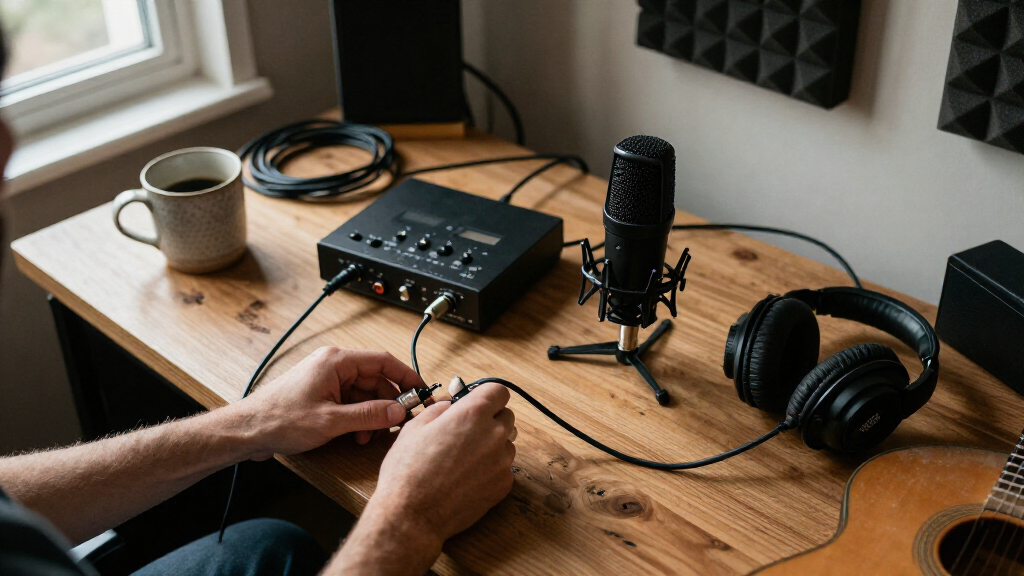
I compared these studio microphone bundles by how well their included parts work together for a realistic recording task—not by counting accessories. The main criteria were microphone connection type, interface or mixer capability, included essentials such as headphones and stands, likely setup effort, and whether the bundle can support the intended number of speakers. I also looked at how easily a buyer could replace or add components later, since a kit that works on day one may be limiting as a home studio grows.
The ranking favors balanced, usable recording chains over packages with many add-ons but a narrow purpose. Interface-based bundles place higher for conventional voice and instrument recording; simple USB kits rank well for quick solo setups; sound-card packages are more targeted toward streaming and effects. No bundle suits every recording style, so the order reflects breadth and practical fit rather than a claim that one microphone is best for every voice or room.
Factors to Consider When Choosing Studio Microphone Bundles
Before choosing a bundle, start with the whole recording path: how sound reaches your computer, how you monitor it, and what you may want to add later. A long accessory list can look complete while leaving a key need—such as a second microphone input or a compatible connection—unaddressed.
Match USB Simplicity to Your Upgrade Plans
A USB microphone connects directly to a computer, which can make setup quick for solo voice recording and online content. Its tradeoff is that the microphone and much of its signal path are tied together, so changing components later can mean replacing more than one item. An XLR microphone requires an interface or mixer, adding setup steps but letting you change microphones, preamps, and monitoring gear separately. Before buying, check that your computer and recording software support the connection and that the bundle includes the cables needed for it. Choose USB for a focused, simple workflow; choose XLR if you expect to build a more flexible recording chain.
Count Inputs for the Sessions You Actually Record
Input count matters more than microphone count on the box: every independently recorded XLR microphone needs a suitable input. A two-mic podcast setup may also need separate gain control and a way to monitor both speakers without excessive latency. Some streaming mixers provide multiple microphone connections but route them differently from a conventional audio interface, so check how the computer receives the signal. If you record solo now but plan to host guests, buying for the future can save a second equipment purchase. If guests are rare, a single-input bundle plus a separate plan for remote calls may be simpler than a larger kit.
Separate Recording Gear From Streaming Effects
Sound cards and podcast mixers can add buttons, voice effects, and controls for live streaming, but those features do not automatically improve recorded microphone quality. For edited voice tracks or instruments, prioritize clean input, stable software compatibility, and straightforward monitoring. For live streams, hands-on mute controls and effects may be more useful than upgrade flexibility. Check whether a bundle records separate tracks or sends a combined mix to the computer; that difference affects how much you can edit afterward. Avoid paying attention to feature counts alone when the actual workflow is the deciding factor.
Check the Accessories That Change Your Setup
A stand or boom arm, pop filter, headphones, and correctly matched cables can make a bundle more ready to use, but accessory quality and fit vary. A desk arm can free up workspace, though it may transmit keyboard bumps or sag if poorly suited to the microphone. Headphones help with monitoring, but closed-back designs are usually more practical while recording because less playback sound leaks into the mic. Confirm that the pop filter and mount fit the microphone and that the cable length suits your desk layout. If you already own reliable accessories, a bundle centered on a better interface or microphone may be a wiser choice than duplicating them.
Treat the Room Before Buying a More Sensitive Microphone
A microphone bundle cannot remove room echo, computer-fan noise, or nearby traffic. Condenser microphones can capture fine vocal detail, but that sensitivity can also reveal untreated-room reflections and background sounds. A closer speaking position, a quiet recording time, and soft furnishings near reflective surfaces may improve a take more than another accessory. Consider where the microphone will sit and whether you can control noise before selecting a highly revealing setup. For an untreated space, prioritize placement and room conditions alongside microphone type rather than expecting the bundle to solve the room.
Pay for the Complete Chain, Not the Longest Feature List
A bundle is useful when its parts remove a real barrier to recording, such as a missing interface, monitoring headphones, or a stand. Extra effects and bundled accessories have less value if they do not fit your intended use or cannot be used with your setup. Spend more for a component you will rely on across sessions—such as a capable interface or a second input—rather than add-ons you may never touch. At the same time, avoid buying a large system before you know whether you need monitors, multiple microphones, or live controls. A focused kit that matches your current workflow is often a better starting point than a package built around hypothetical needs.
Frequently Asked Questions
Should I choose a USB microphone bundle or an XLR bundle with an interface?
Choose USB if you want a direct computer connection for a simple solo recording setup and do not expect to change microphones soon. An XLR bundle makes more sense when you want separate control over the microphone and interface, or plan to add equipment later. Include the interface in your setup plan: an XLR microphone cannot connect directly to most computers without one. Also check whether the bundle supplies headphones and a stand, since those may be separate purchases. The best choice depends on your workflow and upgrade plans, not on the connector alone.
Can one of these bundles record two people on separate tracks?
Not every bundle that includes multiple microphones can record each speaker separately. You need enough suitable inputs and a mixer or interface that sends the channels to the computer in a way your recording software can keep separate. Some podcast sound cards combine signals into a single stereo or mono feed, limiting edits after the session. Check the product’s input count and routing details before buying, especially if you need to adjust each voice independently. For occasional remote guests, recording each person on a separate device or online track may be simpler than building a two-mic local setup.
Do I need studio monitors if my bundle already includes headphones?
No. Headphones are enough to record and edit, and they can be more practical in a shared space or untreated room. Monitors help you hear playback without headphones, but they need suitable placement and can make room acoustics more apparent. A bundle such as the Scarlett 2i2 package with Mackie monitors suits buyers who specifically want speakers as part of their setup. If your main work is voice recording, you may get more use from headphones and a better microphone position. You can add monitors later if your room and workflow support them.
Are voice-changer and sound-card bundles suitable for music recording?
They can capture vocals, but their design often favors live streaming controls and effects rather than a flexible music-recording chain. Before choosing one for music, confirm that it supports the inputs you need, works with your recording software, and can send clean audio without unwanted effects. A conventional interface bundle is usually a more direct fit for recording vocals or instruments and editing them afterward. A sound-card package is more compelling when you want live voice effects or quick controls during a stream. The distinction is workflow, not whether a microphone can pick up a voice.
What should I check before buying a bundle for a laptop?
Confirm the connection type, required ports, operating-system support, and whether the included cable matches your laptop or calls for an adapter. A USB microphone may be simpler, but an interface bundle can also work well when its driver and software support your system. Check whether the package includes monitoring headphones and whether you can hear yourself without distracting delay. Also consider available desk space for a stand or arm and the microphone’s distance from laptop fans. These checks can prevent a bundle from arriving with a connection or monitoring gap that disrupts your setup.
Conclusion
For the broadest conventional home-recording setup, I recommend the Focusrite Scarlett Solo Studio 4th Gen bundle as best overall; it brings an interface and core recording gear together. The Audio-Technica AT2020 bundle is my best value-style XLR pick for buyers who want a familiar condenser setup with practical accessories, while the Focusrite Scarlett 2i2 with Mackie CR4-X monitors is the best premium choice for someone building a more complete recording and listening space. Beginners who favor a direct computer connection should look at the FIFINE T669, and buyers who want more headphone-oriented USB simplicity can compare it with the MAONO AU-A04H. For live streaming features, focus on the ALSO GO or voice-changer sound-card bundles; for two local speakers, the Sktome two-microphone kit is the more targeted option. Pick the bundle that fits your connection, number of speakers, and recording workflow—not the one with the most items in the box.