
Predictive EQ powered by AI helps you make precise, real-time tonal adjustments during surgical mixing, enhancing clarity and reducing errors. It analyzes audio content to forecast frequency effects, allowing you to identify problem areas early and shape sound more accurately. By automating routine tweaks and providing data-backed insights, it streamlines your workflow and improves decision-making. To discover how these tools can elevate your mixing process and guarantee ideal sound quality, explore the details further.
Key Takeaways
- Predictive EQ uses AI algorithms to forecast and shape tonal balance, ensuring clearer surgical audio environments.
- AI-driven tools accurately identify problem frequencies, reducing guesswork in surgical sound mixing.
- Integration of predictive EQ enhances workflow efficiency by automating repetitive adjustments during procedures.
- These tools improve audio clarity and consistency, supporting better communication in complex surgical settings.
- Ongoing AI advancements enable real-time, personalized sound modifications tailored to specific surgical requirements.
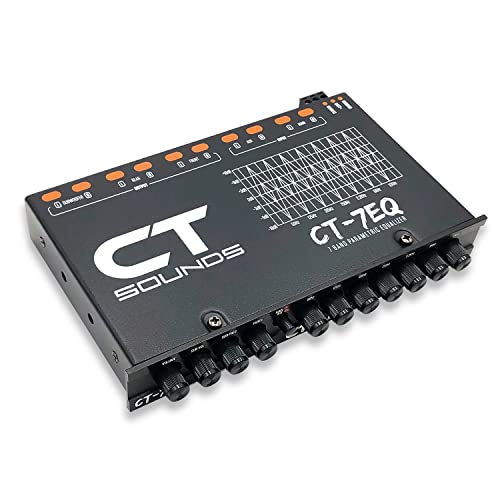
CT Sounds CT-7EQ 7 Band 1/2 Din Parametric Car Audio Equalizer
The CT-7EQ is a 7 band 1/2 din parametric car audio equalizer designed to divide and enhance the…
As an affiliate, we earn on qualifying purchases.
As an affiliate, we earn on qualifying purchases.
Understanding Predictive EQ and Its Role in Modern Mixing
Predictive EQ is transforming how engineers approach mixing by allowing them to anticipate and shape the tonal balance of their tracks before making traditional adjustments. Instead of relying solely on real-time listening and guesswork, you can use predictive tools to analyze audio content and forecast how specific frequency adjustments will affect your mix. This proactive approach helps you identify problem areas early, saving time and reducing the need for multiple tweaks. Predictive EQ leverages AI algorithms to understand the sonic landscape of your track, guiding you toward precise tonal shaping. By integrating this technology, you gain greater control, consistency, and efficiency, ultimately producing cleaner, more balanced mixes with less guesswork. It’s a game-changer for achieving professional-quality results faster. Additionally, understanding projector contrast ratios can be be crucial when creating visual presentations or multimedia content that complements your audio work, ensuring a cohesive and immersive experience. Recognizing the influence of engine tuning on overall sound quality can further refine your mixing approach, especially when working with tracks that feature heavily modified or performance-enhanced sounds. Incorporating insights from Bedroom acoustics can also help you optimize your listening environment, leading to more accurate mixing decisions. Moreover, considering soundproofing techniques can help create an ideal listening environment, reducing external noise interference and enhancing your mixing accuracy.

OneOdio Wired Over Ear Headphones Hi-Res Studio Monitor & Mixing DJ Stereo Headsets with 50mm Drivers and 1/4 to 3.5mm Jack for AMP Computer Recording Podcast Keyboard Guitar Laptop – Black
Bass Sound: Enjoy clear sound and superior comfort with the OneOdio Studio Monitor Headphones. Equipped with large 50mm…
As an affiliate, we earn on qualifying purchases.
As an affiliate, we earn on qualifying purchases.
How AI Enhances Precision in EQ Adjustments

AI-driven frequency targeting allows you to pinpoint exact resonances quickly, reducing guesswork in your mix. It also provides real-time adjustment accuracy, so your EQ settings stay precise as your project evolves. This precision tuning ensures your mix remains balanced and clear with minimal effort. Additionally, leveraging cost-effective strategies can help streamline your workflow and optimize resource use during mixing. Understanding how cookie management impacts your workflow can further enhance your efficiency and control during the mixing process.
AI-Driven Frequency Targeting
When you use AI to target specific frequencies, it can analyze complex audio signals more accurately than manual adjustments. AI algorithms identify precise frequency ranges needing correction, reducing guesswork. This ensures your adjustments are focused, consistent, and tailored to the audio’s unique characteristics. With AI-driven frequency targeting, you save time and improve accuracy in your mixing decisions. Community-driven platform promotes collaboration among users, leading to shared insights and continual improvements.
Real-Time Adjustment Accuracy
Utilizing AI for real-time EQ adjustments markedly enhances precision by continuously analyzing audio signals and making immediate corrections. You benefit from AI’s ability to detect subtle frequency imbalances and respond instantly, ensuring your mix stays balanced. This dynamic process reduces the risk of human error and latency often associated with manual adjustments. AI algorithms adapt on the fly, fine-tuning EQ settings as audio evolves, so you maintain clarity and focus on creative decisions. With this technology, you can achieve consistent, professional sound quality without constant oversight. The system’s rapid responsiveness ensures that even minor issues are addressed before they impact the overall mix. Additionally, integrating sound development techniques can provide a stable financial foundation, supporting your creative endeavors with reliable long-term growth. Furthermore, leveraging data-driven strategies can optimize your mixing workflow for even better results. Ultimately, AI-driven real-time adjustments empower you to deliver precise, polished soundscapes effortlessly, especially when combined with advanced tuning methods to refine your audio further.

Real-Time Audio Processing in Python: Step-by-Step Guide and Projects (Next-Gen Software, Cloud & Embedded Systems Series)
As an affiliate, we earn on qualifying purchases.
As an affiliate, we earn on qualifying purchases.
Key Features to Look for in Predictive EQ Tools

To effectively select a predictive EQ tool for surgical mixing, you need to focus on features that guarantee accuracy and adaptability. Look for tools that incorporate advanced machine learning algorithms trained on diverse datasets, guaranteeing reliable predictions across different scenarios. Real-time processing capabilities are essential, so the tool responds promptly to changing conditions. User-friendly interfaces with intuitive controls help you make quick adjustments without a steep learning curve. Customization options allow you to tailor the EQ settings to specific surgical needs. Additionally, integration with existing surgical systems ensures seamless operation within your workflow. Robust feedback mechanisms, such as confidence scores or confidence intervals, help you assess prediction reliability. Considering the trained algorithms used can also provide insight into the tool’s capacity to handle complex and varied data, further enhancing its effectiveness. Understanding how data diversity impacts model performance can help in selecting the most reliable system. Incorporating sound wave science principles can optimize the predictive capabilities of the tools by aligning with the underlying mechanisms of sound-based interventions. Employing machine learning techniques that adapt over time ensures the system remains effective as new data becomes available. Prioritizing these features helps you choose a predictive EQ tool that enhances precision and flexibility during surgical mixing.

EQ-7 Audio Signal Headset Amplifier 7-Band EQ Equalizer 2 Channel Digital Sound Equalizer +12V Power Adapter
Product parameters: Power supply :DC5V-12V, interface :DC5.5×2.1/3.5mm, input impedance :20K, output impedance: 600Ω, balance circuit control range :±12dB,…
As an affiliate, we earn on qualifying purchases.
As an affiliate, we earn on qualifying purchases.
Comparing Popular AI-Driven EQ Software Options
When comparing AI-driven EQ software options, you’ll notice differences in feature sets that can impact your workflow. Some tools offer advanced predictive capabilities, while others focus on user-friendly interfaces. Considering ease of use alongside feature variety helps you choose the best fit for your mixing needs. Additionally, understanding the AI applications in learning and entertainment can provide insights into how these tools adapt and personalize content to improve user experience.
Feature Set Differences
Have you ever wondered how different AI-driven EQ software options compare when considering features? Each tool offers unique capabilities that can influence your mixing decisions. Some prioritize advanced spectral analysis, allowing precise frequency adjustments, while others focus on real-time automation to streamline workflows. You might find certain options incorporate machine learning models that adapt to your style over time, or include preset libraries tailored for specific genres. Additionally, some software integrates seamlessly with digital audio workstations, offering extensive compatibility. Others emphasize detailed visualizations, helping you understand EQ changes at a glance. Understanding these feature set differences helps you choose the right AI tool for your needs, whether you’re after precision, speed, or flexibility in your surgical mixing process.
User Interface Ease
Choosing an AI-driven EQ software often boils down to how intuitive and accessible its user interface is, especially if you’re aiming for efficient surgical mixing. A clear, well-organized interface allows you to quickly navigate features without distraction, saving valuable time. Look for tools that offer customizable layouts, so you can prioritize essential controls. Visual feedback like real-time graphs and simple sliders help you make precise adjustments easily. Avoid software with cluttered screens or complicated menus, which can slow your workflow. User-friendly options typically include guided workflows or tutorials, making it easier to learn advanced features. Ultimately, a straightforward interface lets you focus on your mix rather than figuring out how to operate the software.
Integrating Predictive EQ Into Your Mixing Workflow
Integrating predictive EQ into your mixing workflow can streamline decision-making and enhance your overall sound. Begin by identifying key tracks that need precise frequency adjustments, then use the AI tool to analyze their spectral content. The predictive EQ suggests targeted cuts or boosts, saving you time on manual adjustments. Incorporate it early in your session to guide your decisions, ensuring your mix stays balanced from the start. Use the AI’s recommendations as a foundation, then fine-tune based on your artistic intent. Automate repetitive tasks by applying predictive EQ across multiple tracks, freeing you to focus on creative elements. Regularly review the AI’s suggestions to develop your understanding of frequency management, gradually building trust in the tool’s capabilities as an integral part of your workflow.
Benefits of Using AI for Surgical Frequency Corrections

Using AI for surgical frequency corrections can substantially improve your decision accuracy, helping you make more precise adjustments. It also reduces the risk of errors during procedures, enhancing patient safety. Plus, it streamlines your workflow, saving time and increasing overall efficiency.
Enhanced Decision Accuracy
AI-driven surgical frequency corrections substantially enhance decision accuracy by providing real-time, data-backed insights. You gain a clearer understanding of ideal surgical schedules, reducing guesswork and subjective judgment. The AI analyzes vast amounts of data instantly, identifying patterns and predicting outcomes more reliably than manual methods. This allows you to make precise adjustments tailored to each patient’s needs, improving overall planning. As a result, you can confidently select the best timing and frequency for surgeries, minimizing unnecessary procedures and ensuring better resource allocation. The increased accuracy reduces variability and enhances consistency across cases. By integrating AI tools, you empower your decision-making process with objective, evidence-based information, ultimately leading to more predictable, successful surgical outcomes and higher patient satisfaction.
Reduced Surgical Errors
By accurately adjusting surgical frequency with AI insights, you can substantially reduce the risk of errors during procedures. AI helps identify ideal scheduling, preventing overuse or underuse of specific techniques that may lead to mistakes. With precise data, you can avoid unnecessary complexity and streamline decision-making. Here are three ways AI reduces errors:
- Predicts potential complications by analyzing historical data, allowing preemptive adjustments.
- Optimizes resource allocation to ensure surgeons and equipment are available when needed, reducing hurried or rushed decisions.
- Detects anomalies in surgical patterns, alerting you to deviations that could indicate higher error risks.
Implementing AI-driven frequency corrections enhances safety, minimizes mishaps, and promotes more consistent surgical outcomes.
Streamlined Workflow Optimization
Streamlined workflow optimization is a key benefit of implementing AI for surgical frequency corrections, as it helps you coordinate procedures more efficiently. By analyzing real-time data and predicting ideal surgical schedules, AI reduces delays and overlaps. This means you spend less time managing conflicts and more time focusing on patient care. AI-driven tools automatically prioritize cases based on urgency and resource availability, ensuring smoother transitions between procedures. You’ll experience fewer bottlenecks and better resource utilization, which accelerates overall surgical throughput. Additionally, AI helps you anticipate staffing needs and equipment requirements in advance, preventing last-minute adjustments. This seamless coordination minimizes downtime and maximizes operating room efficiency, ultimately leading to improved patient outcomes and higher hospital productivity.
Limitations and Considerations When Using Predictive EQ
While predictive EQ offers promising accuracy, it’s important to recognize its limitations. AI tools rely on historical data, which may not fully capture the nuances of every surgical scenario. This can lead to suboptimal decisions if overtrusted. Additionally, predictive models can struggle with unfamiliar or complex cases outside their training set. You should also be aware of the potential for algorithmic bias, which might influence mixing choices unfairly.
Predictive EQ has limitations; overreliance and bias can lead to suboptimal surgical decisions.
To mitigate these issues, consider:
- Continuously updating the AI with new data to improve accuracy.
- Combining AI recommendations with your clinical judgment.
- Staying vigilant for unexpected results that may indicate model limitations.
Real-World Examples of AI-Assisted Mixing Successes

Real-world applications of AI-assisted mixing have demonstrated significant benefits in surgical settings. You might observe how AI tools help surgeons make precise adjustments during complex procedures, improving outcomes and reducing errors. For example, in cardiac surgeries, AI-driven systems analyze real-time data to optimize instrument settings and tissue manipulation, leading to smoother operations. In neurosurgery, predictive algorithms assist in balancing tissue tones, enhancing visualization, and minimizing trauma. These successes showcase AI’s ability to provide immediate, data-backed recommendations that enhance decision-making. Surgeons report increased confidence and efficiency, especially during high-stakes procedures. By integrating AI-assisted mixing tools, medical teams can achieve more consistent results, reduce operative times, and improve patient safety. These real-world examples exemplify AI’s transformative potential in surgical precision and outcome optimization.
Tips for Maximizing the Effectiveness of Predictive EQ

To maximize the effectiveness of predictive EQ in surgical mixing, it’s essential to fine-tune your AI tools for each procedure. First, customize the AI’s parameters based on the specific surgical context to improve accuracy. Second, regularly review and adjust the AI’s recommendations with your expertise to prevent over-reliance. Third, utilize quality training data that reflects real-world scenarios, ensuring the AI learns relevant patterns. By doing so, you enhance the AI’s predictive capabilities and maintain control over the mix. Remember, AI tools are aids, not replacements—your critical judgment remains crucial. Fine-tuning these elements helps you achieve clearer, more precise surgical audio, ultimately improving outcomes and patient communication.
Future Trends in AI and Audio Processing Technologies

Advancements in AI and audio processing technologies are rapidly transforming surgical mixing, promising more accurate and real-time enhancements. Future trends include smarter algorithms that adapt instantly to complex sound environments, improving clarity during surgeries. You’ll see increased integration of machine learning models that predict ideal EQ settings based on patient and procedure specifics. Additionally, hardware will become more powerful and compact, enabling seamless use in operating rooms. These innovations will reduce latency, enhance responsiveness, and support personalized audio profiles.
| Trend | Impact |
|---|---|
| Adaptive algorithms | Real-time, context-aware sound adjustments |
| Hardware miniaturization | More portable, integrated surgical audio systems |
| Predictive modeling | Customized, preemptive mixing decisions |
Frequently Asked Questions
How Does Predictive EQ Adapt to Different Musical Genres?
You might wonder how a tool adjusts for different musical genres. Predictive EQ analyzes genre-specific characteristics and learns from vast datasets, allowing it to tailor its settings accordingly. It adapts by recognizing typical frequency patterns, dynamic ranges, and mixing styles unique to each genre. This way, you get optimized sound profiles that enhance your mix, whether you’re working on rock, jazz, electronic, or classical tracks.
Can Predictive EQ Automatically Detect and Correct Phase Issues?
Sure, because who wouldn’t want an AI to solve all their phase problems without lifting a finger? In reality, predictive EQ can help identify phase issues by analyzing the signal’s characteristics, but it doesn’t automatically fix them. You’ll need to manually review and make adjustments, as AI tools assist rather than replace a skilled ear. Think of it as a helpful assistant, not a miracle worker.
What Are the Ethical Considerations of Relying on AI in Mixing?
When you rely on AI in mixing, you should consider ethical issues like transparency, bias, and accountability. It’s important that you understand how AI makes decisions, so you’re not blindly trusting its judgments. You also need to guarantee that AI tools don’t perpetuate biases or unfair practices. By staying informed and responsible, you help maintain integrity and fairness in your mixing process.
How Does Predictive EQ Handle Complex Stereo or Multichannel Mixes?
This question is as intricate as a labyrinth, and you’ll find that predictive EQ handles complex stereo or multichannel mixes with impressive finesse. It analyzes the entire soundscape, intelligently adjusting frequencies across channels to maintain clarity and balance. You get seamless, cohesive mixes without tedious manual tweaks. While it’s not infallible, it speeds up the process and preserves spatial integrity, making your mixes sound professional and polished with less effort.
Is There a Learning Curve for New Users to Effectively Operate AI Tools?
You might find that there’s a learning curve when starting with AI tools, but it’s manageable. As a new user, you’ll need some time to familiarize yourself with the interface and features. However, many AI tools are designed to be intuitive, offering tutorials and support. With practice, you’ll become more comfortable, and you’ll see how quickly these tools can improve your workflow and results.
Conclusion
Think of predictive EQ as your trusted compass in the vast ocean of mixing, guiding you with precision and insight. By harnessing AI, you gain the ability to navigate complex sound landscapes effortlessly, making smarter decisions faster. As technology continues to evolve, embracing these tools will keep your mixes sharp and focused, like a lighthouse cutting through fog. Stay curious and open-minded—your sonic journey is just beginning.