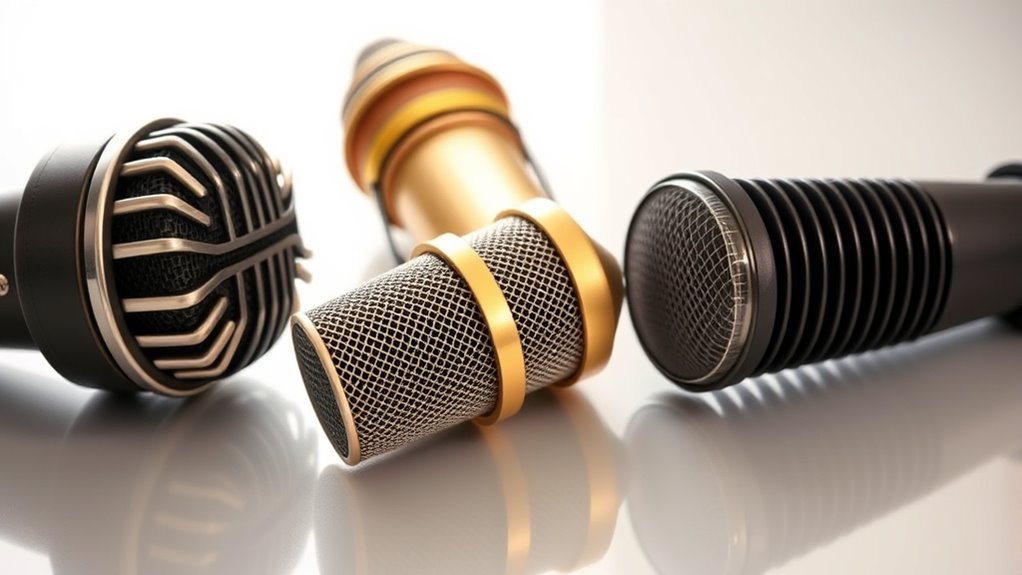
When choosing between dynamic, condenser, and ribbon microphones, consider your environment and what you want to capture. Dynamics are great for loud sources and noisy settings because they’re durable and reject background noise. Condensers excel at capturing detailed, nuanced sounds in controlled spaces, perfect for studio vocals and instruments. Ribbons offer warm tones ideal for mellow recordings in quiet environments. To find the best fit for your needs, explore how each type performs in different scenarios and settings.

Get audio and creator gear delivered free with Prime
- Fast, free delivery on millions of items
- Prime Video, Amazon Music and more included
- Member-only deals all year
Key Takeaways
- Dynamics are ideal for loud sources and noisy environments due to their durability and noise rejection.
- Condenser microphones excel at capturing detailed, nuanced sounds in controlled or studio settings.
- Ribbon microphones provide warm, natural tones suited for studio recordings and vintage sound preferences.
- Choose based on environment: dynamic mics for live, noisy setups; condensers for studio clarity; ribbons for warmth.
- Match microphone type to sound source and environment to optimize sound quality and reduce unwanted noise.
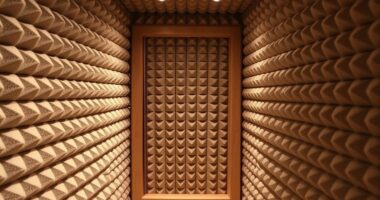
Selecting the right microphone can make a significant difference in the quality of your recordings or live sound. The key is understanding how microphone placement and acoustic environment influence your choice. When you’re setting up, you need to consider where and how you position your microphone relative to the sound source. Proper placement ensures you capture the desired sound clearly and minimize unwanted noise or feedback. For example, if you’re recording vocals in a small, reflective room, placing the microphone closer to the singer can help reduce room ambience and echo, resulting in a cleaner, more focused sound. Conversely, in a larger, more absorptive space, you might need to adjust placement to avoid losing high frequencies or to capture the natural ambiance.
Proper microphone placement enhances sound clarity and reduces noise in various acoustic environments.
Your acoustic environment plays a pivotal role in choosing the right type of microphone. If your space has lots of reflective surfaces, a dynamic microphone might be advantageous because of its rejection of ambient noise and its durability. Condenser microphones, while sensitive and capable of capturing detailed nuances, tend to pick up more of the room’s acoustics—so they’re best suited for controlled environments like studios or sound-treated rooms. Ribbon microphones, known for their warm tone, can also be sensitive to acoustic conditions, so they’re ideal when you want a smooth, vintage sound with minimal background noise.
Understanding the differences between microphone types helps you match your needs to your environment. Dynamics are rugged and handle high sound pressure levels well, making them perfect for loud sources like drums or live vocals. Condensers excel at capturing subtle details, making them the go-to for studio recordings of vocals, acoustic instruments, or delicate sounds. Ribbons, with their warm and natural tone, work superbly for vocals and instruments where a smooth, vintage character is desired. Additionally, advancements in microphone technology and sound design techniques have expanded your options for achieving professional-quality recordings in various settings.
No matter what type you choose, mastering microphone placement is essential. Position your microphone at the right distance—usually a few inches to a foot from the sound source—and experiment with angles to find the sweet spot. This fine-tuning can dramatically improve clarity and reduce unwanted noise. Remember, your acoustic environment influences how close or far you should place the mic. If space is echoey, get closer; if it’s well-treated, you can experiment with more distant placements for a more natural sound. Ultimately, understanding how your environment interacts with your microphone will help you make smarter choices, ensuring your recordings or live performances sound professional and polished.
best dynamic microphone for live vocals
As an affiliate, we earn on qualifying purchases.
As an affiliate, we earn on qualifying purchases.
Frequently Asked Questions
How Do Microphone Polar Patterns Affect Recording Quality?
Your choice of polar pattern directly impacts recording quality by shaping how the microphone captures sound. Selecting the right polar pattern depends on your recording environment; for example, cardioid focuses on the source and reduces background noise, ideal for noisy settings. Omnidirectional captures all directions, great for room ambiance. By understanding polar pattern selection, you can optimize clarity and minimize unwanted noise, ensuring your recordings sound professional.
Can I Use a Condenser Mic Outdoors Without Issues?
You can use a condenser mic outdoors, but wind and weather pose challenges. Like a delicate leaf in a storm, condensers are sensitive to outdoor conditions. To prevent issues, you need outdoor wind protection, such as a foam windscreen or a deadcat. Consider portable microphone options designed for outdoor use, which often include built-in protection. These ensure clear recordings without interference, making your outdoor sessions smoother and more professional.
What Is the Lifespan of Different Microphone Types?
You can expect different microphone types to last varying amounts of time. Dynamics tend to be quite durable, often lasting decades with proper care, making them cost-effective and low maintenance. Condensers are more delicate, potentially needing replacement after 5-10 years due to their sensitive components. Ribbons are fragile and may last 3-10 years, with higher replacement costs if damaged. Proper handling and storage markedly improve your microphone durability, saving you money in the long run.
How Do I Maintain and Clean My Microphones Properly?
To maintain your microphones, regularly clean them with gentle techniques like using a soft brush or a lint-free cloth to remove dust and debris. Avoid harsh chemicals. Store them in a dry, cool place, preferably in a dedicated case to prevent damage. Always disconnect and cover your microphones when not in use. Proper cleaning techniques and storage best practices keep your microphones functioning efficiently and extend their lifespan.
Are There Any Budget-Friendly Microphones That Perform Well?
Did you know that some budget-friendly microphones outperform pricier models in specific applications? You can find affordable options like the Audio-Technica AT2020 or the Rode NT-1 that deliver professional sound quality without breaking the bank. These budget-friendly recommendations are perfect for beginners or home studios, offering great performance at a fraction of the cost. With proper care, they’ll serve you well without sacrificing sound clarity or durability.
studio condenser microphone for vocals
As an affiliate, we earn on qualifying purchases.
As an affiliate, we earn on qualifying purchases.
Conclusion
Choosing the right microphone can dramatically improve your sound quality, whether you prefer dynamics, condensers, or ribbons. Keep in mind, studies show that 70% of recording issues stem from improper microphone selection. By understanding each type’s strengths, you can make smarter choices and capture clearer, more professional audio. So, take the time to choose wisely—your recordings will thank you, and your audience will notice the difference.
As an affiliate, we earn on qualifying purchases.
microphone isolation shield for recording
As an affiliate, we earn on qualifying purchases.
As an affiliate, we earn on qualifying purchases.
Evergreen bestsellers Picks
bestsellers
As an affiliate, we earn on qualifying purchases.