Gain staging still matters in modern DAWs because it helps you keep your recordings clear and balanced. Proper level control prevents distortion and noise, giving your tracks enough headroom for mixing. Even with advanced software, setting good levels early on ensures your sound stays transparent and polished. Continually managing levels throughout the production process preserves audio fidelity and makes mixing smoother. Keep these principles in mind, and you’ll improve your overall sound — there’s much more to discover ahead.

Get audio and creator gear delivered free with Prime
- Fast, free delivery on millions of items
- Prime Video, Amazon Music and more included
- Member-only deals all year
Key Takeaways
- Proper gain staging ensures optimal headroom and prevents digital clipping during recording and mixing.
- It maintains consistent signal levels, reducing noise and distortion in modern digital workflows.
- Effective gain control preserves audio fidelity and clarity throughout the entire production chain.
- Gain staging helps identify and troubleshoot issues quickly, ensuring balanced, professional-sounding mixes.
- It is fundamental for maximizing the quality and integrity of digital audio, just as in analog setups.
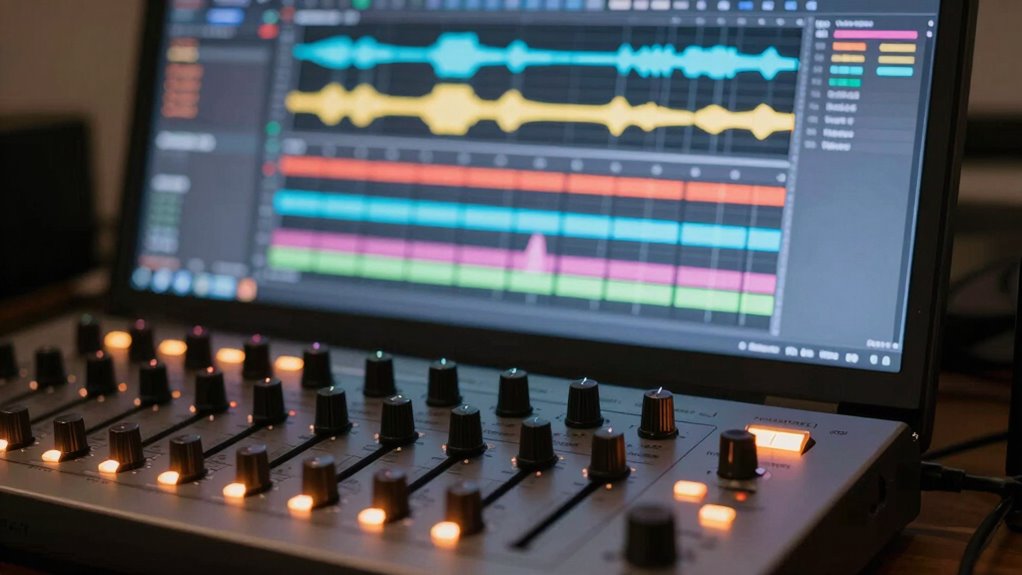
Ever wondered how professional recordings achieve that clear, balanced sound? The secret often lies in meticulous gain staging, a process that remains crucial even when you’re working within a modern digital audio workstation (DAW). While it might seem like digital tools have simplified audio, understanding analog signal flow and hardware integration is still essential. The principles behind gain staging help maintain audio clarity and prevent unwanted noise or distortion, regardless of whether you’re working in a purely digital environment or combining hardware with your DAW.
Proper gain staging ensures clarity and balance in recordings, blending digital precision with analog fundamentals.
In traditional recording setups, analog signal flow is critical. When you send a signal through microphones, preamps, and mixers, each step requires careful level control. This ensures the signal remains strong enough to avoid noise but not so high that it clips or distorts. Even with digital audio, understanding these fundamentals helps you grasp how to manage levels efficiently. Hardware integration becomes relevant here, especially when you incorporate external gear like preamps, compressors, or audio interfaces. These devices each have ideal operating levels, and improper gain staging can compromise the sound quality at any point in the chain.
In your DAW, gain staging isn’t just about setting initial levels; it’s about maintaining proper signal flow through every stage of your project. You want your tracks to be recorded at levels that maximize headroom without clipping, so the digital signal remains clean and editable. During mixing, proper gain staging ensures that each track sits well within the overall mix, preventing certain sounds from overpowering others or getting lost in the noise floor. This requires you to constantly monitor and adjust levels, not just once at the start. Signal flow plays a key role here, guiding how signals move through your setup and emphasizing the importance of consistent levels throughout.
Furthermore, understanding analog signal flow and hardware integration helps you troubleshoot issues that may arise. For example, if your audio sounds dull or noisy, it could be due to improper gain staging at some point in the chain. Knowing how to align levels between hardware and digital inputs allows you to preserve audio fidelity. It also helps you make better decisions about where and when to add external gear, ensuring your hardware complements your digital workflow rather than complicates it. Recognizing signal integrity as a core principle helps you maintain consistency across your entire setup.
Ultimately, gain staging remains a foundational skill. It’s about more than just avoiding distortion — it’s about controlling your entire audio path, from microphone to final mix. By respecting the principles of analog signal flow and understanding hardware integration, you maintain clarity, headroom, and quality throughout your production process. This discipline ensures your recordings sound professional, balanced, and polished, no matter how advanced your DAW may be.
audio interface with gain control
As an affiliate, we earn on qualifying purchases.
As an affiliate, we earn on qualifying purchases.
Frequently Asked Questions
How Does Gain Staging Impact Overall Mix Clarity?
Gain staging directly impacts your mix clarity by managing your dynamic range and maintaining signal integrity. When you set proper gain levels, each element stays crisp and clear without distortion or noise. This prevents clutter and allows individual sounds to shine. By controlling gain early in your chain, you guarantee a balanced, professional sound, making your mix more transparent and easier to process further.
Can Gain Staging Improve Digital Audio Quality?
Yes, gain staging can improve digital audio quality by ensuring ideal levels throughout your chain. Unlike analog gear, digital audio isn’t affected by noise or distortion from improper levels, but maintaining proper gain prevents clipping and preserves clarity. When you integrate hardware with your DAW, proper gain staging helps achieve a balanced signal flow, reducing issues like digital distortion and ensuring your mix sounds clean and professional.
Is Gain Staging Necessary With Auto-Leveling Features?
Auto-leveling features might seem like magic, but they can’t replace gain staging—it’s your secret weapon for pristine sound. You still need to guarantee signal consistency, just like with analog equipment, to prevent digital clipping and noise. Gain staging is vital because it gives you direct control over your audio’s quality, avoiding over-reliance on auto features that might not handle every nuance. It’s the foundation for professional, transparent recordings.
How Do I Fix Gain Staging Issues in a Project?
To fix gain staging issues, start by checking your track levels and reducing any analog distortion caused by overdriving plugins or interfaces. Use your headphone calibration to make certain of accurate monitoring. Adjust your preamp gain and track faders so signals stay healthy without clipping. Keep an eye on your meters, and make small, precise changes. Proper gain staging helps maintain clarity, prevents distortion, and guarantees consistent levels throughout your project.
What’s the Difference Between Gain Staging and Volume Automation?
Imagine gain staging as setting the perfect foundation for a building, ensuring your signal stays clear and undistorted, preserving dynamic range and signal integrity. Volume automation, on the other hand, is like fine-tuning the paint’s color after construction, adjusting levels over time for emotional impact. Gain staging manages your overall signal quality upfront, while automation shapes your sound dynamically, both essential for a polished mix.
studio monitor speakers for mixing
As an affiliate, we earn on qualifying purchases.
As an affiliate, we earn on qualifying purchases.
Conclusion
In your mixing journey, gain staging remains your foundation, your safeguard, your secret weapon. It’s about controlling levels early, setting the stage for clarity, avoiding distortion, and ensuring your mix shines. It’s about discipline, precision, and consistency. Keep gain staging in mind from the start, and you’ll create mixes that sparkle, sit well, and resonate. Because in the end, good gain staging isn’t just a step—it’s the key to professional, polished, and powerful sound.
professional preamp for recording
As an affiliate, we earn on qualifying purchases.
As an affiliate, we earn on qualifying purchases.
digital audio workstation plugins
As an affiliate, we earn on qualifying purchases.
As an affiliate, we earn on qualifying purchases.
Halloween Picks
halloween
As an affiliate, we earn on qualifying purchases.