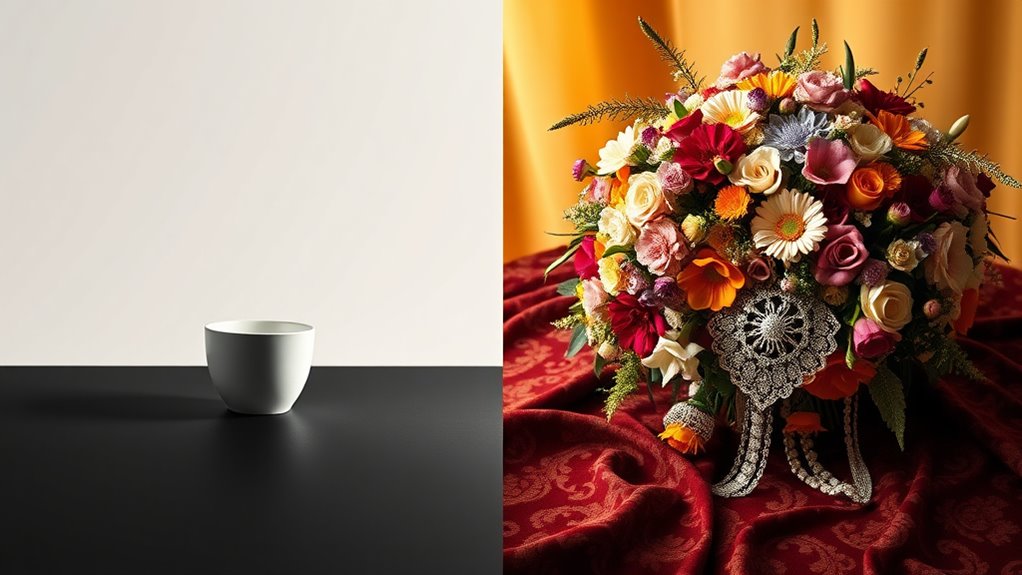

In exploring the compositional extremes of minimalism and maximalism, you’ll find that minimalism focuses on simplicity, neutral colors, and clutter-free spaces, creating calm and clarity. Maximalism, on the other hand, embraces rich colors, layered textures, and abundance, expressing personality and energy. These styles reflect different mindsets—one seeking serenity, the other vibrancy. Understanding how each approach plays with space and color can help you craft environments that truly resonate with your personality. Keep going to discover more about these contrasting yet compelling philosophies.
Key Takeaways
- Minimalism emphasizes simplicity, clean lines, and negative space, creating calm and uncluttered compositions.
- Maximalism features layered textures, bold colors, and abundant decor, resulting in visually rich and complex arrangements.
- Minimalist compositions focus on essential elements, reducing distractions; maximalist designs embrace visual diversity and abundance.
- Compositionally, minimalism uses balance through simplicity, while maximalism achieves harmony via curated chaos and contrast.
- Both styles reflect contrasting philosophies—minimalism seeks restraint, whereas maximalism celebrates expression and abundance.
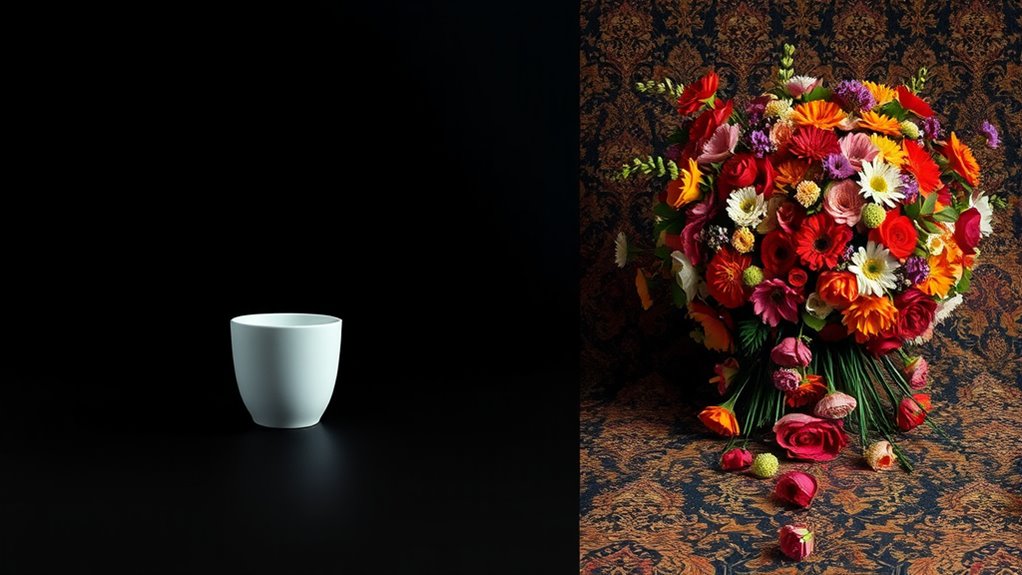
When it comes to interior design and personal style, minimalism and maximalism represent two contrasting philosophies that shape how you create and experience space. As you explore these approaches, you’ll notice that your choice impacts everything from color palettes to the way you handle visual clutter. Minimalism champions simplicity, favoring neutral hues, clean lines, and a pared-down aesthetic. This style reduces distractions by limiting color palettes to a few muted tones, allowing each piece to stand out without overwhelming the senses. In this environment, visual clutter is intentionally minimized, so your space feels calm, open, and uncluttered. You might find that this approach helps you focus, promotes relaxation, and makes your home easier to maintain. Additionally, embracing emotional support can help reinforce your confidence in your chosen style, especially when making significant changes to your environment.
Minimalism emphasizes simplicity and tranquility through neutral tones and clean lines, creating calm, uncluttered spaces that promote focus and relaxation.
On the other hand, maximalism embraces abundance, bold colors, and layered textures. Your color palettes in maximalist spaces tend to be vibrant and diverse, mixing patterns and shades that create a lively, energetic atmosphere. Rather than hiding elements, maximalism encourages you to showcase your personality through an eclectic mix of decor, artwork, and textiles. Visual clutter isn’t seen as a flaw but as a reflection of your personality and experiences. The challenge lies in balancing these elements so your space feels curated rather than chaotic. When you lean into maximalism, you learn to be intentional with your choices, creating a harmonious chaos that invites conversation and discovery.
In a minimalistic space, your focus is on quality over quantity. You carefully select each piece, making sure it serves a purpose or adds to the overall serenity of the room. The color palette remains restrained, and there’s deliberate emptiness or negative space that helps emphasize the essentials. This approach simplifies your environment, making it easier to maintain and more conducive to relaxation or productivity. Conversely, in a maximalist setting, every surface might be filled with meaningful objects, each adding to the layered story of your space. The color palette could be a riot of hues, but with a thoughtful arrangement that prevents overwhelm.
Ultimately, your preference between minimalism and maximalism depends on your personality and lifestyle. If you crave calm and clarity, minimalism’s restraint might suit you best. If you thrive on energy and expression, maximalism offers a canvas for your creativity. Both philosophies challenge your understanding of space, color, and clutter—either embracing simplicity or celebrating abundance. Whichever style you adopt, remember that it’s about creating a space that truly reflects who you are, balancing visual harmony with personal comfort.
Mckanti Drink Coasters Set of 8, 4 Colors Absorbent Coasters for Drinks, Minimalist Cotton Woven Coaster for Living Room Decor, Fall Home Decor, 4.3 Inches
What You Get: You will get more quantity and more multiple styles coasters from us than any others…
As an affiliate, we earn on qualifying purchases.
As an affiliate, we earn on qualifying purchases.
Frequently Asked Questions
How Do Cultural Differences Influence Minimalist and Maximalist Preferences?
Cultural differences shape your preferences by influencing how you interpret cultural symbolism and aesthetic diversity. In some cultures, minimalism reflects clarity and harmony, aligning with values of simplicity. In others, maximalism celebrates richness and storytelling through layered details. Your cultural background guides your appreciation for either aesthetic, making your preferences deeply personal and rooted in the diverse symbolism and visual complexity that resonate with your cultural experiences.
Can a Space Successfully Combine Both Minimalism and Maximalism?
Think of a well-curated garden blending simple stone paths with vibrant flower beds. Yes, your space can successfully combine minimalism and maximalism by creating a balanced contrast that highlights each style’s strengths. Focus on visual harmony, using minimal decor to frame bold, maximalist elements. This approach invites curiosity without overwhelming, resulting in a dynamic yet cohesive environment that celebrates both serenity and exuberance.
What Psychological Effects Do Minimalism and Maximalism Have on Individuals?
You’ll find that minimalism reduces visual clutter, helping you feel more calm and focused, easing stress and sensory overload. Maximalism, on the other hand, can stimulate your senses and boost creativity, but too much can overwhelm you and increase anxiety. Your environment’s style impacts your mood; balancing these extremes can enhance your mental well-being, making you feel both energized and at peace depending on your needs.
How Do Cost and Budget Considerations Impact Design Choices?
Your cost and budget considerations shape your design choices considerably. You’ll often opt for affordable materials to stay within budget, which influences the overall look and feel. If luxury branding is a priority, you might allocate funds toward high-end finishes or branded elements, balancing quality and expense. This approach guarantees your space reflects your style while remaining financially feasible, whether you lean toward minimalism or maximalism.
Are There Specific Industries or Fields Where One Style Dominates?
In luxury branding and tech interfaces, minimalism often dominates because it emphasizes simplicity and elegance, appealing to high-end consumers. You’ll notice sleek, clutter-free designs that focus on essential elements, creating a sophisticated user experience. Maximalism, with its bold visuals and intricate details, tends to appear more in artistic or eclectic fields. Your choice depends on the brand message and target audience, but in these industries, minimalism usually takes precedence for its clarity and modern appeal.

97 Decor LARGE11x14 Eclectic Wall Art Prints – Large Maximalist Wall Decor, Colorful Home Decor Funky Prints For Wall Decor Aesthetic, Trendy Gallery Wall Pictures Artsy Room Decor For Bedroom (Unframed)
Eclectic Poster Set Gallery: Step into a world of creative expression with our eclectic poster set gallery. This…
As an affiliate, we earn on qualifying purchases.
As an affiliate, we earn on qualifying purchases.
Conclusion
Ultimately, whether you lean toward minimalism or maximalism, the truth is that both styles reveal something about your personality. Minimalism forces clarity and focus, while maximalism celebrates abundance and complexity. Some experts suggest that balancing these extremes can create a more authentic expression of yourself. So, why not experiment? Embrace the extremes, discover what resonates, and craft a style that truly speaks to who you are. After all, your unique voice is the real masterpiece.

PHOENIX Skin Tone Watercolor Paint Set – 12 Flesh Colors Artist Grade Half Pans Palette Portrait Colors Watercolor Travel Set for Adults, Professional Artists
Comprehensive Skin Tone Palette – Elevate your portraiture game with the PHOENIX Skin Tone Watercolor Paints. Perfectly suited…
As an affiliate, we earn on qualifying purchases.
As an affiliate, we earn on qualifying purchases.

MIULEE Pack of 2 Decorative Throw Pillow Covers 18×18 Inch Soft Boho Striped Textured Corduroy Pillow Covers Modern Farmhouse Home Decor for Couch Bed Sofa Living Room Cream White
Made of premium soft corduroy fabric with unique texture for a stylish decorative effect
As an affiliate, we earn on qualifying purchases.
As an affiliate, we earn on qualifying purchases.