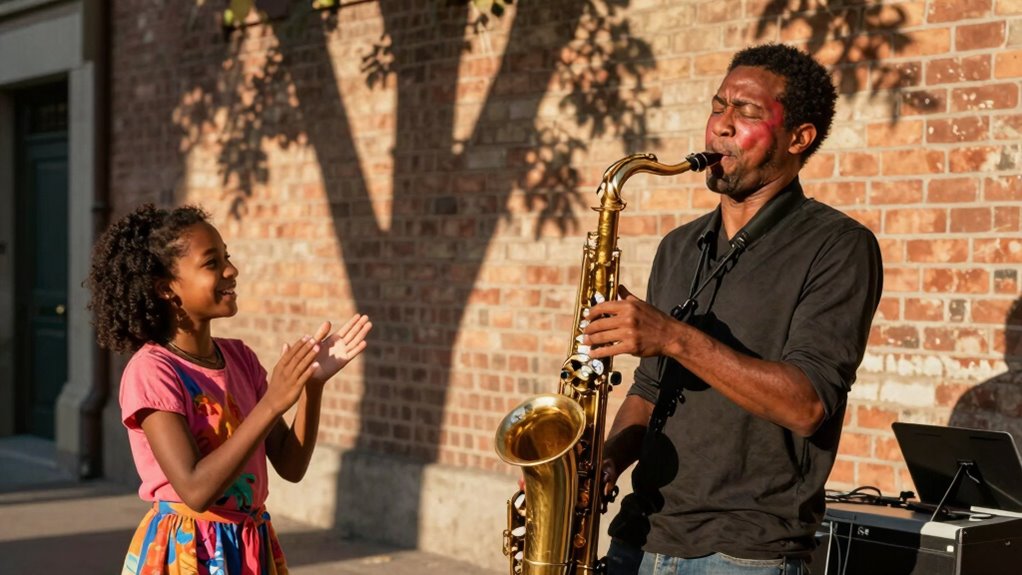

Call and response still powers great writing because it creates an active, engaging dialogue that draws you in. It emphasizes key ideas, builds rhythm, and adds emotional depth through conversational exchanges. This technique connects you with the narrative on a cultural and intuitive level, making stories memorable and impactful. By using this approach, writers control pacing and evoke strong feelings. If you keep exploring, you’ll discover even more ways this technique shapes compelling stories.

Get audio and creator gear delivered free with Prime
- Fast, free delivery on millions of items
- Prime Video, Amazon Music and more included
- Member-only deals all year
Key Takeaways
- Call and response fosters active reader engagement by creating an interactive dialogue within the text.
- It enhances rhythm and musicality, making poetry and prose more memorable and impactful.
- Drawing from oral traditions, it adds authenticity, emotional depth, and cultural resonance to writing.
- It controls pacing, building tension or reflection to shape the narrative’s emotional trajectory.
- Call and response emphasizes themes, inviting participation that deepens reader connection.

Call and response is a powerful literary technique that creates a dynamic interaction between the writer and the reader. It’s a method rooted in tradition, but it remains profoundly effective in contemporary writing because it invites participation and engagement. When you use call and response, you’re fundamentally establishing a dialogue on the page, where one statement prompts a reply, creating a rhythm that pulls the reader in. This technique is often associated with oral traditions, but it’s equally valuable in written form, especially when you want to emphasize a point or evoke emotion.
Call and response fosters dialogue, engaging readers and creating rhythm to emphasize points and evoke emotion.
In poetry techniques, call and response can set a compelling tone by emphasizing key themes or ideas. You might start with a provocative question or a bold statement—your “call”—and follow it with a resonant or contrasting reply. This back-and-forth creates a musicality that makes your poem memorable and impactful. It also helps to build a sense of community, as if the poem is having a conversation with the reader or within a larger cultural context. By using this technique, you can manipulate narrative pacing, controlling how quickly or slowly your ideas unfold. A quick series of exchanges can create excitement, while slower, more deliberate responses might build tension or reflection.
When you incorporate call and response into your writing, you’re engaging your reader actively. It’s a way to make your audience feel involved, almost as if they’re part of the conversation. This engagement keeps readers hooked, enthusiastic to see how the “response” will unfold. It also offers a natural rhythm that guides their attention through your narrative. Whether you’re crafting a poem, a speech, or a story, this technique allows you to control the flow, emphasizing certain moments while giving space for reflection or pause. Additionally, understanding the tradition of oral storytelling can deepen your use of this technique, as it highlights the importance of audience participation and rhythmic repetition in creating memorable narratives.
Moreover, this method helps you develop a sense of pacing that’s crucial for storytelling. If you want to accelerate your narrative, quick exchanges between calls and responses can heighten tension. Conversely, stretching out responses allows you to slow down, providing space for emotion or introspection. It’s a versatile tool that, when used skillfully, can transform ordinary writing into something more compelling and memorable. Recognizing the influence of sound vibrations and their impact on rhythm can help writers craft more resonant call and response patterns. Incorporating techniques from oral traditions can also enhance the authenticity and emotional depth of your writing. Ultimately, call and response invites your reader into an active dialogue, making your writing resonate long after they’ve finished reading.
As an affiliate, we earn on qualifying purchases.
Frequently Asked Questions
How Did Call and Response Originate in Oral Traditions?
You learn that call and response originated in ancient oral traditions, serving as a way to engage communities and preserve stories. Historically, it’s linked to African, Indigenous, and African-American cultures, where it holds deep cultural significance. This pattern helps maintain rhythm, reinforce memory, and foster social bonds. Its roots in storytelling, music, and ritual highlight its enduring power to connect people and pass down cultural values across generations.
Can Call and Response Be Effective in Digital Writing?
You might think call and response is outdated in digital writing, but it actually thrives through interactive dialogue and audience participation. By inviting readers to respond or engage directly, you create a sense of conversation that mirrors traditional call and response. Ironically, the digital space amplifies this technique, transforming static text into an active exchange, making your writing more dynamic and inclusive, just like in oral traditions.
What Are Common Mistakes When Using Call and Response?
You often make mistakes with call and response by overusing it, making dialogue feel forced or predictable. Avoid relying solely on poetry techniques that seem repetitive or unnatural. Instead, balance the response with authentic dialogue structures, ensuring each reply advances the story or theme. Be mindful of pacing, so responses feel organic rather than mechanical, keeping your writing engaging and true to the rhythm of genuine conversation.
How Does Call and Response Influence Reader Engagement?
Call and response creates an interactive rhythm that grabs your attention and keeps you engaged. When you participate in this dynamic exchange, you feel more connected to the writing, making it more memorable. It invites you to become part of the story or message, fostering audience participation. This active involvement heightens your emotional response and encourages you to stay invested, making the overall experience more compelling and impactful.
Are There Cultural Differences in Call and Response Techniques?
You’ll notice cross-cultural variations in call and response techniques, shaped by unique musical influences across cultures. In some traditions, like African or Indigenous music, these exchanges are energetic and communal, while in others, like Western jazz or gospel, they maintain a more conversational tone. These differences influence how audiences connect emotionally and culturally, enriching storytelling and making the technique adaptable worldwide. Your awareness of these variations deepens your appreciation for diverse artistic expressions.
As an affiliate, we earn on qualifying purchases.
Conclusion
By embracing the dynamic dance of call and response, you ignite your writing with energy and engagement. This timeless technique transforms simple sentences into symphonies of significance, encouraging connection and clarity. When you weave words with wit and wonder, your work resonates deeper, drawing readers into a dialogue that delights and defines. So, savor the rhythm, respond with purpose, and let your writing waver not but wave boldly with the power of call and response.
As an affiliate, we earn on qualifying purchases.
As an affiliate, we earn on qualifying purchases.
Fall Picks
fall essentials
As an affiliate, we earn on qualifying purchases.