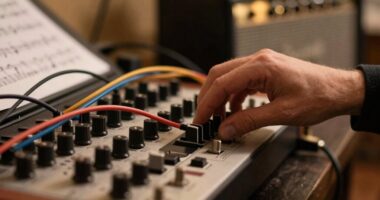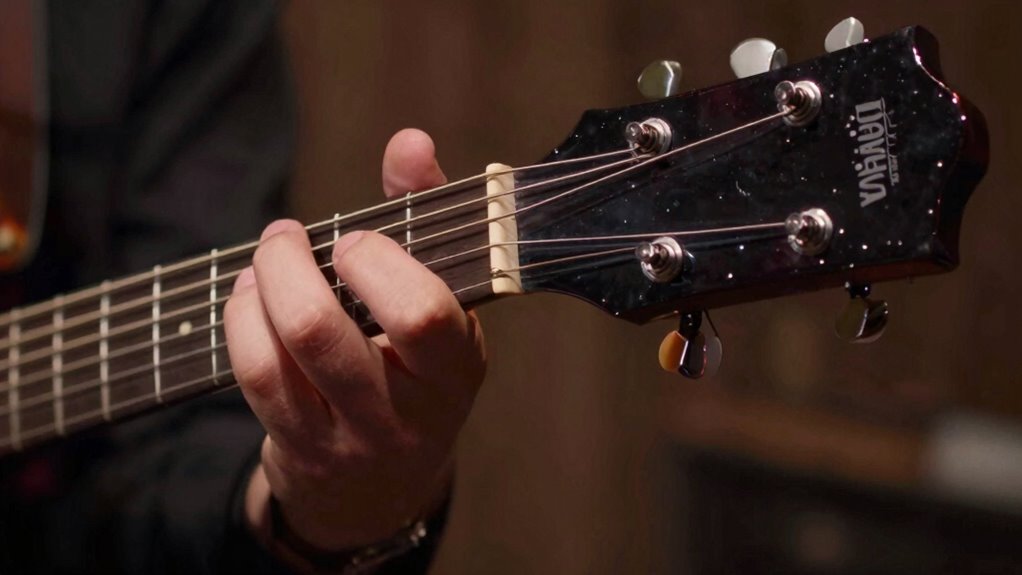

Suspended chords create a sense of unresolved tension in your ear, making you anticipate a resolution. They evoke emotional ambiguity and heighten your awareness of the music’s emotional landscape. This tension taps into your natural pattern-seeking instincts, stirring feelings of longing, uncertainty, or sadness. As your brain seeks stability, the unresolved sound keeps you engaged and emotionally connected. Keep exploring to discover how these chords shape your emotional response and your overall musical experience.

Get audio and creator gear delivered free with Prime
- Fast, free delivery on millions of items
- Prime Video, Amazon Music and more included
- Member-only deals all year
Key Takeaways
- Suspended chords create harmonic tension by replacing the third with the second or fourth, evoking anticipation and emotional ambiguity.
- They engage the listener’s brain by generating a desire for resolution, heightening emotional engagement.
- The unresolved nature of suspended chords adds a sense of instability, making moments more expressive and charged.
- Resolution of suspended chords provides satisfaction, deepening emotional impact and fulfilling pattern-seeking instincts.
- Their use enhances musical storytelling by manipulating emotional responses and creating a dynamic, memorable listening experience.
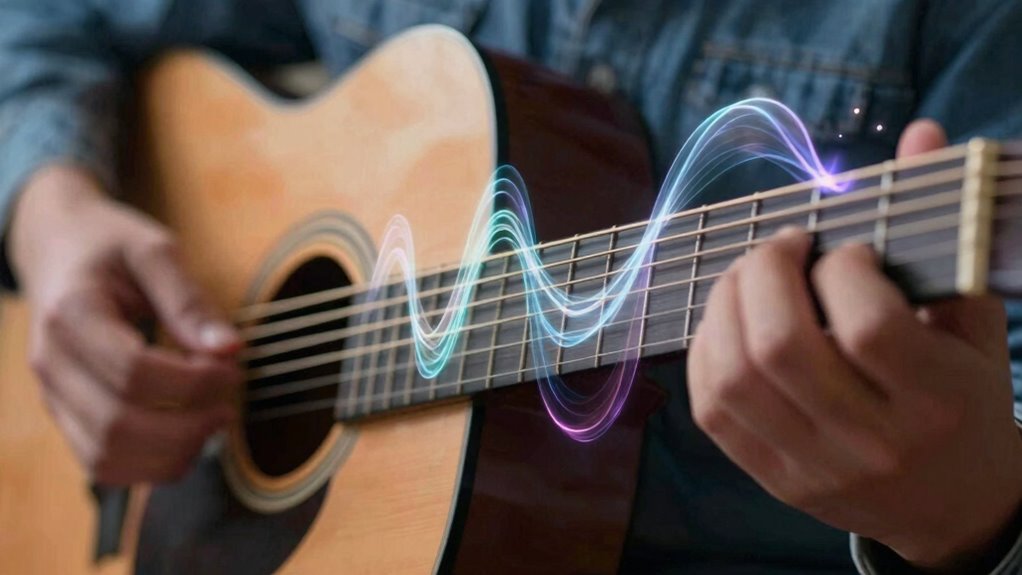
Have you ever wondered why suspended chords evoke a feeling of anticipation or unresolved tension in music? When you hear a suspended chord, your ear naturally senses something’s incomplete, and that’s because of the harmonic tension it creates. Unlike major or minor chords that feel resolved and stable, suspended chords leave your ear hanging, waiting for a resolution that never immediately comes. This sense of instability sparks an emotional response, pulling you into a state of expectation. The tension isn’t just a sound; it’s an emotional cue that something more is about to happen in the music. Your brain recognizes this harmonic ambiguity, which makes suspended chords both intriguing and emotionally compelling. The harmonic tension they produce actively engages your emotional and cognitive processes, deepening your overall listening experience. When you listen to a suspended chord, your mind automatically searches for resolution. This craving for stability is rooted in your brain’s natural tendency to seek patterns and resolve dissonance. Suspended chords, which replace the third of a chord with either a second or fourth, generate that harmonic tension because they lack the definitive quality that major or minor chords provide. The suspension creates a temporary conflict between the dissonant interval and the surrounding harmony. This conflict heightens your awareness of the music’s emotional landscape, making the moment feel more charged and expressive. As a listener, you become emotionally engaged, feeling the anticipation building until the chord finally resolves or sustains unresolved. The emotional response triggered by suspended chords isn’t just about tension; it’s about the feeling of expectation and release. When the tension resolves, you experience a sense of satisfaction, making the music more memorable and emotionally impactful. Conversely, if the tension remains unresolved, it can evoke feelings of longing, uncertainty, or even sadness. This is why suspended chords are often used in music to evoke specific emotional states—they tap into your subconscious desire for resolution and create a dynamic narrative within a piece. The harmonic tension they generate acts as an emotional catalyst, enhancing the expressive power of the music and making your listening experience more visceral. In essence, suspended chords do more than add color to a harmony; they actively manipulate your emotional response through their inherent harmonic tension. They invite you to linger in a state of anticipation, heightening your engagement with the music’s emotional story. Whether they resolve or not, suspended chords deepen your connection to the music by playing on your natural instincts to seek resolution and meaning in the sound.
As an affiliate, we earn on qualifying purchases.
Frequently Asked Questions
How Do Suspended Chords Differ From Regular Major or Minor Chords?
Suspended chords differ from major or minor chords because they replace the third with either a second or fourth, creating harmonic tension and melodic ambiguity. This tension makes the chord feel unresolved, inviting you to anticipate a resolution. Unlike regular chords, suspended chords don’t establish a clear mood immediately, instead adding an interesting flavor that keeps your ear engaged as they often resolve into a more stable, familiar sound.
Can Suspended Chords Evoke Specific Emotions in Listeners?
Suspended chords evoke emotional ambiguity in listeners, creating a sense of ambiguous tension. You might feel a mix of anticipation and uncertainty because these chords lack a definitive major or minor quality. They can stir feelings of longing, suspense, or unresolved emotion, making your ears crave resolution. By doing so, suspended chords engage your emotional response, drawing you into a mood that’s open to interpretation, heightening your musical experience.
Are Suspended Chords Used More in Certain Music Genres?
You’ll notice suspended chords are more common in jazz improvisation, where musicians use them to create tension and release, adding expressive depth. In modern pop, producers often incorporate suspended chords to evoke a contemporary, dreamy vibe that keeps listeners intrigued. These chords offer flexibility across genres, making them versatile tools that enhance emotional impact, whether in jazz solos or catchy pop melodies.
Do Suspended Chords Have Any Cultural or Historical Significance?
Suspended chords act like a musical pause, hinting at unresolved stories within cultural and historical tapestries. Historically, they’ve signified anticipation or shift in folk, classical, and religious music, embodying cultural symbolism of waiting or expectation. Their usage reflects societal shifts and emotional states, making them more than mere harmonics—they’re echoes of human longing and cultural narratives woven through time. Their presence invites listeners to feel the unspoken stories behind each unresolved sound.
How Do Musicians Typically Resolve Suspended Chords in Compositions?
Musicians typically resolve suspended chords by moving the dissonant note either downward or upward to a stable chord tone, using suspension resolution techniques to create melodic tension. You often see the suspended note resolve down to the third or up to the fourth, which provides a satisfying sense of release. This resolution enhances melodic tension creation, guiding listeners smoothly from dissonance to consonance, and adding emotional depth to your composition.
As an affiliate, we earn on qualifying purchases.
Conclusion
So, next time you hear a suspended chord, don’t just dismiss it as a musical ‘pause.’ It’s actually whispering a secret—something unresolved, yet strangely comforting. Ironically, these chords, which seem to leave us hanging, often create a sense of calm and anticipation. Maybe it’s life’s way of reminding us that sometimes, the unresolved moments are what truly make the music—and the experience—more meaningful. After all, isn’t life just a beautifully suspended chord?
electronic keyboard with chord features
As an affiliate, we earn on qualifying purchases.
As an affiliate, we earn on qualifying purchases.
As an affiliate, we earn on qualifying purchases.
Halloween Picks
halloween
As an affiliate, we earn on qualifying purchases.