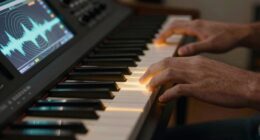
Stage pianos are surprisingly powerful tools in the studio, offering authentic sound, extensive customization, and advanced features. You can tailor the feel of the keys and assign different sounds to specific zones, making it easier to create dynamic performances. Their realistic acoustic qualities and sound modeling help enhance the emotional impact of your recordings. If you explore further, you’ll discover how these instruments can elevate your studio work to new levels of creativity and expression.
Key Takeaways
- Stage pianos offer advanced customization, allowing tailored sound and feel for precise studio recordings.
- They replicate high-fidelity acoustic qualities, enhancing realism and emotional expression in studio mixes.
- Their acoustic simulation capabilities enable versatile tonal options suited to various musical styles.
- They facilitate experimentation with textures and nuances without needing multiple traditional instruments.
- Their integration of realism and control elevates the quality and creativity of studio productions.
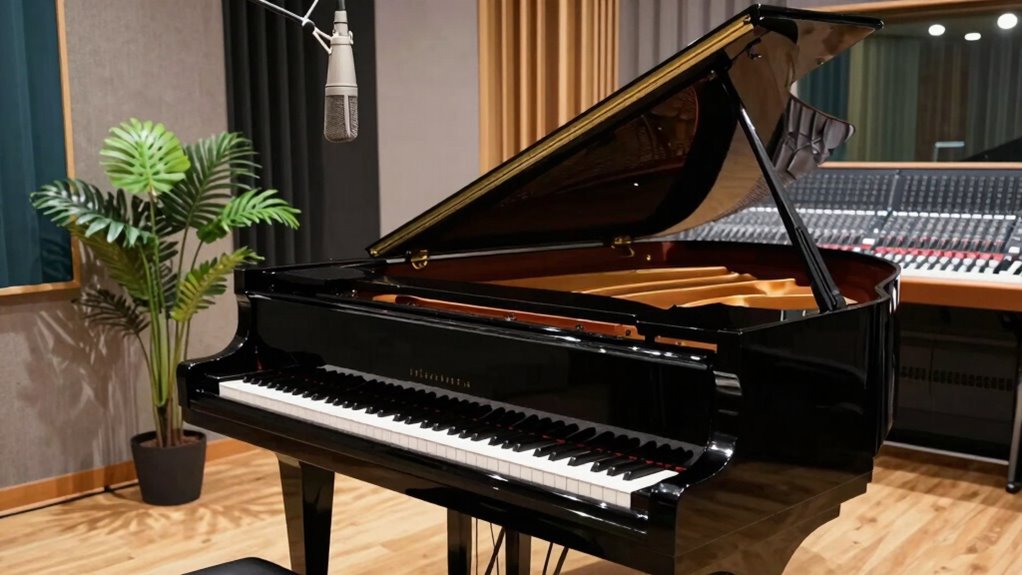
Have you ever wondered why many studio musicians prefer stage pianos over traditional keyboards? The answer lies in the impressive versatility and control they offer. Unlike standard keyboards, stage pianos excel at providing a more realistic and customizable playing experience, making them invaluable tools in the studio environment. One key feature that sets them apart is their advanced keyboard customization options. You can easily tailor the feel of the keys to match your playing style—whether you prefer a heavier touch for more expression or a lighter response for rapid passages. This kind of customization guarantees you’re always comfortable, which translates directly into better performances and more nuanced recordings. It’s not just about the feel; many stage pianos also allow you to assign different sounds or effects to specific keys or zones, giving you a level of control that’s hard to find elsewhere. This flexibility means you can craft unique sounds on the fly, streamlining your workflow and reducing the need for extensive post-production editing. Additionally, the ability to replicate the acoustic qualities of real pianos with high fidelity makes stage pianos a favorite among studio musicians.
Another major advantage is the acoustic simulation capabilities of modern stage pianos. These instruments are engineered to imitate the complex tonal qualities of real acoustic pianos, capturing the nuances of hammer strikes, string vibrations, and resonance. When you play a stage piano with high-quality acoustic simulation, you get a richer, more authentic sound that can blend seamlessly into a mix. This realism helps you convey emotion and dynamics more effectively, making your recordings sound more lively and natural. Plus, with the ability to access different piano models and adjust parameters like damper resonance or string sympathetic vibrations, you can customize the instrument’s sound to suit any musical style or mood. This level of acoustic detail isn’t typically available on traditional keyboards, which often rely on simpler, sampled sounds. Furthermore, the digital modeling technology used in these instruments continually advances, providing even more realistic and expressive options for studio use.
In the studio, these features prove invaluable. They allow you to experiment with different textures and tones without needing multiple instruments or complex setups. With keyboard customization, you can adapt the instrument’s response to your specific touch, ensuring consistent performance across various sessions. Meanwhile, acoustic simulation makes it easier to produce recordings that feel alive and expressive, capturing every subtlety of your performance. This combination of control and realism empowers you to push creative boundaries, making stage pianos a surprisingly powerful choice for studio work. They’re not just portable or stage-ready; they’re precision tools that can elevate your recordings to a new level of authenticity and expressiveness. Recognizing the importance of musical expression can help you make the most of these powerful instruments.

Roland V-STAGE 88 | Premium 88-Key Weighted Digital Keyboard | Ideal for Piano-Focused Players | Four Independent Sound Engines | Advanced Modeling Technology & Sound Customization
Premium keyboards designed for professional stage performers with four independent sound engines powered by Roland’s most advanced modeling…
As an affiliate, we earn on qualifying purchases.
As an affiliate, we earn on qualifying purchases.
Frequently Asked Questions
How Do Stage Pianos Compare to Traditional Digital Keyboards?
Stage pianos often feel more authentic than traditional digital keyboards, especially in sound quality and key action, making them ideal for performances. However, their weight can be a concern, so if portability matters to you, a traditional digital keyboard might be easier to carry around. You get a balance of realistic feel and sound, but consider your need for mobility before choosing the right instrument.
Can Stage Pianos Be Used for Recording Acoustic Piano Sounds?
Yes, you can use stage pianos for recording acoustic piano sounds. Their high-quality samples and realistic feel make them excellent for vocal recording and sound engineering. You simply connect your stage piano to your audio interface, then record directly into your DAW. Many stage pianos offer versatile sound-shaping tools, allowing you to craft authentic acoustic piano recordings that blend seamlessly into your mixes.
What Maintenance Is Required for Stage Pianos in a Studio Setting?
In a busy studio, you need to regularly check your stage piano’s keyboard longevity by cleaning keys and preventing dust buildup. For example, a recording engineer discovered that wiping the keys weekly extended their lifespan. Tuning frequency is minimal for digital pianos, but make sure firmware updates are current for peak performance. Regularly inspecting and maintaining your stage piano keeps it reliable and sounding great, avoiding costly repairs or replacements.
Are There Specific Brands Favored for Studio Use?
You’ll find that brands like Yamaha, Roland, and Korg are favored for studio use because of their solid reputation for quality and reliability. These brands offer a range of options that balance impressive sound with affordability, making price considerations easier for your setup. When choosing, consider your specific needs—whether you prioritize realistic key action or versatile tones—and opt for a brand known for durability and consistent performance.
How Do I Choose the Best Stage Piano for My Studio Needs?
You should focus on a stage piano that offers excellent performance versatility, allowing you to cover various styles and sounds effortlessly. Consider portability considerations too—choose a lightweight model that’s easy to move around your studio or gigs. Look for features like multiple sound options, realistic key action, and reliable connectivity. Balancing these factors guarantees you select a stage piano that enhances your studio setup and adapts to your evolving musical needs.
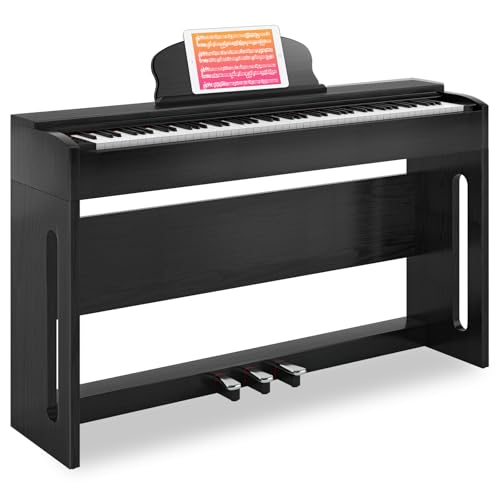
AODSK 88-Key Weighted keyboard piano,Hammer Action Digital Piano with Speakers,Furniture Stand and Triple Pedals,piano keyboard 88 keys Beginner's Course- Support Headphones,Piano Lessons,B-83S
[Fully Weighted Professional Piano Keys]: Full-sized 88-key weighted keyboard, providing a smooth and high-response piano playing experience. Allows…
As an affiliate, we earn on qualifying purchases.
As an affiliate, we earn on qualifying purchases.
Conclusion
Think of stage pianos as your trusty ship steering the vast ocean of music production. They’re not just for the spotlight but serve as your reliable vessel, guiding you through waves of creativity and sound. With their versatility and power, you can explore new horizons and craft your masterpiece. Embrace the stage piano’s role in your studio voyage—you’ll find that its true strength lies in helping you reach uncharted musical territories.
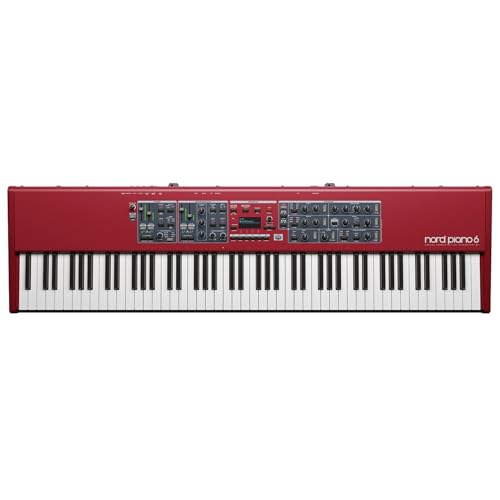
Nord Piano 6 88-key Stage Piano
88-key Stage Piano/Synth with Triple Sensor Keybed
As an affiliate, we earn on qualifying purchases.
As an affiliate, we earn on qualifying purchases.

High School Musical 2 (Piano/Vocal/Guitar)
New
As an affiliate, we earn on qualifying purchases.
As an affiliate, we earn on qualifying purchases.