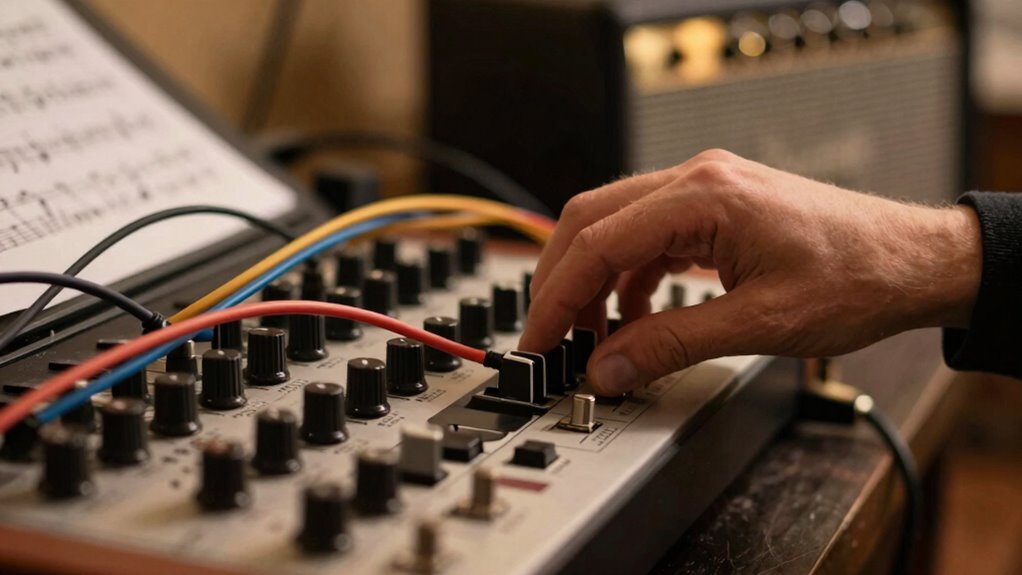

To make modal interchange sound natural, focus on smooth voice leading and common tones when borrowing chords from parallel modes. Identify key chords and explore their modal counterparts, then shift gradually with stepwise motion to avoid abrupt shifts. Use subtle voice movement and connect notes carefully to create a cohesive flow. Incorporate these techniques to craft expressive progressions, and if you keep exploring, you’ll discover even more ways to enhance your harmonic language.

Get audio and creator gear delivered free with Prime
- Fast, free delivery on millions of items
- Prime Video, Amazon Music and more included
- Member-only deals all year
Key Takeaways
- Identify common tones between original and borrowed chords for seamless voice leading.
- Use stepwise motion and smooth transitions to connect modal interchange chords naturally.
- Select chords from parallel modes that share similar harmonic traits for cohesiveness.
- Treat unexpected chords as part of a musical conversation, integrating them smoothly into progressions.
- Develop an ear for modal characteristics to choose chords that enhance the overall harmonic flow.
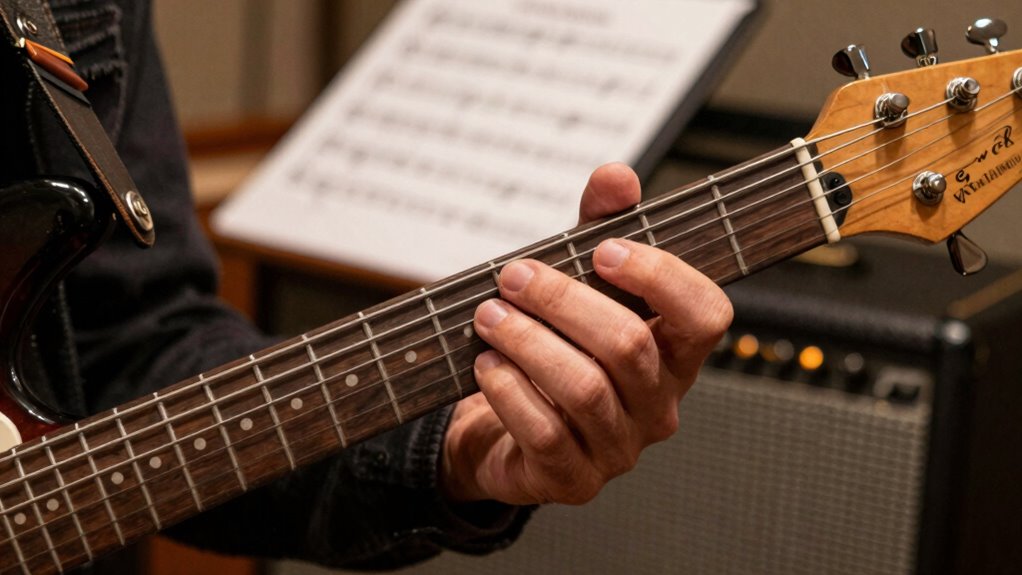
Have you ever wondered how songwriters and composers make unexpected chords sound smooth and natural? One key technique they rely on is modal interchange, which involves borrowing chords from parallel modes to add color and interest to a progression. To master this, you need to understand how to incorporate these borrowed chords seamlessly into your harmony. A good way to do this is by thinking about jazz improvisation and chord substitution, both of which emphasize subtle, clever changes that maintain musical coherence.
Master modal interchange and chord substitution to create smooth, colorful progressions that feel natural and expressive.
In jazz improvisation, musicians often navigate complex harmonic landscapes by smoothly shifting between chords, even when they’re borrowed from different modes. This practice teaches you to listen carefully to the voice leading and melodic flow. When you borrow a chord from a parallel mode—say, using a bVII from the Mixolydian mode in a major key—you want to connect it naturally to the surrounding chords. This means paying attention to common tones and stepwise motion, which helps the transition feel effortless. The same principle applies when doing chord substitution in modal interchange. Instead of abruptly changing the sound, you replace a standard chord with a borrowed one that shares one or more notes with it or leads smoothly into the next chord.
To make modal interchange sound natural, start by identifying the chords in your key and exploring their parallel modes. For example, in a major key, you might borrow a iv chord from the minor mode or a bVII from the Mixolydian mode. Use voice leading—moving individual notes smoothly from one chord to the next—to connect these borrowed chords to your original progression. Additionally, understanding the key traits of your chosen mode can help you select chords that fit well within your harmonic language. Recognizing the musical coherence and how borrowed chords fit into your overall harmonic language can guide your choices effectively. Developing an awareness of common tones and stepwise motion can also make your harmonic shifts more fluid and natural. Incorporating voice leading techniques ensures that even surprising harmonic shifts sound intentional and natural. Being familiar with modal characteristics can further enhance your ability to select chords that sound authentic and well-integrated.
Chaining these borrowed chords into your progressions with subtle voice leading ensures they don’t sound jarring. Think of it like jazz improvisation, where unexpected notes or chords are treated as part of a larger, cohesive musical conversation. When you approach modal interchange with an ear for voice movement and smooth chord substitution, it becomes easier to create progressions that surprise yet feel natural. Over time, this practice helps you develop a musical vocabulary that makes your harmonies more colorful, expressive, and fluid. The goal isn’t just to add unexpected chords but to weave them into your music so they enhance the overall sound without sounding out of place.
music theory chord progressions book
As an affiliate, we earn on qualifying purchases.
As an affiliate, we earn on qualifying purchases.
Frequently Asked Questions
Can Modal Interchange Be Used in All Musical Genres?
Yes, modal interchange can be used in all musical genres, from jazz improvisation to popular song analysis. It adds color and interest by borrowing chords from parallel modes, making shifts smoother or more surprising. Whether you’re improvising over a jazz tune or analyzing a pop hit, modal interchange helps you explore different emotional tones. Its versatility makes it a valuable tool for musicians across genres, enriching your musical palette naturally.
How Do I Identify Suitable Chords for Modal Interchange?
To identify suitable chords for modal interchange, focus on chord substitution and scale variations. Listen for moments where the harmony feels slightly different or unexpected, indicating possible modal shifts. Experiment with borrowing chords from parallel modes or scales, like switching from a major to a minor mode. Trust your ear; if the new chord enriches the progression without sounding out of place, it’s a good candidate for modal interchange.
Is Modal Interchange Effective in Both Melody and Harmony?
Modal interchange is mighty in both melody and harmony, amplifying emotional impact and adding variety. You can cleverly craft chord substitutions to create enchanting, unexpected changes. When you incorporate modal interchange, melodies become more expressive, and harmonies deepen, making your music more dynamic. It’s a powerful technique to evoke specific moods and enhance your song’s overall emotional resonance, whether through melodic motifs or harmonic progressions.
How Does Modal Interchange Affect the Mood of a Song?
Modal interchange profoundly affects the mood of a song by adding emotional color through chord substitution. When you swap chords from different modes, it creates unexpected shifts that evoke specific feelings, whether bright or somber. You can use this technique to enhance the song’s atmosphere, making it more dynamic and expressive. It’s a powerful tool to subtly influence your listeners’ emotional response and deepen the overall mood of your composition.
What Are Common Pitfalls to Avoid With Modal Interchange?
You might think more chord substitution means more flavor, but overdoing modal interchange can create tonal ambiguity, confusing your listeners. Avoid abrupt shifts that feel out of place, and don’t forget that inconsistent modal choices can weaken your song’s emotional clarity. Keep modal exchanges smooth, ensuring they serve the harmony rather than just adding complexity. Balance is key—otherwise, your musical journey risks turning into an unintended tonal maze.
As an affiliate, we earn on qualifying purchases.
Conclusion
Think of modal interchange like seasoning in a recipe; a pinch of the unexpected can elevate your sound without overwhelming it. When I first experimented with modal interchange, I felt like I was adding a splash of spice—initially daring, but suddenly everything tasted richer and more alive. Just like a well-balanced dish, your music becomes more natural and compelling when you subtly incorporate these chords. Trust your ear, and let the harmony flow seamlessly into your melodies.
As an affiliate, we earn on qualifying purchases.
As an affiliate, we earn on qualifying purchases.
Fall Picks
fall essentials
As an affiliate, we earn on qualifying purchases.