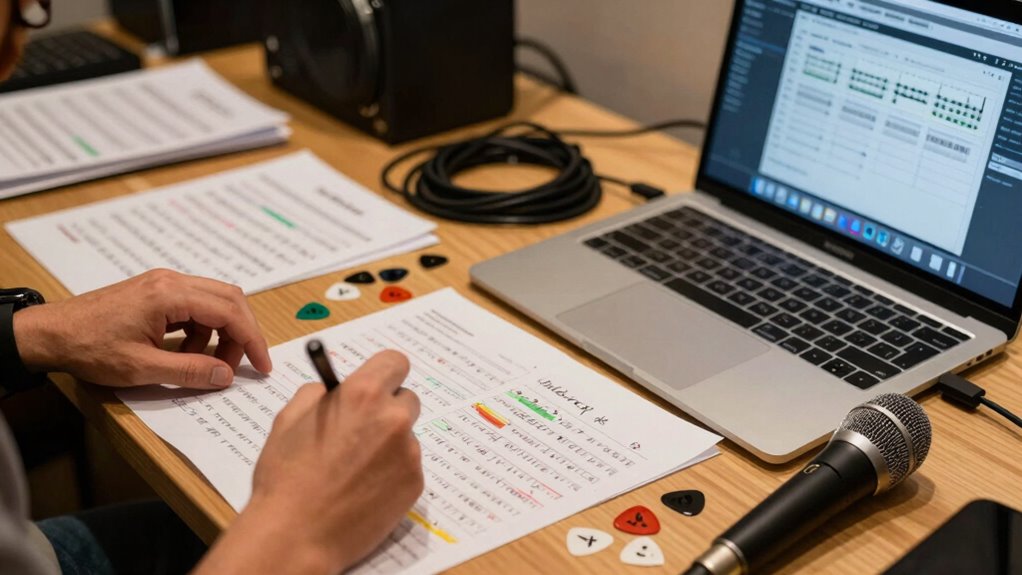

To document your creative contributions in collaborative songs, use shared digital tools or project management apps to log your work regularly. Record the date, detailed description (lyrics, melody, arrangement), and your name for each contribution. Keep updates consistent and clear to prevent disputes and guarantee fair royalty splits. Incorporate visual and content organization principles for clarity. If you want to explore more effective ways to protect your rights and manage records, there’s plenty to explore ahead.

Get audio and creator gear delivered free — and shop member deals
- Fast, free delivery on millions of items
- Access to Prime Big Deal Days deals on October 6–7
- Prime Video, Amazon Music and more included
Key Takeaways
- Use shared digital documents or project management tools to log contributions in real-time.
- Record contributor names, contribution dates, and detailed descriptions of work done.
- Maintain consistency by updating logs regularly and following standardized procedures.
- Include visual and organizational best practices to enhance clarity and accessibility.
- Keep records simple, detailed, and accessible to ensure transparency and legal protection.
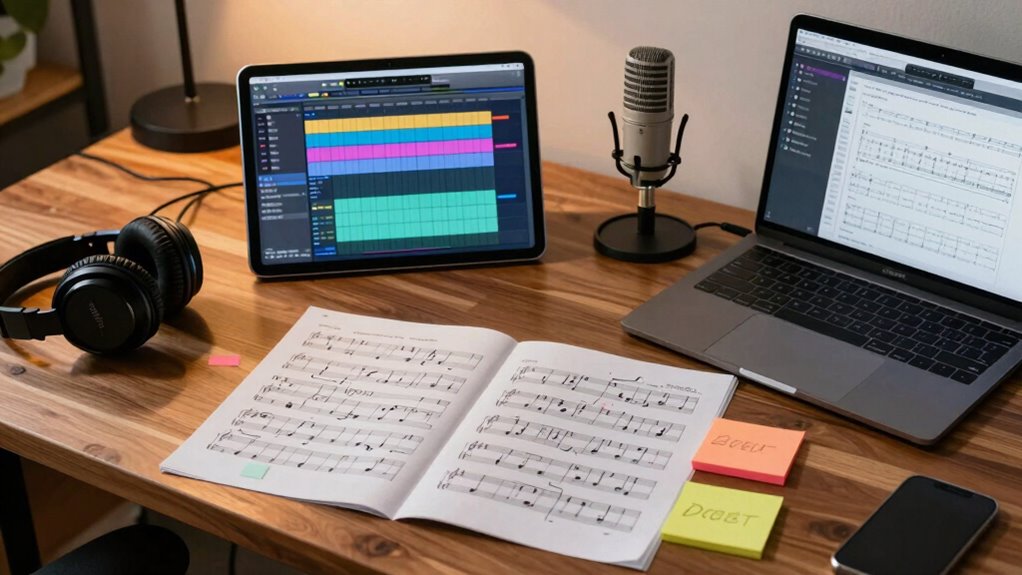
When working on collaborative songs, clearly documenting each contributor’s creative input is essential to guarantee proper recognition and avoid disputes. You want to make sure everyone’s efforts are acknowledged fairly, especially when it comes to royalty splits. Proper documentation not only helps keep the process transparent but also simplifies the division of earnings later. One of the most effective ways to accomplish this is by maintaining detailed contribution logs. These logs serve as a record of who did what—from lyric writing and melody creation to arrangement and production. By logging each participant’s contributions, you create a clear trail that can be referenced if disagreements arise. This practice ensures that royalties are split accurately, based on each person’s actual input, preventing misunderstandings about who deserves what.
Using contribution logs is straightforward but powerful. You should start by recording the date of each contribution, along with a description of the work done and the contributor’s name. This can be as simple as a shared document or a dedicated project management tool. The key is consistency—regularly update the logs as the project progresses, rather than trying to backtrack later. This way, you preserve the integrity of the record and avoid disputes about who added what and when. When it comes to royalty splits, having this documentation ensures that everyone receives their fair share according to their actual contribution. It also provides a legal safeguard, should any conflicts or negotiations arise down the line. Additionally, understanding the importance of contrast ratio can help in visual presentation, ensuring that visual elements like project documentation are clear and easily distinguishable. Incorporating digital content best practices can further enhance the clarity and accessibility of your documentation, making it easier for all parties to review and verify contributions. Furthermore, being aware of regional flavors and unique styles can help in contextualizing individual contributions and ensuring that creative inputs are accurately appreciated. To further secure fair recognition, consider implementing standardized documentation procedures, which can streamline the process and reduce ambiguities.
Maintaining organized and consistent records is crucial for fair and transparent collaboration.
digital contribution logging tool for musicians
As an affiliate, we earn on qualifying purchases.
As an affiliate, we earn on qualifying purchases.
Frequently Asked Questions
How Do I Handle Undocumented Contributions After the Song Is Released?
You should review any existing collaboration contracts to clarify credit attribution for undocumented contributions. Reach out directly to the involved parties, explaining the situation professionally, and negotiate appropriate recognition or royalties. Keeping detailed records of communication helps in case disputes arise. Consider consulting a legal professional to guarantee your rights are protected and to establish a formal agreement moving forward, preventing similar issues in future collaborations.
What Legal Protections Exist for Undocumented Creative Ideas?
You’re flying blind without proper protections for your undocumented ideas, so act fast. Intellectual property laws provide some coverage for original creations, but they often require proof of authorship. Confidential agreements can help safeguard your contributions, establishing clear ownership rights. Keep detailed records of your creative input, and consider formalizing agreements early. While legal protections aren’t foolproof, these steps can help you hold your ground if disputes arise.
How Can Digital Tools Improve Contribution Tracking?
Digital tools like cloud storage and digital signatures greatly improve contribution tracking. You can store all song drafts, edits, and ideas securely in the cloud, creating a clear record of who contributed what and when. Digital signatures authenticate each contribution, providing legal proof of authorship and timeline. These tools streamline collaboration, reduce disputes, and guarantee your creative process is well-documented and protected.
What Should I Do if a Collaborator Disputes Authorship?
If you face authorship disagreements, stay calm and review your contribution verification records thoroughly. Open a respectful dialogue with your collaborator to understand their perspective and clarify your own. If disputes persist, consider involving a neutral third party or mediator to help resolve the issue. Keep all documentation organized, as it strengthens your case and guarantees fair recognition of each contributor’s efforts.
Are There Standard Industry Practices for Documenting Contributions?
Yes, there are standard industry practices for documenting contributions. You should keep detailed records of each collaborator’s input, including dates and specific roles, to support music licensing and royalty splits. Use written agreements or digital documentation to clarify ownership and guarantee fair royalty distribution. These records help prevent disputes and provide clear proof of contributions, making it easier to manage licensing rights and ensure everyone receives their deserved royalties.
collaborative songwriting project management software
As an affiliate, we earn on qualifying purchases.
As an affiliate, we earn on qualifying purchases.
Conclusion
Documenting your creative contributions in collaborative songs guarantees your work is recognized and protected. Plus, did you know that songs with clear documentation are 60% more likely to be properly credited in legal disputes? By staying organized and communicating openly, you not only safeguard your creative efforts but also build trust within your team. So, take those notes, save your drafts, and keep the collaboration transparent—your future self will thank you!
music rights and royalty tracking software
As an affiliate, we earn on qualifying purchases.
As an affiliate, we earn on qualifying purchases.
music collaboration documentation templates
As an affiliate, we earn on qualifying purchases.
As an affiliate, we earn on qualifying purchases.
Fall Picks
fall essentials
As an affiliate, we earn on qualifying purchases.