Loop stations reshape your solo performances by letting you build complex, layered soundscapes in real-time, giving you the power of a full band at your fingertips. They encourage spontaneity, so you can experiment with melodies, harmonies, and rhythms on the fly. This technology enhances your creativity, supports improvisation, and makes your shows more engaging and unique. Want to discover how these tools can take your performance to the next level? Keep exploring to find out more.

Get audio and creator gear delivered free with Prime
- Fast, free delivery on millions of items
- Prime Video, Amazon Music and more included
- Member-only deals all year
Key Takeaways
- Enable real-time, layered soundscapes, allowing solo performers to create complex arrangements spontaneously.
- Promote improvisation and quick adaptation, enhancing expressive and dynamic live performances.
- Reduce reliance on pre-recorded tracks, fostering authenticity and originality in solo acts.
- Improve audience engagement through unique, evolving sound textures and spontaneous musical conversations.
- Make advanced looping technology accessible, sustainable, and affordable for performers at all skill levels.
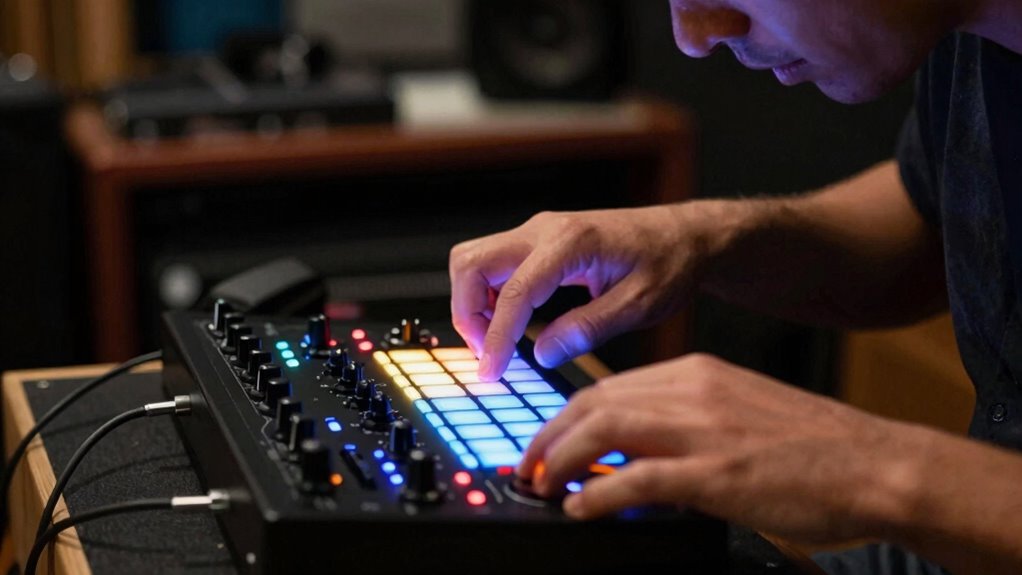
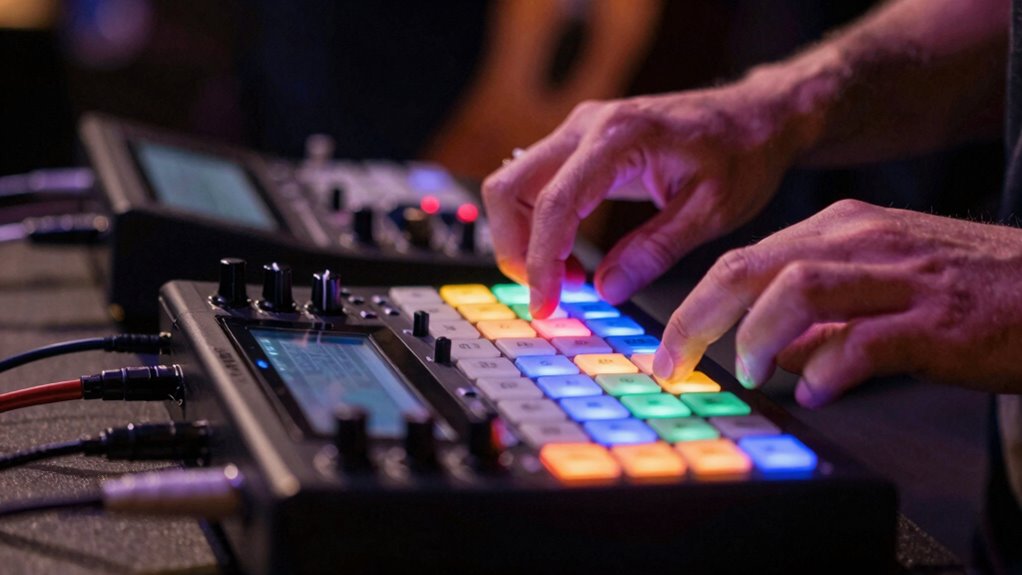
Loop stations have revolutionized solo performers’ ability to create full, layered soundscapes in real-time. With advancements in music technology, these devices have transformed how artists approach live improvisation. Instead of relying solely on pre-recorded backing tracks or multiple band members, you can now build complex arrangements on the spot, making each performance unique and spontaneous. This instant layering capability means you can experiment freely, blending melodies, harmonies, and rhythms without the need for additional musicians. It’s like having a full band at your fingertips, ready to support your improvisations and musical ideas as they unfold.
Using a loop station, you gain control over your live sound in ways that were previously impossible. You record a phrase or chord progression, then immediately loop it to serve as a foundation for your next idea. This process encourages creative exploration since you’re not confined to traditional arrangements or fixed performances. Instead, your music becomes a dynamic conversation between your instrument and the technology. As you build layers, you can modify or add new loops, constantly evolving your soundscape and responding to the energy of the moment. This flexibility keeps performances fresh and engaging, both for you and your audience. Additionally, the accessibility of user-friendly devices has made it easier for musicians at all levels to incorporate looping into their live setups. Many devices now also feature sustainable practices, allowing performers to minimize their environmental impact and promote eco-conscious touring. Incorporating environmentally conscious choices into your setup not only benefits the planet but can also resonate positively with your audience.
The integration of music technology in loop stations also enhances your live improvisation skills. You learn to think quickly, adapt on the fly, and develop new musical ideas in real-time. The immediate feedback loop of recording and looping sharpens your ability to listen critically and make deliberate choices about sound textures and dynamics. It pushes you to become more expressive, as you’re not limited by the constraints of traditional setup or the need for pre-written material. Instead, you can experiment with different styles and genres, blending elements seamlessly as your creativity guides you. This spontaneous approach often results in more authentic and emotionally charged performances.
Furthermore, as you become more comfortable with the technology, you’ll find yourself expanding your musical vocabulary. Loop stations enable you to explore complex arrangements without the need for extensive equipment or multiple performers. You can perform solo with confidence, knowing that your ideas can be layered and manipulated in real-time to produce a rich, full sound. This shift not only amplifies your creative potential but also makes live shows more mesmerizing. Audiences respond to the energy and originality of improvised soundscapes, knowing each performance is a one-of-a-kind experience driven by your spontaneous musical instincts. Additionally, the evolution of music technology has made these devices more accessible and user-friendly, allowing more musicians to incorporate looping into their performances. Embracing biodiversity and sustainable practices in your musical setup can also inspire more environmentally conscious choices in the use and disposal of electronic equipment.
As an affiliate, we earn on qualifying purchases.
Frequently Asked Questions
How Do Loop Stations Integrate With Live Vocals?
You can seamlessly integrate live vocals with loop stations by using harmonic layering, where you record and layer vocal harmonies in real-time. Vocal effects integration enhances your sound, allowing you to add reverb, delay, or distortion directly into your loops. This setup enables you to create complex textures and dynamic performances, giving you full control over your soundscape while performing solo. The result is a richer, more engaging live experience.
What Are the Best Loop Stations for Beginners?
Imagine diving into a vibrant music scene with a loop station that feels like a friendly playground. For beginners, the Boss RC-1 or BOSS RC-3 Loop Station stand out with their simple, intuitive interfaces and essential loop features. These devices are compact, easy to operate, and perfect for building confidence as you layer sounds. With these, you’ll quickly turn your ideas into engaging performances, even with minimal setup.
Can Loop Stations Be Used in Electronic and Acoustic Performances?
Yes, loop stations are versatile tools that you can use in both electronic and acoustic performances. They allow you to create acoustic layering, adding depth to your sound, while also supporting electronic elements seamlessly. This flexibility means you can experiment with different styles, blending acoustic instruments with electronic sounds effortlessly. Their versatility encourages you to explore new creative possibilities, making your performances more dynamic and engaging regardless of your genre.
How Do Loop Stations Impact Improvisation During Live Sets?
Using a loop station transforms your improvisation into a musical adventure, like riding a roller coaster of endless possibilities. It pushes your creativity through layered techniques and creative constraints, forcing you to think quickly and adapt. This setup encourages spontaneous innovation, making each live set unique. You’ll find yourself exploring new sounds and ideas on the fly, turning improvisation into an exhilarating, unpredictable journey that keeps your audience captivated.
What Maintenance Is Required for Loop Stations?
You should regularly check your loop station’s durability by inspecting buttons and jacks for wear and ensuring the pedal’s housing is intact. Keep the device clean and free from dust. Pay attention to power supply considerations; always use the recommended power adapter to prevent damage. Periodically update firmware if available, and store it in a safe, dry place when not in use to prolong its lifespan.
live looping device for musicians
As an affiliate, we earn on qualifying purchases.
As an affiliate, we earn on qualifying purchases.
Conclusion
As you explore the endless possibilities with loop stations, you realize your performances can evolve in ways you never imagined. Every loop becomes a new layer, a fresh idea waiting to be revealed. But what if the true potential lies just beyond your current grasp? The journey isn’t over—it’s only beginning. With each tap and twist, you edge closer to discovering something extraordinary lurking just beneath the surface. Are you ready to access it?
As an affiliate, we earn on qualifying purchases.
portable loop pedal for performances
As an affiliate, we earn on qualifying purchases.
As an affiliate, we earn on qualifying purchases.
Halloween Picks
halloween
As an affiliate, we earn on qualifying purchases.