
The right studio recording microphone depends on one decision before anything else: USB or XLR. USB mics like the Blue Yeti and MAONO A04 plug straight into your computer and cost less to get running, while XLR mics like the Audio-Technica AT2020 and RØDE NT1 need an audio interface but deliver the cleaner, more professional sound serious projects demand. My best overall pick is the Audio-Technica AT2020, because it strikes the best balance between price, build, and studio-grade sound. For plug-and-play simplicity, the Blue Yeti stands out with four pickup patterns, and the MAONO A04 Gen2 earns a spot by offering both USB and XLR in one affordable kit. Read on for the full breakdown of how all ten options compare.

Get audio and creator gear delivered free — and shop member deals
- Fast, free delivery on millions of items
- Access to Prime Big Deal Days deals on October 6–7
- Prime Video, Amazon Music and more included
Complete the kit


Key Takeaways
- The AT2020 ranks best overall because its XLR design and tank-like build deliver studio sound at a mid-tier price, while everything cheaper required real compromises in either detail or durability.
- Only two picks — the MAONO A04 Gen2 and the Focusrite Scarlett bundle — future-proof buyers by bridging USB and XLR, letting you start simple and upgrade later without replacing the mic.
- Complete kits like the MAONO AU-A04H and Maono PM320S win on value for beginners because boom arms, pop filters, and headphones are included, but their capsules can’t match dedicated studio condensers.
- The RØDE NT1 is the clear premium choice here, with self-noise low enough for quiet vocal work — but it demands an interface and a treated room to justify the cost.
- The Blue Yeti’s four pickup patterns make it the only pick suited to multi-person recording, though its sensitivity to room noise makes it a weaker fit for untreated home studios.
| MAONO A04 Gen2 XLR/USB Condenser Microphone Kit for PC Podcast Recording |  | Best Overall | Connectivity: XLR and USB | Sampling Rate: 192kHz/24bit | Frequency Response: 30Hz–16kHz | VIEW LATEST PRICE | See Our Full Breakdown |
| MAONO A04 USB Microphone, 192kHz/24Bit Condenser Mic Kit for PC Podcast |  | Best Value | Connectivity: USB, USB Type-C | Sampling Rate: 192kHz/24bit | Frequency Response: 30Hz–16kHz | VIEW LATEST PRICE | See Our Full Breakdown |
| MAONO AU-A04H USB Microphone Kit with Headphones for PC, Podcast & Gaming |  | Best Complete Starter Bundle | Sampling Rate: 192kHz/24bit | Frequency Response: 30Hz–16kHz | Polar Pattern: Unidirectional | VIEW LATEST PRICE | See Our Full Breakdown |
| Mackie EM-Series Large-Diaphragm Condenser Microphone (EM-91C) |  | Best Pure XLR Studio Mic | Type: Large-diaphragm condenser | Polar Pattern: Cardioid | Connectivity: XLR (requires 48V phantom power) | VIEW LATEST PRICE | See Our Full Breakdown |
| Upgraded Studio Recording Microphone with Isolation Shield & Pop Filter for Podcasting and Music |  | Best for Untreated Rooms | Sampling Rate: 192kHz/24bit | Frequency Response: 30Hz–16kHz | Polar Pattern: Cardioid | VIEW LATEST PRICE | See Our Full Breakdown |
| Audio-Technica AT2020 Cardioid Condenser Studio XLR Microphone |  | Best Value Condenser | Polar Pattern: Cardioid | Connectivity: Wired XLR | Diaphragm: Custom-engineered low-mass | VIEW LATEST PRICE | See Our Full Breakdown |
| Focusrite Scarlett Solo 4th Gen USB-C Audio Interface Bundle |  | Best Complete Starter Studio | Dynamic Range: 120dB | Connectivity: USB-C | Inputs: One mic preamp, one instrument input | VIEW LATEST PRICE | See Our Full Breakdown |
| RØDE NT1 Signature Series Studio Condenser Microphone |  | Best Premium Vocal Mic | Type: Large-diaphragm condenser | Polar Pattern: Cardioid | Self-Noise: Very low | VIEW LATEST PRICE | See Our Full Breakdown |
| Logitech Blue Yeti USB Microphone (Blackout) | 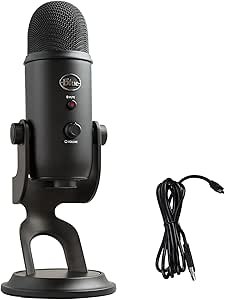 | Best for Streaming and Podcasting | Pickup Patterns: Cardioid, Omni, Bidirectional, Stereo | Connectivity: USB | Software: Blue VO!CE via Logitech G HUB | VIEW LATEST PRICE | See Our Full Breakdown |
| Maono PM320S Condenser PC Microphone with XLR Cable, Boom Arm, Pop Filter |  | Best Budget XLR Kit | Capsule: 16mm condenser | Polar Pattern: Unidirectional (cardioid) | Frequency Response: 20 Hz to 20 kHz | VIEW LATEST PRICE | See Our Full Breakdown |
| studio recording microphone | Connectivity | Polar Pattern | Frequency Response | Included Accessories |
|---|---|---|---|---|
| MAONO A04 Gen2 XLR/USB Condens | XLR and USB | Cardioid | 30Hz–16kHz | Pop filter, foam windscreen, shock mount, arm stand, USB cable |
| MAONO A04 USB Microphone | USB, USB Type-C | Cardioid | 30Hz–16kHz | — |
| MAONO AU-A04H USB Microphone K | USB, USB Type-C | Unidirectional | 30Hz–16kHz | — |
| Mackie EM-Series Large-Diaphra | XLR (requires 48V phantom power) | Cardioid | — | Shock mount, XLR cable |
| Upgraded Studio Recording Micr | — | Cardioid | 30Hz–16kHz | — |
| Audio-Technica AT2020 Cardioid | Wired XLR | Cardioid | — | — |
| Focusrite Scarlett Solo 4th Ge | USB-C | — | — | — |
| RØDE NT1 Signature Series Stud | XLR with phantom power | Cardioid | — | Shock mount, pop filter, XLR cable, dust cover |
| Logitech Blue Yeti USB Microph | USB | — | — | Desktop stand |
| Maono PM320S Condenser PC Micr | XLR with 48V phantom power | Unidirectional (cardioid) | 20 Hz to 20 kHz | Boom arm, shock mount, pop filter, windscreen, XLR cable |
More Details on Our Top Picks
MAONO A04 Gen2 XLR/USB Condenser Microphone Kit for PC Podcast Recording
The MAONO A04 Gen2 earns the top spot because it solves the problem most starter kits ignore: what happens when you outgrow USB. With dual XLR and USB connectivity, this mic works straight out of the box today, then plugs into an interface like the Scarlett Solo later without replacing anything. Compared with the original MAONO A04 USB, the Gen2’s real advantage is that upgrade path — the sound chipset and 16mm capsule are similar, but the flexibility is not. The bundled arm stand, shock mount, and pop filter mean the desk setup is handled in one purchase.
The tradeoffs are real, though. You’ll need to buy an XLR cable separately, and XLR mode requires phantom power from an interface or mixer. If you never plan to leave USB, the cheaper A04 below does nearly the same job for less.
Pros:- Dual XLR and USB output gives you a genuine upgrade path to interfaces and mixers
- 192kHz/24bit resolution is professional-grade for the category
- Complete accessory bundle including arm stand, shock mount, and pop filter
- Broad compatibility from PCs and phones to PS4/PS5 and mixers
Cons:- XLR cable is not included, adding a hidden cost to the interface upgrade path
- XLR mode requires 48V phantom power, so you can’t use it standalone with all mixers
- No Xbox compatibility
Best for: Podcasters and home studio builders who want a mic that grows with them from USB into an XLR interface setup
Not ideal for: Xbox gamers — the mic isn’t compatible — and buyers who will only ever record over USB and don’t need the dual connectivity
- Connectivity:XLR and USB
- Sampling Rate:192kHz/24bit
- Frequency Response:30Hz–16kHz
- Polar Pattern:Cardioid
- Capsule Size:16mm
- Included Accessories:Pop filter, foam windscreen, shock mount, arm stand, USB cable
- Compatibility:PC, laptop, audio interface, mixer, PS4/PS5, mobile phones
Our verdict“The most future-proof pick here — buy it once and it carries you from first recording to full interface-based studio.”
MAONO A04 USB Microphone, 192kHz/24Bit Condenser Mic Kit for PC Podcast
If the A04 Gen2 is about future-proofing, the original MAONO A04 is about value right now. You get the same 192kHz/24bit chipset and 16mm capsule, the same arm stand and shock mount bundle, at a simpler price of admission by skipping XLR entirely. That simplicity is the point: plug it into a laptop and you’re recording in minutes. Compared with the Mackie EM-91C later in this list, this kit wins on convenience — no interface, no phantom power, no extra purchases.
What you give up is longevity. When your ears improve and you buy a proper interface, this mic has nowhere to go — it’s USB-only. The fixed frequency ceiling of 16kHz also means less air in vocals than dedicated XLR condensers like the Audio-Technica AT2020. For a first mic, those are acceptable compromises; for a long-term studio centerpiece, they’re limiting.
Pros:- 192kHz/24bit recording quality punches above its price bracket
- All-in-one kit with arm stand, shock mount, and pop filter included
- True plug-and-play across PC, Mac, PS4/PS5, and phones
- Solid metal build that doesn’t feel like a disposable starter mic
Cons:- USB-only connectivity caps its lifespan once you outgrow beginner gear
- 16kHz frequency ceiling limits the top-end detail compared with XLR condensers
- Arm positioning takes fiddling before you find a quiet, stable setup
Best for: First-time podcasters, streamers, and voice-over beginners who want a complete desk setup in one box without buying an interface
Not ideal for: Producers planning to build around an audio interface — the USB-only design has no upgrade path
- Connectivity:USB, USB Type-C
- Sampling Rate:192kHz/24bit
- Frequency Response:30Hz–16kHz
- Polar Pattern:Cardioid
- Capsule Size:16mm
- Signal-to-Noise Ratio:70 dB
- Build:Metal construction
- Compatibility:PC, Mac, laptop, PS4/PS5, mobile phones
Our verdict“The smart budget choice for anyone who needs a full working studio kit today and doesn’t care about tomorrow’s interface.”
MAONO AU-A04H USB Microphone Kit with Headphones for PC, Podcast & Gaming
The MAONO AU-A04H occupies a specific niche: the buyer who wants monitoring included. Every other kit here leaves you listening through earbuds or desk speakers, which makes hearing your own levels a guessing game. This bundle pairs the familiar MAONO condenser with studio headphones with noise reduction, so you can hear exactly what the mic captures while you record. Compared with the MAONO A04, it’s the same core microphone concept, but the closed-back monitoring closes the feedback loop for beginners who don’t own headphones yet.
The catch is bundled economics. If you already own decent headphones, you’re paying for hardware you don’t need, and the headphones are fixed — no swapping for a better pair within this kit’s value. The 96dB signal-to-noise rating is respectable, but this remains a USB-first kit with the same ceiling as its siblings. Treat it as a complete entry point, not a modular system.
Pros:- Bundled studio headphones with noise reduction enable proper self-monitoring from day one
- 192kHz/24bit chipset matches the more expensive MAONO kits
- 96dB signal-to-noise ratio is strong for a USB kit
- Plug-and-play across computers, consoles, and phones
Cons:- Redundant for anyone who already owns headphones
- Multiple components make initial setup more involved than a simple USB stick mic
- Bulkier overall package is awkward for travel or cramped desks
Best for: Absolute beginners starting from zero who need both a microphone and monitoring headphones in a single purchase
Not ideal for: Buyers who already own studio headphones — the A04 or A04 Gen2 deliver the same mic value without redundant hardware
- Sampling Rate:192kHz/24bit
- Frequency Response:30Hz–16kHz
- Polar Pattern:Unidirectional
- Capsule Size:16mm
- Connectivity:USB, USB Type-C
- Signal-to-Noise Ratio:96 dB
- Weight:1.5 kg
- Compatibility:PC, Mac, laptop, PS4/PS5, mobile phones
Our verdict“The right buy when your studio consists of a laptop and nothing else — everything you need to hear and record arrives in one box.”
Mackie EM-Series Large-Diaphragm Condenser Microphone (EM-91C)
The Mackie EM-91C takes the opposite bet from every MAONO kit in this lineup: no USB, no bundled arm, no boom stand — just a proper XLR condenser with a shock mount and cable included. That focus pays off in sound. A large-diaphragm capsule running through an interface like the Focusrite Scarlett Solo produces a more natural, professional tone than any USB kit at this level can manage, and it’s a legitimate step on the road toward serious mics like the RØDE NT1 without the NT1’s price jump.
But the specialization cuts both ways. This mic requires an interface or mixer with phantom power to function at all, so the true cost includes that hardware. It also ships bare compared with the MAONO bundles — no stand, no pop filter, no headphones — and the cardioid-only pattern makes it sensitive to untreated room noise. In a bare-walled bedroom, the MAONO kits’ simplicity might actually serve you better.
Pros:- Large-diaphragm XLR design delivers more natural studio tone than USB kits
- Shock mount and XLR cable included, unlike many bare XLR mics
- Rugged build suited to both project and professional rooms
- Logical upgrade platform that pairs well with any interface
Cons:- Requires phantom power and an interface or mixer before it makes a sound
- No included stand, pop filter, or monitoring — accessories add up quickly
- Cardioid-only pattern picks up room reflections in untreated spaces
Best for: Home studio owners who already own (or are buying) an audio interface and want a genuine step-up XLR condenser
Not ideal for: Beginners without an interface — this mic produces no sound without phantom power and external gear
- Type:Large-diaphragm condenser
- Polar Pattern:Cardioid
- Connectivity:XLR (requires 48V phantom power)
- Included Accessories:Shock mount, XLR cable
- Build:Rugged metal construction
- Best Use:Home and project studio recording
Our verdict“The pick for buyers building a real signal chain — pair it with an interface and it outclasses every USB kit here on tone alone.”
Upgraded Studio Recording Microphone with Isolation Shield & Pop Filter for Podcasting and Music
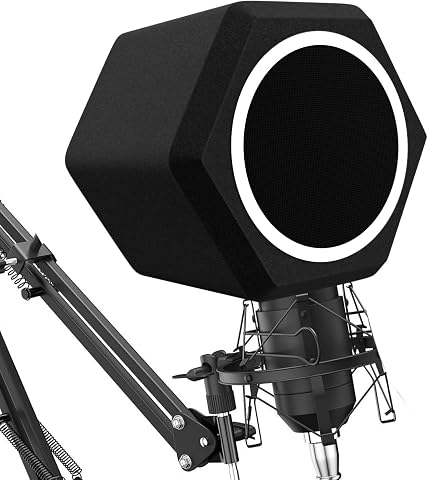
This kit’s differentiator isn’t the microphone — the specs are nearly identical to the MAONO A04 family — it’s the foldable isolation shield wrapped around it. In an untreated bedroom or a shared apartment, room reflections and background noise ruin more recordings than any mic spec ever will, and a 27.5-inch acoustic shield addresses that problem directly. No other entry in this lineup attacks room treatment, which makes this the practical choice where your recording space, not your budget, is the weak link.
The tradeoff is bulk and commitment. At 4.1 pounds with a footprint that dominates a small desk, this is the least portable option here, and folding the shield down for storage is a chore you’ll repeat if you record away from home. The 16kHz frequency ceiling also matches the budget USB kits rather than XLR alternatives like the Mackie EM-91C, so it’s a room-fix purchase, not a fidelity upgrade.
Pros:- Foldable isolation shield tames room reflections and background noise without acoustic panels
- Complete kit includes mic, pop filter, stand, and accessories
- Plug-and-play USB with PC, laptop, and smartphone support
- Three color options (black, rose gold, white) to match a visible setup
Cons:- Large footprint and 4.1-pound weight make it impractical for travel or cramped desks
- Microphone itself matches budget USB kits — the shield is the only real upgrade
- Multiple components make assembly more involved than a simple stick mic
Best for: Recording in echoey bedrooms, dorms, or shared spaces where untreated room noise is the main enemy
Not ideal for: Anyone with a properly treated space or a small desk — the shield adds bulk without adding fidelity you’d notice
- Sampling Rate:192kHz/24bit
- Frequency Response:30Hz–16kHz
- Polar Pattern:Cardioid
- Diaphragm Size:16mm
- Isolation Shield Size:27.55in x 10.23in
- Microphone Dimensions:6.3in x 1.96in
- Weight:4.1 lbs
- Colors:Black, Rose Gold, White
Our verdict“Buy this for the isolation shield, not the mic — it’s the room-noise fix for recorders who can’t treat their space.”
Audio-Technica AT2020 Cardioid Condenser Studio XLR Microphone
The AT2020 has earned its place as the default answer when someone asks for a studio condenser under a modest budget. Its custom low-mass diaphragm delivers a frequency response that extends down to 20 Hz, and its high SPL handling means it won’t fall apart in front of a loud guitar amp or energetic vocalist. Compared with the RØDE NT1 Signature, the AT2020 gives up some refinement and self-noise performance, but it costs far less and gets you most of the way there sonically. The tradeoff is bare-bones packaging: unlike the Maono PM320S, there’s no boom arm, shock mount, or even a cable in the box, so the real cost of ownership includes accessories. It’s also XLR-only with phantom power required, so it presupposes an interface.
Pros:- Extended frequency response reaching down to 20 Hz for full low-end detail
- High SPL handling tolerates loud sources without distortion
- Durable all-metal build that survives daily studio use
- Cardioid pattern provides solid isolation in untreated rooms
Cons:- Requires 48V phantom power, so it won’t work with simpler setups
- No included stand, mount, or cable — accessories cost extra
- XLR-only, with no USB option for direct computer connection
Best for: Home studio owners who already own an audio interface and accessories and want the best raw sound per dollar
Not ideal for: Complete beginners starting from zero — the missing stand, shock mount, and cable add up quickly, and phantom power is mandatory
- Polar Pattern:Cardioid
- Connectivity:Wired XLR
- Diaphragm:Custom-engineered low-mass
- Signal-to-Noise Ratio:74 dB
- Impedance:200 ohm
- Power Source:48V phantom power
- Construction:Metal
Our verdict“This pick makes the most sense for anyone with an interface who wants proven condenser sound without paying for accessories they already own.”
Focusrite Scarlett Solo 4th Gen USB-C Audio Interface Bundle
Every other entry here assumes you already own the gear around the microphone. The Scarlett Solo 4th Gen bundle flips that, packaging an interface, microphone, headphones, and a software suite into one purchase — the fastest route from empty desk to finished track. Its 120dB dynamic range and Air mode give vocals and acoustic guitars a polished lift that a bare USB mic like the Blue Yeti can’t match in a serious mixing context. The limitation is baked into the name: Solo. One mic preamp and one instrument input means no multi-person podcasts and no drum overheads. Compared with the AT2020, you’re trading upgradability for convenience — if you outgrow this setup, you’re replacing the interface too, not just adding a second mic.
Pros:- Everything needed to record is included: interface, mic, headphones, and software
- 120dB dynamic range delivers clean, studio-grade capture
- Air mode adds presence and character to vocals and guitars
- Plug-and-play USB-C connection works without driver hassle
Cons:- Single-channel design prevents multi-source recording
- Bundled microphone will likely be outgrown faster than the interface
- Requires a reasonably capable computer to run the included DAW software
Best for: Songwriters and solo musicians recording vocals plus one instrument who want everything in one box
Not ideal for: Podcast duos or bands recording multiple sources simultaneously — the single preamp is a hard ceiling
- Dynamic Range:120dB
- Connectivity:USB-C
- Inputs:One mic preamp, one instrument input
- Included Software:Pro Tools Intro+, Ableton Live Lite, Cubase LE, Hitmaker Expansion
- Bundle Contents:Interface, microphone, headphones, software
- Special Feature:Air mode for vocals and guitar
Our verdict“This is the smartest choice for a first-time recording musician who values a working studio on day one over piecemeal upgrading.”
RØDE NT1 Signature Series Studio Condenser Microphone
The NT1 Signature is the quiet achiever of this lineup — its ultra-low self-noise means silence between phrases stays genuinely silent, which matters enormously for intimate vocal takes and spoken-word work. Where the AT2020 leaves you sourcing a shock mount and cable separately, the NT1 arrives as a full vocal chain: shock mount, pop filter, XLR cable, and dust cover. Two decades of professional studio adoption backs up its neutrality — it captures what’s there rather than coloring it. The honest tradeoff against the Blue Yeti is convenience: no USB, no onboard controls, and phantom power is required. It’s also sensitive enough that poor handling technique or an untreated room will be faithfully reproduced, so it rewards a decent recording environment.
Pros:- Ultra-low self-noise produces exceptionally clean, detailed recordings
- Complete package includes shock mount, pop filter, XLR cable, and dust cover
- Neutral, professional-grade sound trusted in studios for over twenty years
- Cardioid pattern keeps room noise out of the recording
Cons:- Requires 48V phantom power and an XLR interface
- Sensitive to handling noise if the included mount isn’t used carefully
- Higher price point than value-oriented alternatives like the AT2020
Best for: Vocalists, streamers, and voiceover artists who want a professional, transparent condenser with a complete accessory package
Not ideal for: Anyone without phantom power or acoustic treatment — its sensitivity exposes room flaws and it won’t run without 48V
- Type:Large-diaphragm condenser
- Polar Pattern:Cardioid
- Self-Noise:Very low
- Connectivity:XLR with phantom power
- Included Accessories:Shock mount, pop filter, XLR cable, dust cover
- Color:Black
Our verdict“This option stands out for serious vocal work where silence between words matters and a complete, ready-to-mount package justifies the premium.”
Logitech Blue Yeti USB Microphone (Blackout)
The Blue Yeti isn’t trying to be a boutique condenser — it’s a versatility machine, and its four pickup patterns are the reason. Cardioid for solo commentary, omni for room ambience, bidirectional for two-person interviews, stereo for ensemble takes: no other mic in this roundup offers that flexibility, including the similarly priced Maono PM320S. Plug-and-play USB means no interface, no phantom power, no setup ritual — a genuine advantage over the XLR-only AT2020 for anyone who records at a desk rather than in a treated room. The compromises are real, though. The bundled desktop stand eats desk space, full features depend on Logitech’s G HUB software, and its raw sound lacks the depth and quietness of the RØDE NT1 for music production.
Pros:- Four switchable pickup patterns cover nearly every recording scenario
- Plug-and-play USB operation needs no interface or phantom power
- Blue VO!CE software adds broadcast-style effects and processing
- Onboard headphone monitoring, gain, mute, and pattern controls
Cons:- Full feature set depends on Logitech G HUB software
- Bulky desktop stand occupies significant desk space
- Sound quality falls short of dedicated studio condensers for music
Best for: Streamers, podcasters, and content creators who want pattern flexibility and zero-setup USB recording
Not ideal for: Musicians chasing polished vocal or instrument tracks — its sound quality trails dedicated XLR condensers like the NT1
- Pickup Patterns:Cardioid, Omni, Bidirectional, Stereo
- Connectivity:USB
- Software:Blue VO!CE via Logitech G HUB
- Onboard Controls:Headphone volume, pattern selection, mute, mic gain
- Included Accessories:Desktop stand
- Compatibility:PC, Mac
Our verdict“This model is better suited to creators who value flexibility and instant setup over the last word in audio fidelity.”
Maono PM320S Condenser PC Microphone with XLR Cable, Boom Arm, Pop Filter
Where the AT2020 sells you a bare microphone, the Maono PM320S sells you an entire broadcast station: boom arm, shock mount, pop filter, windscreen, and XLR cable all in the box. Its 16mm condenser capsule delivers respectable 20 Hz to 20 kHz response, and the shock mount plus cardioid pattern do genuine work isolating your voice from keyboard clatter and desk thumps. It won’t match the RØDE NT1 Signature in self-noise or refinement, but the gap is smaller than the price difference suggests, and the included boom arm alone saves a separate purchase. The catch is the same as any XLR mic: it needs a 48V phantom power source, so if you don’t already own an interface, the Focusrite Scarlett Solo bundle is the more sensible starting point.
Pros:- Complete accessory package: boom arm, shock mount, pop filter, windscreen, and XLR cable
- 16mm large capsule produces warm, broadcast-style sound
- Cardioid pattern plus shock mount effectively reject desk and room noise
- Durable all-metal construction throughout
Cons:- Requires an external 48V phantom power supply
- No USB or digital output limits portability and flexibility
- Capsule performance trails premium condensers like the NT1 in detail and quietness
Best for: Budget-conscious podcasters and streamers who already own an interface and want a fully accessorized XLR setup
Not ideal for: Anyone without phantom power or a mixer — the XLR-only design means an extra purchase before it makes a sound
- Capsule:16mm condenser
- Polar Pattern:Unidirectional (cardioid)
- Frequency Response:20 Hz to 20 kHz
- Signal-to-Noise Ratio:75 dB
- Impedance:200 ohm
- Connectivity:XLR with 48V phantom power
- Included Accessories:Boom arm, shock mount, pop filter, windscreen, XLR cable
Our verdict“This pick makes the most sense for creators who want everything mounted and ready out of one box without paying premium-mic prices.”
How We Picked
I judged every microphone through one lens: how well it captures studio-quality recordings for the money. That meant weighing sound character (detail, warmth, self-noise), build quality, connectivity (USB convenience versus XLR flexibility), and whether included accessories genuinely help or just pad the box. Connectivity shaped the ranking more than anything else — XLR microphones paired with an interface consistently outperform USB mics in headroom and noise floor, but they cost more upfront and add setup complexity, so USB picks earned their ranks on value and ease of use rather than raw fidelity.
I also penalized kits that bundle weak accessories, because a flimsy boom arm or muffled headphones can undermine an otherwise decent capsule. Products are ordered from the strongest overall studio value down to options that make sense only for narrower use cases — mobile beginners, tight budgets, or specific recording setups like the isolation-shield bundle.
| studio recording microphone | Polar Pattern | Included Accessories |
|---|---|---|
| MAONO A04 Gen2 XLR/USB Condens | Cardioid | Pop filter, foam windscreen, shock mount, arm stand, USB cable |
| MAONO A04 USB Microphone | Cardioid | — |
| MAONO AU-A04H USB Microphone K | Unidirectional | — |
| Mackie EM-Series Large-Diaphra | Cardioid | Shock mount, XLR cable |
| Upgraded Studio Recording Micr | Cardioid | — |
| Audio-Technica AT2020 Cardioid | Cardioid | — |
| Focusrite Scarlett Solo 4th Ge | — | — |
| RØDE NT1 Signature Series Stud | Cardioid | Shock mount, pop filter, XLR cable, dust cover |
| Logitech Blue Yeti USB Microph | — | Desktop stand |
| Maono PM320S Condenser PC Micr | Unidirectional (cardioid) | Boom arm, shock mount, pop filter, windscreen, XLR cable |
Factors to Consider When Choosing Studio Recording Microphones
Before picking a microphone from this list, step back and think about your room, your signal chain, and what you actually record. The biggest mistakes in this category happen before the mic ever ships.USB vs. XLR: Decide Before Anything Else
This single choice determines your entire budget and workflow. USB microphones bundle the preamp and converter into the mic itself, so you’re recording within minutes — but you’re locked into that built-in electronics chain forever, and you can’t upgrade one piece without replacing the whole mic. XLR microphones require an audio interface like the Scarlett Solo in this lineup, which adds cost but lets you swap mics, interfaces, or preamps independently over the years. A common mistake is buying a USB mic intending to ‘upgrade later,’ only to find nothing carries over. If you see yourself recording vocals or instruments seriously two years from now, starting XLR is usually cheaper than buying twice.
Your Room Matters as Much as Your Mic
Large-diaphragm condensers — which is nearly everything on this list — hear everything: your voice, your echoey walls, your refrigerator, and your neighbor’s dog. Buyers routinely spend more on a microphone than on acoustic treatment and end up with worse results than a cheaper mic in a treated corner. The isolation shield bundled with one pick on this list helps, but a closet of hanging clothes often outperforms it. If your recording space is untreated and noisy, prioritize a tighter cardioid pattern and consider dynamic-friendly positioning, or budget for foam panels before upgrading your capsule. This is why the Blue Yeti ranks lower for home studios despite its versatility — its omni and bidirectional modes will happily capture your room.
Self-Noise and Sensitivity Specs, Decoded
Two specs separate budget and professional condensers: self-noise (measured in dBA, lower is better) and maximum SPL handling. Self-noise becomes audible when you record quiet sources, apply heavy compression, or lift gain for soft speakers — the RØDE NT1’s famously low self-noise is why it earns the premium slot here. High SPL handling matters for loud sources like guitar amps or drum overheads, where a sensitive mic will distort. Sample-rate marketing like ‘192kHz/24-bit’ is far less meaningful; the capsule and circuitry determine sound quality, and no human ear benefits from 192kHz capture. Ignore resolution numbers, focus on noise floor and pattern.
Bundled Accessories: Genuine Value or Box Filler?
Several picks here arrive as kits, and the quality of the extras varies enormously. A sturdy boom arm is the accessory that genuinely changes your recordings — it lets you position the capsule correctly and kills desk-borne rumble. Pop filters matter for vocal work; foam windscreens do less. Headphones in budget kits (like the AU-A04H’s) are serviceable for monitoring but shouldn’t factor heavily into your decision. The trap is paying extra for a ‘complete studio bundle’ whose arm sags under a mic’s weight or whose shock mount transmits vibration. Evaluate kits by the mic first, then ask whether you’d buy the accessories separately at their implied value.
What You Record Should Drive Your Pick
A mic that flatters spoken word can sound thin on acoustic guitar, and vice versa. Podcasters and streamers need consistent proximity behavior and noise rejection more than detail. Singers benefit most from the low-noise, full-bodied condensers higher on this list. Instrument recordists should check SPL handling and consider whether a tighter pattern suits close-miking amps. Multi-person sessions are the one case where multi-pattern mics like the Yeti justify themselves, though one mic per speaker with separate tracks always sounds cleaner. Match the capsule to your primary source rather than chasing versatility you won’t use.
When to Pay More — and When Not To
The honest diminishing-returns curve in this category: the jump from budget kits to a mic like the AT2020 is audible to almost anyone; the jump from AT2020 to NT1 is real but subtler and depends on your room and interface being good enough to reveal it. Paying more makes sense when you have (or plan to add) an interface with clean gain and some acoustic treatment — otherwise the extra fidelity gets masked. Don’t pay premium prices for features tied to software ecosystems you won’t adopt, or resolution specs your chain can’t exploit. For a first mic, a well-built mid-tier condenser plus treatment money left over beats a flagship mic in a bare room every time.
Frequently Asked Questions
Do I need an audio interface, or can I skip it with a USB microphone?
You can absolutely skip one with USB mics like the Blue Yeti or MAONO A04 — they contain their own preamp and converter, and for voice work the convenience is real. The catch is that you’re buying the entire signal chain at once, with no ability to upgrade any single part later, and budget USB circuitry tends to have a higher noise floor when you push the gain. An XLR mic plus an interface like the Scarlett Solo costs more upfront but every component carries forward: keep the mic when you upgrade the interface, keep both when you add a second mic. If you’re recording solo voice in a decent room and value simplicity, USB is a legitimate choice, not a compromise. If you envision ever recording two sources at once or upgrading piecemeal, start XLR.
Is the RØDE NT1 worth nearly double the price of the Audio-Technica AT2020?
It depends on whether the rest of your setup can reveal the difference. The NT1’s self-noise is low enough that it essentially disappears, even under heavy compression on quiet vocal takes — that’s its main technical advantage, along with a smoother, more forgiving top end. The AT2020 remains one of the best values in audio and handles most home-studio work well, but its slightly brighter character and higher noise floor show up on soft, intimate vocals. If you’re podcasting or recording amplified instruments, the gap will be barely audible. If you record acoustic vocals professionally and have a treated room and a decent interface, the NT1’s upgrade is one you’ll hear for years. Skip it if the NT1 would be the only quality link in a noisy, untreated chain.
Are the complete microphone kits actually a good deal for beginners?
Usually yes, with caveats. Kits like the Maono PM320S and AU-A04H include a boom arm, pop filter, and sometimes headphones, which are things a beginner genuinely needs and would otherwise buy piecemeal — the total is almost always cheaper than assembling separately at the entry level. The tradeoff is that the mic itself is typically the weakest part of the bundle, and the accessories are built to a price: arms may sag over time and included headphones are basic. My advice is to treat these kits as a low-risk way to learn mic technique, positioning, and monitoring, then upgrade the capsule once you know what your recordings actually need. For someone testing whether recording will stick, that’s a smarter first purchase than a bare professional mic with nothing to mount it on.
Why does my microphone recording sound echoey and roomy, and will a better mic fix it?
Almost certainly not — that echo is your room, and a better condenser will capture it more faithfully, making the problem worse. Large-diaphragm condensers are extremely sensitive and pick up reflections off bare walls just as clearly as your voice. The fixes, in order of impact: record in a smaller, softer space (a closet or a corner with curtains works surprisingly well), get close to the mic and reduce gain, add absorption panels at the first reflection points, and use a tight cardioid pattern pointed away from reflective surfaces. An isolation shield like the one bundled with one pick here helps a little but can’t treat the whole room. Spend on your space before spending on a fancier capsule — a budget mic in a treated corner beats a premium mic in a tile bathroom every time.
What does a dual USB/XLR microphone like the MAONO A04 Gen2 actually get me?
It buys you a bridge between two stages of your setup. Over USB, the mic works like any plug-and-play option — power and audio over one cable, ideal for starting out with no interface. Over XLR, you connect to an interface later and gain the advantages of a proper preamp, more gain flexibility, and the ability to keep the mic when you upgrade everything around it. The honest tradeoff is that the mic is designed to a price point across both modes, so it won’t match a dedicated XLR condenser like the AT2020 through an interface. But for someone who wants to buy once and grow into an interface setup without discarding their first mic, it’s the most future-proof budget option in this lineup. If you already own an interface, a dedicated XLR mic makes more sense.
Conclusion
Here’s how the decision shakes out by buyer type. Best overall goes to the Audio-Technica AT2020 — studio-grade sound and build at a price most home recorders can justify. Best value belongs to the MAONO A04 Gen2, whose dual USB/XLR design means your first mic doesn’t become obsolete when you upgrade. Best premium is the RØDE NT1 Signature Series, the pick for serious vocal work — provided you have an interface and a treated room to let it shine. Best for beginners is the Maono PM320S kit, which hands you everything you need to start recording on day one for minimal investment. For specific needs: the Blue Yeti for multi-person or pattern-experimenting creators, the Scarlett Solo bundle for anyone building a proper XLR chain from scratch, and the isolation-shield bundle for recorders in untreated spaces. Whatever you choose, remember that your room and positioning shape your sound as much as the capsule — buy accordingly.
Fall Picks
fall essentials
As an affiliate, we earn on qualifying purchases.




![NoCap - Angels Smile [Official Music Video]](https://rhythmfailure.com/wp-content/uploads/2026/09/nocap-angels-smile-official-music-video-featured-260x140.jpg)