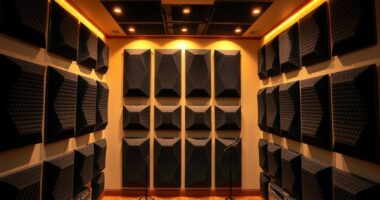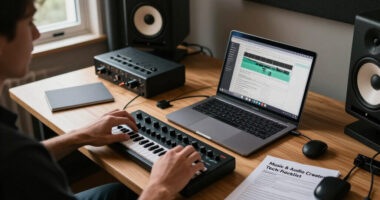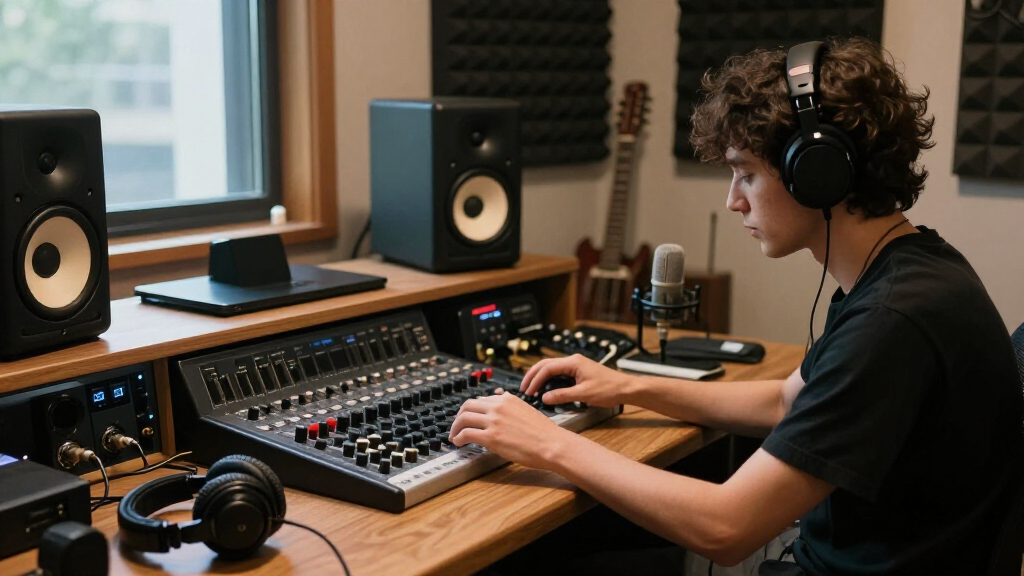

Whether you’re a budding home studio enthusiast or a seasoned professional, assembling the right music and audio equipment is essential for achieving high-quality sound. This checklist is designed to guide you through the most important gear needed for a functional and inspiring workspace, focusing on key components that influence your overall production quality. From monitors to software, each section highlights what to consider when making your selections.

Get audio and creator gear delivered free with Prime
- Fast, free delivery on millions of items
- Prime Video, Amazon Music and more included
- Member-only deals all year
Organized into clear categories, this guide helps you compare options based on your specific needs and budget. Use it as a reference to identify the features that matter most—such as compatibility, sound quality, and durability—so you can make informed decisions. Remember, the goal is to build a setup that complements your workflow and enhances your creative process without overwhelming your space or budget.
To get started, review each section carefully, paying close attention to the “lookFor” tips to spot the best features. Whether you’re upgrading existing gear or starting fresh, this checklist will help you prioritize essential equipment and avoid common pitfalls like overbuying or mismatched components. Happy shopping, and enjoy creating with confidence!
Studio Monitors
The studio monitors are the cornerstone of any music production setup, offering accurate sound reproduction that helps you craft your mixes with confidence. The Yamaha HS8 8-Inch Powered Studio Monitor Pair is renowned for its clarity and balanced frequency response, making it a popular choice for both beginners and professionals. When selecting monitors, consider the size of your room—larger spaces may benefit from bigger drivers, while smaller rooms might favor more compact options. Proper positioning and calibration are critical to getting the best sound from your monitors, so invest time in setting them up correctly.
Common buying mistakes include choosing monitors that are too large or too small for your space, neglecting room acoustics, and ignoring connectivity options. Be sure to check compatibility with your audio interface and other gear. Look for features like flat frequency response, good bass response, and reliable build quality. It’s also wise to consider whether the monitors are powered or require an external amp, depending on your setup preferences.
What to look for:
- Flat frequency response
- Suitable size for your room
- Reliable connectivity options
- Good build quality
- Accurate sound reproduction
Yamaha HS8 8-Inch Powered Studio Monitor Pair – Black

The Yamaha HS8 studio monitors feature an 8-inch cone woofer and a 1-inch dome tweeter, delivering a frequency response of 38Hz to 30kHz. They are powered by a bi-amp system with a total of 120W, suitable for high-performance audio monitoring in professional or home studios.
Pros:
- High-quality sound with wide frequency response
- Powerful 120W amplification for clear audio
- Suitable for professional studio use
Cons:
- May be expensive for casual users
- Large size requires ample space
Best for: Professional-grade sound accuracy
Not ideal for: Small or irregularly shaped rooms
Bottom line: Choose monitors that match your space and needs.
Microphones
While this guide doesn’t feature specific microphone models, it’s important to understand that microphones are highly versatile tools that vary based on your recording goals. Whether you’re capturing vocals, instruments, or ambient sounds, selecting the right microphone involves considering type, polar pattern, and connectivity. For vocals and speech, condenser microphones tend to offer greater sensitivity and detail, whereas dynamic microphones are often preferred for louder sources or live environments. Compatibility with your audio interface and the intended use case should guide your choice.
Many buyers make the mistake of choosing microphones based solely on price or brand reputation without considering their specific needs. For example, a microphone with a cardioid polar pattern reduces background noise, making it ideal for home studios. Proper placement and acoustic treatment are also crucial to maximize your microphone’s performance. Don’t forget to factor in the necessary accessories, such as pop filters and shock mounts, to improve your recordings.
What to look for:
- Appropriate polar pattern (cardioid, omni, etc.)
- Compatibility with your audio interface
- Suitable for your recording environment
- Good reviews for durability and sound quality
- Includes necessary accessories
Audio Interfaces
The audio interface acts as the bridge between your microphones, instruments, and your computer, converting analog signals into digital data. The LyxJam 2×2 USB Audio Interface Bundle with Presonus Eris 3.5 Monitors offers a compact yet capable solution for home studios and portable setups. When selecting an audio interface, consider the number of inputs and outputs you need, as well as compatibility with your computer’s operating system. Features like high-resolution audio, low latency, and reliable drivers are essential for smooth recording and playback.
Many users overlook the importance of the interface’s build quality and the quality of its preamps, which directly impact your sound. A good interface should provide clean, transparent sound with minimal noise. Check whether it supports your preferred recording software, and consider future expansion—more inputs might be needed as your projects grow. Keep in mind that bundled monitors or headphones can be a cost-effective way to get started, but investing in quality gear pays off in the long run.
What to look for:
- Compatible with your computer and software
- Adequate number of inputs and outputs
- High-resolution audio support
- Low latency performance
- Reliable drivers and build quality
LyxJam 2×2 USB Audio Interface Bundle with Presonus Eris 3.5 Monitors, Bluetooth

This all-in-one studio bundle includes a 2×2 USB audio interface with high-resolution recording capabilities, a pair of Presonus Eris 3.5 monitors for accurate sound, a Bluetooth MIDI pad controller for beat making, a condenser microphone with accessories, studio headphones, an isolation shield, and a software suite for recording and editing. Designed for home studios, podcasters, and content crea
Pros:
- High-quality 24-bit/192 kHz audio recording
- Versatile bundle suitable for home studios and content creators
- Includes professional monitors and accessories for comprehensive setup
- Wireless MIDI controller adds creative flexibility
Cons:
- May be complex for beginners due to multiple components
- Limited to Windows and macOS, no mention of other OS support
- Some users might find the setup process involved
Best for: Home studio recording and streaming
Not ideal for: Limited input/output options
Bottom line: Select an interface that matches your current and future needs.
Headphones
The studio headphones are vital for accurate mixing and detailed listening during production. The HD 480 PRO Professional Closed-Back Studio Headphones are known for their flat frequency response and comfortable fit, making them suitable for long sessions. When choosing headphones, prioritize models that offer a closed-back design to isolate sound and prevent bleed into microphones. Comfort is also key—look for adjustable headbands and soft ear cups to ensure you can work for hours without fatigue.
Many buyers make the mistake of selecting headphones based on style or brand alone, neglecting sound accuracy. For critical listening, flat or neutral frequency responses are preferred over consumer-grade headphones that emphasize bass or treble. Compatibility with your device and durability are also important considerations. Remember to test fit and comfort before purchasing, especially if you’ll be wearing them for extended periods. Proper storage and maintenance will extend the lifespan of your headphones.
What to look for:
- Flat or neutral frequency response
- Comfortable, adjustable fit
- Good noise isolation
- Durable construction
- Compatibility with your gear
HD 480 PRO Professional Closed-Back Studio Headphones, Black
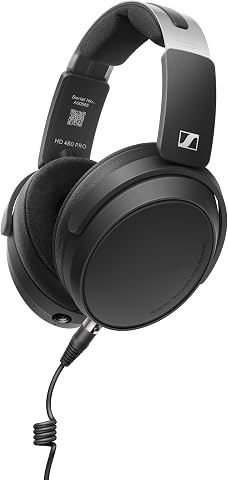
These professional closed-back studio headphones deliver accurate, full-spectrum sound with advanced drivers and a lightweight design for all-day comfort. They feature noise control, versatile connectivity, and durable construction, making them suitable for mixing, monitoring, and mobile production.
Pros:
- Accurate, full-spectrum sound quality
- Comfortable for extended wear
- Versatile connectivity options
Cons:
- May be expensive for casual users
- Requires careful handling due to delicate components
Best for: Mixing and detailed audio editing
Not ideal for: For casual or casual listening only
Bottom line: Prioritize sound accuracy and comfort in your headphones.
Sound Treatment
Music Software
The music notation software you choose can greatly influence your composition and arrangement process. The Sibelius Ultimate Music Notation Software Annual Subscription offers comprehensive features for scoring, editing, and sharing your music. When selecting software, consider its compatibility with your operating system, ease of use, and integration with other digital tools. Advanced features like playback, MIDI support, and cloud collaboration can streamline your workflow and enhance your creative output.
Common mistakes include choosing software that is too complex for your skill level or lacking necessary features. It’s important to evaluate whether the software supports your preferred music notation style and whether it offers sufficient export options for your projects. Subscriptions can be cost-effective, providing access to updates and new features, but ensure you understand the renewal terms. Also, take advantage of trial versions to test usability before committing to a purchase.
What to look for:
- Compatibility with your OS
- Intuitive interface
- Rich feature set (playback, MIDI, etc.)
- Good export and sharing options
- Regular updates and support
Sibelius Ultimate Music Notation Software Annual Subscription

Sibelius Ultimate is professional music notation software available via a 1-year subscription. It offers features like automatic chord symbol recognition, an improved Inspector window, and support for MIDI input, helping musicians compose and edit scores efficiently.
Pros:
- Includes latest features with upgrade support
- User-friendly Inspector for editing
- Supports MIDI input for chord recognition
Cons:
- Requires online activation and download
- Subscription-based, not a one-time purchase
Best for: Professional music composition
Not ideal for: Simplistic or limited features
Bottom line: Choose software that enhances your creative process and suits your workflow.
When approaching your music studio setup, start by prioritizing essential gear within your budget to ensure you build a solid foundation. Focus on quality components that will serve your current needs and allow room for future upgrades. Remember, the right equipment can inspire your creativity and improve your overall production quality, so take your time to research and select wisely.
With this checklist as your guide, you’re well-equipped to make confident purchasing decisions. Enjoy the process of assembling your studio, and most importantly, keep creating and experimenting. Your ideal music setup is within reach—happy shopping!
Halloween Picks
halloween
As an affiliate, we earn on qualifying purchases.