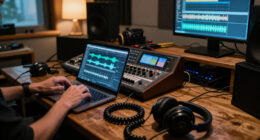
Searching for the best cue mix headphone mixers in 2026? These devices allow multiple users to customize their headphone mixes, essential for live performances, recording, or streaming. The PreSonus HP60 stands out as the best overall choice, offering versatile 6-channel mixing with reliable build quality. For those on a budget, the 2 Channel Stereo Audio Mixer provides simple, effective mixing at a low price. Meanwhile, the Behringer HA6000 suits larger setups with its extensive 6-channel capacity. The main tradeoffs involve balancing ease of use, channel count, and price. Continue reading for a detailed breakdown of these options and how to pick the right cue mix mixer for your needs.

Get audio and creator gear delivered free with Prime
- Fast, free delivery on millions of items
- Prime Video, Amazon Music and more included
- Member-only deals all year
Complete the kit


Key Takeaways
- Higher channel count mixers like the Behringer HA6000 are ideal for larger setups requiring multiple headphone mixes.
- Build quality and durability become more critical with frequent use or professional environments.
- Simple, compact mixers such as the 2-channel stereo models work best for small-scale or portable needs.
- USB and digital connectivity options add convenience but may increase cost and complexity.
- Price often reflects feature set—more channels and advanced features typically mean a higher investment.


More Details on Our Top Picks
MAONO G3 Gaming Audio Mixer with Map Any Audio Sources for PC Streaming
The MAONO G3 stands out for its all-in-one design tailored to streamers, gamers, and content creators who need flexible control over multiple audio sources. Unlike the PreSonus HP60, which is better suited for professional studio environments, the G3’s customizable faders and submixes make live audio management more intuitive. Its built-in XLR with phantom power ensures clear voice quality, while dual USB-C connectivity simplifies multi-PC setups. However, its Windows-only compatibility and focus on streaming limit its use for high-end studio recordings. The RGB lighting and sound pads add interactive appeal, but may be superfluous for non-gaming tasks. This pick makes the most sense for streamers who prioritize ease of use and aesthetic features, accepting some compatibility constraints.
Pros:- Flexible management of multiple audio sources with customizable faders
- Built-in XLR input with phantom power for clear voice capture
- Dual USB-C ports streamline multi-PC setups
- Interactive features like mute buttons and RGB lighting
Cons:- Primarily designed for Windows; Mac compatibility may be limited
- Focus on streaming features may not meet demanding studio recording needs
- Requires compatible microphones with sufficient gain
Best for: Streamers and content creators who want flexible, all-in-one audio management during live broadcasts
Not ideal for: Professional studio engineers needing advanced recording features or Mac users who may face setup issues
- Input Types:XLR, USB-C
- Number of Faders:4
- Submixes:3
- Phantom Power:48V
- Preamp Gain:up to 57 dB
- Features:Mute buttons, customizable sound pads, RGB lighting, direct monitoring, AI noise reduction
Our verdict“An excellent choice for streamers seeking versatile, easy-to-use audio mixing tailored for live content, with some platform limitations.”
PreSonus HP60 6-Channel Headphone Amplifier and Mixer
The PreSonus HP60 offers robust, rack-mountable power for multi-user monitoring, making it ideal for studio engineers and live sound setups. Compared with the B0F5QCGKLG 8-channel amplifier, the HP60’s six independent channels provide ample control for smaller groups, but lack the extensive outputs of the larger unit. Its rugged steel chassis and individual level controls promote durability and precision. However, its limited number of channels and absence of digital or wireless connectivity restrict its scalability for larger or more modern setups. This unit is perfect for professional environments where reliability and sound clarity matter most, but less so for casual or portable use.
Pros:- Six independent headphone amplifiers with individual volume controls
- Durable, rack-mountable steel chassis for professional environments
- Multiple input and output options for flexible connectivity
- Reliable, low-noise operation
Cons:- Limited to six channels, not suitable for large groups
- No digital or wireless connectivity options
- Requires rack space and installation which may be cumbersome for casual users
Best for: Studio engineers or live sound technicians needing reliable, high-quality multi-channel headphone distribution
Not ideal for: Small home studios or portable setups requiring more channels or wireless features
- Number of headphone channels:6
- Power per channel:150 mW
- Input channels:2 stereo with Mix control and Mute
- External line inputs:6 stereo ¼”
- Line outputs:6 stereo ¼”
- Chassis:Steel, 1U rack-mountable
Our verdict“A dependable choice for professional settings where multi-channel headphone distribution requires durability and precision, with limited scalability.”
2 Channel Stereo Audio Mixer – 3.5mm Mini Mixer with Dual Volume Control, Aluminum Shell, 2-in-1 Out for PC Headphones Speakers and Live Streaming
This 2-channel mini mixer offers a straightforward solution for users who need to connect two audio sources to a single output, making it ideal for home offices or casual streaming. Its plug-and-play design simplifies setup, and the aluminum shell adds durability. Unlike the 8-channel distribution amplifier, it’s limited to just two sources, which may be enough for simple live streams or personal use but less flexible for multi-mic or multi-instrument setups. Its independent volume controls are convenient, but the absence of additional features like EQ or effects limits its versatility. It’s best suited for users who prioritize simplicity and portability over extensive routing options.
Pros:- Simple, plug-and-play operation with minimal setup
- Durable aluminum shell for long-lasting use
- Independent volume controls for each source
- Includes necessary cables and external power supply
Cons:- Limited to two audio sources, restricting flexibility
- Requires external power for optimal operation
- No built-in EQ, effects, or advanced features
Best for: Casual streamers or home users needing a simple, portable mixer for two audio sources
Not ideal for: Professional broadcasters or multi-mic applications requiring more complex routing and effects
- Number of Channels:2
- Connectivity Technology:Auxiliary, USB
- Power Source:USB-C
- Output Connector Type:3.5mm Audio
- Audio Input:3.5mm Audio
- Item Weight:0.14 kg
Our verdict“A practical, no-fuss mixer for basic dual-source audio needs, with portability and simplicity as key advantages.”
8-Channel Headphone Mixing Distribution Amplifier with Mono/Stereo Modes and 16 Outputs
The 8-channel amplifier excels in environments where multiple users need independent control, such as recording studios or live event monitoring. Compared to the PreSonus HP60, which is more compact and suited for smaller setups, this unit offers twice the outputs and supports up to 16 headphones, making it ideal for larger groups. Its dual input modes and real-time LED meters enhance monitoring accuracy, though the complexity can challenge beginners. Its heavy-duty rack-mount design and professional-grade sound quality justify its higher price point. This amplifier is perfect for professional environments requiring extensive routing and high-volume distribution, but overkill for small or casual setups.
Pros:- Supports up to 16 headphones with independent volume control
- High-quality, low-distortion audio
- Rack-mountable for seamless integration into professional setups
- Real-time LED level monitoring for precise control
Cons:- Complex operation may be intimidating for beginners
- No wireless or digital connectivity options
- Size and weight may be impractical for portable use
Best for: Large studios or live venues needing multi-user headphone monitoring with independent control
Not ideal for: Small home studios or casual users who don’t require many outputs or advanced features
- Number of channels:8
- Outputs:16 headphone outputs
- Input modes:Mono/Stereo
- Rack size:1U
- Headphone load support:8Ω
- LED meters:6-segment for all channels
Our verdict“A robust, high-capacity distribution amp designed for large-scale professional environments where multiple headphones need independent control.”
2 in 4 Channel Stereo Headphone Amplifier with 3.5mm Input and Output
This compact 2-in, 4-out amplifier offers a portable solution for small groups, bands, or stage setups, allowing four users to listen simultaneously from two sources. Its high-power stereo amplification maintains clarity at high volumes, making it suitable for stage or studio use. Compared to the larger PreSonus HP60, it’s far more portable but less feature-rich, lacking individual channel controls or digital connectivity. The need for an external adapter for 6.35mm headphones might be an inconvenience, but its small footprint makes it ideal for on-the-go scenarios. This product fits users who need quick, reliable multi-user listening without complex routing or extensive controls.
Pros:- Allows four users to listen simultaneously with independent volume controls
- High-quality, high-power stereo output
- Compact, portable design
- Easy to set up and operate
Cons:- Requires an adapter for 6.35mm headphones
- Limited to stereo input/output only
- No built-in battery, needs external power
Best for: Stage performers or mobile musicians requiring a compact, high-power headphone splitter
Not ideal for: Home studio owners or professionals needing detailed control over each channel or more inputs
- Input:3.5mm stereo
- Output:4 channels, 3.5mm or 6.35mm (with adapter)
- Power:12V 1A (adapter included)
- Dimensions:6.7 x 2 x 1.26 inches
- Weight:7.8 oz
- Channels:2 in, 4 out
Our verdict“A portable, high-power splitter ideal for small groups or live stage applications where simplicity and power are priorities.”
Redco RED-200 Little Red Cue Box Headphone Distribution
The Redco RED-200 Little Red Cue Box excels as a dedicated headphone distribution amplifier in professional environments, offering multiple outputs that simplify complex setups. Compared with the Behringer HA6000, it provides straightforward audio distribution without the bells and whistles like individual EQs, making it more streamlined but less feature-rich. Its main tradeoff is the sparse information on specifications, which could be a concern for precise integration. This makes it ideal for studios or live stages where reliable, simple distribution is needed and detailed control is less critical.
Pros:- Multiple headphone outputs for large groups
- Reliable, clear audio distribution
- Designed for professional environments
Cons:- Limited available information on detailed features
- No user reviews to gauge performance
Best for: Audio engineers and stage technicians who need reliable multi-headphone distribution in professional settings
Not ideal for: Home users or casual podcasters looking for versatile mixing features or individual channel control
- Number of Outputs:Multiple
- Audio Quality:High-fidelity
Our verdict“This product suits professionals who prioritize straightforward, dependable headphone distribution over advanced mixing features.”
LiNKFOR 3.5mm Audio Mixer, 2-Channel Stereo Active Mixer with Gold-Plated Connectors, USB-C Powered, Plug & Play for PC, Phone, Tablet, MP3, Echo Dot
The LiNKFOR 3.5mm Audio Mixer makes a compelling choice for quick, portable dual-source mixing, especially for users who need a no-fuss solution for two audio inputs. Unlike the LZSIG Mini Mixer, which offers more channels, the LiNKFOR’s simplicity is its strength—ideal for blending two devices into one headphone feed. However, its line-level only design and potential ground-loop hum are tradeoffs that users should consider. It’s best suited for casual use or small desktop setups where straightforward control and compactness matter most.
Pros:- High-quality gold-plated connectors
- Plug-and-play with included cables
- USB-C powered for wide compatibility
Cons:- Limited to line-level signals only
- Possible ground-loop hum without dedicated power
Best for: Podcasters, streamers, or mobile users needing quick, two-input mixing with minimal setup
Not ideal for: Musicians requiring multi-channel or microphone support, as it lacks mic inputs and advanced features
- Channels:2
- Connectivity:3.5mm stereo
- Power Source:USB-C
- Dimensions:3.93″D x 2.75″W x 0.66″H
- Weight:0.1 kg
Our verdict“This mixer is perfect for users seeking a portable, easy-to-use solution for combining two audio sources without complex features.”
LZSIG Mini Audio Mixer, 4-Channel, Ultra Low-Noise, 4 IN 1 OUT
The LZSIG Mini Audio Mixer offers four channels, making it more versatile than the LiNKFOR for users with multiple audio sources like keyboards, guitars, or electronic drums. Its ultra-low noise design ensures clean output, which is a step above basic mixers like the Cooidea. The main tradeoff is the need for an external power supply, which reduces portability and adds setup complexity. This pick makes the most sense for musicians or content creators who need multiple inputs with high-quality sound in a compact form.
Pros:- Supports up to four audio sources
- Ultra-low noise performance
- Supports mono and stereo modes
Cons:- Power supply sold separately
- Limited user reviews available
Best for: Musicians or content creators managing several audio sources in a small studio or on-stage environment
Not ideal for: Casual users or those seeking built-in power supplies and simple stereo mixing only
- Channels:4
- Input Types:1/4″ and 1/8″ TRS
- Output:Mono, Stereo
- Power:12V external
- Dimensions:3.14″D x 5.39″W x 1.77″H
Our verdict“This mixer is well-suited for multi-source audio setups demanding high clarity and low noise in tight spaces.”
Behringer HA6000 6-Channel High-Power Headphone Mixing and Distribution Amplifier
The Behringer HA6000 stands out with its ability to support up to twelve headphones with individual mixes, making it ideal for studio or stage environments where multiple users need personalized audio. Its built-in EQ and LED meters provide extra control, surpassing the basic distribution capabilities of the Redco RED-200. The complexity of its setup and lack of wireless features can be a barrier for beginners. This device is best for professional settings where detailed control and high power are priorities, rather than simple distribution.
Pros:- Supports up to 12 headphones with individual mixes
- High-power amplification with low noise
- Includes EQ and LED meters for precise control
Cons:- Complex setup for beginners
- No wireless connectivity or Bluetooth
Best for: Studio engineers or stage managers overseeing large groups needing individual headphone mixes
Not ideal for: Solo creators or casual users who don’t need multiple individual mixes or advanced features
- Channels:6
- Headphone Outputs:12
- Input Types:¼” and XLR
- EQ:2-band per channel
- Noise Level:Ultra-low
Our verdict“This mixer is ideal for professional environments demanding multi-user, individually tailored headphone monitoring.”
Cooidea 2 Channel Stereo Mini Audio Mixer
The Cooidea 2 Channel Stereo Mini Audio Mixer offers a simple, compact solution for combining two stereo audio sources with high fidelity and minimal noise, making it perfect for on-the-go use. Its stylish aluminum housing and USB power make it highly portable, but its limited features mean it’s not suitable for complex setups or microphone integration, unlike the LZSIG. This device makes the most sense for users who need a small, reliable mixer for basic stereo blending without extra features or inputs.
Pros:- Compact and durable metal design
- High-quality sound with low distortion
- USB-powered for convenience
Cons:- No microphone or additional feature support
- Limited to stereo only
Best for: Travelers, podcasters, or casual users who need a small, portable stereo mixer for two sources
Not ideal for: Musicians or streamers requiring microphone support or multi-channel mixing
- Channels:2
- Input Interface:3.5mm stereo
- Output Power:125mW (@32 ohms)
- Dimensions:33mm x 28mm x 13mm
- Power Supply:USB
- Total Harmonic Distortion:0.001%
Our verdict“This mini mixer is perfect for portable stereo blending where simplicity and quality are key, but it isn’t suitable for microphone or multi-input needs.”
Mini Audio Mixer, 4 Channel Stereo Line Mixer with 1/4″ & 1/8″ Inputs, Independent Control, Stereo/Mono Switch for Guitars, Microphones, Keyboards
This mini mixer stands out for its versatility in supporting both 6.35mm and 3.5mm inputs, making it ideal for integrating a variety of instruments and microphones in small setups. Compared with larger or more feature-rich options like the Redco RED-200, it offers a more portable form factor without sacrificing essential control. Its independent volume controls and stereo/mono switch provide clear advantages for fine-tuning sound, but its limited power and absence of effects restrict its use to basic mixing tasks. The durable metal shell ensures longevity, though it’s not suited for larger venues or complex audio environments. Overall, this model is best for musicians, podcasters, or home studio enthusiasts needing a straightforward, reliable mixer without extra bells and whistles.Pros:- Supports multiple input types with dual plug compatibility
- Independent volume controls for each channel
- Low-noise, high-quality audio output
- Durable metal construction with anti-interference shielding
Cons:- Limited to small-scale or personal use
- No built-in effects or advanced features
- Requires external power supply, which adds inconvenience
Best for: Musicians, podcasters, or small studio users who need a compact, versatile mixing solution.
Not ideal for: Large-scale live sound setups or users requiring built-in effects and advanced features, due to its basic feature set and limited scalability.
- Channels:4
- Input types:1/4″ (6.35mm) and 3.5mm (1/8″)
- Mode switching:Stereo/Mono
- Power supply:5V
- Material:Metal shell
- Included cable:Gold-plated 6.35mm audio cable
Our verdict“This mixer is perfect for small, portable setups where simplicity and quality matter most.”
Stereo Sound Mixer, 4 Channel Headphones Amplifier with Separate Volume Controls
This stereo mixer excels in delivering high-quality sound with ultra-low noise, making it a solid choice for headphone monitoring, especially compared to multi-channel mixers like the Redco RED-200, which is more suited to larger headphone distribution. Its independent volume controls for each channel enable precise adjustments, ideal for scenarios where multiple performers need personalized mixes. The aluminum alloy shell offers excellent durability, but its stereo-only output limits versatility for those who need mono or more complex routing. Its interface, using a standard 3.5mm stereo jack, makes it simple to connect to various devices, but the lack of detailed power specifications could be a concern for continuous use. Overall, this model fits well with musicians or engineers focusing on headphone clarity and individual control.Pros:- Independent volume controls for each channel
- High sound quality with ultra-low noise
- Sturdy aluminum alloy construction
- Suitable for headphones and speakers
Cons:- Limited to stereo sound mixing
- No detailed power supply information
- May be complex for beginners unfamiliar with audio routing
Best for: Musicians, audio engineers, or broadcasters focused on headphone mixing and personal monitoring.
Not ideal for: Users needing multi-channel or speaker output options, as it only offers a single stereo output and no more advanced routing features.
- Channels:4 input channels
- Output:1 output channel
- Interface:3.5mm stereo
- Material:Aluminum alloy
Our verdict“This mixer is best suited for those prioritizing headphone clarity and individual control in a compact, durable package.”

How We Picked
These products were evaluated based on performance, ease of use, build quality, connectivity options, and value for money. Priority was given to devices that balance functionality with user-friendly controls, especially for live or studio environments. We also considered how well each mixer handled multiple headphone outputs and whether they offered reliable audio quality. The ranking reflects a combination of versatility, durability, and affordability, ensuring each pick serves a specific audience—whether beginners, professionals, or those needing larger setups.Factors to Consider When Choosing Cue Mix Headphone Mixers
Choosing the right cue mix headphone mixer depends on several key factors that influence usability, sound quality, and value. Understanding these considerations helps prevent common pitfalls like overpaying for unnecessary features or selecting an underpowered device that can’t handle your needs. Below are the most important aspects to keep in mind when selecting a cue mix mixer.Channel Capacity and Expandability
Consider how many individual headphone mixes you’ll need now and in the future. Smaller setups might only require 2 to 4 channels, but larger groups or bands may need 8 or more. Some mixers allow for expansion or multiple outputs, which can save money long-term. Think about your current setup and potential growth to avoid needing an entirely new mixer later.
Connectivity and Compatibility
Check whether the mixer supports your preferred input sources, whether via analog, USB, or digital. USB-powered models offer plug-and-play ease, especially for streaming or computer-based work, but might lack analog outputs. Compatibility with your devices ensures seamless integration without additional adapters or converters, which can introduce noise or latency.
Ease of Use and Controls
Simplicity is vital, especially if multiple users need to adjust their mixes quickly. Look for intuitive controls, such as dedicated volume knobs, mute buttons, and clear labeling. Overly complex interfaces can slow down live performances or recording sessions, so strike a balance between functionality and straightforward operation.
Build Quality and Durability
In professional or frequent-use settings, a sturdy build with quality components ensures longevity. Metal casings and reliable connectors reduce the risk of failure. Cheaper plastic models might be suitable for light use but could deteriorate faster with regular handling or transport.
Price and Value
While investing in a more expensive model often yields better durability and features, it’s essential to match your needs. Budget-friendly options can suffice for casual or temporary setups, but professionals should consider higher-end units for reliability and advanced features. Avoid paying for extras you won’t use, but don’t skimp on quality if your setup demands it.
Frequently Asked Questions
Can I use a cue mix headphone mixer with wireless headphones?
Yes, many cue mix mixers support standard headphone jacks, which can be connected to wireless headphones that use wired adapters. However, using wireless headphones may introduce latency or connection issues, especially if the mixer lacks Bluetooth or wireless capabilities. For critical audio work, wired connections generally provide more stable and low-latency performance, but if convenience is a priority, ensure your wireless headphones are compatible with the mixer’s output options.
Is it better to choose a digital or analog cue mix mixer?
Digital mixers offer more advanced features like scene memory, remote control, and integration with digital audio workstations, which can be beneficial in complex setups. Analog mixers are simpler, often more reliable, and easier to troubleshoot, making them suitable for small or live environments. Your choice depends on your technical comfort level and whether you need advanced features or straightforward operation.
How many headphone outputs should I look for in a cue mix mixer?
The number of outputs needed depends on your setup size. For solo or small group use, 2 to 4 outputs might suffice. Larger groups or multi-room setups require more outputs—some mixers provide up to 16 or more. Always consider future expansion to avoid replacing your mixer prematurely, but also ensure the outputs are well isolated to prevent audio bleed between mixes.
Are powered or unpowered mixers better for cue mixing?
Powered mixers typically include their own amplifiers, making them more suitable for larger setups or scenarios where multiple headphones need to be driven loudly without external amplification. Unpowered mixers are often more compact and suitable for smaller, controlled environments. Your choice should depend on the size of your setup and whether external amplification is necessary.
What features are essential for live performance use?
For live performances, durability, multiple channels, easy-to-access controls, and reliable connectivity are critical. A mixer with sturdy build quality, clear labeling, and low latency will perform better under demanding conditions. Additionally, features like mute buttons, quick scene recall, and multiple outputs help manage complex live setups efficiently.
Conclusion
For most users, the PreSonus HP60 offers the best overall experience thanks to its balanced mix of channels, build quality, and user-friendly controls, making it ideal for professional setups. Budget-conscious buyers should consider the 2 Channel Stereo Audio Mixer for simple, portable use without sacrificing essential functionality. Those needing a large-scale solution will find the Behringer HA6000 suitable, providing ample outputs for bigger groups. Beginners and hobbyists will benefit from compact, easy-to-use models like the Cooidea 2 Channel Stereo Mixer. Ultimately, your choice depends on your setup size, budget, and the features that matter most to your workflow.Fall Picks
fall essentials
As an affiliate, we earn on qualifying purchases.