
Editorial update log

Get audio and creator gear delivered free with Prime
- Fast, free delivery on millions of items
- Prime Video, Amazon Music and more included
- Member-only deals all year
September 27, 2026:
Deal update: RoundupForge price history now flags ASIN B0BS1QCFHX on amazon.com as below its typical tracked range. RF labels the deal as all_time_low.
Exact pricing remains intentionally gated through the live Grimfaste price module in the article.
The AIAIAI TMA-2 Studio Wireless is my best overall pick for wireless studio headphones thanks to its modular design, balanced tuning, and aptX HD streaming that stays honest enough for mixing reference checks. Close behind, the Audio-Technica ATH-M50XBT2 delivers the beloved M50X sound in wireless form, while the budget-friendly OneOdio Studio Max 2 impresses with 9ms low-latency tracking and LDAC support at a fraction of the price. The core tradeoff in this category is simple: Bluetooth still can’t fully match a wired monitoring signal, so every model here balances wireless convenience against studio accuracy, latency, and battery life. Some pairs, like the wired-only ATH-M50X, earn their spot by offering a cabled fallback. Read on for the full breakdown of how these nine models compare.
Complete the kit


Key Takeaways
- The AIAIAI TMA-2 Studio Wireless won best overall because its modular, replaceable parts and aptX HD streaming give it the longest useful lifespan of any pair in this lineup — a real advantage over sealed designs like the Beats Studio Pro.
- Latency separated the OneOdio models sharply: the Studio Max 2 (9ms) is genuinely usable for tracking while overdubbing, while the Studio Max 1 (20ms) is better reserved for mixing and casual listening.
- The ATH-M50X and ATH-M50XBT2 prove that paying more for the wireless version only makes sense if you actually move around; stationary producers get the same sound for less with the wired model.
- The Sony WH-CH720N and Beats Studio Pro prioritize consumer features (ANC, spatial audio) over flat response — strong picks for hybrid producer-listeners, weaker choices for critical mixing.
- The OneOdio A70 and Audio-Technica ATH-M20xBT show that under-$100 wireless studio headphones are viable now, but both cut corners in build materials and isolation compared with mid-tier picks.
| AIAIAI TMA-2 Studio Wireless Black Over-Ear Headphones |  | Best Overall Wireless Studio Pick | Connectivity: W+ Link, Bluetooth, detachable cable | Latency: Under 10ms | Playback Time: 20+ hours | VIEW LATEST PRICE | See Our Full Breakdown |
| Audio-Technica ATH-M50X Professional Studio Monitor Headphones, Black | 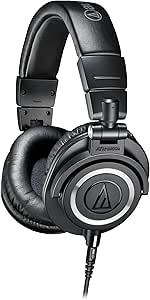 | Best Wired Reference Standard | Type: Professional monitor headphones | Driver Size: 45 mm | Impedance: 38 ohms | VIEW LATEST PRICE | See Our Full Breakdown |
| OneOdio A70 Bluetooth Over-Ear Headphones, Hi-Res Wired DJ Studio – Black | 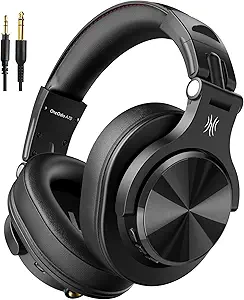 | Best Budget Entry Point | Battery Life: 72 hours | Connectivity: Bluetooth and wired (3.5mm and 6.35mm) | Drivers: 40mm neodymium | VIEW LATEST PRICE | See Our Full Breakdown |
| OneOdio Studio Max 2 Wireless DJ Headphones, 9ms Latency, Studio LDAC |  | Best for Low-Latency Production Value | Latency: 9ms | Connectivity: Bluetooth 6.0, wired 3.5mm and 6.35mm | Drivers: 45mm High-Flux | VIEW LATEST PRICE | See Our Full Breakdown |
| OneOdio Studio Max 1 Wireless DJ & Wired Studio Headphones, 20ms Latency |  | Best Wired-Flexibility Workhorse | Connectivity: Bluetooth 5.3, 3.5mm/6.35mm wired, dongle mode | Latency: 20ms | Battery Life: 120 hours Bluetooth, 50 hours dongle | VIEW LATEST PRICE | See Our Full Breakdown |
| Audio-Technica ATH-M50XBT2 Wireless Headphones, Black |  | Best Studio Sound, Untethered | Battery Life: Up to 50 hours | Charging Time: 10 minutes for 3 hours of use | Drivers: 45 mm proprietary drivers | VIEW LATEST PRICE | See Our Full Breakdown |
| Sony WH-CH720N Wireless Noise Cancelling Over-Ear Headphones, Black |  | Best for Long Monitoring Sessions | Weight: 192g | Battery Life: Up to 35 hours | Charging: 3-minute quick charge for 1 hour playback | VIEW LATEST PRICE | See Our Full Breakdown |
| Audio-Technica ATH-M20xBT Wireless Over-Ear Headphones, Black |  | Best Budget Studio Entry Point | Driver Size: 40mm | Design: Over-ear, circumaural | Connectivity: Wireless (Bluetooth) | VIEW LATEST PRICE | See Our Full Breakdown |
| Beats Studio Pro Wireless Over-Ear Headphones | 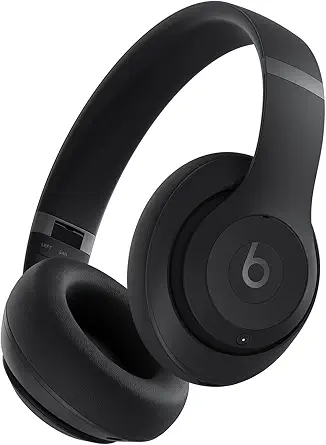 | Best for Cross-Platform Flexibility | Battery Life: Up to 40 hours | Active Noise Cancelling: Yes, with transparency mode | Spatial Audio: Yes | VIEW LATEST PRICE | See Our Full Breakdown |
| wireless studio headphone | Connectivity | Battery Life |
|---|---|---|
| AIAIAI TMA-2 Studio Wireless B | W+ Link, Bluetooth, detachable cable | — |
| Audio-Technica ATH-M50X Profes | — | — |
| OneOdio A70 Bluetooth Over-Ear | Bluetooth and wired (3.5mm and 6.35mm) | 72 hours |
| OneOdio Studio Max 2 Wireless | Bluetooth 6.0, wired 3.5mm and 6.35mm | 120 hours |
| OneOdio Studio Max 1 Wireless | Bluetooth 5.3, 3.5mm/6.35mm wired, dongle mode | 120 hours Bluetooth, 50 hours dongle |
| Audio-Technica ATH-M50XBT2 Wir | Bluetooth, multipoint pairing | Up to 50 hours |
| Sony WH-CH720N Wireless Noise | Multipoint connection | Up to 35 hours |
| Audio-Technica ATH-M20xBT Wire | Wireless (Bluetooth) | — |
| Beats Studio Pro Wireless Over | Bluetooth, USB-C, 3.5 mm audio | Up to 40 hours |
More Details on Our Top Picks
AIAIAI TMA-2 Studio Wireless Black Over-Ear Headphones
The AIAIAI TMA-2 Studio Wireless earns the top spot because it treats wireless latency as a design constraint rather than an afterthought. Its W+ Link connection drops latency under 10ms, which puts it ahead of the OneOdio Studio Max 2 (9ms only in its proprietary mode) while adding a genuinely useful app-based EQ that neither the Audio-Technica ATH-M50X nor the OneOdio A70 can match. Battery life of 20+ hours trails the OneOdio models’ triple-digit figures, but AIAIAI’s modular build and app-tuned sound profile make it the more refined production tool. The tradeoff is price: casual listeners will struggle to justify the cost for features they’ll never touch.
Pros:- Sub-10ms wireless latency suitable for tracking and production
- Customizable EQ profiles via the AIAIAI app
- Modular, repairable design with replaceable parts
- Multiple connection modes for studio and everyday use
Cons:- Expensive relative to the OneOdio alternatives
- Full sound customization depends on the companion app
- Over-ear bulk won’t suit commuters or travelers
Best for: Producers and engineers who want app-tunable, near-zero-latency monitoring without being tethered to an interface
Not ideal for: Budget-conscious buyers or casual listeners — the price reflects studio features they won’t use
- Connectivity:W+ Link, Bluetooth, detachable cable
- Latency:Under 10ms
- Playback Time:20+ hours
- Design:Over-ear, memory foam cushions, PU leather covering
- Customization:App-based EQ profiles
- Modes:Bluetooth, wired, music creation
Our verdict“If wireless producing is the primary job, this is the most complete tool in the lineup — provided the price fits your budget.”
Audio-Technica ATH-M50X Professional Studio Monitor Headphones, Black
The ATH-M50X belongs here as the benchmark against which every wireless option should be judged. Its 45mm drivers and 38-ohm impedance deliver the kind of honest, unflattering accuracy that the warmer-tuned OneOdio A70 deliberately avoids, which is exactly why mixing engineers trust it. The catch is obvious in a wireless roundup: this is a wired-only model in a field that includes the Bluetooth-equipped ATH-M50XBT2. Buyers are choosing accuracy over convenience. Sound isolation is strong enough for loud control rooms, but the non-folding-inward design and coiled cable make it a clumsy travel companion compared to the foldable OneOdio models.
Pros:- Industry-standard monitoring accuracy trusted by professionals
- Large 45mm drivers with deep, controlled bass
- Detachable coiled and straight cables extend lifespan
- Strong passive isolation for loud environments
Cons:- No wireless connectivity at all in this wireless roundup
- Needs a quality audio source to sound its best
Best for: Engineers and mixers who prioritize reference-grade accuracy and already work tethered to an interface or console
Not ideal for: Anyone whose main use case is wireless — buy the ATH-M50XBT2 instead if Bluetooth is non-negotiable
- Type:Professional monitor headphones
- Driver Size:45 mm
- Impedance:38 ohms
- Frequency Response:15 Hz – 28 kHz
- Cable:Detachable, coiled and straight options
- Warranty:2 years
Our verdict“Still the accuracy yardstick — buy it if your work happens at a desk, skip it if you need to cut the cable.”
OneOdio A70 Bluetooth Over-Ear Headphones, Hi-Res Wired DJ Studio – Black
At the value end, the OneOdio A70 makes studio-style headphones accessible without demanding the investment of the AIAIAI TMA-2 Studio Wireless. Its 72-hour battery dwarfs the AIAIAI’s 20 hours, and both 3.5mm and 6.35mm cables ship in the box, so it doubles as a DJ and monitoring headphone. What you give up is precision: latency isn’t specified or optimized here, so it can’t compete with the Studio Max 2’s 9ms figure for tracking work, and its bass-forward tuning is less honest for critical mixing. The sharing jack and foldable frame are thoughtful touches that make it a better collaborative and travel option than most rivals at this price.
Pros:- Exceptional 72-hour battery life
- Includes both 3.5mm and 6.35mm cables for DJ and studio gear
- Foldable, comfortable design with audio-sharing jack
- Built-in noise-reducing microphone for calls
Cons:- No specified low-latency mode for production
- Bass-tuned sound is less neutral for mixing decisions
Best for: Students, beginner producers, and DJs who want versatile wired/wireless headphones without a large budget
Not ideal for: Engineers needing low-latency monitoring — Bluetooth lag makes it unsuitable for tracking or tight production work
- Battery Life:72 hours
- Connectivity:Bluetooth and wired (3.5mm and 6.35mm)
- Drivers:40mm neodymium
- Foldable:Yes
- Sharing Function:Yes
- Microphone:HD with noise reduction
- Material:Aluminum fascia, protein leather, memory cotton
Our verdict“The smartest spending floor in the roundup — versatile and long-running, but not a true monitoring tool.”
OneOdio Studio Max 2 Wireless DJ Headphones, 9ms Latency, Studio LDAC
The Studio Max 2 positions itself as the value answer to the AIAIAI TMA-2 Studio Wireless: it matches that model’s sub-10ms latency promise while throwing in LDAC high-resolution audio and a staggering 120-hour battery with 5-minute fast charging. For producers who want wireless tracking without AIAIAI money, this is the obvious compromise. The 45mm high-flux drivers and 40kHz frequency ceiling suggest genuine monitoring ambition, and the 180° swivel earcups make it more DJ-friendly than the fixed cups on the ATH-M50X. Where it falls short is refinement — LDAC only works with compatible sources, and the sound tuning lacks the neutral discipline that makes Audio-Technica’s wired monitors a mixing reference.
Pros:- Ultra-low 9ms latency for real-time monitoring and editing
- LDAC support for high-resolution wireless audio
- 120-hour battery with 5-minute fast charging
- Both 3.5mm and 6.35mm wired fallbacks included
Cons:- High-res LDAC playback requires a compatible source device
- Sound signature is less neutral than dedicated wired monitors
Best for: Budget-conscious producers, video editors, and gamers who need true low-latency wireless monitoring
Not ideal for: Listeners without LDAC-capable devices, who lose the model’s main audio-quality advantage
- Latency:9ms
- Connectivity:Bluetooth 6.0, wired 3.5mm and 6.35mm
- Drivers:45mm High-Flux
- Frequency Range:20Hz – 40kHz
- Battery Life:120 hours
- Fast Charging:9 hours in 5 minutes
- Earcups:Memory foam, 180° swivel
Our verdict“The most feature-dense wireless studio headphone per dollar here, provided your devices support LDAC.”
OneOdio Studio Max 1 Wireless DJ & Wired Studio Headphones, 20ms Latency
Sitting between the A70 and the Studio Max 2 in OneOdio’s own lineup, the Studio Max 1 justifies its place through sheer versatility rather than headline specs. Its 20ms latency is double the Max 2’s 9ms, which matters for tight tracking, but the included dongle mode (50 hours of playback) gives it a low-latency wireless option the basic A70 lacks. The 50mm drivers are the largest in this batch — larger than the ATH-M50X’s 45mm — delivering the big, physical low end DJs want, though at the cost of weight during long sessions. Bundling a travel case, dual cables, and a 1/4-inch adapter makes it the best-equipped unboxing here for multi-gear setups.
Pros:- Wired, Bluetooth, and dongle connection options cover every setup
- 120-hour Bluetooth battery with 5-minute quick charge
- Large 50mm drivers with Hi-Res and LDAC certification
- Includes travel case, dual cables, and 1/4-inch adapter
Cons:- 20ms Bluetooth latency lags the Studio Max 2 for critical monitoring
- Heavier and bulkier than rivals for extended wear
Best for: DJs and multi-format creators who move between controllers, interfaces, and consoles and want one headphone for everything
Not ideal for: Listeners sensitive to weight — long uninterrupted sessions become fatiguing without breaks
- Connectivity:Bluetooth 5.3, 3.5mm/6.35mm wired, dongle mode
- Latency:20ms
- Battery Life:120 hours Bluetooth, 50 hours dongle
- Quick Charge:5 mins = 5 hours
- Drivers:50mm high-resolution
- Audio Support:Hi-Res Audio, LDAC, LC3
- Microphone:Dual-mic ENC
- Includes:Travel case, 1/4-inch to 1/8-inch adapter
Our verdict“A connectivity Swiss-army knife for gear-hopping creators, if you can live with its weight and mid-tier latency.”
Audio-Technica ATH-M50XBT2 Wireless Headphones, Black
This is the pick that answers the core question of the roundup: what happens when a genuine studio monitor goes wireless? The ATH-M50XBT2 carries over the tuned 45mm drivers from the wired ATH-M50X that mixing engineers have trusted for years, so the deep, accurate bass here is a reference point rather than a bass boost. Compared with the Sony WH-CH720N, it trades noise cancellation for a flatter, more honest frequency response — a tradeoff producers should make willingly. The 50-hour battery outlasts nearly everything in this lineup, and the 10-minute quick charge buys 3 more hours. The clunky, plasticky design has barely changed since the wired original, though, and it shows.
Pros:- Studio-reference tuning inherited directly from the wired ATH-M50X
- Exceptional 50-hour battery life leads this roundup
- Multipoint pairing keeps a laptop and phone connected simultaneously
- 10-minute charge delivers 3 hours of playback
Cons:- No active noise cancellation despite the premium positioning
- Bulky, utilitarian design that hasn’t aged gracefully
- Clamping force can fatigue longer sessions compared with lighter rivals
Best for: Producers and mixing engineers who want the ATH-M50X sound without a cable dragging across the desk
Not ideal for: Commuters and frequent flyers — the bulky frame and lack of active noise cancellation make the Sony WH-CH720N a better travel companion
- Battery Life:Up to 50 hours
- Charging Time:10 minutes for 3 hours of use
- Drivers:45 mm proprietary drivers
- Connectivity:Bluetooth, multipoint pairing
- Color:Black
- Type:Wireless over-ear
Our verdict“Buy it if accurate monitoring matters more to you than noise cancellation; skip it if you need headphones for the subway rather than the studio.”
Sony WH-CH720N Wireless Noise Cancelling Over-Ear Headphones, Black
At 192 grams, this is the lightest over-ear option in the entire roundup — and that single spec changes how you use it. Where the ATH-M50XBT2 starts to press on your temples after a few hours, the WH-CH720N nearly disappears, which matters for anyone tracking through long sessions or wearing headphones all workday. Sony’s dual-sensor noise cancellation and DSEE upscaling deliver a polished, consumer-friendly sound — smoother and less revealing than the Audio-Technica, but far easier to live with in noisy spaces. The 35-hour battery and 3-minute quick charge keep it practical. The tradeoff is precision: this flatters recordings rather than exposing them, so it sits lower on the list for critical mixing work.
Pros:- Featherweight 192g build is the most comfortable here for all-day wear
- Effective noise cancellation with dual noise sensors
- Customizable ambient sound modes for situational awareness
- 3-minute quick charge yields a full hour of playback
Cons:- Sound signature is polished rather than neutral, limiting its value for mixing
- Fewer pro-oriented features than pricier studio-focused rivals
- Limited color options
Best for: Podcasters, remote workers, and long-session creators who prioritize comfort and quiet over analytical accuracy
Not ideal for: Mixing engineers who need a flat reference response — the tuned, consumer-leaning sound will mask flaws the ATH-M50XBT2 reveals
- Weight:192g
- Battery Life:Up to 35 hours
- Charging:3-minute quick charge for 1 hour playback
- Noise Cancelling:Active, with dual noise sensors
- Sound Enhancement:DSEE technology
- Connectivity:Multipoint connection
- Included Cable:USB Type-C
Our verdict“The most comfortable and commute-ready pick in the lineup, best for creators who wear headphones for hours and want quiet more than analytical truth.”
Audio-Technica ATH-M20xBT Wireless Over-Ear Headphones, Black
This model makes the list as the most affordable path into studio-style sound, and its strengths are exactly where a beginner needs them. The 40mm drivers emphasize mid-range clarity, so vocals and instruments sit forward in the mix — a more honest starting point than bass-heavy consumer sets, if a step below the ATH-M50XBT2’s resolution. The circumaural isolation does passive noise blocking that partially compensates for the absence of ANC, and the foldable frame makes it an easy grab-and-go option the bulkier M50XBT2 can’t match. The gaps are real, though: no published battery life, no noise cancellation, and no quick-charge spec. Compared with the OneOdio A70, it trades DJ flash for cleaner studio tuning at a similar price.
Pros:- Clean mid-range-focused tuning that suits vocal and instrument work
- Passive sound isolation from the circumaural seal
- Foldable, portable design at a budget price
- Solid Audio-Technica build quality for the money
Cons:- No active noise cancellation
- Battery life is not specified, complicating planning
- Less bass extension and detail than the ATH-M50XBT2
Best for: Beginner producers and students who want Audio-Technica’s studio tuning without the flagship price
Not ideal for: Anyone who needs predictable all-day runtime — the unspecified battery life makes it hard to plan long sessions around
- Driver Size:40mm
- Design:Over-ear, circumaural
- Connectivity:Wireless (Bluetooth)
- Foldable:Yes
- Cable Exit:Single side
- Color:Black
Our verdict“The smartest low-cost entry into wireless studio listening here, as long as you can live without ANC and a stated battery figure.”
Beats Studio Pro Wireless Over-Ear Headphones
The Studio Pro earns its place as the most versatile connectivity package in the roundup: Bluetooth, USB-C audio, and a 3.5mm jack mean it never leaves you stranded, whether you’re monitoring from an interface, a laptop, or a phone. That wired fallback is something neither the Sony WH-CH720N nor the ATH-M20xBT can match as gracefully. Its 40-hour battery, strong ANC, and spatial audio make it the best all-rounder for creators who split time between production and everyday listening. The catch is character: Beats’ sound is rich and engaging rather than neutral, so it sits closer to the Sony’s consumer tuning than to Audio-Technica’s reference honesty. The unpublished weight also raises fit questions for marathon sessions.
Pros:- Triple connectivity: Bluetooth, USB-C, and 3.5mm analog
- 40-hour battery life with fast charging
- Effective ANC plus transparency and spatial audio modes
- Seamless switching across Apple and Android devices
Cons:- Sound signature is bass-tilted, not studio-neutral
- Weight is unspecified, so long-session comfort is unverified
- Price is not listed, complicating value comparison
Best for: Cross-platform creators and Apple-and-Android households who want one headphone for studio, travel, and calls
Not ideal for: Engineers chasing a flat monitoring reference — the bass-forward tuning colors mixes in ways the ATH-M50XBT2 does not
- Battery Life:Up to 40 hours
- Active Noise Cancelling:Yes, with transparency mode
- Spatial Audio:Yes
- Connectivity:Bluetooth, USB-C, 3.5 mm audio
- Compatibility:Apple & Android
- Design:Over-ear
- Included Accessories:Carrying case, audio cable, USB-C cable, quick start guide, warranty card
Our verdict“The best one-headphone-for-everything pick here — ideal if versatility beats neutrality, wrong if reference accuracy is the goal.”

How We Picked
I evaluated each pair against four criteria that actually matter for studio work: frequency accuracy (can you trust what you hear?), wireless latency (can you track without timing smear?), comfort and isolation (can you wear them through a long session?), and versatility (wired fallback options, battery life, build repairability). Consumer-focused features like active noise cancellation were treated as bonuses, not ranking drivers, because a colored or artificially quiet listening environment can mislead a mix.
The ranking reflects a simple hierarchy: models that behave like studio tools first and wireless headphones second rose to the top, while models that lean consumer dropped despite stronger mainstream appeal. Price was weighed against longevity — a modular pair like the AIAIAI scores higher than a cheaper sealed pair that can’t be repaired. Budget picks earned their positions by punching above their weight in one specific area, like the Studio Max 2’s latency, rather than by being well-rounded.
Factors to Consider When Choosing Wireless Studio Headphones
Before committing to a pair, it helps to understand where wireless studio headphones still fall short of wired models and which compromises are acceptable for your workflow.Latency Tolerance Depends on Your Workflow
Latency is the single most misunderstood spec in this category. Anything under about 10ms feels instantaneous to most musicians, which is why the OneOdio Studio Max 2’s 9ms rating matters — you can overdub vocals or punch in guitar parts without the delayed playback throwing off your timing. At 20ms, like the Studio Max 1, tracking becomes noticeably harder for tight rhythmic parts, though mixing and editing are unaffected since you’re not performing live. A common mistake is assuming Bluetooth 5.x alone solves latency; the codec and the manufacturer’s tuning matter more than the version number. If you record yourself playing instruments or singing, prioritize latency or plan to use a cable for tracking sessions. Producers who only arrange, edit, and mix can safely ignore this spec and save money.
Codec Support Shapes Sound Quality More Than Drivers
Two headphones with identical drivers can sound different over Bluetooth depending on the codec negotiated with your device. LDAC and aptX HD transmit far more audio detail than the default SBC codec, which is why the Studio Max 2 and AIAIAI rank highly for accuracy-minded buyers. The catch: your source device has to support the codec too, so an older phone or budget interface may silently downgrade you to SBC regardless of what your headphones can do. Apple users should note that iPhones only support AAC, which caps the benefit of premium codecs on any pair in this list. Before paying extra for codec support, check your actual recording device. Otherwise you’re buying capability you can’t use — one of the most common overspending traps in this category.
Wired Fallback Is Your Safety Net
Batteries die, Bluetooth drops, and codecs add artifacts — which is why a detachable cable option dramatically extends a headphone’s studio usefulness. The ATH-M50X family and the OneOdio hybrids shine here because they function as full wired monitors when wireless isn’t cutting it, effectively giving you two products in one. Sealed consumer designs without a cable path become useless paperweights once the battery degrades, typically after two to four years of heavy use. My advice: treat wireless as a convenience layer, not a replacement for wired monitoring. If a pair can’t accept a cable, it should at least justify that limitation with exceptional battery life or comfort. This single factor often decides whether a purchase lasts a decade or a single battery cycle.
Noise Cancellation Can Hurt Your Mix
ANC is genuinely useful for commuting or recording in a noisy room, but it introduces a subtle low-frequency coloration that many engineers don’t notice until their mixes translate poorly elsewhere. The Sony WH-CH720N and Beats Studio Pro both apply digital processing that alters the raw signal path, making them better reference-adjacent tools than primary monitors. If you work in a treated room, skip ANC entirely and rely on passive isolation from well-sealed ear cups, which the Audio-Technica models do well. Choose ANC only if your real-world environment — a shared apartment, a mobile setup, travel between sessions — makes it unavoidable. And when you do use it, A/B your mixes with it switched off before printing. That habit alone prevents the most common mixing error I see from hybrid-headphone users.
Repairability and Long-Term Cost
Studio headphones take abuse: coiled cables yank ear pads, headbands flex thousands of times, and pads compress and flake. The AIAIAI TMA-2’s modular architecture — replaceable drivers, pads, headbands, and cables — means a broken part costs $30 to fix instead of $300 for a new pair. Sealed designs like the Beats Studio Pro and Sony WH-CH720N offer almost no user serviceability, so their true cost of ownership over five years is higher than the sticker suggests. Ear pads are the first thing to go on every model here, and aftermarket pad availability varies widely. Before buying, check whether pads and cables are easy to source. A $120 repairable headphone often outlasts two $200 disposable ones, which changes the value math considerably.
Frequently Asked Questions
Can I actually mix on wireless studio headphones, or do I need a cable?
For final mix decisions, a cable remains the safer choice because even LDAC and aptX HD introduce slight compression artifacts in the high frequencies that can mislead EQ choices. That said, rough mixes, arrangement work, and reference listening translate well over the premium codecs on the AIAIAI TMA-2 or Studio Max 2, especially if you know your headphone’s tonal tendencies. A practical workflow is wireless for creation and editing, then a wired pass for the final balance and level decisions. Every serious pair in this roundup except the Sony and Beats offers that cabled fallback. If you mix exclusively wireless, cross-check your results on monitors or in a car before release.
Is the ATH-M50XBT2 worth the extra money over the wired ATH-M50X?
Only if you genuinely move around while working. The BT2 matches the wired M50X sound quality and adds Bluetooth with a decent battery, but it costs noticeably more and adds charging routine to your life. If you sit at a desk with an audio interface, the wired M50X delivers identical tonal character for less money and never needs charging. The BT2 makes sense for producers who check mixes on the go, record in different rooms, or shuttle between a studio and mobile setup. One nuance: the BT2 still works passively with a cable, so you’re really paying for flexibility, not better sound. Desk-bound buyers should save the difference.
What’s the difference between the OneOdio Studio Max 1 and Studio Max 2?
Latency is the headline difference: the Max 2 runs at 9ms versus the Max 1’s 20ms, and that gap determines whether you can comfortably track live instruments. The Max 2 also supports LDAC for higher-quality wireless playback, while the Max 1 tops out at more basic codecs. If you sing or play while listening over Bluetooth, the Max 2 is the clear choice because the timing stays tight enough for overdubs. The Max 1 remains a solid budget option for mixing, editing, and DJ practice where latency doesn’t interfere with performance. Both share similar build and comfort, so the decision really comes down to whether you record yourself live.
Are the Beats Studio Pro or Sony WH-CH720N acceptable for studio work?
They’re workable for early-stage production but I’d hesitate to trust them for final mixes. Both apply consumer-tuned processing — the Beats with its alternating tonal profiles and spatial features, the Sony with ANC coloration — that deviates from the flat response monitoring demands. Where they excel is the hybrid lifestyle: producing on a train, checking how a mix sounds on consumer gear (which the Beats actually approximates well), or blocking a noisy environment. If your sessions live mostly inside a DAW with occasional critical listening, either works with the caveat that you verify decisions elsewhere. Serious mix engineers should treat them as secondary reference tools rather than primary monitors.
How much do I need to spend for reliable wireless studio headphones?
The functional entry point sits around $60 to $80, where the OneOdio A70 and Audio-Technica ATH-M20xBT deliver honest sound with wired backup, though with plasticky builds and mediocre isolation. The sweet spot is the $100 to $200 range occupied by the Studio Max 2 and ATH-M50XBT2, where latency, codec support, and comfort all become genuinely studio-grade. Above that, the AIAIAI TMA-2 justifies its price less through sound alone and more through repairability and longevity. The biggest waste is the middle: paying $250-plus for consumer features like ANC that don’t help monitoring. Set your budget based on whether you track live (spend for latency) or just mix (spend for accuracy and comfort).
Conclusion
For best overall, the AIAIAI TMA-2 Studio Wireless earns the top spot with its modular repairability, accurate tuning, and aptX HD streaming — the pair most likely to still be in your studio in five years. The OneOdio Studio Max 2 is my best value pick, combining 9ms latency and LDAC at a price that undercuts rivals by half. For beginners, the Audio-Technica ATH-M20xBT offers the safest entry point: affordable, comfortable, and honest enough to learn on without developing bad mixing habits. If budget isn’t a concern and you want a premium do-everything pair, the ATH-M50XBT2 delivers the most trusted sound signature in wireless form, while the Beats Studio Pro suits producers who split time between the studio and everyday listening. Specific needs narrow it further: the Studio Max 1 for budget mixing desks, the Sony WH-CH720N for noisy environments, and the wired ATH-M50X for anyone who realizes they never actually leave their desk. Whatever your workflow, pick the pair whose weaknesses you can live with — every model here trades something away.
Fall Picks
fall essentials
As an affiliate, we earn on qualifying purchases.