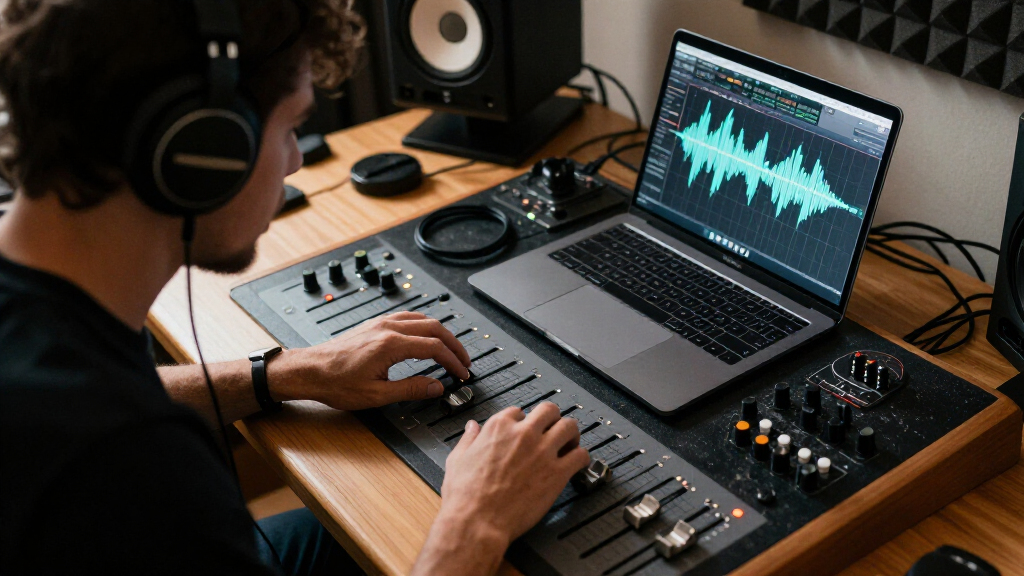

Wireless headphones can make music production more flexible, but Bluetooth latency and sound processing can make precise recording and mixing harder. I’d choose the Audio-Technica ATH-M50xBT2 as the best overall here for its versatile listening profile and wired option; the OneOdio Studio Max 2 and Pioneer DJ HDJ-CUE1BT stand out for DJ focused use. The main tradeoff is convenience versus dependable timing and an unprocessed monitoring signal. For critical work, a wired connection is usually the safer choice, even when the headphones also support wireless listening. Read on for how these six options compare and which fits your workflow.
Complete the kit


Key Takeaways
- The ATH-M50xBT2 is the most versatile pick in this group because wireless listening can sit alongside wired use for production tasks where Bluetooth delay is a problem.
- The OneOdio Studio Max 2 is the DJ focused alternative; its role is better suited to cueing and performance than to choosing a neutral reference for final mixes.
- The two HDJ-CUE1BT listings are the same headphone model in different color variants, so the comparison does not offer two distinct performance options.
- The ATH-M20xBT and OneOdio A70 make more sense as entry points for casual production and practice than as sole references for detailed mix decisions.
- Wireless capability does not remove the need to check wired operation: connection mode, latency, and any sound processing can change how useful a headphone is during recording or editing.
| OneOdio Studio Max 2 Wireless DJ Headphones |  | Best for Low-Latency Wireless Monitoring | Latency: 9 ms | Audio codec: LDAC | Frequency response: 20 Hz–40 kHz | VIEW LATEST PRICE | See Our Full Breakdown |
| Pioneer DJ HDJ-CUE1BT On-Ear Bluetooth DJ Headphones, White |  | Best Compact Pick for DJ Cueing | Model: HDJ-CUE1BT | Color: White | Connectivity: Bluetooth 4.2 and 3.5 mm headphone jack | VIEW LATEST PRICE | See Our Full Breakdown |
| Audio-Technica ATH-M50xBT2 Wireless Headphones, Black |  | Best for Switching Between Studio and Calls | Driver size: 45 mm | Battery life: Up to 50 hours | Rapid charging: 10 minutes for up to 3 hours of use | VIEW LATEST PRICE | See Our Full Breakdown |
| OneOdio A70 Bluetooth Over-Ear Headphones | 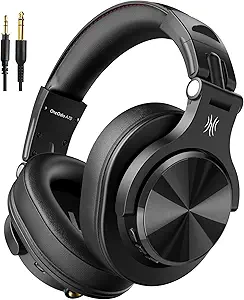 | Best for Long Sessions and Wired Backup | Connectivity: Bluetooth and wired | Battery life: Up to 72 hours in wireless mode | Driver size: 40 mm | VIEW LATEST PRICE | See Our Full Breakdown |
| Pioneer DJ HDJ-CUE1BT On-Ear Bluetooth DJ Headphones |  | Best for Wired One-Ear Monitoring | Type: On-ear DJ headphones | Connectivity: Bluetooth and wired | Cable: 1.2 m coiled cable; 1.8 m extended length | VIEW LATEST PRICE | See Our Full Breakdown |
| Audio-Technica ATH-M20xBT Wireless Over-Ear Headphones, Black |  | Best for Midrange-Focused Mobile Work | Driver size: 40 mm | Design: Wireless, over-ear, circumaural | Driver magnets: Rare earth | VIEW LATEST PRICE | See Our Full Breakdown |
| wireless headphones for music production | Driver size | Connectivity | Battery life | Design |
|---|---|---|---|---|
| OneOdio Studio Max 2 Wireless | 45 mm | 2.4 GHz wireless, Bluetooth 6.0, wired | Up to 120 hours | Over-ear with 180° swivel earcups |
| Pioneer DJ HDJ-CUE1BT On-Ear B | 40 mm | Bluetooth 4.2 and 3.5 mm headphone jack | 3 hours | Foldable with swivel earcups |
| Audio-Technica ATH-M50xBT2 Wir | 45 mm | — | Up to 50 hours | — |
| OneOdio A70 Bluetooth Over-Ear | 40 mm | Bluetooth and wired | Up to 72 hours in wireless mode | Over-ear, rotatable, and foldable |
| Pioneer DJ HDJ-CUE1BT On-Ear B | — | Bluetooth and wired | — | — |
| Audio-Technica ATH-M20xBT Wire | 40 mm | — | — | Wireless, over-ear, circumaural |
More Details on Our Top Picks
OneOdio Studio Max 2 Wireless DJ Headphones
For production tasks where wireless delay can throw off edits or cueing, the 9 ms latency claim and 2.4 GHz connection make the Studio Max 2 the most monitoring-focused pick here. Its LDAC support, 45 mm drivers, and wired option give it more listening flexibility than the Bluetooth-only use case might suggest. Compared with the Audio-Technica ATH-M50xBT2, it offers a stated low-latency mode and a longer claimed battery life, while the Audio-Technica lists multipoint pairing and dual microphones. The Studio Max 2’s 120-hour battery claim is based on the product description, so buyers should treat it as a manufacturer figure. Wireless playback still isn’t a substitute for a wired reference check when judging a final mix.
Pros:- 2.4 GHz wireless mode is specified with 9 ms latency for responsive monitoring
- LDAC support and 45 mm drivers offer high-resolution wireless playback
- Wired listening is available through 3.5 mm and 6.35 mm connections
- Product description claims up to 120 hours of battery life and rapid charging
Cons:- Latency and battery figures are product-description claims, not independently verified here
- Wireless playback can still differ from a wired studio reference
- The large over-ear design may be less convenient for travel than the foldable Pioneer DJ options
Best for: Producers and video editors who want low-latency wireless monitoring for cueing and rough edits, with a wired fallback for critical listening
Not ideal for: Mix engineers who need independently verified response accuracy or plan to make final tonal decisions from wireless playback
- Latency:9 ms
- Audio codec:LDAC
- Frequency response:20 Hz–40 kHz
- Driver size:45 mm
- Connectivity:2.4 GHz wireless, Bluetooth 6.0, wired
- Connectors:3.5 mm and 6.35 mm jacks
- Battery life:Up to 120 hours
- Fast charging:5 minutes for up to 9 hours of playback
- Design:Over-ear with 180° swivel earcups
Our verdict“Choose the Studio Max 2 for flexible wireless cueing and editing, but check final mix decisions on a wired reference.”
Pioneer DJ HDJ-CUE1BT On-Ear Bluetooth DJ Headphones, White
The white HDJ-CUE1BT is the most compact choice for DJs who need portable headphones with Bluetooth for casual listening and a cable for monitoring. Its swivel earcups support one-ear cueing, while the stated bass-and-kick tuning gives beat matching a clear emphasis. Compared with the over-ear OneOdio A70, this Pioneer model folds down more readily and is built around DJ cueing rather than long wireless sessions. Its listed three-hour battery life, though, is a serious limit if you expect to use Bluetooth throughout a workday; the A70 claims up to 72 hours. The wired connection helps when monitoring, but the on-ear fit may also become less comfortable during long production sessions than a cushioned over-ear design.
Pros:- Foldable design is suited to travel and compact storage
- Swivel earcups support one-ear DJ cueing
- Bluetooth listening and wired monitoring are both supported
- Bass and kick drums receive specific emphasis in the sound tuning
Cons:- Listed battery life is only 3 hours
- On-ear fit may become uncomfortable during extended sessions
- Bluetooth 4.2 is an older listed wireless standard
Best for: Traveling DJs who prioritize a foldable, one-ear cueing design and can use the wired connection for monitoring
Not ideal for: Producers seeking all-day Bluetooth use or a comfortable over-ear fit for extended sessions
- Model:HDJ-CUE1BT
- Color:White
- Connectivity:Bluetooth 4.2 and 3.5 mm headphone jack
- Driver type:Dynamic
- Driver size:40 mm
- Impedance:32 ohm
- Sensitivity:104 dB
- Battery life:3 hours
- Design:Foldable with swivel earcups
Our verdict“Pick this Pioneer for portable DJ cueing with a wired fallback, and skip it if long Bluetooth sessions are a priority.”
Audio-Technica ATH-M50xBT2 Wireless Headphones, Black
The ATH-M50xBT2 suits producers who move between listening on two Bluetooth devices and taking calls, thanks to multipoint pairing and dual beamforming microphones. Its 45 mm drivers and dedicated amplifier are described as delivering clear sound and deep bass, giving it a more general listening focus than the Pioneer DJ HDJ-CUE1BT, whose tuning specifically highlights kick drums and whose swivel cups favor one-ear cueing. The Audio-Technica also claims up to 50 hours of battery life, far beyond the three hours listed for that Pioneer model. The tradeoff is that the supplied data doesn’t specify a low-latency wireless mode or active noise cancellation, so this is less clearly suited to timing-sensitive wireless monitoring than the OneOdio Studio Max 2. Keep a wired reference in the production workflow.
Pros:- Multipoint Bluetooth pairing connects to two devices at once
- Up to 50 hours of stated battery life
- Dual beamforming microphones are included for calls
- A 10-minute charge is specified to provide up to 3 hours of use
Cons:- No low-latency wireless specification is provided
- No active noise cancellation information is provided
- Deep-bass emphasis may call for a separate reference when judging mix balance
Best for: Producers who regularly switch between a computer and phone and want headphones for listening, calls, and everyday studio use
Not ideal for: DJs who need explicit low-latency wireless cueing or a swivel-cup design for one-ear monitoring
- Driver size:45 mm
- Battery life:Up to 50 hours
- Rapid charging:10 minutes for up to 3 hours of use
- Bluetooth pairing:Connects to two devices at once
- Microphones:Dual mics with beamforming technology
- Color:Black
Our verdict“Choose the ATH-M50xBT2 for device switching and calls alongside production listening, rather than latency-sensitive wireless cueing.”
OneOdio A70 Bluetooth Over-Ear Headphones
The OneOdio A70 is a practical fit for producers who value long listening stretches and want to keep working even when the battery runs down. It claims up to 72 hours of wireless playback, and its included 3.5 mm cables let you listen wired without battery power. That wired fallback makes it more session-friendly than the Bluetooth-focused Audio-Technica ATH-M50xBT2 based on the supplied details, while the Audio-Technica offers multipoint pairing and call microphones. The A70’s 40 mm neodymium drivers and foldable, rotatable design cover everyday monitoring needs, but the description provides no latency figure or specialized production tuning. Audio sharing also requires another pair of headphones, so it’s a secondary convenience rather than a solo-producer feature. Use wired monitoring for timing-sensitive work.
Pros:- Up to 72 hours of wireless playback is claimed
- Wired listening works without battery power
- Includes 3.5 mm to 6.35 mm and 3.5 mm to 3.5 mm cables
- Foldable, rotatable over-ear design with memory cotton cushioning
Cons:- No low-latency wireless specification is provided
- Audio sharing requires an additional pair of headphones
- Wireless listening depends on the battery being charged
Best for: Home producers who want long wireless playback, a wired option that works without battery power, and a foldable over-ear fit
Not ideal for: DJs who need a stated low-latency mode or dedicated one-ear cueing features
- Connectivity:Bluetooth and wired
- Battery life:Up to 72 hours in wireless mode
- Driver size:40 mm
- Driver type:Neodymium
- Included cables:3.5 mm to 6.35 mm and 3.5 mm to 3.5 mm
- Microphone:Built-in HD microphone with noise reduction
- Design:Over-ear, rotatable, and foldable
- Color:Black
Our verdict“Choose the A70 for long everyday sessions and battery-free wired fallback, but look elsewhere for specified wireless monitoring latency.”
Pioneer DJ HDJ-CUE1BT On-Ear Bluetooth DJ Headphones
This black HDJ-CUE1BT is the clearest match for a DJ who wants a lightweight, foldable headset with swivel earcups and a coiled cable for wired monitoring. At 250 g, it’s specified lighter than the over-ear OneOdio A70 by design category, though the supplied A70 data gives no weight for a direct measurement comparison. Pioneer’s bass-and-kick emphasis targets cueing in loud environments, while the sound-isolation feature supports that use. Compared with the white HDJ-CUE1BT in this roundup, the provided details add cable length and weight, but don’t list a battery-life figure. That makes Bluetooth endurance hard to judge. The on-ear fit can also be tiring over long production sessions, so this is a focused portable DJ pick rather than an all-day studio comfort choice.
Pros:- 250 g listed weight supports a lighter travel setup
- Swivel earcups enable one-ear monitoring
- Includes a 1.2 m coiled cable with 1.8 m extended length
- Foldable design and sound isolation suit portable DJ cueing
Cons:- On-ear fit may be uncomfortable during extended sessions
- Bluetooth listening requires charging, but no battery duration is listed
- No low-latency wireless specification is provided
Best for: Mobile DJs who want a light, foldable on-ear design, wired cueing, and a coiled cable
Not ideal for: Producers who need documented long Bluetooth runtime or prefer cushioned over-ear headphones for lengthy sessions
- Type:On-ear DJ headphones
- Connectivity:Bluetooth and wired
- Cable:1.2 m coiled cable; 1.8 m extended length
- Weight:250 g
- Impedance:36 ohm
- Sensitivity:104 dB
- Driver:40 mm dynamic
- Noise control:Sound isolation
- Features:Foldable design with swivel earcups
Our verdict“Pick this version for portable wired DJ cueing and a coiled cable, not for long wireless production sessions.”
Audio-Technica ATH-M20xBT Wireless Over-Ear Headphones, Black
The ATH-M20xBT suits producers who want to sketch or edit away from a desk and value a clearly described midrange tuning. Its 40 mm drivers and circumaural fit are intended to give sound detail while helping block some outside noise, which can make casual listening and focused work more practical. Compared with the Audio-Technica ATH-M50xBT2, this model has fewer documented details here for judging production use, so buyers should not assume it offers the same level of connectivity or monitoring options. Its collapsible design and single-side cable exit favor portability and a tidy wired setup. The tradeoff is that the supplied product information gives no battery-life or charging details, and wireless headphones alone are a poor basis for final mix decisions because Bluetooth can add latency and alter what you hear. I would use these for mobile drafts, then check mixes on wired references.
Pros:- 40 mm drivers are specified for detailed sound with clear midrange definition.
- Circumaural earcups help isolate sound from the surroundings.
- Collapsible construction makes storage and transport easier.
- Single-side cable exit can help keep a wired setup less cluttered.
Cons:- No battery-life or charging details are provided in the product data.
- The available specifications do not establish wireless latency or connection options for production monitoring.
- Wireless playback should be treated as a secondary reference for timing and final mix decisions.
Best for: Producers who need foldable over-ear headphones for mobile arranging, editing, and rough checks, with a stated emphasis on clear midrange.
Not ideal for: Mix engineers who need documented battery performance, low-latency wireless monitoring, or detailed connection specifications before choosing headphones.
- Driver size:40 mm
- Design:Wireless, over-ear, circumaural
- Driver magnets:Rare earth
- Voice coils:Copper-clad aluminum wire
- Sound tuning:Detailed sound with clear midrange definition
- Cable exit:Single side
- Portability:Collapsible
- Color:Black
Our verdict“Choose the ATH-M20xBT for portable production drafts and midrange-focused listening, but use wired references for latency-sensitive work and final mix checks.”
How We Picked
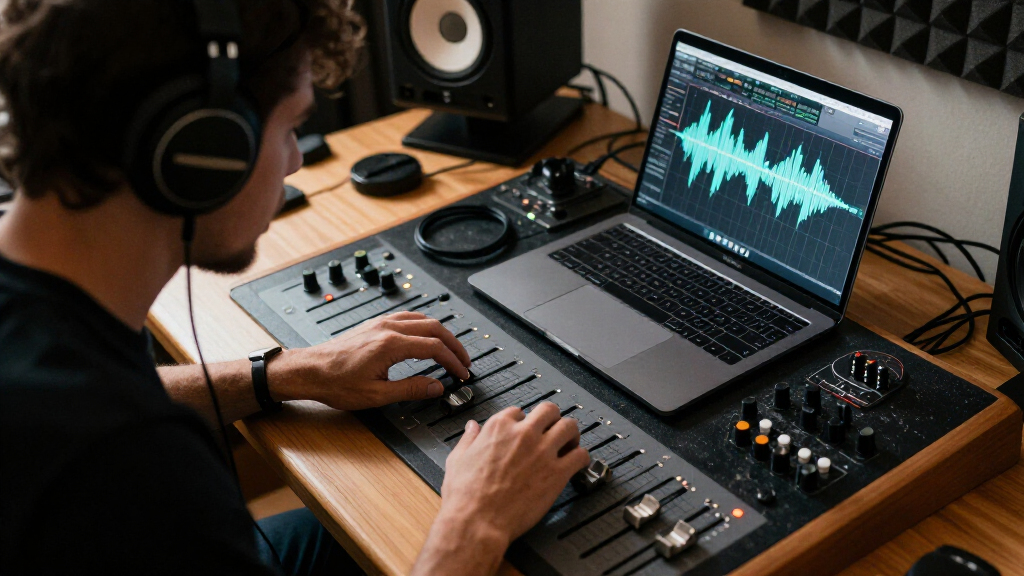
I ranked these headphones around the needs of someone making music: whether the listening experience can support production decisions, whether a wired connection is available for timing sensitive work, and whether the controls and fit suit long sessions. I also weighed each model’s intended use, from DJ cueing to general wireless listening, against the demands of recording, editing, and checking a mix. A wireless feature alone did not earn a high placement.
The ATH-M50xBT2 leads for versatility because it offers a stronger bridge between everyday wireless listening and wired production use. The Studio Max 2 and HDJ-CUE1BT follow for buyers whose workflow leans toward DJ monitoring, while the A70 and ATH-M20xBT serve simpler or beginner setups. The duplicate HDJ-CUE1BT listing represents a color choice, not a separate ranked design. None should be treated as a substitute for checking mixes on multiple playback systems.
| wireless headphones for music production | Design | Color |
|---|---|---|
| OneOdio Studio Max 2 Wireless | Over-ear with 180° swivel earcups | — |
| Pioneer DJ HDJ-CUE1BT On-Ear B | Foldable with swivel earcups | White |
| Audio-Technica ATH-M50xBT2 Wir | — | Black |
| OneOdio A70 Bluetooth Over-Ear | Over-ear, rotatable, and foldable | Black |
| Pioneer DJ HDJ-CUE1BT On-Ear B | — | — |
| Audio-Technica ATH-M20xBT Wire | Wireless, over-ear, circumaural | Black |
Factors to Consider When Choosing Wireless Headphones For Music Production
Choosing headphones for production starts with the work you need them to do, not with Bluetooth as a headline feature. These broader checks can help you avoid a mismatch between convenient listening and dependable monitoring.
Separate tracking from critical mixing
Bluetooth can add delay between a live input and what you hear, which may distract a performer or make timing feel loose. Before buying, check whether the headphones support a wired listening mode and whether that mode works while the battery is depleted. Use wired monitoring for recording and timing sensitive edits when possible. Wireless playback can still be useful for arranging, reference listening, and moving around the room. A common mistake is assuming that a low delay codec solves every studio problem, since both the source device and the headphone must support it. If recording is central to your work, treat a dependable wired path as a basic requirement.
Know what a wireless sound profile can tell you
Headphones tuned for energetic listening may make bass or treble feel more prominent than it will on other systems. That can be enjoyable for production sessions, but it may encourage mix choices that do not translate. Look for a sound profile you can learn over time and compare your work with familiar speakers, earbuds, or reference tracks. Do not assume that a larger driver or DJ label means greater accuracy. Bluetooth codecs and built in processing can also change playback, so check whether wired mode sounds different. For final balance decisions, use headphones as one perspective rather than the only one.
Check comfort for the length of your sessions
A comfortable fit matters because pressure and heat can make long editing sessions tiring and can prompt frequent readjustment. Over ear designs may provide more coverage, while on ear models can be easier to carry but press directly against the ears. Clamp force, ear pad depth, weight, and whether pads can be replaced all shape day to day comfort. If you wear glasses, a tight seal may become uncomfortable sooner. Consider how long you typically work before treating compactness as a major advantage. A short listening tryout, where available, can reveal fit issues that specifications cannot.
Match controls and isolation to your workspace
In a shared room or while recording near a microphone, sound leakage can be as important as how much outside noise the headphones block. A strong seal may help you hear details at lower volume, but active noise cancellation can alter what you hear and is not automatically useful for mixing. Physical controls are handy when you need to adjust volume or pause without reaching for a computer. Check whether buttons are easy to distinguish by touch and whether pairing behavior suits your devices. For a quiet home studio, isolation and comfort may matter more than noise cancellation. For travel, compact storage and simple device switching may deserve greater weight.
Pay for the limitation you need to remove
Spending more makes sense when it adds something your workflow uses, such as a more capable wired option, stronger build, or fit you can tolerate through long sessions. Extra wireless features have less value if you will keep the headphones connected to an audio interface most of the time. Beginners may get more from a straightforward, comfortable model and a separate set of reference checks than from feature-heavy headphones. Also consider replaceable pads and cable availability, since worn parts can shorten the useful life of a set. Compare the full workflow rather than one headline specification. The right choice reduces a real friction point in your work.
Frequently Asked Questions
Can I mix music using Bluetooth headphones?
You can use them for rough balance checks and casual listening, but Bluetooth delay and possible playback processing make them less dependable for recording and precise edits. The sound profile may also differ from what you hear through a wired connection. If you mix on them, compare against familiar speakers or other headphones and check the result on more than one system. A wired mode is useful when you need a stable signal. Treat Bluetooth as a convenience, not proof that a headphone is a studio reference.
Should I connect wireless headphones to an audio interface with a cable?
If the headphones support wired playback, connecting them by cable can avoid Bluetooth latency during tracking and editing. Check that the cable input works in the way you expect, including whether the headphones need battery power and whether any onboard processing remains active. Also confirm that your interface has a suitable headphone output or that you have the right adapter. Wired playback does not automatically make a consumer tuned headphone neutral. It does give you a more direct monitoring path for timing sensitive work.
Are DJ headphones a good choice for music production?
They can work well for cueing, beat matching, and production tasks where a robust, easy to monitor design matters. Their tuning and intended use may differ from headphones chosen for neutral mix decisions, so do not assume a DJ model reveals every balance accurately. The Pioneer HDJ-CUE1BT and OneOdio Studio Max 2 fit DJ oriented workflows more naturally than a buyer seeking one reference for final mastering decisions. If you produce and DJ, their versatility may outweigh that limitation. Keep another playback reference available for mix checks.
Are the two Pioneer HDJ-CUE1BT entries different headphones?
The listed products share the HDJ-CUE1BT model name, with one listing specifying a white finish and the other presented without that color detail. The roundup treats them as color variants rather than separate designs with distinct production strengths. Choose between them based on the finish and the exact listing details, such as included accessories. Check the seller’s model number before ordering if color matters. Their position in this comparison reflects the model’s DJ focused role, not a performance difference between the two entries.
What should a beginner prioritize over extra wireless features?
Start with a comfortable fit, a reliable wired connection, and a sound you can compare consistently across sessions. Those basics help more with learning balances than extra wireless controls or convenience features. The ATH-M20xBT and OneOdio A70 are the more approachable choices in this lineup, while the ATH-M50xBT2 gives more room to bridge wireless listening and wired work. Keep reference tracks you know well and listen on other devices before finalizing a mix. That routine matters more than relying on one headphone’s marketing category.
Conclusion
For the best overall fit, choose the Audio-Technica ATH-M50xBT2 if you want wireless listening with a wired option for production sessions. For DJ focused work, consider the OneOdio Studio Max 2, while the Pioneer HDJ-CUE1BT suits buyers who want an on ear DJ style design; its two listings are color variants. For a beginner or value minded setup, compare the ATH-M20xBT and OneOdio A70 around fit, wired use, and the controls you actually need. The M50xBT2 is also the premium leaning pick in this group for buyers seeking broader use, rather than a dedicated mastering reference. Whichever you choose, use wired monitoring for timing sensitive tasks and check mixes on more than one playback system.