
For most home-studio producers, I’d start with the beyerdynamic DT 770 Pro X: its closed-back design suits recording and everyday production, while the Audio-Technica ATH-M50x is a versatile alternative for tracking and general listening. The beyerdynamic DT 900 PRO X stands out for open-back mixing, and the Sennheiser HD 280 Pro offers a practical closed-back option for isolation. Choosing among music production headphones means balancing isolation, sound presentation, comfort, and the way each model connects to your setup. Read on for the full comparison, including where each pick falls short and which one fits your workflow.

Get audio and creator gear delivered free with Prime
- Fast, free delivery on millions of items
- Prime Video, Amazon Music and more included
- Member-only deals all year
Complete the kit


Key Takeaways
- Closed-back models dominate for recording: the DT 770 Pro X, ATH-M50x, HD 280 Pro, and MDR-7506 limit sound leakage into microphones better than the open-back DT 900 PRO X and DT 1990 Pro MKII.
- The open-back options serve a narrower role: the DT 900 PRO X and DT 1990 Pro MKII are better suited to focused mixing in quiet rooms than vocal tracking or noisy spaces.
- The ATH-M50x family offers the broadest lineup choice: standard and white-bundle listings give buyers several purchase configurations, but the duplicate white listings should be checked carefully for what is included.
- Entry-level choices trade refinement for accessibility: the ATH-M20x, FIFINE H8, and OneOdio Pro-10 cover basic monitoring needs, while offering fewer reasons to choose them over more versatile studio models for demanding mix work.
- Connection and impedance matter as much as brand: Bluetooth convenience on the OneOdio A70 may suit casual listening, but wired models are the more direct fit for latency-sensitive production and dependable monitoring.
| beyerdynamic DT 770 Pro X Closed-Back Studio Headphones |  | Best Overall for Recording | Design: Closed-back, over-ear | Impedance: 48 ohms | Driver: 45 mm dynamic STELLAR.45 | VIEW LATEST PRICE | See Our Full Breakdown |
| beyerdynamic DT 900 PRO X Open-Back Studio Headphones |  | Best for Open-Back Mixing | Design: Open-back, over-ear | Impedance: 48 ohms | Driver: 45 mm dynamic STELLAR.45 | VIEW LATEST PRICE | See Our Full Breakdown |
| OneOdio Pro-10 Wired Over-Ear DJ Headphones |  | Best for DJ-Style Monitoring | Design: Wired over-ear | Driver size: 50 mm | Impedance: 32 ohms | VIEW LATEST PRICE | See Our Full Breakdown |
| OneOdio A70 Bluetooth Over-Ear Headphones, Black |  | Best for Wireless Convenience | Design: Foldable over-ear, rotatable | Connectivity: Bluetooth and wired | Bluetooth version: 5.3 | VIEW LATEST PRICE | See Our Full Breakdown |
| beyerdynamic DT 770 Pro 80 Ohm Closed-Back Studio Headphones |  | Best for Traditional Studio Tracking | Design: Closed-back, over-ear | Impedance: 80 ohms | Driver type: Dynamic | VIEW LATEST PRICE | See Our Full Breakdown |
| Audio-Technica ATH-M20xWH Professional Studio Monitor Headphones, White |  | Best Entry-Level Closed-Back Pick | Driver size: 40 mm | Driver type: Dynamic | Impedance: 47 ohm | VIEW LATEST PRICE | See Our Full Breakdown |
| FIFINE H8 Wired Studio Monitor Headphones |  | Best for Flexible Studio Connections | Driver size: 50 mm | Frequency response: 20 Hz–20 kHz | Design: Over-ear, closed-back | VIEW LATEST PRICE | See Our Full Breakdown |
| beyerdynamic DT 1990 Pro MKII 30 Ohm Open-Back Studio Headphones |  | Best for Open-Back Mix and Mastering Work | Impedance: 30 ohm | Sensitivity: 94 dB | Frequency response: 5 hertz (as listed) | VIEW LATEST PRICE | See Our Full Breakdown |
| Audio-Technica ATH-M50x Closed-Back Monitor Headphones, White Bundle |  | Best for One-Ear Monitoring and Studio Versatility | Driver size: 45 mm | Driver type: Dynamic | Frequency response: 15 Hz–28 kHz | VIEW LATEST PRICE | See Our Full Breakdown |
| Audio-Technica ATH-M50x Closed-Back Monitor Headphones – White Bundle |  | Best for a Ready-to-Use USB-C Studio Setup | Driver type and size: Dynamic, 45 mm | Frequency response: 15 Hz–28 kHz | Impedance: 38 ohm | VIEW LATEST PRICE | See Our Full Breakdown |
| Audio-Technica ATH-M20x Professional Studio Monitor Headphones |  | Best Entry-Level Tracking Pick | Driver size: 40 mm | Driver type: Dynamic | Frequency response: 15–20,000 Hz | VIEW LATEST PRICE | See Our Full Breakdown |
| Sennheiser HD 280 Pro Closed-Back Headphones |  | Best for Noisy Recording Rooms | Type: Dynamic, closed-back | Fit: Around-ear | Noise attenuation: Up to 32 dB | VIEW LATEST PRICE | See Our Full Breakdown |
| Audio-Technica ATH-M50x Professional Studio Monitor Headphones | 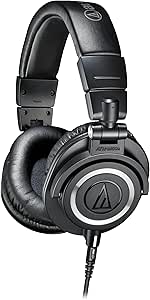 | Best for Versatile Studio Monitoring | Driver size: 45 mm | Driver type: Dynamic | Frequency response: 20 Hz–28,000 Hz | VIEW LATEST PRICE | See Our Full Breakdown |
| Audio-Technica ATH-M30x Professional Studio Monitor Headphones |  | Best Compact Studio Pick | Driver type: Dynamic | Driver size: 40 mm | Frequency response: 20 Hz–20,000 Hz | VIEW LATEST PRICE | See Our Full Breakdown |
| Sony MDR-7506 Professional Studio Headphones | 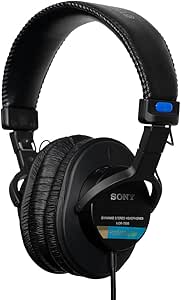 | Best for Straightforward Studio Monitoring | Driver size: 40 mm | Frequency response: 10 Hz–20 kHz | Connectivity: Wired | VIEW LATEST PRICE | See Our Full Breakdown |
| music production headphone | Design | Impedance | Frequency response | Sensitivity |
|---|---|---|---|---|
| beyerdynamic DT 770 Pro X Clos | Closed-back, over-ear | 48 ohms | 5 Hz–35,000 Hz | 97 dB |
| beyerdynamic DT 900 PRO X Open | Open-back, over-ear | 48 ohms | 5 Hz | 100 dB |
| OneOdio Pro-10 Wired Over-Ear | Wired over-ear | 32 ohms | 20 Hz–40 kHz | 110 dB |
| OneOdio A70 Bluetooth Over-Ear | Foldable over-ear, rotatable | — | — | — |
| beyerdynamic DT 770 Pro 80 Ohm | Closed-back, over-ear | 80 ohms | — | 96 dB |
| Audio-Technica ATH-M20xWH Prof | Closed-back, circumaural over-ear | 47 ohm | — | 96 dB |
| FIFINE H8 Wired Studio Monitor | Over-ear, closed-back | — | 20 Hz–20 kHz | — |
| beyerdynamic DT 1990 Pro MKII | Open-back, over-ear | 30 ohm | 5 hertz (as listed) | 94 dB |
| Audio-Technica ATH-M50x Closed | Closed-back, over-ear | 38 ohm | 15 Hz–28 kHz | 99 dB |
| Audio-Technica ATH-M50x Closed | — | 38 ohm | 15 Hz–28 kHz | 99 dB |
| Audio-Technica ATH-M20x Profes | Over-ear, circumaural | 47 ohms | 15–20,000 Hz | 96 dB |
| Sennheiser HD 280 Pro Closed-B | — | 64 ohms | 8–25,000 Hz | — |
| Audio-Technica ATH-M50x Profes | — | 38 ohms | 20 Hz–28,000 Hz | 99 dB |
| Audio-Technica ATH-M30x Profes | Over-ear, circumaural | 38 ohms | 20 Hz–20,000 Hz | 100 dB |
| Sony MDR-7506 Professional Stu | Closed-ear, foldable, over-ear | — | 10 Hz–20 kHz | — |
More Details on Our Top Picks
beyerdynamic DT 770 Pro X Closed-Back Studio Headphones
For production that includes vocals or live instruments, I’d put the DT 770 Pro X near the top of this group. Its closed-back isolation helps limit headphone spill into a microphone, while the 48-ohm impedance makes it easier to drive from a laptop or interface than the 80-ohm DT 770 Pro. That makes this version a more flexible studio choice when you move between recording setups. The detachable 3 m cable and replaceable velour pads also address two common wear points, unlike the fixed-cable DT 770 Pro. The tradeoff is that it remains wired and closed-back: it is useful for tracking, but less suited to open, spacious monitoring than the DT 900 PRO X. I’d choose it for an adaptable recording pair, not as a wireless or open-back mixing option.
Pros:- Closed-back design helps reduce room noise and headphone bleed during recording.
- 48-ohm impedance suits laptops, interfaces, and other common sources.
- Detachable cable and replaceable velour ear pads support repairs and long-term use.
- Includes a 3 m cable and carrying bag.
Cons:- Wired connection restricts movement.
- Closed-back presentation is less open than the DT 900 PRO X for spacious mix monitoring.
- Not water resistant.
Best for: Home-studio producers who record vocals or instruments and need isolation plus an easy-to-drive wired headphone.
Not ideal for: Producers who want an open soundstage for extended mixing sessions or wireless freedom while moving around.
- Design:Closed-back, over-ear
- Impedance:48 ohms
- Driver:45 mm dynamic STELLAR.45
- Frequency response:5 Hz–35,000 Hz
- Sensitivity:97 dB
- Cable:Detachable 3 m mini-XLR
- Weight:10.8 ounces
- Included:Carrying bag
Our verdict“Choose the DT 770 Pro X if you need a versatile, easy-to-drive closed-back headphone for recording and studio work.”
beyerdynamic DT 900 PRO X Open-Back Studio Headphones
The DT 900 PRO X is the clearest fit here for producers who mix in a quiet room and want an open-back presentation. Its design lets sound in and out, which rules it out for microphone tracking but offers a more spacious monitoring experience than the closed-back DT 770 Pro X. Like that model, it uses 48-ohm impedance and STELLAR.45 drivers, so you can connect it to many laptops and interfaces without adding a headphone amp. The detachable mini-XLR cable and included case make it a practical studio choice, too. The tradeoff is not subtle: sound leakage can bother nearby people, and outside noise can interfere with listening. I’d rank it below a closed-back option for all-purpose home production, but ahead of one when open-back mixing is the main job.
Pros:- Open-back design offers a wide, natural soundstage for monitoring.
- 48-ohm impedance works with many laptops and audio interfaces.
- Detachable mini-XLR cable is replaceable.
- Includes a 1/4-inch adapter and protective case.
Cons:- Sound leakage makes it a poor choice for microphone tracking.
- Outside noise can interrupt listening in shared or busy spaces.
- Not water resistant.
Best for: Mixers working in a quiet room who want an open-back headphone that can connect directly to common studio and computing gear.
Not ideal for: Vocalists, podcasters, and producers recording near a microphone, since the open cups leak sound in both directions.
- Design:Open-back, over-ear
- Impedance:48 ohms
- Driver:45 mm dynamic STELLAR.45
- Frequency response:5 Hz
- Sensitivity:100 dB
- Connectivity:Wired, 3.5 mm headphone jack
- Cable:Detachable mini-XLR
- Weight:12.2 ounces
Our verdict“Pick the DT 900 PRO X for open-back mixing in a quiet space, but use the DT 770 Pro X for recording isolation.”
OneOdio Pro-10 Wired Over-Ear DJ Headphones
For producers who also cue tracks or monitor one channel at a time, the OneOdio Pro-10 offers a practical feature the beyerdynamic models lack: 90-degree swiveling ear cups. Its 3.5 mm and 6.35 mm connections also suit a range of audio gear without relying on a separate adapter. The 50 mm drivers are described as delivering powerful bass and crisp highs, a sound profile that can work for beat-making and DJ tasks but may be less suitable for judging balance than the DT 900 PRO X’s open-back monitoring approach. It is also heavier at 415 g, and the cable connection means it is not a wireless option. I’d favor the Pro-10 for hands-on cueing and flexible jack compatibility, not for producers seeking a dedicated open-back mixing headphone.
Pros:- 90-degree swiveling ear cups support single-ear monitoring.
- Includes 3.5 mm and 6.35 mm audio connections.
- 50 mm drivers are described as producing powerful bass and clear vocals.
- Shared audio port allows connection to another pair of headphones.
Cons:- Wired-only design limits movement.
- At 415 g, it is heavier than the listed beyerdynamic DT 770 Pro X.
- Bass-forward presentation may be less useful for balance-critical mixing than an open-back option.
Best for: Beat-makers and DJs who need swiveling cups for single-ear cueing and want both 3.5 mm and 6.35 mm connections.
Not ideal for: Mixers who prioritize an open soundstage or want a lighter, dedicated reference headphone.
- Design:Wired over-ear
- Driver size:50 mm
- Impedance:32 ohms
- Frequency response:20 Hz–40 kHz
- Sensitivity:110 dB
- Connections:3.5 mm and 6.35 mm audio jacks
- Ear cup rotation:90 degrees
- Weight:415 g
Our verdict“Choose the Pro-10 for DJ-style cueing and broad jack compatibility rather than open-back mix analysis.”
OneOdio A70 Bluetooth Over-Ear Headphones, Black
The OneOdio A70 is the flexible listening pick, not the most studio-focused option in this group. It supports Bluetooth and wired playback, so you can move around during general listening and connect by cable when working at a desk. That versatility separates it from the wired-only Pro-10 and the beyerdynamic DT 770 Pro X, both of which are more directly suited to studio monitoring. The foldable design, memory foam cushions, and stated playback time of up to 72 hours make it convenient for portable use; a built-in microphone adds another everyday function. For production, I’d treat its wireless mode as a convenience rather than a substitute for a dedicated wired setup. The charge-time information is unclear, and audio sharing requires a wired connection, so its extra features do not make it the best choice for critical mixing.
Pros:- Supports both Bluetooth and wired listening.
- Listed wireless playback time is up to 72 hours.
- Foldable, rotatable design aids storage and portability.
- Includes 3.5 mm and 6.35 mm audio connections.
Cons:- Battery charge-time information is unclear.
- Audio sharing requires a wired connection to additional headphones.
- Its extra wireless and microphone features do not make it as focused on studio monitoring as the DT 770 Pro X.
Best for: Producers who want one pair for casual wireless listening, portable use, and occasional wired work with studio gear.
Not ideal for: Buyers seeking a dedicated mixing reference or dependable wireless audio sharing during production.
- Design:Foldable over-ear, rotatable
- Connectivity:Bluetooth and wired
- Bluetooth version:5.3
- Bluetooth range:10 meters
- Driver size:40 mm neodymium
- Wireless playback:Up to 72 hours
- Microphone:Built-in HD microphone with noise reduction
- Headphone jacks:3.5 mm and 6.35 mm
Our verdict“Choose the A70 if wireless convenience and portable listening matter more than a dedicated music-production monitoring setup.”
beyerdynamic DT 770 Pro 80 Ohm Closed-Back Studio Headphones
The DT 770 Pro 80 Ohm is the more traditional studio pick: a closed-back design with passive isolation for tracking, podcasting, and monitoring near a microphone. Compared with the DT 770 Pro X, it has a fixed 3 m cable and higher impedance, so it is less convenient to replace the cable and more likely to benefit from an interface or headphone amp. In return, it keeps the familiar closed-back format and includes a 1/4-inch adapter for studio connections. Its replaceable velour pads help with upkeep, but the fixed cable is a meaningful limitation for long-term flexibility. The DT 900 PRO X is the better match for open, spacious monitoring; this model makes more sense when isolation matters more than an open presentation or a detachable lead.
Pros:- Closed-back design helps reduce sound leakage into recording microphones.
- Replaceable velour ear pads support upkeep over time.
- Includes a 3 m cable and 1/4-inch adapter.
- Works with most laptops, though it can sound best with an interface or headphone amp.
Cons:- Fixed cable cannot be replaced separately if damaged.
- 80-ohm impedance can benefit from an audio interface or headphone amp.
- Closed-back design does not offer the open presentation of the DT 900 PRO X.
Best for: Home-studio recordists and podcasters who need closed-back isolation and already have an audio interface or headphone amp.
Not ideal for: Laptop-only users who want an easily driven headphone with a detachable cable; the DT 770 Pro X is a more convenient alternative.
- Design:Closed-back, over-ear
- Impedance:80 ohms
- Driver type:Dynamic
- Frequency range:5 Hz–35,000 Hz
- Sensitivity:96 dB
- Cable:Fixed 3 m straight cable
- Connectivity:Wired 3.5 mm jack with 6.35 mm adapter
- Weight:9.5 ounces
Our verdict“Choose the DT 770 Pro 80 Ohm for isolated tracking when you have suitable drive gear and do not need a detachable cable.”
Audio-Technica ATH-M20xWH Professional Studio Monitor Headphones, White
The ATH-M20xWH is the straightforward choice here for home producers who need closed-back headphones for tracking and basic mix work. Its 40 mm dynamic drivers are tuned for stronger low-frequency output, which can make kick and bass easier to monitor, but that emphasis may be less useful when you want a neutral reference for final mix decisions. Compared with the more feature-rich FIFINE H8, it has a simpler fixed cable setup; compared with the ATH-M50x bundles, it lacks swiveling earcups and spare cables. The 9.8 ft single-side cable gives room to move around a desk or recording position, while the closed cups help limit sound spill into a microphone. The tradeoff is a wired, relatively basic design, with no stated water resistance.
Pros:- Closed-back circumaural design helps reduce sound leakage during recording
- 40 mm drivers are tuned for enhanced low-frequency monitoring
- Long 9.8 ft single-side cable suits desk and tracking setups
- 261 g weight keeps the listed build relatively light
Cons:- Bass-forward tuning may be less suitable for judging final tonal balance
- Fixed wired connection restricts mobility and cable replacement
- No water-resistance rating is provided
Best for: Beginning home producers who need an affordable-feeling, wired closed-back monitor for recording vocals and checking mixes in a shared room.
Not ideal for: Producers who need a highly neutral mastering reference, wireless mobility, or swiveling cups for one-ear monitoring.
- Driver size:40 mm
- Driver type:Dynamic
- Impedance:47 ohm
- Sensitivity:96 dB
- Design:Closed-back, circumaural over-ear
- Connectivity:Wired, 3.5 mm headphone jack
- Cable length:9.8 ft
- Weight:261 g
- Warranty:2 years
Our verdict“Choose the ATH-M20xWH for basic tracking and home production where closed-back isolation matters more than upgradeable cables or a more mix-focused feature set.”
FIFINE H8 Wired Studio Monitor Headphones
The FIFINE H8 earns its place for producers who switch between consumer devices and studio gear: it includes detachable coiled cables with both 3.5 mm and 6.35 mm plugs. That makes it more adaptable than the fixed-cable ATH-M20xWH, and the detachable design is useful if a cable wears out or a different reach is needed. Its 50 mm drivers and stated 20 Hz–20 kHz response cover the typical listening range, while closed-back cups and passive isolation suit recording near a microphone. The coiled leads can be convenient at a workstation, though they may tug or feel cumbersome when moving around. Compared with the bundle-oriented ATH-M50x, the H8 offers fewer listed accessories and no one-ear swivel-monitoring feature. Its padded fit is a plus, but closed cups can feel warm over long sessions.
Pros:- Two detachable coiled cables include 3.5 mm and 6.35 mm connectors
- Closed-back construction and passive isolation suit recording and tracking
- 50 mm drivers cover the stated 20 Hz–20 kHz frequency range
- Adjustable headband and padded ear cushions support extended use
Cons:- Coiled cables can feel heavy or restrictive when moving around
- Closed-back pads may become warm during long sessions
- No swiveling earcups are specified for single-ear monitoring
Best for: Home-studio producers and musicians who connect to both an audio interface and standard headphone output and want replaceable cables with included plug options.
Not ideal for: Mixers who prioritize open, airy listening or wear headphones for long sessions in warm rooms.
- Driver size:50 mm
- Frequency response:20 Hz–20 kHz
- Design:Over-ear, closed-back
- Noise isolation:Passive
- Weight:265 g
- Cables:Two detachable 9.8 ft coiled cables
- Connectors:3.5 mm and 6.35 mm
- Warranty:1 year
Our verdict“Pick the H8 if connector flexibility and replaceable cables matter more to your studio workflow than the ATH-M50x bundle’s extra accessories.”
beyerdynamic DT 1990 Pro MKII 30 Ohm Open-Back Studio Headphones
For mix decisions that benefit from a spacious presentation, the DT 1990 PRO MKII is the specialist pick in this group. Its open-back design supports a less enclosed listening experience than the closed-back ATH-M50x, making it better suited to a quiet room for detailed editing, stereo placement, and mastering checks. The listed 30-ohm impedance is intended to work with laptops, interfaces, and mobile devices without a dedicated headphone amplifier, so it is easier to integrate than many high-impedance studio designs. A detachable cable, velour cushions, and protective case add practical value for a premium work tool. The main compromise is inherent to the open construction: sound leaks in and out, so it is a poor choice for vocal tracking beside a live microphone or for noisy spaces. The product data also describes its driver type inconsistently, so I would not rely on that spec alone.
Pros:- Open-back presentation is suited to detailed mixing and stereo-image work
- 30-ohm impedance is designed for use with common devices without a dedicated amp
- Detachable cable and protective case are included
- Velour ear cushions are described as comfortable for long sessions
Cons:- Open-back construction offers no noise isolation and leaks sound
- Unsuitable for close-mic tracking where headphone bleed is a concern
- Supplied driver-type and frequency-response details are incomplete or inconsistent
Best for: Mixers and mastering-focused producers working in a quiet room who want an open presentation and can keep headphone bleed away from microphones.
Not ideal for: Vocalists recording near a microphone, producers in noisy rooms, or anyone needing sound isolation for shared spaces.
- Impedance:30 ohm
- Sensitivity:94 dB
- Frequency response:5 hertz (as listed)
- Design:Open-back, over-ear
- Connectivity:Wired, 3.5 mm headphone jack
- Cable:Detachable
- Weight:13.3 ounces
- Included items:Detachable cable, ear cushions, protective case, user manual
- Warranty:2 years
Our verdict“Choose the DT 1990 PRO MKII for quiet-room mix and mastering work, not for tracking or listening where isolation is needed.”
Audio-Technica ATH-M50x Closed-Back Monitor Headphones, White Bundle
The ATH-M50x White Bundle is the more adaptable closed-back option for producers who track, edit, and monitor from different setups. Its swiveling earcups make one-ear monitoring practical, a feature the simpler ATH-M20xWH does not list, while three detachable cables let you choose between coiled and straight connections. The 45 mm dynamic drivers and stated 15 Hz–28 kHz range give it a broader listed response than the FIFINE H8, and the closed-back fit helps keep playback from bleeding into a microphone. The bundle adds a USB-C DAC adapter, stand, pouch, and full-sized case, so it arrives ready for several desk and travel workflows. The tradeoff is that this listing’s accessory-heavy package can be more than a focused studio setup needs, and it remains a wired design. The provided data gives no clear user-reported drawbacks, so fit and tonal preference are worth checking against your workflow.
Pros:- Swiveling earcups support single-ear monitoring
- Three detachable cables provide coiled and straight options
- Closed-back design helps limit sound leakage during recording
- Bundle includes a USB-C DAC adapter, stand, pouch, and full-sized case
Cons:- Wired connection limits movement away from the source
- Closed-back design is less suitable than open-back models for airy, room-like listening
- The bundle includes several accessories that may add clutter for a fixed studio setup
Best for: Producers and recording musicians who need closed-back isolation, one-ear monitoring, and multiple cable options for studio and computer setups.
Not ideal for: Buyers who want an open-back mix reference, wireless listening, or a minimal headphone-only setup without extra bundle accessories.
- Driver size:45 mm
- Driver type:Dynamic
- Frequency response:15 Hz–28 kHz
- Impedance:38 ohm
- Sensitivity:99 dB
- Design:Closed-back, over-ear
- Weight:0.29 kg
- Included accessories:Coiled cable, two straight cables, 1/4-inch adapter, USB-C DAC adapter, carrying pouch, headphone stand, full-sized case
- Warranty:Limited 2-year manufacturer warranty
Our verdict“Choose this ATH-M50x bundle if you need one-ear monitoring and a broad accessory set in a closed-back production headphone.”
Audio-Technica ATH-M50x Closed-Back Monitor Headphones – White Bundle
This ATH-M50x bundle targets producers who want a familiar closed-back studio headphone plus the small accessories needed to connect and store it. The 45 mm dynamic drivers, 38-ohm impedance, and 99 dB sensitivity make it a straightforward wired choice for many production sources; its stated frequency range is the same as the other ATH-M50x White Bundle in this roundup. The included USB-C adapter with built-in DAC gives laptop users a direct connection option, while the coiled and straight cables cover different desk layouts. Compared with the ATH-M20xWH, it adds a fuller accessory package and a more flexible detachable-cable setup, though neither listing offers wireless use. This version includes a cleaning cloth, while the other M50x bundle lists a stand and carrying pouch. Check which extras match your needs: duplicated headphones with different bundles are not meaningfully different mix tools.
Pros:- 45 mm dynamic drivers and stated 15 Hz–28 kHz response suit broad production listening
- USB-C headphone adapter with built-in DAC supports compatible laptop setups
- Detachable coiled and straight cables offer flexible connection lengths
- Full-sized case and microfiber cleaning cloth are included
Cons:- Wired-only design does not support Bluetooth use
- Closed-back construction gives a more enclosed presentation than open-back studio models
- Bundle differs from the other listed ATH-M50x package mainly by its accessories
Best for: Laptop-based producers who want a closed-back ATH-M50x with a USB-C DAC adapter, multiple cable lengths, and a protective case in one package.
Not ideal for: Buyers seeking open-back spatial listening, Bluetooth convenience, or a different headphone sound rather than accessory variations on the ATH-M50x.
- Driver type and size:Dynamic, 45 mm
- Frequency response:15 Hz–28 kHz
- Impedance:38 ohm
- Sensitivity:99 dB
- Weight:0.29 kg
- Included cables:Coiled cable and two straight cables
- Adapters:1/4-inch screw-on adapter and USB-C headphone adapter with built-in DAC
- Included accessories:Full-sized headphone case and microfiber cleaning cloth
Our verdict“Pick this bundle over the other ATH-M50x listing if its USB-C DAC adapter and cleaning cloth fit your setup better than a stand and pouch.”
Audio-Technica ATH-M20x Professional Studio Monitor Headphones
The ATH-M20x makes the most sense for a first home-studio setup where closed-back isolation matters more than extra flexibility. Its 40 mm drivers are tuned for stronger low-frequency response, which can make tracking bass-heavy parts easier to follow, though that emphasis is less neutral than the Sennheiser HD 280 Pro‘s stated linear monitoring sound. The circumaural cups help keep playback from spilling into a microphone, and the single-sided 3 m cable is practical when working at a desk. That same long, fixed cable can snag or feel cumbersome away from the studio. I would choose the M20x for straightforward recording rather than frequent travel or detailed mix decisions; the ATH-M30x adds a folding design and included case for a more portable studio option.
Pros:- Circumaural closed-back design helps limit sound leakage during recording
- 40 mm drivers are tuned for enhanced low-frequency performance
- Single-side cable exit keeps the lead away from both earcups
- 3 m cable gives room to move around a studio desk
Cons:- Fixed 3 m cable can be cumbersome for portable use
- Low-frequency tuning may be less suitable for neutral mix decisions
- No folding design or detachable cable is listed
Best for: New home-studio users recording vocals or instruments who want closed-back isolation and a simple wired setup.
Not ideal for: Mobile producers who need a compact, easy-to-pack headphone or anyone who wants a detachable cable.
- Driver size:40 mm
- Driver type:Dynamic
- Frequency response:15–20,000 Hz
- Impedance:47 ohms
- Sensitivity:96 dB
- Design:Over-ear, circumaural
- Cable:Single-side, 3 m
- Connectivity:3.5 mm headphone jack
Our verdict“Choose the ATH-M20x for affordable, isolated studio tracking, but look to the HD 280 Pro for a more explicitly linear monitoring profile.”
Sennheiser HD 280 Pro Closed-Back Headphones
The HD 280 Pro is the strongest fit here when blocking outside sound is a priority: its closed-back design is rated for up to 32 dB of ambient noise attenuation. That can help a vocalist or engineer hear monitoring clearly in a busy room, while its accurate, linear presentation is better suited to checking balances than the bass-enhanced ATH-M20x. Its collapsible, swiveling earcups make storage easier, and replaceable cable and earpads offer a practical path to maintaining the set over time. The tradeoff is a coiled cable that can pull or feel awkward, plus a wired-only setup. Compared with the ATH-M30x, the HD 280 Pro puts more emphasis on noise attenuation and replaceable parts than on a supplied protective case.
Pros:- Up to 32 dB of stated ambient noise attenuation
- Accurate, linear sound is suited to monitoring
- Collapsible design and swiveling earcups support compact storage
- Cable and earpads are replaceable
Cons:- Wired-only connection limits listening flexibility
- Coiled cable may feel cumbersome or exert a tug
- Does not include the ATH-M30x’s listed protective case
Best for: Recording engineers, vocalists, and home-studio producers working near computer fans, other musicians, or room noise.
Not ideal for: Producers who need wireless listening, a straight cable, or a lightweight option for long sessions away from the studio.
- Type:Dynamic, closed-back
- Fit:Around-ear
- Noise attenuation:Up to 32 dB
- Frequency response:8–25,000 Hz
- Impedance:64 ohms
- Cable:Coiled, 1–3 m
- Connectors:3.5 mm and 6.3 mm stereo
- Weight:220 g
Our verdict“Pick the HD 280 Pro when noise attenuation and maintainable parts matter more than a straight cable or wireless convenience.”
Audio-Technica ATH-M50x Professional Studio Monitor Headphones
The ATH-M50x is the most versatile all-rounder in this group for producers who switch between tracking, one-ear monitoring, and everyday listening. Its 45 mm drivers and stated 20 Hz–28,000 Hz response support a broad listening range, while the product description calls out clear sound and deep bass. The 90-degree swiveling earcups are useful for monitoring with one ear free, a feature the ATH-M20x does not list. A detachable cable also makes replacement easier than with the Sony MDR-7506’s fixed cord. The tradeoff is that it remains wired and closed-back; buyers seeking a neutral, explicitly linear monitoring profile may prefer the HD 280 Pro. Its sound-isolating design helps during recording, but the supplied data does not specify a noise-attenuation figure.
Pros:- 45 mm drivers and broad stated frequency response
- Detachable cable is easier to replace than a fixed cord
- 90-degree swiveling earcups support one-ear monitoring
- Foldable, sound-isolating design suits studio use and storage
Cons:- Wired connection only
- No water resistance is listed
- No specific ambient-noise attenuation figure is provided
Best for: Producers who need one closed-back headphone for home-studio tracking, one-ear monitoring, and casual listening.
Not ideal for: Buyers prioritizing a stated linear monitoring character or anyone who wants wireless headphones or water resistance.
- Driver size:45 mm
- Driver type:Dynamic
- Frequency response:20 Hz–28,000 Hz
- Impedance:38 ohms
- Sensitivity:99 dB
- Connectivity:Wired, 3.5 mm headphone jack
- Cable:Detachable
- Earcup movement:90-degree swiveling
Our verdict“Choose the ATH-M50x for flexible closed-back studio use and one-ear monitoring, while the HD 280 Pro is a stronger match for buyers focused on linear monitoring and noise attenuation.”
Audio-Technica ATH-M30x Professional Studio Monitor Headphones
The ATH-M30x stands out as the most travel-friendly studio option among these Audio-Technica models: it folds down and includes a protective case, unlike the ATH-M20x as described here. Its 40 mm drivers are tuned for detailed audio and clear mid-range definition, a useful emphasis for hearing vocal and instrument parts while editing. The circumaural cups provide passive isolation, though the listing does not claim the stronger attenuation figure stated for the Sennheiser HD 280 Pro; very loud rooms may still intrude. A single-sided cable keeps the connection simple, but wireless connectivity is not listed. This is a sensible pick for a producer who carries a wired setup between rooms, not for someone needing a detachable lead or maximum isolation in a noisy recording space.
Pros:- 40 mm drivers tuned for detailed audio and clear mid-range definition
- Circumaural design provides passive sound isolation
- Collapsible construction is easier to pack than the ATH-M20x
- Protective case and screw-on adapter are included
Cons:- Passive isolation may be insufficient in very loud rooms
- No wireless connectivity is listed
- Single-sided cable is not listed as detachable
Best for: Students and mobile home-studio producers who want foldable wired headphones with a case for moving between workspaces.
Not ideal for: Engineers tracking in very loud environments or producers who need a detachable cable or wireless connectivity.
- Driver type:Dynamic
- Driver size:40 mm
- Frequency response:20 Hz–20,000 Hz
- Impedance:38 ohms
- Sensitivity:100 dB
- Design:Over-ear, circumaural
- Noise control:Passive noise cancellation
- Included accessories:Cable, protective case, user manual, screw-on adapter
Our verdict“Choose the ATH-M30x if portability and mid-range detail matter more than the HD 280 Pro’s stated high noise attenuation.”
Sony MDR-7506 Professional Studio Headphones
The Sony MDR-7506 is a practical monitoring choice for producers who want a foldable closed-ear design with a long studio lead and basic connection accessories included. Its 40 mm drivers and 10 Hz–20 kHz stated response provide the core specifications for wired monitoring, while the folding construction and soft case help keep it manageable between sessions. Unlike the ATH-M50x, its cord is non-detachable, so a damaged cable cannot be swapped out as readily. The 9.8 ft length is useful at a desk but can become excess slack in a compact workspace. The listing identifies it for professional audio monitoring but does not provide a sensitivity or impedance figure, so buyers comparing amplification needs have less data than with the M50x. It is a simple studio tool, not the most serviceable option here.
Pros:- Closed-ear design helps reduce external noise
- Folding construction supports storage and travel
- Long 9.8 ft cord provides reach around studio equipment
- Soft case and 1/4-inch adapter are included
Cons:- Non-detachable cord is harder to replace than the ATH-M50x cable
- Long cord may leave excess slack in a compact workspace
- Impedance and sensitivity are not specified in the supplied product data
Best for: Producers who need wired closed-ear monitoring, a long reach to studio equipment, and a folding design for storage.
Not ideal for: Buyers who want a replaceable cable, detailed electrical specifications for matching gear, or a short lead for portable setups.
- Driver size:40 mm
- Frequency response:10 Hz–20 kHz
- Connectivity:Wired
- Design:Closed-ear, foldable, over-ear
- Cord length:9.8 ft
- Cord:Non-detachable OFC
- Plug:Gold-plated; 1/4-inch adapter included
- Weight:8 oz
Our verdict“Pick the MDR-7506 for simple, foldable wired monitoring with a long lead, but choose the ATH-M50x if cable replacement matters.”

How We Picked
I ranked these headphones by how well they fit real production tasks: tracking without microphone bleed, monitoring detail during editing, comfort across longer sessions, and practical compatibility with common interfaces and devices. I also weighed build and design choices, including closed-back isolation versus open-back airflow, wired reliability versus wireless convenience, and whether a model is aimed at studio work or broader listening.
The order favors adaptable production tools first, then more specialized or entry-level picks. That puts the DT 770 Pro X and ATH-M50x near the top for their useful closed-back roles, while open-back models rank highly for quiet-room mixing but lower as all-purpose studio choices. Budget-oriented and wireless options remain relevant for specific setups, though their narrower use or fewer production-focused strengths place them below the more versatile picks. The two ATH-M50x white-bundle entries appear separately in the supplied lineup; buyers should compare their included accessories and listing details rather than assume they are different headphone designs.
Factors to Consider When Choosing Music Production Headphones
Choosing music production headphones is less about finding one model that does everything than matching its design to your room, recording habits, and monitoring chain. These broader checks can prevent common mismatches that a spec sheet alone won’t reveal.
Decide Whether You Need Isolation or an Open Sound
Closed-back headphones reduce sound escaping into a vocal or instrument microphone, which makes them the safer choice for tracking in the same room. Open-back headphones let air and sound pass through the earcups, a design many listeners prefer for longer, quiet-room editing and mixing sessions. The tradeoff is that open-back sound can leak into microphones and outside noise can interfere with listening. A common mistake is buying open-back headphones as the only pair for recording vocals. If you work in a shared or untreated space, prioritize isolation; if you already have tracking covered, an open-back pair can fill a separate mixing role.
Match Impedance and Connection to Your Equipment
Headphone impedance affects how readily a source can drive a pair to useful listening levels, but it does not alone determine sound quality. Check the headphones’ requirements against your laptop, audio interface, mixer, or portable device before buying. A model that plays loudly from a phone may behave differently from a higher-impedance studio version, especially if you need headroom for quieter material. Wired connections also avoid the added delay and battery dependence that can complicate recording. Bluetooth can be handy for casual playback, but I would not choose it as my primary connection for performance monitoring or precise editing.
Treat Tonal Balance as a Translation Tool
Headphones can reveal editing clicks, vocal details, and low-level noise, but a flattering sound can lead you to make mix decisions that do not translate to speakers. Before committing, check whether the headphone’s tonal character suits your work and whether you can compare your mixes on other systems. Bass-heavy playback may encourage you to reduce low frequencies too much, while a bright presentation can make you soften treble that is already balanced. Avoid relying on a single pair as the final judge of every mix. Familiar reference tracks and occasional speaker checks help compensate for the way headphones present stereo width and bass.
Prioritize Fit for the Length of Your Sessions
Clamp force, earcup space, padding, and weight shape comfort more than a short listening session can suggest. A secure fit helps keep the sound consistent, but excessive pressure can become distracting during long editing blocks. If possible, check return terms and fit dimensions before purchase, especially if you wear glasses or have larger ears. Replaceable pads can extend a headphone’s useful life, though pad changes may also alter the seal and perceived sound. Choose for the sessions you actually do: a compact, firm fit may work for short tracking takes, while extended production calls for comfort you can tolerate for hours.
Pay for the Job You Need, Not the Most Premium Label
A more expensive pair makes sense when its construction, detail, comfort, or specialized design solves a real limitation in your workflow. It cannot fix poor room acoustics, compensate for unfamiliar monitoring, or guarantee mixes that translate. Beginners often gain more from learning one familiar pair and checking references than from moving quickly to a premium model. Conversely, producers who mix for long sessions in a quiet room may value the refinement and open design of a higher-end option. Start by identifying what your current headphones prevent you from doing, then spend toward that specific gap.
Check the Exact Listing and Included Accessories
Product names can appear in multiple configurations, and bundle listings may differ in cables, adapters, or other included items even when the headphone itself is the same. The two white ATH-M50x entries in this roundup are a good reason to compare listing contents rather than treating every repeated name as a distinct model. Confirm connector type, cable style, adapter inclusion, and whether accessories meet your interface or tracking setup. Also check the exact model suffix, since related headphones can differ in impedance or design. This quick check helps avoid paying attention to the color or bundle label while missing the details that affect daily use.
Frequently Asked Questions
Can I use open-back headphones to record vocals?
You can, but sound from open-back headphones may leak into a sensitive vocal microphone, especially at higher monitoring levels. Closed-back models are usually the easier choice when the singer and microphone share a room. If you prefer an open-back pair, keep playback quiet and test for bleed in the recorded track before a full session. The DT 900 PRO X and DT 1990 Pro MKII are better viewed as quiet-room listening or mixing options than default vocal-tracking choices. Your microphone pattern, distance, and room noise also affect the result.
Are Bluetooth headphones suitable for music production?
Bluetooth headphones can work for casual listening, checking a rough mix, or monitoring playback when a cable is inconvenient. Wireless audio may add latency, which can make playing or singing along feel out of sync, and battery status becomes part of the session setup. Codec processing can also mean the wireless signal is not identical to a wired connection. For recording, editing, and timing-sensitive work, a wired pair is the more dependable primary tool. A wireless model can still serve as a secondary listening option rather than a studio reference.
Do I need separate headphones for tracking and mixing?
Not necessarily, particularly if you are starting out or work in a quiet room with only occasional recording. A closed-back pair can handle tracking and general production, though its presentation may not be your preferred choice for long mixing sessions. Separate pairs become more useful when you record often and also want an open-back design for quiet-room mixing. Using two different designs can expose different issues, but only if you learn how each one presents sound. If you buy one pair first, choose the task you do most and check mixes on other playback systems.
Should I buy a high-impedance headphone for my home studio?
Only if your audio interface or headphone amplifier can drive it comfortably. Impedance is one part of compatibility, alongside sensitivity and the output power of your source, so a higher number is not automatically better for studio work. A weak headphone output may leave you with limited volume or headroom, particularly for quiet recordings. Check your interface specifications and the headphone’s requirements before choosing. If you often switch between an interface, laptop, and phone, a model that works well across those sources may be more convenient.
What should I check when two listings appear to be the same headphone?
Compare the exact model name and suffix first, then look at the included cables, adapters, and bundle contents. A color variant or bundle may be the same headphone design, while a similar-looking model can have different technical details. Check whether the listing describes a wired connection, impedance, and the accessories you need for your interface. The repeated ATH-M50x white-bundle entries in this roundup illustrate why listing contents deserve a closer look. If the included items are unclear, do not assume that the bundle provides a meaningful upgrade.
Conclusion
Best overall: I’d choose the beyerdynamic DT 770 Pro X for a versatile closed-back studio role that covers tracking and everyday production. Best value: the Audio-Technica ATH-M50x is a strong all-round alternative, while buyers focused on a simpler entry point can look at the ATH-M20x. Best premium: the beyerdynamic DT 1990 Pro MKII suits producers who specifically want an open-back option for quiet-room work. Best for beginners: I’d start with a wired closed-back model that fits the available interface and recording setup, rather than paying for premium features before building listening references. For vocal tracking and noisy rooms, favor the HD 280 Pro or another closed-back pick; for open-back mixing, consider the DT 900 PRO X; and for casual wireless listening, the OneOdio A70 has a different role from the wired studio choices.
Fall Picks
fall essentials
As an affiliate, we earn on qualifying purchases.