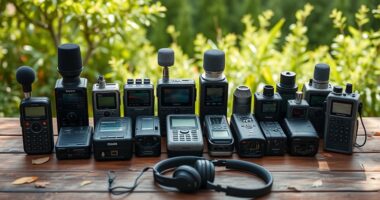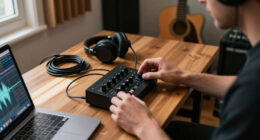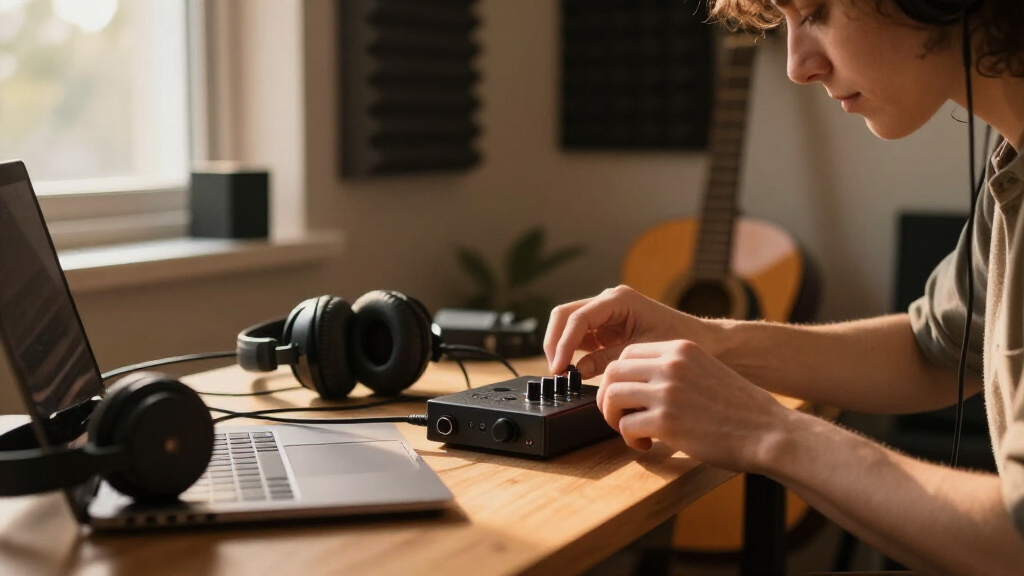

Searching for the best compact USB audio interfaces in 2026? The Focusrite Scarlett 2i2 4th Gen stands out as the overall top choice for its reliable performance and user-friendly design. For those prioritizing value, the M-Audio M-Track Duo offers solid features at a lower price. Meanwhile, the Arturia MiniFuse 1 appeals to users who want a versatile combo of audio and MIDI options in a tiny footprint. These devices balance performance, size, and affordability, but each has tradeoffs like limited I/O or slightly higher cost. Continue reading to see how each model compares for your specific needs.

Get audio and creator gear delivered free with Prime
- Fast, free delivery on millions of items
- Prime Video, Amazon Music and more included
- Member-only deals all year
Complete the kit


Key Takeaways
- Top-tier models like the Focusrite Scarlett 2i2 4th Gen deliver reliable sound quality and simple interfaces suitable for most users.
- Budget options such as the M-Audio M-Track Duo provide good value but may lack advanced features or multiple inputs.
- Some compact interfaces include both XLR and line inputs, which is ideal for versatile recording setups, but may increase size or cost.
- High sample rates and phantom power are common in mid-range models, but not always found in the most affordable picks.
- Size and portability are primary considerations, but some models sacrifice I/O options or build quality to stay small.
| BOMGE Mini 2-Channel USB Audio Interface with XLR and 48V Phantom Power |  | Best Compact Budget Interface for Basic Recording | Audio Resolution: 48 kHz | Input/Output Configuration: 2-in/2-out | Inputs: 2 combo XLR/MIC/LINE | VIEW LATEST PRICE | See Our Full Breakdown |
| Cubilux CB5 USB Audio Interface with Stereo Microphone, Line-In, Line-Out, and Headphone Ports |  | Best Multi-Connection Compact Hub for Versatile Recording | Recording Quality: up to 96 kHz/24-bit | Maximum Output Sample Rate: 192 kHz/32-bit | Ports: 2 stereo mic, 1 line-in, 1 line-out, 1 headphone | VIEW LATEST PRICE | See Our Full Breakdown |
| Focusrite Scarlett 2i2 4th Gen USB-C Audio Interface |  | Best Studio-Grade Compact Interface for Serious Recordings | Audio Resolution: up to 24-bit/192 kHz | Inputs: 2 ultra-low-noise mic preamps | Dynamic Range: 120 dB | VIEW LATEST PRICE | See Our Full Breakdown |
| Jolgoo 2×2 USB Audio Interface with 24-Bit/192kHz Recording and +48V Phantom Power |  | Best High-Resolution, Versatile Compact Interface | Audio Resolution: 24-bit/192 kHz | Inputs: 2 XLR/Line combo | Phantom Power: +48V | VIEW LATEST PRICE | See Our Full Breakdown |
| MAONO P2 Hybrid USB-C Audio Interface with Dual XLR Inputs |  | Best Multi-Device Compatible Compact Interface for Versatility | Maximum Resolution: 24-bit/192 kHz | Inputs: Dual XLR | Connectivity: Dual USB (USB-C and USB-A) | VIEW LATEST PRICE | See Our Full Breakdown |
| M-Audio M-Track Duo USB Audio Interface |  | Best Compact Two-Channel Interface for Entry-Level Recording | Audio Resolution: 48 kHz | Connectivity: USB | Compatibility: Mac and PC | VIEW LATEST PRICE | See Our Full Breakdown |
| Arturia MiniFuse 1 USB Audio and MIDI Interface |  | Best Compact Interface with MIDI and Software for Mobile Production | Model: MiniFuse 1 | Interface Type: USB audio and MIDI | Main Input: 1 combo Mic/Instrument/Line XLR | VIEW LATEST PRICE | See Our Full Breakdown |
| Wrugste Solo USB Audio Interface with 48V Phantom Power, 24-Bit/192kHz |  | Best High-Resolution Compact Interface for Detailed Recording | Audio Resolution: 24-bit/192kHz | Phantom Power: 48V | Input Connections: XLR and 6.35 mm combo | VIEW LATEST PRICE | See Our Full Breakdown |
| Focusrite Scarlett Solo 4th Gen USB-C Audio Interface |  | Best Overall for Studio-Quality Sound in a Compact Package | Generation: 4th Gen | Connection: USB-C | Dynamic Range: 120 dB | VIEW LATEST PRICE | See Our Full Breakdown |
| M-Audio M-Track Solo USB Audio Interface |  | Best Budget-Friendly Compact Interface for Basic Recording | Audio Resolution: 48 kHz | Inputs: 1 combo XLR/Line with phantom, 1 Line/Instrument | Outputs: 1/8-inch headphone, stereo RCA | VIEW LATEST PRICE | See Our Full Breakdown |
| Focusrite Scarlett Solo 3rd Gen USB-C Audio Interface |  | Best Overall for Solo Musicians and Vocalists | Connectivity: USB-C (bus-powered, no external power required) | Sample Rate/Resolution: 24-bit/192kHz | Mic Preamps: 1 (3rd Gen Scarlett with switchable Air mode) | VIEW LATEST PRICE | See Our Full Breakdown |
| PreSonus AudioBox 96 25th Anniversary USB Audio Interface |  | Best Value for Versatile Small-Scale Recording | Channels: 2 | Connectivity: USB 2.0 (bus-powered) | Preamps: 2 Class-A mic preamps | VIEW LATEST PRICE | See Our Full Breakdown |
| XTUGA Q-12 USB Audio Interface with XLR and 3.5 mm Microphone Inputs |  | Best Budget-Friendly Entry-Level Interface | Audio Resolution: 16-bit/48 kHz | Channels: 2 | Inputs: XLR and 3.5 mm microphone | VIEW LATEST PRICE | See Our Full Breakdown |
| Synido USB-C 2×2 Audio Interface for Recording, Streaming, and Podcasting, Silver |  | Best Compact Interface with Multiple Monitoring Options | Channels: 2 | Bit Depth: 24-bit | Sample Rate: 48 kHz | VIEW LATEST PRICE | See Our Full Breakdown |
| compact USB audio interface | Inputs | Audio Resolution | Phantom Power | Connectivity |
|---|---|---|---|---|
| BOMGE Mini 2-Channel USB Audio | 2 combo XLR/MIC/LINE | 48 kHz | +48V | USB |
| Cubilux CB5 USB Audio Interfac | — | — | — | — |
| Focusrite Scarlett 2i2 4th Gen | 2 ultra-low-noise mic preamps | up to 24-bit/192 kHz | — | — |
| Jolgoo 2×2 USB Audio Interface | 2 XLR/Line combo | 24-bit/192 kHz | +48V | USB (USB-C and USB-A included) |
| MAONO P2 Hybrid USB-C Audio In | Dual XLR | — | — | Dual USB (USB-C and USB-A) |
| M-Audio M-Track Duo USB Audio | 2 combo XLR/line/instrument | 48 kHz | Yes | USB |
| Arturia MiniFuse 1 USB Audio a | — | — | 48V | — |
| Wrugste Solo USB Audio Interfa | — | 24-bit/192kHz | 48V | — |
| Focusrite Scarlett Solo 4th Ge | Microphone and guitar | — | — | — |
| M-Audio M-Track Solo USB Audio | 1 combo XLR/Line with phantom, 1 Line/Instrument | 48 kHz | — | — |
| Focusrite Scarlett Solo 3rd Ge | — | — | — | USB-C (bus-powered, no external power required) |
| PreSonus AudioBox 96 25th Anni | — | — | — | USB 2.0 (bus-powered) |
| XTUGA Q-12 USB Audio Interface | XLR and 3.5 mm microphone | 16-bit/48 kHz | Switchable 48V | — |
| Synido USB-C 2×2 Audio Interfa | — | — | 48V | USB-C, AUX |
More Details on Our Top Picks
BOMGE Mini 2-Channel USB Audio Interface with XLR and 48V Phantom Power
This option stands out for its simplicity and portability, making it ideal for solo podcasters or musicians who need a straightforward setup. Compared with the Focusrite Scarlett 2i2 4th Gen, it offers fewer features and lower audio resolution—limited to 48 kHz—but its plug-and-play design and dual combo inputs make it accessible for beginners. The inclusion of 48V phantom power supports condenser mics, which is a plus for home studios. However, its 48 kHz resolution may fall short for users seeking high-fidelity recording, and only having two inputs limits multi-mic setups. This pick makes the most sense for newcomers or those prioritizing portability over advanced features.
Pros:- Compact and highly portable design
- Dual combo XLR/LINE inputs support microphones and instruments
- Includes 48V phantom power for condenser mics
- Zero-latency direct monitoring
Cons:- Limited to 48 kHz audio resolution, less suitable for high-fidelity needs
- Only provides two input channels, restricting multi-mic setups
Best for: Beginners, podcasters, or mobile musicians needing a compact, easy-to-use interface with basic features.
Not ideal for: Professional studios or users aiming for high-resolution recording and multiple inputs, as it caps at 48 kHz and only offers two channels.
- Audio Resolution:48 kHz
- Input/Output Configuration:2-in/2-out
- Inputs:2 combo XLR/MIC/LINE
- Phantom Power:+48V
- Monitor Outputs:2 RCA and 1/4-inch
- Connectivity:USB
Our verdict“A great choice for beginners or mobile users who need a simple, portable interface for basic recording tasks.”
Cubilux CB5 USB Audio Interface with Stereo Microphone, Line-In, Line-Out, and Headphone Ports
The Cubilux CB5 excels in providing multiple audio connections within a tiny footprint, making it suitable for streamers and podcasters who need flexibility. Unlike the Jolgoo 2×2, which focuses on studio-grade 24-bit/192kHz recording, the Cubilux offers up to 96 kHz/24-bit for versatile recording and playback. Its multiple inputs and outputs enable multi-track recording, but it cannot run both line-out and headphones simultaneously, which may inconvenience live performers. The bus-powered design enhances portability, yet limited OS support (Windows and macOS) might be restrictive for some mobile users. This device is ideal for content creators requiring multiple simultaneous connections in a compact form.
Pros:- Multiple audio connections for versatile setups
- Supports high-resolution recording and playback up to 96 kHz/24-bit
- Compact, portable design with bus power
- Enables multi-track recording with independent device names
Cons:- Cannot use line-out and headphone output at the same time
- Limited OS compatibility, excluding some Linux or mobile platforms
Best for: Streamers, podcasters, or musicians who need numerous audio connections in a small, portable package.
Not ideal for: Users needing simultaneous line-out and headphone use or those working across unsupported operating systems like Linux or Android.
- Recording Quality:up to 96 kHz/24-bit
- Maximum Output Sample Rate:192 kHz/32-bit
- Ports:2 stereo mic, 1 line-in, 1 line-out, 1 headphone
- Power:USB bus-powered
- Compatibility:Windows, macOS
Our verdict“A flexible, compact hub suited for content creators who need multiple connections and high-resolution audio in a portable form.”
Focusrite Scarlett 2i2 4th Gen USB-C Audio Interface
The Focusrite Scarlett 2i2 4th Gen is favored for its ultra-low-noise preamps and high-quality converters, making it a go-to for serious home recording. Its dual mic preamps and 120 dB dynamic range surpass many competitors like the Jolgoo 2×2 in fidelity, providing cleaner, more detailed recordings. The inclusion of software like Ableton Live Lite and Pro Tools First adds value, though the two-input limit can be restrictive for multi-mic setups. The USB-C connection is modern, but some older computers may need adapters. Compared to the BOMGE Mini, it offers higher resolution and more professional features at a slightly larger size. This pick is best for dedicated musicians or producers needing high-end quality in a compact form.
Pros:- Studio-grade converters with 120 dB dynamic range
- Ultra-low-noise mic preamps for clear recordings
- Includes a comprehensive software bundle
- Air mode adds harmonic warmth to recordings
Cons:- Limited to two inputs, restricting multi-mic recording
- Requires USB-C or adapters for older systems
Best for: Musicians, producers, and serious hobbyists looking for studio-quality sound in a small device.
Not ideal for: Beginners or casual users who don’t require high-fidelity recording or multi-mic setups, as it’s more feature-rich and slightly more complex.
- Audio Resolution:up to 24-bit/192 kHz
- Inputs:2 ultra-low-noise mic preamps
- Dynamic Range:120 dB
- Connection:USB-C
- Included Software:Pro Tools, Ableton, Cubase LE
Our verdict“A compact, high-quality choice for serious home recorders demanding professional-grade sound with minimal size.”
Jolgoo 2×2 USB Audio Interface with 24-Bit/192kHz Recording and +48V Phantom Power
The Jolgoo 2×2 stands out for delivering professional 24-bit/192kHz audio at an attractive price, appealing to musicians and podcasters who need high resolution. Its dual XLR/line combo inputs with independent gain control provide flexibility and clarity, similar to the Focusrite Scarlett 2i2, but with broader compatibility including mobile devices. The rugged metal housing and full connectivity, including stereo out and headphone ports, make it suitable for portable studio setups. However, macOS users might experience some reformatting issues, and its slightly larger size compared to ultra-compact options makes it less ideal for pocket portability. This device is best for mobile recording or desktop setups where high-res audio is a priority.
Pros:- 24-bit/192kHz high-resolution audio conversion
- Full connectivity with stereo out and headphone port
- Rugged metal housing for durability
- Plug-and-play with major DAWs and mobile devices
Cons:- MacOS compatibility may vary and require reformatting
- Slightly larger than ultra-compact models
Best for: Musicians, podcasters, or content creators seeking high-resolution audio with mobile flexibility.
Not ideal for: Users with limited desk space or those who prioritize extreme portability over high-res audio quality.
- Audio Resolution:24-bit/192 kHz
- Inputs:2 XLR/Line combo
- Phantom Power:+48V
- Connectivity:USB (USB-C and USB-A included)
- Housing:Metal
Our verdict“Ideal for those needing high-res audio and portable durability in a compact interface for mobile or desktop use.”
MAONO P2 Hybrid USB-C Audio Interface with Dual XLR Inputs
The MAONO P2 offers impressive versatility for users who need to connect across multiple devices, including computers, smartphones, and cameras. Its dual XLR inputs and 24-bit/192kHz recording capability make it suitable for musicians and streamers alike. Unlike the Focusrite Scarlett Solo, which is more tailored to traditional studio setups, the P2 supports direct VST effects and routing through ProStudio 2, adding creative flexibility. Its aluminum housing and dual USB connectivity support a wide range of mobile and desktop workflows, but maximum microphone gain of 56 dB might be insufficient for some low-output mics. The software features, while powerful, require some learning curve. This device is best for on-the-go content creators who need extensive device compatibility and software options.
Pros:- Connects simultaneously to multiple devices including smartphones and cameras
- Supports high-resolution 24-bit/192kHz recording
- Low-latency direct monitoring with independent mute controls
- Includes versatile software with effects and routing features
Cons:- Maximum microphone gain may be insufficient for some dynamic mics
- Advanced software features may have a learning curve
Best for: Content creators and musicians who want flexible device connectivity and advanced routing capabilities in a small package.
Not ideal for: Low-output microphone users or those seeking plug-and-play simplicity without software complexity.
- Maximum Resolution:24-bit/192 kHz
- Inputs:Dual XLR
- Connectivity:Dual USB (USB-C and USB-A)
- Monitoring:Low-latency direct
- Housing:Aluminum alloy
Our verdict“Best suited for mobile content creators or musicians needing multi-device compatibility and software flexibility in a compact interface.”
M-Audio M-Track Duo USB Audio Interface
The M-Audio M-Track Duo stands out as a straightforward, portable interface that’s ideal for podcasters and solo musicians. Its support for both microphones and instruments, combined with zero-latency direct monitoring, makes it a practical choice for simple recording setups. Compared with the Focusrite Scarlett Solo 4th Gen, it offers similar input options but is limited to only 48 kHz resolution, which may matter for those seeking higher audio fidelity. The inclusion of MPC Beats software adds value, though the 48 kHz cap could be a limitation for users aiming for professional-grade audio. The two-input design simplifies workflows but restricts multi-source recording. This model is best suited for beginners or those needing a portable, no-fuss interface for basic recording tasks.
Pros:- Supports microphones, guitars, and line-level sources
- Zero-latency direct monitoring
- Includes MPC Beats production software
Cons:- Limited to 48 kHz recording resolution
- Only two input channels can be used simultaneously
Best for: Beginners, podcasters, or solo musicians who need a simple, portable interface with basic features.
Not ideal for: Producers or multi-instrument recording engineers requiring higher resolution or multiple inputs.
- Audio Resolution:48 kHz
- Connectivity:USB
- Compatibility:Mac and PC
- Inputs:2 combo XLR/line/instrument
- Preamps:Crystal preamps
- Phantom Power:Yes
- Headphone Output:1/4-inch
- Main Outputs:Stereo 1/4-inch
- Included Software:MPC Beats
Our verdict“A solid choice for entry-level creators seeking portability and straightforward operation with basic recording needs.”
Arturia MiniFuse 1 USB Audio and MIDI Interface
The Arturia MiniFuse 1 excels as a versatile, portable interface that combines audio and MIDI capabilities, making it ideal for musicians who also need to control MIDI gear. Its single combo input is perfect for solo artists or voiceover work but can be limiting for multi-mic setups. Compared to the Focusrite Scarlett Solo 4th Gen, it offers MIDI connectivity and a broader software bundle, including Ableton Live Lite and Analog Lab Intro, which appeals to those starting out or needing integrated tools. The inclusion of balanced outputs supports cleaner monitoring, and the loopback recording feature simplifies capturing application audio. However, the main input’s limitation to one microphone or instrument at a time means it’s less suited for complex recording sessions. This pick makes the most sense for mobile musicians or content creators who need MIDI and software bundles in a compact package.
Pros:- Supports both audio and MIDI connections
- Includes a comprehensive software bundle
- Loopback recording simplifies capturing application audio
- Compact, portable design
Cons:- Single main combo input limits multi-source recording
- No onboard DSP or advanced features
Best for: Musicians, content creators, and producers needing a portable interface with MIDI support and bundled software.
Not ideal for: Multi-mic recording setups or users requiring multiple simultaneous inputs for live band recording.
- Model:MiniFuse 1
- Interface Type:USB audio and MIDI
- Main Input:1 combo Mic/Instrument/Line XLR
- Additional Inputs:2 Instrument/Line TRS
- Phantom Power:48V
- Line Outputs:2 balanced 1/4-inch TRS
- Headphone Output:1 with volume control
- MIDI Connections:5-pin MIDI in/out
- Included Software:Ableton Live Lite, Analog Lab Intro, Guitar Rig 6 LE, Auto-Tune, Splice
Our verdict“Ideal for mobile producers and musicians who value MIDI connectivity and software integration in a compact form.”
Wrugste Solo USB Audio Interface with 48V Phantom Power, 24-Bit/192kHz
The Wrugste Solo prioritizes high-resolution audio, supporting 24-bit/192kHz recording, making it suitable for users demanding detailed sound quality. Its XLR and 6.35 mm combo inputs accommodate a range of microphones and instruments, with phantom power supporting condensers. Compared with the M-Audio M-Track Solo, it offers higher sample rates, which benefits mastering or nuanced recordings. Its plug-and-play design makes it straightforward to use, though lacking bundled software means users need to source their own recording programs. The need for an adapter for 3.5 mm headphones and potential driver setup on Windows can add complexity. This interface is best for hobbyists or semi-professionals who need high-res audio but prefer straightforward hardware.
Pros:- Supports 24-bit/192kHz high-resolution recording
- Provides 48V phantom power for condenser mics
- Supports microphones, guitars, and line-level sources
Cons:- Software not included, requiring separate setup
- Requires adapters for 3.5 mm headphones
- Windows users may need additional driver installation
Best for: Home studio users or hobbyists seeking high-fidelity recording with minimal setup complexity.
Not ideal for: Multi-mic or band recording scenarios, due to single input limitations and absence of software bundle.
- Audio Resolution:24-bit/192kHz
- Phantom Power:48V
- Input Connections:XLR and 6.35 mm combo
- Headphone Output:6.35 mm
- Compatibility:Mac, Windows 10 and later
- Included Items:None
Our verdict“Best suited for users prioritizing high-resolution audio quality in a simple, plug-and-play device.”
Focusrite Scarlett Solo 4th Gen USB-C Audio Interface
The Focusrite Scarlett Solo 4th Gen earns its place as the premier choice for those seeking studio-quality sound in a compact, reliable design. Its 120 dB dynamic range and Air mode provide a richer, more present vocal and guitar tone, which elevates recordings beyond basic setups. Compared with the M-Audio M-Track Duo, it offers higher resolution and a more refined preamp design, making it suitable for serious home studios. The single combo input is ideal for solo work but limits multi-mic or band recordings. Its USB-C connection ensures fast, stable connectivity, and the included software bundle supports all stages of production. The main tradeoff remains its limited input capacity; if recording multiple sources simultaneously is needed, a larger interface might be better. This interface is best for solo artists and hobbyists aiming for professional-quality results.
Pros:- Studio-quality 120 dB dynamic range
- Enhanced Air mode for richer sound
- Compact, durable design with USB-C connection
- Includes professional software suite
Cons:- Limited to one microphone and one instrument input
- Not suitable for multi-source recordings or live band sessions
Best for: Solo singers, guitarists, and home studio enthusiasts focused on high-quality recordings and minimal setup complexity.
Not ideal for: Multi-mic or multi-instrument recording setups, or live band recording requiring multiple inputs.
- Generation:4th Gen
- Connection:USB-C
- Dynamic Range:120 dB
- Inputs:Microphone and guitar
- Sound Mode:Enhanced Air
- Included Software:Pro Tools Intro+, Ableton Live Lite, Cubase LE
Our verdict“A top-tier compact choice for solo performers and those valuing high-fidelity sound in a small form factor.”
M-Audio M-Track Solo USB Audio Interface
The M-Audio M-Track Solo offers a straightforward, budget-conscious option for podcasters and beginners needing reliable sound quality. Its 48 kHz resolution suffices for streaming, podcasting, and casual recording, and the Crystal preamp provides good microphone performance within its class. Compared to the Wrugste Solo, it has the advantage of a more familiar brand and slightly more polished software support. The combo XLR/Line input with phantom power makes it versatile enough for condenser mics, but the limited two-input setup restricts complex multi-source projects. Its simplicity and affordability make it ideal for newcomers, but high-end users should look elsewhere. This interface makes sense for those just starting out or with modest recording needs.
Pros:- Affordable price point
- Supports phantom-powered condenser microphones
- Compact and portable design
- Includes MPC Beats software
Cons:- Limited to 48 kHz maximum resolution
- Only two inputs restrict multi-source recording
- Basic feature set without advanced controls
Best for: Beginners, podcasters, or students requiring a simple, portable interface at an accessible price point.
Not ideal for: Advanced users or multi-instrument recording engineers needing more inputs and higher resolution.
- Audio Resolution:48 kHz
- Inputs:1 combo XLR/Line with phantom, 1 Line/Instrument
- Outputs:1/8-inch headphone, stereo RCA
- Monitoring:USB/Direct switch
- Preamp:Crystal Preamp
- Compatibility:Mac, PC
- Included Software:MPC Beats
Our verdict“A practical, budget-friendly choice for newcomers focused on simple, quality recording without complex features.”
Focusrite Scarlett Solo 3rd Gen USB-C Audio Interface
The Focusrite Scarlett Solo 3rd Gen stands out for its high-quality 24-bit/192kHz converters, which deliver professional-level sound in a compact form. Its Air mode adds brightness to vocals, making it ideal for singer-songwriters who want a polished sound without extra equipment. Compared to the PreSonus AudioBox 96, it offers slightly higher resolution and better preamp quality, though it sacrifices multi-input flexibility for simplicity. The single mic preamp and instrument input limit multi-instrument recordings, which might be restrictive for full-band projects. Still, its bundled software and bus-powered design make it a strong choice for portable recording needs.
Pros:- Exceptional 24-bit/192kHz audio quality for professional recording clarity
- Air mode enhances vocal brightness and presence
- Includes comprehensive software bundle (Ableton Live Lite, Pro Tools Intro+, Hitmaker Expansion)
Cons:- Limited to one mic preamp, restricting multi-mic recording
- Only one instrument input may be insufficient for multi-instrument recordings
Best for: Solo artists, singer-songwriters, and podcasters seeking high-quality sound in a portable device.
Not ideal for: Musicians needing multiple inputs for recording bands or complex setups, due to its single mic preamp and limited inputs.
- Connectivity:USB-C (bus-powered, no external power required)
- Sample Rate/Resolution:24-bit/192kHz
- Mic Preamps:1 (3rd Gen Scarlett with switchable Air mode)
- Instrument Inputs:1 high-headroom, high-impedance
- Outputs:2 low-noise balanced outputs
- Included Software:Pro Tools Intro+, Ableton Live Lite, Hitmaker Expansion
Our verdict“This interface offers top-tier audio quality and simplicity, making it perfect for solo performers and vocalists who prioritize sound clarity.”
PreSonus AudioBox 96 25th Anniversary USB Audio Interface
The PreSonus AudioBox 96 excels in offering versatile connectivity with two Class-A mic preamps, high-headroom instrument inputs, and MIDI I/O, making it well-suited for small home studios. Its support for 24-bit/96kHz recording ensures good sound quality, comparable to the XTUGA Q-12’s 16-bit/48kHz but at a higher resolution. The inclusion of over $1,000 worth of software, including Studio One Artist and Ableton Live Lite, adds significant value, especially for beginners or those on a budget. However, its USB 2.0 connection can be a limiting factor compared to more modern USB-C interfaces, and the global phantom power, while convenient, lacks channel-specific control. Despite these compromises, it offers a compelling mix of features and affordability.
Pros:- Two high-quality Class-A mic preamps with high-headroom inputs
- Includes over $1,000 in bundled software for immediate production
- MIDI I/O adds flexibility for electronic instruments and controllers
Cons:- Limited to USB 2.0, which can restrict data transfer speed
- Maximum resolution of 24-bit/96kHz may be insufficient for professional recording standards
Best for: Beginners and small project studios looking for a reliable, all-in-one solution with extensive bundled software.
Not ideal for: Users needing higher sample rates or future-proofing, as USB 2.0 and 96kHz might be limiting for more advanced recording projects.
- Channels:2
- Connectivity:USB 2.0 (bus-powered)
- Preamps:2 Class-A mic preamps
- Instrument Inputs:2 high-headroom
- Max Resolution:24-bit/96 kHz
- MIDI:Yes
Our verdict“This interface offers great value and flexibility for beginners and small studios, with plenty of software to start producing immediately.”
XTUGA Q-12 USB Audio Interface with XLR and 3.5 mm Microphone Inputs
The XTUGA Q-12 is designed for beginners needing simple, reliable recording with minimal fuss. Its 16-bit/48kHz resolution is adequate for casual streaming, karaoke, or basic home recordings, where ultra-high fidelity is less critical. Supporting condenser mics with switchable phantom power, it grants flexibility for entry-level setups. Compared to the Focusrite Scarlett Solo, it offers basic features at a lower price point, but the tradeoff is in sound quality and resolution. Its plug-and-play USB design makes it accessible for newcomers, though it lacks advanced features like multiple outputs or higher sample rates. It’s ideal for those prioritizing ease of use over professional-grade audio fidelity.
Pros:- Supports condenser microphones with switchable 48V phantom power
- Low-latency, plug-and-play operation for quick setup
- Durable, portable design suitable for mobile use
Cons:- Limited to 16-bit/48kHz, which may be insufficient for professional work
- Only two input channels restrict multi-mic or multi-instrument recording
Best for: Beginners, streamers, or mobile users who need a straightforward, low-cost recording interface.
Not ideal for: Serious musicians or producers seeking high-resolution audio or multi-channel recordings, due to its limited 16-bit/48kHz quality.
- Audio Resolution:16-bit/48 kHz
- Channels:2
- Inputs:XLR and 3.5 mm microphone
- Phantom Power:Switchable 48V
- Connection:USB
- Setup:Plug and play
Our verdict“This interface provides a straightforward, budget-friendly option for beginners and casual users who prioritize simplicity.”
Synido USB-C 2×2 Audio Interface for Recording, Streaming, and Podcasting, Silver
The Synido USB-C 2×2 offers a versatile setup with 24-bit/48kHz quality in a lightweight, portable package. Its three monitoring modes—Stereo, Mix, and USB—are particularly useful for streamers and podcasters who need flexible listening options. Supporting 48V phantom power, it accommodates condenser microphones, while LED level indicators help prevent clipping. Compared to the XTUGA Q-12, it provides higher resolution and more monitoring modes, though its slightly higher weight and size may be less ideal for ultra-portable setups. The absence of advanced features like MIDI or multi-channel inputs keeps it simple, but that makes it more accessible for quick, straightforward recordings.
Pros:- 24-bit/48kHz recording quality for clear audio
- Three monitoring modes for flexible listening setups
- Supports condenser mics with 48V phantom power
Cons:- Limited to 24-bit/48kHz, not suitable for high-end production
- Slightly larger and heavier than ultra-compact models like the XTUGA Q-12
Best for: Podcasters, streamers, and remote content creators seeking a compact yet versatile interface.
Not ideal for: Professional music producers requiring higher-resolution recordings or extensive connectivity options.
- Channels:2
- Bit Depth:24-bit
- Sample Rate:48 kHz
- Phantom Power:48V
- Connectivity:USB-C, AUX
- Weight:0.41 kg
Our verdict“This model is well-suited for content creators needing versatile monitoring and portable recording at a reasonable price.”
How We Picked
I evaluated these audio interfaces based on performance, build quality, usability, and value. Priority was given to devices that balance compact size with strong audio quality and reliable connectivity. I also considered user-friendly features like straightforward controls and adequate I/O options for recording and streaming. Devices were ranked to emphasize those that offer the best mix of portability and performance, with tradeoffs explained for each. The goal was to identify models suitable for home studios, mobile recording, and streaming setups, distinguishing between entry-level and more advanced options.| compact USB audio interface | Connectivity |
|---|---|
| BOMGE Mini 2-Channel USB Audio | USB |
| Cubilux CB5 USB Audio Interfac | — |
| Focusrite Scarlett 2i2 4th Gen | — |
| Jolgoo 2×2 USB Audio Interface | USB (USB-C and USB-A included) |
| MAONO P2 Hybrid USB-C Audio In | Dual USB (USB-C and USB-A) |
| M-Audio M-Track Duo USB Audio | USB |
| Arturia MiniFuse 1 USB Audio a | — |
| Wrugste Solo USB Audio Interfa | — |
| Focusrite Scarlett Solo 4th Ge | — |
| M-Audio M-Track Solo USB Audio | — |
| Focusrite Scarlett Solo 3rd Ge | USB-C (bus-powered, no external power required) |
| PreSonus AudioBox 96 25th Anni | USB 2.0 (bus-powered) |
| XTUGA Q-12 USB Audio Interface | — |
| Synido USB-C 2×2 Audio Interfa | USB-C, AUX |
Factors to Consider When Choosing Compact USB Audio Interfaces
Choosing the right compact USB audio interface involves balancing size, features, and budget. Beyond just the number of inputs and outputs, consider how you’ll use the device—whether for streaming, podcasting, or music production—and ensure it supports your required sample rate and connectivity options. Build quality and driver stability matter, especially if you’ll be using it on the go or for live streaming. Avoid models that cut corners on essential features like phantom power or headphone outputs if you plan to record vocals or guitars. Lastly, compatibility with your system and user interface should influence your choice to prevent frustration and maximize workflow.Size and Portability
Size is often the primary reason for choosing a compact interface, especially for mobile recording or streaming. However, smaller devices may limit input/output options or reduce available controls, which could impact your workflow. Consider how portable you really need it to be and whether you’re willing to sacrifice some features for size. Larger models tend to have more connectivity options, but if you only need a simple setup, a tiny interface can be more convenient without notably sacrificing quality.Input and Output Options
Assess your recording needs carefully—do you require just a mic and instrument, or multiple sources? Many compact interfaces offer 1-2 combo XLR/line inputs, which suit solo musicians or podcasters. More advanced models may include additional line outs or MIDI, but these often come at the expense of size or cost. Avoid models with too few inputs if you plan to expand your setup later, but don’t overpay for features you won’t use. Balance your current needs with potential future upgrades.Audio Quality and Sample Rate
High audio fidelity is vital for professional-sounding recordings. Most quality compact interfaces support 24-bit depth and sample rates up to 192kHz, which covers most recording needs. However, cheaper models might not support higher sample rates, limiting flexibility. Check whether the device offers good preamp quality and low latency, which directly impact your monitoring experience. Investing in a slightly more expensive unit with better specs can be worthwhile if you aim for high-quality recordings or streaming.Build Quality and Durability
A compact device must withstand frequent use, especially if you’re mobile. Look for sturdy metal chassis and reliable connectors to prevent issues like loose jacks or broken controls. Cheaper plastics or flimsy designs may save space but can compromise longevity. If portability is key, prioritize models with robust construction and good customer reviews of durability, even if it means paying a bit more or accepting a slightly larger size.Compatibility and Ease of Use
Ensure the interface is compatible with your operating system, whether Windows, macOS, or others. Driver stability and regular updates matter for a smooth experience. User interface should be straightforward—look for models with minimal controls, simple setup, and clear indicators. Avoid overly complicated devices if you’re new to audio interfaces, but don’t compromise on essential features like phantom power or direct monitoring. Compatibility issues can derail your workflow, so check system requirements before purchase.Frequently Asked Questions
Can I use a compact USB audio interface for live streaming?
Absolutely. Many compact interfaces are designed with streaming in mind, offering low latency and direct monitoring to avoid echo or delay. Ensure the model supports your streaming platform and has enough inputs for your microphone and other sources. A reliable build and stable drivers help prevent disconnections during live sessions. For best results, choose an interface with a headphone output for real-time monitoring and good preamps for clear sound quality.Is it better to get a model with more inputs or a smaller, simpler device?
It depends on your current and future needs. If you only record a microphone or guitar, a small 1-2 input model might suffice, keeping your setup minimal and portable. However, if you plan to expand—adding more mics, instruments, or MIDI gear—consider a larger model with more inputs. Investing in a slightly bigger device now can save you from upgrading later, but if space or simplicity is your priority, a smaller interface will serve well for basic tasks.Do I need to pay more for higher sample rates?
Higher sample rates, like 96kHz or 192kHz, provide finer audio detail, which is useful for professional mixing or mastering. However, most casual users or streamers won’t notice a significant difference beyond 48kHz or 96kHz. More expensive interfaces usually support these higher rates along with better preamps and lower noise floors. If your goal is podcasting or basic recording, a mid-range device with 44.1kHz or 48kHz support is generally sufficient and more cost-effective.Are phantom power features necessary in a compact interface?
Phantom power is essential if you plan to use condenser microphones, which require external power to operate. Many compact interfaces include phantom power, making them versatile for various mic types. If you only intend to use dynamic microphones or instruments, phantom power might be unnecessary. Always verify whether the device provides phantom power if you need it, as not all budget models include this feature.How important is driver support and software compatibility?
Reliable drivers and ongoing software support are key to a smooth recording experience. Poor driver stability can cause dropouts, latency issues, or incompatibility with your DAW. Choose brands known for regular updates and compatibility with your OS. User reviews can reveal common driver problems, so consider those when selecting a model. Investing in an interface with good driver support can prevent many technical headaches over time.Conclusion
The best overall choice for most users is the Focusrite Scarlett 2i2 4th Gen, thanks to its balance of sound quality, durability, and ease of use. Budget-conscious buyers will find the M-Audio M-Track Duo provides solid performance without breaking the bank. For beginners or those seeking a simple plug-and-play device, the Focusrite Scarlett Solo 4th Gen offers straightforward operation in a small package. Professionals or streamers who need a versatile yet compact option might prefer the Arturia MiniFuse 1 with its combined audio and MIDI capabilities. Each of these picks caters to different priorities, helping you find the perfect fit.Fall Picks
fall essentials
As an affiliate, we earn on qualifying purchases.