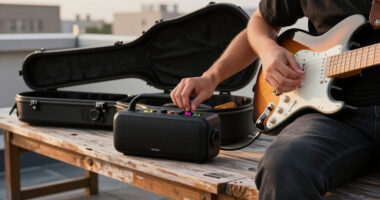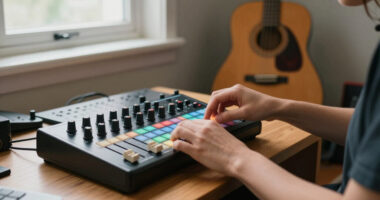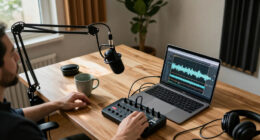
If you’re a music enthusiast, a budding producer, or a seasoned audio professional, having the right accessories can significantly enhance your sound experience. This checklist is designed to guide you through the essential music and audio accessories you should consider for 2026, ensuring you get quality gear tailored to your needs. Whether you’re setting up a home studio, upgrading your headphone game, or expanding your recording tools, this guide has you covered.

Get audio and creator gear delivered free with Prime
- Fast, free delivery on millions of items
- Prime Video, Amazon Music and more included
- Member-only deals all year
Organized into specific categories, each section highlights a top pick along with key features to look for. Use this as a quick reference to compare options, understand what makes each product stand out, and avoid common pitfalls like mismatched compatibility or inadequate features. Remember, choosing the right gear is about matching your goals, workspace, and budget—so take your time to evaluate each item carefully.
To make the most of this checklist, start by identifying your primary use—whether it’s casual listening, professional recording, or music production—and then dive into the sections that align with those needs. Pay close attention to the ‘look for’ criteria to ensure your chosen accessories will fit seamlessly into your setup and deliver the performance you expect.
Headphones & Earbuds
Headphones and earbuds are foundational for both casual listening and professional monitoring. The Bose QuietComfort Wireless Noise Cancelling Headphones are renowned for their exceptional noise cancellation, comfort, and sound clarity. When selecting headphones, consider factors like noise isolation, battery life, comfort during long sessions, and wireless connectivity. Proper fit is crucial—ill-fitting headphones can compromise sound quality and comfort, especially during extended use. Compatibility with your devices, whether Bluetooth or wired, is also essential to ensure seamless operation.
Many buyers make the mistake of prioritizing style over fit or ignoring the importance of sound quality for their specific needs. For example, if you’re a traveler or commuter, active noise cancelling and portability matter most. For studio work, flat frequency response and clarity take precedence. Always check for adjustable headbands, earcup materials, and the presence of features like touch controls or voice assistant integration. Remember, investing in a quality pair of headphones can make a huge difference in your listening and recording experience.
In terms of sizing and fit, ensure the headphones comfortably envelop your ears without excessive pressure. Look for adjustable headbands and cushioned ear pads. Compatibility with your device’s Bluetooth version or wired connections is also key. Think about your typical usage environment—will you need durability for travel or lightweight comfort for extended wear? Matching these factors with your lifestyle will help you select the perfect pair.
What to look for:
- Active noise cancellation capability
- Comfortable, adjustable fit
- Long battery life for wireless models
- Compatibility with your devices (Bluetooth, wired)
- Quality sound with balanced frequency response
Bose QuietComfort Wireless Noise Cancelling Headphones

These Bose QuietComfort headphones offer active noise cancellation, high-fidelity audio, and customizable sound modes. They feature up to 24 hours of battery life, multi-device connectivity, and a wired option for versatile listening experiences.
Pros:
- Excellent noise cancellation and sound quality
- Long battery life of up to 24 hours
- Comfortable over-ear design for extended use
- Multiple listening modes and customizable sound
Cons:
- Premium price may be high for some users
- Bulkier design might not be ideal for portability
Best for: Casual listening and travel
Not ideal for: Professional studio monitoring
Bottom line: Excellent choice for everyday sound isolation.
Audio Interfaces
An audio interface is essential for anyone serious about recording music or podcasts at home or in a professional setting. The Focusrite Scarlett 2i2 4th Gen USB Audio Interface stands out for its user-friendly design, reliable performance, and high-quality audio conversion. When choosing an audio interface, consider factors like the number of inputs and outputs, compatibility with your computer’s OS, and the quality of preamps. These elements ensure your recordings are clear, noise-free, and versatile enough for various recording setups.
Common mistakes include underestimating the importance of good preamps or choosing an interface with insufficient input options. If you’re planning to record multiple instruments or vocals simultaneously, opt for an interface with at least two inputs. Compatibility issues can also arise if your interface doesn’t support your DAW or operating system, so verify these details beforehand. Additionally, look for features like direct monitoring, which allows you to listen to recordings without latency, and bus-powered operation if you want a portable setup.
Size and connectivity matter—ensure the interface fits comfortably into your workspace and connects seamlessly via USB. Consider future expansion—will you need more inputs later? The build quality and driver stability also influence long-term satisfaction, so choose a reputable brand with good support. Properly matching your interface to your computer and workflow will streamline your recording process and improve your final output.
What to look for:
- Multiple input options (at least 2)
- High-quality preamps for clean sound
- Compatibility with your DAW and OS
- Direct monitoring feature
- Compact, portable design
Focusrite Scarlett 2i2 4th Gen USB Audio Interface for Recording, Songwriting, S

The Focusrite Scarlett 2i2 4th Gen is a high-quality USB audio interface designed for musicians, streamers, and podcasters. It features studio-grade sound with 120dB dynamic range, auto gain, clip safe technology, and Air mode for enhanced vocal and guitar recordings.
Pros:
- High-fidelity studio-quality sound
- Auto Gain and Clip Safe prevent clipping and ensure optimal levels
- Includes comprehensive recording software and plugins
- Versatile for recording vocals, guitars, and streaming
Cons:
- Limited to 2 inputs, may not suit larger recording setups
- Requires USB connection to computer, may need additional accessories for mobile use
Best for: Home recording and streaming
Not ideal for: Large-scale professional studio
Bottom line: Reliable audio interface for serious creators.
Studio Monitors
Studio monitors are a critical investment for accurate sound reproduction during mixing and mastering. The KRK RP5G5 ROKIT 5 Generation Five paired with its matching monitor is known for its balanced sound profile and clarity in a compact form. When selecting studio monitors, pay attention to size, power output, and frequency response. The goal is to find speakers that reveal every detail in your mix without coloring the sound. Proper placement and room acoustics also play significant roles in achieving optimal results.
Many beginners make the mistake of choosing monitors based solely on size or price, overlooking the importance of accurate sound reproduction. Larger monitors tend to provide deeper bass, but smaller rooms might benefit from smaller units to prevent overwhelming sound. Compatibility with your workspace and proper positioning are key—place monitors at ear level and form an equilateral triangle with your listening position. Acoustic treatment of your room will further enhance sound accuracy, ensuring you’re not misled by speaker coloration or room resonances.
In terms of compatibility, verify the power requirements and whether your audio interface can drive the monitors adequately. Consider the monitor’s connectivity options—balanced XLR or TRS inputs help reduce noise. The overall goal is to achieve a flat, transparent sound that allows you to make precise mixing decisions. Properly choosing and positioning your studio monitors will elevate your production quality and confidence in your mixes.
What to look for:
- Flat frequency response
- Adequate power output for room size
- Balanced input options (XLR/TRS)
- Good reviews for accuracy and clarity
- Appropriate size for your workspace
KRK RP5G5 ROKIT 5 Generation Five 5-inch Powered Studio Monitor Pair

The KRK RP5G5 ROKIT studio monitors feature custom-designed Class D amplifiers for clear audio and efficient operation. They include a new silk dome tweeter for improved high-frequency performance, a low diffraction baffle for better stereo imaging, and acoustic foam pads for resonance reduction.
Pros:
- High-quality audio with improved high-frequency response
- Efficient Class D amplification reduces heat
- Versatile input options for various audio devices
- Design minimizes resonance and distortion
Cons:
- May be expensive for beginners
- Requires proper positioning for optimal sound
- Limited to 5-inch size, which may not suit all needs
Best for: Home and project studios
Not ideal for: Large-scale commercial setup
Bottom line: Essential for precise sound mixing.
Music Production Software
The right music production software can unlock your creative potential, especially if you’re into composition and notation. The Sibelius Ultimate Music Notation Software offers comprehensive features for arranging, composing, and sharing your music. When choosing software, consider ease of use, compatibility with your hardware, and whether it supports your preferred workflows. Features like real-time collaboration, extensive sound libraries, and advanced notation tools can significantly streamline your creative process.
Many users tend to select software based solely on price or brand, neglecting important factors like file compatibility and learning curve. For composers focusing on notation, look for programs that support multiple staves, flexible layout options, and playback capabilities. If you plan to collaborate, ensure the software offers cloud sharing or online access. Also, check for updates and customer support—these can save you time and frustration in the long run. Remember, a well-chosen notation tool should integrate seamlessly into your digital workspace and inspire your creativity.
Size and system requirements are worth considering—ensure your computer meets the software’s specifications. The subscription model of Sibelius Ultimate allows for regular updates and access to the latest features, which can be a good investment for serious composers. Familiarize yourself with the interface and trial options before committing to a purchase. The right software will become your trusted partner in crafting professional-grade music scores and arrangements.
What to look for:
- Supports multiple staves and layouts
- Real-time playback and sound library
- Compatibility with your OS and DAWs
- Cloud sharing or collaboration features
- User-friendly interface
Sibelius Ultimate Music Notation Software Annual Subscription

Sibelius Ultimate is professional music notation software available via a 1-year subscription. It offers features like automatic chord symbol recognition, an improved Inspector window, and support for MIDI input, helping musicians compose and edit scores efficiently.
Pros:
- Includes latest features with upgrade support
- User-friendly Inspector for editing
- Supports MIDI input for chord recognition
Cons:
- Requires online activation and download
- Subscription-based, not a one-time purchase
Best for: Professional composers and arrangers
Not ideal for: Basic hobbyist notation needs
Bottom line: Enhance your composition workflow easily.
MIDI Controllers
A MIDI controller is a versatile tool for musicians and producers, offering hands-on control over your digital instruments and DAWs. The M-Audio Hammer 88 USB MIDI Keyboard Controller is prized for its realistic hammer action keys, making it ideal for piano players who want expressive control. When choosing a MIDI controller, consider the key action, number of keys, and additional controls like knobs and pads. These features expand your creative options, allowing for dynamic performances and precise editing.
Many buyers overlook the importance of key feel and responsiveness, which can impact your playing and production quality. If you’re a pianist, prioritize a controller with weighted keys that mimic acoustic instruments. For producers focused on beat-making or live performance, additional drum pads and assignable controls are beneficial. Compatibility with your DAW and ease of setup are also critical—look for plug-and-play connectivity and software integration. Properly matching your controller to your workflow can streamline your creative process and inspire new ideas.
Size and portability matter—if you perform live or travel often, a compact design with USB power is advantageous. Consider the number of keys based on your playing style—88 keys provide the most realistic experience, while smaller controllers suit limited spaces. Check for firmware updates and manufacturer support to ensure longevity. With the right MIDI controller, you’ll gain expressive control over your digital instruments, elevating your music production to new levels.
What to look for:
- Weighted hammer action keys
- Full 88-key range for realism
- Assignable controls (knobs, pads)
- Plug-and-play USB connectivity
- Compatibility with major DAWs
M-Audio Hammer 88 USB MIDI Keyboard Controller with 88 Hammer Action Keys

The M-Audio Hammer 88 is a fully weighted, hammer-action MIDI keyboard designed for professional and semi-professional musicians and students. It offers realistic piano feel, extensive control options, and seamless USB-MIDI connectivity, making it ideal for virtual instrument performance and recording.
Pros:
- Realistic hammer-action keys for authentic piano feel
- Fully weighted keys suitable for professional use
- Includes a comprehensive software suite for music production
- Supports iOS connectivity for mobile music creation
Cons:
- No built-in sounds; requires software to produce audio
- Keys do not produce sound directly
- Some features may require additional hardware or software setup
Best for: Pianists and producers
Not ideal for: Limited control options for live performance
Bottom line: Brings your digital music to life.
Microphones
Choosing the right microphone is fundamental for capturing high-quality sound, whether for vocals, instruments, or podcasts. The Lewitt LCT 440 PURE Large Diaphragm Condenser Microphone is celebrated for its clarity, low self-noise, and wide frequency response. When selecting a microphone, consider your primary recording environment, the type of sound you want to capture, and compatibility with your audio interface. Large diaphragm condensers are excellent for vocals and detailed recordings, providing richness and depth to your sound.
Many beginners make the mistake of choosing a microphone based solely on price, without considering the specific application. For vocals, a condenser mic like the Lewitt LCT 440 PURE offers transparency and detail. For live instruments or louder sources, dynamic mics might be more appropriate. Proper placement and understanding of polar patterns (cardioid, omnidirectional) are essential to get the best results. Also, ensure your audio interface has the right input options and phantom power if needed.
Size and handling are also factors—consider a mic that suits your workspace and mobility needs. The Lewitt’s build quality and included accessories make it a versatile choice for studio setups. Matching your microphone to your recording goals will ensure your captures are clear, professional, and true to the source. Investing in a quality mic is a crucial step toward elevating your sound recordings.
What to look for:
- Low self-noise for clarity
- Wide frequency response
- Compatibility with phantom power
- Durability and build quality
- Appropriate polar pattern for your needs
Lewitt LCT 440 PURE Large Diaphragm Condenser Microphone

The Lewitt LCT 440 PURE is a large diaphragm condenser microphone featuring a 1-inch true condenser capsule that captures detailed sound with clarity. Its cardioid polar pattern reduces background noise, making it suitable for studio, stage, and home recording of vocals, instruments, drums, and more.
Pros:
- High-quality 1-inch condenser capsule captures detailed sound
- Effective rear rejection with cardioid pattern
- Versatile for vocals and various instruments
- Includes professional accessories
Cons:
- May require additional equipment for optimal setup
- Designed primarily for studio and stage use, less portable
Best for: Vocal and detailed instrument recording
Not ideal for: Loud live sound reinforcement
Bottom line: Captures professional-grade audio effortlessly.
When building your music and audio setup, start with your primary needs and budget. Prioritize essential accessories that will have the most significant impact on your workflow and sound quality, and then gradually expand your collection as your skills grow.
Remember, investing in quality gear today can save you time and frustration tomorrow. Keep exploring, stay inspired, and enjoy creating your best music yet with the right tools by your side!
Halloween Picks
halloween
As an affiliate, we earn on qualifying purchases.