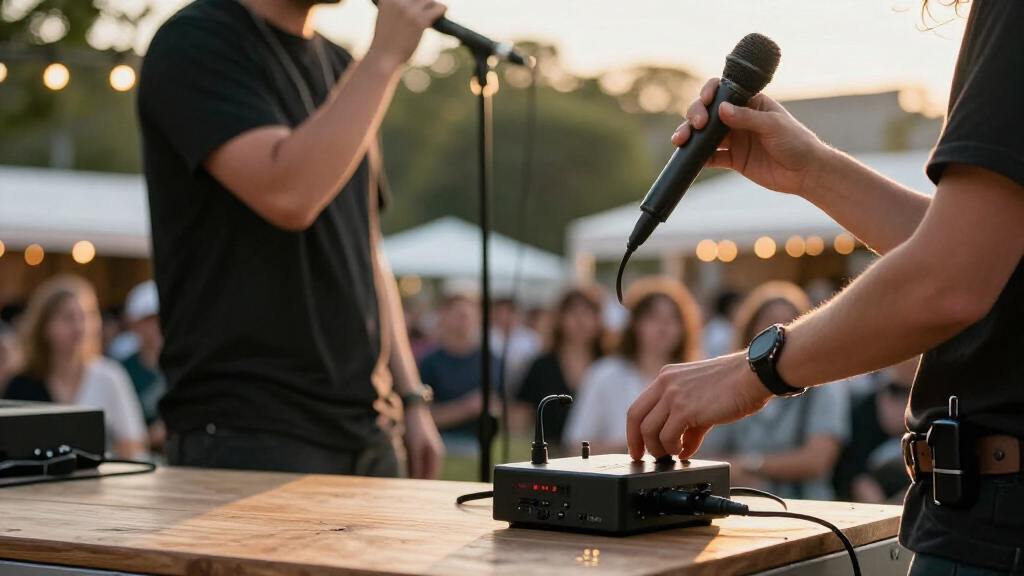

For most singers who need a portable microphone for rehearsals, gigs, or open-mic nights, I’d start with the Shure SM58 with a 25-foot XLR cable: it pairs a familiar stage-ready dynamic mic with a useful cable. The Shure SM58-LC is a strong pick if you already have a cable, while the MAONO PD200W suits singers who want wireless flexibility and recording connections. The main tradeoff is straightforward: wired XLR models favor dependable, uncomplicated live use, while wireless and karaoke systems add freedom or built-in features but may need more setup and offer a different performance focus. Read on for how all 12 options compare and which one fits your setup.

Get audio and creator gear delivered free with Prime
- Fast, free delivery on millions of items
- Prime Video, Amazon Music and more included
- Member-only deals all year
Complete the kit


Key Takeaways
- The Shure SM58 models lead the stage-mic choices. The cable-included SM58 is the most ready-to-go pick; the SM58-LC makes more sense when you already own a cable, and the SM58S adds an on/off switch.
- Portability depends on the whole setup, not just mic size. A handheld XLR mic still needs a cable and compatible mixer or audio input, while the ResponseBridge H9 and karaoke models bundle more of the experience.
- Wireless convenience comes with a different use case. The MAONO PD200W combines wireless and recording connections, while the ECHOMUSSY and karaoke-oriented options are aimed more at casual, feature-led singing than a simple wired stage rig.
- The Pyle and WEYMIC options prioritize accessible wired setups. Pyle’s three-mic kit suits group use, while the WEYMIC WM58 is a straightforward single-mic alternative; neither replaces checking connector and equipment compatibility.
- Podcast features do not automatically make a mic better for singing. The MAONO HD300T and PD200W offer USB/XLR flexibility, but singers should weigh recording convenience against stage handling, monitoring, and the rest of their live setup.
| WEYMIC WM58 Dynamic Vocal Microphone |  | Best Value for a Focused Stage Pickup | Microphone type: Moving-coil dynamic | Polar pattern: Supercardioid | Frequency response: 45 Hz–16,000 Hz | VIEW LATEST PRICE | See Our Full Breakdown |
| Shure SM58 Dynamic Vocal Microphone with 25-ft XLR Cable |  | Best Overall for Live Singing | Microphone type: Dynamic | Polar pattern: Unidirectional cardioid | Frequency response: 50–15,000 Hz | VIEW LATEST PRICE | See Our Full Breakdown |
| Pyle PDMICKT34 3-Piece Professional Dynamic Microphone Kit |  | Best for Groups and Shared Kits | Microphone type: Dynamic, moving coil | Pickup pattern: Unidirectional; hypercardioid listed in technical specs | Frequency response: 60 Hz–15 kHz | VIEW LATEST PRICE | See Our Full Breakdown |
| ResponseBridge H9 Wireless Bluetooth Microphone and Voice Amplifier |  | Best for Self-Contained Portable Amplification | Connectivity: Bluetooth | Connector: USB Type-C | Speaker output: 15W | VIEW LATEST PRICE | See Our Full Breakdown |
| YIOWNER Wired Handheld Karaoke Microphone with 2.5 m Cable |  | Best for Simple Karaoke Setups | Connectivity: XLR listed | Connector: 6.35 mm jack | Polar pattern: Unidirectional | VIEW LATEST PRICE | See Our Full Breakdown |
| MAONO HD300T USB/XLR Dynamic Podcast Microphone |  | Best for USB-to-XLR Flexibility | Microphone type: Dynamic, large diaphragm | Connectivity: USB and XLR | Polar pattern: Supercardioid | VIEW LATEST PRICE | See Our Full Breakdown |
| ECHOMUSSY Dual Wireless Microphone System with AI Vocal Removal |  | Best for Duets and Karaoke | Microphones: 2 handheld wireless microphones | Wireless connectivity: 2.4 GHz | Music connectivity: Bluetooth 5.0 | VIEW LATEST PRICE | See Our Full Breakdown |
| MAONO PD200W Hybrid Wireless Podcast Microphone |  | Best Hybrid Option for Home and Mobile Recording | Microphone type: Dynamic | Connectivity: Wireless, USB, and XLR | Polar pattern: Cardioid | VIEW LATEST PRICE | See Our Full Breakdown |
| BONAOK Q37 Wireless Bluetooth Karaoke Microphone, Rose Gold |  | Best All-in-One Portable Karaoke Mic | Microphone type: Handheld, unidirectional | Connectivity: Bluetooth and audio cable | Bluetooth range: 10 m | VIEW LATEST PRICE | See Our Full Breakdown |
| Shure SM58S XLR Dynamic Vocal Microphone with On/Off Switch |  | Best for Straightforward Live Vocals | Microphone type: Dynamic | Connectivity: Wired XLR | Polar pattern: Cardioid (unidirectional) | VIEW LATEST PRICE | See Our Full Breakdown |
| Shure SM58-LC Cardioid Dynamic Vocal Microphone |  | Best for Serious Live Vocalists | Microphone type: Dynamic | Polar pattern: Unidirectional cardioid | Frequency response: 50 Hz–15 kHz | VIEW LATEST PRICE | See Our Full Breakdown |
| Pyle PDMIC58 Dynamic Cardioid Handheld Microphone with 15 ft XLR Cable |  | Best Value Complete Wired Set | Microphone type: Dynamic, moving-coil | Polar pattern: Unidirectional cardioid | Frequency response: 50 Hz–15 kHz | VIEW LATEST PRICE | See Our Full Breakdown |
| portable vocal microphones for singer | Microphone type | Polar pattern | Connectivity | Frequency response |
|---|---|---|---|---|
| WEYMIC WM58 Dynamic Vocal Micr | Moving-coil dynamic | Supercardioid | — | 45 Hz–16,000 Hz |
| Shure SM58 Dynamic Vocal Micro | Dynamic | Unidirectional cardioid | XLR | 50–15,000 Hz |
| Pyle PDMICKT34 3-Piece Profess | Dynamic, moving coil | — | — | 60 Hz–15 kHz |
| ResponseBridge H9 Wireless Blu | — | — | Bluetooth | — |
| YIOWNER Wired Handheld Karaoke | — | Unidirectional | XLR listed | — |
| MAONO HD300T USB/XLR Dynamic P | Dynamic, large diaphragm | Supercardioid | USB and XLR | 20 Hz–20 kHz |
| ECHOMUSSY Dual Wireless Microp | — | — | — | — |
| MAONO PD200W Hybrid Wireless P | Dynamic | Cardioid | Wireless, USB, and XLR | 16 kHz listed |
| BONAOK Q37 Wireless Bluetooth | Handheld, unidirectional | — | Bluetooth and audio cable | — |
| Shure SM58S XLR Dynamic Vocal | Dynamic | Cardioid (unidirectional) | Wired XLR | — |
| Shure SM58-LC Cardioid Dynamic | Dynamic | Unidirectional cardioid | XLR | 50 Hz–15 kHz |
| Pyle PDMIC58 Dynamic Cardioid | Dynamic, moving-coil | Unidirectional cardioid | — | 50 Hz–15 kHz |
More Details on Our Top Picks
WEYMIC WM58 Dynamic Vocal Microphone
The WEYMIC WM58 suits singers who want a straightforward wired mic with a pickup pattern aimed at keeping attention on the voice. Its supercardioid pattern is narrower than the Shure SM58’s cardioid pattern, which can help reject sound arriving from the sides, though singers need to stay aligned with the mic. The metal body and moving-coil dynamic design make it a practical fit for regular stage or studio vocal use. Unlike the Shure SM58 package, this one does not include an XLR cable, so it is less ready to use out of the box. I’d choose it for a basic XLR setup where focused pickup matters more than bundled accessories; singers who need a gentler, less position-sensitive pickup may prefer the SM58.
Pros:- Supercardioid pattern focuses pickup toward the front
- Zinc-alloy metal body is suited to regular handling
- Dynamic design works for stage and studio vocals
Cons:- XLR cable is not included
- Narrower pickup pattern requires more consistent mic positioning than the Shure SM58’s cardioid pattern
Best for: Singers with an existing XLR cable and audio setup who want a metal-bodied handheld mic with focused side rejection.
Not ideal for: Beginners assembling their first wired setup or singers who move around the mic, since a cable is not included and the supercardioid pickup calls for careful positioning.
- Microphone type:Moving-coil dynamic
- Polar pattern:Supercardioid
- Frequency response:45 Hz–16,000 Hz
- Impedance:600 ohms ±30%
- Sensitivity:-52 ±1 dB
- Connector:XLR
- Body material:Zinc alloy metal
- Included items:1 microphone; cable not included
Our verdict“Choose the WM58 if you already have an XLR cable and want a durable, focused-pickup vocal mic.”
Shure SM58 Dynamic Vocal Microphone with 25-ft XLR Cable
The Shure SM58 package is the most balanced pick here for singers who need a dependable handheld mic and a useful starting cable in one box. Its cardioid pickup is more forgiving of small changes in position than the WEYMIC WM58’s supercardioid pattern, while the built-in filter and shock-mount system address breath pops and handling noise that can distract in live performance. The 25-foot XLR cable also makes this a more complete wired option than the cable-free WEYMIC. The tradeoff is that it still requires an XLR-connected sound system; it is not a self-contained portable speaker or a wireless mic. I’d rank it ahead of the Pyle three-mic kit for a singer prioritizing a single vocal mic and noise-control features over multiple microphones.
Pros:- Included 25-foot XLR cable makes setup more complete
- Cardioid pattern helps limit background pickup
- Built-in filter reduces breath and wind pops
- Shock-mount system helps reduce handling noise
Cons:- Requires an XLR connection and compatible audio equipment
- Wired design limits movement compared with wireless options
Best for: Performing singers who want a rugged single-mic setup with an included long XLR cable and built-in handling-noise and pop reduction.
Not ideal for: Singers seeking wireless operation, an onboard speaker, or a microphone that connects directly to devices without an XLR input.
- Microphone type:Dynamic
- Polar pattern:Unidirectional cardioid
- Frequency response:50–15,000 Hz
- Connectivity:XLR
- Weight:0.32 kg
- Dimensions:10.3 × 4.9 × 3.4 inches
- Enclosure material:Metal
- Included accessory:25-ft XLR cable
Our verdict“Choose the SM58 package for a reliable wired stage mic with useful noise-control features and its cable included.”
Pyle PDMICKT34 3-Piece Professional Dynamic Microphone Kit
For a small group, rehearsal space, or backup-mic collection, the Pyle kit offers a different kind of portability from a single handheld mic: three microphones, three cables, clips, and a hard case travel together. Each mic has a dynamic design, built-in pop filter, metal construction, and an on/off switch, giving singers useful control without needing to unplug between songs. Compared with the Shure SM58 package, this is better suited to outfitting several vocalists, but its XLR-to-1/4-inch cables may not match a mixer or stage box that expects XLR at both ends. The pickup pattern is also described inconsistently as unidirectional and hypercardioid, so I would not choose this kit for a precise pickup-pattern requirement. The bundled quantity is its strength; the connection details deserve a check before buying.
Pros:- Includes three microphones, clips, cables, and a hard case
- Metal bodies and steel mesh grilles suit shared handling
- Built-in pop filters and on/off switches add practical stage controls
- Long cables provide room to move around a practice area
Cons:- Included cables terminate in 1/4-inch connectors, which may not suit all mixers
- Pickup pattern is described as both unidirectional and hypercardioid
- Three-mic bundle is less focused than buying a single vocal mic such as the Shure SM58
Best for: Bands, family karaoke groups, and rehearsal organizers who need several handheld mics with storage and cables in one kit.
Not ideal for: Solo singers who want one refined stage mic or users whose audio gear needs XLR-to-XLR cables or a clearly specified pickup pattern.
- Microphone type:Dynamic, moving coil
- Pickup pattern:Unidirectional; hypercardioid listed in technical specs
- Frequency response:60 Hz–15 kHz
- Sensitivity:-54 dB
- Output impedance:600 ohm, ±3 dB
- Cable connectors:XLR to 1/4 inch
- Cable length:26+ ft
- Included:3 microphones, 3 cables, hard case, storage bag, clips
Our verdict“Choose the Pyle kit when several singers need basic wired mics and shared storage, after checking cable compatibility.”
ResponseBridge H9 Wireless Bluetooth Microphone and Voice Amplifier
The ResponseBridge H9 serves a different need from the wired vocal mics in this roundup: it combines a handheld microphone with a 15W built-in speaker, so a singer can amplify a voice without carrying a separate amp. Bluetooth playback, three voice modes, and stated 8+ hour battery life make it more suited to casual karaoke, announcements, or informal singing than to a conventional stage rig. Compared with the Shure SM58, the H9 is far more self-contained, but it does not offer the same XLR connection for integration with standard mixers. Its manufacturer-stated coverage should not be treated as a guaranteed result in every room, and the single specified channel limits what can be inferred about multi-mic use. I’d pick it for convenience and portability, not for a singer building a traditional live vocal setup.
Pros:- Built-in 15W speaker avoids the need for a separate amplifier
- Bluetooth supports audio playback alongside vocal use
- Three voice modes and separate effect and volume controls
- Battery-powered operation is stated at over eight hours per charge
Cons:- Does not provide the XLR connection found on the Shure SM58
- Only one channel is specified
- Manufacturer-stated coverage may vary with room conditions and use
Best for: Karaoke singers, instructors, and presenters who need a portable voice amplifier with Bluetooth playback and no separate speaker.
Not ideal for: Gigging vocalists who need XLR mixer connectivity, a multi-microphone system, or predictable coverage in larger performance spaces.
- Connectivity:Bluetooth
- Connector:USB Type-C
- Speaker output:15W
- Voice modes:Karaoke, Professional, Acoustic
- Battery life:8+ hours
- Microphone form factor:Handheld
- Power source:Battery powered
- In the box:Microphone, charging cable, user manual
Our verdict“Choose the H9 for portable karaoke or speech amplification when self-contained convenience matters more than mixer integration.”
YIOWNER Wired Handheld Karaoke Microphone with 2.5 m Cable
The YIOWNER is a basic wired choice for singers who want to connect a microphone directly to compatible karaoke or amplification equipment without managing batteries. Its 2.5 m cable, mute function, and built-in pop filter make it practical for home singing where the speaker or system is nearby. Compared with the ResponseBridge H9, it has no onboard speaker or Bluetooth playback, so it depends on external audio gear; compared with the Shure SM58 package, it uses a 6.35 mm jack connection rather than a standard XLR cable setup. That makes input compatibility the first thing to check. The product data also lists XLR connectivity alongside a 6.35 mm connector, so I would verify the actual plug and device fit before relying on it for a performance. It is a modest, plug-in option rather than a stage-system centerpiece.
Pros:- Corded operation requires no batteries
- 2.5 m cable suits nearby karaoke and speaker setups
- Mute function offers quick control between songs
- Built-in pop filter helps reduce vocal plosives
Cons:- Wired connection restricts movement
- Compatibility depends on the correct input, and product data lists both XLR connectivity and a 6.35 mm connector
- Requires an external amplifier, speaker, or karaoke system
Best for: Home karaoke singers with a compatible 6.35 mm microphone input who want a corded mic with a mute control and no battery charging.
Not ideal for: Performers using XLR-only mixers, singers who need wireless movement, or buyers seeking a self-amplified portable microphone like the ResponseBridge H9.
- Connectivity:XLR listed
- Connector:6.35 mm jack
- Polar pattern:Unidirectional
- Cable length:2.5 m
- Weight:200 g
- Signal-to-noise ratio:55 dB
- Power source:Corded electric
- Special feature:Mute function
Our verdict“Choose the YIOWNER for straightforward home karaoke if your equipment has a compatible input and you do not need wireless use.”
MAONO HD300T USB/XLR Dynamic Podcast Microphone
The MAONO HD300T suits singers who want a wired microphone that can start on a computer and later connect to an audio mixer. Its USB and XLR outputs make it more adaptable than the XLR-only Shure SM58S, while the included stand, shock mount, pop filter, and cables reduce the extra gear needed for a home setup. In USB mode, the headphone jack supports zero-latency monitoring, helpful for hearing your vocal as you sing. Its dynamic capsule and supercardioid pattern are aimed at limiting room noise, though mic placement still matters. The tradeoff is that this is a desktop-oriented, cable-bound setup, not a handheld wireless option like the ECHOMUSSY. Monitoring is specified for USB mode, so singers using XLR should plan on separate monitoring equipment.
Pros:- USB and XLR connections support both computer recording and mixer-based setups.
- Zero-latency headphone monitoring is available in USB mode.
- Includes a desktop stand, shock mount, pop filter, and both connection cables.
- Dynamic supercardioid pickup is designed to reduce unwanted room sound.
Cons:- Requires a cable connection and does not support wireless performance.
- Zero-latency monitoring is specified for USB mode, not XLR use.
- The included desktop stand is less suited to handheld or stage singing.
Best for: Home singers who record on a computer now but may move to an XLR mixer or interface later.
Not ideal for: Performers who need a handheld wireless mic for moving around, or singers who want the simplest stage-ready XLR setup without a desktop stand.
- Microphone type:Dynamic, large diaphragm
- Connectivity:USB and XLR
- Polar pattern:Supercardioid
- Frequency response:20 Hz–20 kHz
- Signal-to-noise ratio:80 dB
- Monitoring:3.5 mm headphone jack with zero-latency monitoring in USB mode
- Included accessories:Desktop stand, shock mount, pop filter, USB cable, and XLR cable
Our verdict“Choose the HD300T if you want a supplied-accessory home vocal setup that can connect by USB or XLR, and skip it if you need wireless mobility.”
ECHOMUSSY Dual Wireless Microphone System with AI Vocal Removal
For singers who want to perform together without passing one mic back and forth, the ECHOMUSSY dual wireless system supplies two handheld microphones and a receiver. That makes it a better fit for duets and group karaoke than the single-mic BONAOK Q37, which is designed more for personal, all-in-one use. Bluetooth 5.0 streams backing tracks, while adjustable DSP reverb and AI vocal removal add karaoke-focused controls. The stated range reaches up to 260 feet in open areas, but walls and other obstacles can reduce that distance. This is a receiver-based system, not a self-contained speaker microphone: singers need compatible audio gear with a 6.35 mm input. Compared with the wired Shure SM58S, it gives performers more freedom to move, but involves a receiver and compatible sound system to get started.
Pros:- Includes two handheld wireless microphones for simultaneous singing or speaking.
- Bluetooth 5.0 supports streaming music for karaoke.
- Adjustable DSP reverb and AI vocal removal add performance-focused controls.
- Listed wireless range reaches up to 260 feet in open areas.
Cons:- Requires compatible equipment with a 6.35 mm microphone input.
- Wireless range can be shorter in rooms or areas with obstacles.
- A receiver-based setup is less self-contained than the BONAOK Q37.
Best for: Duets, family karaoke, and small gatherings with a PA system, speaker, or karaoke machine that accepts a 6.35 mm connection.
Not ideal for: Solo singers seeking a compact mic that works by itself, or buyers without compatible audio equipment to connect the receiver.
- Microphones:2 handheld wireless microphones
- Wireless connectivity:2.4 GHz
- Music connectivity:Bluetooth 5.0
- Wireless range:Up to 260 ft in open areas
- Connector:6.35 mm jack
- Features:AI vocal removal, DSP reverb, noise reduction, and voice changer
- Included components:Receiver, two wireless microphones, and battery
Our verdict“Pick the ECHOMUSSY for two-person karaoke through compatible sound equipment, but choose a self-contained karaoke mic if you do not have a receiver input available.”
MAONO PD200W Hybrid Wireless Podcast Microphone
The MAONO PD200W is the most connection-flexible option here: singers can use it wirelessly, over USB, or through XLR, rather than committing to the HD300T’s wired USB/XLR arrangement. Its cardioid pickup and three-stage noise cancellation are useful for voice recording in less-than-treated rooms, and the app-based controls add sound adjustment without requiring a separate mixer. Wireless operation is listed at up to 60 m, with up to 60 hours of battery life when RGB lighting is off. It can also support two microphones on one receiver for interviews, a practical plus for vocal duets or recording sessions. The tradeoffs are its desktop-style build and a listed frequency response of only 16 kHz, which gives less specification detail than the HD300T. Camera and Lightning accessories are sold separately.
Pros:- Wireless, USB, and XLR connections cover several recording setups.
- Cardioid pickup and three-stage noise cancellation help manage background sound.
- Listed battery life is up to 60 hours with RGB lighting off.
- Supports two wireless microphones on one receiver for interviews or paired vocals.
Cons:- Camera and Lightning accessories are sold separately.
- The listed frequency response is 16 kHz, with no wider range specified.
- Its desktop-oriented design is less natural for handheld stage performance than the Shure SM58S.
Best for: Singers who record at home and away from a desk and want wireless, USB, and XLR options in one microphone.
Not ideal for: Stage performers seeking a light handheld vocal mic, or buyers who need supplied camera or Lightning connections.
- Microphone type:Dynamic
- Connectivity:Wireless, USB, and XLR
- Polar pattern:Cardioid
- Wireless range:Up to 60 m
- Battery life:Up to 60 hours with RGB lighting off
- Maximum SPL:128 dB
- Frequency response:16 kHz listed
- Weight:1.32 kg
Our verdict“Choose the PD200W if you need one mic for wireless and wired recording setups, but look to a handheld stage mic for live performance.”
BONAOK Q37 Wireless Bluetooth Karaoke Microphone, Rose Gold
The BONAOK Q37 is aimed at casual singing without a separate receiver or mixer: it combines a handheld microphone with a Bluetooth speaker, MP3 playback, and recording functions. That self-contained approach makes it easier to take along than the ECHOMUSSY system, which needs compatible sound equipment, though the ECHOMUSSY is the better pick when two people need microphones at once. The Q37 connects to a phone by Bluetooth or audio cable, and separate controls for mic, echo, and music volume let singers adjust the balance. A microSD slot supports cards up to 32 GB, but the card is not included. This is a karaoke-oriented device rather than a conventional vocal mic for a PA or recording chain; singers seeking the more standard wired performance setup of the Shure SM58S should choose that instead.
Pros:- Combines a microphone and Bluetooth speaker in one portable device.
- Supports Bluetooth and audio-cable connections to phones.
- Separate microphone, echo, and music volume controls help adjust karaoke playback.
- Supports microSD cards up to 32 GB for stored music.
Cons:- The microSD card is not included.
- Its all-in-one karaoke design is not a substitute for an XLR vocal mic like the Shure SM58S.
- Battery-powered operation requires charging rather than a direct wired performance connection.
Best for: Casual solo singers who want a portable karaoke setup for phone playback, MP3s, or recording without separate audio equipment.
Not ideal for: Gigging singers who need an XLR mic for a mixer, or duets that require two microphones connected at once.
- Microphone type:Handheld, unidirectional
- Connectivity:Bluetooth and audio cable
- Bluetooth range:10 m
- MicroSD support:Up to 32 GB; card not included
- Functions:Microphone, Bluetooth speaker, MP3 player, and recorder
- Power source:Battery powered
- Dimensions:4.25 × 3.86 × 11.02 in
Our verdict“Choose the Q37 for portable solo karaoke with built-in playback, but pick a conventional XLR microphone for a PA or stage vocal setup.”
Shure SM58S XLR Dynamic Vocal Microphone with On/Off Switch
The Shure SM58S is the straightforward live-vocal choice in this group: a wired dynamic mic with a cardioid pattern, a familiar XLR connection, and a built-in on/off switch. Its grille and internal filtering are designed to help tame plosives, breath noise, and handling sounds, which can make close handheld singing more manageable. Compared with the MAONO HD300T, it gives up USB recording and the bundled desktop accessories in favor of a simpler XLR-only setup. The switch is useful for muting between songs, but singers should confirm that its placement and operation fit their performance habits. This is not a wireless or self-contained karaoke mic, and no cable or other accessories are specified in the supplied product details. Choose it for a mixer-based vocal chain, not plug-and-play computer use.
Pros:- Cardioid pickup focuses on sound from the front and helps reduce off-axis noise.
- Built-in switch allows quick muting between songs or speaking sections.
- Grille and internal filtering help control plosives, breath noise, and handling sounds.
- Metal enclosure suits a conventional handheld vocal setup.
Cons:- Requires a wired XLR connection and compatible audio equipment.
- No cable or additional accessories are specified.
- Does not offer the USB connection or included desktop kit of the MAONO HD300T.
Best for: Singers who need a handheld wired dynamic microphone for a mixer-based rehearsal, venue, or PA setup and value an on/off switch.
Not ideal for: Singers who need USB recording, wireless movement, a supplied cable, or an all-in-one karaoke microphone.
- Microphone type:Dynamic
- Connectivity:Wired XLR
- Polar pattern:Cardioid (unidirectional)
- Frequency range:50 Hz–15 kHz
- Impedance:150 ohm
- Sensitivity:54.5 dB
- Special feature:On/off switch
- Weight:10.5 ounces
Our verdict“Choose the SM58S for a simple switched XLR vocal mic, and skip it if you need wireless operation or direct USB recording.”
Shure SM58-LC Cardioid Dynamic Vocal Microphone
The SM58-LC is the sturdier, more performance-focused wired choice here: its cardioid pattern helps limit spill from nearby instruments, and the built-in pop filter cuts plosives without adding an external screen. Its metal construction suits frequent stage use, while the familiar handheld format works for rehearsals, recording, and spoken-word jobs too. Compared with the Pyle PDMIC58, this Shure is the stronger pick for singers prioritizing a proven live-vocal design over an included cable and a lower-friction setup. The tradeoff is that the LC version requires a separate XLR cable and compatible input; it is not a plug-and-play phone or computer mic. Its listed weight is unusually high for a handheld microphone, so check the stated specs if carrying weight matters.
Pros:- Cardioid pickup helps reduce background sound and feedback on stage
- Integrated pop filter helps tame plosives, breath, and wind noise
- Rugged metal construction and reinforced stand adapter suit frequent handling
- Useful across live vocals, recording, podcasting, and broadcast
Cons:- XLR cable is not included, so the microphone needs a separate cable and compatible equipment
- Wired operation restricts movement compared with wireless options
- Listed weight of 19 pounds is unusually high for a handheld mic and may make portability a concern
Best for: Gigging singers and vocalists who already have an XLR cable and mixer, interface, or PA input
Not ideal for: Singers who want a complete ready-to-connect kit, wireless freedom, or direct USB connection to a computer
- Microphone type:Dynamic
- Polar pattern:Unidirectional cardioid
- Frequency response:50 Hz–15 kHz
- Connectivity:XLR
- Form factor:Handheld
- Power source:Corded electric
- Enclosure material:Metal
- Weight:19 pounds
Our verdict“Choose the SM58-LC for a durable, stage-oriented vocal mic if you already own the XLR gear and cable it requires.”
Pyle PDMIC58 Dynamic Cardioid Handheld Microphone with 15 ft XLR Cable
The Pyle PDMIC58 makes the most sense for singers who need a basic wired setup in one box: it includes a 15-foot XLR-to-1/4-inch cable, needs no batteries, and has a metal body with a steel mesh windscreen. Its cardioid pickup and built-in pop filter address common stage nuisances, though they do not make it wireless or self-contained. Compared with the Shure SM58-LC, the Pyle is easier to get connected when your equipment accepts a 1/4-inch plug, but that cable termination may not suit a mixer or interface with XLR-only inputs. The listed frequency range matches the Shure, yet the product data gives no reason to treat the two as interchangeable in build or intended use. Choose this for a straightforward starter rig, not for maximum setup flexibility.
Pros:- Includes a 15-foot cable for a ready-to-connect basic setup
- Cardioid pickup helps reduce background noise and feedback
- Metal body and steel mesh windscreen suit regular handling
- Passive operation requires no batteries or external power
Cons:- Included cable ends in a 1/4-inch connector, which may not match XLR-only equipment
- Wired connection limits movement on stage
- Less suited to buyers seeking the more stage-focused Shure SM58-LC option
Best for: New singers, rehearsal groups, and home users with a 1/4-inch input who want a microphone and cable together
Not ideal for: Performers needing wireless movement or singers whose audio equipment requires an XLR-terminated cable
- Microphone type:Dynamic, moving-coil
- Polar pattern:Unidirectional cardioid
- Frequency response:50 Hz–15 kHz
- Impedance:600 ohms
- Sensitivity:-54 dB
- Connector:XLR
- Included cable:15 ft XLR-to-1/4 in
- Body material:Zinc alloy
- Power:Passive; no batteries required
Our verdict“Pick the PDMIC58 for a simple wired vocal setup when its included 1/4-inch cable matches your equipment.”
How We Picked
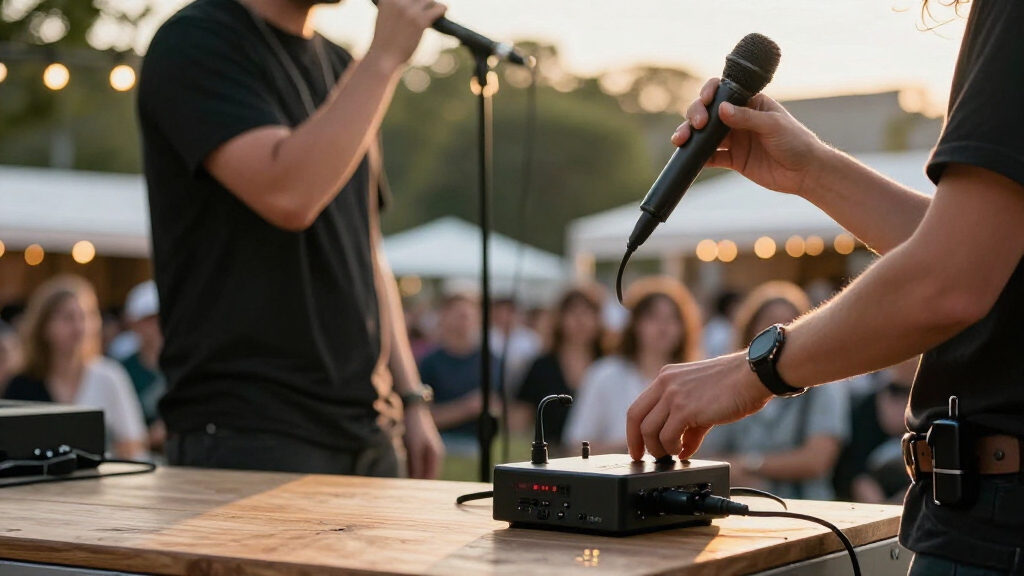
I compared these microphones as tools for singers who may carry them between home, rehearsal, karaoke, and live performance. My criteria were vocal-oriented design, connection type and compatibility, portability of the full setup, ease of operation, and whether included accessories or multiple microphones add practical value. I also separated stage-focused dynamic microphones from karaoke amplifiers and podcast-oriented models, since a feature-rich device is not automatically the better choice for live vocals.
The ranking favors options with a clear singing use case and a simple path into common audio equipment. That puts the cable-equipped Shure SM58 first for a singer seeking a familiar wired stage setup, while the SM58-LC and SM58S serve different cable and switch preferences. Wireless, karaoke, multi-mic, and USB/XLR models rank according to the specific convenience they add, balanced against their narrower use cases and extra compatibility or setup questions.
| portable vocal microphones for singer | Microphone type | Polar pattern |
|---|---|---|
| WEYMIC WM58 Dynamic Vocal Micr | Moving-coil dynamic | Supercardioid |
| Shure SM58 Dynamic Vocal Micro | Dynamic | Unidirectional cardioid |
| Pyle PDMICKT34 3-Piece Profess | Dynamic, moving coil | — |
| ResponseBridge H9 Wireless Blu | — | — |
| YIOWNER Wired Handheld Karaoke | — | Unidirectional |
| MAONO HD300T USB/XLR Dynamic P | Dynamic, large diaphragm | Supercardioid |
| ECHOMUSSY Dual Wireless Microp | — | — |
| MAONO PD200W Hybrid Wireless P | Dynamic | Cardioid |
| BONAOK Q37 Wireless Bluetooth | Handheld, unidirectional | — |
| Shure SM58S XLR Dynamic Vocal | Dynamic | Cardioid (unidirectional) |
| Shure SM58-LC Cardioid Dynamic | Dynamic | Unidirectional cardioid |
| Pyle PDMIC58 Dynamic Cardioid | Dynamic, moving-coil | Unidirectional cardioid |
Factors to Consider When Choosing Portable Vocal Microphones For Singers
Before choosing, decide what “portable” means for your singing: a mic that fits in a bag, a complete system that works without a mixer, or a flexible mic you can use for both gigs and recording. These factors can prevent a compact purchase from turning into a complicated setup.
Start With the Destination: PA, Computer, or Karaoke Speaker
Match the mic’s output to the equipment you will actually use. An XLR microphone usually needs a mixer, audio interface, or PA input; a USB connection is aimed at a computer and does not by itself make a mic ready for a venue. Karaoke microphones with built-in amplification target a different job from a stage mic feeding a sound system. A common mistake is buying based on the connector alone without checking what input the speaker or interface accepts. If you sing in several places, list each destination and identify the connection or adapter required before buying.
Count the Cables, Batteries, and Other Gear
A handheld microphone may be easy to carry while its cable, stand, power supply, and speaker make the full rig bulky. Wired models avoid charging a transmitter, but they limit movement and require cable management. Wireless models can reduce cable clutter, yet add batteries or charging and may need pairing or receiver setup. For a portable rig, think about how quickly you can pack, connect, and troubleshoot everything—not only the microphone body. If you already own compatible gear, a simpler mic can be the more portable choice.
Choose Wireless Freedom Only When It Solves a Real Problem
Wireless operation is useful when you move around a stage, lead a group, or sing where a cable would get in the way. It is less helpful if you mostly stand near a mixer or record at a desk, where a wired connection may be simpler. Check what the system needs to connect to and how it handles charging, pairing, and range; “wireless” does not mean it connects to every speaker automatically. Karaoke microphones with Bluetooth and an amplifier also serve a different purpose from wireless stage systems. Pay for freedom of movement when you will use it, rather than treating it as a blanket upgrade.
Separate Live Vocal Needs From Recording Features
USB/XLR models can bridge computer recording and traditional audio equipment, which is handy for singers who record demos and rehearse through a compatible setup. That versatility does not settle questions about live monitoring, feedback, mic technique, or how the microphone works with your PA. Podcast-oriented features may be useful at a desk but add little if your only goal is a dependable handheld for stage vocals. Decide whether you need one mic to cover distinct tasks or a focused tool for singing. A single dual-purpose mic can reduce gear, but it may involve compromises in setup convenience for each use.
Buy for the Number of Singers and the Type of Event
Solo singers usually benefit more from a well-matched individual microphone than from extra pieces they will not use. A multi-mic kit can make sense for duets, group rehearsals, or events where several people need a mic at once. Before choosing a kit, check how its microphones connect and whether your mixer or speaker has enough compatible inputs. For casual karaoke, built-in effects or amplification may matter more than a traditional stage connection. Avoid paying attention to the microphone count alone: the useful measure is how many people your complete system can support at the same time.
Treat Switches and Included Cables as Setup Choices
An on/off switch gives a singer a way to mute a wired microphone between songs, but it can also be switched off accidentally if handled without care. A supplied cable can make a setup usable sooner, yet its length and connector still need to fit the venue and equipment. Buying a mic without a cable may be sensible if you already own the length and type you prefer. Do not assume every included accessory is a lasting upgrade, or that a model without one is a poor value. Compare what you need to add against what you already have before choosing between otherwise similar options.
Frequently Asked Questions
Can I plug an XLR vocal microphone straight into a Bluetooth speaker?
Usually, not directly: a standard XLR microphone needs a compatible microphone input, while many Bluetooth speakers accept audio wirelessly or through a different type of input. Check the speaker’s manual for a mic-level input before buying an adapter, since a connector that physically fits does not guarantee the right signal path. You may need a mixer or suitable preamp between the mic and speaker. If you want a self-contained karaoke setup, a microphone with built-in amplification may suit that job better than a conventional stage mic. Confirm the full connection chain before taking a wired mic to an event.
Is a wireless karaoke microphone a good substitute for a stage microphone?
It can work for casual singing where portability and built-in playback features matter more than integration with a venue’s sound system. A stage microphone is usually the more direct choice when you need to connect to a PA or mixer and want a conventional live setup. Karaoke models may have different output options, amplification, and controls, so check whether they support the equipment and performance environment you have. Consider the room, audience size, and sound system rather than assuming either type will cover every situation. For regular gigs, a mic designed around the PA connection is often the simpler starting point.
Should I choose the Shure SM58 with a cable or the SM58-LC?
Choose the cable-included SM58 if you need a ready-to-connect XLR cable and its length suits your setup. The SM58-LC is a cleaner fit if you already own a compatible cable or want to select a different length. In either case, check the input on your mixer or PA and make sure the cable reaches without creating a trip hazard. The SM58S adds an on/off switch, which may be useful for muting between songs but is not a sound-system substitute. Your existing accessories and preferred handling are better decision points than the model name alone.
Is a USB/XLR microphone a sensible choice for singing live and recording at home?
It can be a practical option if you want one microphone for computer recording and a separate XLR connection to compatible live equipment. USB and XLR serve different signal paths, so check how the model handles each connection and whether your recording or stage setup needs extra equipment. Do not assume USB will connect directly to a PA, or that an XLR output removes the need for a mixer or interface where one is required. Also decide whether you value versatility more than having a mic designed around only one task. For singers who primarily perform live, a dedicated stage-focused option may mean fewer setup questions.
What should I check before buying a three-microphone kit for group singing?
Check how each microphone connects and whether your mixer, interface, or speaker has enough independent inputs for all singers. Confirm that the kit includes the cables or receivers needed for simultaneous use; a set of several microphones does not always equal a complete multi-person system. Think about how the group will manage mic levels and avoid crowding around one speaker. A three-mic package can be useful for shared rehearsals, but a solo singer may get more practical value from a single microphone suited to their own equipment. Match the kit to the full group setup, not just the number of microphones in the box.
Conclusion
For a singer seeking a dependable wired stage setup, my best overall pick is the Shure SM58 with a 25-foot XLR cable; it arrives with a practical accessory for connecting to compatible gear. My best value direction is the WEYMIC WM58 for a straightforward single wired mic, while the Pyle three-mic kit is a better fit for group use. Beginners who want a conventional path into a mixer or PA can start with the Shure SM58 cable bundle, provided they have compatible equipment. For a best premium-style feature set, consider the MAONO PD200W when wireless and recording flexibility both matter. For specific needs, choose the ResponseBridge H9 or a karaoke model for a more self-contained, casual singing setup, the SM58S if you want an on/off switch, or the SM58-LC if you already own a cable. The right choice comes down to your sound system, how freely you need to move, and whether you are singing solo, recording, or sharing the mic.