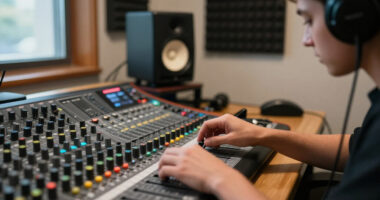
For a balanced starting point, I’d choose the Sennheiser HD 560S as the best overall open-back studio headphone in this lineup, with the beyerdynamic DT 900 Pro X standing out for a more robust studio build and the Audio-Technica ATH-R50X as another serious mixing option. The right choice depends on whether you prioritize a neutral sound, a forgiving fit, durable parts, or a headphone that works well from your existing interface or laptop. Open-back designs offer an airy presentation, but they leak sound and provide little isolation, so they are a poor fit for noisy rooms or shared spaces. Impedance, comfort over long sessions, and replaceable parts can matter as much as sound character. Read on for the full comparison and help matching a model to your work and setup.

Get audio and creator gear delivered free with Prime
- Fast, free delivery on millions of items
- Prime Video, Amazon Music and more included
- Member-only deals all year
Complete the kit


Key Takeaways
- The HD 560S is the clearest all-around starting point: it balances a studio-oriented presentation with a relatively straightforward fit for common home setups.
- The DT 900 Pro X prioritizes studio practicality: its 48-ohm design is less demanding than the 250-ohm DT 990 PRO, while its robust construction suits regular work.
- High impedance changes the buying decision: the DT 990 PRO 250 Ohm may need a capable headphone output, so it is a less convenient match for some laptops and portable devices.
- Premium construction and comfort come at a different tradeoff: the HD 490 PRO and SRH1840 target buyers who value professional-session usability and refinement over a basic entry point.
- Not every open-back option is equally suited to critical mixing: the K240 is semi-open, while the SHP9600 and HD 599 can suit casual listening and home use better than buyers seeking a dedicated reference tool.
| Audio-Technica ATH-R50X Open-Back Headphones |  | Best Overall for Long Studio Sessions | Brand: Audio-Technica | Model: ATH-R50x | Weight: 7.36 ounces | VIEW LATEST PRICE | See Our Full Breakdown |
| Sennheiser HD 560S Open-Back Over-Ear Wired Headphones |  | Best for Natural, Accurate Listening | Design: Open-back, over-ear | Connectivity: Wired | Driver type and size: Dynamic, 38 mm | VIEW LATEST PRICE | See Our Full Breakdown |
| beyerdynamic DT 900 Pro X Studio Mixing Open-Back Headphones |  | Best for Easy Source Compatibility | Impedance: 48 ohms | Frequency response: 5 Hz–40 kHz | Sensitivity: 100 dB | VIEW LATEST PRICE | See Our Full Breakdown |
| beyerdynamic DT 990 PRO 250 Ohm Open-Back Studio Headphones |  | Best for Amp-Equipped Studio Setups | Design: Open-back, over-ear, circumaural | Driver type: Dynamic | Impedance: 250 ohms | VIEW LATEST PRICE | See Our Full Breakdown |
| AKG K240 Studio Semi-Open Wired Headphones | 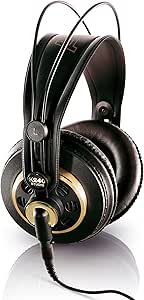 | Best Semi-Open Studio Pick | Design: Semi-open, over-ear | Transducers: 30 mm XXL with Varimotion diaphragms | Cable length: 3 m | VIEW LATEST PRICE | See Our Full Breakdown |
| Sennheiser HD 490 PRO Open-Back Professional Headphones |  | Best for Flexible Mixing | Design: Open-back, over-ear | Frequency response: 5–36,000 Hz | Connectivity: Wired | VIEW LATEST PRICE | See Our Full Breakdown |
| beyerdynamic DT 990 Pro X Open-Back Studio Headphones, 48 Ohm, Black | 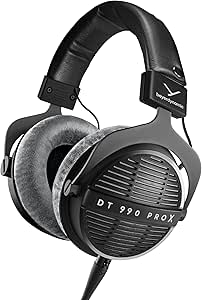 | Best for Direct Device Compatibility | Design: Open-back, over-ear | Impedance: 48 ohms | Driver: STELLAR.45 dynamic | VIEW LATEST PRICE | See Our Full Breakdown |
| HIFIMAN Deva-Pro Wired Over-Ear Open-Back Planar Magnetic Headphone |  | Best Planar Magnetic Pick | Driver type: Planar magnetic | Impedance: 18 ohms | Frequency response: 20 Hz–20 kHz | VIEW LATEST PRICE | See Our Full Breakdown |
| Shure SRH1840 Professional Open Back Headphones |  | Best for Long Critical-Listening Sessions | Design: Open-back, over-ear | Driver type: Dynamic, individually matched 40 mm neodymium drivers | Impedance: 65 ohms | VIEW LATEST PRICE | See Our Full Breakdown |
| beyerdynamic DT 990 PRO 250 Ohm Open-Back Studio Headphones |  | Best for Amp-Equipped Studio Setups | Design: Open-back, over-ear | Driver type: Dynamic | Impedance: 250 ohms | VIEW LATEST PRICE | See Our Full Breakdown |
| Philips SHP9600 Over-Ear Open-Back Studio Monitor Headphones with Detachable Audio Jack |  | Best Value for Home Listening | Design: Over-ear, open-back | Driver size: 50 mm | Impedance: 32 Ω | VIEW LATEST PRICE | See Our Full Breakdown |
| Sennheiser HD 599 Open-Back Wired Headphones, Ivory |  | Best for Comfortable Long Sessions | Design: Open-back, over-ear, wired | Driver type: Dynamic | Audio impedance: 50 ohms | VIEW LATEST PRICE | See Our Full Breakdown |
| open back studio headphone | Design | Impedance | Weight | Sensitivity |
|---|---|---|---|---|
| Audio-Technica ATH-R50X Open-B | — | — | 7.36 ounces | — |
| Sennheiser HD 560S Open-Back O | Open-back, over-ear | 120 ohms | 600 g | 110 dB |
| beyerdynamic DT 900 Pro X Stud | — | 48 ohms | 12.2 ounces | 100 dB |
| beyerdynamic DT 990 PRO 250 Oh | Open-back, over-ear, circumaural | 250 ohms | — | 96 dB |
| AKG K240 Studio Semi-Open Wire | Semi-open, over-ear | — | — | — |
| Sennheiser HD 490 PRO Open-Bac | Open-back, over-ear | — | — | — |
| beyerdynamic DT 990 Pro X Open | Open-back, over-ear | 48 ohms | 10.3 ounces | 97 dB |
| HIFIMAN Deva-Pro Wired Over-Ea | — | 18 ohms | 360 g | 93.5 dB |
| Shure SRH1840 Professional Ope | Open-back, over-ear | 65 ohms | 328 g | — |
| beyerdynamic DT 990 PRO 250 Oh | Open-back, over-ear | 250 ohms | 0.4 kg | 96 dB |
| Philips SHP9600 Over-Ear Open- | Over-ear, open-back | 32 Ω | — | 101 dB |
| Sennheiser HD 599 Open-Back Wi | Open-back, over-ear, wired | — | — | — |
More Details on Our Top Picks
Audio-Technica ATH-R50X Open-Back Headphones
The ATH-R50X balances studio accuracy with a roomy presentation, making it a flexible pick for mixing, mastering, and extended critical listening. Its 207 g weight and redesigned headband are meaningful advantages for long sessions, while the detachable cables in two lengths make it easier to move between a desk and a listening setup. Compared with the Sennheiser HD 560S, this model emphasizes light wear and cable flexibility; both aim for natural sound, but the ATH-R50X supplies a useful long-cable option for studio work. The tradeoff is shared by all open-back designs: sound escapes and outside noise remains audible, so it is a poor fit for tracking beside a live microphone or working in a busy room. I’d choose it for a versatile reference pair, not for isolation.
Pros:- Lightweight 207 g construction and redesigned headband suit long sessions.
- Natural, expansive soundstage supports spatial judgments during mixing.
- Accurate bass and mids are useful for reference listening.
- Two detachable cable lengths and a 6.3 mm adapter offer connection flexibility.
Cons:- Open-back cups leak sound and do not block surrounding noise.
- Wired listening limits movement away from the source.
Best for: Mixers and critical listeners who want a lightweight open-back pair with multiple cable lengths for desk and studio use.
Not ideal for: People recording beside sensitive microphones or working in noisy shared spaces, since the open cups leak sound and provide little isolation.
- Brand:Audio-Technica
- Model:ATH-R50x
- Weight:7.36 ounces
- Cable lengths:3.0 m and 1.2 m, detachable
- Cable connection:2.5 mm twist-lock
- Included connector:3.5 mm mini-plug with 6.3 mm adapter
- Warranty:2 years
Our verdict“Choose the ATH-R50X if you want a light, adaptable open-back reference headphone for quiet studio work and long listening sessions.”
Sennheiser HD 560S Open-Back Over-Ear Wired Headphones
The HD 560S is the straightforward choice here for listeners who put natural, accurate sound ahead of extras. Its open-back presentation and extended bass are intended to help reveal balance and spatial detail, while velour earpieces offer a breathable contact surface for longer listening. Compared with the Audio-Technica ATH-R50X, the HD 560S lists a 6.3 mm connection with a 3.5 mm adapter rather than two cable lengths, so it is less flexible for moving around a studio but remains ready for common headphone outputs. The 120-ohm impedance and wired-only design make source compatibility worth checking before buying. Like the other open-back picks, it is not suited to noisy rooms or recording situations where headphone spill could reach a microphone.
Pros:- Open-back design creates a wide soundstage for spatial listening.
- Natural sound profile with extended bass is aimed at accurate evaluation.
- Detachable cable includes a 3.5 mm adapter for different outputs.
- Velour earpieces suit extended listening sessions.
Cons:- Wired-only use restricts movement around a workspace.
- The 120-ohm impedance may call for checking compatibility with low-output devices.
- Open-back construction leaks sound and offers little noise isolation.
Best for: Home-studio mixers and analytical listeners with a suitable wired source who want a natural presentation and velour earpieces.
Not ideal for: Buyers who need wireless freedom, strong isolation, or a headphone that can be used near an open microphone without sound bleed.
- Design:Open-back, over-ear
- Connectivity:Wired
- Driver type and size:Dynamic, 38 mm
- Frequency range:6 Hz to 38 kHz
- Impedance:120 ohms
- Sensitivity:110 dB
- Earpiece material:Velour
- Cable and connector:Detachable cable; 6.3 mm plug with 3.5 mm adapter
- Weight:600 g
Our verdict“Pick the HD 560S if natural, spacious listening matters more than wireless use or isolation.”
beyerdynamic DT 900 Pro X Studio Mixing Open-Back Headphones
The DT 900 Pro X stands out for combining an open, spacious sound with a 48-ohm design that does not require a dedicated headphone amp according to the product details. That makes it a practical studio reference option for buyers moving between an interface and other wired sources. Its 45 mm driver and detachable mini-XLR cable add useful flexibility for regular studio use. Compared with the beyerdynamic DT 990 PRO 250 Ohm, the DT 900 Pro X is the easier match for less powerful outputs; the older 250-ohm model is more dependent on an amp or suitable interface. The tradeoffs are its sound leakage, lack of water resistance, and plastic enclosure components, which may feel less substantial than some buyers expect from a studio headphone.
Pros:- 48-ohm impedance is designed to work without a dedicated headphone amp.
- Open-back soundstage supports natural imaging for mixing and critical listening.
- Detachable mini-XLR cable can be replaced and includes a 1/4-inch adapter.
- 45 mm driver is specified for low-distortion listening.
Cons:- Open-back construction leaks sound into the room and admits outside noise.
- Not water resistant, limiting use in humid environments.
- Plastic enclosure components may feel less premium than metal construction.
Best for: Studio users who need open-back imaging and want a wired headphone that can reach full volume without a dedicated headphone amp.
Not ideal for: People needing isolation for tracking, wireless convenience, or a water-resistant headphone for humid or mobile use.
- Impedance:48 ohms
- Frequency response:5 Hz–40 kHz
- Sensitivity:100 dB
- Driver size:45 mm
- Weight:12.2 ounces
- Cable:Detachable mini-XLR
- Included adapter:1/4-inch
- Enclosure materials:Plastic, spring steel, and velour
Our verdict“Choose the DT 900 Pro X if you want open-back studio listening with fewer source-power demands than the DT 990 PRO 250 Ohm.”
beyerdynamic DT 990 PRO 250 Ohm Open-Back Studio Headphones
The DT 990 PRO 250 Ohm makes the most sense when a studio interface or headphone amp is already part of the setup. Its open-back, circumaural design gives critical listening a broad presentation, and the replaceable velour pads are a practical detail for a headphone that may see regular use. Compared with the DT 900 Pro X, this model has a much higher 250-ohm impedance, so it is less forgiving of low-powered sources; in return, it suits buyers who specifically want a wired studio headphone for dedicated equipment. The fixed 3 m straight cable also reaches across a desk but is less convenient to replace than a detachable lead. Sound leakage and the lack of water resistance rule it out for noisy or damp environments.
Pros:- Open-back presentation provides a broad soundstage for critical listening.
- Soft circumaural velour pads are replaceable.
- 3 m cable accommodates a studio desk setup.
- Includes a 1/8-inch to 1/4-inch adapter and drawstring bag.
Cons:- 250-ohm impedance is intended for a headphone amp or suitable audio interface.
- Fixed cable is less convenient to replace than the detachable cable on the DT 900 Pro X.
- Open-back design leaks sound and does not isolate from surrounding noise.
Best for: Studio owners with a headphone amp or capable audio interface who want a full-size open-back headphone for critical listening.
Not ideal for: Listeners using low-powered phones or laptops without an appropriate headphone output, and anyone needing isolation or a detachable cable.
- Design:Open-back, over-ear, circumaural
- Driver type:Dynamic
- Impedance:250 ohms
- Frequency response:Up to 35,000 Hz
- Sensitivity:96 dB
- Cable:3 m straight cable
- Ear pad material:Replaceable velour
- Included accessories:Drawstring bag and 1/8-inch to 1/4-inch adapter
- Warranty:2 years
Our verdict“Choose the DT 990 PRO if your studio has a suitable headphone output and you prefer its fixed-cable, amp-oriented setup over the easier-to-drive DT 900 Pro X.”
AKG K240 Studio Semi-Open Wired Headphones
The AKG K240 Studio is the lineup’s semi-open alternative, making it a sensible choice for buyers who want some of the spacious character associated with open-back headphones but do not need a fully open design. Its self-adjusting headband and circumaural pads are aimed at comfortable extended monitoring, while the 3 m cable suits a fixed studio desk. Compared with the fully open Sennheiser HD 560S, the K240 is better framed as a studio monitoring option with semi-open construction rather than a direct substitute for a fully open reference headphone. That distinction matters: it may still leak sound, and it does not provide the isolation required for noisy rooms or close-mic recording. Buyers also get a wired connection and a longer, desk-oriented cable rather than wireless freedom.
Pros:- Semi-open construction offers a spacious listening approach for studio monitoring.
- Self-adjusting headband reduces the need for manual fit adjustment.
- Circumaural pads are suited to longer listening sessions.
- 3 m cable and screw-on 1/4-inch adapter support common studio connections.
Cons:- Semi-open cups can still leak sound and do not provide strong isolation.
- Wired connection restricts movement around the workspace.
- Its semi-open design is not the same choice as a fully open reference model such as the HD 560S.
Best for: Podcast editors, home-studio monitors, and listeners who want a semi-open wired headphone with a long cable and simple fit adjustment.
Not ideal for: Buyers who require a fully open reference design, sound isolation for tracking, or freedom from a wired connection.
- Design:Semi-open, over-ear
- Transducers:30 mm XXL with Varimotion diaphragms
- Cable length:3 m
- Connector:1/8-inch stereo plug
- Adapter:Screw-on 1/4-inch adapter
- Headband:Self-adjusting
Our verdict“Pick the K240 Studio if you want a comfortable, desk-ready semi-open monitor and do not require full isolation or a fully open design.”
Sennheiser HD 490 PRO Open-Back Professional Headphones
I’d put the HD 490 PRO near the top for studio users who want one open-back pair to serve different tasks. Its standout advantage is the inclusion of two switchable ear-pad sets, each with a different sound signature for mixing or producing. That gives it more setup flexibility than the Shure SRH1840, which instead emphasizes matched drivers and a lightweight metal build. Sennheiser also supplies a detachable cable and washable, replaceable pads, useful details for headphones that will see regular studio use.
The wide, ventilated presentation suits long sessions, but it comes with the usual open-back compromise: sound leaks both ways, so it is a poor match for tracking beside a microphone or working in a noisy room. The wired connection also keeps it tethered to your interface. I’d choose it for adaptable production work, not isolation or mobile convenience.
Pros:- Two washable, replaceable ear-pad sets provide distinct mixing and producing sound signatures.
- Open-back construction creates a spacious presentation and allows ventilation during long sessions.
- Detachable cable supports easier replacement and flexible studio routing.
- Includes the dearVR MIX-SE plugin and an adapter.
Cons:- Open-back design offers little isolation and allows sound to leak to nearby people.
- Wired-only connection limits use away from a studio setup.
Best for: Producers and mixers who want separate pad options for different studio tasks and expect to work in a quiet room.
Not ideal for: Musicians recording near open microphones or anyone who needs noise isolation, wireless listening, or a cable-free setup.
- Design:Open-back, over-ear
- Frequency response:5–36,000 Hz
- Connectivity:Wired
- Cable length:1.8 m, detachable
- Ear pads:Two switchable, washable, replaceable sets
- Included accessories:Adapter, ear cushions, dearVR MIX-SE plugin
- Warranty:2 years
Our verdict“Choose the HD 490 PRO if you want adaptable open-back headphones for quiet-room production and mixing, with replaceable pads and a detachable cable.”
beyerdynamic DT 990 Pro X Open-Back Studio Headphones, 48 Ohm, Black
The DT 990 Pro X makes open-back studio monitoring easier to fit into a mixed setup: its 48-ohm impedance is intended to work with laptops, phones, interfaces, and consoles without a separate headphone amp. That is a more convenient starting point than the DT 990 PRO 250 Ohm, which is better paired with an interface or dedicated amplifier. The Pro X also has a detachable 3 m mini-XLR cable, so replacing a damaged lead is less of a hassle than with the older model’s fixed cable.
Its open construction and STELLAR.45 driver are aimed at detailed monitoring with a broad, natural soundstage. However, the design provides no meaningful isolation, and the long cable may feel cumbersome outside a desk setup. I’d favor this version when source compatibility and cable serviceability matter more than a compact, closed listening experience.
Pros:- 48-ohm impedance is designed for use with common devices without a separate headphone amplifier.
- Detachable 3 m mini-XLR cable is replaceable and provides room to move around a studio desk.
- STELLAR.45 dynamic driver is designed for detailed monitoring.
- Velour ear pads and an included 1/4-inch adapter support studio use.
Cons:- Open-back construction leaks sound and provides little isolation from surrounding noise.
- The 3 m cable can be unwieldy for portable listening.
- Not water resistant.
Best for: Home-studio owners who switch among computers, consoles, and interfaces and want open-back monitoring without relying on a separate headphone amp.
Not ideal for: People recording in noisy rooms, sharing a space with others, or needing headphones that resist water and sweat.
- Design:Open-back, over-ear
- Impedance:48 ohms
- Driver:STELLAR.45 dynamic
- Driver size:45 mm
- Sensitivity:97 dB
- Cable:Detachable 3 m mini-XLR
- Connectivity:Wired, 3.5 mm and 6.35 mm
- Weight:10.3 ounces
Our verdict“Pick the DT 990 Pro X if you want a flexible open-back studio pair that can connect to everyday devices without a separate amp.”
HIFIMAN Deva-Pro Wired Over-Ear Open-Back Planar Magnetic Headphone
The HIFIMAN Deva-Pro is the distinct choice here for listeners who want a planar magnetic driver rather than the dynamic designs used by the Sennheiser HD 490 PRO and Shure SRH1840. Its ultra-thin diaphragm and stealth magnet design are intended to support quick response and detailed imaging, qualities that can help when listening closely to layered material. The lightweight headband is another plus for extended sessions, and its 18-ohm impedance is lower than the 65-ohm SRH1840’s.
That does not make it a complete studio-workflow pick: the supplied data lists a wired 3.5 mm connection, and it lacks the HD 490 PRO’s two task-specific pad sets. Its 360 g weight is also worth checking against your comfort preferences. I’d shortlist it for planar-driver fans who prioritize detailed listening, but not for buyers seeking a purpose-built, highly configurable mixing setup.
Pros:- Planar magnetic driver uses a supernano diaphragm designed for fast response and detailed imaging.
- Stealth magnet design is intended to reduce acoustic interference.
- Lightweight headband is aimed at comfort during longer listening sessions.
- Detachable cable supports 3.5 mm connections.
Cons:- Wired-only design limits portability and convenience away from a listening setup.
- At 360 g, the listed weight may feel substantial during long sessions.
- The listed 93.5 dB sensitivity means source output should be checked for the desired listening level.
Best for: Listeners and producers who specifically want an open-back planar magnetic presentation for detailed, extended listening at a desk.
Not ideal for: Buyers who need adaptable mixing pads, a compact travel pair, or clear evidence of compatibility with a particular studio interface.
- Driver type:Planar magnetic
- Impedance:18 ohms
- Frequency response:20 Hz–20 kHz
- Sensitivity:93.5 dB
- Weight:360 g
- Connectivity:Wired, 3.5 mm jack
- Enclosure material:Plastic
- Color:Silver
Our verdict“Choose the Deva-Pro if planar-driver detail is your priority and you are comfortable with a wired, open-back listening setup.”
Shure SRH1840 Professional Open Back Headphones
The SRH1840 suits buyers who want a lightweight, carefully built open-back pair for extended critical listening. Its individually matched 40 mm drivers are designed to keep the stereo presentation consistent while delivering smooth highs and accurate bass. The aluminum-alloy yoke and stainless-steel grilles give it a more metal-forward construction than the largely plastic beyerdynamic DT 990 PRO 250, while the padded headband is intended to stay comfortable through long mastering sessions.
Compared with the Sennheiser HD 490 PRO, Shure offers no alternate pad sound signatures for switching between production tasks. It is a more focused pick for natural, spacious listening than for configurable workflows. The 65-ohm impedance also makes source matching relevant, and its open-back design will not quiet a busy room or prevent others from hearing your playback. I’d choose it for a calm studio, not shared or noisy spaces.
Pros:- Individually matched drivers are designed for consistent stereo imaging and accurate bass.
- Aluminum-alloy yoke and stainless-steel grilles provide a durable build.
- Lightweight construction and a padded headband suit extended listening.
- Open-back design delivers a spacious, natural presentation.
Cons:- Open-back construction provides little isolation from room noise and leaks sound to others.
- No alternate ear-pad sound signatures for different studio tasks.
- 65-ohm impedance makes source compatibility worth checking.
Best for: Mastering engineers and critical listeners who want lightweight, durable open-back headphones for long sessions in a quiet workspace.
Not ideal for: People working in noisy shared rooms or producers who want multiple pad options to tailor the headphone sound for different tasks.
- Design:Open-back, over-ear
- Driver type:Dynamic, individually matched 40 mm neodymium drivers
- Impedance:65 ohms
- Weight:328 g
- Cable length:2.1 m
- Construction:Aluminum alloy and stainless steel
- Color:Black
- Warranty:2 years
Our verdict“The SRH1840 is a strong fit for long, quiet-room mastering sessions if you value matched drivers and a durable lightweight build over pad versatility.”
beyerdynamic DT 990 PRO 250 Ohm Open-Back Studio Headphones
The DT 990 PRO 250 Ohm is the more specialized choice for a studio that already has an interface or headphone amp capable of driving high-impedance headphones. Its 250-ohm rating makes source matching more demanding than with the DT 990 Pro X, whose 48-ohm design is intended for a broader range of devices. In return, the classic model offers a wide stereo image, replaceable velour pads, and a spring-steel headband suited to regular desk use.
Its fixed 3 m coiled cable gives useful reach around a workstation, but it cannot be detached like the Pro X’s mini-XLR lead. The open-back design also leaks sound and leaves you exposed to room noise, so this is not a tracking-room or commute pick. I’d choose it when the studio’s headphone output is a known match and the fixed cable is acceptable.
Pros:- Wide stereo image suits monitoring and critical listening in a quiet room.
- Replaceable velour ear pads support long sessions and straightforward pad replacement.
- Spring-steel headband adds structure for regular studio use.
- Includes a 3 m coiled cable and 1/4-inch adapter.
Cons:- 250-ohm impedance calls for a suitable headphone amp or audio interface.
- Fixed cable cannot be detached or quickly replaced.
- Open-back design leaks sound and provides little isolation.
Best for: Studio users with a suitable headphone amplifier or audio interface who want a wired open-back pair for monitoring, mixing, or mastering.
Not ideal for: Laptop and phone users without a capable headphone output, or anyone who needs isolation or a replaceable detachable cable.
- Design:Open-back, over-ear
- Driver type:Dynamic
- Impedance:250 ohms
- Frequency response:5 Hz–35,000 Hz
- Sensitivity:96 dB
- Cable:Fixed 3 m coiled cable
- Connectivity:Wired, 3.5 mm and 6.35 mm
- Weight:0.4 kg
Our verdict“Choose the DT 990 PRO 250 Ohm if your studio can drive it and you prefer its long coiled cable to a detachable lead.”
Philips SHP9600 Over-Ear Open-Back Studio Monitor Headphones with Detachable Audio Jack
The Philips SHP9600 is a good fit for listeners who want an open, spacious presentation for home monitoring without stepping up to a more studio-focused model such as the Sennheiser HD 560S. Its 50 mm drivers and 32-ohm impedance make it a straightforward wired option for common home sources, while the detachable cable adds flexibility if a cable needs replacing. The steel-reinforced headband and breathable, double-layered cushioning suit longer sessions, though comfort is personal and the fit may not work for everyone. Its open-back cups let sound escape and provide little isolation, so it is a poor match for shared rooms or noisy recording spaces. I’d choose it for relaxed home listening and general monitoring, not when isolation or a more specialized studio tool is the priority.
Pros:- Open-back design creates a spacious presentation suited to home listening and monitoring.
- 32-ohm impedance is a practical match for many everyday wired audio sources.
- Steel-reinforced headband and breathable cushions support extended listening.
- Detachable cable can be replaced and connects through 6.3 mm and 3.5 mm plugs.
Cons:- Open-back construction leaks sound and offers little isolation in noisy environments.
- The 3 m cable can be cumbersome at a desk or with portable sources.
- A single supplied cable offers less length flexibility than the Sennheiser HD 599’s two-cable set.
Best for: Home listeners and beginner creators who want spacious wired sound, comfortable longer sessions, and compatibility with standard headphone outputs.
Not ideal for: Commuters, recording vocalists near a live microphone, and anyone working in a noisy or shared space where sound leakage and weak isolation are a problem.
- Design:Over-ear, open-back
- Driver size:50 mm
- Impedance:32 Ω
- Frequency response:20 Hz–35,000 Hz
- Sensitivity:101 dB
- Cable:3 m, detachable
- Connector:Gold-plated 6.3 mm to 3.5 mm jack
- Headband:Reinforced steel
- Water resistance:Not water resistant
Our verdict“Choose the SHP9600 for comfortable, spacious home listening on a practical wired setup, but skip it if you need isolation or a quieter cable arrangement.”
Sennheiser HD 599 Open-Back Wired Headphones, Ivory
The Sennheiser HD 599 makes the most sense for listeners who value a natural, spacious presentation and soft fit over isolation or portability. Its large cups, replaceable velour pads, and padded headband are designed for long sessions, while the included 3 m and 1.2 m detachable cables make it easier to choose a suitable reach at a desk or with a nearby source. Compared with the Philips SHP9600, the HD 599 gives buyers more cable-length flexibility and replaceable ear pads; the Philips lists a lower 32-ohm impedance, versus 50 ohms here. Neither is suited to noisy spaces, since both open-back designs leak sound. The HD 599’s wired connection and lack of noise control also make it a poor travel choice, but its comfort-oriented design gives it a distinct role for home listening.
Pros:- Open-back design supports a spacious, natural listening presentation.
- Replaceable velour ear pads and a padded headband are designed for extended wear.
- Includes detachable 3 m and 1.2 m cables for different listening setups.
- 6.3 mm and 3.5 mm connector options suit common wired audio equipment.
Cons:- Open-back construction provides no noise isolation and allows sound to escape.
- The 50-ohm impedance may be a less straightforward match than the Philips SHP9600’s 32 ohms for some low-powered sources.
- Wired-only operation limits mobility away from a desk or nearby audio source.
Best for: Home listeners and creators who spend long stretches at a desk and want replaceable velour ear pads plus two detachable cable lengths.
Not ideal for: Travelers, users in noisy rooms, and recording musicians who need isolation to limit headphone spill into microphones.
- Design:Open-back, over-ear, wired
- Driver type:Dynamic
- Audio impedance:50 ohms
- Frequency range:12–38,500 Hz
- Cable lengths:3 m and 1.2 m, detachable
- Connector sizes:6.3 mm and 3.5 mm
- Ear cushions:Replaceable velour
- Color:Ivory
- Warranty:1 year
Our verdict“Pick the HD 599 for long home sessions where replaceable velour pads and two cable lengths matter more than isolation or wireless freedom.”
How We Picked
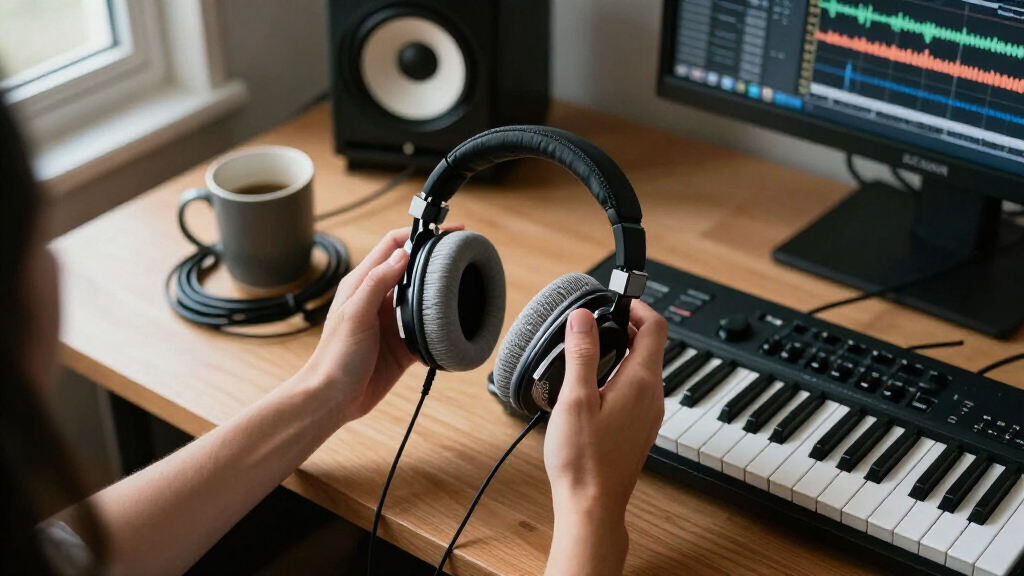
I compared the 12 models as open-back studio tools, focusing on how useful their sound presentation may be for editing, mixing, and monitoring rather than treating listening enjoyment as the only measure. I also considered drive requirements, comfort, build, cable arrangements, and likely setup compatibility, since an accurate-sounding headphone is less helpful if it is uncomfortable or difficult to power in the intended workspace.
The order favors models that combine studio relevance with fewer setup compromises, then separates specialist picks by who benefits from their particular strengths. That puts the HD 560S ahead as a versatile choice, while the DT 900 Pro X earns a strong position for practical studio use and the 250-ohm DT 990 PRO is more conditional on the listener’s equipment. Premium and budget-friendly alternatives rank according to their tradeoffs, not a claim that one sound signature suits every listener. The DT 990 PRO appears twice in the supplied lineup; those entries refer to the same named model, so the article should not present them as distinct headphones.
| open back studio headphone | Design |
|---|---|
| Audio-Technica ATH-R50X Open-B | — |
| Sennheiser HD 560S Open-Back O | Open-back, over-ear |
| beyerdynamic DT 900 Pro X Stud | — |
| beyerdynamic DT 990 PRO 250 Oh | Open-back, over-ear, circumaural |
| AKG K240 Studio Semi-Open Wire | Semi-open, over-ear |
| Sennheiser HD 490 PRO Open-Bac | Open-back, over-ear |
| beyerdynamic DT 990 Pro X Open | Open-back, over-ear |
| HIFIMAN Deva-Pro Wired Over-Ea | — |
| Shure SRH1840 Professional Ope | Open-back, over-ear |
| beyerdynamic DT 990 PRO 250 Oh | Open-back, over-ear |
| Philips SHP9600 Over-Ear Open- | Over-ear, open-back |
| Sennheiser HD 599 Open-Back Wi | Open-back, over-ear, wired |
Factors to Consider When Choosing Open Back Studio Headphones
I’d choose open-back studio headphones by starting with the room and the audio gear already on your desk, then narrowing by comfort and sound priorities. Open backs are a specific tool, not a universal upgrade: their spacious presentation comes with sound leakage and limited isolation. These broader checks can prevent a mismatch that a feature list alone won’t catch.
Match Open-Back Design to Your Room
Open-back headphones let sound pass through their earcups, which can make listening feel less enclosed but also lets outside noise in. They can leak enough audio to bother someone nearby, so a quiet private room is a better setting than a shared office, library, or recording booth with a live microphone. A common mistake is choosing open backs for their spacious presentation without checking whether the room is quiet enough to hear detail reliably. If you record vocals or instruments near a microphone, leakage may be captured in the recording. In that situation, closed-back headphones are often the more practical monitoring tool, even if you keep open backs for editing or mixing.
Check Impedance Against Your Headphone Output
Impedance is only one part of how easy a headphone is to drive, but it can flag a setup mismatch. The 250-ohm DT 990 PRO is a more demanding pairing than a 48-ohm option such as the DT 900 Pro X, so check the output specifications of your interface, DAC, or headphone amp before buying. A headphone that does not reach adequate listening levels may leave too little headroom for quiet passages. Do not assume a laptop jack will perform equally well with every studio model. If you move between devices, a less demanding headphone can reduce dependence on extra equipment, while a dedicated amp may make sense for a fixed studio setup.
Prioritize Fit for the Length of Your Sessions
Comfort is personal, and the listed weight or padding alone cannot predict how a headphone will feel after several hours. Headband pressure, earcup depth, clamp, heat, and the shape of your ears all influence long-session tolerance. If possible, check the return policy and try a new pair during a normal work session rather than judging it from a brief listen. Glasses wearers may find that clamp pressure matters more than soft-looking pads. A model with a sound profile you like is not a useful studio choice if you remove it repeatedly to relieve discomfort.
Separate Reference Use From Enjoyment
Studio headphones need to help you make repeatable decisions, but there is no single sound signature that works for every listener or task. A neutral-leaning presentation can help with balance judgments, while a more colored response may be enjoyable for casual listening but can lead you to compensate in a mix. Use familiar tracks and compare what you hear on other playback systems before changing a mix based on headphones alone. Open-back soundstage can make placement easier to perceive, but it does not replace room monitors or checking a finished mix on everyday speakers. If you are new to mixing, consistency and familiarity may help more than chasing the most expensive model.
Look Beyond the Headphone Itself
Cables, connectors, pads, and replacement-part availability affect how well a headphone fits into a working routine. A detachable cable can be easier to replace if it is damaged, while a fixed cable may be simpler but creates a single point of failure. Check whether the included cable length suits your desk and whether the connector needs an adapter for your interface. Pads wear down with use, and their condition can affect both comfort and sound, so replacement access matters for long-term ownership. A lower-cost headphone with easy upkeep can be a better studio tool than a more elaborate model that is awkward to maintain.
Spend More for a Specific Benefit
Paying more makes sense when the added comfort, construction, or professional features solve a real problem in your workflow. A premium model is harder to justify if you only need occasional home listening or have not yet confirmed that open backs suit your room. Beginners may get more from a dependable, manageable setup and time spent learning how their mixes translate than from buying a flagship immediately. Conversely, daily users may value replaceable parts and session comfort enough to spend more than a casual listener would. Decide which limitation you are trying to remove before treating a higher tier as an automatic improvement.
Frequently Asked Questions
Can I use open-back studio headphones to record vocals?
You can, but sound leakage from open-back earcups may reach the microphone, especially during quiet vocal passages or with a sensitive mic. The risk depends on headphone volume, mic placement, and how much isolation the recording requires. For tracking, closed-back headphones usually make it easier to keep playback out of the recording. Open backs can still be useful for editing or listening between takes in the same studio. If you plan to record regularly, treat isolation as a core requirement rather than assuming open backs will work for every session.
Will a 250-ohm headphone work from my laptop or audio interface?
It may work, but the result depends on the strength of the headphone output, not impedance alone. A limited output can leave a 250-ohm model quieter than you need or with insufficient headroom for dynamic material. Check the interface or device specifications and compare them with the headphone’s requirements before ordering. A lower-impedance option such as the DT 900 Pro X can be a simpler fit for mixed-device use than the DT 990 PRO 250 Ohm. If your existing output is not strong enough, a suitable headphone amplifier is another route.
Are open-back headphones accurate enough to mix without studio monitors?
They can support mixing, especially for checking detail, stereo placement, and edits, but they cannot show how a mix will behave in every listening environment. Headphone response and fit vary, and open-back soundstage does not recreate the way speakers interact with a room. Cross-check important decisions on speakers or familiar everyday playback devices when available. If headphones are your only option, learn how your chosen pair presents familiar reference tracks and avoid making large changes from one listening pass. The HD 560S and other studio-focused choices in this lineup are better starting points for reference work than selecting solely for casual listening features.
Should I choose the DT 990 PRO 250 Ohm or the DT 900 Pro X?
Choose based on your equipment and workflow, not just the shared brand or open-back design. The DT 990 PRO’s 250-ohm version is the less convenient choice when you rely on a modest laptop or interface output, while the DT 900 Pro X uses a 48-ohm design that is easier to pair with a wider range of sources. Consider comfort, sound preferences, and whether you want the particular character of the DT 990 PRO before deciding. If you have a capable headphone amp and prefer the DT 990 PRO’s presentation, its drive requirement may be manageable. For a more straightforward studio setup, the DT 900 Pro X is the safer practical pick.
Usually not unless a particular premium feature addresses a clear need, such as longer-session comfort or a construction detail that matters for frequent professional use. A beginner benefits most from a headphone that fits comfortably, works with their audio output, and has a presentation they can learn through repeated comparisons. The HD 560S offers a useful starting point in this lineup, while the HD 490 PRO and SRH1840 are more compelling when their professional-oriented qualities match regular work. Keep some budget and attention for reference tracks, room treatment, or an interface if those are larger limits in your setup. Upgrade when you can identify what your current headphones are preventing you from doing.
Conclusion
For most buyers seeking a dependable studio starting point, I’d pick the Sennheiser HD 560S as best overall, while the beyerdynamic DT 900 Pro X makes a strong choice for studio users who want a 48-ohm design and practical construction. For value, I’d look closely at the AKG K240 Studio or Philips SHP9600, while recognizing that the K240 is semi-open and neither should be chosen as a substitute for isolation. Beginners who want a straightforward reference-oriented option can start with the HD 560S; buyers seeking a more premium professional pick should compare the Sennheiser HD 490 PRO and Shure SRH1840 around comfort and workflow needs. For a specific high-impedance preference, the DT 990 PRO 250 Ohm is best suited to a setup with a capable headphone output. If your room is noisy or you record beside an open microphone, choose closed-back monitoring instead of forcing an open-back model to do the wrong job.