TL;DR

Get audio and creator gear delivered free with Prime
- Fast, free delivery on millions of items
- Prime Video, Amazon Music and more included
- Member-only deals all year
A good home recording microphone isn’t always the most expensive. The best choice hinges on your room, source, and recording style. Proper placement and room treatment are just as vital as the mic itself.
Imagine capturing your voice or instrument with clarity, warmth, and presence—right in your own home. It’s easier than you think, but choosing the right microphone can feel overwhelming. You might assume the most expensive mic guarantees perfection, but that’s not always true.
What really matters are your space, what you’re recording, and your goals. This guide will walk you through selecting a studio microphone that fits your needs, offers practical tips on setup, and explains how your room’s acoustics shape your sound. Ready to make your home recordings sound professional? Let’s dive in.
Room treatment is often more impactful on sound quality than the microphone itself.
Choose a microphone type based on your environment: condensers for quiet, treated rooms; dynamics for noisy or untreated spaces.
Placement and technique can improve recordings more than upgrading your gear.
Flexible polar patterns and good accessories are worth considering for versatility.
Don’t assume expensive equals better—match your gear to your specific needs and environment.
Which Microphone Type Fits Your Home Setup Best?
Choosing the right microphone type is the first step. Each has strengths for specific scenarios. For home recording, your environment and the source matter more than just the mic’s price tag.
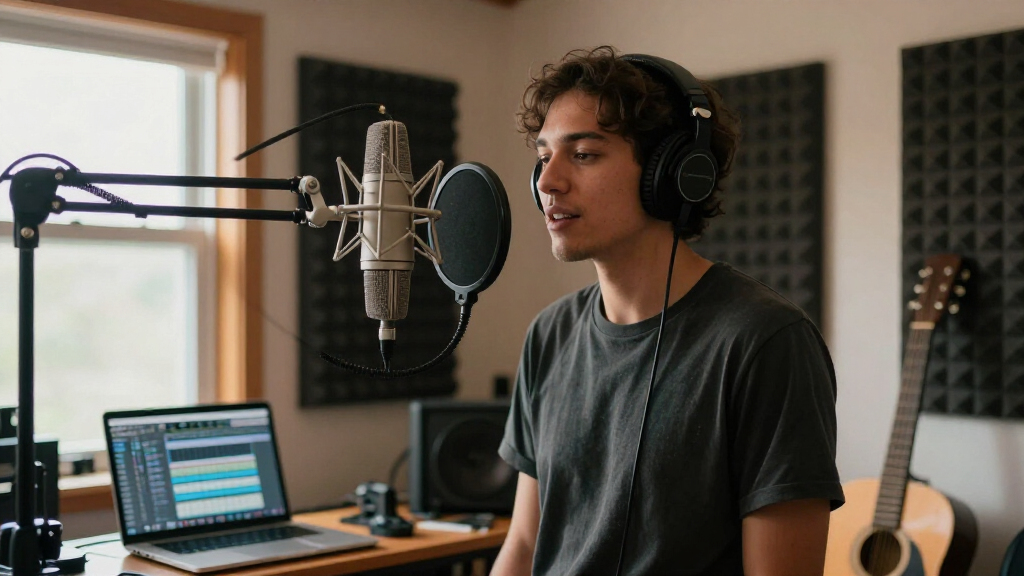
Large-diaphragm condenser microphones excel at capturing vocals, acoustic guitar, or voice-overs. They deliver rich detail and airy high frequencies but also pick up room reflections. This means they can beautifully capture the nuances of a singer’s breath or the shimmer of a guitar string, but they also tend to record more of the room’s character. This makes them ideal if you have a well-treated space or are aiming for a vibrant, detailed sound. However, in untreated rooms, their sensitivity can introduce unwanted echoes and background noise. Choosing a large-diaphragm condenser involves balancing the desire for detail against the potential need for acoustic treatment or close-miking techniques. Examples include the Audio-Technica AT4040 or Rode NT1.
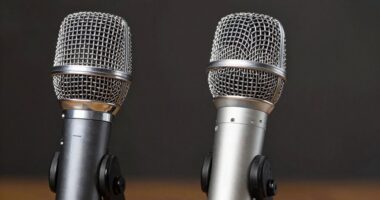
Dynamic microphones are less sensitive and more forgiving of room imperfections. They excel at close-miking loud sources like guitar amps or drums, and their durability makes them suitable for everyday use. They tend to reject more ambient noise, which is crucial if your space isn’t acoustically ideal. This means you can record in a noisy environment without capturing everything around you. For vocals or speech in untreated spaces, a dynamic mic like the Shure SM58 can provide a cleaner, more focused sound with less effort on room correction. Their tradeoff is that they often lack the detail and high-frequency response of condensers, so they’re best when simplicity and noise rejection are priorities.
Small-diaphragm condensers are designed for transient response, capturing quick details in sounds like percussion or piano. They are often used in professional studios for stereo recordings or detailed instrument captures. For home setups, they can be effective if you’re recording specific sources that benefit from their accuracy, but they require careful placement to avoid capturing unwanted room reflections.
Ribbon microphones offer a smooth, natural tone, especially for vocals or acoustic instruments. They tend to have a warmer sound, which can add a professional touch. However, they are fragile and require plenty of clean gain, so they’re best used with a dedicated preamp. Their sensitivity to high SPLs and delicate construction mean they’re more suitable for controlled environments. Using ribbon mics can impart a vintage character to recordings, but they demand careful handling and often benefit from a dedicated preamp with high gain and low noise.
In summary, select a microphone type that aligns with your recording environment and the sound you aim to achieve. Condensers are great for capturing details in controlled spaces, while dynamics are more versatile in less ideal acoustic settings. Small-diaphragm and ribbon mics serve specialized roles but can add unique qualities to your recordings when used appropriately.
home recording studio condenser microphone
As an affiliate, we earn on qualifying purchases.
As an affiliate, we earn on qualifying purchases.
How to Pick the Perfect Polar Pattern for Your Room
The polar pattern determines how your microphone picks up sound from different directions. For most home studios, cardioid microphones are the default choice because they focus on sound directly in front of the mic while rejecting much of what’s behind and to the sides. This directivity helps reduce unwanted room reflections and background noise, which is crucial if your space isn’t acoustically treated.
Imagine talking into a cone-shaped speaker—your voice is captured clearly in the front, while ambient noise and reflections from the room are minimized. This makes cardioid mics ideal for vocals, speech, and single-source recordings. Examples include the Rode PodMic or Shure SM7B, both of which excel at isolating your source from room noise.
Omnidirectional microphones pick up sound equally from all directions, providing a natural, spacious tone. This pattern is advantageous if your room has been treated to eliminate harsh reflections, or if you’re aiming to record a full ensemble or ambient sound where room acoustics are part of the desired effect. However, in untreated spaces, omnidirectional mics can pick up unwanted echoes and background noise, making them less suitable for typical home environments.
Figure-eight (bidirectional) patterns capture sound from the front and rear, which can be useful for duet recordings or stereo techniques, but are less practical if your room is noisy or untreated. Many microphones offer switchable patterns, providing flexibility to adapt to different recording scenarios. Understanding the practical implications of each pattern helps you make an informed choice that aligns with your room’s acoustics and your recording goals.
Beyond the pattern itself, consider the versatility of microphones with switchable polar patterns. They allow you to adapt to different recording situations without needing multiple mics, making them a smart investment for a home studio. When choosing a polar pattern, think about your typical recording environment and the sources you’ll be capturing most often. For example, a cardioid pattern is excellent for solo vocals or podcasting in a less-than-ideal room, while omnidirectional might be better if you’re recording a small ensemble in a room with good acoustics.
dynamic microphone for home vocals
As an affiliate, we earn on qualifying purchases.
As an affiliate, we earn on qualifying purchases.
Frequently Asked Questions
What is the best microphone for home recording?
It depends on your space and source. A large-diaphragm condenser works well in a quiet, treated room, while a dynamic mic is more forgiving in untreated or noisy environments.Should I buy a USB or XLR microphone as a beginner?
USB microphones are easier to set up and great for starting out, especially for streaming or podcasts. XLR mics offer more flexibility and upgrade paths if you plan to expand your studio.Is a condenser microphone always better than a dynamic?
Not necessarily. Condensers capture more detail, but dynamics excel in noisy or untreated rooms and are often better for loud sources or rough environments. The choice depends on your specific needs and environment.Do I need an audio interface?
If you choose an XLR microphone, yes—an interface is essential to provide power and connect it to your computer. For USB mics, you can connect directly, simplifying setup.Can a cheap microphone produce professional-sounding recordings?
Yes, if paired with good placement, room treatment, and proper technique. Microphone quality is important, but understanding your environment and mastering your technique often outweighs the price tag.acoustic treatment for home studio
As an affiliate, we earn on qualifying purchases.
As an affiliate, we earn on qualifying purchases.
Conclusion
Your best home recording setup isn’t about the most expensive microphone. It’s about understanding your space, selecting the right type, and mastering your placement. Even the humble dynamic mic, paired with good technique and room treatment, can deliver professional results.
Think of your home studio as a garden—careful planting, proper positioning, and nurturing will yield rich, vibrant sound. So start with what you have, learn the basics, and build from there. Your recordings will thank you.
microphone accessories for home recording
As an affiliate, we earn on qualifying purchases.
As an affiliate, we earn on qualifying purchases.
Halloween Picks
halloween
As an affiliate, we earn on qualifying purchases.