
To excel in sound design for games and film, focus on blending ambient textures, character voices, and sound effects thoughtfully. Use high-quality libraries and layer sounds carefully to create realistic environments and emotional depth. Balance and sync elements with timing and spatial awareness, avoiding clutter. By mastering these techniques, you’ll craft immersive experiences that evoke emotion and tell compelling stories—so keep exploring to discover even more tips and insights.
Key Takeaways
- Use ambient textures to establish environments and subtly guide emotional responses without overshadowing main actions.
- Leverage high-quality sound effects libraries for diverse textures, enhancing realism and streamlining workflow.
- Record authentic character voices, capturing natural emotion and tone to convey personality and deepen audience connection.
- Integrate sounds thoughtfully, balancing ambient, effects, and dialogue to support storytelling and emotional impact.
- Employ careful mixing techniques like volume, EQ, and reverb to create spatial clarity and emotional resonance.
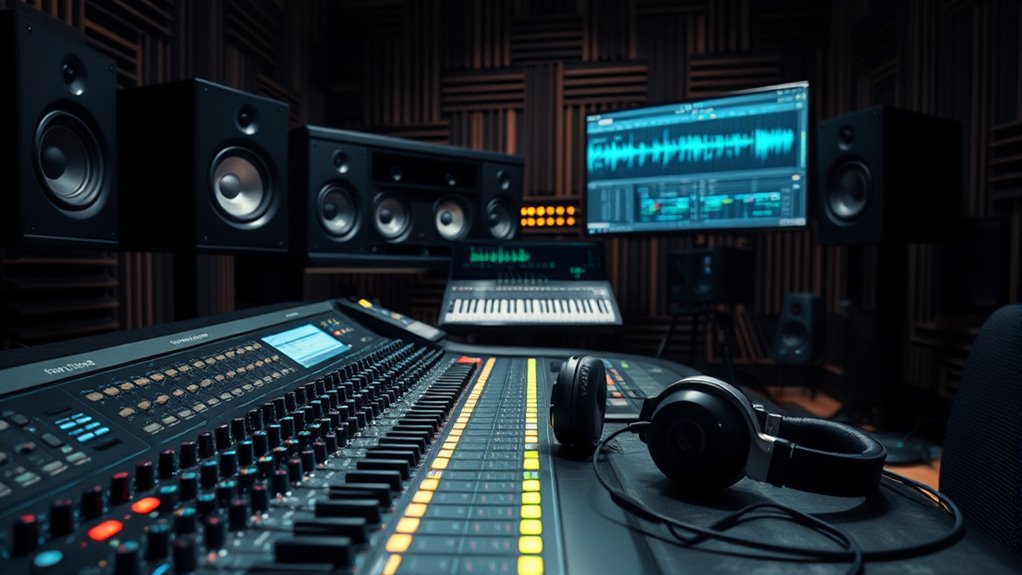
Have you ever wondered how sound shapes the emotional impact of games and films? It’s a powerful tool that can turn a simple scene into an unforgettable experience. When you’re designing sound, it’s essential to pay attention to ambient textures and character voices, because these elements set the tone and deepen immersion. Ambient textures, like the subtle hum of a city or the whisper of wind through trees, establish the environment and make it feel real. They fill empty spaces in a scene, guiding your audience’s emotions without overwhelming the main action. Using a variety of textures—sometimes gritty, sometimes ethereal—helps convey the mood, whether it’s tension, serenity, or chaos. The key is to layer these sounds thoughtfully, ensuring they complement the visuals and don’t distract from the story. Incorporating sound effects libraries can also provide a wealth of high-quality textures and sounds for various scenes, streamlining the creative process and enhancing realism.
Character voices are equally fundamental. They carry the narrative’s emotional weight and help define personalities. When you record voices, focus on capturing authentic emotions and natural intonations. A well-crafted voice can evoke empathy, fear, joy, or anger, making characters feel genuine and relatable. In gameplay or film, the way a character speaks influences how your audience perceives them, so you should carefully select tone, pitch, and timing. Modulating these elements creates distinct identities, even if characters share visual similarities. When mixing voices, balance is essential; they shouldn’t overpower ambient textures or sound effects but still remain clear and expressive. Using subtle ambient sounds in the background during dialogue can add context and atmosphere, making conversations more engaging and believable.
In practice, integrating ambient textures and character voices requires a good sense of timing and space. Pay attention to how sounds interact and evolve throughout a scene. For example, during a tense conversation, soft ambient textures can heighten suspense, while a character’s voice delivers the emotional punch. Avoid overuse; too many sounds competing can muddy the experience. Instead, aim for clarity and purpose in each sound element. When editing, consider the emotional arc of the scene—adjust the volume, EQ, and reverb to enhance mood and character expression. Remember, your goal is to support storytelling, not distract from it. When done correctly, these sound design choices can transform an ordinary scene into an immersive, emotionally resonant moment that stays with your audience long after the scene ends.
Frequently Asked Questions
How Does Adaptive Sound Design Influence Player Immersion?
Adaptive sound design greatly influences your immersion by delivering dynamic audio that responds to your actions and environment. As you navigate, the soundscape shifts seamlessly, creating a more authentic experience. This technique enhances emotional resonance, making moments feel more intense or subtle depending on your gameplay. By tailoring audio in real-time, you stay engaged and connected, deepening your overall immersion in the game or film world.
What Are the Latest Tools for Real-Time Sound Mixing?
Aren’t you curious about the latest tools for real-time sound mixing? You can explore software like Wwise and FMOD, which excel in creating immersive audio experiences through real-time mixing. These tools give you dynamic control, allowing you to adapt soundscapes instantly and enhance player immersion. With features like spatial audio integration and adaptive sound design, they empower you to craft more engaging, responsive environments effortlessly.
How Can Sound Design Improve Storytelling in Silent Scenes?
You can enhance storytelling in silent scenes by carefully selecting ambient cues that reflect the setting and mood, guiding the audience’s emotions. Use subtle sounds to build emotional resonance, drawing viewers deeper into the story without dialogue. Strategic sound design helps convey tension, joy, or sadness, making the scene more immersive and impactful. By emphasizing ambient cues and emotional resonance, you create a rich auditory experience that complements the visual storytelling effectively.
What Are Common Challenges in Designing Sound for VR Games?
Designing sound for VR games is like steering through a maze—you need precise spatial awareness, or it can feel disorienting. You face challenges like hardware limitations that restrict audio quality and immersion, making it hard to create realistic soundscapes. Balancing immersive spatial audio with hardware constraints requires clever techniques, so players stay engaged without overwhelming their senses. Prioritizing sound clarity and positioning guarantees a seamless, immersive experience in VR environments.
How Does Sound Design Differ Between Indie and AAA Productions?
You’ll find that sound design varies considerably between indie and AAA productions. With indie projects, budget constraints mean you often work with limited resources, relying on creative solutions and solo effort. In contrast, AAA productions involve larger teams, fostering collaboration to develop complex, immersive soundscapes. You’ll need to adapt your approach based on team size and budget, balancing quality and cost-effectiveness to deliver impactful audio experiences.
Conclusion
Sound design truly enhances your gaming and film experiences, immersing you in every scene. Did you know that 70% of emotional impact in media comes from sound? By mastering best practices, you can create powerful, memorable audio that elevates your projects. So, keep experimenting and refining your techniques—your audience will notice the difference, feeling more connected and engaged with every sound you craft.