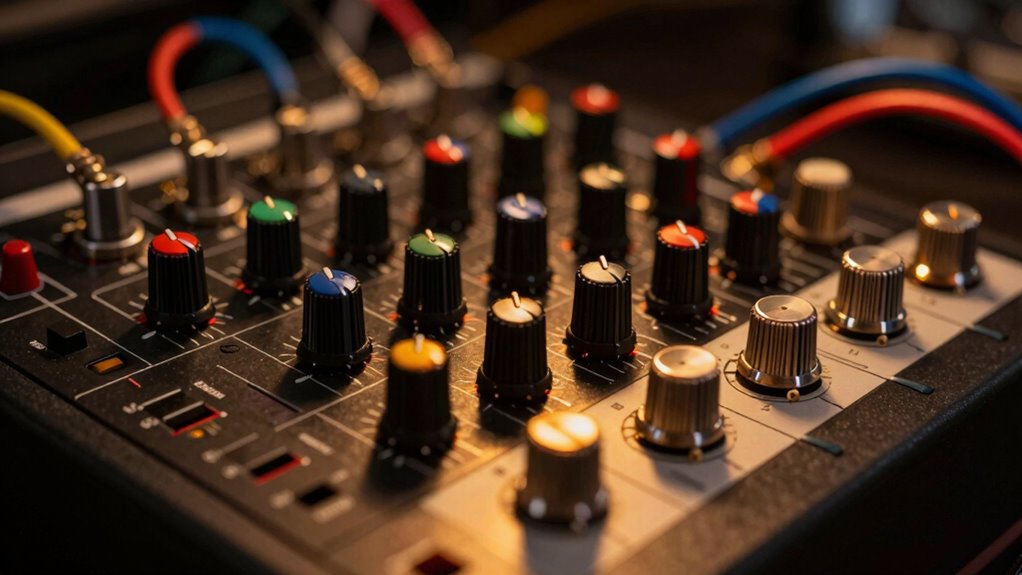

Saturation is your secret weapon because it adds warmth, character, and depth to your sound. It transforms sterile digital recordings into rich, engaging audio by enriching harmonic content and creating a vintage charm. You can use it to glue elements together, add naturalness, and craft emotional impact. Whether with hardware or plugins, mastering saturation helps your mix sound more polished and lively. Keep exploring, and you’ll discover even more ways to access its creative potential.

Get audio and creator gear delivered free with Prime
- Fast, free delivery on millions of items
- Prime Video, Amazon Music and more included
- Member-only deals all year
Key Takeaways
- Saturation adds warmth and harmonic richness, making digital sounds feel more inviting and less sterile.
- It introduces controlled distortion that enhances energy and cohesion without harsh clipping.
- Saturation creates depth and naturalness, giving audio a more three-dimensional and organic feel.
- Using saturation strategically elevates recordings, adding emotional weight and character.
- Both hardware and digital methods allow precise manipulation to craft compelling, polished soundscapes.

Saturation is a powerful tool in sound design that can add warmth, character, and presence to your audio. When you incorporate saturation, you’re fundamentally enriching your sound, giving it a more organic and lively feel. This process often involves introducing subtle harmonic content that mimics analog warmth, making digital recordings sound less sterile and more inviting. It’s like adding a touch of vintage charm to modern recordings, creating a sense of familiarity and depth that listeners naturally connect with. By carefully applying saturation, you can transform flat, lifeless sounds into vibrant, textured audio that commands attention.
Saturation adds warmth and character, transforming flat sounds into vibrant, engaging audio with organic, vintage charm.
One of the main advantages of saturation is its ability to introduce digital distortion in a controlled manner. Unlike harsh digital clipping or unwanted noise, well-crafted saturation adds a smooth, musical distortion that enhances the energy and presence of your mix. It’s about finding that sweet spot where the sound becomes richer without losing clarity. This digital distortion can glue different elements together, creating a cohesive feel across your mix. Whether you’re working on vocals, drums, or synths, saturation helps each element sit better in the overall soundscape, giving your project a professional polish. Additionally, sound quality can be significantly improved through proper saturation techniques, ensuring clarity and warmth coexist. Incorporating dynamic range control alongside saturation can further enhance the naturalness and punch of your sounds. Understanding the analog warmth it imparts can help you better craft your desired tone.
You’ll find that saturation works particularly well when you want to emphasize certain parts of your mix without overwhelming it. It’s a subtle art—too much can lead to unwanted harshness or muddiness, but just the right amount injects life into dull sounds. When you use saturation strategically, you create a sense of depth, making your audio feel more three-dimensional. It’s about enhancing the natural qualities of your recordings while adding a layer of complexity that keeps the listener engaged. You can think of saturation as the secret ingredient that elevates good recordings into great ones. Knowing how to use filtration techniques can help you shape the harmonic content for more precise control. Additionally, understanding audio processing techniques can assist in achieving a more polished and refined sound.
Applying saturation is also incredibly versatile. You can use hardware units to achieve authentic analog warmth or digital plugins to add precision and control. Each approach offers different benefits, but both serve the same purpose: to make your sound more engaging. When you understand how to manipulate saturation effectively, you gain a powerful tool to shape your audio creatively. It’s not just about making things louder or brighter; it’s about adding an emotional weight and character that resonate with your audience. Ultimately, saturation is your secret weapon for elevating your sound design to the next level, blending warmth and digital edge seamlessly to craft compelling audio experiences.
As an affiliate, we earn on qualifying purchases.
Frequently Asked Questions
How Does Saturation Differ From Distortion in Sound Design?
Saturation differs from distortion in sound design by providing harmonic enhancement and tonal coloration without harshness. You apply saturation to subtly enrich the sound, adding warmth and depth, while distortion often creates more aggressive, aggressive effects. Saturation enhances the natural qualities of your audio, emphasizing harmonics and smoothing out imperfections, making your mix sound fuller and more polished. Distortion, in contrast, generally pushes signals into more extreme, often less musical territory.
Can Saturation Be Used on All Types of Audio?
Yes, you can use saturation on all types of audio. It adds analog warmth and harmonic enhancement, making sounds richer and more engaging. Whether you’re working on vocals, drums, or synths, saturation helps to glue elements together and add character. Just be mindful of the amount you apply, as too much can muddy the mix. Experimenting across different audio types allows you to discover unique textures and depth.
What Are the Best Saturation Plugins for Beginners?
As a beginner, you’ll love plugins like Soundtoys Decapitator, FabFilter Saturn, and iZotope Trash 2. These plugins add analog warmth and harmonic enhancement effortlessly, making your sounds richer and more vibrant. They’re user-friendly, versatile, and perfect for learning how saturation shapes your mix. Start with these to experiment with different textures, and you’ll quickly see how saturation can transform your sound design.
How Does Saturation Affect Dynamic Range?
Saturation compresses your sound like a gentle hand pressing down, reducing dynamic range while adding harmonic enhancement. It’s like turning a wild river into a steady stream, shaping the tone with subtle warmth. This process preserves the essence of your audio but controls peaks, making your mix feel fuller and more balanced. Saturation’s tonal shaping helps you craft a polished sound, ensuring every element sits perfectly without losing its natural energy.
Is Saturation Suitable for Mastering Tracks?
Yes, saturation is suitable for mastering tracks. It adds analog warmth and harmonic enhancement, making your final mix sound richer and more cohesive. By subtly applying saturation during mastering, you can glue the elements together and increase perceived loudness without sacrificing clarity. Just be cautious not to overdo it, as too much saturation can introduce unwanted distortion. Used judiciously, saturation is a powerful tool for achieving a polished, professional sound.
As an affiliate, we earn on qualifying purchases.
Conclusion
By embracing saturation, you unleash warmth, character, and richness that elevate your sound design. It’s about adding depth, creating presence, and forging connections within your mix. Saturation isn’t just a tool; it’s your secret weapon, your enhancer, your creative catalyst. When you harness it effectively, you craft textures that resonate, punch that hits, and layers that breathe. So, let saturation be your guide, your secret, your ultimate weapon in making sound truly stand out.
As an affiliate, we earn on qualifying purchases.
digital to analog warm audio converter
As an affiliate, we earn on qualifying purchases.
As an affiliate, we earn on qualifying purchases.
Fall Picks
fall essentials
As an affiliate, we earn on qualifying purchases.