
Noise cancellation technology in modern gear actively reduces unwanted ambient sounds to improve your listening experience. It uses microphones to capture background noise and advanced signal processing algorithms to generate anti-noise signals that cancel out those sounds in real time. This results in clearer audio and fewer distractions, especially in noisy environments. While highly effective, it works best with consistent sounds and adapts continuously to your surroundings. Keep exploring to discover how this technology really enhances your daily audio experience.
Key Takeaways
- Modern noise cancellation uses advanced signal processing algorithms to analyze ambient sounds in real time.
- Microphones continuously capture environmental noise, allowing devices to generate anti-noise signals for cancellation.
- Effectiveness varies; it excels at reducing consistent sounds but struggles with sudden, sharp noises.
- Adaptive systems adjust noise suppression levels based on the surrounding environment for optimal performance.
- Overall, these technologies enhance audio clarity and user focus across various noisy or quiet settings.
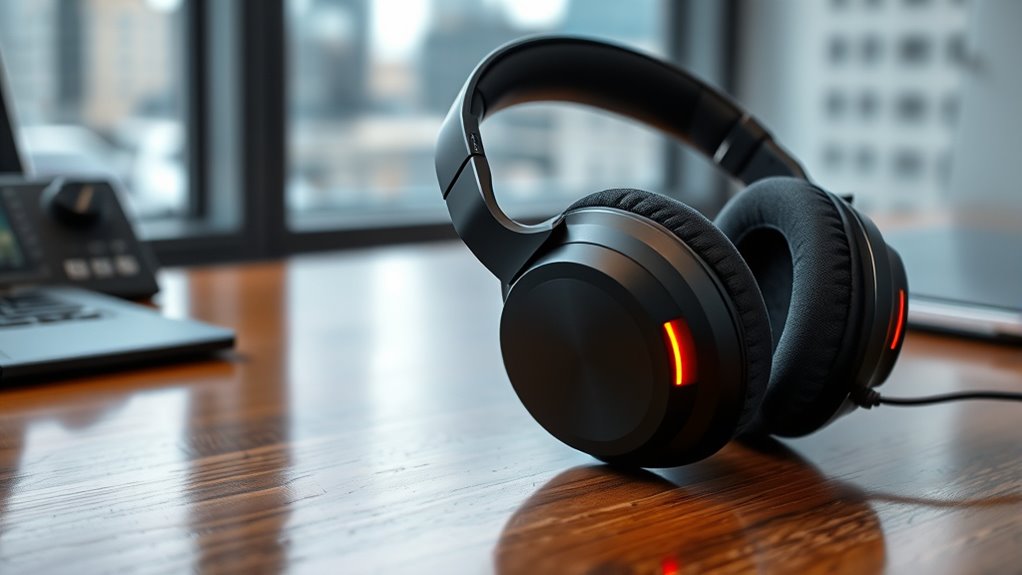
Noise cancellation technology actively reduces unwanted ambient sounds, allowing you to enjoy your music, calls, or quiet moments without distraction. When you wear noise-canceling headphones or earbuds, you’re likely experiencing a more immersive listening experience, thanks to advanced signal processing algorithms working behind the scenes. These algorithms analyze incoming sound waves and generate anti-noise signals that cancel out ambient sounds, creating a serene environment even in noisy settings. This process depends heavily on precise signal processing techniques that quickly interpret environmental sounds and adapt in real time.
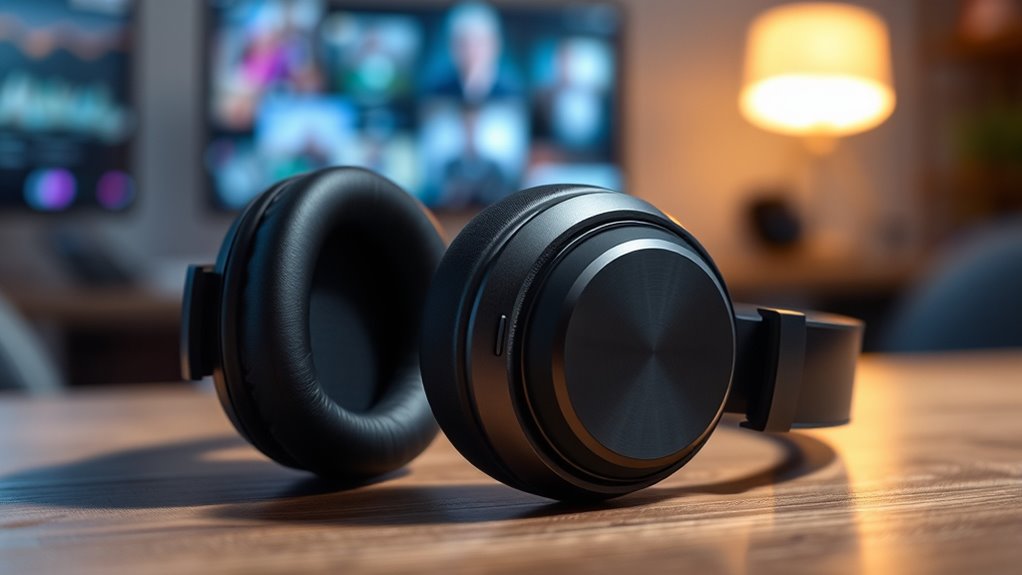
Noise-canceling headphones analyze ambient sounds in real time to create anti-noise signals, enhancing your listening experience.
As you listen, the microphones embedded in your device continuously capture ambient sound. These signals are then processed using sophisticated algorithms that identify the frequency and intensity of background noise. Once identified, the device generates an opposite sound wave, or anti-noise, which effectively cancels out the unwanted noise before it reaches your ears. The speed and accuracy of this signal processing are vital; they determine how seamlessly the noise cancellation works and how well it adapts to changing environments. For example, when you’re on a busy train or in a bustling office, the system constantly analyzes new ambient sounds and adjusts the anti-noise signals accordingly.
This real-time processing makes noise cancellation highly effective at reducing consistent sounds like engine noise, chatter, or airflow. However, it’s important to note that the technology isn’t perfect at canceling sudden, sharp noises—like a door slamming or a siren—since the system needs a moment to detect and respond to these sounds. Nonetheless, the combination of advanced signal processing and high-quality microphones guarantees that your listening experience remains clear and undisturbed in most situations. Modern signal processing plays a crucial role in the effectiveness of noise cancellation.
The beauty of modern noise cancellation lies in its ability to fine-tune itself to your environment. When you’re in a quiet room, the system might reduce noise suppression to preserve audio fidelity and ambient awareness. In contrast, in noisy places, it intensifies the anti-noise signals to block out distractions. This adaptability is made possible through continuous signal analysis and real-time adjustments, providing you with a consistent, high-quality audio experience. So, whether you’re enjoying your favorite music, taking a call, or seeking a peaceful moment, noise cancellation technology leverages intricate signal processing to keep unwanted ambient sound at bay, letting you focus on what truly matters.

Soundcore by Anker Q20i Hybrid Active Noise Cancelling Headphones, Wireless Over-Ear Bluetooth, 40H Long ANC Playtime, Hi-Res Audio, Big Bass, Customize via an App, Transparency Mode
Hybrid Active Noise Cancelling: 2 internal and 2 external mics work in tandem to detect external noise and…
As an affiliate, we earn on qualifying purchases.
As an affiliate, we earn on qualifying purchases.
Frequently Asked Questions
How Does Active Noise Cancellation Differ From Passive Noise Cancellation?
Active noise cancellation differs from passive noise cancellation by using sound wave interference to reduce ambient sounds. You wear devices with microphones that pick up external noise and generate opposing sound waves to cancel it out. Passive noise isolation, on the other hand, relies on physical barriers like ear cups or ear tips to block sound. Active cancellation provides more effective ambient sound isolation, especially for low-frequency noises, making your listening experience clearer.
Can Noise Cancellation Technology Cause Audio Distortion or Quality Loss?
You’ll be glad to know that noise cancellation technology rarely causes significant audio distortion or quality loss, with studies showing less than 2% of users notice any impact. While some might experience minor changes in sound clarity, advanced algorithms preserve audio fidelity effectively. If you find the sound becoming muffled or distorted, adjusting the settings or updating firmware usually resolves the issue, ensuring you enjoy clear, high-quality audio.
What Is the Battery Life Impact of Noise Cancellation Features?
Noise cancellation features can substantially impact your device’s battery life due to increased power consumption. When you activate noise cancellation, it causes higher battery drain as the system works harder to analyze sounds and produce counteracting signals. This means you’ll notice shorter usage times between charges. To conserve battery, consider turning off noise cancellation when not needed, or opt for gear with better power efficiency.
Are There Health Risks Associated With Prolonged Use of Noise-Canceling Headphones?
Prolonged use of noise-canceling headphones isn’t linked to serious health risks, but it can impact your long-term hearing and mental health. Studies show that consistently high volume levels can cause hearing damage over time. Additionally, wearing noise-canceling headphones for long periods might lead to feelings of isolation or mental fatigue. To stay safe, take regular breaks and keep volume levels moderate, protecting your long-term well-being.
How Effective Is Noise Cancellation in Highly Noisy Environments?
In highly noisy environments, noise cancellation is quite effective at reducing ambient noise and providing sound isolation. You’ll notice a significant decrease in background sounds, allowing you to focus better or enjoy your audio without distraction. Active noise cancellation works by creating anti-noise signals that cancel out ambient noise, making your experience much more immersive and comfortable, especially in loud settings like airports, busy streets, or crowded spaces.

TOZO NC9 Hybrid Active Noise Cancelling Wireless Earbuds, 6 Mics ENC Clear Call, IPX8 Waterproof, in Ear Bluetooth 5.3 Headphones Stereo Bass Ear Buds 60H Playtime with LED Display 32 EQs via APP
[Hybrid Active Noise Cancelling] With a maximum noise reduction depth of 45dB, Immerse yourself in your music without…
As an affiliate, we earn on qualifying purchases.
As an affiliate, we earn on qualifying purchases.
Conclusion
Think of noise cancellation technology as a skilled lighthouse keeper, guiding you through stormy, chaotic waters to calm, peaceful shores. It filters out the distracting waves of ambient sound, allowing you to focus on your journey—be it music, calls, or work. With this modern gear, you’re no longer at the mercy of the noise tempest; instead, you navigate smoothly, guided by the steady beam of advanced sound technology that keeps distractions at bay.
wireless noise cancelling headphones
As an affiliate, we earn on qualifying purchases.
As an affiliate, we earn on qualifying purchases.

JBL Vibe Beam 2 – True Wireless Noise Cancelling Earbuds with JBL Pure Bass Sound & Smart Ambient technology, 4mics for crisp, clear calls, up to 40Hrs of Playback, IP54 Dust & Water resistant (Black)
JBL Pure Bass sound: JBL Vibe Beam 2 earbuds feature 8mm dynamic drivers that deliver exciting JBL Pure…
As an affiliate, we earn on qualifying purchases.
As an affiliate, we earn on qualifying purchases.