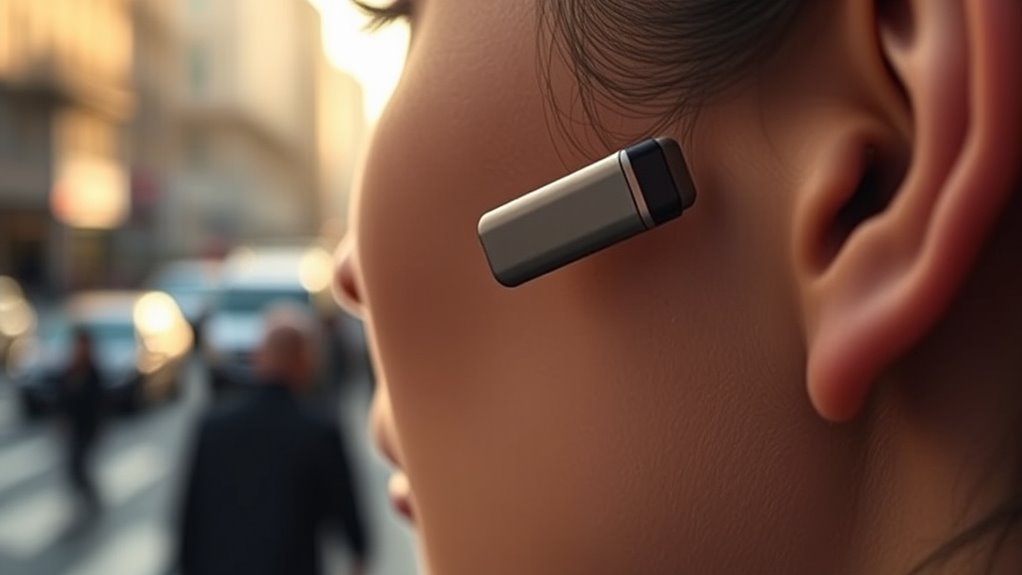

Bone-conduction audio works by transmitting sound vibrations through your skull bones directly to your inner ear, bypassing the eardrum. This means you can listen to music or calls without blocking your ears, keeping you aware of your surroundings. It’s ideal for outdoor activities like running or cycling where awareness matters. If you want to learn about how this technology can boost your safety and comfort, there’s more to discover below.
Key Takeaways
- Bone conduction transmits sound via skull bones directly to the inner ear, bypassing the eardrum.
- It allows users to hear audio while keeping ear canals open for environmental awareness.
- Ideal for outdoor activities, sports, or situations requiring alertness and safety.
- Sound quality may differ from traditional headphones, with less emphasis on bass and clarity.
- Suitable for those with ear discomfort, hearing impairments, or needing situational awareness.

Bone-conduction audio is an innovative technology that allows you to listen to sound without blocking or inserting into your ears. Instead of traditional headphones that cover or go inside your ears, bone conduction transmits sound through your skull bones directly to your inner ear. This method keeps your ear canals open, so you remain aware of your surroundings. When you wear bone-conduction devices, sound waves bypass the eardrum and stimulate the bones directly, which can lead to a different sensory experience compared to conventional headphones.
One key aspect of this technology is how it interacts with muscle stimulation. The vibrations produced by bone-conduction devices can cause subtle muscle movements around your jaw and skull. While this sensation is usually minimal, some users report feeling a gentle thrum or pressure, especially during long listening sessions. This muscle stimulation is generally safe and doesn’t cause discomfort, but it’s worth noting if you’re sensitive to vibrations or have underlying jaw or skull issues. The stimulation of muscles around your head can sometimes enhance the feeling of sound, making it more immersive, especially when listening to music or podcasts.
Another significant benefit of bone-conduction audio is its ability to minimize environmental noise interference. Since the devices don’t block your ears, you can still hear ambient sounds like traffic, conversations, or alarms. This makes bone conduction ideal for outdoor activities such as running, cycling, or walking in busy areas where situational awareness is vital. Unlike traditional headphones, which create a seal that isolates you from your environment, bone conduction allows you to stay alert without removing your headphones. This transparency to environmental noise enhances safety and situational awareness, making it a popular choice for athletes, commuters, and professionals who need to stay connected to their surroundings.
However, this openness also means that bone-conduction audio isn’t the best choice if you’re in a noisy environment and need to block out background sounds to focus. The sound quality may also differ from traditional headphones, with some users experiencing less bass or clarity due to the way vibrations are transmitted through bones. Still, the trade-off is worth it for those who prioritize awareness and safety over absolute sound isolation. Additionally, advancements in sound quality optimization are gradually improving the audio experience delivered by bone conduction devices.
Frequently Asked Questions
Can Bone-Conduction Headphones Cause Hearing Damage?
Bone-conduction headphones generally don’t cause hearing damage if used properly, but you should still be cautious. They don’t block your ear canal, so your ear canal health stays intact, reducing risk of infections. However, listening at high volumes for extended periods can increase tinnitus risk and potentially harm your hearing. Always keep the volume moderate and take breaks to protect your ears and maintain ear canal health.
Are Bone-Conduction Devices Suitable for All Ear Conditions?
Bone-conduction devices are generally suitable even if you have ear canal blockage or concerns about tympanic membrane health. They bypass the ear canal entirely, making them a good option for those with such conditions. However, it’s wise to consult an audiologist first, especially if you have specific ear issues. This way, you guarantee the device won’t aggravate your condition and will deliver sound safely and effectively.
How Long Can I Wear Bone-Conduction Headphones Safely?
You can typically wear bone-conduction headphones safely for several hours, but it’s best to limit usage duration to prevent discomfort or potential hearing issues. Pay attention to comfort considerations, like pressure and fit, and take regular breaks to avoid fatigue or irritation. If you notice any discomfort, ringing, or pain, remove the headphones and give your ears a rest. Always follow manufacturer guidelines for safe usage.
Do Bone-Conduction Headphones Work With All Types of Music?
Yes, bone-conduction headphones work with all types of music, but your experience depends on music compatibility and sound quality. You might notice differences when listening to genres with deep bass or intricate details, as bone conduction transmits vibrations differently than traditional headphones. To get the best experience, choose headphones optimized for your preferred music style, and be aware that sound quality may vary based on the device and audio source.
Are There Any Health Risks Associated With Long-Term Use?
Long-term use of bone-conduction headphones is generally safe, but you should consider long-term safety and health implications. Prolonged exposure to loud sounds can still damage your hearing, even with bone conduction technology. To protect your health, keep the volume at moderate levels and take regular breaks. While these devices are designed to be safe, it’s wise to stay mindful of your listening habits to avoid any potential health risks over time.
Conclusion
Bone-conduction audio offers a unique listening experience, especially when you need to stay aware of your surroundings. Did you know that over 60% of users report feeling more comfortable wearing bone-conduction devices for extended periods? Whether you’re working out or commuting, this technology keeps your ears free while delivering clear sound. So, next time you want to stay alert and connected, give bone conduction a try — it might just change how you listen.