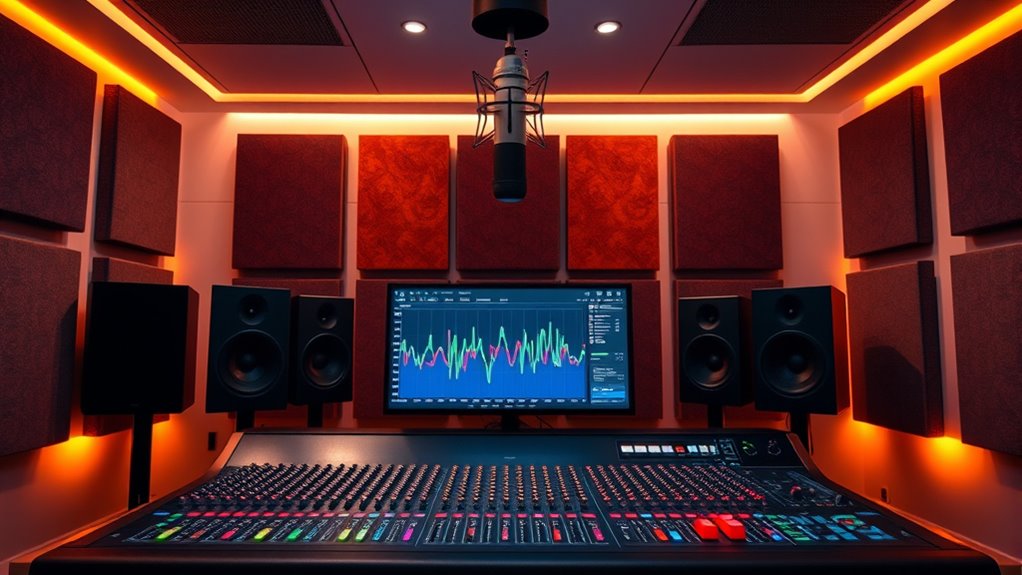
Using audio analytics helps you make better mixes by providing clear, data-driven insights into stereo image and dynamic range. It shows you how sounds are spread across the stereo field, highlighting narrow or overly wide elements, and reveals sections that are too compressed or too dynamic. By visualizing peaks and loudness, you can make precise adjustments, resulting in a more balanced and immersive sound. Keep exploring to discover how these tools can truly elevate your mixing process.
Key Takeaways
- Audio analytics provide visual feedback on stereo image balance, helping to create wide, immersive mixes without phase issues.
- They reveal stereo field discrepancies, allowing precise adjustments to achieve a cohesive spatial placement of sounds.
- Dynamic range analysis identifies overly compressed or inconsistent sections, ensuring expressive and balanced loudness levels.
- Combining stereo and dynamic insights streamlines production, reducing guesswork and enhancing overall mix clarity and impact.
- Objective data from analytics supports faster decision-making, leading to more polished, natural-sounding, and competitive mixes.
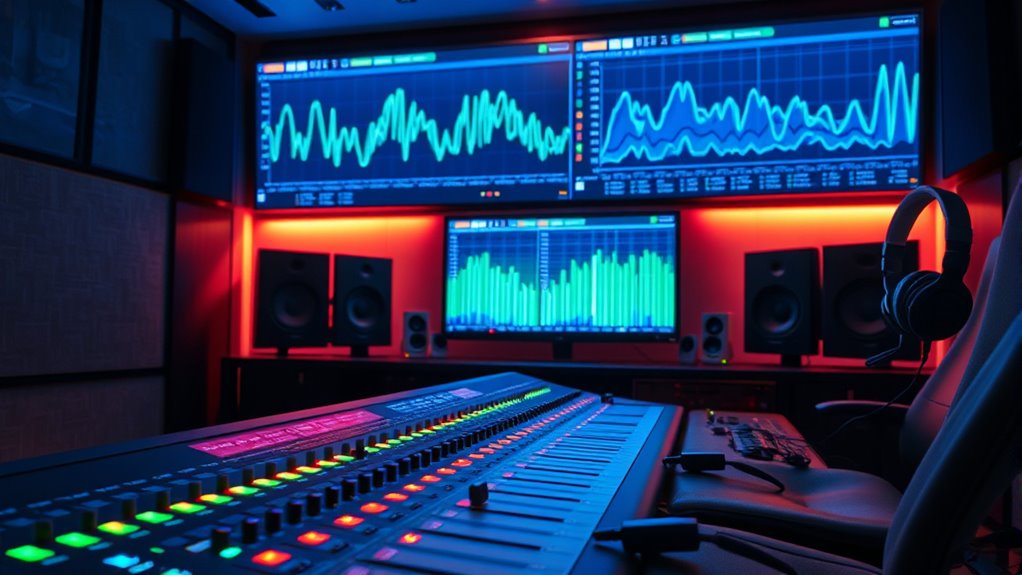
In today’s fast-paced music production environment, achieving a perfect mix can feel like searching for a needle in a haystack. That’s where audio analytics comes into play, providing you with data-driven insights to refine your sound. One of the key areas you’ll want to focus on is stereo imaging. Proper stereo imaging ensures your mix feels wide and immersive without losing clarity or causing phase issues. Audio analytics tools analyze the stereo field, showing you how your sounds are spread across left and right channels. If certain elements are too narrow or overly wide, you’ll get visual feedback that helps you make precise adjustments. This way, you can achieve a balanced stereo image that makes your mix more engaging and natural.
Audio analytics reveal stereo image balance, helping you craft immersive, clear mixes with precision adjustments.
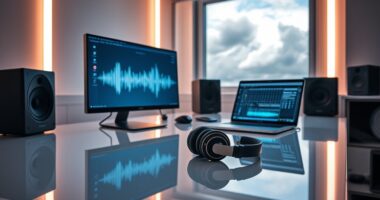
Another critical aspect you’ll want to monitor is dynamic range—the difference between the loudest and softest parts of your track. Too much dynamic range can make your mix feel inconsistent, while too little can lead to a flat, squashed sound. Audio analytics tools measure the dynamic range in real-time, giving you detailed information about peaks, RMS levels, and loudness distribution. With this data, you can make informed decisions about compression, limiting, or automation to control the dynamic range effectively. This ensures your mix remains lively and expressive without losing clarity or impact.
Using audio analytics, you gain a clear picture of how your mix’s stereo imaging and dynamic range interact. For example, if your vocals are too narrow or too wide relative to the rest of the mix, the analytics tools will highlight these discrepancies. Similarly, if certain sections are overly compressed or too dynamic, you’ll see those issues visually. This feedback allows you to make precise tweaks, ensuring each element sits well within the stereo field and maintains an appropriate dynamic profile. It’s like having a detailed roadmap that guides you toward a more professional, polished sound.
Ultimately, integrating audio analytics into your workflow helps you make smarter decisions faster. Instead of relying solely on your ears, you leverage objective data to identify imbalances and inconsistencies. As a result, your mixes become more balanced, immersive, and commercially competitive. Whether you’re working on a pop hit, a cinematic score, or a subtle acoustic track, understanding stereo imaging and dynamic range through analytics elevates your production quality. This approach not only streamlines your process but also boosts your confidence in the final product, knowing it’s backed by precise, actionable insights.
Frequently Asked Questions
Can Audio Analytics Replace Experienced Sound Engineers?
Audio analytics can’t fully replace experienced sound engineers because automation limitations prevent it from capturing the nuance and creativity you bring. While analytics can assist with technical adjustments and consistency, they lack the artistic judgment and emotional sensitivity essential for crafting a compelling mix. Your expertise influences the creative impact of your work, making human insight irreplaceable despite the advancements in audio technology.
How Does Audio Analytics Handle Complex or Live Recordings?
You see the live recording unfold like a dynamic canvas, with audio analytics capturing every nuance in real time. It expertly manages complex sounds by swiftly processing data, reducing noise, and balancing layers instantly. As chaos swirls on stage, the system filters out distractions, allowing clarity to shine through. With real-time processing and noise reduction, you get a polished mix that adapts seamlessly, even in the most unpredictable live environments.
What Equipment Is Required to Implement Audio Analytics?
To implement audio analytics, you’ll need microphones, audio interfaces, and a powerful computer or server for processing. Guarantee sensor calibration for accurate data collection, and prioritize data security to protect sensitive recordings. You might also consider specialized software or plugins that integrate with your setup. Proper calibration and security measures help you get reliable insights, enabling better mixing decisions and maintaining client privacy.
Are There Privacy Concerns With Audio Data Analysis?
You might have privacy concerns with audio data analysis, especially regarding data security and how your recordings are used. When implementing audio analytics, guarantee that sensitive information is protected through encryption and strict access controls. Be transparent with users about data collection practices, and comply with privacy regulations. Addressing these privacy concerns helps maintain trust and safeguards your data, making your audio analytics system both effective and responsible.
How Cost-Effective Is Integrating Audio Analytics Into Mixing Workflows?
Like Da Vinci’s brushstrokes, integrating audio analytics in your workflow proves cost-effective, delivering noticeable cost savings and efficiency improvements. You’ll spend less time tweaking mixes, reduce costly errors, and streamline your process. While initial setup might seem an investment, the long-term benefits outweigh costs, making it a savvy choice. Ultimately, harnessing audio analytics transforms your mixing experience into a more precise, efficient, and financially sound endeavor.
Conclusion
By harnessing audio analytics, you can achieve more balanced and professional mixes effortlessly. These tools help identify issues you might miss, saving you time and improving your sound quality. Did you know that 78% of mixing engineers say audio analytics has improved their workflow? Incorporate this technology into your process, and you’ll not only enhance your mixes but also stay ahead in a competitive industry. Embrace audio analytics and take your mixes to the next level.