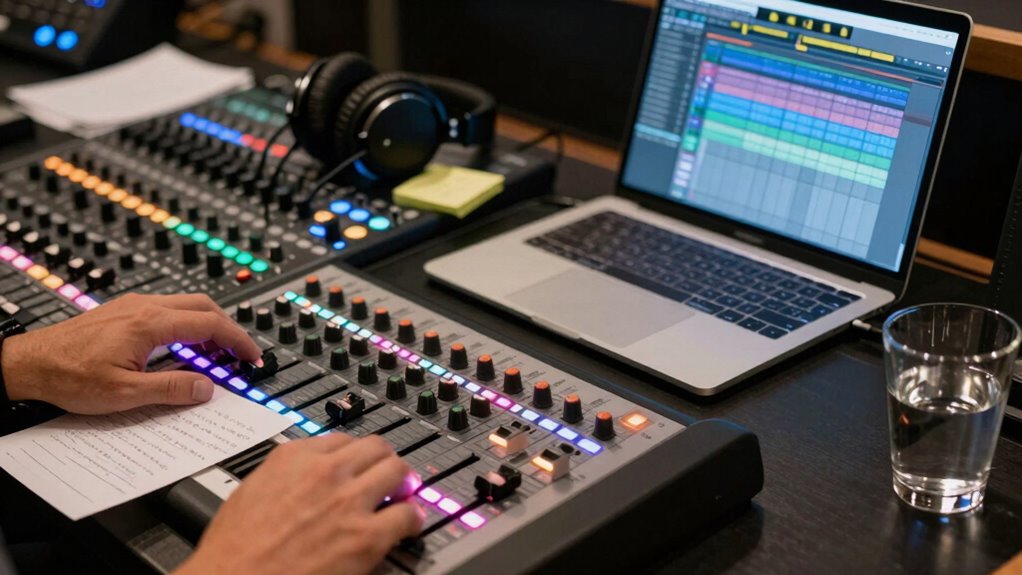

During revision rounds, you should track your mix balance, noting adjustments to vocals, instruments, and effects, while keeping a detailed log to avoid redundancy. Pay attention to arrangement changes, ensuring shifts are smooth and the song flows well. Monitor sound quality closely, making necessary tweaks to EQ, dynamics, and clarity. Tracking these elements helps you stay organized and consistent throughout the project. Continue exploring how to refine your process for a polished final product.

Get audio and creator gear delivered free with Prime
- Fast, free delivery on millions of items
- Prime Video, Amazon Music and more included
- Member-only deals all year
Key Takeaways
- Document specific mix adjustments like volume, EQ, and effects to ensure consistency across revisions.
- Record arrangement changes, including added, removed, or reordered sections, and assess their impact on flow.
- Track sound quality improvements and technical fixes to maintain professional standards.
- Note visual and presentation elements for engaging and accessible content delivery.
- Maintain a detailed log of creative and strategic decisions to prevent redundancy and support project goals.

When you’re steering through multiple revision rounds, staying organized is essential to guarantee the project stays on track and your feedback is effectively implemented. As a producer, tracking key elements during revisions helps you maintain a clear vision and assures every adjustment aligns with your goals. One of the most critical aspects to monitor is the mix balance. You want to make certain that each element—vocals, instruments, effects—sits well within the overall soundscape. Keep notes on which tracks need volume adjustments, EQ tweaks, or dynamic processing. This way, you avoid redundancy and can quickly reference what has or hasn’t been addressed. Maintaining a detailed log of mix adjustments helps you evaluate progress objectively and prevents overlapping revisions that could muddy the final sound. Additionally, paying attention to support breakfast options like high-protein choices can inspire creative energy during the revision process, ensuring you stay energized and focused. Regularly reviewing content formats can also help ensure your presentation remains engaging and accessible to your target audience. It’s also beneficial to consider projector specifications to ensure your visual elements align with your content delivery. Arrangement clarity is another crucial detail to track during revisions. As changes are made, it’s easy for the song’s structure to become confusing or cluttered. You should keep a record of modifications related to arrangement—such as sections added, removed, or rearranged—and note whether these changes improve the song’s flow. This helps you identify if certain sections need more refinement or if further simplification is necessary to preserve clarity. When reviewing the arrangement, listen for smooth transitions and logical progression, making notes on areas that might benefit from additional edits or enhancements. Tracking these details helps the song’s story remain clear and engaging, preventing it from becoming overly complicated or disjointed. Considering creative strategies such as different listening environments or perspective shifts can also aid in refining the final version. Furthermore, keeping an eye on sound quality ensures that all elements meet professional standards and contribute to a polished final product.
As an affiliate, we earn on qualifying purchases.
Frequently Asked Questions
How Do I Prioritize Revisions During Multiple Rounds?
You should prioritize revisions by applying clear revision strategies that focus on the most impactful feedback first. Start by identifying the changes that will improve the overall quality, then address smaller issues later. Use feedback prioritization to categorize comments into critical and minor. This way, you guarantee your efforts align with project goals, making each round more efficient and effective. Keep revisiting your priorities as new feedback comes in.
What Tools Are Best for Tracking Revision Changes?
They say, “A stitch in time saves nine,” and that’s true for tracking revisions. Use tools like Google Docs or Microsoft Word’s revision history for change management, as they let you see every edit and comment. Version control software like Git can also help manage complex revisions. These tools help you stay organized, make revisions clear, and guarantee nothing gets lost during multiple rounds.
How Do I Communicate Revision Notes Effectively?
To communicate revision notes effectively, prioritize revision clarity by being specific and concise, so your team understands exactly what needs changing. Use consistent terminology to avoid confusion and guarantee feedback is clear. Provide actionable suggestions, and consider using visual cues or annotations for emphasis. Regularly check in with your team to confirm they grasp your expectations, fostering a collaborative environment that guarantees revisions align with your vision.
When Should I Stop Tracking Revisions?
You should stop tracking revisions once you reach the agreed-upon revision timeline with your team. Keep monitoring feedback consistency throughout the process to guarantee all notes are addressed systematically. When the revisions align with the project goals and no new feedback emerges, it’s time to conclude tracking. This helps maintain clarity, prevents excessive changes, and ensures everyone stays on the same page as you finalize the project.
How Do I Handle Conflicting Feedback From Different Stakeholders?
When handling conflicting feedback from stakeholders, you first analyze stakeholder dynamics to understand each stakeholder’s priorities and influence. Then, seek feedback consistency by identifying common themes or goals across their comments. Communicate transparently, explaining how you’ll address conflicting inputs, and prioritize changes based on project goals. Engaging stakeholders in a collaborative discussion can also help resolve conflicts and foster consensus, ensuring the project moves forward smoothly.
music arrangement revision checklist
As an affiliate, we earn on qualifying purchases.
As an affiliate, we earn on qualifying purchases.
Conclusion
So, next time you’re drowning in revision notes, imagine yourself as a detective with a magnifying glass, scrutinizing every line like a suspect. Keep track of those pesky feedbacks, deadlines, and version numbers—your secret weapons. By doing so, you’ll avoid the chaos of lost notes and endless loops. Because, let’s face it, a producer armed with a tidy tracker is just a conductor waving a baton at a well-rehearsed symphony—minus the missed cues.
As an affiliate, we earn on qualifying purchases.
studio monitor calibration tools
As an affiliate, we earn on qualifying purchases.
As an affiliate, we earn on qualifying purchases.
Halloween Picks
halloween
As an affiliate, we earn on qualifying purchases.