
If you’re choosing between rent-to-own software and subscription models, consider your goals. Rent-to-own offers full ownership and long-term cost savings, but might require larger upfront payments and independent maintenance. Subscriptions provide flexibility, automatic updates, and lower initial costs but don’t transfer ownership. Your preference depends on whether you value control or convenience. To find out which option fits your needs best, explore the details further below.
Key Takeaways
- Rent-to-own offers full ownership after payments, ideal for long-term investment, while subscriptions provide ongoing access without ownership transfer.
- Subscription models include maintenance and updates, reducing management effort; rent-to-own requires independent handling post-purchase.
- Subscriptions typically have lower initial costs and predictable payments, whereas rent-to-own may involve larger upfront or cumulative expenses.
- Rent-to-own suits users seeking control and ownership; subscriptions are better for those prioritizing flexibility and always-up-to-date features.
- Long-term cost-effectiveness depends on ownership goals, with rent-to-own potentially cheaper over time, but subscriptions offering ongoing convenience.
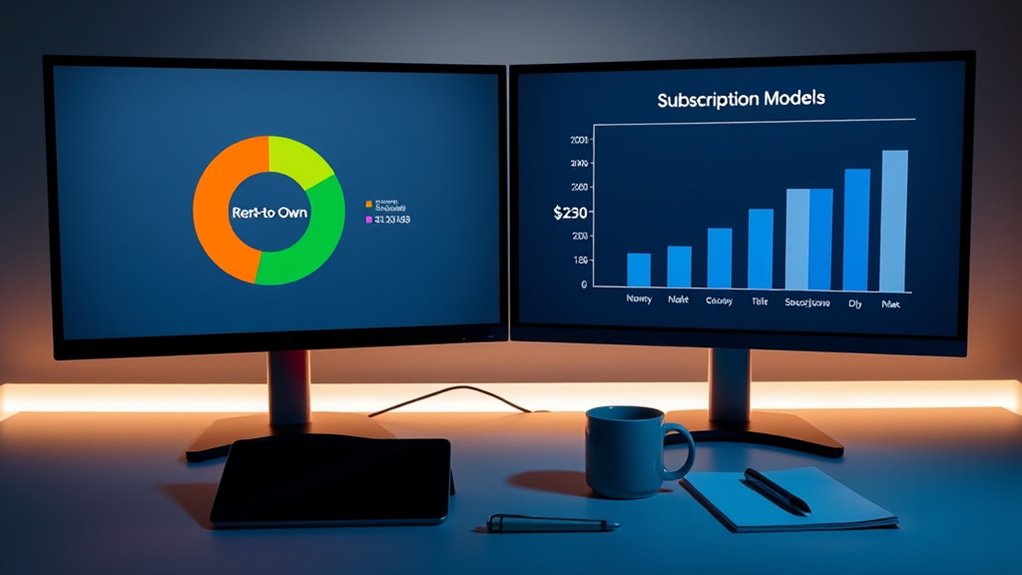
When choosing software, understanding the differences between rent-to-own and subscription models is key to making an informed decision. These options each offer distinct advantages and drawbacks, especially when it comes to payment flexibility and ownership benefits. Rent-to-own models typically let you spread out payments over time, gradually moving toward full ownership of the software. This can be appealing if you prefer to invest in a product you’ll ultimately own, rather than continuously paying for access. It allows you to plan your expenses and avoid recurring charges once the payments are complete. Additionally, owning the software outright means you’re free from ongoing subscription fees and can customize or use it without restrictions often associated with licenses or account limitations.
Understanding rent-to-own and subscription models helps you choose the best software payment options.
Subscription models, on the other hand, provide a different kind of payment flexibility. Instead of making large upfront payments, you pay smaller, regular fees—monthly or yearly—which can be easier on your cash flow. This model is ideal if you want access to the latest features and updates without worrying about obsolescence or additional costs. Subscriptions also usually include maintenance, support, and automatic updates, saving you time and effort on upgrades. However, with a subscription, you never truly own the software; your access depends on continued payments. If you stop paying, you lose access, which can be a disadvantage if long-term control and ownership are priorities for you.
Deciding between these models hinges on your financial strategy and long-term goals. If you’re looking for ownership benefits and want to make a one-time investment, rent-to-own could be the better choice. It might cost more upfront or over time but grants you full control and ownership once payments are complete. Conversely, if your focus is on flexibility, low initial costs, and always having access to the newest features, a subscription model suits better. You’ll benefit from the convenience of ongoing updates and support, but you’ll need to stay committed to regular payments to retain access.
Ultimately, your decision should reflect how you value ownership versus flexibility, your budget, and how you plan to use the software long-term. Both models have their merits, but understanding these core differences ensures you choose the best fit for your needs. Whether you prioritize owning the software outright or prefer the ease of ongoing access, knowing what each model offers helps you make smarter, more informed choices.
Frequently Asked Questions
How Do Maintenance Costs Differ Between Rent-To-Own and Subscription Software?
You’ll find that maintenance costs tend to be lower with subscription software because updates and user support are included in the regular fee, promoting software longevity. With rent-to-own options, you might face additional costs for upgrades or support once the initial period ends, leading to unpredictable expenses. Overall, subscription models typically provide more consistent maintenance costs, ensuring you get ongoing support without unexpected charges, which helps you better manage your budget.
Can Rent-To-Own Agreements Be Customized for Different Business Sizes?
You can definitely customize rent-to-own agreements for different business sizes, tailoring the terms to fit your company’s needs. This flexibility allows you to adjust payment plans, contract length, and features, supporting your growth and scalability. As your business expands or shifts, the customization flexibility in rent-to-own agreements makes it easier to adapt, ensuring you get the right solutions at every stage of your business’s scalability journey.
What Are the Tax Implications of Each Software Licensing Model?
You can benefit from tax deductions and depreciation benefits with both models. With rent-to-own software, you usually capitalize the software costs and claim depreciation over time, offering ongoing deductions. Subscription models allow you to deduct monthly or annual payments immediately, giving you quick tax relief. Your choice depends on your cash flow and accounting preferences, but both options can provide valuable tax advantages if managed properly.
How Do Updates and Upgrades Compare in Rent-To-Own Versus Subscription Models?
In subscription models, updates and upgrades happen automatically, enhancing your software’s scalability and ensuring a better user experience without extra costs. Rent-to-own models often require manual upgrades, which can slow down scalability and disrupt your workflow. With subscriptions, you get continuous improvements that keep your software current, while rent-to-own options may leave you with outdated versions, impacting overall user experience and limiting growth.
Are There Industry-Specific Preferences for Rent-To-Own or Subscription Software?
You might be surprised, but certain industries prefer rent-to-own software, especially where long-term ownership appeals—think real estate or retail. Others, like SaaS, lean toward subscription models for flexibility. Industry adoption and user preferences drive these choices; some sectors value ongoing updates, while others prioritize cost efficiency. Your decision depends on your industry’s unique needs, but understanding these trends can help you choose the right fit for your business.
Conclusion
So, whether you choose rent-to-own or subscription software, remember it’s really just a fancy way to keep paying forever. One promises ownership, the other endless access, but let’s be honest—you’re just leasing happiness on a monthly bill. Pick your poison wisely; after all, who needs ownership when you can keep “renting” your freedom? In the end, both options make sure your wallet stays just a little lighter—because what’s life without a little perpetually deferred ownership?