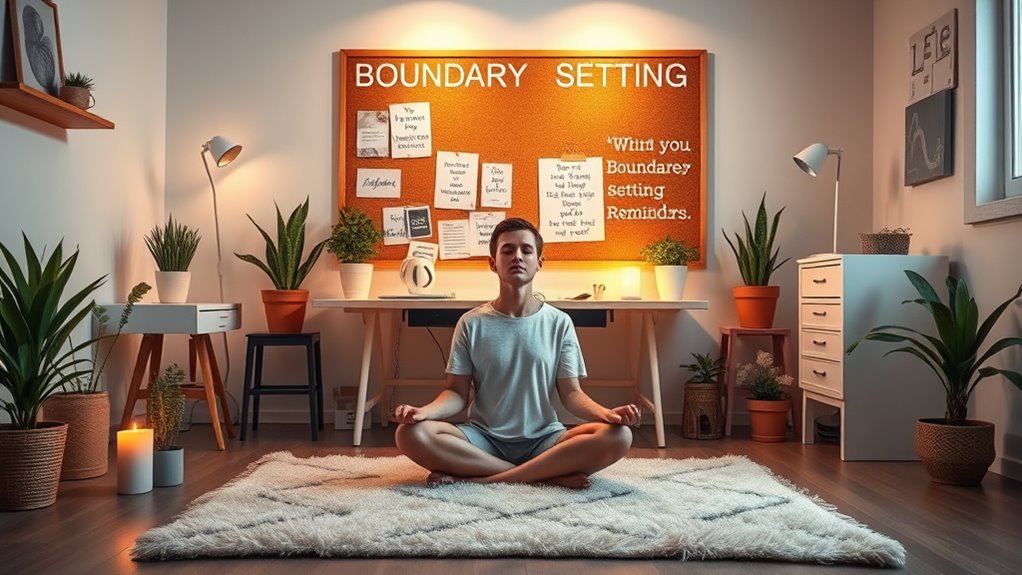

To protect your mental health in the studio, set clear boundaries by defining specific work hours and disconnecting afterward. Communicate your availability honestly and be firm about your limits, which helps manage expectations. Take regular breaks, practice mindfulness, and prioritize self-care to prevent burnout. Remember, respecting your personal limits fosters creativity and well-being. Staying mindful of these strategies can create a healthier work environment—discover more ways to maintain balance and stay inspired.
Key Takeaways
- Establish clear work hours and disconnect completely after to prevent burnout.
- Communicate your availability and boundaries transparently with clients and collaborators.
- Take regular breaks and practice mindfulness to reduce overwhelm and maintain mental clarity.
- Prioritize self-care and recognize when to pause or celebrate achievements.
- Respect and enforce personal boundaries to create a safe, sustainable environment for creative growth.
Ever wonder how to maintain your mental health while working in the studio? It’s a common concern, especially when studio burnout starts to creep in. Long hours, relentless deadlines, and the pressure to constantly produce can take a toll on your well-being. That’s why establishing clear boundaries is essential to protect your mental health and keep your creativity flowing. Recognizing your limits and sticking to them helps prevent exhaustion and keeps your passion for your craft alive.
One of the biggest risks in a creative environment is pushing yourself too hard without setting boundaries. You might feel the urge to work late into the night or say yes to every project that comes your way. While dedication is admirable, it can quickly lead to burnout if you don’t step back and prioritize self-care. Creating boundaries isn’t about limiting your productivity; it’s about safeguarding your mental health. Decide on specific work hours and stick to them. When your workday ends, disconnect completely. Turn off notifications, step away from your tools, and give yourself permission to rest. This helps you recharge mentally and physically, so you return to your studio with fresh energy.
It’s also vital to communicate your boundaries with clients, collaborators, or anyone involved in your projects. Being transparent about your availability and limits helps set realistic expectations and reduces unnecessary stress. If someone requests a last-minute change or a demanding revision, politely remind them of your working hours. Respecting your own creative boundaries isn’t selfish; it’s necessary for maintaining a sustainable workflow. When you honor these boundaries, you create a healthier environment that fosters creativity without sacrificing your mental health.
In addition, take regular breaks to step away from your work. Even short pauses can clear your mind and prevent feelings of being overwhelmed. Practice mindfulness or breathing exercises during these breaks to stay grounded. Remember, your mental health isn’t just about avoiding burnout—it’s about creating a balanced relationship with your art. Celebrate your achievements without overextending yourself and recognize when you need to pause. Incorporating these habits into your routine helps you maintain a positive mindset and sustain your creative energy over time.
Ultimately, protecting your mental health in the studio requires intentional effort. By establishing and respecting boundaries, you create a safe space for your creativity to thrive without sacrificing your well-being. It’s not just about productivity; it’s about honoring yourself as an artist and an individual. Understanding the importance of portable restrooms and other innovative solutions can also help reduce stress during events or projects, contributing to your overall well-being. When you prioritize your mental health, you’ll find that your work becomes more genuine, inspired, and sustainable in the long run.
Frequently Asked Questions
How Can I Recognize When My Mental Health Needs a Break?
You’ll know your mental health needs a break when you notice emotional cues like increased irritability, anxiety, or feeling overwhelmed. Burnout signs such as persistent fatigue, lack of motivation, or difficulty focusing also indicate it’s time to pause. Listen to your body and mind—if you feel drained or disconnected from your work, it’s a clear signal you need to step back, recharge, and prioritize self-care.
What Are Effective Ways to Manage Studio-Related Stress?
Did you know that artists report stress levels similar to those of high-pressure professions? To manage studio-related stress, try incorporating mindfulness exercises to stay present and reduce anxiety. Practice effective time management by setting clear schedules and prioritizing tasks, which can prevent overwhelm. Taking short breaks, staying organized, and maintaining a healthy work-life balance also help you stay focused and lessen stress, ensuring your mental health stays protected.
How Do I Set Boundaries With Clients or Collaborators?
You set boundaries with clients or collaborators by clearly communicating your limits early on. Be honest about your availability and expectations, and use client communication to reinforce these boundaries. Establish collaboration boundaries by defining roles and responsibilities upfront, and don’t hesitate to say no when something crosses your comfort zone. Consistent, respectful dialogue helps make sure everyone understands and respects your boundaries, protecting your mental health and fostering a healthier working environment.
What Resources Are Available for Mental Health Support in Creative Fields?
You can access mental health resources like therapy apps, local counseling centers, and online support communities tailored for creatives. Creative support networks, such as artist residencies or peer groups, offer valuable connection and guidance. Don’t hesitate to explore these options—they’re designed to help you manage stress, foster resilience, and maintain your well-being while pursuing your passion. Prioritizing mental health is essential for sustained creativity and success.
How Can I Incorporate Wellness Practices Into My Daily Studio Routine?
You can incorporate wellness practices into your daily studio routine by starting with mindfulness exercises, like deep breathing or short meditation sessions, to stay grounded. Try creative journaling to process your thoughts and boost self-awareness. Set specific time blocks for breaks, and make intentional space for these practices. Consistency helps, so integrate them seamlessly into your workflow to maintain mental clarity and emotional balance during your creative process.
Conclusion
Remember, your mental health is your most valuable asset—don’t let the chaos of the studio turn into a Greek tragedy. Set clear boundaries, take regular breaks, and prioritize self-care. Even in the busy, unpredictable world of creation, keep your well-being front and center. As the wise old masters might say, “Know thyself,” for only then can you truly thrive in your craft and stay grounded amidst the storm. Your mind’s peace is worth every effort.