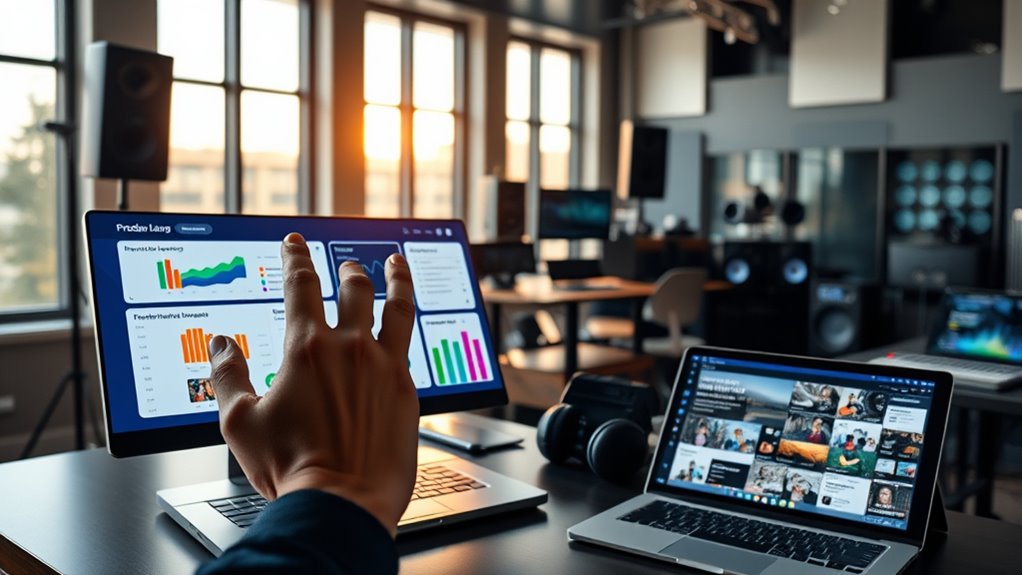

Personalized learning platforms for producers use adaptive assessments to evaluate your skills in real time, adjusting difficulty and content based on your responses. These systems keep you engaged with immediate feedback, gamified elements, and progress tracking, all tailored to your strengths and weaknesses. They also collect data to refine future lessons, making your learning more efficient and relevant. If you keep exploring, you’ll discover how these tools can boost your production skills even further.
Key Takeaways
- Adaptive assessments tailor content difficulty to producers’ skill levels, enhancing learning efficiency and mastery.
- Engagement features like gamified badges motivate producers to actively participate and track progress.
- Data-driven insights help refine course material based on producers’ responses and learning pace.
- Personalized environments recognize individual strengths and weaknesses, fostering targeted skill development.
- Visual optimization ensures clarity and reduces eye strain, supporting seamless, accessible learning experiences for producers.
Have you ever wondered how technology can tailor education to fit your unique learning style? Personalized learning platforms are transforming the way you acquire knowledge, offering customized experiences that adapt to your specific needs. At the core of these platforms are adaptive assessments, which serve as dynamic tools to evaluate your understanding in real-time. Instead of relying on standard tests that might feel disconnected from your progress, adaptive assessments adjust their difficulty based on your responses. If you answer a question correctly, the system presents a more challenging one, pushing you further. Conversely, if you struggle, it simplifies the task, ensuring you build confidence and master foundational concepts before moving ahead. This continuous adjustment keeps you engaged, preventing frustration and boredom, and helps maintain a steady flow of user engagement. By tailoring assessments to your current skill level, the platform ensures that you’re constantly challenged without feeling overwhelmed, making learning more effective and enjoyable.
As you interact with these systems, you’ll notice how they respond to your actions, providing immediate feedback and personalized recommendations. The integration of adaptive assessments creates a learning environment that feels responsive and intuitive. This personalized approach means you’re not just passively absorbing information; you’re actively participating in a process that recognizes your strengths and weaknesses. The more engaged you are, the better your chances of retention and mastery. These platforms often incorporate gamified elements, such as badges or progress tracking, which further boost user engagement by making learning feel like an interactive journey rather than a chore. This keeps you motivated to continue exploring new topics, revisiting challenging areas, and celebrating your achievements.
Furthermore, personalized learning platforms often use data collected from your interactions to refine future content delivery. They analyze your responses, learning pace, and areas needing improvement to optimize your experience continually. This not only makes learning more efficient but also more relevant to your goals and interests. As a result, you stay motivated because the content feels tailored specifically to you, increasing your overall user engagement. Additionally, understanding the importance of contrast ratio and other visual factors can significantly enhance the effectiveness of digital learning environments, ensuring clarity and reducing eye strain. The combination of adaptive assessments and personalized feedback creates a seamless, engaging experience that adapts as you grow, ensuring that your educational journey remains dynamic and aligned with your evolving needs. In this way, technology becomes a powerful ally in helping you reach your learning potential, making education more accessible, engaging, and effective.
Top picks for "personaliz learn platform"
Open Amazon search results for this keyword.
As an affiliate, we earn on qualifying purchases.
Frequently Asked Questions
How Do Personalized Learning Platforms Adapt to Different Production Industries?
You can trust personalized learning platforms to adapt to different production industries through industry-specific customization and adaptive content delivery. They tailor lessons to fit your industry’s unique processes, tools, and skills, ensuring relevant training. By constantly evaluating your progress, these platforms adjust the content in real-time, helping you learn more efficiently. This targeted approach maximizes your productivity and keeps your skills aligned with your industry’s evolving needs.
What Security Measures Protect User Data on These Platforms?
You’re protected by security measures like data encryption, which scrambles your data to prevent unauthorized access. Access controls ensure only authorized users can view or modify sensitive information. The platform might also use multi-factor authentication and regular security audits to bolster protection. These measures work together to keep your personal and production data secure, giving you peace of mind while you focus on learning and producing.
Can These Platforms Integrate With Existing Production Software?
Did you know 78% of producers successfully integrate new tools into existing workflows? These platforms often seamlessly connect with your current production software through data synchronization, making your workflow smoother. They also support third-party plugins, so you can customize features and enhance functionality. This integration helps you streamline tasks, improve efficiency, and keep everything in sync without disrupting your established processes, saving you time and effort.
What Is the Cost Range for Implementing Personalized Learning Solutions?
You’ll find that the cost estimation for implementing personalized learning solutions varies widely, typically ranging from a few thousand dollars for basic systems to over $100,000 for extensive platforms. To stay on track, you should include these expenses in your budget planning, considering licensing fees, integration costs, and ongoing support. This way, you guarantee the investment aligns with your organization’s goals and resources.
How Do Platforms Measure the Effectiveness of Personalized Training?
You can measure the effectiveness of personalized training by analyzing data analytics that track learner engagement, progress, and completion rates. These platforms often provide dashboards showing real-time insights into how learners interact with content. You should also monitor improvements in performance metrics and gather feedback to see if the training meets individual needs. Engaging with this data helps you identify areas for improvement and guarantees your training remains impactful.
Conclusion
By using personalized learning platforms, you can boost your skills more effectively and efficiently. Did you know that 74% of learners feel more motivated when their learning is tailored to their needs? Embracing these platforms means you’ll stay engaged, learn faster, and achieve your goals sooner. So, don’t miss out—start exploring personalized learning today and unleash your full potential as a producer. Your success is just a customized lesson away!