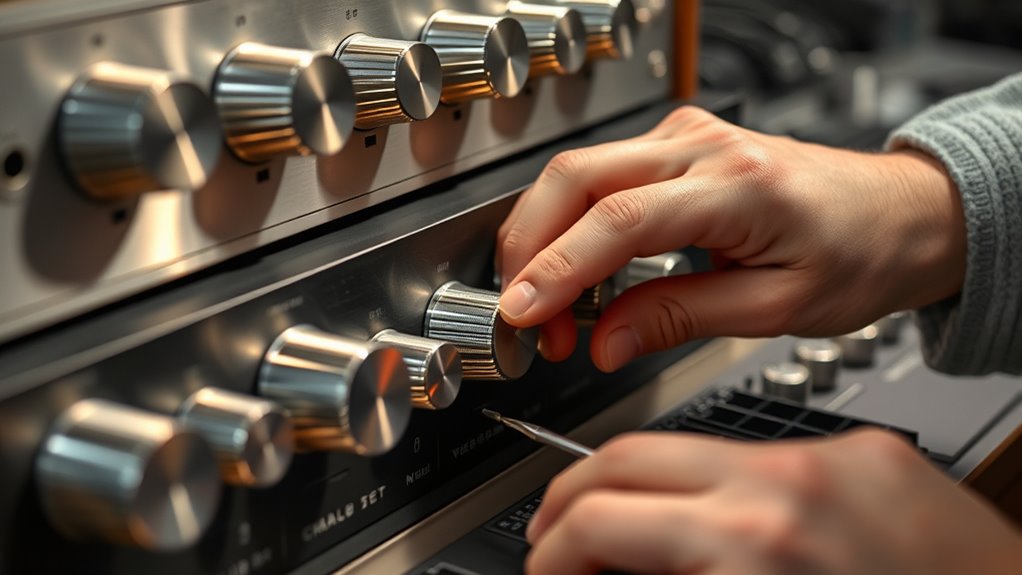

To properly maintain and service your analog gear, you should regularly check and calibrate components to guarantee accurate performance. Inspect power supplies for worn parts, tighten connections, and use surge protectors to prevent damage. Keep your equipment clean, dust-free, and follow manufacturer guidelines for routine maintenance schedules. Address power fluctuations promptly to avoid distortion. Continuing with these steps uncovers more essential tips to keep your gear sounding its best over time.
Key Takeaways
- Regularly perform circuit calibration using manufacturer guidelines and high-quality test signals to ensure accurate equipment performance.
- Inspect and verify power supplies, replacing worn components and using surge protectors or UPS to prevent damage.
- Schedule routine maintenance, including calibration and power checks, based on usage frequency and environment conditions.
- Clean internal and external components regularly with compressed air or soft brushes to prevent dust buildup and overheating.
- Implement protective measures such as proper grounding, shielding, and surge protection to extend equipment lifespan and maintain sound quality.
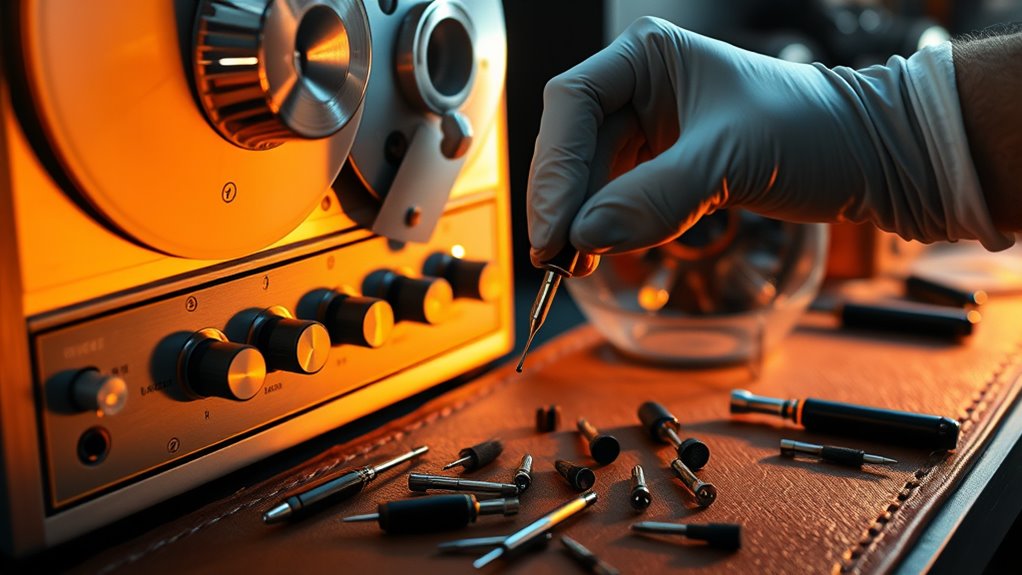
Keeping your analog gear in top shape requires regular maintenance and timely servicing. One of the most critical tasks is circuit calibration, which ensures that your equipment functions accurately and consistently. Over time, components can drift out of alignment, causing distortions or imprecise outputs. By routinely calibrating your circuits, you maintain the integrity of your signals and prevent issues before they become costly repairs. Start by reviewing your manufacturer’s guidelines on calibration procedures—some units may require specialized tools or software, while others need simple adjustments with a screwdriver or test equipment. Always use high-quality test signals and measurement devices to verify that your gear’s output aligns with the specified parameters. This proactive approach not only boosts performance but also prolongs the lifespan of your equipment.
Power supply checks are equally essential for keeping your analog gear running smoothly. Fluctuations or inconsistencies in power can cause subtle damage that worsens over time, leading to unexpected failures or degraded sound quality. Regularly inspect your power supplies for signs of wear, such as swollen or leaking capacitors, loose connections, or unusual noises. Use a multimeter to verify voltage levels and ensure they match the recommended specifications. If you notice irregularities, address them promptly—replacing faulty components or tightening connections as needed. Implementing surge protectors or uninterruptible power supplies (UPS) can safeguard your gear against voltage spikes and power outages, preventing damage during storms or power fluctuations. These checks should be part of your routine maintenance schedule, especially if your equipment is used frequently or in environments prone to electrical noise.
In addition to calibration and power checks, keeping your gear clean and dust-free helps maintain ideal performance. Dust accumulation can cause overheating or short circuits, which might compromise circuit calibration and power stability. Use compressed air or soft brushes to clear vents, knobs, and internal components carefully. Always turn off and unplug your gear before cleaning, and avoid using harsh chemicals that could damage sensitive parts.
Frequently Asked Questions
How Often Should I Calibrate My Analog Equipment?
You should calibrate your analog equipment at least once a year to guarantee ideal performance. Regular calibration helps maintain accuracy, especially as digital integration and software updates can affect analog gear’s stability. If you notice any drift or irregularities, calibrate sooner. Staying on top of calibration keeps your gear running smoothly, prevents issues from digital influences, and ensures consistent sound quality over time.
What Are the Signs My Gear Needs Servicing?
You notice your gear’s sound becomes distorted or suddenly drops out, like a fog settling over your soundstage. Dust accumulation on knobs and vents can cause poor connections, while power supply issues may lead to unpredictable operation or unexpected noise. If your equipment feels sluggish or heats up excessively, it’s time to check for dust and inspect the power supply. Regular servicing keeps your gear performing at its best, avoiding these warning signs.
Can I Repair Analog Gear Myself Safely?
You can try DIY repairs on your analog gear, but always prioritize safety precautions. Make sure to unplug the device first, wear insulated gloves, and work in a dry environment. If you’re not confident or lack experience, it’s safest to consult a professional technician. Remember, rushing into repairs without proper knowledge can cause damage or injury, so assess your skills carefully before attempting any repairs yourself.
What Are the Best Storage Conditions for Analog Devices?
To keep your analog devices in top shape, you should store them in a cool, dry place with stable temperature and controlled humidity. Use humidity control measures like silica gel packs or dehumidifiers to prevent moisture buildup, which can cause corrosion. Maintain consistent temperature to avoid thermal stress. Keep gear away from direct sunlight, heat sources, or fluctuating environments, ensuring they stay preserved and ready for ideal performance.
How Do I Identify Worn-Out Tubes or Components?
You can identify worn-out tubes or components by performing tube testing with a reliable tester, checking for decreased performance or erratic behavior. Look for signs like discoloration, cracks, or unusual noise. Regularly inspect components for corrosion or wear. If you notice any issues, don’t hesitate to replace the faulty tubes or components promptly to maintain peak sound quality and prevent further damage. Staying vigilant ensures your gear stays in top condition.
Conclusion
Taking care of your analog gear guarantees it stays in top shape and delivers the warm, rich sound you love. Regular maintenance and prompt servicing can prevent costly repairs and extend its lifespan. Are you willing to risk losing that classic tone by neglecting your equipment? Stay proactive, stay attentive, and you’ll enjoy the authentic magic only analog gear can provide for years to come. After all, isn’t your sound worth the extra effort?