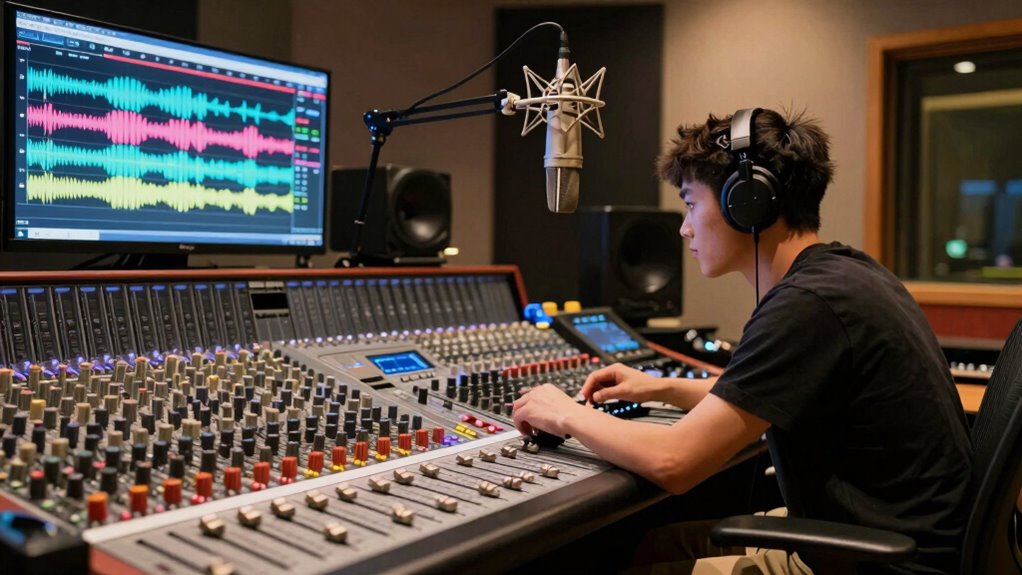

To finish more tracks without lowering standards, focus on mastering your workflow and strengthening your music theory skills. Set clear goals for each session and break projects into manageable parts to stay organized. Use deadlines to create urgency, but keep timelines realistic to avoid burnout. Prioritize key elements like arrangement and arrangement quality, and don’t get caught up in minor details. Keep improving your techniques and stay disciplined—if you keep pushing forward, you’ll discover more ways to finish tracks efficiently.

Get audio and creator gear delivered free with Prime
- Fast, free delivery on millions of items
- Prime Video, Amazon Music and more included
- Member-only deals all year
Key Takeaways
- Set realistic deadlines to maintain progress without sacrificing quality.
- Break projects into manageable tasks to stay focused and avoid overwhelm.
- Prioritize key elements like arrangement and vocals over perfectionist details.
- Develop a disciplined workflow with clear goals for each session.
- Balance technical skills and creativity to work efficiently without lowering standards.
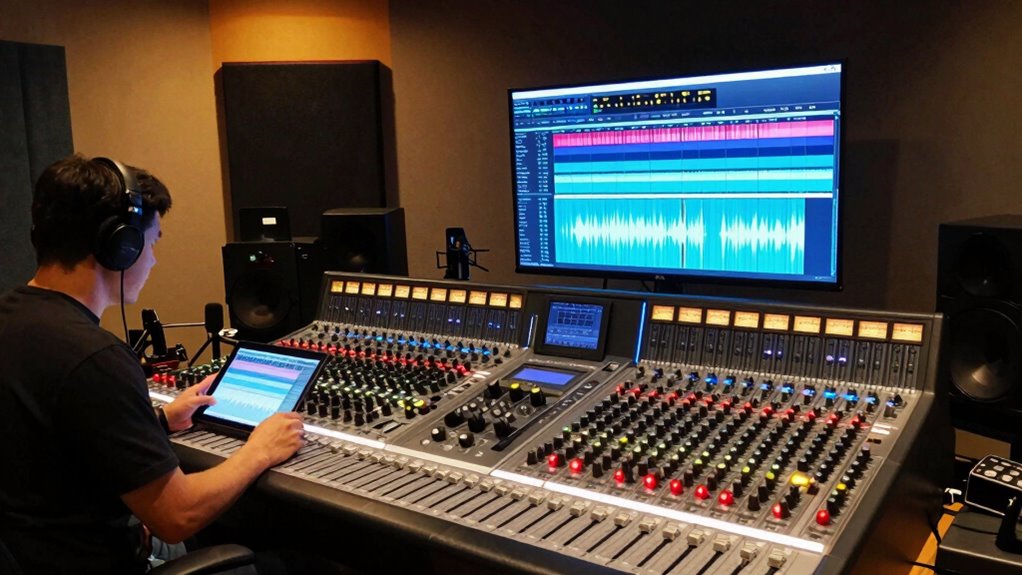
Finishing more tracks while maintaining high standards is possible with the right strategies. One of the key areas to focus on is your understanding of music theory. When you have a solid grasp of music theory, you can make quicker decisions about chord progressions, melodies, and harmonies. This clarity allows you to streamline your workflow, reducing the time spent second-guessing or reworking sections. Instead of getting lost in endless experimentation, you can lean on your knowledge to craft compelling, cohesive tracks efficiently. This doesn’t mean sacrificing creativity; it means working smarter so you can complete more projects without compromising quality. Additionally, deepening your music theory knowledge can help you better understand digital concepts, enabling you to innovate within your productions more effectively.
Master music theory to accelerate your workflow and craft cohesive tracks more efficiently without sacrificing creativity.
Another critical aspect is your approach to vocal arrangements. Well-structured vocal arrangements help communicate the song’s emotion clearly and keep the listener engaged. When you plan your vocal parts thoughtfully from the start, you avoid labor-intensive revisions later. Think about how each vocal layer interacts, ensuring that harmonies, lead lines, and background vocals complement each other. Simplify complex arrangements when necessary—sometimes less is more. Focus on capturing the essence of the vocal performance and getting the right takes rather than overcomplicating the arrangement. Efficient vocal arrangements also mean you can spend more time on other elements of your track, like mixing and mastering, ultimately speeding up the entire production process.
In addition to these technical skills, developing a disciplined workflow can make a significant difference. Set clear goals for each session, and break your projects into manageable chunks. For example, dedicate a session solely to laying down the foundation of your track, then another to vocals, and so on. This structure prevents you from jumping around aimlessly, which can lead to burnout or unfinished projects. Remember to stay organized by labeling your files and keeping your workspace clutter-free. This saves precious time when you need to locate specific elements or make quick adjustments.
Finally, don’t be afraid to establish deadlines for each phase of your project. Deadlines create a sense of urgency that keeps you moving forward. While it’s important to uphold high standards, setting realistic timelines ensures you don’t get stuck perfecting every detail at the expense of completing tracks. Balance quality with efficiency by trusting your instincts and knowing when a mix or arrangement is “good enough” to move on. With a combination of solid music theory, effective vocal arrangements, disciplined workflow, and deadlines, you’ll find yourself finishing more tracks without compromising your artistic integrity.
As an affiliate, we earn on qualifying purchases.
Frequently Asked Questions
How Do I Stay Motivated to Complete Multiple Tracks?
To stay motivated and complete multiple tracks, prioritize your time management by setting clear, achievable goals for each session. Cultivate creative discipline by establishing a routine that keeps you consistent, even when inspiration wanes. Break projects into smaller tasks to prevent overwhelm, and celebrate small wins. Remember, maintaining focus and discipline helps you push through creative challenges, ensuring you finish tracks without sacrificing quality or inspiration.
What Tools Can Help Streamline My Workflow?
Imagine a sleek control tower guiding your music creation. Music production software streamlines your workflow with intuitive features, saving you time and effort. Collaboration platforms act like a digital studio, connecting you with others seamlessly. These tools help you stay organized and focused, making it easier to complete tracks without sacrificing quality. Embrace these technologies to enhance your efficiency and keep your creative momentum alive.
How Do I Handle Creative Burnout During Busy Periods?
When you feel creative burnout during busy periods, try mindfulness techniques like deep breathing or meditation to reset your mind. Taking regular creative breaks helps prevent exhaustion and sparks fresh ideas. You might also step away from your workspace briefly, go for a walk, or listen to inspiring music. These strategies restore your energy and focus, making it easier to stay productive without sacrificing quality.
Can Outsourcing Improve My Track Completion Rate?
Outsourcing can considerably boost your track completion rate through collaborative partnerships. For example, a producer partnered with a mixing engineer to handle post-production, freeing up time for composing. This highlights outsourcing benefits: faster project turnaround, specialized expertise, and maintaining quality standards. By delegating specific tasks, you stay focused on your strengths, ensuring more tracks finish promptly without sacrificing quality, ultimately growing your catalog and reputation.
How Do I Prioritize Tracks Effectively?
You prioritize tracks effectively by conducting regular track evaluations, appraising each project’s potential and relevance. Use task scheduling to break down your workload into manageable steps, focusing on high-priority tracks first. Set clear deadlines and review progress often. By aligning your evaluations with your schedule, you guarantee you’re dedicating energy to the most promising projects, preventing burnout, and maintaining high standards without sacrificing productivity.
As an affiliate, we earn on qualifying purchases.
Conclusion
By implementing focused planning, breaking projects into manageable steps, and maintaining high standards, you can finish more tracks without compromising quality. Remember, studies show that artists who set clear goals and stay consistent produce twice as much work as those who don’t. So, stay disciplined, trust your process, and keep pushing forward—your dedication will pay off with a higher volume of polished tracks. Keep your standards high and your progress steady.
workflow organization tools for music
As an affiliate, we earn on qualifying purchases.
As an affiliate, we earn on qualifying purchases.
digital audio workstation (DAW) accessories
As an affiliate, we earn on qualifying purchases.
As an affiliate, we earn on qualifying purchases.
Halloween Picks
halloween
As an affiliate, we earn on qualifying purchases.