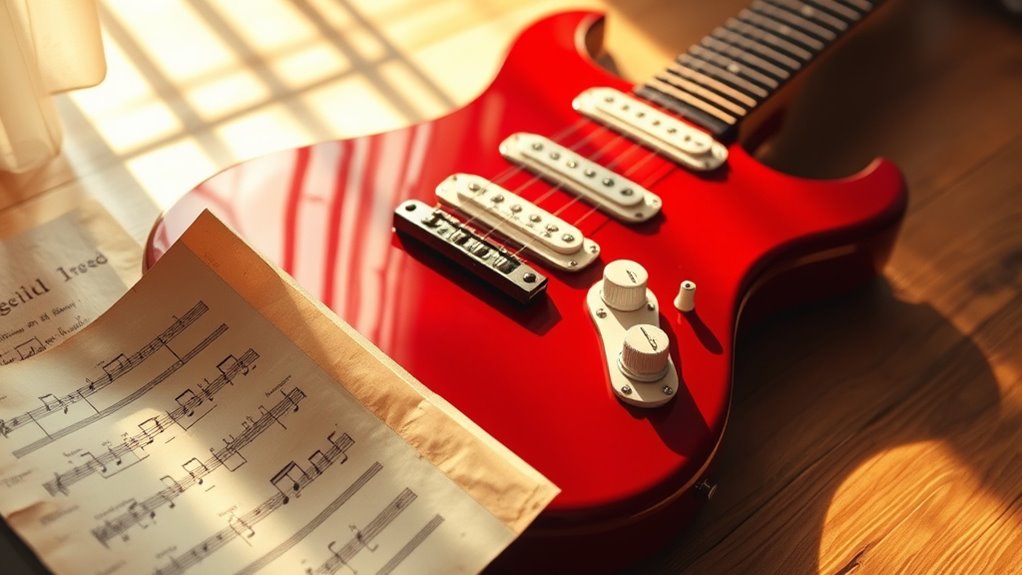

Retro chord progressions are making a big comeback as artists revive vintage sounds that evoke emotion and nostalgia. By incorporating classic patterns from the 60s and 70s, you can create authentic yet fresh music that resonates with modern audiences. Experimenting with substitutions, inversions, and blending old with new helps develop unique harmonic textures. If you want to explore how these timeless progressions can inspire your own compositions, you’ll find plenty more ideas ahead.
Key Takeaways
- Classic chord progressions from the 60s and 70s are being integrated into modern music to evoke nostalgia and emotional depth.
- Artists are creatively reworking vintage progressions through substitutions and voicings for fresh, innovative sounds.
- The trend encourages blending retro patterns with contemporary genres, enhancing authenticity and listener engagement.
- Analyzing and adapting old progressions accelerates songwriting and deepens emotional communication in new compositions.
- The revival fosters experimentation, combining classic harmonic structures with modern production to shape unique musical identities.
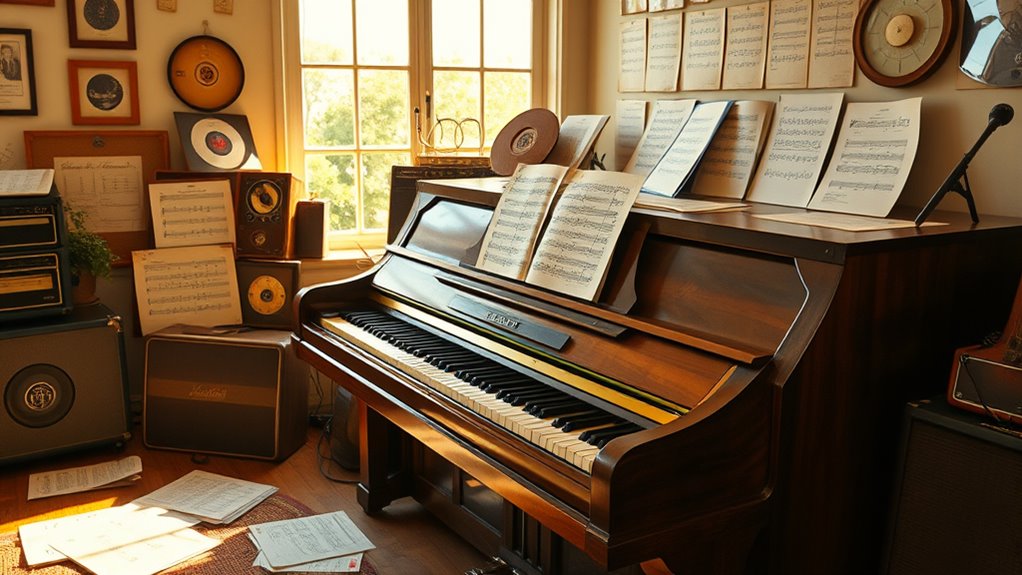
In recent years, chord progressions that once defined classic genres are making a powerful comeback, inspiring new music and enthralling listeners. This genre revival isn’t just a nostalgic nod; it’s a fresh wave of creativity that encourages songwriters to experiment with familiar harmonic structures. As you explore this trend, you’ll notice how artists incorporate retro chord progressions to evoke specific emotions or pay homage to musical eras. These progressions often carry a timeless quality, resonating deeply with audiences who appreciate both the familiarity and the novelty. When you tap into this resurgence, you’re not only embracing a sound rooted in history but also opening up new avenues for songwriting techniques. Understanding harmonic structure helps you grasp how these progressions evoke particular moods and atmospheres in music.
Retro chord progressions are making a powerful comeback, inspiring fresh creativity and emotional resonance in modern songwriting.
Using vintage chord progressions allows you to craft music that instantly connects with listeners. You might start by analyzing classic tracks from the 60s or 70s, identifying the progressions that give songs their enduring appeal. Then, you can adapt these patterns into your own compositions, blending them with modern production styles or lyrics. This approach makes your music feel both authentic and innovative. The genre revival driven by retro progressions encourages you to think creatively about how chords build emotion and tension. You can experiment with substitutions, inversions, and voicings to give old progressions a fresh twist, transforming familiar sounds into something uniquely yours.
Moreover, these progressions influence your songwriting techniques by providing a rich palette of harmonic tools. Instead of starting from scratch, you can leverage proven progressions that have already shown their power to evoke mood and atmosphere. This not only speeds up the songwriting process but also enhances your ability to communicate specific feelings through harmony. By understanding the roots of these progressions, you gain insight into how different chords work together to create a sense of movement and resolution. You’ll find that mixing old-school progressions with contemporary melodies or lyrics can produce compelling, emotionally resonant songs that stand out.
As this retro trend continues to grow, it pushes you to think outside the box. You might combine multiple vintage progressions within a single song or modify them to fit different genres. This fusion of old and new makes your music more dynamic and relatable. Embracing the genre revival means you’re not just copying past sounds; you’re reinventing them with your personal touch. Ultimately, it provides a solid foundation for your songwriting techniques—grounded in history yet fertile for innovation. It’s an exciting time to explore how these classic progressions can shape your musical voice and captivate your audience.

1908 The Most Popular Chord Progressions Book For Piano: The Ultimate Collection of Chord Progressions for Songwriters and Musicians, Major and Minor Chords in All Keys
As an affiliate, we earn on qualifying purchases.
As an affiliate, we earn on qualifying purchases.
Frequently Asked Questions
How Do Retro Chord Progressions Influence Modern Music Genres?
You can see how retro chord progressions influence modern music genres by adding vintage harmony and nostalgic melodies that resonate emotionally. When you incorporate these progressions, your compositions evoke a sense of familiarity and warmth, connecting listeners to past eras. This blending of old-school charm with contemporary styles creates unique sounds, making your music stand out and appeal to diverse audiences who appreciate both innovation and tradition.
What Are the Most Iconic Songs Featuring Vintage Chord Progressions?
You’ll recognize iconic songs like The Beatles’ “Yesterday” and Frank Sinatra’s “Fly Me to the Moon,” which feature vintage melodies and classic harmonies. These tracks showcase timeless chord progressions that evoke nostalgia and emotional depth. When you listen, you’ll notice how their vintage melodies and classic harmonies create a rich, nostalgic sound that continues to influence modern music, proving that great chord progressions never go out of style.
Can Retro Progressions Be Adapted for Electronic or Hip-Hop Music?
Yes, you can adapt retro progressions for electronic or hip-hop music by incorporating sampling techniques and genre blending. You might sample vintage chord progressions and manipulate them with digital effects, creating a nostalgic yet fresh sound. Layering these progressions with modern beats and diverse sounds allows you to fuse genres seamlessly, making your tracks stand out. Experimenting with different styles helps you craft unique compositions that honor the retro vibe while staying contemporary.
How Do Music Producers Incorporate Nostalgic Progressions Creatively?
You can creatively incorporate nostalgic progressions by blending genres and using sampling techniques that evoke a vintage vibe. Layer retro chords with modern beats, adding subtle effects to make them fresh. Mix in elements from different styles to surprise your audience, creating a seamless fusion. This approach allows you to honor the past while crafting something uniquely contemporary, making your music both familiar and innovative.
Are There Specific Scales or Modes That Work Best With Retro Progressions?
You’ll find that modal interchange and pentatonic scales work really well with retro progressions. Modal interchange lets you borrow chords from parallel modes, adding nostalgic flavor, while pentatonic scales give your melodies a familiar, vintage feel. Experiment by switching between modes like Dorian or Mixolydian, and layer pentatonic runs over your chords. This combination helps you craft authentic, nostalgic sounds that resonate with retro vibes.

Walrus Productions Mini Guitar Chord Chart Poster – Laminated Guitar Progressions Chord Poster for Beginners and Musicians – Guitar Chord Trainer – Acoustic Guitar Accessories – 8.5" x 11"
Master The Guitar – Get up to speed quickly and be able to jam instantly with Walrus Production's…
As an affiliate, we earn on qualifying purchases.
As an affiliate, we earn on qualifying purchases.
Conclusion
As you explore these retro chord progressions, remember, they’re not just echoes of the past—they’re the keys to revealing fresh inspiration. Like a well-worn vinyl, they carry timeless charm that can transform your music today. So, why not embrace the nostalgia and let these classic progressions guide your creativity? After all, sometimes the best way forward is by looking back—because in music, history is always waiting to be rewritten.

Piano Progressions, 8.5" x 11" Laminated Chord Chart – Music Theory & Chord Progressions for Piano & Guitar
EASY TO READ & USE – Our laminated piano chord chart is printed on thick, sturdy, matte laminate…
As an affiliate, we earn on qualifying purchases.
As an affiliate, we earn on qualifying purchases.
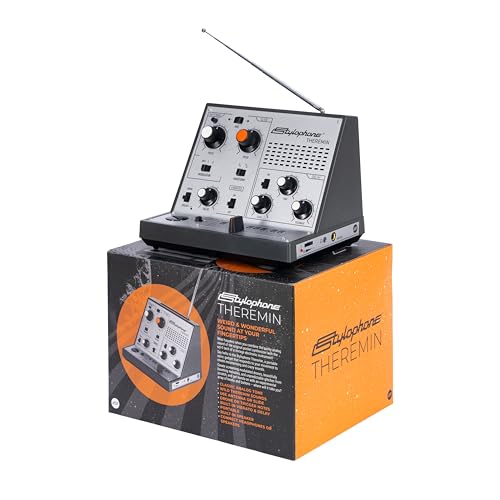
Stylophone Theremin – Award-Winning Portable Touch-Sensitive Synthesizer with Retro Analog Sound, Built-In Speaker, Delay & Vibrato Effects, Slider Control, Compact Battery-Powered Design
🎵 AWARD WINNING STYLOPHONE THEREMIN – pitch theremin antenna meets Stylophone’s retro design approach, creating a unique portable…
As an affiliate, we earn on qualifying purchases.
As an affiliate, we earn on qualifying purchases.