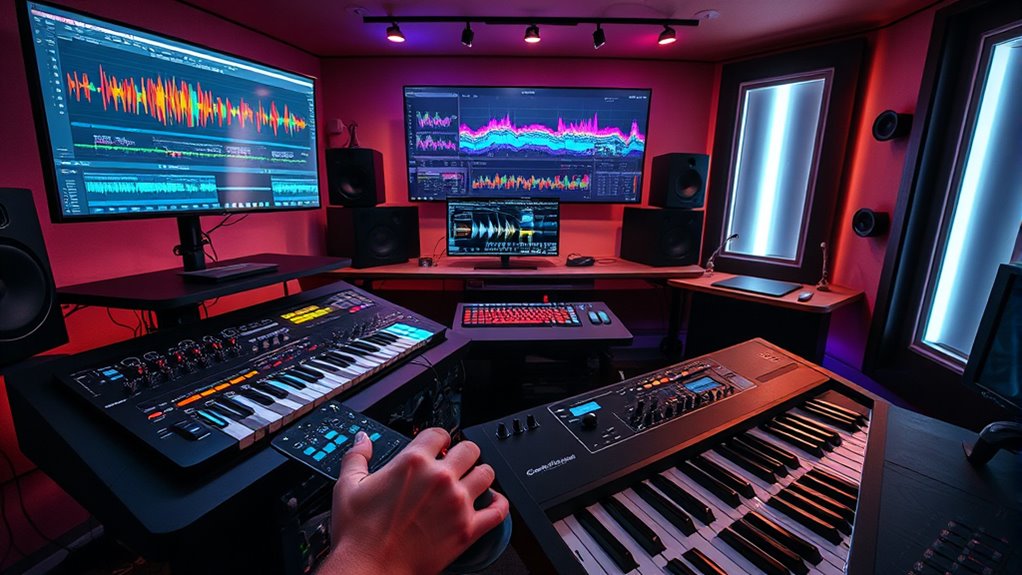

Loop-based composition and non-linear songwriting let you work creatively and flexibly using digital tools like DAWs. You can experiment spontaneously by layering, modifying, and rearranging loops without sticking to a strict order. This approach encourages improvisation, helping you capture fresh ideas instantly. You gain more control over your music, exploring complex arrangements and unique sounds. Keep exploring how these techniques can expand your creative process and open new musical possibilities.
Key Takeaways
- Loop-based composition enables flexible, non-linear songwriting through repeated musical segments that can be rearranged and layered freely.
- Digital audio workstations (DAWs) facilitate experimentation with loops, supporting dynamic editing, stretching, and manipulation.
- Improvisation techniques in DAWs allow spontaneous idea capture, fostering organic and authentic musical development.
- Non-linear workflows let artists revisit and refine sections effortlessly, encouraging ongoing exploration and complex arrangements.
- Combining loops, improvisation, and digital tools promotes innovative, spontaneous music creation that transcends traditional linear processes.
Loop-based composition and non-linear songwriting have revolutionized how musicians create music, offering greater flexibility and creative freedom. Instead of following a traditional, linear process from start to finish, you now have the ability to experiment with ideas in a more dynamic way. Using digital audio workstations (DAWs), you can easily create, edit, and rearrange loops, transforming your creative process into a fluid and spontaneous experience. This approach encourages improvisational techniques, allowing you to layer sounds, test different melodies, and make adjustments on the fly. As a result, you can develop complex arrangements without being constrained by the need to plan everything out upfront.
Loop-based and non-linear songwriting empower musicians to experiment freely and craft complex, spontaneous arrangements with digital tools.
When working with DAWs, you can begin by recording or importing short musical segments—loops—that serve as the building blocks for your composition. These loops can be manipulated independently, enabling you to explore various musical directions without losing your initial ideas. You might start with a drum loop and add melodic or harmonic layers, improvising over the repetitive foundation. The beauty of this method is that it promotes experimentation; you can easily duplicate, stretch, or modify loops to see how different combinations sound. This flexibility helps you discover new textures and motifs that might not emerge through traditional songwriting. Additionally, understanding offensive security tactics can inspire innovative approaches to problem-solving within your creative process.
Improv-based techniques play a crucial role here. Instead of pre-planning each note, you can improvise within the loops, capturing spontaneous ideas that add authenticity and freshness to your music. DAWs often include tools like MIDI controllers and real-time recording features that facilitate improvisation, making it easier to translate your creative intuition directly into your project. As you experiment, you develop a more organic and intuitive workflow, where happy accidents and unexpected overlaps can shape your song in exciting ways. These techniques remove the pressure of perfect execution, encouraging you to focus on expression and exploration.
Furthermore, non-linear workflows enabled by digital audio workstations allow you to revisit and revise sections effortlessly. You aren’t locked into a linear timeline; instead, you can jump between parts, refine loops, and experiment with arrangements until they feel right. This approach aligns perfectly with improvisational techniques, as it fosters a mindset of continuous discovery. Ultimately, you gain more control over your creative process, breaking free from traditional constraints and embracing a more spontaneous, intuitive way of making music. Whether you’re layering textures or crafting intricate compositions, the combination of improvisational techniques and powerful DAWs empowers you to push your musical boundaries and develop truly unique works.
Frequently Asked Questions
How Do I Choose the Best Software for Loop-Based Composition?
You should choose software that fits your workflow and enhances your digital audio experience. Look for features like intuitive interface, flexible loop management, and seamless integration with your digital audio work environment. Prioritize options that optimize your workflow, saving time and effort. Try free trials or demos to see which program feels most natural and efficient, ensuring it supports your creative process and helps you craft your music effortlessly.
Can Non-Linear Songwriting Improve My Creative Process?
Yes, non-linear songwriting can boost your creativity by encouraging improvisation techniques and fostering spontaneity. It allows you to experiment freely, jump between sections, and explore new ideas without strict structure. This approach keeps your mind open, sparks fresh inspiration, and helps you discover unique melodies and arrangements. Embracing non-linear methods transforms your process into an exciting journey, making songwriting more dynamic and personally fulfilling.
What Are Common Challenges in Non-Linear Song Structures?
Tackling non-linear song structures can be tricky, as you often face creative constraints that challenge your clarity. You might struggle with maintaining listener engagement, as unpredictable progressions can confuse or disconnect your audience. Balancing bold experimentation with cohesive storytelling becomes a common challenge, requiring you to carefully craft shifts. Staying focused amid these flexible forms demands patience, precision, and persistent practice to transform complex ideas into compelling, engaging compositions.
How Do Loops Influence Emotional Impact in Music?
Loops profoundly influence emotional impact by creating musical tension that keeps you engaged. When you use repetitive patterns, they build anticipation and evoke feelings of familiarity or suspense. This sustained tension draws you deeper into the music, making the emotional experience more intense. Cleverly crafted loops can manipulate mood shifts, enhance storytelling, and maintain your interest throughout the piece, ensuring a powerful connection between the music and your emotions.
Are There Genres That Benefit More From Loop-Based Methods?
You’ll find genres like electronic dance music, hip-hop, and ambient music benefit most from loop-based methods. These styles rely on genre-specific techniques that emphasize repetition, building atmosphere, and groove. Cultural influences also play a role, shaping how loops are used to evoke emotion and connect with listeners. By leveraging these loops, you can create immersive experiences that are both engaging and deeply rooted in the traditions of each genre.
Conclusion
By embracing loop-based composition and non-linear songwriting, you open endless creative possibilities. You can experiment freely, build layers, and discover unexpected melodies. Isn’t it exciting to think that your next great song might emerge from simply playing around with a loop? So, why limit yourself to traditional methods when you have the tools to craft something truly unique? Plunge into, explore, and let your creativity flow beyond the constraints of linear thinking.