Clear stage monitors are key to boosting your confidence during live shows. When you hear your vocals and instruments clearly, you stay focused and perform more naturally. Good monitors prevent distractions and technical issues that can break your flow. With reliable sound, you can connect better with your audience and express yourself authentically. If you keep exploring, you’ll discover how optimizing your setup can make your performances even more engaging and confident.

Get audio and creator gear delivered free — and shop member deals
- Fast, free delivery on millions of items
- Access to Prime Big Deal Days deals on October 6–7
- Prime Video, Amazon Music and more included
Key Takeaways
- Clear stage monitors enhance performers’ confidence by providing accurate sound, reducing uncertainty during live performances.
- Reliable monitors enable musicians to focus on their performance without distraction from sound issues.
- Proper monitor setup improves communication and connection between band members, boosting overall stage confidence.
- Consistent monitor sound allows performers to maintain natural flow and avoid overplaying or mistakes.
- Enhanced audio clarity through monitors encourages authentic audience engagement and interaction.
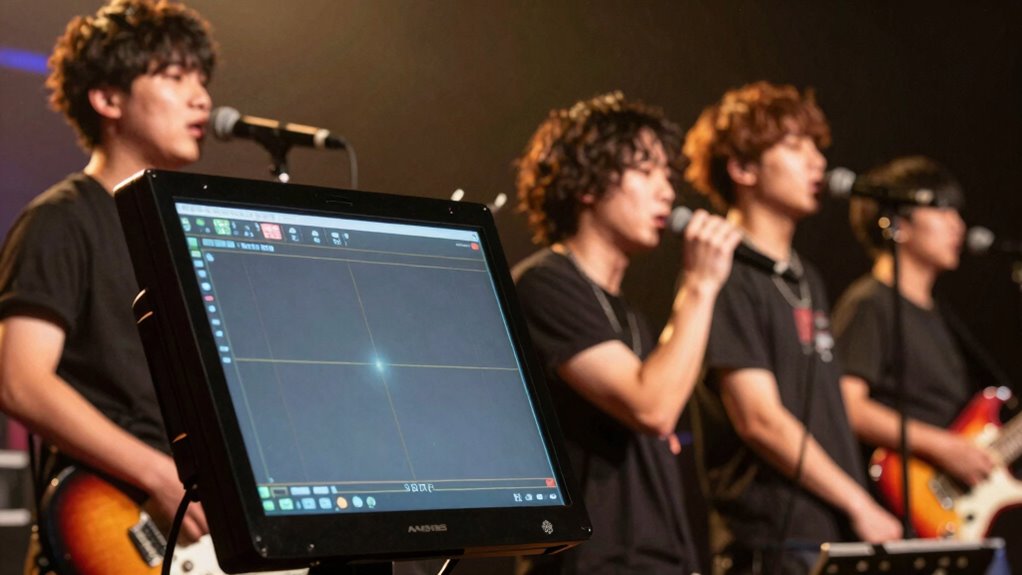
Stage monitors play an essential role in boosting a band’s confidence during live performances. When you’re on stage, these monitors are your direct link to the audience, helping you stay connected and in sync with the vibe of the show. As you perform, your ability to hear yourself clearly through the monitors directly impacts how confidently you play. If the sound is muddled or inconsistent, it’s easy to lose focus, feel uncertain, and struggle to engage the audience effectively. On the other hand, when your stage monitors deliver crisp, clear sound, you can precisely gauge your pitch, timing, and dynamics, which boosts your confidence and allows you to perform at your best.
Audience engagement is essential during live shows, and stage monitors play an indispensable role in facilitating this connection. When you can hear yourself and the rest of the band with clarity, you’re more likely to respond naturally to the crowd’s energy. This heightened awareness encourages you to make eye contact, move more freely, and interact authentically with your audience. As a result, your stage presence becomes more compelling, and the audience feels more involved. When the sound is balanced and clear through your monitors, you also pick up on audience reactions more easily, enabling you to adjust your performance dynamically. This real-time feedback loop fosters a sense of control and confidence, making your performance more engaging and memorable.
Moreover, the quality of your stage monitors influences how smoothly the entire performance runs. When sound clarity is compromised, you might find yourself compensating by overplaying or becoming distracted, which can break the flow and diminish your confidence. Conversely, reliable monitors that deliver consistent sound help you stay focused on your musical delivery rather than fighting technical issues. This stability allows you to concentrate on your performance, connect with the band, and respond to audience cues more instinctively. When you trust what you hear, you perform more naturally, and that authenticity radiates outward, further enhancing audience engagement. Ensuring your monitor setup is optimized can make a significant difference in your overall confidence on stage, and understanding the importance of proper sound calibration can help prevent common issues that undermine performance. Paying attention to monitor placement, acoustics, and sound quality can also greatly improve your on-stage experience.
stage monitor speakers for live performance
As an affiliate, we earn on qualifying purchases.
As an affiliate, we earn on qualifying purchases.
Frequently Asked Questions
How Do Stage Monitors Differ From In-Ear Monitors?
Stage monitors are traditional, often using wedge-shaped speakers that project sound toward you, while in-ear monitors are small earpieces that deliver personalized sound directly into your ears. With in-ear monitors, you get better personalization options and noise isolation, and they often feature wireless technology, giving you freedom of movement. Stage monitors can be wired or wireless, but in-ear monitors typically offer a more tailored experience, boosting your confidence during performances.
What Are Common Issues With Stage Monitor Setups?
Like a tangled spider web, stage monitor setups often face issues. Common problems include stage feedback caused by poor monitor placement, which creates loud, disruptive squeals. Incorrect positioning can also lead to uneven sound distribution, making it hard for you to hear your cues clearly. To avoid these issues, guarantee monitors are strategically placed and regularly checked, so you maintain confidence and deliver a great performance.
How Do Monitors Impact a Band’s Live Performance Energy?
Stage monitors directly impact your live performance energy by enhancing audience engagement and improving performer communication. When you hear a clear, well-balanced sound, you feel more confident and connected, which translates into more dynamic playing. Better monitors allow you to focus on your performance rather than technical issues, boosting your enthusiasm and interaction with the audience. This heightened energy creates a memorable experience for everyone, elevating your show to the next level.
Can Monitor Sound Quality Affect Audience Perception?
Yes, monitor sound quality directly affects audience perception. When you have clear, well-balanced sound, your performance feels more confident, which boosts audience engagement. Poor sound clarity can distract your audience, making it harder for them to connect emotionally with your music. By ensuring high-quality monitors, you help create a seamless experience, allowing your audience to focus on your performance and enhancing their overall perception of your show.
What Training Is Needed for Proper Monitor Mixing?
You need training in monitor calibration and feedback suppression to mix stage monitors effectively. Learn how to set up and adjust monitor levels accurately, ensuring each musician hears clearly. Understand how to identify and eliminate feedback using suppression techniques. Practice balancing sound sources and utilizing equalization tools. With hands-on experience and knowledge of these essentials, you’ll boost your confidence and deliver a mix that keeps the band focused and energized during performances.
professional stage monitor in-ear monitors
As an affiliate, we earn on qualifying purchases.
As an affiliate, we earn on qualifying purchases.
Conclusion
When your stage monitors deliver clear, balanced sound, your confidence soars—like a ship sailing smoothly through calm waters. You trust your ears, stay in sync, and perform with ease. Remember, a well-tuned monitor is the backbone of a great show; without it, even the best musicians can feel lost. Keep your monitors in check, and you’ll always have a steady compass guiding your performance to success.
As an affiliate, we earn on qualifying purchases.
crisp clear stage monitor system
As an affiliate, we earn on qualifying purchases.
As an affiliate, we earn on qualifying purchases.
Fall Picks
fall essentials
As an affiliate, we earn on qualifying purchases.