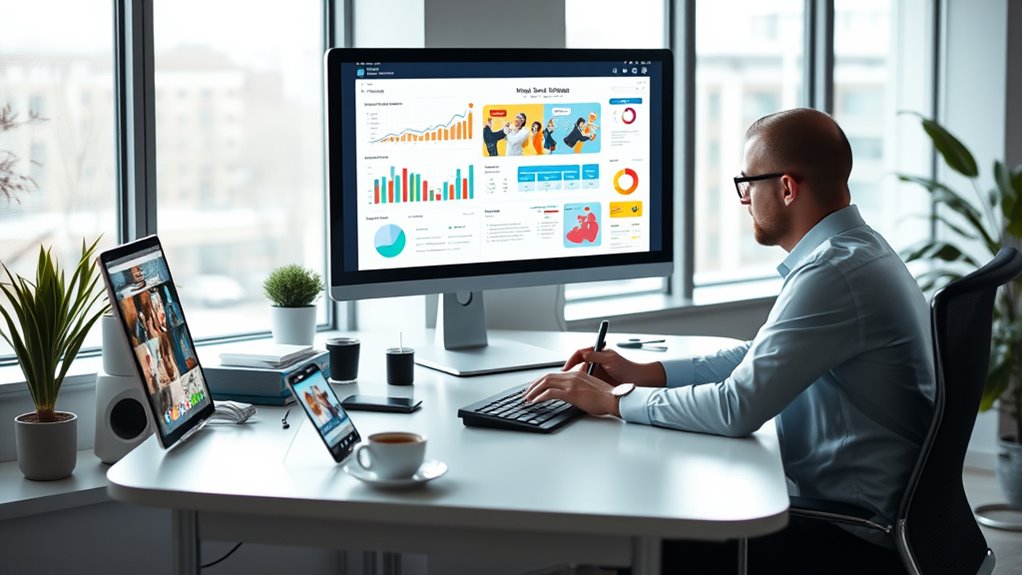

To launch a successful email marketing campaign, start by segmenting your audience based on demographics, interests, or purchase history to send targeted, relevant content. Personalize your emails with customized subject lines, greetings, and send times for better engagement. Focus on collecting accurate data to refine your messaging and create meaningful campaigns that build trust. Incorporating well-being tips and tailored messages can boost connection and conversions. Keep these strategies in mind as you explore more ways to optimize your campaign.
Key Takeaways
- Define clear campaign goals and target audience segments based on data analysis.
- Segment subscribers using demographics, behavior, and interests for targeted messaging.
- Personalize emails with tailored content, subject lines, and send times to boost engagement.
- Collect and analyze interaction data to refine messaging and improve future campaigns.
- Incorporate relevant content like well-being tips to deepen connection and enhance campaign effectiveness.

Are you ready to grow your business with an effective email marketing campaign? The key to success starts with understanding your audience and crafting messages that resonate. One of the most powerful ways to do this is through segmentation strategies. Instead of sending a generic email to everyone on your list, segmentation allows you to divide your subscribers into smaller, targeted groups based on specific criteria like demographics, purchase history, or engagement levels. This approach ensures that each recipient receives content relevant to their interests, increasing the chances they’ll open, read, and act on your emails.
Implementing segmentation strategies isn’t complicated, but it requires some planning. Begin by analyzing your existing data to identify patterns and commonalities among your subscribers. For example, you might create segments for new subscribers, repeat customers, or those interested in specific product categories. Once segmented, you can tailor your messaging for each group, making your emails more personalized and impactful. Personalized content demonstrates that you understand your audience’s needs, building trust and fostering loyalty.
Analyzing data helps create targeted, personalized email campaigns that build trust and boost loyalty.
Email personalization takes this concept a step further. It involves customizing not just the content but also the subject line, greeting, and even the send time, based on individual subscriber data. Personalization makes your emails feel more like a one-on-one conversation rather than a mass broadcast. For instance, addressing a subscriber by name in the subject line and opening sentence can grab their attention immediately. Recommending products based on past purchases shows you’re paying attention to their preferences, encouraging more conversions. Sending emails at times when each subscriber is most likely to engage maximizes open rates and click-throughs. Additionally, understanding the importance of well-being tips can help you craft content that resonates on a deeper level with your audience, fostering stronger relationships.
To effectively utilize email personalization, you need accurate data collection. Track how your subscribers interact with your emails and website, then use that information to refine your messaging. Automation tools can help you send personalized emails at the right moments, whether it’s a welcome series for new subscribers or a re-engagement campaign for inactive ones. Remember, the goal is to make each recipient feel valued and understood, which ultimately boosts your conversion rates.
Frequently Asked Questions
How Do I Segment My Email List Effectively?
You can segment your email list effectively by analyzing customer demographics like age, location, and purchase history. Use segmentation tools to automatically categorize your contacts into relevant groups. Tailor your messages based on these segments to increase engagement and conversions. Regularly update your segments as customer data evolves, ensuring your campaigns stay targeted and personalized, which ultimately boosts your email marketing success.
What Are the Best Times to Send Marketing Emails?
Timing is everything—you’ll want to hit your audience when they’re most likely to engage. Generally, the best times are mid-morning or early afternoon on Tuesdays or Thursdays. Ideal timing varies by audience, so analyze your data for peak engagement hours. Sending emails at these times maximizes audience engagement, ensuring your messages don’t get lost in the inbox abyss and instead make a real impact.
How Can I Improve Email Open Rates?
To improve your email open rates, focus on subject line optimization by making them clear, compelling, and personalized. Use concise language that creates curiosity or offers value. Additionally, apply email design best practices by ensuring your emails are visually appealing and mobile-friendly. Keep your content relevant and engaging, and test different subject lines and designs to see what resonates best with your audience.
What Legal Considerations Should I Be Aware Of?
You should review privacy policies to guarantee you’re compliant with data protection laws like GDPR and CAN-SPAM Act. Make sure your emails include clear opt-out options, and avoid spam regulations by not using deceptive subject lines or misleading content. Always obtain explicit consent before sending marketing emails, and keep records of subscriber permissions. Staying aware of these legal considerations helps protect your business from penalties and builds trust with your audience.
How Do I Personalize Email Content at Scale?
Oh, the irony of personalized emails at scale—who knew AI personalization and dynamic content could make you seem like you’ve read your audience’s minds? To do this effectively, leverage AI tools that analyze user behavior and preferences. Use dynamic content blocks to tailor messages automatically, ensuring each recipient feels special. With these strategies, you’ll boost engagement without sacrificing authenticity, all while managing a large audience effortlessly.
Conclusion
Now that you’re ready to launch your email marketing campaign, remember to monitor your results like a savvy captain steering through the digital seas. Keep tweaking your messages based on open rates and click-throughs, just as a modern-day Leonardo might refine his masterpiece. Don’t forget, patience is key—Rome wasn’t built in a day, and neither is a successful campaign. Stay persistent, learn from each send, and watch your engagement soar like a rocket in the night sky.