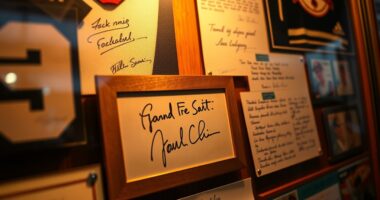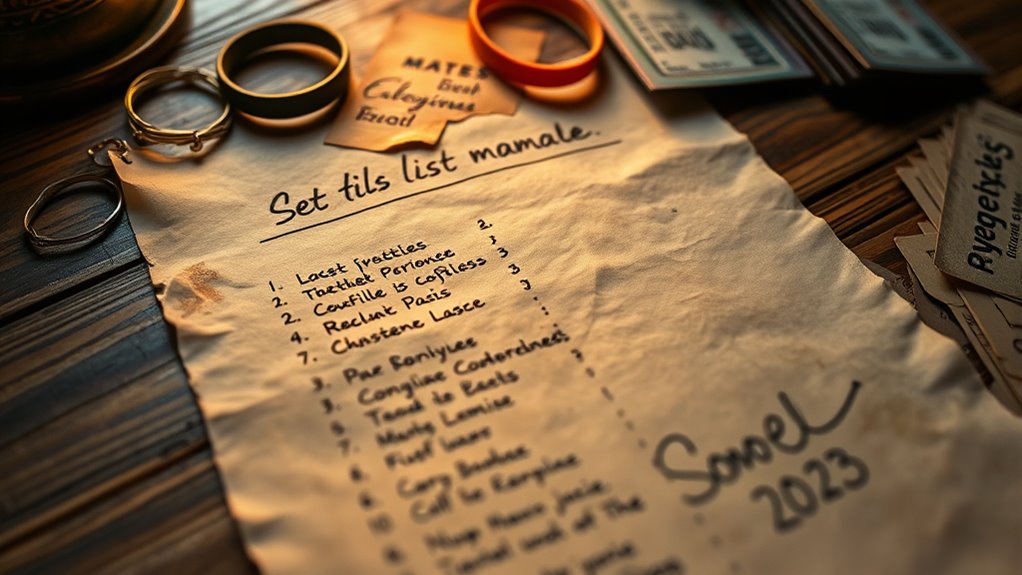

Handwritten set lists often fetch higher prices because they capture the authentic energy, personal style, and spontaneity of a performer. Collectors value their uniqueness, imperfections, and the connection to important moments, making them more desirable than printed or digital versions. Authenticity and provenance further boost their worth. If you want to discover how authenticity, artist significance, and preservation practices can maximize value, there’s plenty more to explore.
Key Takeaways
- Handwritten set lists are perceived as more authentic and personal, increasing their desirability and market value.
- The presence of the artist’s signature on handwritten lists significantly boosts their collectible worth.
- Provenance and expert authentication confirm authenticity, making handwritten lists more valuable than printed equivalents.
- Unique imperfections and personal handwriting style add rarity, elevating the price of handwritten set lists.
- Items connected to iconic artists or historic performances tend to fetch higher prices, especially when handwritten.

Handicraftviet Wooden Music Note Sculpture and Music Lovers, Handmade Music Symbols Gifts for Office Bookshelf Room Decor, Music Teacher Gifts, Music Graduation Gifts (Music Note Set 3, Black)
Crafted from "Cassia Siamea lamk", a type of hardwood known for its natural grain, this set of three…
As an affiliate, we earn on qualifying purchases.
As an affiliate, we earn on qualifying purchases.
The Allure of Handwritten Set Lists in Music Memorabilia
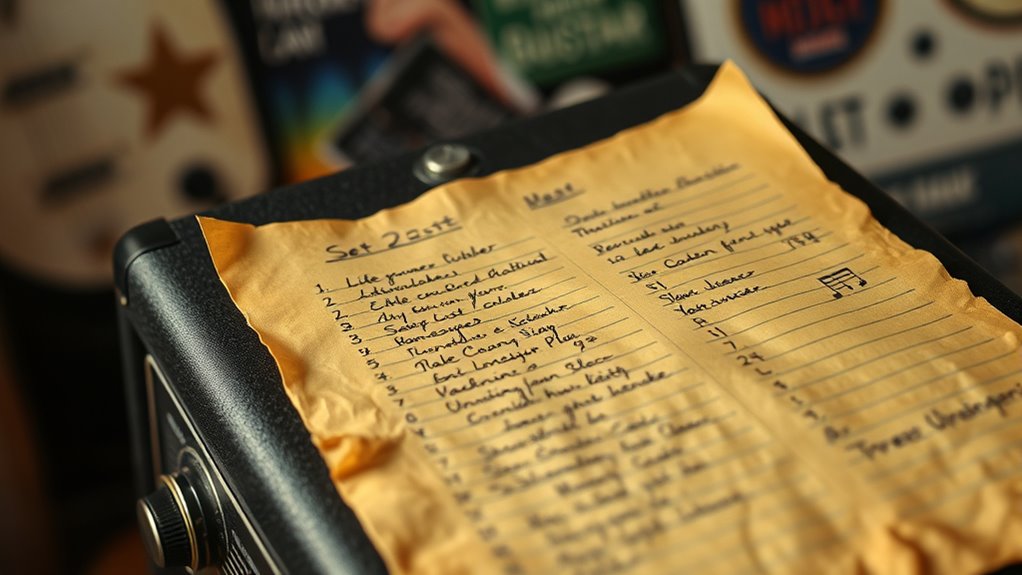
Handwritten set lists hold a special place in music memorabilia because they offer a raw, personal glimpse into a band’s creative process. When you see one, you’re witnessing a moment of spontaneity and authenticity, as if you’re peering directly into the band’s rehearsals or live performances. The handwritten notes often include doodles, corrections, or unique annotations, which add character and personality. This immediacy makes the item feel more genuine and valuable to collectors. Unlike printed set lists, handwritten versions reflect the artist’s raw energy and spontaneity, making them more meaningful. Additionally, color accuracy in the presentation of these memorabilia pieces can enhance their visual appeal and perceived value. As a result, they resonate deeply with fans and collectors alike, elevating their status from mere memorabilia to treasured artifacts of musical history.

MORGAN WALLEN SIGNED AUTOGRAPH CONCERT SET LIST SUPER RARE W/JAMES SPENCE JSA AUTHENTICATION – COUNTRY MUSIC SUPERSTAR, IF I KNOW ME, DANGEROUS: THE DOUBLE ALBUM
Over 15 years in the business!
As an affiliate, we earn on qualifying purchases.
As an affiliate, we earn on qualifying purchases.
Factors That Influence the Value of Set List Collectibles
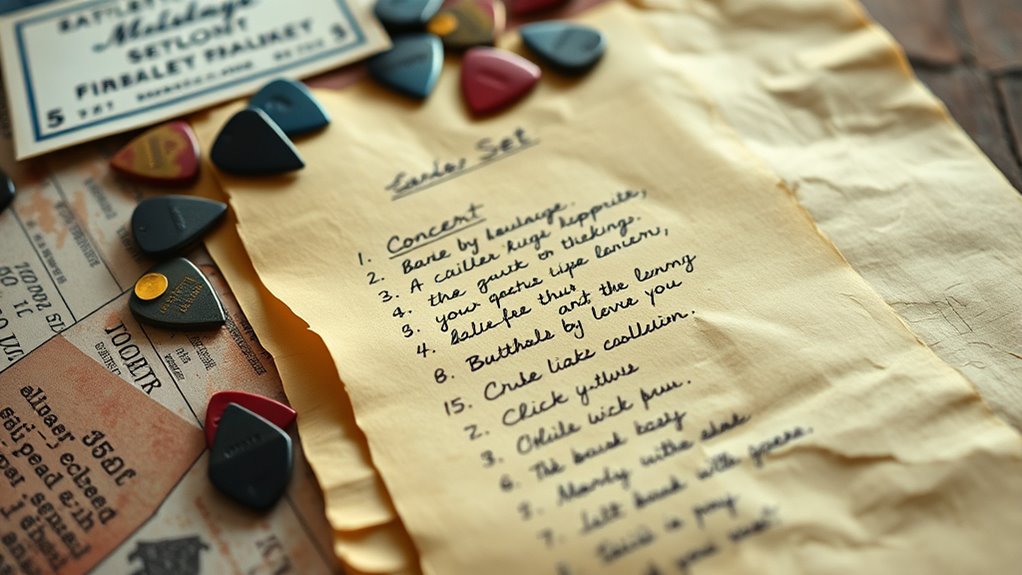
The value of set list collectibles often depends on how authentic they are and whether they feature the artist’s signature. You should consider the verification methods used to confirm authenticity, as this impacts their desirability. Additionally, an artist’s signature can markedly boost a set list’s worth, making it a key factor in its overall value. Incorporating unique and verified signatures can significantly enhance the collectible’s appeal and market price. When assessing these items, understanding the authentication process can help buyers make informed decisions.
Authenticity Verification Methods
Authenticity verification is essential when evaluating the value of set list collectibles, as forgeries and misrepresentations can markedly diminish their worth. You want confidence that your item is genuine before valuing it highly. Methods like provenance checks, expert authentication, and scientific analysis help verify authenticity. Provenance traces the item’s history, giving you peace of mind. Expert appraisers analyze handwriting, ink, and paper, providing credibility. Scientific tests detect age and materials used, confirming originality.
| Method | What it Confirms | Emotional Impact |
|---|---|---|
| Provenance Check | True history and ownership | Confidence in your treasure |
| Expert Authentication | Authentic handwriting & details | Trust in its genuineness |
| Scientific Testing | Age and material authenticity | Pride in owning a real piece |
Artist Signature Presence
When an artist signs a set list, their signature considerably boosts its value by serving as a direct link to the performer. A signed set list acts as a tangible connection to a specific concert, increasing its appeal to collectors. The signature verifies authenticity and adds a personal touch, making it more desirable. Collectors often see signed items as more exclusive, especially if the artist is renowned or hard to get signatures from. The presence of an authentic autograph can notably elevate the set list’s worth, sometimes doubling or tripling its price. However, the value depends on the artist’s popularity, the clarity of the signature, and the context of the signing. Ultimately, a signed set list becomes a prized keepsake, symbolizing a unique moment in music history.

My Book Of Songs: Notebook for Musicians, Singers & Songwriters | Lined Paper & Manuscript Paper for Recording Lyrics & Music | Gift for Music Lovers, Students & Teachers
As an affiliate, we earn on qualifying purchases.
As an affiliate, we earn on qualifying purchases.
Authenticity and Provenance: Establishing Genuine Handwritten Lists
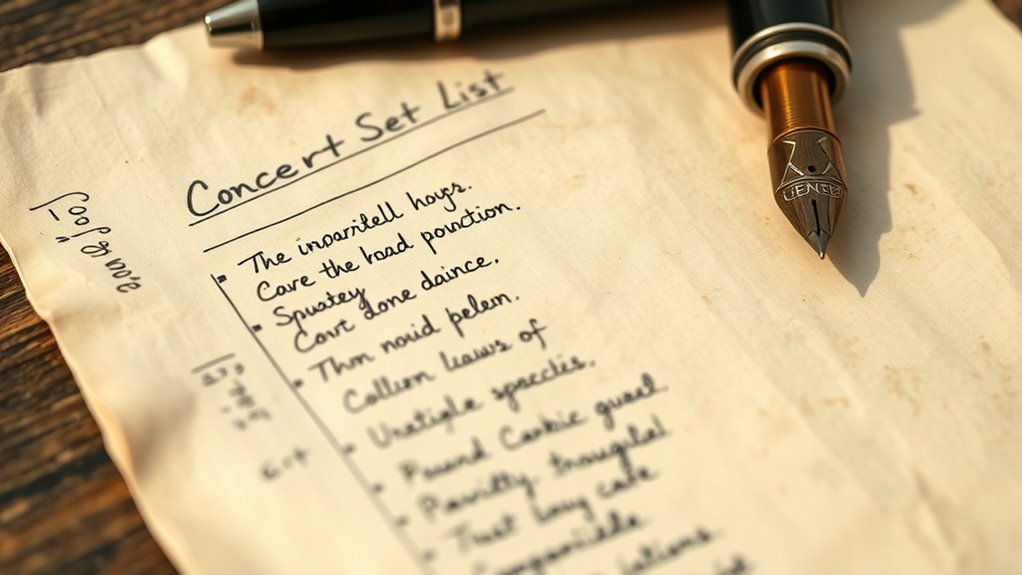
You need to verify handwritten set lists to guarantee they’re genuine, using handwriting verification methods. Proper provenance documentation helps confirm where and how these lists originated, adding to their credibility. Following established authenticity certification standards makes it easier to trust and value your collectibles.
Handwriting Verification Methods
Establishing the genuineness of handwritten set-lists requires careful analysis of various physical and stylistic features. You need to compare handwriting traits, ink consistency, and paper aging to authentic samples. Look for unique characteristics like letter formation, slant, spacing, and pressure patterns. Verifying authenticity also involves examining signatures, if present, and any corrections or annotations. Technological tools can assist, such as microscopic analysis or forensic handwriting software, to detect forgeries. Be aware of common signs of forgery, like tremors or inconsistent strokes. Cross-referencing with known authentic examples helps confirm provenance. Remember, thorough examination combines both scientific methods and expert judgment to ensure the list’s legitimacy. Additionally, understanding the father-daughter bond can provide contextual insights into the importance of authentic memorabilia linked to personal relationships, and recognizing authentic handwriting traits is crucial for establishing credibility. Recognizing genetic variations that influence physical traits, such as coat color or patterns, can also aid in differentiating genuine items from forgeries or misidentifications.
Provenance Documentation Practices
Provenance documentation is essential for confirming the authenticity of handwritten set-lists, as it provides a traceable history of their origin and ownership. Proper records help verify that a list genuinely belonged to a specific artist or tour, increasing its value. To establish clear provenance, you should gather supporting evidence such as photographs, letters, or receipts. Maintaining detailed documentation ensures potential buyers feel confident about the item’s legitimacy. Here’s an example of provenance data:
| Owner History | Supporting Evidence | Date Acquired |
|---|---|---|
| Previous collector | Signed photograph | 2015 |
| Music memorabilia shop | Purchase receipt | 2018 |
| Personal estate | Handwritten note | 2021 |
| Auction house | Catalog description | 2022 |
| Current owner | Authentication letter | 2023 |
This organized approach solidifies your set-list’s provenance and value.
Authenticity Certification Standards
Authenticity certification standards serve as the benchmark for verifying that handwritten set-lists are genuine and accurately attributed. These standards help collectors and buyers trust the provenance of a piece, ensuring it’s not a forgery or misattribution. To establish credibility, professionals rely on several key factors:
- Expert authentication by recognized appraisers
- Detailed provenance records linking the list to the artist or event
- Scientific analysis of ink, paper, and handwriting techniques
- Certification from reputable authentication organizations
- Consistent documentation supporting the list’s history

FUNERAL PIANO MUSIC: a collection of 50 peaceful piano pieces for farewell and remembrance – emotional piano sheet music for mourning ceremonies – intermediate to advanced level
As an affiliate, we earn on qualifying purchases.
As an affiliate, we earn on qualifying purchases.
The Role of Artist and Performance Significance in Pricing
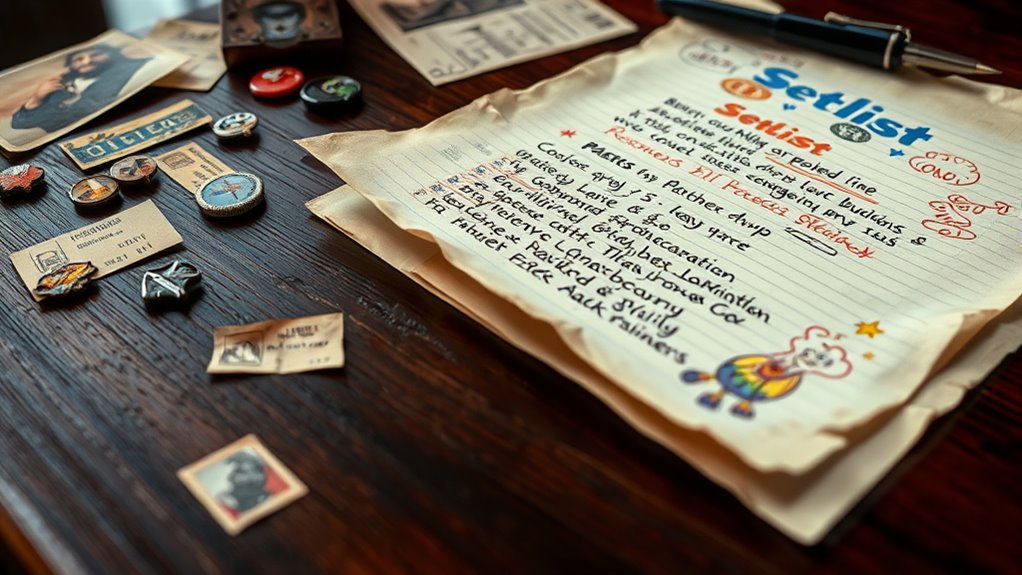
The significance of an artist and their performance greatly influences how set-list souvenirs are priced. When a legendary artist performs, their memorabilia, including handwritten set lists, often commands higher prices due to their iconic status. Similarly, a memorable concert—such as a milestone anniversary or a historic event—adds value to the souvenirs. Fans and collectors see these items as tangible connections to important moments, increasing their desirability and worth. The artist’s reputation, influence, and the cultural impact of their show all contribute to perceived value. If an artist is well-respected or their performance is considered groundbreaking, the set list’s importance skyrockets. Hence, the more significant the artist and performance, the higher the potential price for these memorabilia. Additionally, the artist’s enduring impact on Indian cinema and their influence on generations can elevate the perceived significance of their memorabilia even further.
Market Trends: Are Handwritten Set Lists Gaining Popularity?

As fans and collectors recognize the increasing importance of the artist’s role and performance significance, they’ve also begun to pay closer attention to the trends shaping memorabilia collectability. Handwritten set lists are gaining popularity, driven by their perceived authenticity and personal touch. Many collectors see these as more intimate and unique than printed or digital versions. The trend is fueled by the desire for items with a tangible connection to the artist’s creative process. Additionally, social media amplifies interest in firsthand artifacts. This rise in popularity reflects a broader collectible trend emphasizing authenticity and originality in memorabilia. The value of these handwritten items is further heightened by their authenticity verification, which collectors increasingly seek. Growing emphasis on authenticity and originality, artists and fans sharing handwritten set lists online, collectors valuing the personal connection, increased auction activity for handwritten pieces, and the rise of boutique shops specializing in handwritten memorabilia continue to drive this trend. Moreover, the increasing recognition of relationships between artists and fans has contributed to the desirability of such personal items, fostering a deeper emotional connection. The provenance of these items further enhances their desirability and potential value in the marketplace.
Comparing Handwritten Versus Printed or Digital Set Lists in Valuation

Handwritten set lists typically command higher valuations than printed or digital versions because they’re seen as more authentic and personal. Collectors value the unique imperfections, handwriting style, and the evident effort behind a handwritten list. These details connect the item directly to the artist’s hand, adding a layer of intimacy and rarity. In contrast, printed or digital set lists are often viewed as more generic and mass-produced, reducing their desirability. While digital lists can be easily duplicated and stored, they lack the tangible, personal touch that makes handwritten versions special. As a result, handwritten set lists often fetch higher prices at auction or resale, especially when tied to notable performances or artists. The authenticity and personal nature of handwritten lists markedly enhance their market value compared to their printed or digital counterparts. Additionally, understanding the aura or energy associated with these items can deepen collectors’ appreciation of their significance, emphasizing their collectible appeal. Recognizing the emotional connection that fans and collectors feel towards handwritten memorabilia further underscores their unique value in the collectibles market. Moreover, the rarity of a handwritten list can significantly influence its market value, making it a sought-after piece among enthusiasts.
Tips for Collectors: Buying, Selling, and Caring for Handwritten Set List Souvenirs
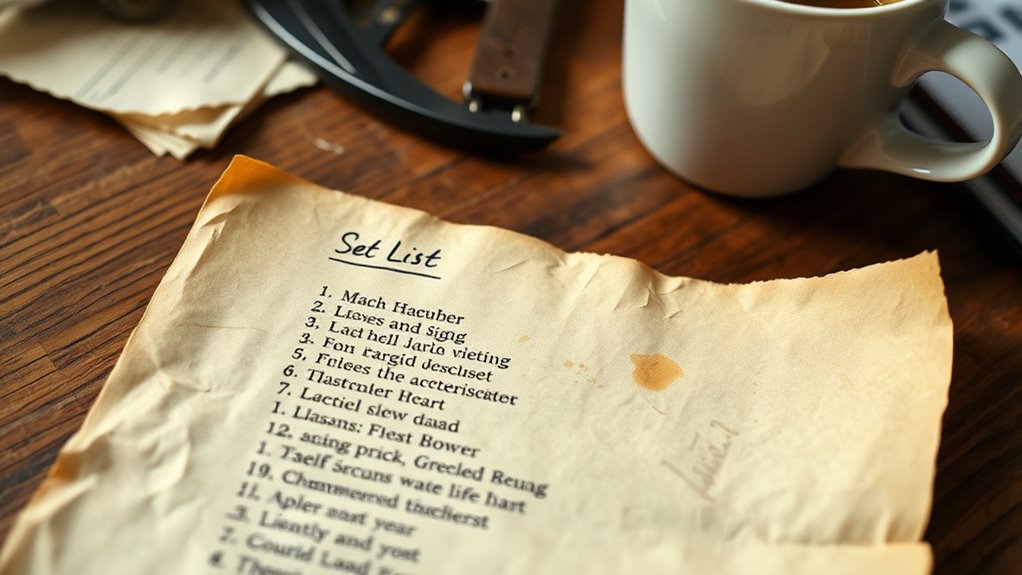
When purchasing, selling, or caring for handwritten set list souvenirs, it’s essential to handle them with care to preserve their value. Proper handling prevents damage and maintains their authenticity. Store them in acid-free sleeves or frames to prevent deterioration. Keep them away from direct sunlight, moisture, and extreme temperatures. When buying, verify the provenance and authenticity of the set list. Selling, choose reputable platforms and consider appraisals to get fair value. Regularly inspect for signs of fading or damage. Avoid excessive handling, and if needed, use gloves to prevent oils from your skin. Properly caring for your set list can greatly boost its worth and longevity.
- Use acid-free storage materials
- Keep away from sunlight and moisture
- Handle with gloves when necessary
- Store flat in a secure location
- Document provenance for resale
Frequently Asked Questions
How Do Handwritten Set Lists Impact a Collector’S Investment Risk?
You wonder how handwritten set lists influence your investment risk. Handwritten lists can increase value due to their uniqueness and personal touch, but they also come with risks like fading or damage over time. If you’re collecting for profit, you should consider preservation methods and authentication. Ultimately, while handwritten lists can boost your collection’s worth, careful handling is essential to protect your investment and minimize potential losses.
Are There Specific Genres Where Handwritten Set Lists Are More Valuable?
Your curiosity about specific genres makes sense, as certain music styles elevate handwritten set lists to legendary status. Rock and punk, with their passionate fan bases and iconic performances, often see handwritten lists fetching jaw-dropping prices. These genres capture raw energy and cultural significance, making their memorabilia incredibly desirable for collectors. If you focus on these genres, you might find that your handwritten set lists become priceless treasures, embodying musical history’s heartbeat.
What Are Common Forgeries or Counterfeit Signs to Watch For?
When examining signs for forgeries, you should look for inconsistencies like uneven fonts, misspellings, or mismatched signatures. Counterfeit signs often have poor-quality printing or faded ink. Check the material and compare it to authentic items. Be cautious of signs that seem too perfect or look artificially aged. Always verify provenance and consult experts if you’re unsure, as counterfeit signs can be convincing but often hide subtle flaws.
How Does the Condition of a Handwritten List Affect Its Price?
When it comes to handwritten lists, you’re only as good as the condition it’s in. A well-preserved list with clear handwriting and minimal damage can fetch top dollar, as collectors see it as authentic and valuable. On the flip side, tears, smudges, or fading can knock down its worth. Keep your list in tip-top shape, and you’ll be able to turn back the clock on its value.
Can Digital Scans of Set Lists Hold Similar Value to Original Handwritten Versions?
You wonder if digital scans of set lists hold similar value to the original handwritten versions. While scans preserve the content, they lack the tactile and historical authenticity that collectors seek in handwritten lists. Originals often fetch higher prices because of their uniqueness and physical connection to the artist. However, digital copies can still be valuable for reference or display, but they typically won’t match the premium of an authentic handwritten set list.
Conclusion
If you’re considering collecting set lists, remember that handwritten versions are like rare gems—shining brighter and often fetching higher prices. Their authenticity and connection to the artist make them treasures worth cherishing. By paying attention to provenance and market trends, you can turn your collection into a mesmerizing story etched in time. After all, in the world of memorabilia, a handwritten set list is the heartbeat that keeps the music alive.